From Real Exams Exam Paper

Primary 5 Science Weighted Assessment 1 (Term 1) Paper 2

Free Exam-Derived Qwen3.7 Plus Primary 5 Science Weighted Assessment 1 (Term 1) Paper 2 practice paper with questions and answers for Singapore students. This page is rendered as a direct URL so the questions and answers can be discovered without pressing in-page buttons.

These static practice materials are generated from the site's syllabus and paper-generation workflow, with source and model context shown so students and parents can evaluate the material before use.

Primary 5 Science From Real Exams Generated by Qwen3.7 Plus Updated 2026-06-04

Questions

<!-- TuitionGoWhere generation metadata: stage=3-1; model=qwen/qwen3.7-plus; model_label=Qwen3.7 Plus; generated=2026-06-04; Sources: Stage 2-1 real exam-derived templates and Stage 2-2 exam-enriched syllabus. -->

TuitionGoWhere Practice Paper - Science Primary 5

TuitionGoWhere Exam Practice (AI)

Subject: Science
Level: Primary 5
Paper: WA1 (Version 2 of 5)
Duration: 1 hour 45 minutes
Total Marks: 56
Name: __________________________
Class: __________
Date: __________________________

Instructions to Candidates:

  1. This paper consists of two sections, A and B.
  2. Answer all questions.
  3. Write your answers in the spaces provided.
  4. For questions in Section B, you need to give explanations in accordance with what is required.

Section A (28 marks)

For each question from 1 to 14, four options are given. One of them is the correct answer. Make your choice (1, 2, 3 or 4) and write your answer in the bracket provided. Each question carries 2 marks.

1. Which of the following statements about cells is correct? (1) All cells have a cell wall. (2) The nucleus controls the activities of the cell. (3) Plant cells do not have a cell membrane. (4) Animal cells contain chloroplasts for photosynthesis. Answer: ( )

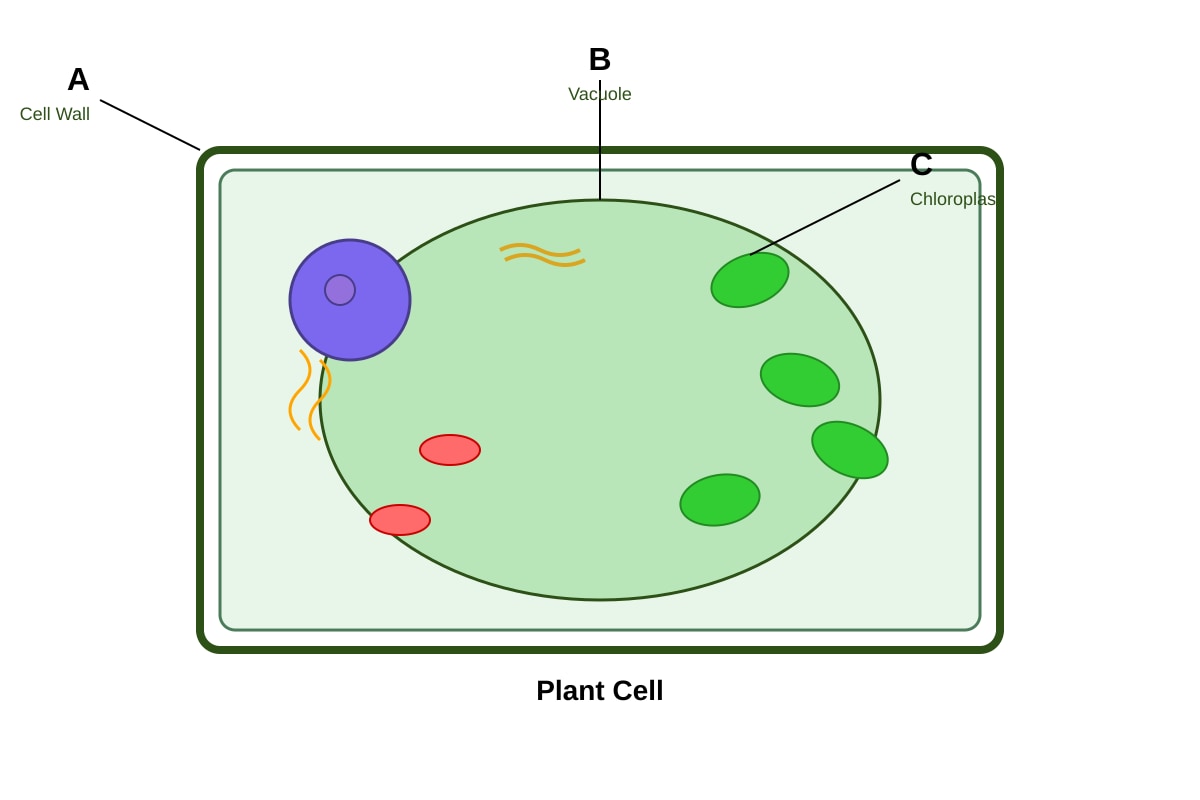
2. The diagram below shows a plant cell.

<image_placeholder> id: Q2-fig1 type: diagram linked_question: Q2 description: A standard plant cell diagram with three labels pointing to specific parts. Label A points to the outermost rigid layer. Label B points to the large central sac. Label C points to the green oval structures. labels: A, B, C must_show: Clear distinction between cell wall, vacuole, and chloroplasts. </image_placeholder>

What are the functions of parts A, B and C?

PartFunction
A(1) Gives the cell a regular shape
B(2) Contains cell sap
C(3) Site of photosynthesis

(1) A only (2) A and B only (3) B and C only (4) A, B and C Answer: ( )

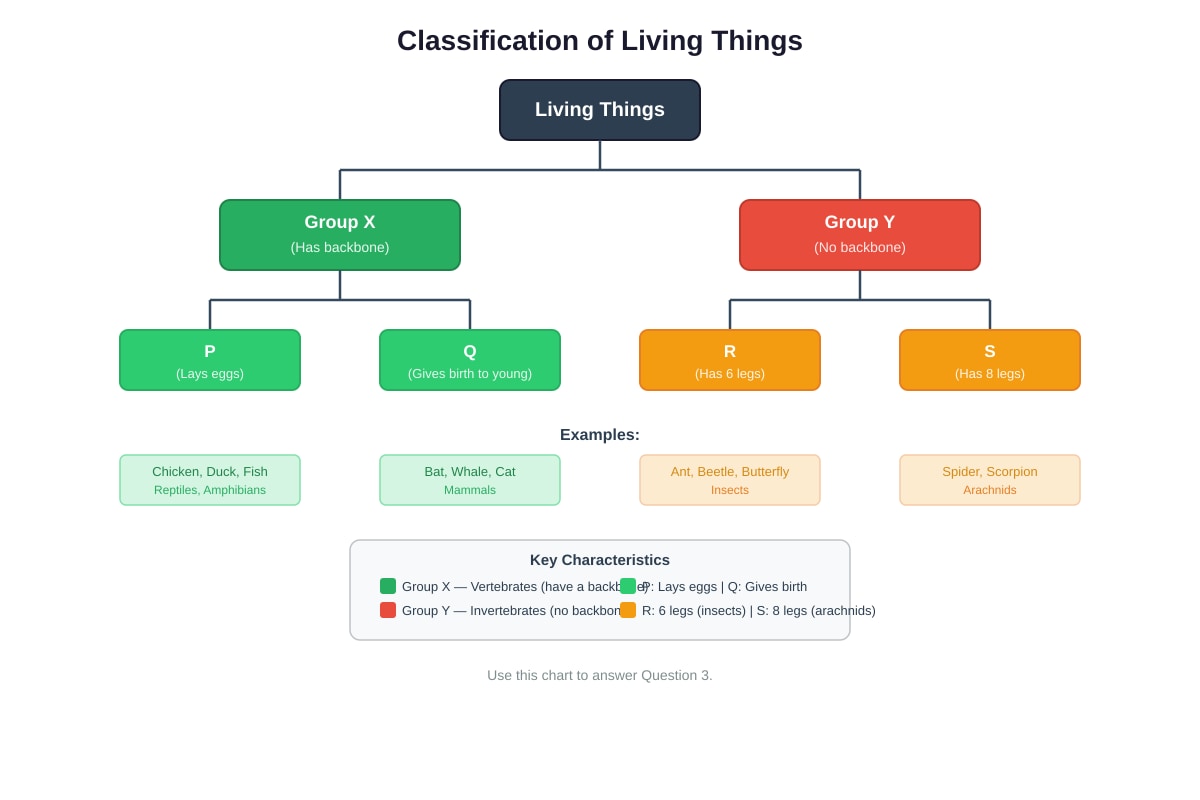
3. Study the classification chart below.

<image_placeholder> id: Q3-fig1 type: chart linked_question: Q3 description: A simple branching classification chart. Top level: Living Things. Branches into Group X and Group Y. Group X branches into P and Q. Group Y branches into R and S. labels: Group X, Group Y, P, Q, R, S values: Group X: Has backbone. Group Y: No backbone. P: Lays eggs. Q: Gives birth to young. R: Has 6 legs. S: Has 8 legs. must_show: Clear hierarchy showing vertebrates vs invertebrates, then further subdivision. </image_placeholder>

Which of the following animals fits into Group Q? (1) Bat (2) Penguin (3) Spider (4) Butterfly Answer: ( )

4. Why do plants need to reproduce? (1) To increase the number of species in the world. (2) To ensure the continuity of their kind. (3) To produce food for animals. (4) To grow larger in size. Answer: ( )

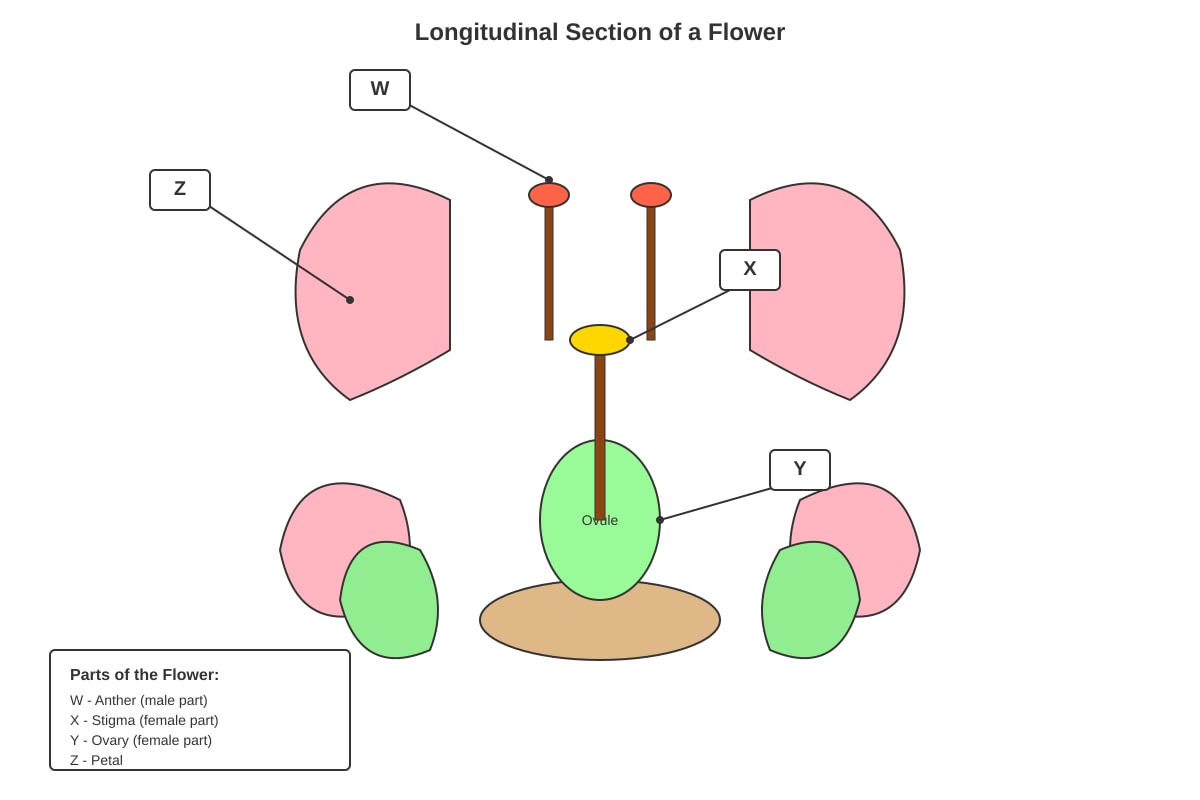
5. The diagram below shows the reproductive parts of a flower.

<image_placeholder> id: Q5-fig1 type: diagram linked_question: Q5 description: A longitudinal section of a flower. Label W points to the anther. Label X points to the stigma. Label Y points to the ovary. Label Z points to the petal. labels: W, X, Y, Z must_show: Clear identification of male (anther) and female (stigma, ovary) parts. </image_placeholder>

Which parts are involved in sexual reproduction? (1) W and Z only (2) X and Y only (3) W, X and Y only (4) W, X, Y and Z Answer: ( )

6. Which of the following sequences correctly shows the stages of sexual reproduction in flowering plants? (1) Pollination → Fertilisation → Seed Dispersal → Germination (2) Fertilisation → Pollination → Germination → Seed Dispersal (3) Pollination → Germination → Fertilisation → Seed Dispersal (4) Seed Dispersal → Pollination → Fertilisation → Germination Answer: ( )

7. A farmer wants to prevent cross-pollination between two different varieties of corn plants. What should he do? (1) Remove the petals from the flowers. (2) Cover the tassels (male parts) with bags before they release pollen. (3) Water the plants more frequently. (4) Plant the two varieties far apart from each other. Answer: ( )

8. Which of the following is a characteristic of wind-dispersed seeds? (1) They are juicy and sweet. (2) They have hooks or barbs. (3) They are light and have wing-like structures. (4) They have a hard waterproof coat. Answer: ( )

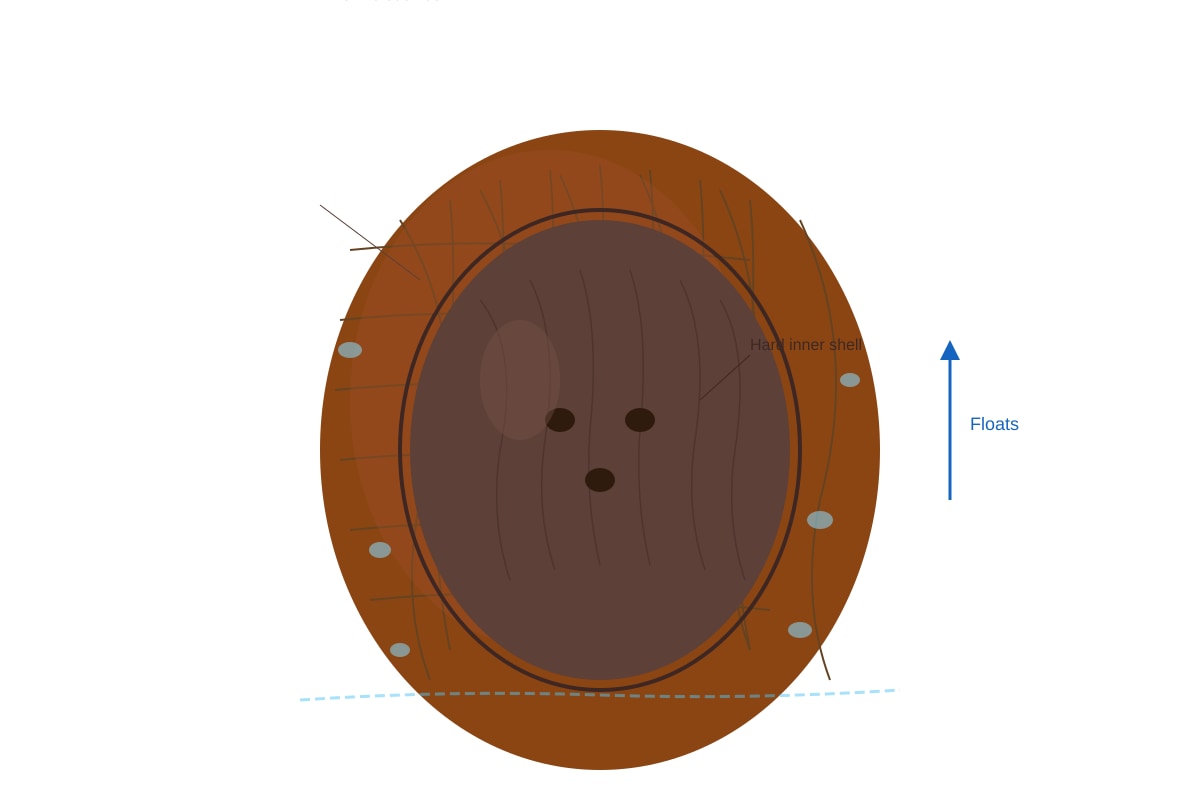
9. Look at the fruit below.

<image_placeholder> id: Q9-fig1 type: figure linked_question: Q9 description: A drawing of a coconut. It shows a thick fibrous husk and a hard inner shell. labels: None must_show: Texture of the husk suggesting buoyancy. </image_placeholder>

How is the seed inside this fruit dispersed? (1) By wind (2) By water (3) By animals (4) By explosive action Answer: ( )

10. Which of the following conditions is NOT necessary for seed germination? (1) Sunlight (2) Water (3) Air (Oxygen) (4) Suitable temperature Answer: ( )

11. John set up an experiment to find out if water is needed for seed germination. He placed wet cotton wool in Beaker A and dry cotton wool in Beaker B. He placed 5 bean seeds in each beaker. Both beakers were left in the same room. What is the variable that was changed in this experiment? (1) The type of seeds (2) The amount of water (3) The temperature of the room (4) The amount of air Answer: ( )

12. Which part of the human reproductive system produces sperm? (1) Penis (2) Testes (3) Urethra (4) Sperm duct Answer: ( )

13. Where does fertilisation occur in the human female reproductive system? (1) Ovary (2) Uterus (3) Oviduct (4) Vagina Answer: ( )

14. Which of the following statements about human reproduction is true? (1) The egg is larger than the sperm. (2) The sperm has more cytoplasm than the egg. (3) Fertilisation happens in the uterus. (4) The embryo gets food from the mother through the umbilical cord only after birth. Answer: ( )


Section B (28 marks)

Answer all questions in the spaces provided. The number of marks available for each question or part-question is given in brackets [ ].

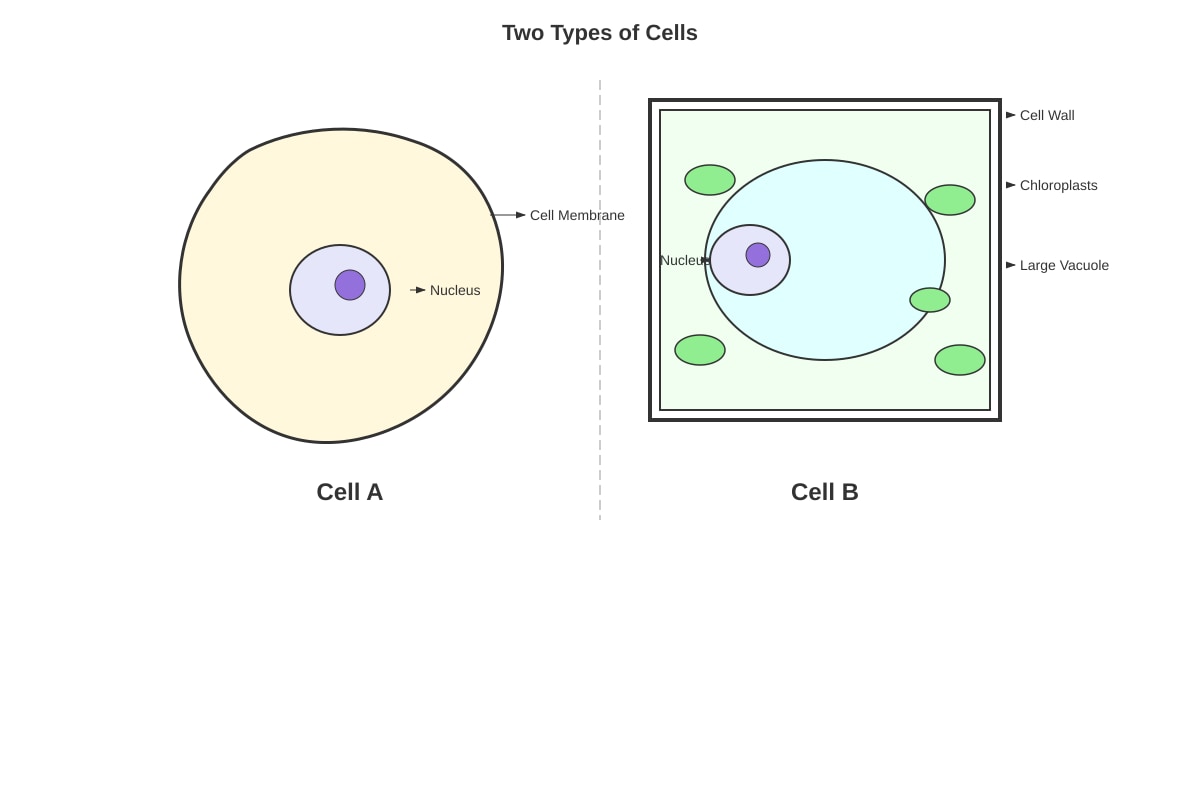
15. The diagram below shows two types of cells, Cell A and Cell B.

<image_placeholder> id: Q15-fig1 type: diagram linked_question: Q15 description: Two cell diagrams side-by-side. Cell A is irregular in shape, has a nucleus and cell membrane, but no cell wall or chloroplasts. Cell B is rectangular, has a cell wall, a large vacuole, chloroplasts, and a nucleus. labels: Cell A, Cell B must_show: Distinct features of animal vs plant cells. </image_placeholder>

(a) Identify Cell A and Cell B. [2] Cell A: __________________________ Cell B: __________________________

(b) State one function of the nucleus found in both cells. [1]


(c) Why does Cell B have chloroplasts but Cell A does not? [1]


16. The table below shows the characteristics of four animals, P, Q, R and S.

AnimalBody CoveringReproductionBreathing Organ
PScalesLays eggsLungs
QFurGives birth to youngLungs
RFeathersLays eggsLungs
SMoist skinLays eggsLungs and Skin

(a) Which animal is a mammal? Give a reason for your answer. [2] Animal: __________ Reason: _________________________________________________________________

(b) Animal S is likely to be an amphibian. Name one other characteristic of amphibians that is not shown in the table. [1]


(c) Animals P and R both lay eggs. However, they belong to different groups. Name the group for Animal P and Animal R. [2] Animal P: __________________________ Animal R: __________________________

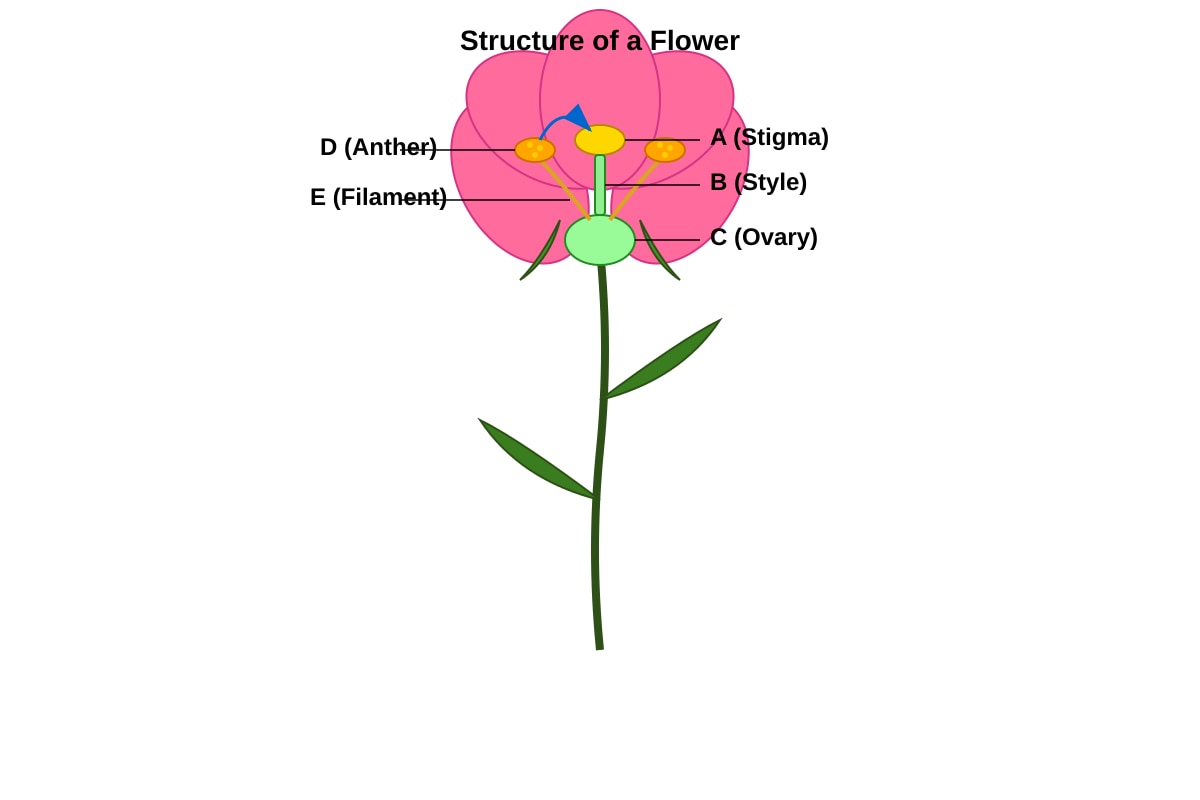
17. The diagram below shows the structure of a flower.

<image_placeholder> id: Q17-fig1 type: diagram linked_question: Q17 description: A flower with labels A (Stigma), B (Style), C (Ovary), D (Anther), E (Filament). Arrows show pollen moving from D to A. labels: A, B, C, D, E must_show: Path of pollen from anther to stigma. </image_placeholder>

(a) Name the process shown by the arrow. [1]


(b) After this process, what happens to part C? [2]


(c) Why is it important for seeds to be dispersed away from the parent plant? [1]


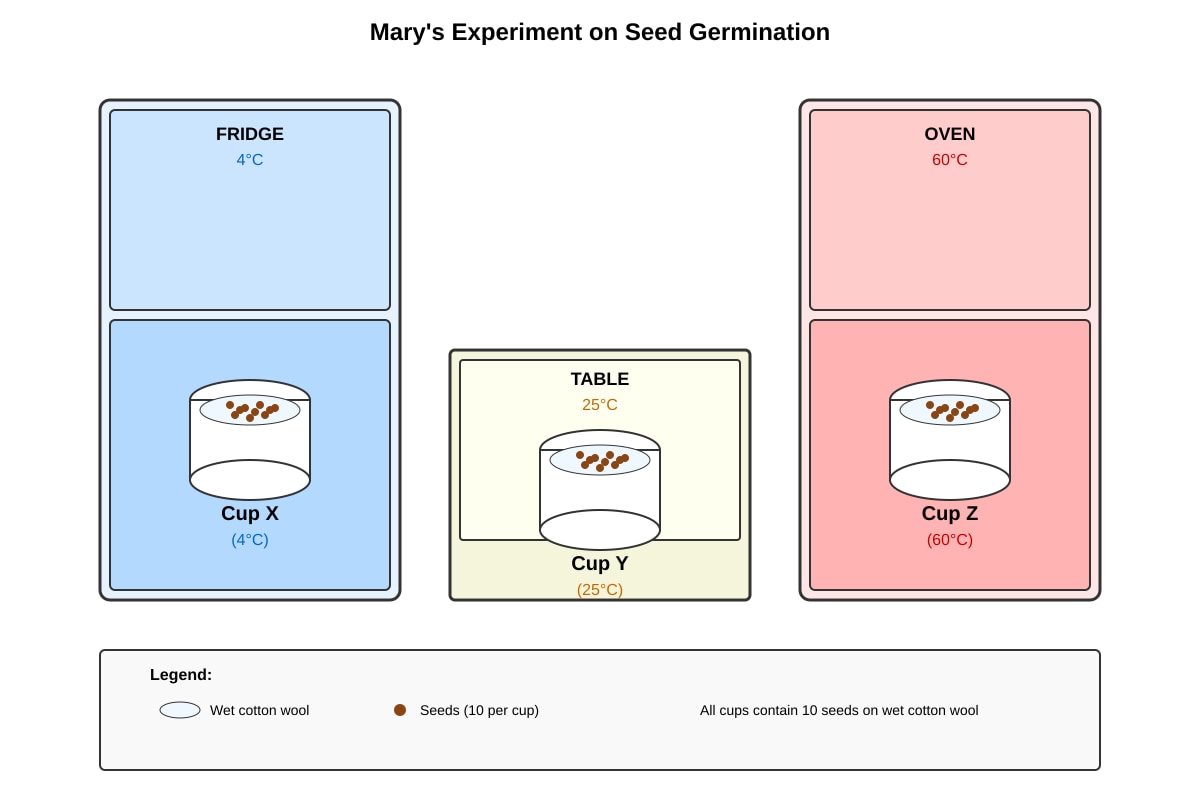
18. Mary conducted an experiment to study the effect of temperature on seed germination. She set up three cups as shown below.

<image_placeholder> id: Q18-fig1 type: experimental_setup linked_question: Q18 description: Three cups labeled X, Y, Z. Cup X is in a fridge (4°C). Cup Y is on a table (25°C). Cup Z is in an oven (60°C). All cups have 10 seeds on wet cotton wool. labels: Cup X (4°C), Cup Y (25°C), Cup Z (60°C) values: Temperature settings clearly marked. must_show: Different temperature environments. </image_placeholder>

(a) What is the aim of this experiment? [1]


(b) Which cup is the control set-up? Explain why. [2] Cup: __________ Explanation: _____________________________________________________________


(c) Predict which cup will have the most seeds germinating after 5 days. Give a reason for your answer. [2] Cup: __________ Reason: _________________________________________________________________


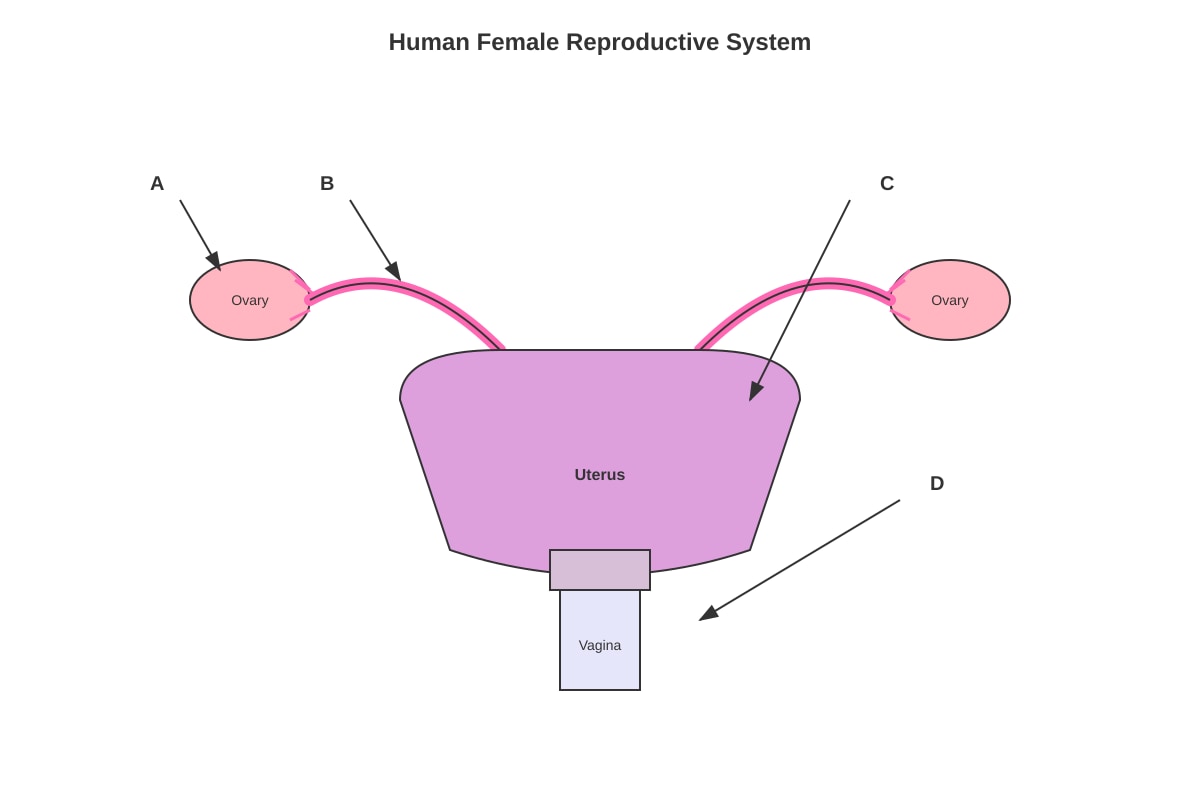
19. The diagram below shows the human female reproductive system.

<image_placeholder> id: Q19-fig1 type: diagram linked_question: Q19 description: Diagram of female reproductive system. Label A points to Ovary. Label B points to Oviduct. Label C points to Uterus. Label D points to Vagina. labels: A, B, C, D must_show: Anatomical positions of ovary, oviduct, uterus, vagina. </image_placeholder>

(a) Where are eggs produced? [1] Label: __________

(b) If part B is blocked, can fertilisation occur? Explain your answer. [2]


(c) What is the function of part C? [1]


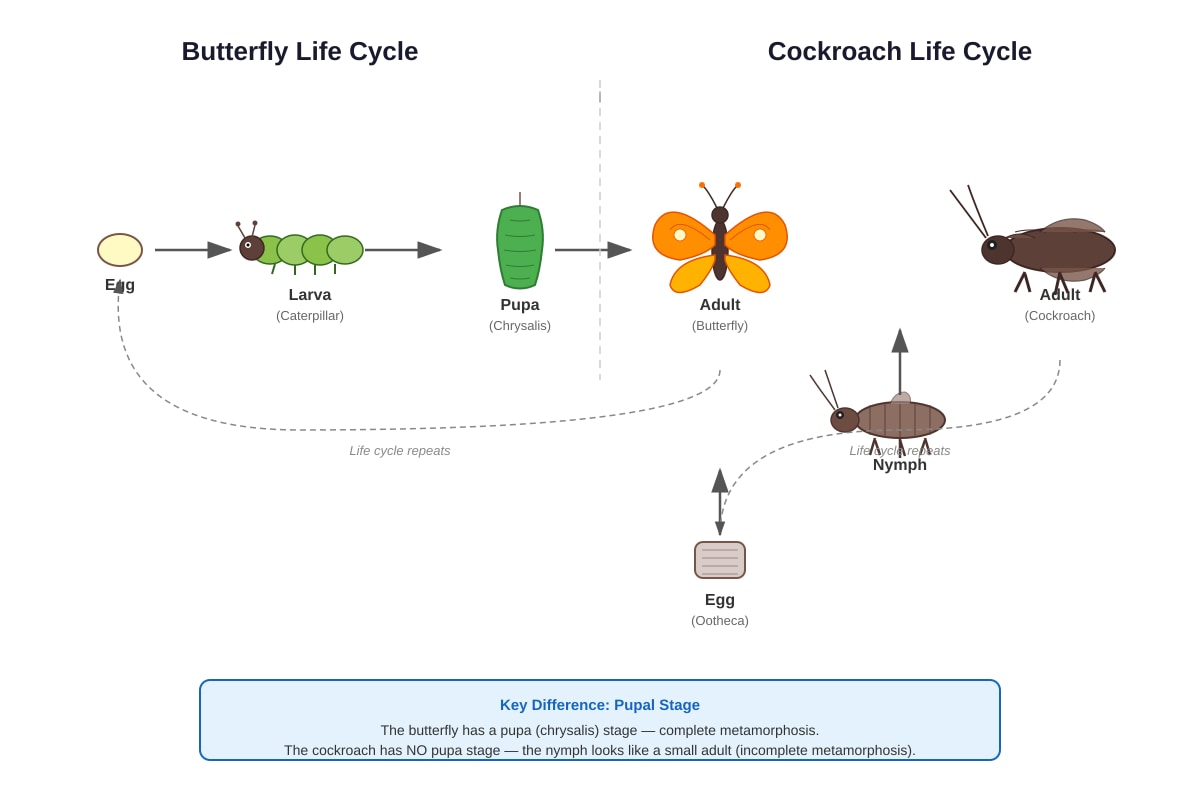
20. Study the life cycle of a butterfly and a cockroach below.

<image_placeholder> id: Q20-fig1 type: diagram linked_question: Q20 description: Two life cycles. Left: Butterfly (Egg -> Larva/Caterpillar -> Pupa -> Adult). Right: Cockroach (Egg -> Nymph -> Adult). labels: Butterfly Life Cycle, Cockroach Life Cycle must_show: Presence of pupal stage in butterfly, absence in cockroach. </image_placeholder>

(a) State one similarity between the life cycles of the butterfly and the cockroach. [1]


(b) State one difference between the young of the butterfly and the young of the cockroach. [2]


(c) Why does the butterfly go through a pupal stage? [1]


[End of Paper]

Answers

<!-- TuitionGoWhere generation metadata: stage=3-1; model=qwen/qwen3.7-plus; model_label=Qwen3.7 Plus; generated=2026-06-04; Sources: Stage 2-1 real exam-derived templates and Stage 2-2 exam-enriched syllabus. -->

TuitionGoWhere Practice Paper - Science Primary 5 (WA1 Version 2)

Answer Key and Marking Scheme

Section A (28 marks)

1. (2)

  • Reasoning: The nucleus contains genetic material and controls cell activities. (1) is incorrect because animal cells lack cell walls. (3) is incorrect because all cells have cell membranes. (4) is incorrect because animal cells do not have chloroplasts.

2. (4)

  • Reasoning: Part A is the cell wall (provides shape/support). Part B is the vacuole (contains cell sap). Part C is the chloroplast (site of photosynthesis). All statements are correct.

3. (1)

  • Reasoning: Group Q represents vertebrates that give birth to young (Mammals). Bats are mammals. Penguins are birds (lay eggs). Spiders and butterflies are invertebrates.

4. (2)

  • Reasoning: Reproduction ensures that the species continues to exist even after the parents die. It does not necessarily increase the number of species (that is evolution/speciation), nor is it primarily for food or growth.

5. (3)

  • Reasoning: Sexual reproduction involves the male parts (Anther W) and female parts (Stigma X, Ovary Y). Petals (Z) attract pollinators but are not directly involved in the fusion of gametes.

6. (1)

  • Reasoning: The correct sequence is Pollination (transfer of pollen) → Fertilisation (fusion of gametes) → Seed Dispersal (spreading seeds) → Germination (growth of new plant).

7. (2)

  • Reasoning: Covering the male parts (tassels) prevents pollen from being carried by wind or insects to other plants, thus preventing cross-pollination.

8. (3)

  • Reasoning: Wind-dispersed seeds are typically light and have structures like wings or hairs to catch the wind. Juicy fruits are for animals, hooks are for animals, and hard coats are often for water or protection.

9. (2)

  • Reasoning: Coconuts have a fibrous, air-filled husk that allows them to float on water. They are dispersed by water.

10. (1)

  • Reasoning: Seeds germinate underground where there is no sunlight. They need water, air (oxygen), and suitable temperature. Sunlight is needed for photosynthesis after the shoot emerges.

11. (2)

  • Reasoning: The only difference between Beaker A and B is the presence of water (wet vs dry cotton wool). This is the changed variable.

12. (2)

  • Reasoning: The testes produce sperm. The penis is for transfer, urethra is a tube, and sperm duct transports sperm.

13. (3)

  • Reasoning: Fertilisation occurs in the oviduct (fallopian tube) where the sperm meets the egg.

14. (1)

  • Reasoning: The egg is much larger than the sperm because it contains cytoplasm and food reserves for the developing embryo. Sperm are small and motile.

Section B (28 marks)

15. (a) Cell A: Animal Cell [1] Cell B: Plant Cell [1] (b) To control the activities of the cell. [1] Teaching Note: The nucleus contains DNA which instructs the cell on what to do. (c) Cell B is a plant cell and needs to make its own food through photosynthesis, which requires chloroplasts. Cell A is an animal cell and gets food from eating other organisms, so it does not need chloroplasts. [1]

16. (a) Animal: Q [1] Reason: It has fur and gives birth to young. [1] Teaching Note: Both characteristics are key identifiers for mammals. (b) The young look like the adults (no metamorphosis) OR They feed their young with milk. [1] Note: Since Q is the mammal, S is the amphibian. A key characteristic of amphibians is moist skin for gas exchange (already in table) or undergoing metamorphosis. Another valid answer is that they lay eggs in water/jelly-like eggs. (c) Animal P: Reptile [1] Animal R: Bird [1]

17. (a) Pollination [1] (b) The ovary develops into a fruit. [1] The ovules inside the ovary develop into seeds. [1] Teaching Note: Students often confuse ovary and ovule. Ovary → Fruit; Ovule → Seed. (c) To reduce overcrowding and competition for water, nutrients, and sunlight with the parent plant. [1]

18. (a) To find out if temperature affects seed germination. [1] (b) Cup: Y [1] Explanation: It is set at room temperature (25°C), which is the normal/ideal condition for comparison. [1] Teaching Note: The control set-up represents the "normal" state where the variable being tested is not extreme. (c) Cup: Y [1] Reason: 25°C is a suitable temperature for enzyme activity in seeds. 4°C is too cold and 60°C is too hot, which may kill the seeds or denature enzymes. [1]

19. (a) Label: A [1] (b) No. [1] Fertilisation occurs in the oviduct (B). If it is blocked, sperm cannot reach the egg. [1] (c) It is where the fertilised egg (embryo) develops into a fetus. [1]

20. (a) Both start with an egg. OR Both have young that look different from adults (incomplete/complete metamorphosis involves change). [1] Note: "Both undergo metamorphosis" is also acceptable, though the type differs. (b) The young of the butterfly (caterpillar) looks very different from the adult and has no wings. The young of the cockroach (nymph) looks similar to the adult but is smaller and has no wings. [2] Marking: 1 mark for describing butterfly young, 1 mark for describing cockroach young. (c) To allow for the drastic change in body structure from larva to adult (metamorphosis). [1] Teaching Note: The pupal stage is a resting stage where the body is reorganized.