From Real Exams Exam Paper

Primary 5 Science Semestral Assessment 2 (End of Year) Paper 3

Free Exam-Derived Qwen3.7 Plus Primary 5 Science Semestral Assessment 2 (End of Year) Paper 3 practice paper with questions and answers for Singapore students. This page is rendered as a direct URL so the questions and answers can be discovered without pressing in-page buttons.

These static practice materials are generated from the site's syllabus and paper-generation workflow, with source and model context shown so students and parents can evaluate the material before use.

Primary 5 Science From Real Exams Generated by Qwen3.7 Plus Updated 2026-06-04

Questions

<!-- TuitionGoWhere generation metadata: stage=3-1; model=qwen/qwen3.7-plus; model_label=Qwen3.7 Plus; generated=2026-06-04; Sources: Stage 2-1 real exam-derived templates and Stage 2-2 exam-enriched syllabus. -->

TuitionGoWhere Exam Practice (AI) - Science Primary 5

School: TuitionGoWhere Secondary School (AI)
Subject: Science
Level: Primary 5
Paper: SA2 Practice Paper (Version 3 of 5)
Duration: 1 hour 45 minutes
Total Marks: 56
Name: __________________________
Class: __________
Date: __________

Instructions to Candidates:

  1. This paper consists of two sections: Section A and Section B.
  2. Answer all questions.
  3. Write your answers in the spaces provided in this booklet.
  4. For questions in Section A, write the number (1, 2, 3 or 4) in the brackets provided.
  5. The use of calculators is not allowed.

Section A (28 marks)

For each question from 1 to 14, four options are given. One of them is the correct answer. Make your choice (1, 2, 3 or 4) and write it in the brackets provided. Each question carries 2 marks.

  1. Which of the following statements about cells is correct? (1) All cells have a cell wall. (2) The nucleus controls the activities of the cell. (3) Chloroplasts are found in all plant cells. (4) Animal cells are generally larger than plant cells.

    Answer: ( )

  2. The diagram below shows the reproductive system of a flowering plant.

    <image_placeholder> id: Q2-fig1 type: diagram linked_question: Q2 description: A simplified diagram of a flower showing the Stigma, Style, Ovary, and Anther. An arrow points from the Anther to the Stigma. labels: Stigma, Style, Ovary, Anther, Pollen grain must_show: The path of pollen transfer from Anther to Stigma. </image_placeholder>

    What is the process shown by the arrow, and what is the result of this process?

    ProcessResult
    (1) FertilisationFormation of a seed
    (2) PollinationFusion of male and female reproductive cells
    (3) PollinationTransfer of pollen to the stigma
    (4) GerminationGrowth of a new plant

    Answer: ( )

  3. Which of the following characteristics is not passed from parents to offspring in humans? (1) Eye colour (2) Hair texture (3) Ability to speak English (4) Height potential

    Answer: ( )

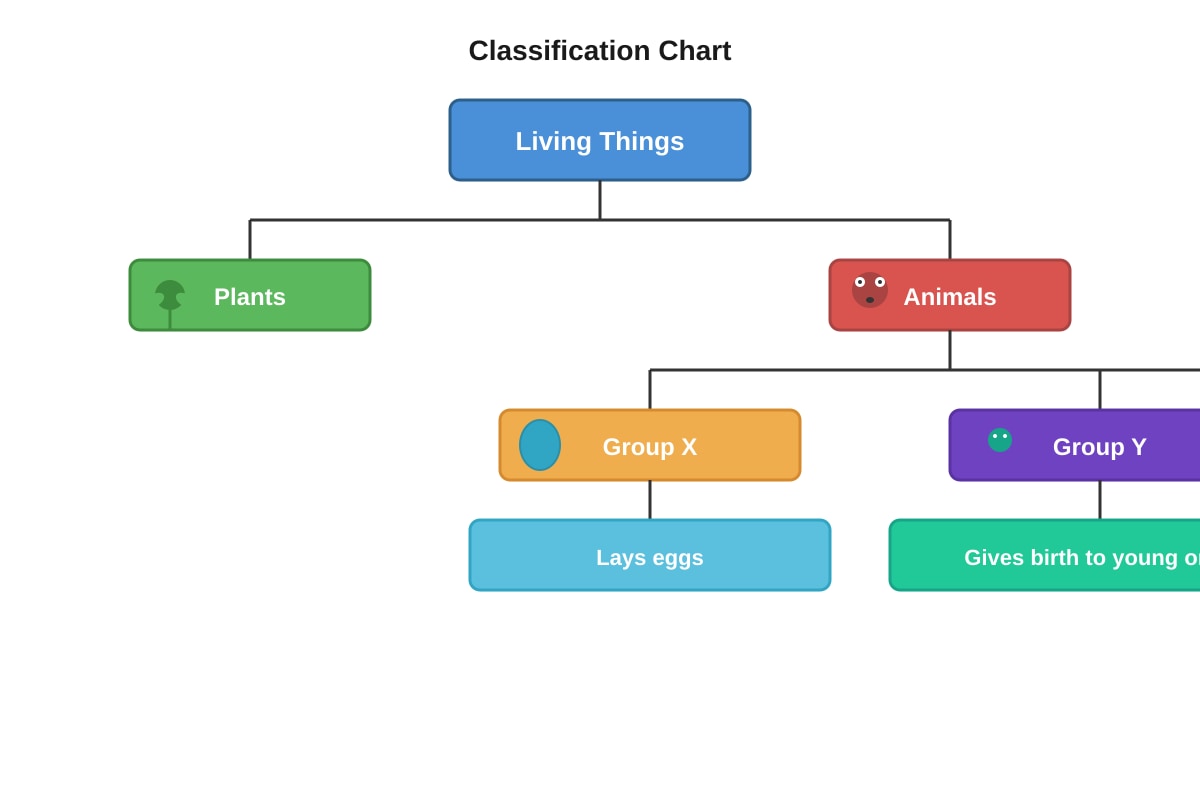
  4. Study the classification chart below.

    <image_placeholder> id: Q4-fig1 type: chart linked_question: Q4 description: A branching classification chart. Top level: Living Things. Branch 1: Plants. Branch 2: Animals. Under Animals, it branches into Group X and Group Y. Group X has 'Lays eggs'. Group Y has 'Gives birth to young ones'. labels: Living Things, Plants, Animals, Group X, Group Y, Lays eggs, Gives birth to young ones must_show: The distinction between egg-laying and live-bearing animals. </image_placeholder>

    Which of the following animals belongs to Group Y? (1) Chicken (2) Dolphin (3) Crocodile (4) Butterfly

    Answer: ( )

  5. Why is reproduction important for living things? (1) To provide food for the young. (2) To ensure the continuity of their kind. (3) To help them grow bigger and stronger. (4) To allow them to adapt to environmental changes.

    Answer: ( )

  6. The table below shows the characteristics of four different seeds.

    SeedCharacteristics
    ALight, has wing-like structures
    BHard shell, floats on water
    CHas hooks, sticks to animal fur
    DExplosive fruit, splits open when dry

    Which seed is most likely dispersed by wind? (1) A (2) B (3) C (4) D

    Answer: ( )

  7. In humans, where does fertilisation take place? (1) Ovary (2) Uterus (Womb) (3) Oviduct (4) Vagina

    Answer: ( )

  8. Which of the following is a condition required for seed germination? (1) Sunlight (2) Soil (3) Water (4) Fertiliser

    Answer: ( )

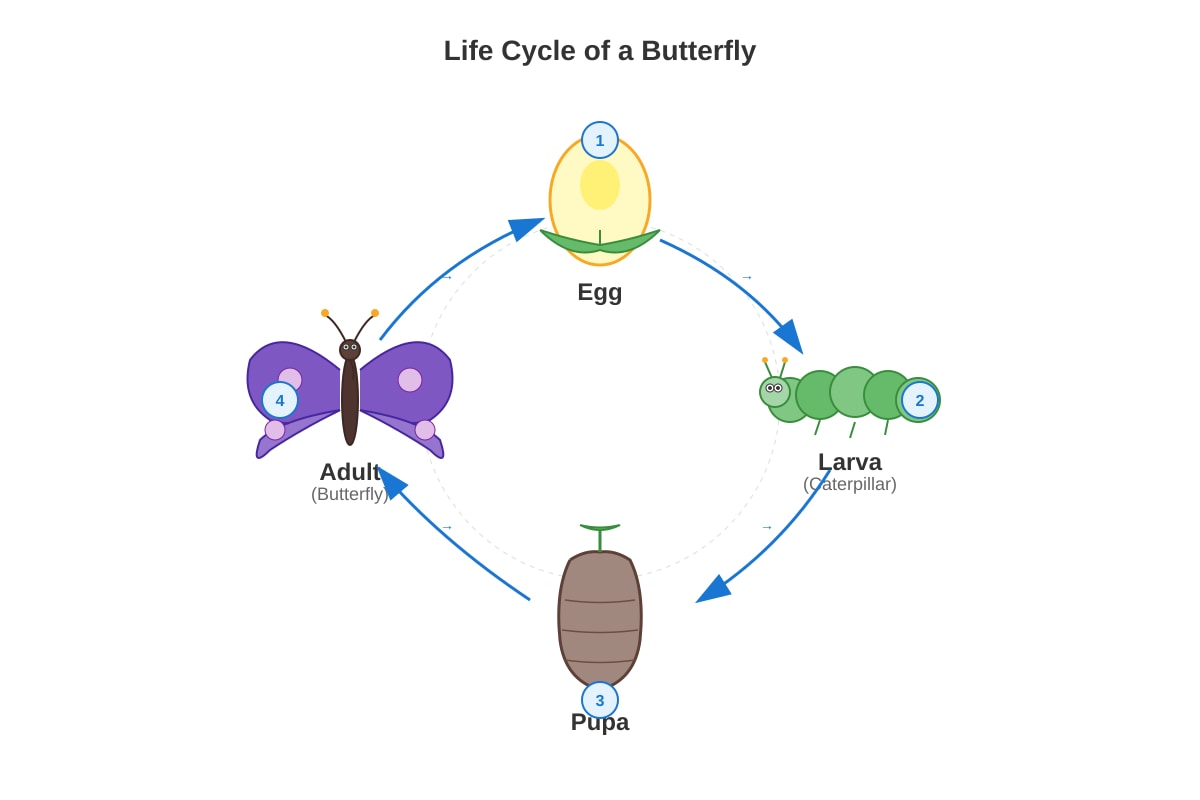
  9. Study the life cycle of a butterfly below.

    <image_placeholder> id: Q9-fig1 type: diagram linked_question: Q9 description: A circular life cycle diagram with four stages: Egg, Larva (Caterpillar), Pupa, Adult (Butterfly). Arrows connect them in order. labels: Egg, Larva, Pupa, Adult must_show: The four distinct stages of metamorphosis. </image_placeholder>

    At which stage does the butterfly feed the most? (1) Egg (2) Larva (3) Pupa (4) Adult

    Answer: ( )

  10. Which part of the human reproductive system produces sperm? (1) Penis (2) Testes (3) Urethra (4) Sperm duct

    Answer: ( )

  11. A farmer wants to grow plants that are exactly identical to the parent plant. Which method of reproduction should he use? (1) Sexual reproduction using seeds (2) Asexual reproduction using stem cuttings (3) Sexual reproduction using pollination (4) Dispersal of fruits by animals

    Answer: ( )

  12. Which of the following statements about mosses and ferns is true? (1) They reproduce using seeds. (2) They reproduce using spores. (3) They have flowers. (4) They are non-flowering plants that produce fruits.

    Answer: ( )

  13. Why do some plants have bright and colourful flowers? (1) To attract insects for pollination. (2) To protect the seeds from birds. (3) To absorb more sunlight for photosynthesis. (4) To store water for dry seasons.

    Answer: ( )

  14. Which of the following is an example of asexual reproduction in plants? (1) A bean plant growing from a seed. (2) A potato plant growing from a tuber. (3) A sunflower producing seeds after pollination. (4) A mango tree growing from a seed inside the fruit.

    Answer: ( )


Section B (28 marks)

Answer all questions. Write your answers in the spaces provided. The number of marks available is shown in brackets [ ] at the end of each question or part-question.

  1. The diagram below shows the structure of a flower.

    <image_placeholder> id: Q15-fig1 type: diagram linked_question: Q15 description: A cross-section of a flower with labels A, B, C, and D. A is the Stigma, B is the Style, C is the Ovary, D is the Anther. labels: A, B, C, D must_show: Clear distinction between male (Anther) and female (Stigma, Style, Ovary) parts. </image_placeholder>

    (a) Identify parts A and D. [2]

    Part A: __________________________

    Part D: __________________________

    (b) Explain why part D is important for the formation of seeds. [2]


    (c) After fertilisation, what does part C develop into? [1]


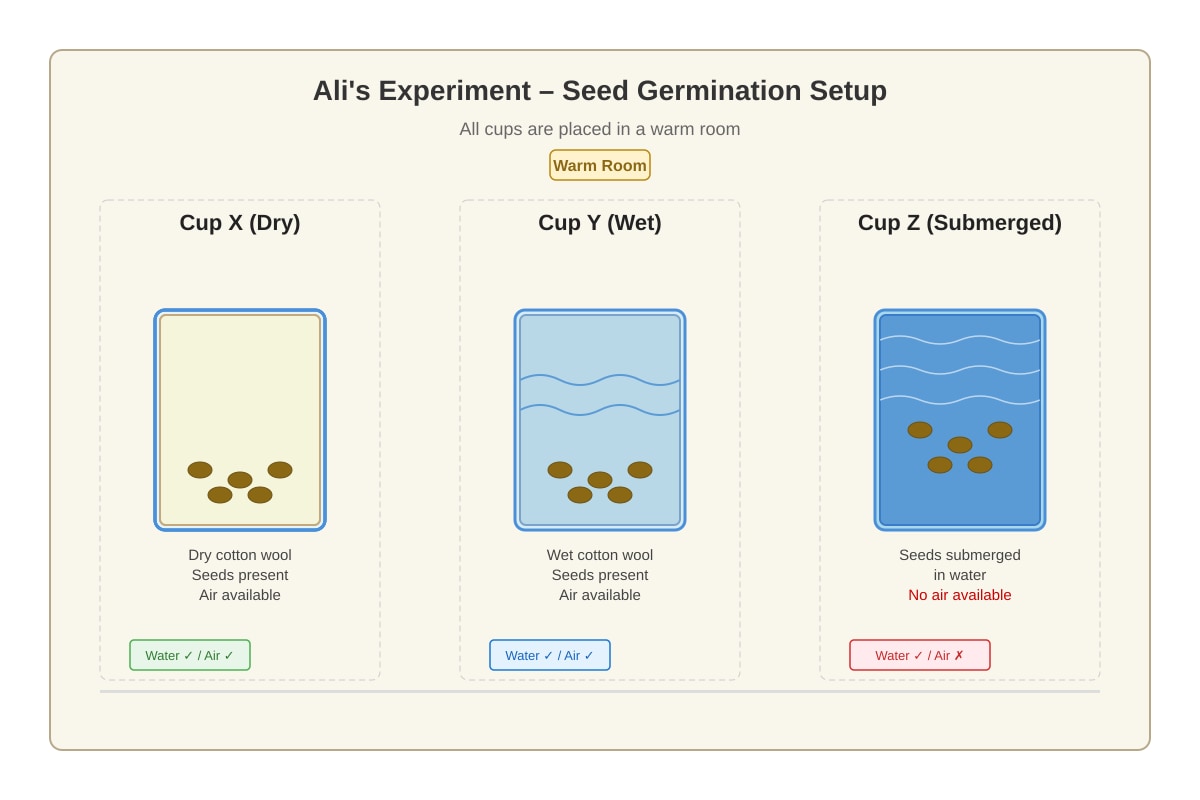
  2. Ali conducted an experiment to find out if water is necessary for seed germination. He set up three cups as shown below.

    <image_placeholder> id: Q16-fig1 type: diagram linked_question: Q16 description: Three cups labeled X, Y, and Z. Cup X has dry cotton wool and seeds. Cup Y has wet cotton wool and seeds. Cup Z has seeds submerged in water (no air). All are placed in a warm room. labels: Cup X (Dry), Cup Y (Wet), Cup Z (Submerged), Warm Room must_show: The difference in water availability and air exposure. </image_placeholder>

    (a) Which cup serves as the control in this experiment? [1]


    (b) Explain why Ali placed the cups in a warm room. [1]


    (c) Predict which cup(s) will have seeds that germinate. Explain your answer. [2]


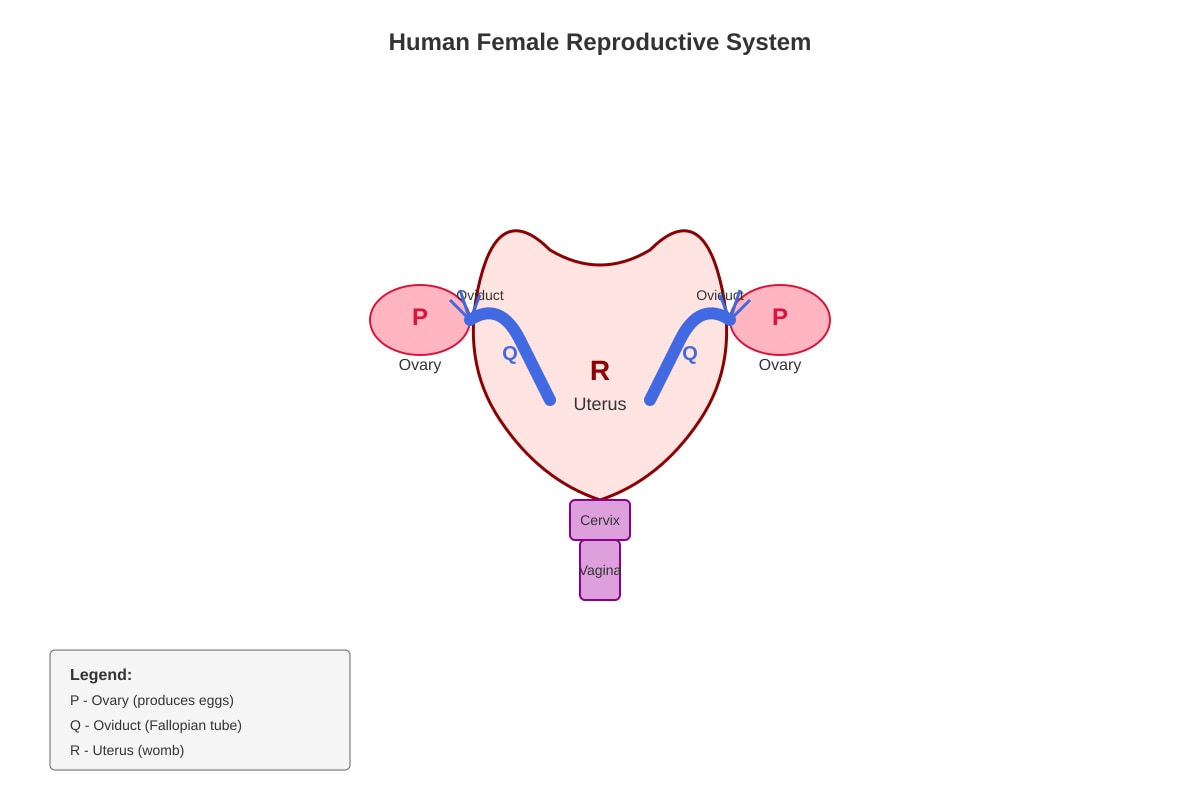
  3. The diagram below shows the reproductive system of a human female.

    <image_placeholder> id: Q17-fig1 type: diagram linked_question: Q17 description: Diagram of female reproductive system with labels P, Q, R. P is Ovary, Q is Oviduct, R is Uterus. labels: P, Q, R must_show: Anatomical position of ovary, oviduct, and uterus. </image_placeholder>

    (a) State the function of part P. [1]


    (b) Where does the fertilised egg implant and develop? [1]


    (c) Why is it important for the lining of part R to thicken every month? [2]


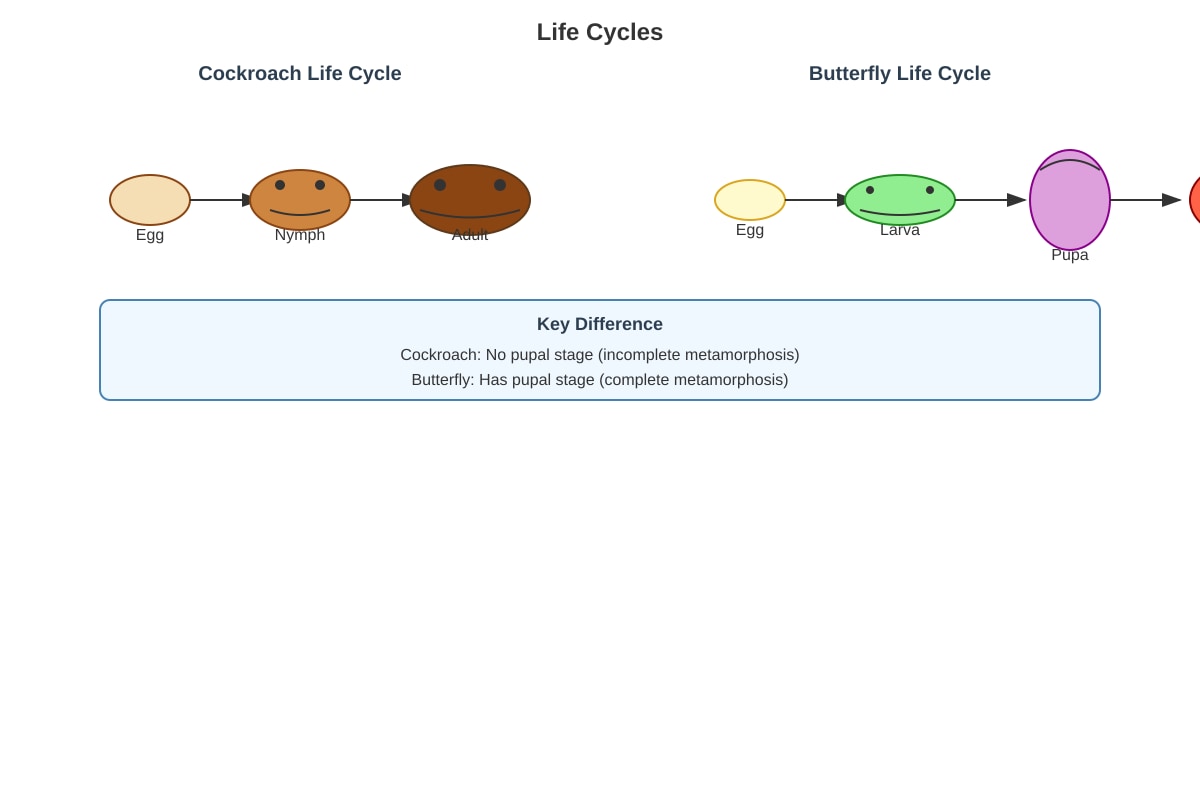
  4. Study the life cycle of a cockroach and a butterfly.

    <image_placeholder> id: Q18-fig1 type: diagram linked_question: Q18 description: Two side-by-side life cycles. Left: Cockroach (Egg -> Nymph -> Adult). Right: Butterfly (Egg -> Larva -> Pupa -> Adult). labels: Cockroach Life Cycle, Butterfly Life Cycle, Egg, Nymph, Adult, Larva, Pupa must_show: The absence of a pupal stage in the cockroach and its presence in the butterfly. </image_placeholder>

    (a) State one similarity between the life cycles of the cockroach and the butterfly. [1]


    (b) State one difference between the life cycles of the cockroach and the butterfly. [1]


    (c) Why does the nymph of a cockroach look similar to the adult? [1]


  5. The table below shows the methods of seed dispersal for four plants.

    PlantMethod of Dispersal
    BalsamExplosive action
    CoconutWater
    LallangWind
    BurdockAnimals

    (a) Explain how the structure of the Balsam fruit helps in seed dispersal. [2]


    (b) Why is it important for seeds to be dispersed away from the parent plant? [2]


  6. Jane planted two identical bean seeds in two different pots. Pot A was placed in a dark cupboard, and Pot B was placed on a windowsill with sunlight. Both pots were watered daily.

    (a) After one week, the seedling in Pot B was green, but the seedling in Pot A was yellow. Explain why. [2]


    (b) Jane concluded that sunlight is needed for seed germination. Is her conclusion correct? Explain your answer. [2]


    (c) Suggest one other condition, besides water and warmth, that is needed for the healthy growth of the plant after germination. [1]


End of Paper

Answers

<!-- TuitionGoWhere generation metadata: stage=3-1; model=qwen/qwen3.7-plus; model_label=Qwen3.7 Plus; generated=2026-06-04; Sources: Stage 2-1 real exam-derived templates and Stage 2-2 exam-enriched syllabus. -->

Answer Key - Science Primary 5 SA2 Practice Paper (Version 3)

Section A (28 marks)

  1. (2)
    Reasoning: The nucleus contains genetic material and controls cell activities. Not all cells have cell walls (animal cells do not). Chloroplasts are only in green parts of plants. Size varies, but animal cells are not generally larger.

  2. (3)
    Reasoning: The arrow shows pollen moving from the anther to the stigma, which is pollination. Fertilisation is the fusion of cells, which happens later inside the ovary.

  3. (3)
    Reasoning: Eye colour, hair texture, and height potential are inherited traits. Language is a learned characteristic, not inherited.

  4. (2)
    Reasoning: Group Y gives birth to young ones (mammals). Dolphins are mammals. Chickens, crocodiles, and butterflies lay eggs.

  5. (2)
    Reasoning: Reproduction ensures that a species does not become extinct and continues to exist.

  6. (1)
    Reasoning: Seed A is light and has wing-like structures, which are adaptations for wind dispersal.

  7. (3)
    Reasoning: Fertilisation in humans occurs in the oviduct (fallopian tube). The uterus is where the embryo implants and grows.

  8. (3)
    Reasoning: The three conditions for germination are water, warmth, and air (oxygen). Sunlight, soil, and fertiliser are not required for germination.

  9. (2)
    Reasoning: The larva (caterpillar) stage is the feeding stage where it eats leaves to store energy for metamorphosis.

  10. (2)
    Reasoning: The testes produce sperm. The penis is for delivery, the urethra is a tube, and the sperm duct transports sperm.

  11. (2)
    Reasoning: Asexual reproduction (like stem cuttings) produces offspring that are genetically identical to the parent. Sexual reproduction introduces variation.

  12. (2)
    Reasoning: Mosses and ferns are non-flowering plants that reproduce via spores, not seeds.

  13. (1)
    Reasoning: Bright colours and scents attract insects, which help transfer pollen for pollination.

  14. (2)
    Reasoning: Potatoes grow from tubers (underground stems), which is a form of asexual reproduction. Seeds involve sexual reproduction.


Section B (28 marks)

(a) Part A: Stigma [1]
Part D: Anther [1]
Teaching Note: A is the sticky top part of the female reproductive organ. D is the part of the male reproductive organ that produces pollen.

(b) Part D (Anther) produces pollen grains. [1]
Pollen grains contain the male reproductive cells. [1]
Teaching Note: Without pollen, fertilisation cannot occur, and seeds will not form.

(c) Fruit [1]
Teaching Note: The ovary develops into the fruit, and the ovules inside develop into seeds.

(a) Cup Y [1]
Teaching Note: Cup Y has the ideal conditions (water, air, warmth) and serves as the standard for comparison.

(b) To provide warmth/ideal temperature for germination. [1]
Teaching Note: Germination requires warmth. Keeping it constant ensures it is not a variable affecting the result.

(c) Cup Y [1]
Because it has both water and air (oxygen). [1]
Teaching Note: Cup X lacks water. Cup Z lacks air. Cup Y has both, which are necessary for germination.

(a) To produce eggs (female reproductive cells). [1]
Teaching Note: The ovary is the female gonad.

(b) Uterus (or Part R) [1]
Teaching Note: The uterus is the muscular organ where the fetus develops.

(c) To provide a suitable place for the fertilised egg to implant. [1]
To provide nutrients for the developing embryo. [1]
Teaching Note: If fertilisation does not occur, the lining breaks down (menstruation).

(a) Both start with an egg. OR Both have an adult stage. [1]
Teaching Note: Look for common stages in the life cycle diagrams.

(b) The butterfly has a pupal stage, but the cockroach does not. [1]
Teaching Note: Cockroaches undergo incomplete metamorphosis (3 stages), while butterflies undergo complete metamorphosis (4 stages).

(c) Because it undergoes incomplete metamorphosis. [1]
Teaching Note: Nymphs resemble adults but are smaller and lack wings/reproductive organs.

(a) The fruit dries up and builds up tension. [1]
When it bursts, the seeds are thrown away from the parent plant. [1]
Teaching Note: This is explosive action. The mechanical force disperses the seeds.

(b) To reduce overcrowding/competition for resources (water, sunlight, nutrients). [1]
To colonise new areas/prevent extinction if the parent plant dies. [1]
Teaching Note: Competition is the key concept. If seeds fall directly under the parent, they may not survive.

(a) Sunlight is needed for the production of chlorophyll. [1]
Without chlorophyll, the plant cannot make food and appears yellow. [1]
Teaching Note: Chlorophyll gives plants their green colour. It is essential for photosynthesis.

(b) No. [1]
Because both seeds germinated (grew roots/shoots), showing sunlight is not needed for germination. [1]
Teaching Note: Germination only needs water, warmth, and air. Sunlight is needed for growth after germination.

(c) Air (Oxygen) OR Minerals/Nutrients [1]
Teaching Note: While air is needed for germination, minerals from soil are needed for healthy long-term growth. Air is also acceptable as a general condition for life.