TuitionGoWhere Exam Practice (AI) - Science Primary 5
School: TuitionGoWhere Exam Practice (AI)
Subject: Science
Level: Primary 5
Paper: SA2 Practice Paper (Version 2 of 5)
Topic Focus: Diversity (Adaptation, Classification, Interactions)
Duration: 1 hour 45 minutes
Total Marks: 60
Name: __________________________
Class: __________
Date: __________________________
Instructions to Candidates
- Do not turn over this question paper until you are told to do so.
- Write your Name, Class, and Date in the spaces provided.
- Answer all questions.
- Write your answers in the spaces provided in this question paper.
- The number of marks available for each question or part question is given in brackets [ ] at the end of each question or part question.
Section A (20 marks)
For each question from 1 to 20, four options are given. One of them is the correct answer. Make your choice (1, 2, 3 or 4) and write your answer in the brackets provided. Each question carries 1 mark.
1. Which of the following groups of animals are all mammals?
(1) Bat, Whale, Penguin
(2) Dolphin, Seal, Platypus
(3) Crocodile, Turtle, Snake
(4) Frog, Toad, Salamander
Answer: ( )
2. The table below shows the characteristics of four different plants.
| Plant | Has Flowers? | Has Cones? | Reproduces by Spores? |
|---|
| A | Yes | No | No |
| B | No | Yes | No |
| C | No | No | Yes |
| D | Yes | Yes | No |
Which plant is most likely a fern?
(1) Plant A
(2) Plant B
(3) Plant C
(4) Plant D
Answer: ( )
3. Why do cacti have spines instead of broad leaves?
(1) To attract insects for pollination
(2) To reduce water loss through transpiration
(3) To increase the surface area for photosynthesis
(4) To protect the plant from strong winds
Answer: ( )
4. Which of the following is a characteristic shared by both birds and insects?
(1) They have feathers.
(2) They lay eggs.
(3) They have six legs.
(4) They have a backbone.
Answer: ( )
5. Look at the classification key below.
1a. Has wings ....................... Go to 2
1b. Does not have wings ......... Go to 3
2a. Has feathers .................... P
2b. Does not have feathers ...... Q
3a. Has 6 legs ........................ R
3b. Has more than 6 legs ........ S
Which animal could be Q?
(1) Eagle
(2) Butterfly
(3) Bat
(4) Spider
Answer: ( )
6. Which of the following adaptations helps a polar bear survive in the Arctic?
(1) Thin skin to release heat
(2) White fur for camouflage in snow
(3) Large ears to hear prey from far away
(4) Webbed feet for climbing trees
Answer: ( )
7. A student observed an animal in the garden. It had a hard outer covering, three pairs of jointed legs, and two antennae. To which group does this animal belong?
(1) Arachnids
(2) Crustaceans
(3) Insects
(4) Myriapods
Answer: ( )
8. Why do fish have streamlined bodies?
(1) To help them breathe underwater
(2) To reduce water resistance while swimming
(3) To protect them from predators
(4) To help them float on the surface
Answer: ( )
9. Which of the following statements about fungi is correct?
(1) They make their own food using sunlight.
(2) They have roots, stems, and leaves.
(3) They obtain food by breaking down dead organic matter.
(4) They reproduce using seeds.
Answer: ( )
10. The diagram below shows the life cycle of a butterfly.
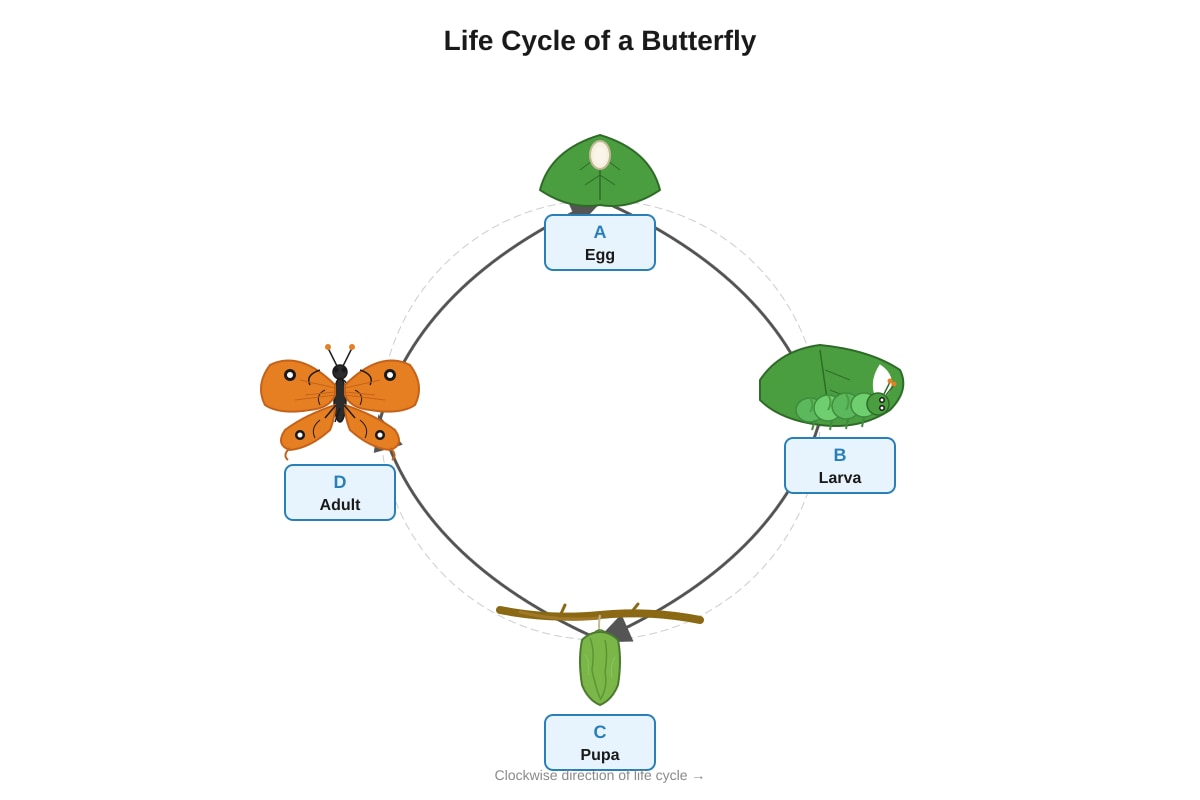
Generated diagram for Q10.
At which stage does the butterfly feed the most?
(1) A
(2) B
(3) C
(4) D
Answer: ( )
11. Which of the following is an example of a structural adaptation?
(1) A bear hibernating in winter
(2) A bird migrating to a warmer place
(3) A chameleon changing its skin colour
(4) A duck having webbed feet
Answer: ( )
12. Why do desert plants often have thick, waxy stems?
(1) To store water
(2) To attract pollinators
(3) To support heavy fruits
(4) To absorb more sunlight
Answer: ( )
13. Which of the following animals is an amphibian?
(1) Lizard
(2) Newt
(3) Turtle
(4) Crocodile
Answer: ( )
14. What is the main function of the gills in a fish?
(1) To help the fish swim faster
(2) To extract oxygen from water
(3) To regulate body temperature
(4) To sense vibrations in the water
Answer: ( )
15. Which of the following pairs of animals are most closely related?
(1) Shark and Dolphin
(2) Bat and Bird
(3) Whale and Cow
(4) Snake and Earthworm
Answer: ( )
16. Why do some plants have bright and colourful flowers?
(1) To attract insects for pollination
(2) To scare away herbivores
(3) To absorb more sunlight
(4) To store excess water
Answer: ( )
17. Which of the following is NOT a characteristic of all living things?
(1) Growth
(2) Reproduction
(3) Movement from place to place
(4) Response to changes
Answer: ( )
18. The diagram shows a food chain: Grass → Grasshopper → Frog → Snake.
If the population of frogs decreases significantly, what will likely happen to the population of grasshoppers in the short term?
(1) It will decrease.
(2) It will increase.
(3) It will remain the same.
(4) It will become extinct.
Answer: ( )
19. Which of the following features helps a camel survive in the desert?
(1) Long eyelashes to keep out sand
(2) Thin fur to lose heat quickly
(3) Small hooves to sink into the sand
(4) Short neck to stay close to the ground
Answer: ( )
20. Which of the following groups contains only flowering plants?
(1) Fern, Moss, Pine
(2) Rose, Sunflower, Orchid
(3) Mushroom, Yeast, Mould
(4) Cactus, Fern, Moss
Answer: ( )
Section B (40 marks)
Answer all questions in the spaces provided. The number of marks available for each question or part question is given in brackets [ ].
21. The table below shows the characteristics of four animals, P, Q, R, and S.
| Animal | Body Covering | Breathing Organ | Reproduction |
|---|
| P | Scales | Lungs | Lays eggs |
| Q | Feathers | Lungs | Lays eggs |
| R | Hair/Fur | Lungs | Gives birth to young |
| S | Moist Skin | Lungs and Skin | Lays eggs |
(a) Identify the group of animals to which each animal belongs. [2]
- Animal P: __________________________
- Animal Q: __________________________
(b) Animal S is an amphibian. Explain why Animal S needs to live near water or in damp places. [2]
(c) Animal R is a mammal. State one advantage of giving birth to live young compared to laying eggs. [1]
22. Study the diagram of the plant below.
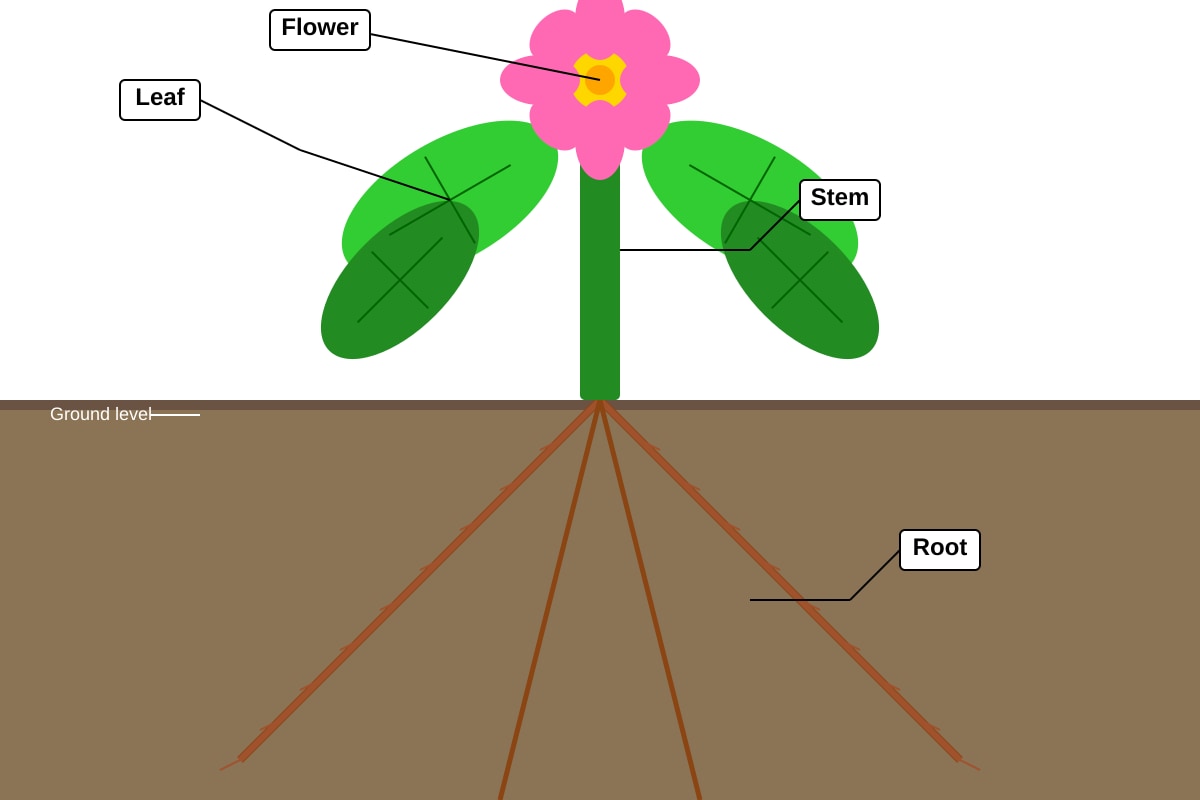
Generated diagram for Q22.
(a) State the function of the part labeled Leaf. [1]
(b) Some plants, like the cactus, have modified leaves in the form of spines. Explain how this adaptation helps the cactus survive in a hot and dry environment. [2]
(c) Why do most plants have broad and flat leaves? [1]
23. A group of students investigated the effect of light on the growth of two identical plants, Plant X and Plant Y.
- Plant X was placed in a sunny spot.
- Plant Y was placed in a dark cupboard.
Both plants were given the same amount of water every day. After two weeks, the students observed the plants.
(a) Predict the appearance of Plant Y after two weeks. [1]
(b) Explain your answer in (a). [2]
(c) Why was it important to give both plants the same amount of water? [1]
24. The diagram below shows a classification key for five animals: A, B, C, D, and E.
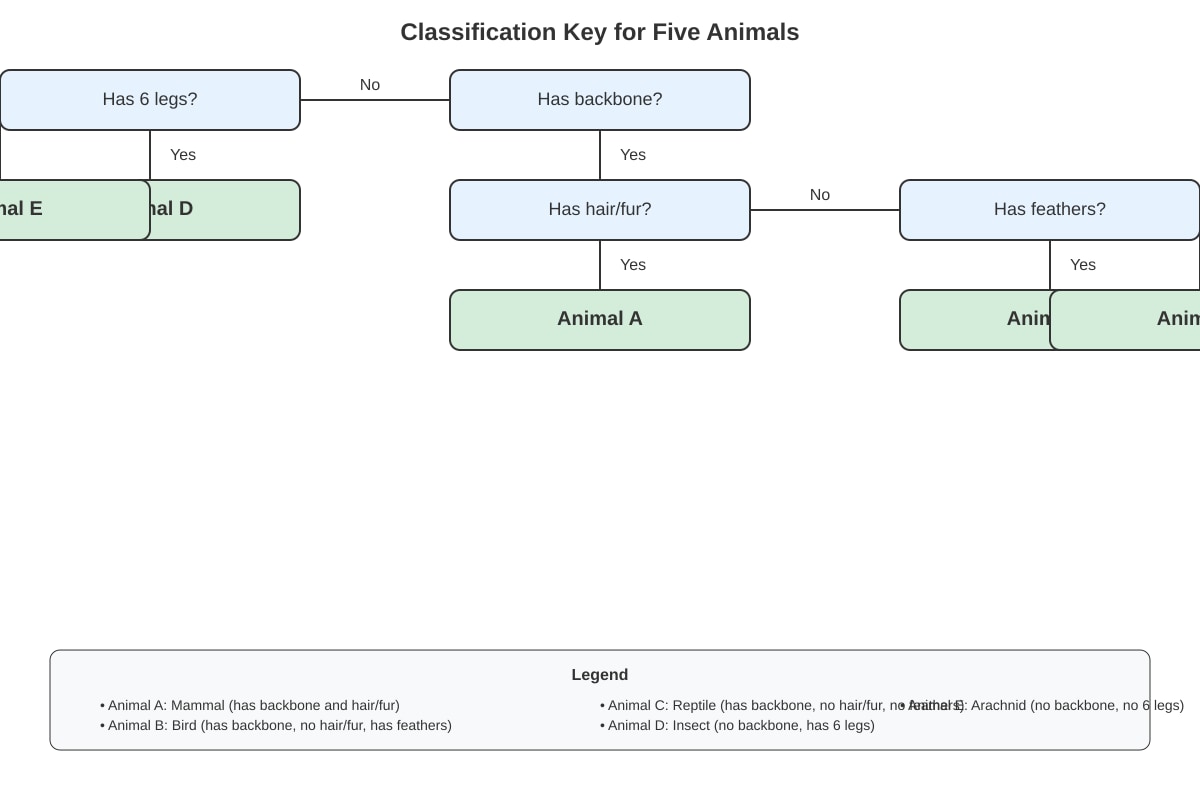
Generated diagram for Q24.
(a) Which animal is a mammal? [1]
Answer: __________
(b) Animal E has an exoskeleton and 8 legs. Name the group of animals to which Animal E belongs. [1]
Answer: __________
(c) Animal C is a reptile. State one characteristic of reptiles that is not mentioned in the key above. [1]
25. Read the passage below.
The mangrove tree grows in coastal areas where the soil is salty and muddy. The roots of the mangrove tree are often exposed above the mud. These specialized roots, called breathing roots, have small pores that allow the tree to take in air. The leaves of the mangrove tree have a thick waxy coating and can excrete excess salt through special glands.
(a) Why do mangrove trees need breathing roots? [2]
(b) How does the waxy coating on the leaves help the mangrove tree? [1]
(c) Suggest one other adaptation that helps the mangrove tree stay upright in the soft, muddy soil. [1]
26. The diagram below shows the life cycle of a cockroach.
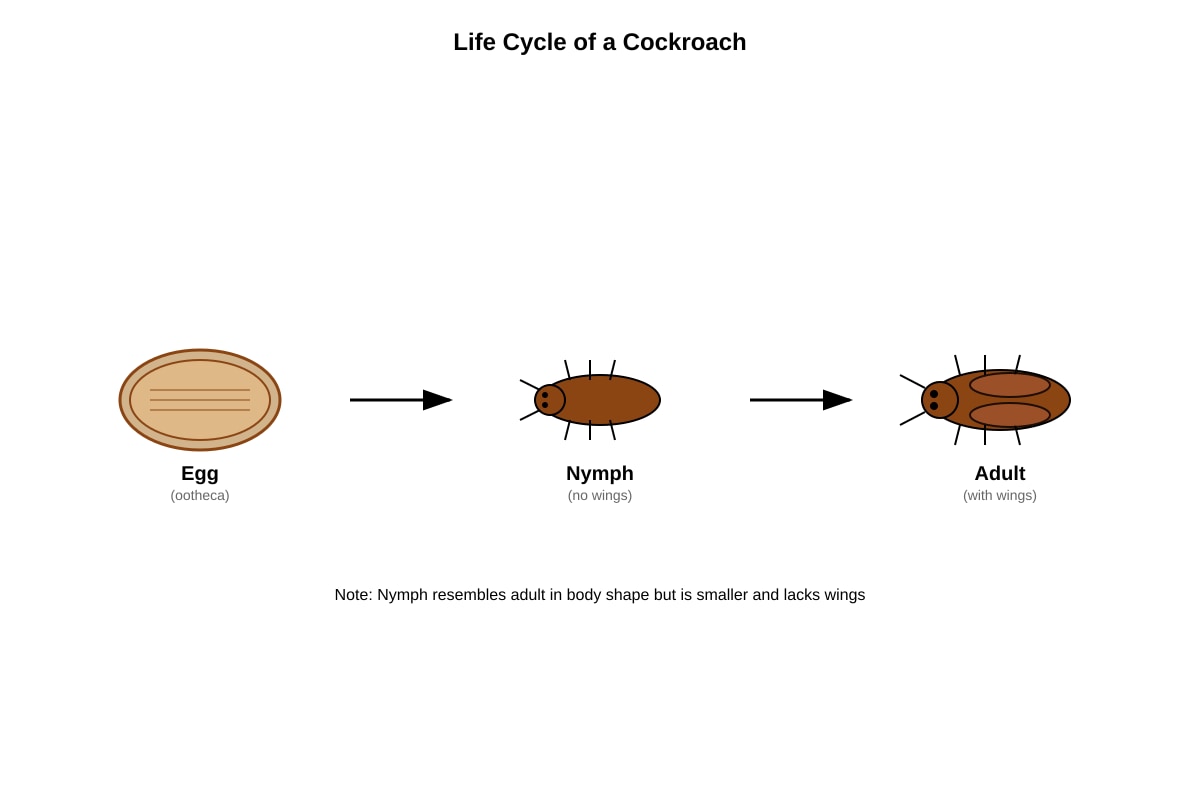
Generated diagram for Q26.
(a) Name the type of life cycle shown above. [1]
Answer: __________
(b) State one difference between the nymph and the adult cockroach. [1]
(c) Why does the nymph need to moult (shed its skin) as it grows? [2]
27. The table below shows the number of legs and body parts for three different animals.
| Animal | Number of Legs | Body Parts |
|---|
| X | 6 | 3 (Head, Thorax, Abdomen) |
| Y | 8 | 2 (Cephalothorax, Abdomen) |
| Z | Many | Many segments |
(a) Identify the group of animals for X, Y, and Z. [3]
- X: __________________________
- Y: __________________________
- Z: __________________________
(b) Which of these animals is an arachnid? [1]
Answer: __________
28. The diagram below shows a simple food web in a forest.
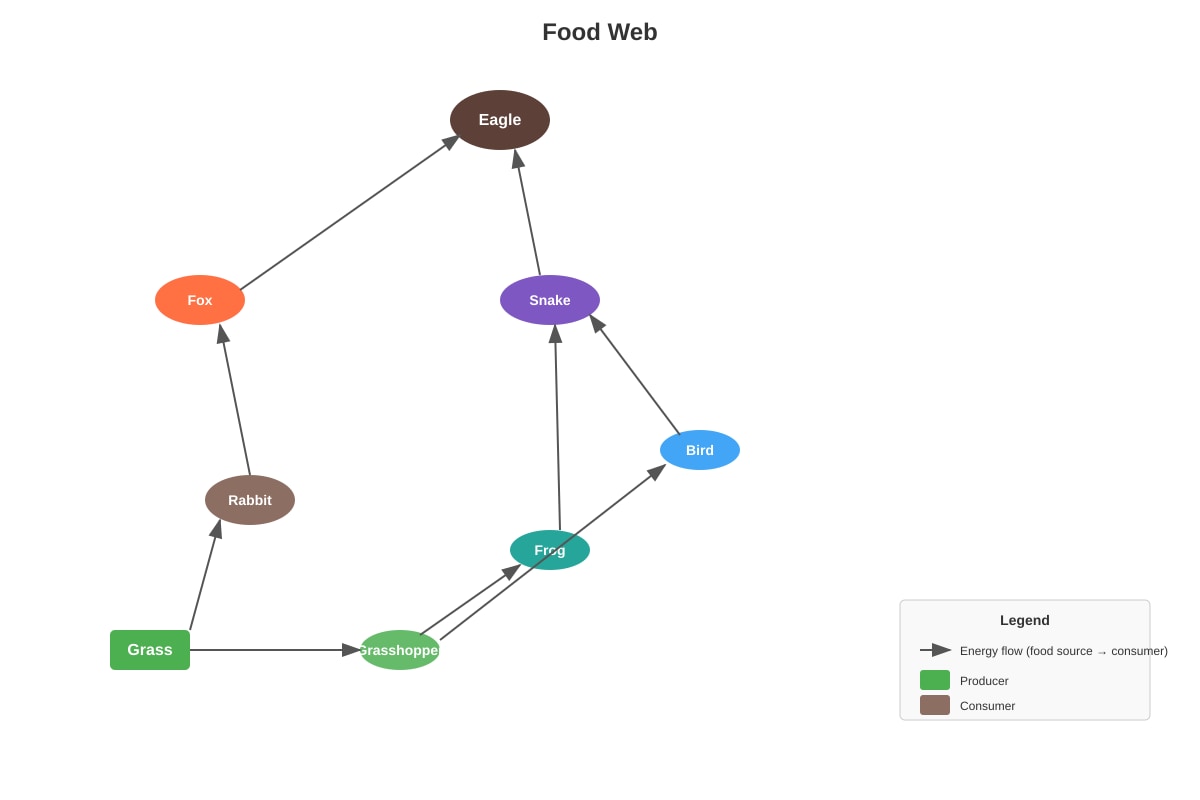
Generated diagram for Q28.
(a) Name one producer in the food web. [1]
Answer: __________
(b) Name one animal that is both a predator and prey. [1]
Answer: __________
(c) If all the frogs died due to a disease, explain what would happen to the population of grasshoppers and snakes. [2]
- Grasshoppers: _______________________________________________________
- Snakes: ____________________________________________________________
29. Scientists discovered a new organism in the deep sea. It has the following characteristics:
- It does not have chlorophyll.
- It obtains nutrients by absorbing them from dead whales that sink to the ocean floor.
- It reproduces by releasing spores.
(a) Is this organism a plant or a fungus? Give a reason for your answer. [2]
(b) Why is this organism important to the ecosystem? [1]
30. The diagram below shows two types of seeds, Seed A and Seed B.
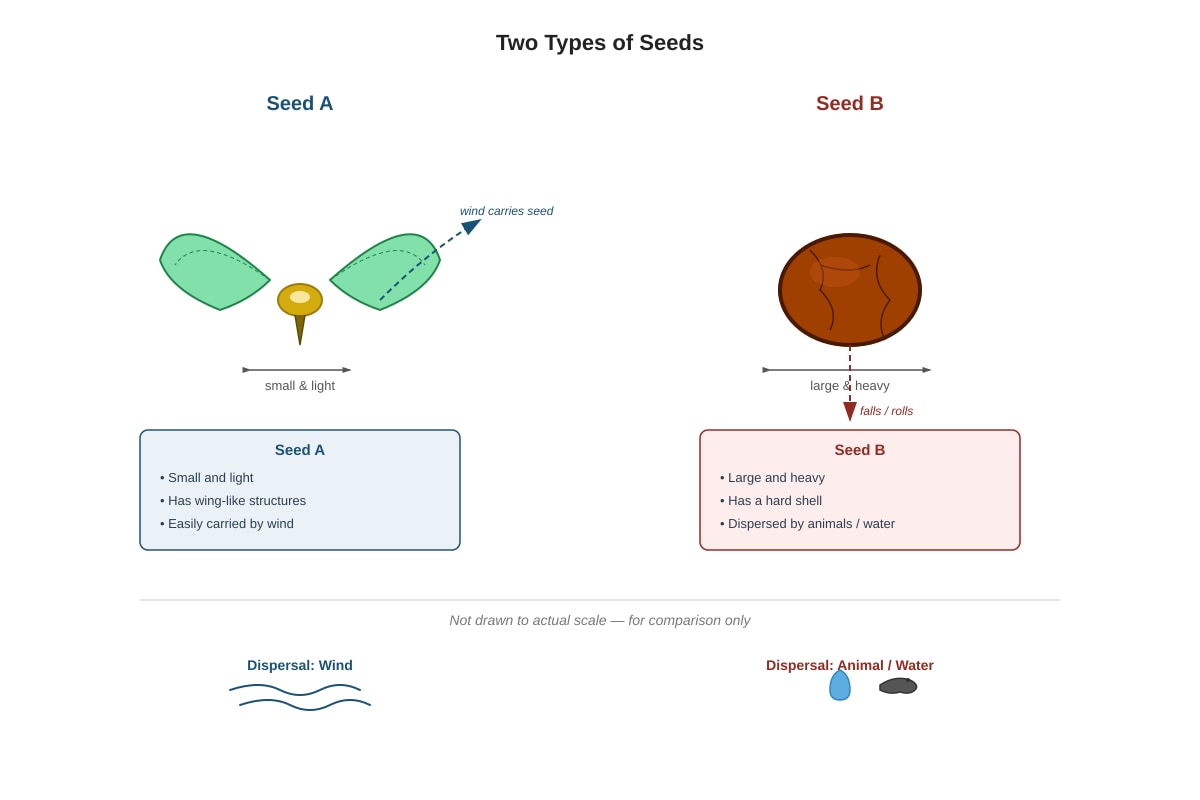
Generated diagram for Q30.
(a) How is Seed A likely dispersed? [1]
Answer: __________
(b) Explain how the structure of Seed A helps in its dispersal. [2]
(c) Why is seed dispersal important for plants? [1]
End of Paper