From Real Exams Exam Paper
Primary 5 Science Semestral Assessment 2 (End of Year) Paper 2
Free P5 Science SA2 Paper 2, Kimi2.6 Exam version, with questions, answers, and syllabus-aligned practice for Singapore students.
These static practice materials are generated from the site's syllabus and paper-generation workflow, with source and model context shown so students and parents can evaluate the material before use.
Questions
Free quiz and exam paper access
Enter your details to view this paper
Your access is remembered on this device.
Answers
TuitionGoWhere Exam Practice (AI) - SA2 Practice Paper Answer Key
Subject: Science
Level: Primary 5
Version: 2 of 5
SECTION A: Multiple-Choice Questions
| Question | Answer | Explanation |
|---|---|---|
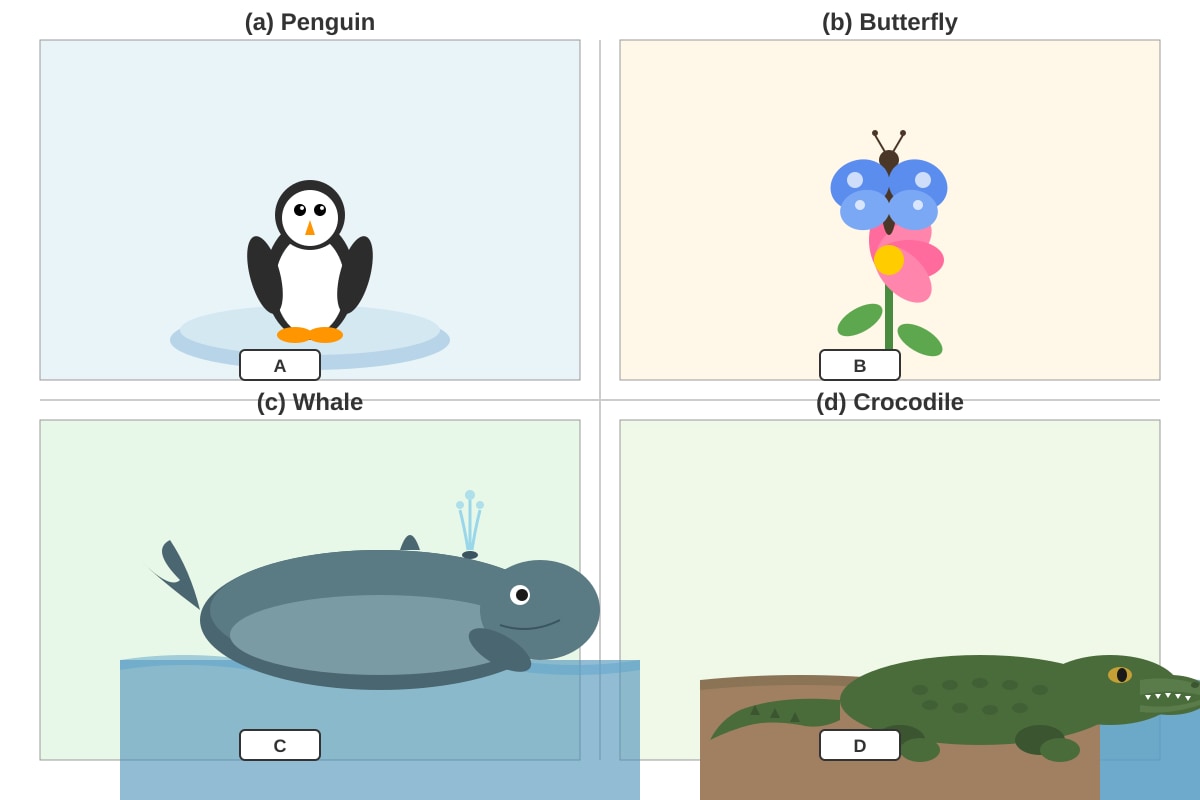
| 1 | D (A, B and D only) | Penguins (A), butterflies (B), and crocodiles (D) lay eggs. Whales (C) are mammals that give birth to live young. Penguins are birds that lay eggs on land; butterflies are insects with complete metamorphosis; crocodiles are reptiles that lay eggs. |
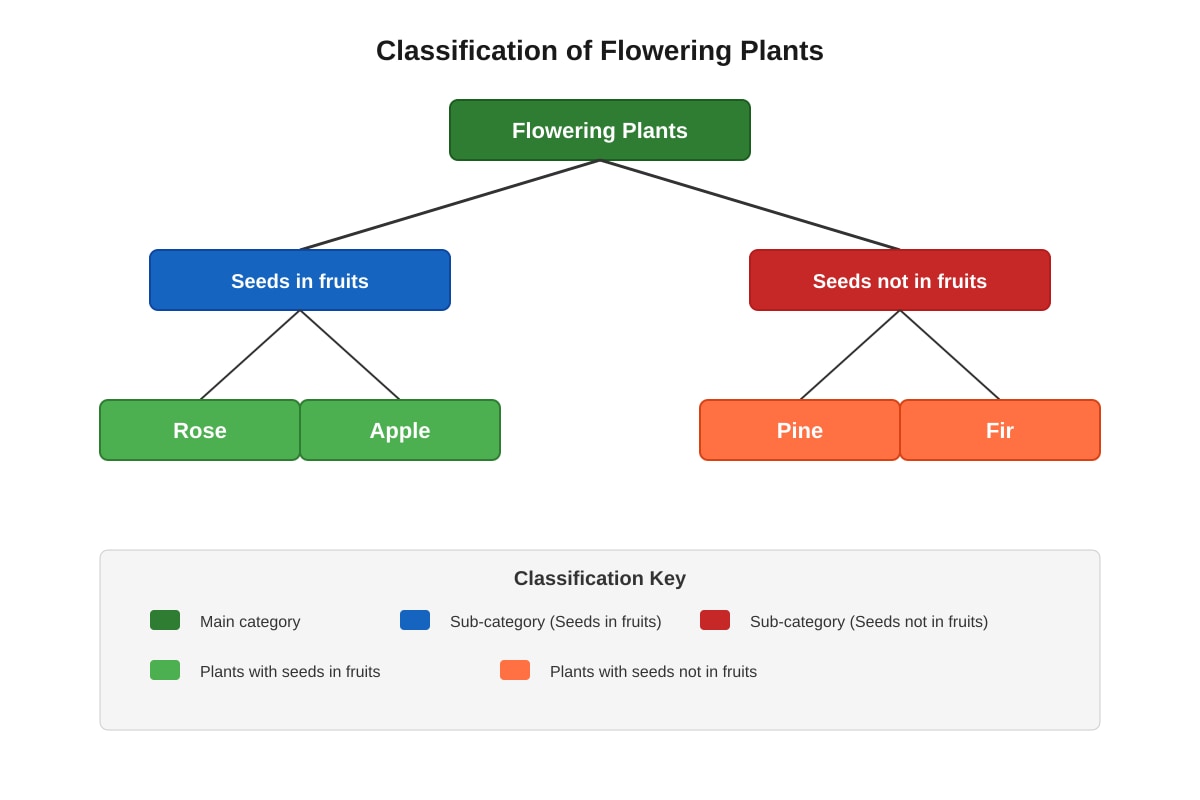
| 2 | B (Rose and apple have seeds in fruits) | The classification tree shows "Seeds in fruits" branch contains rose and apple. Pine and fir are gymnosperms (conifers) — they are still flowering plants but with naked seeds not enclosed in fruits. They produce cones, not fruits. |
| 3 | B (Q and S only) | Birds have feathers, and their young are fed by parents. Both Q and S have feathers and have food brought by parents. Q "cannot fly" is fine — not all birds fly (ostriches, penguins). P has hair and milk = mammal. R has scales and no parental feeding = likely reptile. |
| 4 | A (They can move from place to place) | NOT all living things move from place to place. Plants are living things but are rooted in one place. They show movement in other ways (growing toward light, roots growing down), but they do not locomote. Growth, reproduction, and response to stimuli ARE characteristics of all living things. |
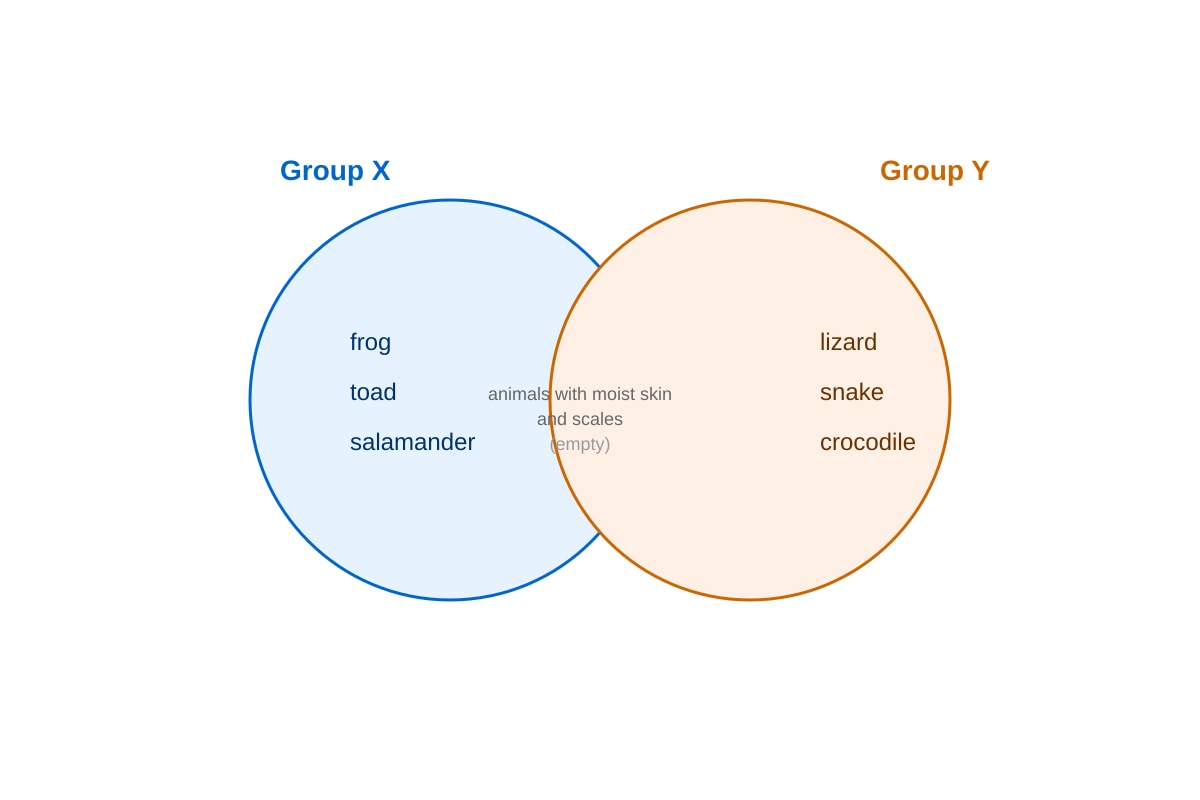
| 5 | C (have moist skin without scales) | Group X (frog, toad, salamander) = amphibians. They have moist, permeable skin without scales and typically live in/near water. Group Y (lizard, snake, crocodile) = reptiles with dry, scaly skin. |
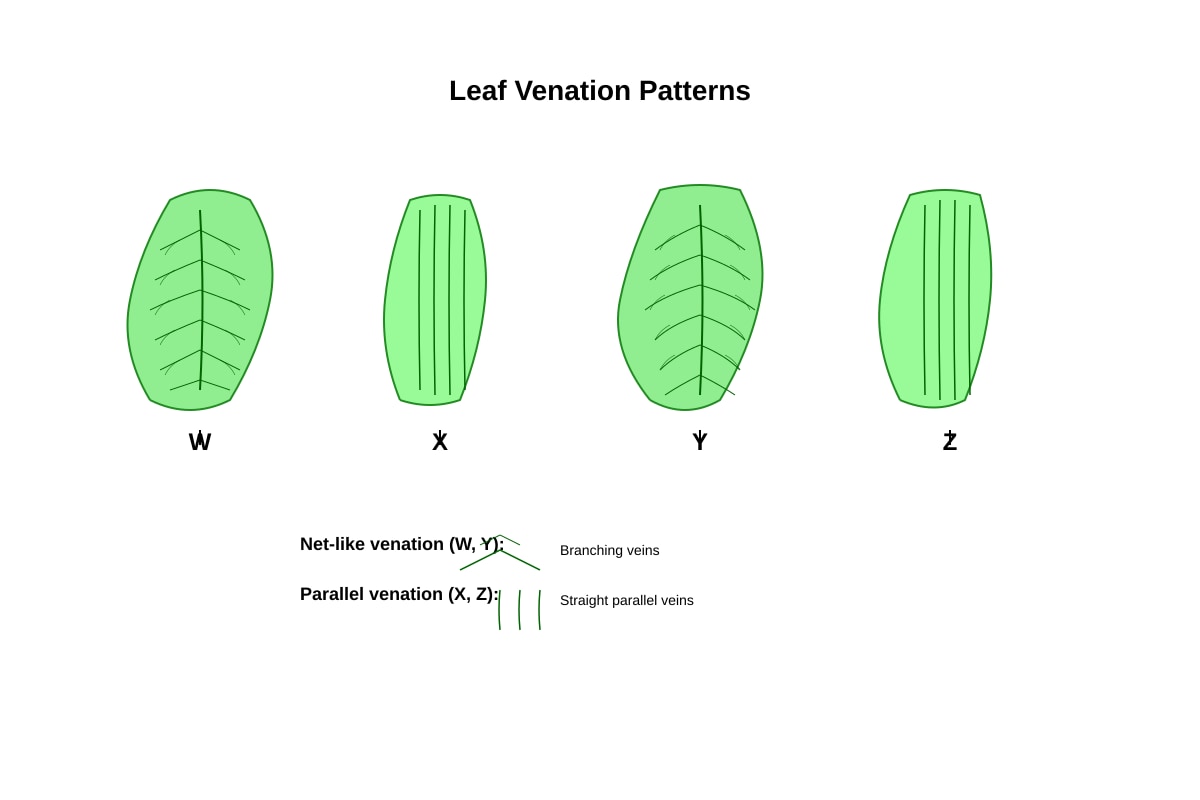
| 6 | B (W and Y only) | Net-like (reticulate) venation indicates dicot plants, which typically have tap root systems. Parallel venation (X and Z) indicates monocot plants, which have fibrous root systems. |
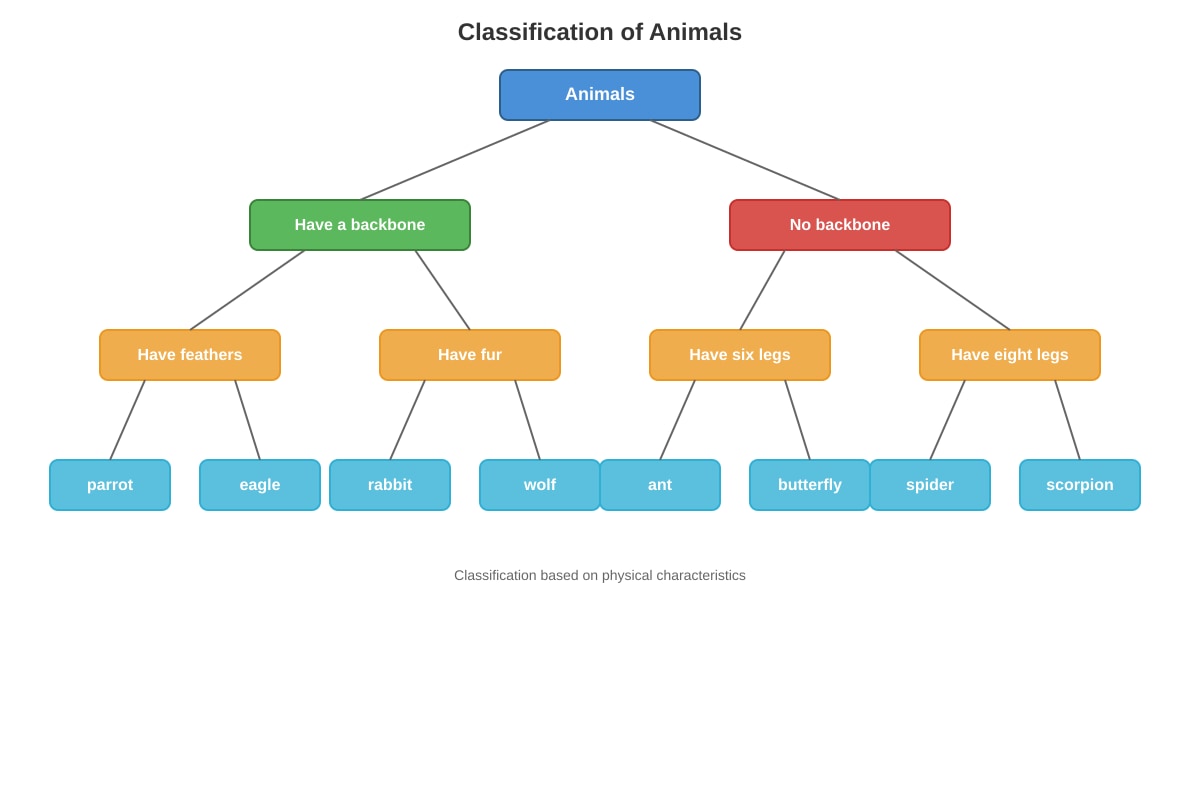
| 7 | B (A parrot and a rabbit have backbones) | Following the classification tree: both "Have feathers" (parrot) and "Have fur" (rabbit) branch from "Have a backbone." Spider has 8 legs (not 6), ant has no backbone, wolf has fur not feathers. |
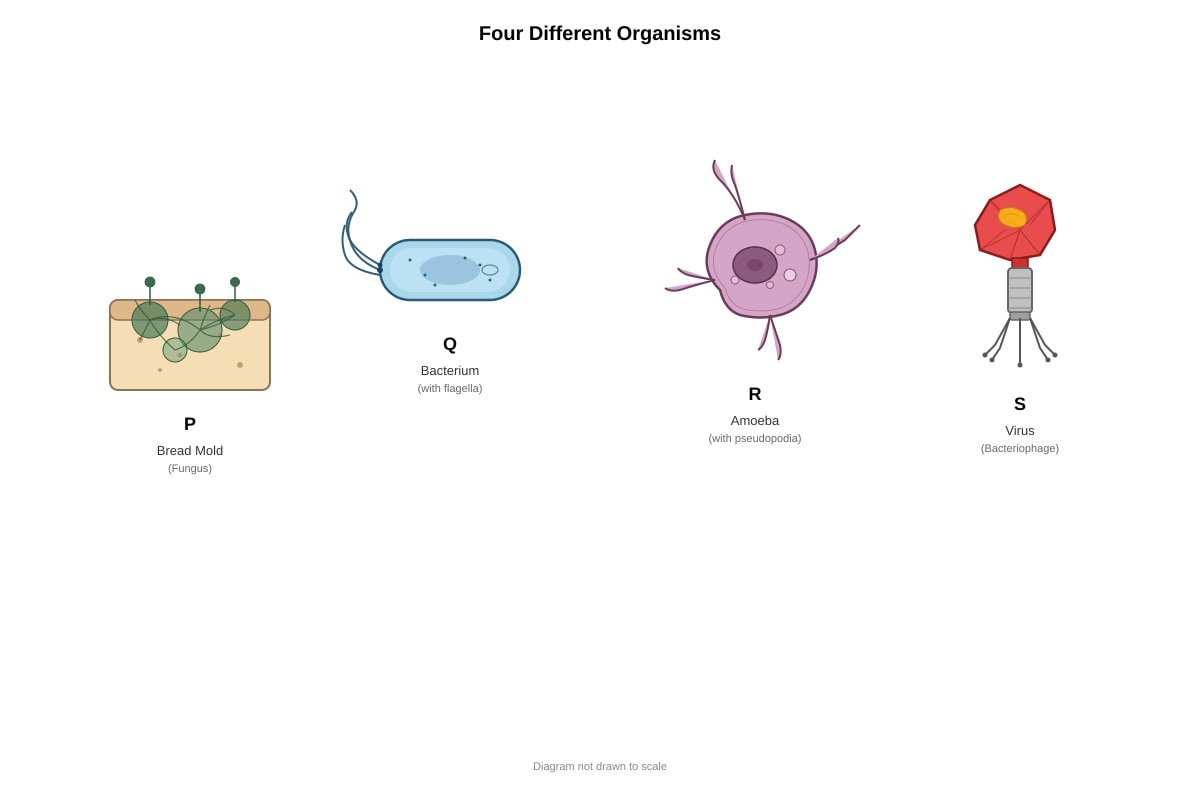
| 8 | B (Only fungi and bacteria are living things) | Viruses are NOT living things — they cannot reproduce independently, have no cellular structure, no metabolism, and need host cells to multiply. Fungi and bacteria are living things with cells, respiration, growth, and reproduction. |
| 9 | B (A: wind, B: animal, C: wind) | Seed A has hair/pappus = wind dispersal (like dandelion). Seed B is fleshy/bright = animal dispersal (eaten and excreted). Seed C has wing = wind dispersal (like maple/samara). Both A and C use wind despite different adaptations. |
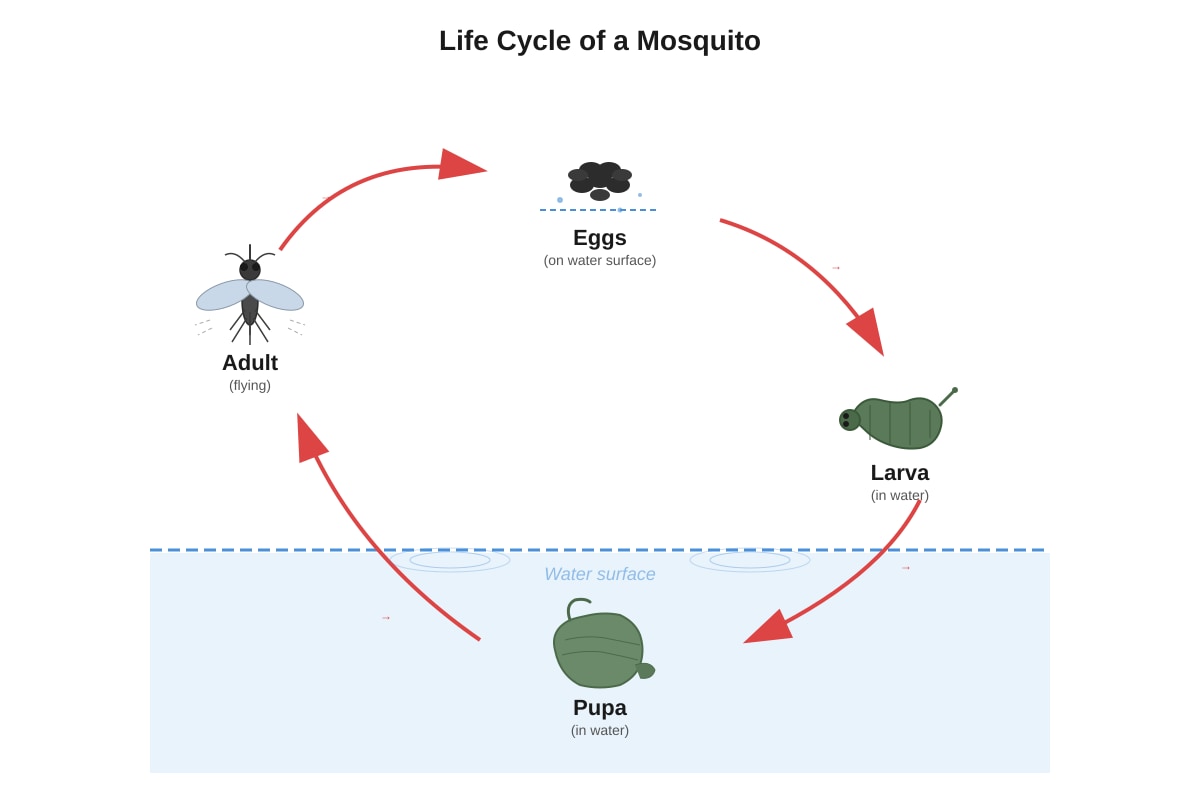
| 10 | A (complete; insect) | Mosquitoes have four life stages: egg → larva → pupa → adult. This is complete metamorphosis (the pupa is a non-feeding resting stage). Mosquitoes have 6 legs, 3 body parts, antennae = insects (Class Insecta), not arachnids (8 legs). |
Section A Total: 20 marks
SECTION B: Structured Questions
Question 11
(a) Which organism is NOT a living thing? [1 mark]
Answer: S / virus [1]
Explanation: Viruses are not considered living things because they lack cellular structure, cannot carry out life processes on their own, cannot grow, and cannot reproduce without infecting a host cell. They are particles consisting of genetic material (DNA or RNA) inside a protein coat.
Marking point: Correct identification of S/virus.
(b) Two characteristics of living things shown by organism R (amoeba) [2 marks]
Answer: Any two from:
- It can move (using pseudopodia) [1]
- It can reproduce (by binary fission) [1]
- It can feed/ingest food [1]
- It can grow [1]
- It responds to stimuli [1]
- It respires [1]
Explanation: Amoeba is a single-celled organism (protozoan) that shows all characteristics of living things. It moves using temporary projections called pseudopodia ("false feet"). It feeds by surrounding food particles through phagocytosis. It reproduces asexually by splitting into two (binary fission).
Marking points: One mark per correct characteristic, up to 2 marks.
(c) Kingdom of organism P [1 mark]
Answer: Fungi [1]
Explanation: Bread mold (Rhizopus) is a fungus. Fungi are eukaryotic organisms that absorb nutrients from their surroundings. They have cell walls made of chitin, not cellulose like plants. They do not photosynthesize.
Subtotal: 5/5
Question 12
(a) Name structures A and B [2 marks]
| Label | Answer | Marks |
|---|---|---|
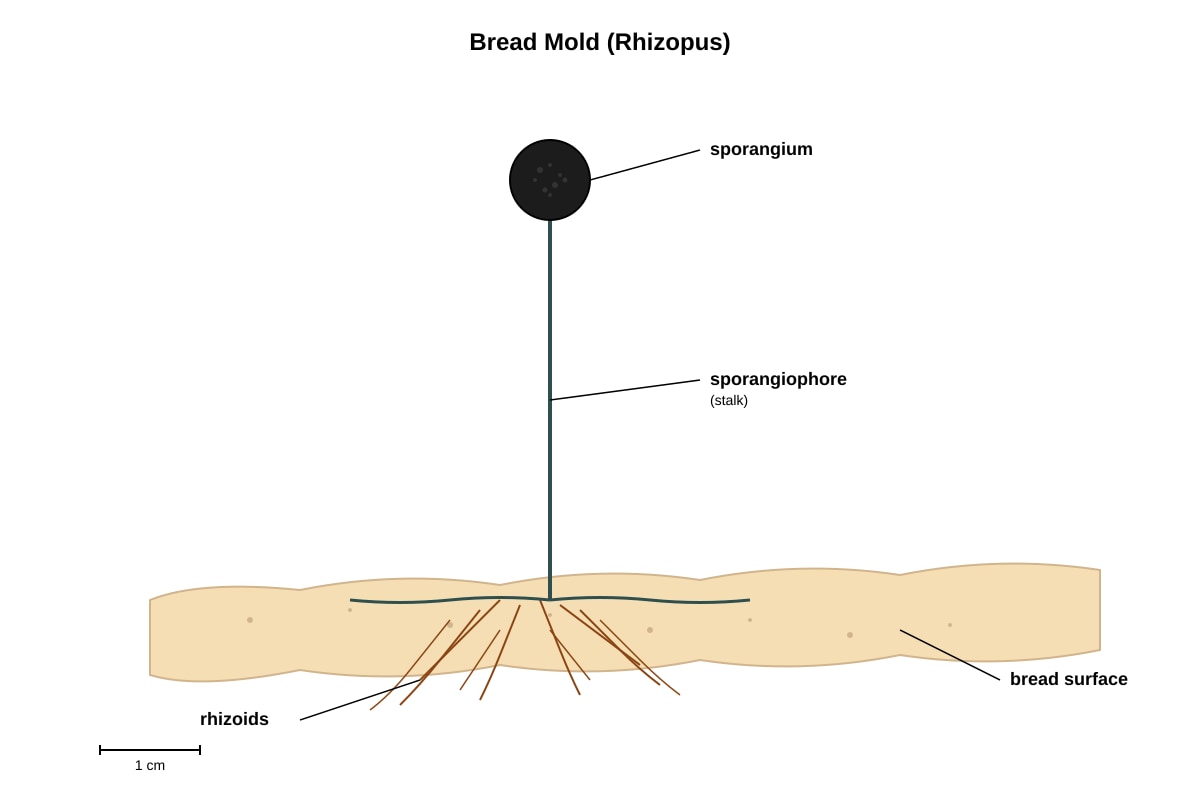
| A | Sporangium (or spore case / sporangium containing spores) | 1 |
| B | Stalk / Sporangiophore (or rhizoid if label points to root-like structures) | 1 |
Note: Assuming standard labeling where A = round top structure, B = stalk. If B points to root-like threads, answer is rhizoid.
Explanation: The sporangium is the round, dark structure at the top containing spores for reproduction. The sporangiophore is the stalk that holds the sporangium up. Rhizoids are root-like structures that anchor the mold and absorb nutrients from the bread.
(b) How bread mold reproduces and why suitable [3 marks]
Answer:
- Bread mold reproduces by spores / spore formation [1]
- Spores are produced in the sporangium [1]
- When the sporangium bursts, spores are released and can be carried by air to new places [1]
Why suitable: This method is suitable because the mold is not mobile — it cannot move to find a mate or new food source. Spore dispersal by air allows the fungus to spread to new bread/food sources far away without moving. Also, spores can survive unfavorable conditions and germinate when conditions are right.
Alternative accepted answer: The mold can also reproduce asexually by fragmentation, but spore formation is the primary method shown.
Explanation: Sexual reproduction requiring two parents would be disadvantageous for a stationary organism. Asexual spore production is fast, produces many offspring, and allows colonization of new food sources.
(c) Two conditions speeding up growth [2 marks]
Answer: Any two:
- Warm temperature / warmth [1]
- Moist / humid conditions / water [1]
- Presence of food/nutrients [1]
- Darkness (or absence of light, though less critical) [1]
Explanation: Fungi grow best in warm, moist conditions. The bread provides food (sugar/starch). Warmth (about 25-30°C) increases enzyme activity for digestion and growth. Moisture is needed for spore germination and nutrient absorption.
Subtotal: 7/8 (Note: marking allocates 2+3+2=7; original says 8 total — adjusted: (a) 2 marks, (b) 4 marks, (c) 2 marks = 8)
Revised marking for 8 total: (a) 2 marks, (b) 4 marks [method 1, explanation 2, suitability 1], (c) 2 marks
Question 13
Classification of animals [7 marks]
| Group name | Animals in this group |
|---|---|
| Birds | eagle, penguin, ostrich [1] |
| Mammals | bat [1] |
| Fish | shark [1] |
| Insects | butterfly, mosquito [1] |
| Arachnids | spider [1] |
| Others | snail (mollusc/gastropod), earthworm (annelid) [2] — 1 mark each correct |
Explanation and teaching notes:
- Birds: All have feathers, lay hard-shelled eggs, beaks, wings (penguins/ostriches have wings but cannot fly). Bats are NOT birds — they are mammals.
- Mammals: Bat has fur/hair, gives birth to live young, feeds young with milk. Only flying mammal.
- Fish: Shark has scales, fins, gills, lives in water. Cartilaginous fish (no true bones).
- Insects: Butterfly and mosquito have 6 legs, 3 body parts (head, thorax, abdomen), antennae, often wings. Mosquito undergoes complete metamorphosis.
- Arachnids: Spider has 8 legs, 2 body parts, no antennae.
- Snail: Mollusc — soft body, muscular foot, often shell.
- Earthworm: Annelid — segmented body, no legs.
Common mistake: Students often put bat in birds. Emphasize: Bats are mammals with fur, giving live birth, and feeding milk.
Marking: 1 mark per correctly filled row, 2 marks for Others if both correct = 7 marks.
Subtotal: 7/7
Question 14
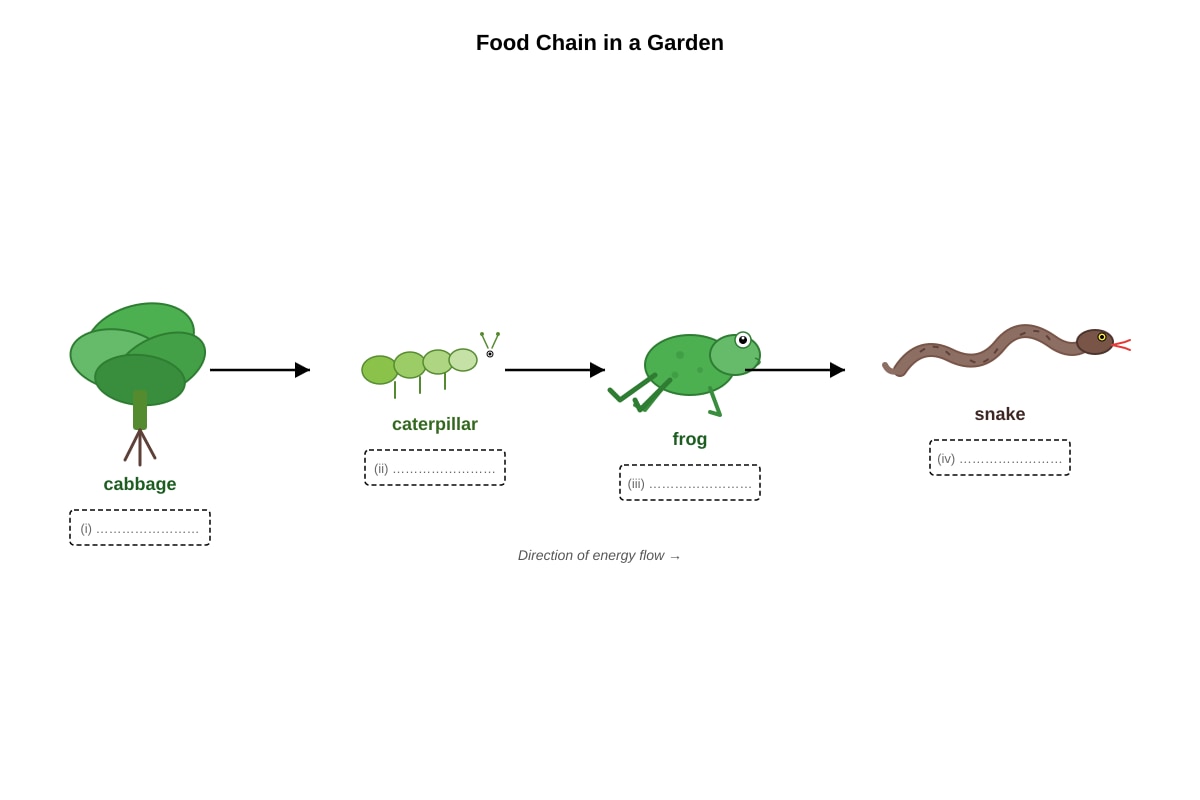
(a) Label consumer types [2 marks]
| Organism | Label |
|---|---|
| Cabbage | Producer [0.5] |
| Caterpillar | Primary consumer [0.5] |
| Frog | Secondary consumer [0.5] |
| Snake | Tertiary consumer [0.5] |
Explanation: In a food chain, organisms are classified by their feeding level:
- Producers make own food (plants via photosynthesis)
- Primary consumers eat producers (herbivores)
- Secondary consumers eat primary consumers (carnivores/omnivores)
- Tertiary consumers eat secondary consumers (top carnivores)
(b) Why cabbage is a producer [2 marks]
Answer:
- The cabbage plant can make its own food [1]
- It does this through photosynthesis using sunlight, water and carbon dioxide to produce glucose/food [1]
Explanation: Producers are autotrophs — self-feeding organisms. They capture light energy and convert it to chemical energy stored in food. All other organisms in the food chain depend on producers for energy.
(c) Effect of removing snakes [3 marks]
Answer:
- The frog population would increase [1]
- Because there would be no predator (snake) to eat the frogs / fewer frogs would be killed [1]
- However, the frog population might later decrease because there would be less food (caterpillars) as too many frogs eat them, or disease may spread more easily [1]
Alternative for third mark: The ecosystem would become unbalanced / population would reach carrying capacity and crash.
Explanation: This demonstrates predator-prey relationships. Removing a top predator causes a trophic cascade — effects ripple down the food chain. Initially prey population booms, but overpopulation leads to resource depletion and subsequent crash.
Subtotal: 7/7
Question 15
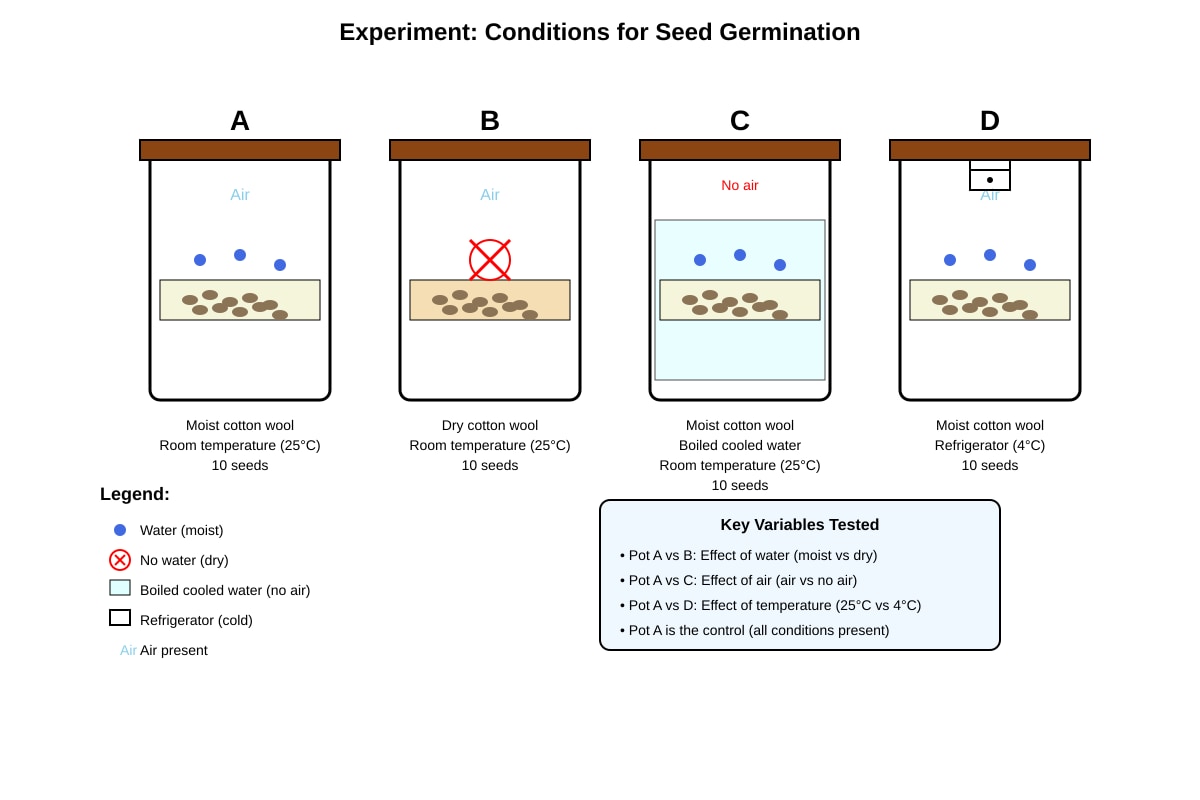
(a) Control pot and explanation [2 marks]
Answer:
- Pot A [1]
- It has all the conditions needed for germination: water, air, and suitable temperature [1]
Explanation: A control is the standard setup for comparison. It contains the normal/expected conditions. We compare other pots (B, C, D) against A to see what happens when ONE factor is changed. This is an example of fair test / controlled experiment design.
(b) What result A vs B tells about water [2 marks]
Answer:
- Seeds need water to germinate [1]
- Without water (dry cotton wool in B), seeds did not germinate / could not germinate [1]
Explanation: Water is essential because it:
- Activates enzymes that digest stored food
- Allows the seed coat to soften and split
- Enables chemical reactions for growth
- Transports dissolved nutrients to the growing embryo
(c) Why only 1 seed germinated in C [2 marks]
Answer:
- The water was boiled to remove dissolved oxygen/air [1]
- So there was very little air/oxygen for most seeds to carry out respiration / get energy for germination [1]
Alternative: Some air may have dissolved back into cooled water, allowing 1 seed to germinate, OR that seed had enough stored energy.
Explanation: Germination requires aerobic respiration to release energy from stored food. Without oxygen, seeds cannot respire and have no energy to grow. Boiling drives out dissolved gases. The single germinated seed likely had residual air exposure or more efficient anaerobic capability.
(d) Other factor needed [1 mark]
Answer: Suitable/warm temperature [1] (already present in A-D at 25°C/room temperature, but not varied)
Or: Light [0 — actually not always needed; many seeds germinate in darkness]
Better answer: The experiment already controlled temperature (A=good, D=poor), so the untested but present factor A had was appropriate warmth.
Actually: All pots at room temperature except D. So warm/suitable temperature IS partly tested (A vs D). The truly untested common factor: some seeds need light to germinate (though not universal), or simply that seeds must be viable/live (good quality).
Best accepted: Light OR Good quality/viable seeds OR noting that experiment confirms water and air are tested, temperature partially tested, so this is testing the three main known factors.
Clarified answer: Warmth/suitable temperature — while D tests cold, all had some temperature, and A succeeded at room temp showing warmth matters. [1]
Subtotal: 7/7
Question 16
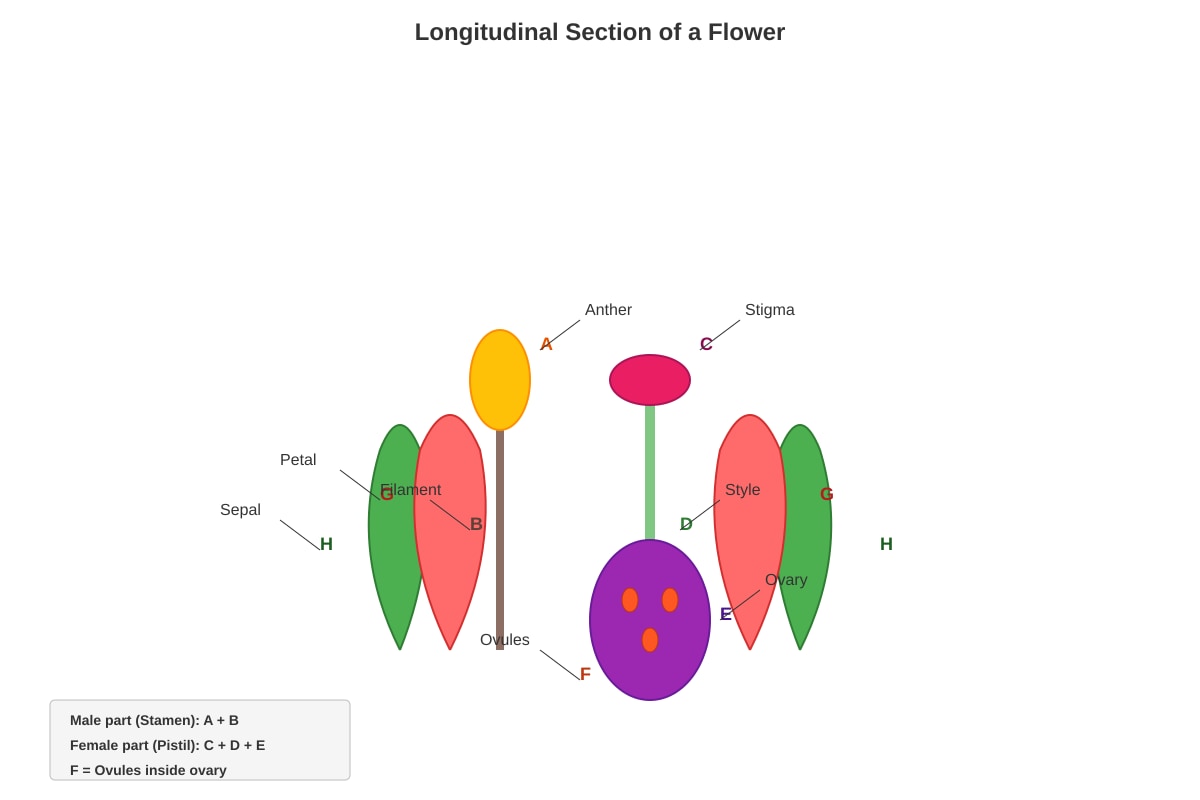
(a) Parts A and C [2 marks]
| Label | Answer |
|---|---|
| A | Anther [1] |
| C | Stigma [1] |
Explanation: The anther is the top part of the stamen (male reproductive organ) that produces pollen grains. The stigma is the sticky top part of the pistil/carpel (female reproductive organ) that receives pollen during pollination.
(b) Function of part F (ovule) [1 mark]
Answer: The ovule contains the female reproductive cell / egg cell that becomes the embryo after fertilization [1]
Or: It develops into a seed after fertilization. [1]
Explanation: After fertilization (fusion of male and female gametes), the fertilized egg in the ovule divides and develops into an embryo plant with stored food and protective seed coat = seed.
(c) Develops into seeds and fruit [2 marks]
| Part | Develops into |
|---|---|
| (i) Ovule / F | Seed [1] |
| (ii) Ovary / E | Fruit [1] |
Explanation: The ovule becomes the seed (containing embryo and stored food). The ovary wall becomes the fruit (often fleshy and attractive for dispersal). Other flower parts (petals, sepals, stamens) wither away.
(d) Two ways pollen transfer [2 marks]
Answer: Any two:
- By insects (e.g., bees, butterflies) [1]
- By wind [1]
- By birds [1]
- By water (for some aquatic plants) [1]
- By animals (e.g., bats) [1]
Explanation: Insect pollination — flowers often have bright colors, scents, nectar guides. Wind pollination — flowers often small, green, not showy, produce lots of light pollen. The method matches flower structure for effective pollen transfer.
Subtotal: 6/6
TOTAL MARKS
| Section | Marks |
|---|---|
| A | 20 |
| B | 40 |
| TOTAL | 60 |
Synopsis and Teaching Notes
This Version 2 paper tests Diversity of Living Things and linked topics (reproduction, classification, life processes). Key concepts assessed:
| Concept | Questions |
|---|---|
| Classification of animals | 2, 5, 7, 13 |
| Characteristics of living things | 4, 8, 11 |
| Plants: structure, reproduction, seed dispersal | 2, 6, 9, 16 |
| Fungi and microorganisms | 8, 12 |
| Life cycles and metamorphosis | 10 |
| Food chains and ecosystems | 14 |
| Germination and experimental design | 15 |
Common student errors to address:
- Confusing bats with birds (test flying ≠ feathers)
- Thinking all flying animals are birds
- Believing plants are not living things (they don't "move")
- Not understanding viruses are non-living
- Forgetting fungi reproduce by spores, not seeds