From Real Exams Quiz
Primary 5 Mathematics Area Perimeter Quiz
Free Exam-Derived Qwen3.7 Plus Primary 5 Mathematics Area Perimeter quiz with questions and answers for Singapore students. This page is rendered as a direct URL so the questions and answers can be discovered without pressing in-page buttons.
These static practice materials are generated from the site's syllabus and paper-generation workflow, with source and model context shown so students and parents can evaluate the material before use.
Questions
Primary 5 Mathematics Quiz - Area Perimeter
Name: __________________________
Class: __________________________
Date: __________________________
Score: _________ / 40
Duration: 1 hour 15 minutes
Total Marks: 40
Instructions to Candidates:
- This quiz consists of 20 questions.
- Answer all questions.
- Write your answers in the spaces provided.
- For questions requiring working, show your working clearly. Marks may be awarded for method even if the final answer is incorrect.
- Unless otherwise stated, give your answers in the simplest form.
- Use or where appropriate (though this topic focuses on rectilinear shapes, triangles, and composite figures).
Section A: Multiple Choice Questions (Questions 1 – 5)
Each question carries 1 mark. Choose the correct answer and write its number (1, 2, 3, or 4) in the brackets provided.
1. The area of a rectangle is . If its length is , what is its perimeter? (1) (2) (3) (4)
Answer: ( ______ )
2. A square has a perimeter of . What is its area? (1) (2) (3) (4)
Answer: ( ______ )
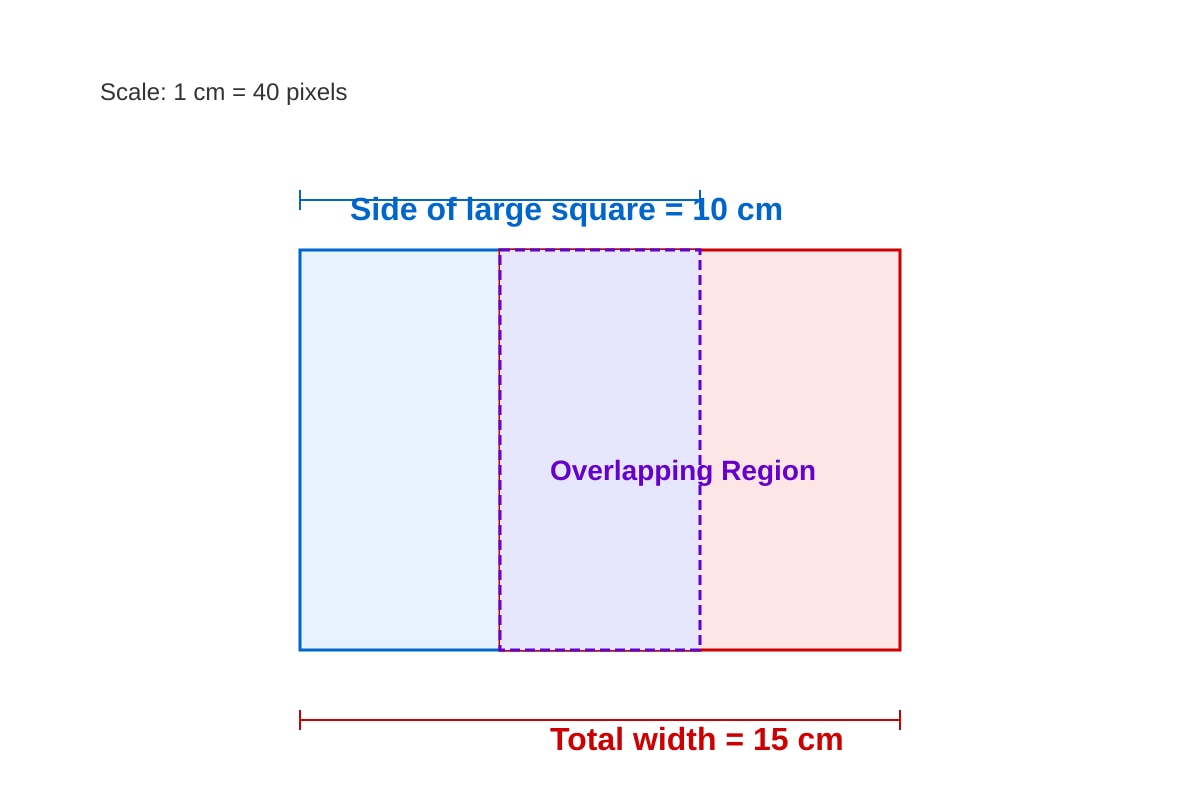
3. The figure below shows two identical squares overlapping. <image_placeholder> id: Q3-fig1 type: diagram linked_question: Q3 description: Two identical squares of side 10 cm overlapping. The overlap is a smaller square in the center. The total width of the combined shape is 15 cm. labels: Side of large square = 10 cm, Total width = 15 cm values: Side = 10, Total Width = 15 must_show: The overlapping region, dimensions labeled clearly. </image_placeholder> What is the area of the overlapping region? (1) (2) (3) (4)
Answer: ( ______ )
4. A triangle has a base of and a height of . What is its area? (1) (2) (3) (4)
Answer: ( ______ )
5. The perimeter of a rectangle is . If the length is , what is the breadth? (1) (2) (3) (4)
Answer: ( ______ )
Section B: Short Answer Questions (Questions 6 – 15)
Each question carries 2 marks. Show your working.
6. Find the area of a triangle with a base of and a height of .
<br> <br> <br>Answer: _______________
7. A rectangular garden is long and wide. A fence is built around the garden. Find the length of the fence.
<br> <br> <br>Answer: _______________
8. The area of a square is . Find the length of one side of the square.
<br> <br> <br>Answer: _______________
9. A rectangle has a length of and a breadth of . A square of side is cut out from one corner. What is the area of the remaining shape?
<br> <br> <br>Answer: _______________
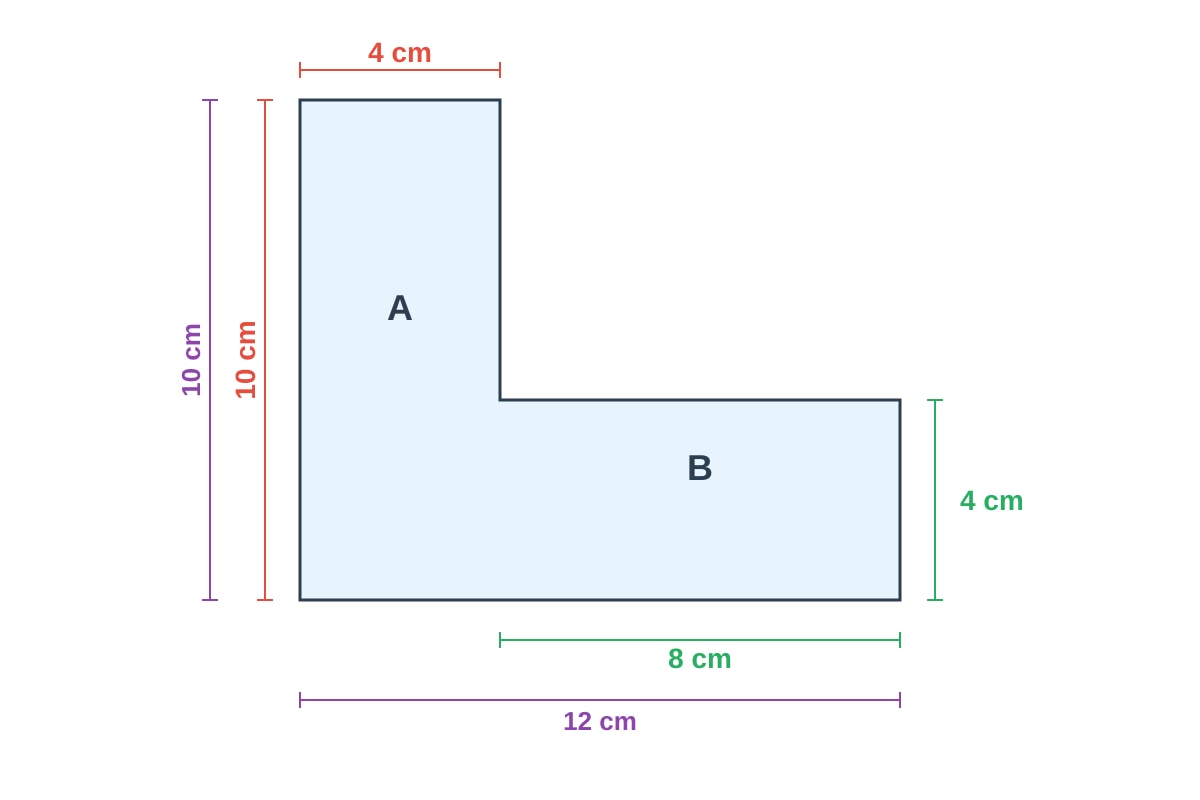
10. The figure below is made up of two rectangles, A and B. <image_placeholder> id: Q10-fig1 type: diagram linked_question: Q10 description: An L-shaped figure composed of two rectangles. Rectangle A is vertical (width 4cm, height 10cm). Rectangle B is horizontal attached to the bottom right of A (width 8cm, height 4cm). The total height is 10cm, total width is 12cm. labels: Width of A = 4 cm, Height of A = 10 cm, Width of B = 8 cm, Height of B = 4 cm values: wA=4, hA=10, wB=8, hB=4 must_show: The L-shape, dimensions labeled on the outer edges. </image_placeholder> Find the total area of the figure.
<br> <br> <br>Answer: _______________
11. The perimeter of an equilateral triangle is . Find the length of one side.
<br> <br> <br>Answer: _______________
12. A rectangular field has an area of . If its breadth is , find its length.
<br> <br> <br>Answer: _______________
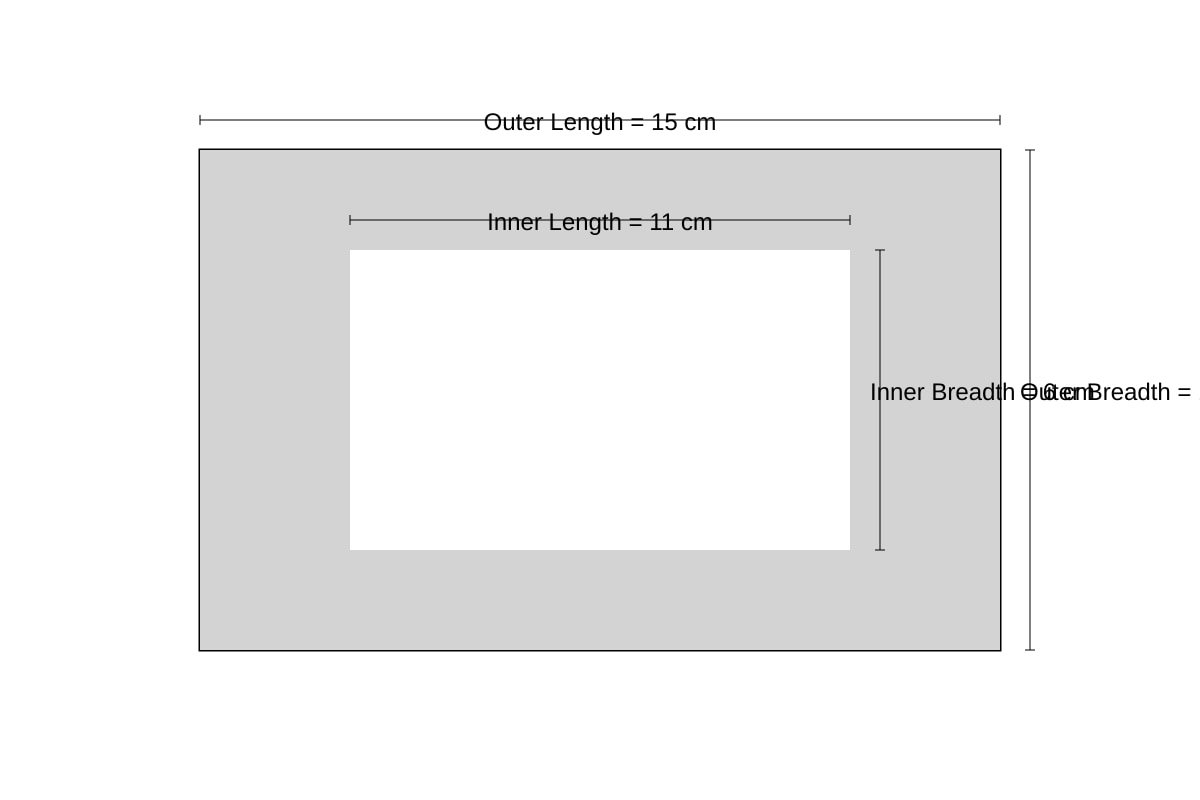
13. The figure below shows a rectangle inside a larger rectangle. The shaded region is the area between them. <image_placeholder> id: Q13-fig1 type: diagram linked_question: Q13 description: A large rectangle (15cm by 10cm) with a smaller unshaded rectangle (11cm by 6cm) inside it. The space between is shaded. labels: Outer Length = 15 cm, Outer Breadth = 10 cm, Inner Length = 11 cm, Inner Breadth = 6 cm values: OL=15, OB=10, IL=11, IB=6 must_show: Shaded region clearly marked, dimensions of both rectangles. </image_placeholder> Find the area of the shaded region.
<br> <br> <br>Answer: _______________
14. A square and a rectangle have the same perimeter. The square has a side of . The rectangle has a length of . Find the breadth of the rectangle.
<br> <br> <br>Answer: _______________
15. The base of a triangle is . Its area is . Find its height.
<br> <br> <br>Answer: _______________
Section C: Long Answer Questions (Questions 16 – 20)
Each question carries 4 marks. Show all necessary working.
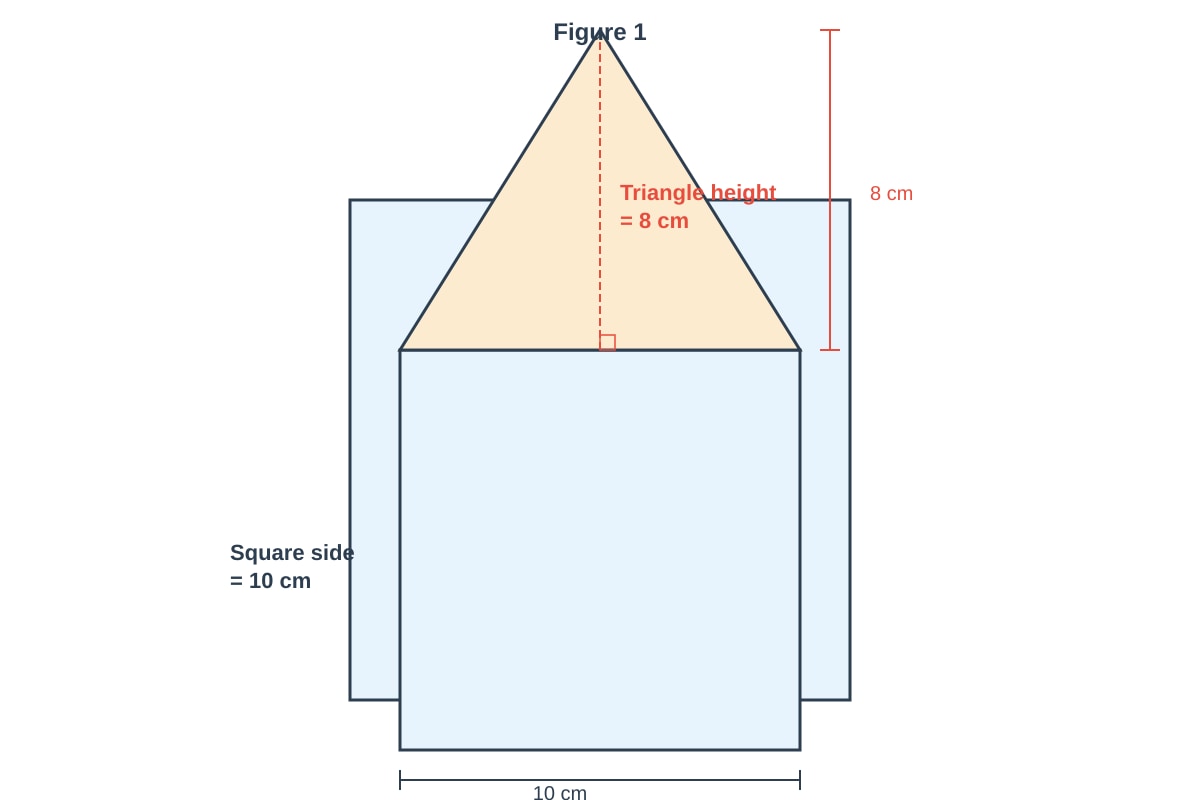
16. The figure below is made up of a square and a triangle. <image_placeholder> id: Q16-fig1 type: diagram linked_question: Q16 description: A composite shape. A square of side 10cm is at the bottom. An isosceles triangle sits on top of the square, sharing the top side of the square as its base. The height of the triangle is 8cm. labels: Square side = 10 cm, Triangle height = 8 cm values: Side=10, Height=8 must_show: The composite shape, base of triangle aligned with top of square. </image_placeholder> (a) Find the area of the square. (b) Find the total area of the figure.
<br> <br> <br> <br> <br> <br>Answer: (a) _______________ (b) _______________
17. Mr. Tan wants to tile his rectangular living room which measures by . Each square tile has a side of . (a) What is the area of the living room in ? (b) How many tiles does he need to cover the floor completely?
<br> <br> <br> <br> <br> <br>Answer: (a) _______________ (b) _______________ tiles
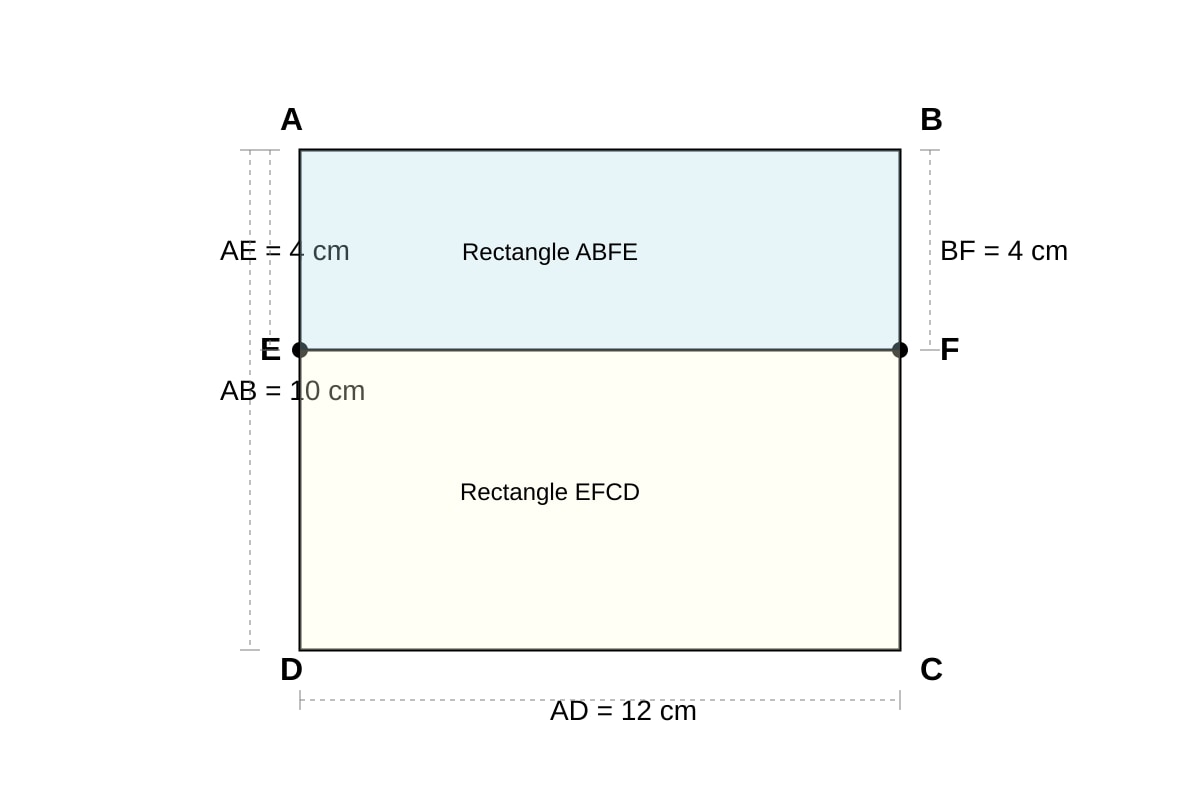
18. The figure below shows a rectangle . is a point on such that . is a point on such that . The length of is and is . <image_placeholder> id: Q18-fig1 type: diagram linked_question: Q18 description: Rectangle ABCD. AB=10cm (height), AD=12cm (width). Point E on AD, 4cm from A. Point F on BC, 4cm from B. Line EF is drawn parallel to AB. The shape is divided into two smaller rectangles ABFE and EFCD. labels: AB = 10 cm, AD = 12 cm, AE = 4 cm, BF = 4 cm values: AB=10, AD=12, AE=4, BF=4 must_show: Rectangle with internal line EF, labels for all segments. </image_placeholder> (a) Find the area of rectangle . (b) Find the perimeter of rectangle .
<br> <br> <br> <br> <br> <br>Answer: (a) _______________ (b) _______________
19. A piece of wire long is bent to form a rectangle. The length of the rectangle is twice its breadth. (a) Find the breadth of the rectangle. (b) Find the area of the rectangle.
<br> <br> <br> <br> <br> <br>Answer: (a) _______________ (b) _______________
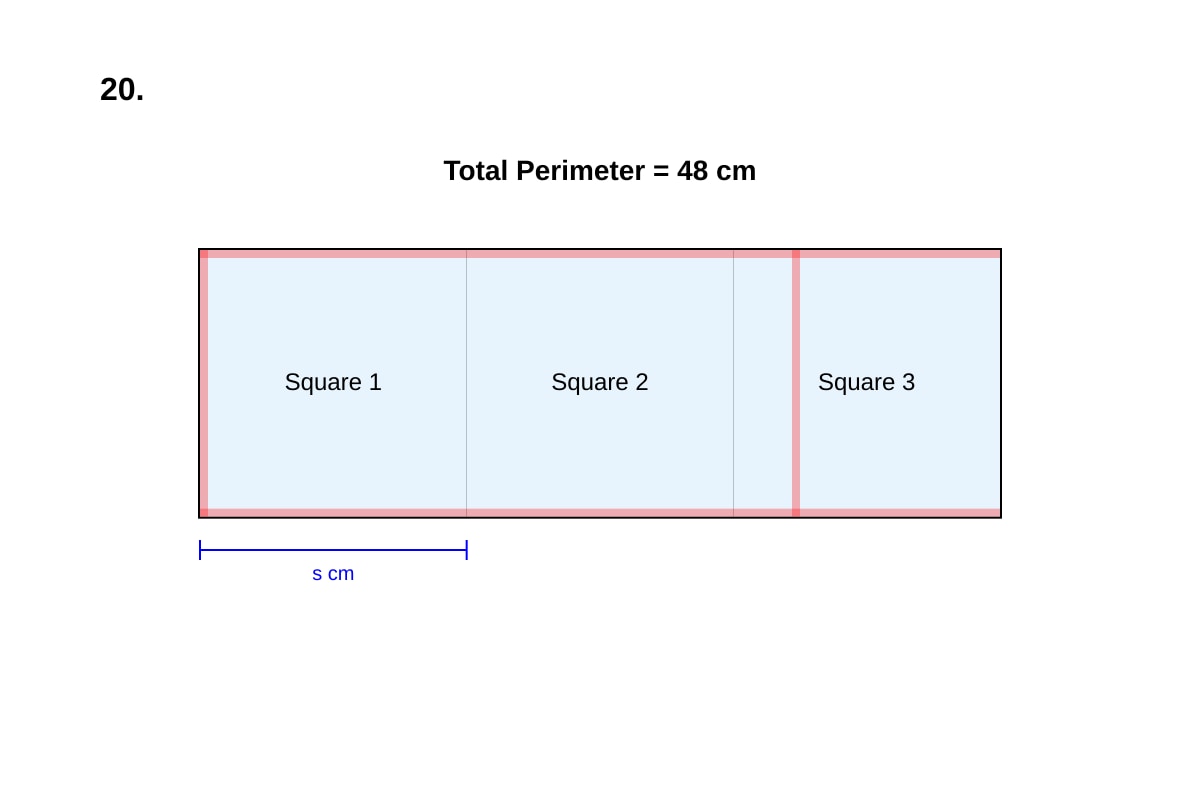
20. The figure below is composed of three identical squares arranged in a row. <image_placeholder> id: Q20-fig1 type: diagram linked_question: Q20 description: Three identical squares placed side-by-side horizontally to form a long rectangle. The total perimeter of the resulting shape is 48 cm. labels: Total Perimeter = 48 cm values: P_total = 48 must_show: Three squares joined, outline of the combined shape highlighted. </image_placeholder> (a) How many sides of the small squares make up the perimeter of the large shape? (b) Find the area of one small square. (c) Find the total area of the figure.
<br> <br> <br> <br> <br> <br>Answer: (a) _______________ (b) _______________ (c) _______________
*** End of Quiz ***
Answers
Primary 5 Mathematics Quiz - Area Perimeter (Answer Key)
General Note:
- Units must be included in the final answer.
- Working must be shown for Section B and C to earn method marks.
Section A: Multiple Choice Questions
1. (3)
- Reasoning:
- .
- .
- .
- Common Mistake: Adding length and breadth only () or forgetting to multiply by 2.
2. (3)
- Reasoning:
- .
- .
- .
- Common Mistake: Confusing perimeter formula with area, or squaring the perimeter.
3. (1)
- Reasoning:
- Let the side of the square be .
- If they did not overlap, total width would be .
- Actual width is .
- .
- Since they are squares, the overlap is a square of side .
- .
- Visual Check: The diagram shows the total span is less than the sum of individual widths. The difference is the shared region.
4. (2)
- Reasoning:
- .
- .
- Common Mistake: Forgetting the , resulting in .
5. (2)
- Reasoning:
- .
- .
- .
- .
Section B: Short Answer Questions
6.
- Working:
7.
- Working:
8.
- Working:
- .
- .
- Side .
9.
- Working:
- .
- .
- .
- Note: Cutting a corner does not change the perimeter, but it does reduce the area.
10.
- Working:
- Method 1 (Split into two rectangles):
- Rectangle A (vertical part excluding overlap with B's height? No, standard L-shape split):
- Let's split vertically: Left rectangle is wide and high. Area .
- Right rectangle is remaining width. Total width is not explicitly given as sum, but diagram labels imply:
- Actually, looking at Q10 placeholder: Width A=4, Height A=10. Width B=8, Height B=4.
- Usually, L-shapes are joined. If joined at bottom-right of A and top-left of B?
- Let's assume standard non-overlapping composition based on "Total width 12" in placeholder description vs "Width A 4, Width B 8". . So they are side-by-side horizontally? No, "L-shaped".
- Correct interpretation of L-shape from placeholder: Vertical bar (4x10) and Horizontal bar (8x4). If they form an L, they share a corner or side.
- Let's assume the standard decomposition:
- Vertical Rectangle: .
- Horizontal Rectangle (extending from bottom): The placeholder says Width B=8. If it's an L, the total width is usually ? Or is B the entire bottom?
- Let's use the explicit values: Area A . Area B .
- If they are distinct parts of the L (non-overlapping), Total Area .
- Method 1 (Split into two rectangles):
- Answer: .
11.
- Working:
- Equilateral triangle has 3 equal sides.
- .
12.
- Working:
- .
13.
- Working:
- .
- .
- .
14.
- Working:
- .
- .
- .
- .
- .
15.
- Working:
- .
Section C: Long Answer Questions
16. (a)
- Working:
- .
(b)
- Working:
- Base of triangle = Side of square .
- .
- .
17. (a)
- Working:
- .
(b) 192 tiles
- Working:
- Convert units to be consistent. Let's use cm.
- .
- .
- .
- .
- .
- Alternative Method:
- Length in tiles: . tiles.
- Breadth in tiles: . tiles.
- .
18. (a)
- Working:
- Rectangle :
- .
- .
- .
(b)
- Working:
- Rectangle :
- .
- .
- .
19. (a)
- Working:
- Let Breadth .
- Then Length .
- .
- .
- .
- .
- .
- Breadth .
(b)
- Working:
- .
- .
20. (a) 8 sides
- Reasoning:
- When 3 squares are in a row, the internal touching sides are not part of the perimeter.
- Top: 3 sides.
- Bottom: 3 sides.
- Left end: 1 side.
- Right end: 1 side.
- Total sides.
(b)
- Working:
- .
- .
- .
- .
(c)
- Working:
- .
- .
- Check: Total shape is by . . Correct.