From Real Exams Quiz
Primary 5 Higher Chinese Writing Quiz
Free P5 HCL Writing quiz, Nemo3 Exam version, with questions, answers, and syllabus-aligned practice for Singapore students.
These static practice materials are generated from the site's syllabus and paper-generation workflow, with source and model context shown so students and parents can evaluate the material before use.
Questions
Free quiz and exam paper access
Enter your details to view this paper
Your access is remembered on this device.
Answers
Primary 5 Higher Chinese Quiz - Writing (Answer Key)
Total Marks: 40
Marking Principle: Answers are assessed on content relevance, language accuracy, vocabulary richness, sentence variety, and structural coherence. For open-ended questions, sample answers are provided; accept valid alternatives that meet the criteria.
Section A: Short Writing Tasks (20 marks)
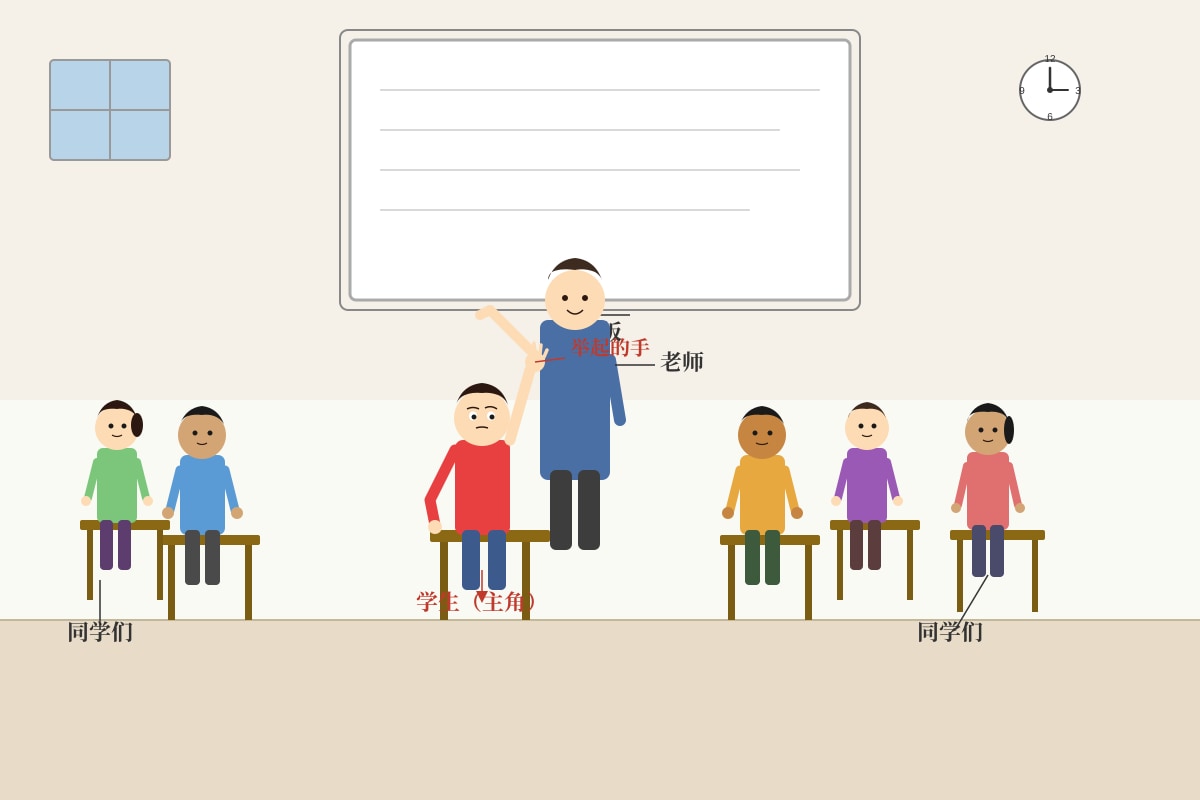
Q1 (2 marks) — Picture Description
Sample Answer:
课堂上,小明坐姿端正,目不转睛地望着老师,右手高高举起,眼神专注而自信,仿佛胸有成竹。同学们也都屏息凝神,教室里弥漫着浓厚的学习氛围。
Marking Guide:
- 1 mark: Accurately describes the focused student's posture, raised hand, and expression (动作、神态).
- 1 mark: Includes classroom context and atmosphere; uses appropriate vocabulary (端正、目不转睛、胸有成竹、屏息凝神).
- Deduct 0.5 mark for missing key visual elements or using colloquial language.
Q2 (2 marks) — Idiom Application
Sample Answer:
工匠制作工艺品时专心致志,眼神不离细微之处,生怕出一丝差错。
学生做作业要一丝不苟,每一个字都工工整整,每一道题都仔细推敲。
Marking Guide:
- 1 mark per sentence: Correct usage of idiom in context + appropriate elaboration showing understanding of nuance (专心致志 = mental focus; 一丝不苟 = meticulous action).
- Accept variations that clearly distinguish the two idioms' shades of meaning.
Q3 (2 marks) — Sentence Expansion
Sample Answer:
妹妹坐在阳台的小书桌前,手握毛笔,眉头微蹙,目光紧盯宣纸。她先轻蘸墨汁,再缓缓落笔,横竖撇捺,一丝不苟,嘴角不时浮现专注的微笑,仿佛在与纸上飞舞的线条对话。
Marking Guide:
- 0.5 mark: Action details (握笔、蘸墨、落笔、横竖撇捺).
- 0.5 mark: Facial expression (眉头微蹙、专注的微笑).
- 0.5 mark: Environment (阳台、小书桌、宣纸、墨汁).
- 0.5 mark: Coherent flow and vivid language (仿佛在与……对话).
- Penalise list-like expansion without integration.
Q4 (2 marks) — Show, Don't Tell (改写描写)
Sample Answer:
他双拳紧握,指节泛白;胸膛剧烈起伏,呼吸粗重如牛;原本平静的眼眸瞬间燃起怒火,嘴唇紧抿成一条直线,喉咙里压抑着低沉的吼声。
Marking Guide:
- 1 mark: At least three distinct physical/behavioural details (fists, breathing, eyes, lips, voice).
- 1 mark: No direct emotion words (生气、愤怒); purely descriptive "showing".
- Deduct if any telling word remains (e.g., "他愤怒地握紧拳头").
Q5 (2 marks) — Parallelism (排比句)
Sample Answer:
读书,能让狭隘的心胸变得宽广深邃;读书,能让枯燥的生活增添斑斓色彩;读书,能让迷茫的灵魂找到前行的灯塔。
Marking Guide:
- 1 mark: At least three parallel clauses with same structure (读书,能让……变得/增添/找到……).
- 1 mark: Meaningful, non-repetitive benefits (mind, life, soul); rhythmic and balanced.
- Accept other structures (e.g., 读书是……,读书是……,读书更是……).
Q6 (2 marks) — Narrative Opening
Sample Answer:
夕阳如血,洒在空荡荡的操场上,拉长了我们僵持的影子。方才的争吵声早已散去,只剩下风吹过树叶的沙沙声,和彼此不敢对视的尴尬沉默。
Marking Guide:
- 1 mark: Uses all prompts (傍晚/夕阳、操场、争吵后的沉默).
- 1 mark: Sets mood effectively (如血、僵持、不敢对视、尴尬); hooks reader for "apology" narrative.
- Deduct if reads like a list rather than a scene.
Q7 (2 marks) — Title Design
Sample Answer:
标题:指尖上的传承
用意:双关「指尖」包饺动作与「传承」技艺情感,点明主题。
Marking Guide:
- 1 mark: Title ≤ 10 characters, creative, relevant (e.g., 「饺香里的爱」、「一折一褶的温情」).
- 1 mark: Explanation ≤ 15 characters, clearly states rhetorical device or thematic focus (双关、点题、含蓄).
- Accept other valid titles with sound reasoning.
Q8 (2 marks) — Continuation Writing
Sample Answer:
……感到一股久违的轻松涌上心头。雨水冲刷了尘埃,也冲淡了烦躁,我迈开轻快的脚步,朝着家的方向走去,心里默念:一切都会好起来的。
Marking Guide:
- 1 mark: Logical follow-up from refreshed atmosphere (雨停、阳光、泥土香 → 心情舒畅、行动).
- 1 mark: Emotional resonance (轻松、烦躁冲淡、一切都会好); consistent tone.
- Deduct if abrupt shift or irrelevant content.
Q9 (2 marks) — Contrast Writing
Sample Answer:
考前,心如十五个吊桶打水——七上八下,书页翻得飞快却一个字不进脑,连呼吸都带着颤抖;考后,像卸下千斤重担,云淡风轻,甚至想大声哼首歌,把焦虑全抛进垃圾桶。
Marking Guide:
- 1 mark: Clear contrast between two states (考前焦虑 vs 考后释然).
- 1 mark: Vivid imagery for each (吊桶打水、书页不进脑 vs 卸下重担、云淡风轻); balanced length.
- Deduct if only states emotions without descriptive contrast.
Q10 (2 marks) — Sentence Correction
Sample Answer:
修改:这次比赛让我懂得了团结的重要性。 / 通过这次比赛,我懂得了团结的重要性。
理由:原句「通过……让」搭配不当,主语缺失。「通过」后需接主语「我」,或去掉「通过」直接用「让」。
Marking Guide:
- 1 mark: Correct revised sentence (either version acceptable).
- 1 mark: Accurate explanation identifying "通过……让" structure error and subject missing.
- Common mistake: Only fixing one part (e.g., removing "让" but keeping "通过").
Section B: Guided Writing (15 marks)
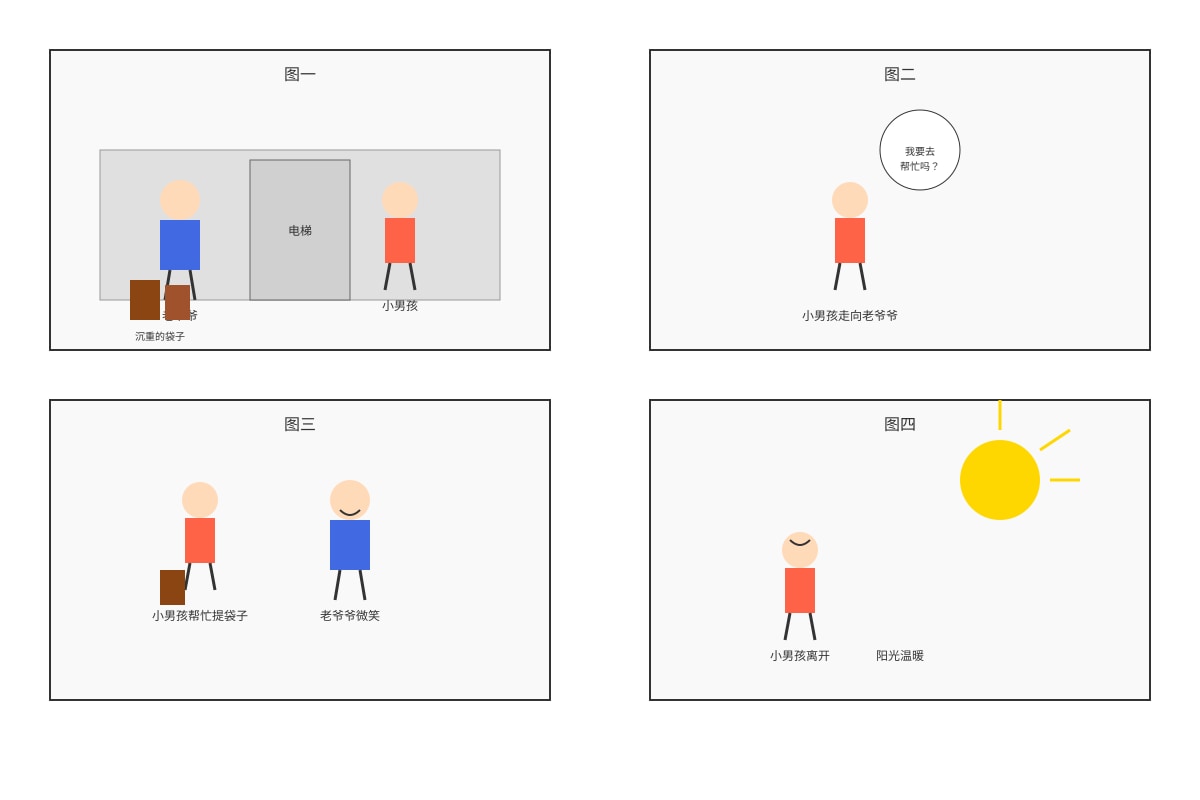
Q11 (3 marks) — Picture Composition (4-panel)
Sample Answer:
放学时,我看见一位老爷爷在电梯口费力地搬着两个沉重的编织袋,额头渗出汗珠。我犹豫了一下,鼓起勇气走上前:「爷爷,我帮您吧!」老爷爷感激地笑着,把袋子递给我。我扛起袋子走进电梯,老爷爷连声道谢。走出电梯,阳光洒在脸上,心里暖洋洋的,原来助人真的很快乐。
Marking Guide (3 marks):
- 1 mark: Complete narrative arc — 起因 (see old man), 经过 (hesitate → help), 结果 (carry bags, gratitude), 感受 (warmth, joy).
- 1 mark: Vivid details (额头渗汗、犹豫一下、鼓起勇气、连声道谢、阳光洒脸、暖洋洋).
- 1 mark: Coherent paragraph, appropriate vocabulary, correct sequence connectors (放学时、方才、走出电梯).
- Deduct 0.5 per missing element; deduct 0.5 for list-like writing without flow.
Q12 (3 marks) — Essay Outline: 「我的拿手好戏」
Sample Answer:
(1) 开头:点题,引出「拿手好戏」—— 「人人都有拿手好戏,而我的拿手好戏,是包饺子——这看似寻常的技艺,却藏着奶奶教我的耐心与爱。」
(2) 中间:具体事例(至少两个细节)—— ① 初学时馅料外漏、皮破,奶奶耐心示范「一折一捏」;② 经过反复练习,我掌握「松皮紧馅、边捏边压」诀窍,饺子挺立如元宝。
(3) 结尾:升华主题—— 「这拿手好戏,不只是技艺,更是代代相传的温情;每一折一褶,都捏着家的味道。」
Marking Guide (3 marks):
- 1 mark: Opening hooks topic and hints at deeper significance (not just "I like dumplings").
- 1 mark: Two specific, sensory details showing progression (failure → technique → success).
- 1 mark: Ending elevates beyond skill to heritage/love; thematic resonance.
- Accept other "skills" (书法、游泳、修自行车) if outline follows same depth.
Q13 (3 marks) — Semi-open Title & Outline
Sample Answer:
补全题目:那一刻,我读懂了父爱
提纲:
时间地点:深夜书房,台灯下
核心事件:发现父亲在为我默默整理错题集,笔迹因颤抖而歪斜,原来他坚持陪伴我复习许久
心理变化:从误解父亲严厉/冷漠 → 震惊于细微之爱 → 愧疚与感动交织 → 暗下决心回报
Marking Guide (3 marks):
- 1 mark: Title completed meaningfully (e.g., 学会了感恩、懂得了坚持、长大了、流泪了).
- 1 mark: Outline has three specific, concrete elements (not vague: "at home", "something happened", "I felt happy").
- 1 mark: Psychological arc shows progression (initial state → trigger → realization → resolution).
- Deduct if outline is generic or lacks emotional turning point.
Q14 (3 marks) — Material-based Argumentative Paragraph
Sample Answer:
「盲人摸象」启示我们:认识事物必须全面,不可以偏概全。生活中,有人见同学考砸一科便断定「他不行」,忽略了他其他优点;有人因网上片面言论就攻击某群体,却未深究真相。唯有像智者一样,多角度观察、深入思考,才能看清事物全貌,做出公正判断,避免偏见伤人。
Marking Guide (3 marks):
- 1 mark: Clear thesis — must view things comprehensively (全面看待、不可以偏概全).
- 1 mark: Two distinct life examples linking to material (classmate judgement, online prejudice).
- 1 mark: Conclusion ties back to "wise person" ideal; language persuasive (唯有……才能……避免……).
- Deduct if only retells story without argument; deduct if examples are repetitive.
Q15 (3 marks) — Practical Writing: Proposal (倡议书)
Sample Answer:
倡议书
亲爱的同学们:
校园是我们共同的家,绿化护绿人人有责。倡议大家:一、爱护花草树木,不践踏草坪、不折枝摘叶;二、主动捡拾垃圾,做「护绿小卫士」;三、参与班级认养绿化带活动,定期浇水施肥。
让我们行动起来,为校园增添一抹绿,留下一份美!
五年级二班 班长 敬上
202X年X月X日
Marking Guide (3 marks):
- 1 mark: Correct format (title centered, salutation, body with numbered points, closing, signature block, date).
- 1 mark: Three concrete, actionable suggestions relevant to "campus greening".
- 1 mark: Persuasive, polite tone (亲爱的同学们、人人有责、让我们行动起来); ~80 characters.
- Deduct 0.5 for missing format element; deduct 0.5 for vague suggestions (e.g., "保护环境").
Section C: Critical Essay (20 marks)
Q16 (4 marks) — Critical Commentary on Blind Comparison
Sample Answer:
班内盛行盲目攀比:文具要名牌、鞋子比限量、电子产品追新款,甚至以此划分「阶级」。这扭曲了同学关系,让友谊掺杂金钱嫌贫爱富;更让家长背负沉重经济压力,助长虚荣浮躁之风。建议:学校开展「简约生活」主题班会;家长引导孩子建立正确消费观;同学间以品德才学相交,拒绝物质标签。真正的优秀,不在身上穿什么,而在心里装什么。
Marking Guide (4 marks):
- 1 mark: Phenomenon clearly described with specific examples (文具、鞋子、电子产品、划分阶级).
- 1 mark: Harm analysed at two levels — peer relationships (友谊掺杂金钱) and family/society (家长压力、虚荣风).
- 1 mark: Three targeted suggestions (school, parents, students) with action verbs (开展、引导、以……相交).
- 1 mark: Language persuasive, structured (现象→危害→建议), concluding aphorism (真正的优秀……).
- Deduct 0.5 per missing component; deduct for rambling or repetitive language.
Q17 (4 marks) — Argument: "Failure is Mother of Success" — True?
Sample Answer:
我持辩证肯定态度:失败是成功之母,前提是「复盘反思」。爱迪生试灯丝上千次,每次记录失败数据、调整方案,终成电灯;若他只重复同一错误,失败永远只生失败。生活中,考试失利后若不分析错因、调整方法,下次依然失利。所以,失败本身不产生成功,从失败中汲取教训、改变策略、坚持再试,才是成功之母。
Marking Guide (4 marks):
- 1 mark: Clear, nuanced stance (辩证肯定/不完全是/有条件).
- 1 mark: One well-developed example with cause-effect (爱迪生: 记录数据→调整→成功; 反面: 重复错误→仍失败).
- 1 mark: Logical reasoning distinguishing "failure itself" vs "learning from failure".
- 1 mark: Concise synthesis (失败本身不产生成功……才是成功之母); ~120 characters.
- Deduct if stance is vague; deduct if example is generic ("爱迪生失败很多次终于成功" without mechanism).
Q18 (4 marks) — Cultural Reflection on Traditional Festivals
Sample Answer:
看到孩子们只知「放假吃月饼收红包」,不知屈原爱国、嫦娥奔月、年兽传说,我深感忧虑:传统节日正沦为「消费节」「娱乐节」,文化基因面临断层。原因有二:一、学校家庭文化教育缺位,重知识轻传承;二、商业营销喧嚣掩盖文化内核。呼吁:课本增设节俗专题、家庭讲故事成习惯、媒体推优质文化内容。让孩子在仪式感中触摸历史温度,在传承中扎根文化自信。
Marking Guide (4 marks):
- 1 mark: Expresses genuine concern (忧虑、沦为消费节、文化基因断层).
- 1 mark: Two distinct causes (education gap, commercial noise).
- 1 mark: Three actionable calls (school, family, media).
- 1 mark: Elevated ending linking ritual → history → cultural confidence; language eloquent.
- Deduct if only complains without analysis or action.
Q19 (4 marks) — Reading Response Fragment
Sample Answer (based on 《草房子》):
读《草房子》,最触动我的是纸月为了圆杜小康「穿新衣」的梦,在寒夜里为他缝制红马甲,却因劳累染病离世。纸月虽贫穷体弱,却拥有最纯真的善良、最坚韧的担当、最无私的爱——她把快乐给别人,把痛苦留给自己。这启发我:真正的美不在外表,而在内心的光辉;我也要学会用微小的善意温暖身边人,让生命因给予而厚重。
Marking Guide (4 marks):
- 1 mark: Book title + specific moving scene (纸月缝马甲、寒夜、染病离世).
- 1 mark: Character analysis with 2–3 precise qualities (善良、担当、无私) supported by scene.
- 1 mark: Personal inspiration linked to character trait (美在内心、微小善意、生命因给予而厚重).
- 1 mark: Coherent structure (书名→情节→品质→启发); ~120 characters; sincere tone.
- Accept 《海底两万里》 (尼摩船长、阿龙纳斯、科学精神、探索勇气) with equivalent depth.
Q20 (4 marks) — Creative Invention Writing
Sample Answer:
如果我能发明一样东西,我要造一台**「时光收音机」**。它外形像复古收音机,旋钮一拨,就能收听过去或未来的声音:拨到「童年频道」,能听见奶奶年轻时哼的摇篮曲、爸爸小时候摔车的哭声;拨到「未来频道」,能听见自己长大后对孩子说的第一句话、地球发出的感谢低语。它不改变历史,只让爱与遗憾被听见,让我们在当下更珍惜拥有、更勇敢前行。这台收音机,不需要电池,只需一颗真心。
Marking Guide (4 marks):
- 1 mark: Original, imaginative invention with name and form (时光收音机、复古外形、旋钮拨动).
- 1 mark: Clear, specific functions with examples (童年频道/未来频道、具体声音场景).
- 1 mark: Thoughtful impact — emotional/philosophical (不改变历史、让爱被听见、珍惜当下、勇敢前行).
- 1 mark: Language vivid, childlike wonder (摇篮曲、摔车哭声、地球感谢低语、不需要电池只需真心); ~150 characters.
- Deduct if invention is generic (飞行鞋、作业机器人) without unique twist; deduct if lacks emotional depth.
General Marking Notes for Teachers
- Language Quality: Higher Chinese expects richer vocabulary (四字词语、成语、修辞), varied sentence structures (长短句结合、排比、设问), and fewer grammatical errors.
- Content Depth: Section C distinguishes Higher Chinese — reward critical thinking, dialectical reasoning, cultural awareness, and personal voice.
- Length Tolerance: ±10% of suggested character count acceptable; penalise significant under/over only if it affects completeness.
- Alternative Answers: Accept any response meeting the marking criteria, even if different from samples.
- Common Errors to Flag: 病句 (Q10 type), 成语误用 (Q2), 记叙缺要素 (Q11), 议论空泛无例证 (Q14, Q16–Q18), 实用写作格式错误 (Q15).