AI Generated Quiz
Primary 5 Higher Tamil Speaking Quiz
Free P5 Higher Tamil Speaking quiz, LongCat AI version, with questions, answers, and syllabus-aligned practice for Singapore students.
These static practice materials are generated from the site's syllabus and paper-generation workflow, with source and model context shown so students and parents can evaluate the material before use.
Questions
Free quiz and exam paper access
Enter your details to view this paper
Your access is remembered on this device.
Answers
Primary 5 Higher Tamil Quiz - Speaking
Answer Key
Section A: Pronunciation & Reading Aloud (Questions 1–5)
Question 1. [5 marks — 1 mark per word]
(a) அன்பு — Pronounced "aṉ-bu" (love). The first syllable "அன" has a nasalised 'n' sound, and the second syllable "பு" is a short 'u' vowel with the consonant 'ப'.
(b) கல்வி — Pronounced "kal-vi" (education). The first syllable "கல" has a hard 'k' and 'l' blend, and the second syllable "வி" has a 'v' consonant with a short 'i' vowel.
(c) சமூகம் — Pronounced "ca-mu-ka-m" (society). Three syllables. The first "ச" is a soft 'c' (like 'ch' in "church" but lighter), "மூ" has a long 'u' vowel, and "கம்" ends with a nasal 'm'.
(d) வளர்ச்சி — Pronounced "vaḷar-cci" (growth/development). The first part "வளர்" has a retroflex 'ள' (ḷ) sound, which is distinct from the dental 'ல'. The second part "ச்சி" has a doubled 'c' sound.
(e) மரியாதை — Pronounced "ma-ri-yā-dai" (respect). Four syllables. The third syllable "யா" has a long 'ā' vowel. The final syllable "தை" is a diphthong (ai).
Marking notes: Award 1 mark for each word pronounced clearly and correctly. Accept minor variations in accent. Deduct marks for mispronouncing key consonants (e.g., confusing ள with ல) or incorrect vowel length.
Question 2. [5 marks]
The student should read the sentence with:
- Correct pronunciation of all words
- A natural pause after "மிகவும் முக்கியமானது" (this is a complete thought)
- Proper intonation — the sentence is a statement, so the voice should not rise at the end
- Clear enunciation of compound words like "நண்பர்களோடு" and "முக்கியமானது"
Marking scheme:
- 5 marks: Fluent, natural reading with correct pronunciation and expression
- 4 marks: Mostly fluent with 1–2 minor pronunciation errors
- 3 marks: Adequate reading with some hesitation or 3–4 errors
- 2 marks: Choppy reading with multiple errors
- 1 mark: Significant difficulty reading the sentence
Question 3. [5 marks — 1 mark per word]
(a) பள்ளி — Pronounced "paḷḷi" (school). Note the retroflex 'ள' (ḷ) — the tongue curls back. This is NOT the same as the dental 'ல' (la).
(b) வீடு — Pronounced "vī-ḍu" (house). The first syllable "வீ" has a long 'ī' vowel. The second syllable "டு" uses the retroflex 'ட' (ṭ), not the dental 'த'.
(c) புத்தகம் — Pronounced "put-ta-kam" (book). Three syllables. The middle syllable "த்த" has a doubled 't' sound. The final "ம்" is a nasal.
(d) மருத்துவர் — Pronounced "ma-rut-tu-var" (doctor). Four syllables. The second syllable "ருத்" ends with a hard 't'. The third syllable "து" has a soft 'th' sound.
(e) விளையாட்டு — Pronounced "vi-ḷai-yāṭ-ṭu" (sport/game). Four syllables. The second syllable "ளை" is a diphthong (ai) with a retroflex 'ள'. The third syllable "யாட்" has a long 'ā' and ends with a retroflex 'ட'.
Marking notes: Award 1 mark per word. Pay special attention to retroflex consonants (ள, ட) which are commonly mispronounced by students.
Question 4. [5 marks]
The student should read the passage with:
- Correct pronunciation of all words
- Natural pauses at full stops
- Expression that matches the cheerful, descriptive content
- Proper handling of verb forms like "உதிக்கிறான்," "பாடுகின்றன," "போகிறார்கள்," "செய்கிறார்," and "படிக்கிறேன்"
- Correct intonation for each sentence (all are statements)
Marking scheme:
- 5 marks: Fluent, expressive reading with correct pronunciation throughout
- 4 marks: Mostly fluent with 1–2 minor errors
- 3 marks: Adequate reading with some hesitation
- 2 marks: Choppy reading with multiple errors
- 1 mark: Significant difficulty
Question 5. [5 marks]
The tongue twister "காகிதத்தில் காகி குருவி காகிதக் குருவி" means "A crow that became paper, a paper sparrow."
The student should:
- Read it at a reasonable speed without stumbling
- Clearly distinguish between "காகி" (crow) and "குருவி" (sparrow)
- Correctly pronounce "காகிதத்தில்" (on paper) and "காகிதக் குருவி" (paper sparrow)
- Maintain clarity even when reading quickly
Marking scheme:
- 5 marks: Reads quickly and clearly with no errors
- 4 marks: Reads clearly with 1–2 minor stumbles
- 3 marks: Reads at moderate speed with some errors
- 2 marks: Reads slowly with multiple errors
- 1 mark: Cannot read the tongue twister
Section B: Vocabulary & Sentence Construction (Questions 6–10)
Question 6. [5 marks — 1 mark per word]
(a) "Friend" = நண்பன் (male friend) or நண்பி (female friend) or தோழன் / தோழி (b) "School" = பள்ளி (c) "Book" = புத்தகம் (d) "Water" = நீர் or தண்ணீர் (e) "Tree" = மரம்
Marking notes: Accept any correct Tamil equivalent. Award 1 mark per correct answer.
Question 7. [5 marks — 1 mark per blank]
(a) பள்ளியில் ஆசிரியர் நமக்குப் போதுவார். (The teacher teaches us at school.)
(b) அம்மா சமையல் செய்கிறார். (Mother does the cooking.)
(c) மரம் நிழல் தருகிறது. (The tree gives shade.)
(d) என் நண்பன் என்னோடு விளையாடுகிறான். (My friend plays with me.)
(e) பூ அழகாக மலர்கிறது. (The flower blooms beautifully.)
Marking notes: Award 1 mark per correct answer. The student must use the exact word from the box.
Question 8. [3 marks — 1 mark per sentence]
Sample correct answers:
(a) குழந்தைகள் பள்ளிக்குப் போகிறார்கள். (The children go to school.)
(b) குழந்தைகள் விளையாட்டுகளில் விளையாடுகிறார்கள். (The children play in games/sports.)
(c) பள்ளி எங்கள் வளர்ச்சிக்கு முக்கியமானது. (School is important for our development.)
Marking notes: Award 1 mark per sentence if it is grammatically correct, meaningful, and uses the given word appropriately. Accept any valid sentence. Deduct marks for grammatical errors or meaningless constructions.
Question 9. [5 marks — 1 mark per match]
(a) அன்பு → (ii) love (b) அறிவு → (i) knowledge (c) நம்பிக்கை → (iv) hope (d) உழைப்பு → (iii) hard work (e) வெற்றி → (v) victory
Marking notes: Award 1 mark per correct match. No partial credit.
Question 10. [5 marks — 1 mark per word]
(a) நல்ல (good) = கெட்ட (bad) or மோசம் (bad) (b) பெரிய (big) = சிறிய (small) (c) குளிர்ந்த (cold) = வெப்பமான (hot) or சூடான (hot/warm) (d) இரவு (night) = பகல் (day) (e) சந்தோஷம் (happiness) = துன்பம் (sadness) or கவலை (sorrow)
Marking notes: Award 1 mark per correct opposite. Accept any valid antonym.
Section C: Picture Description & Role-Play (Questions 11–20)
Question 11. [4 marks]
Sample answer (in Tamil):
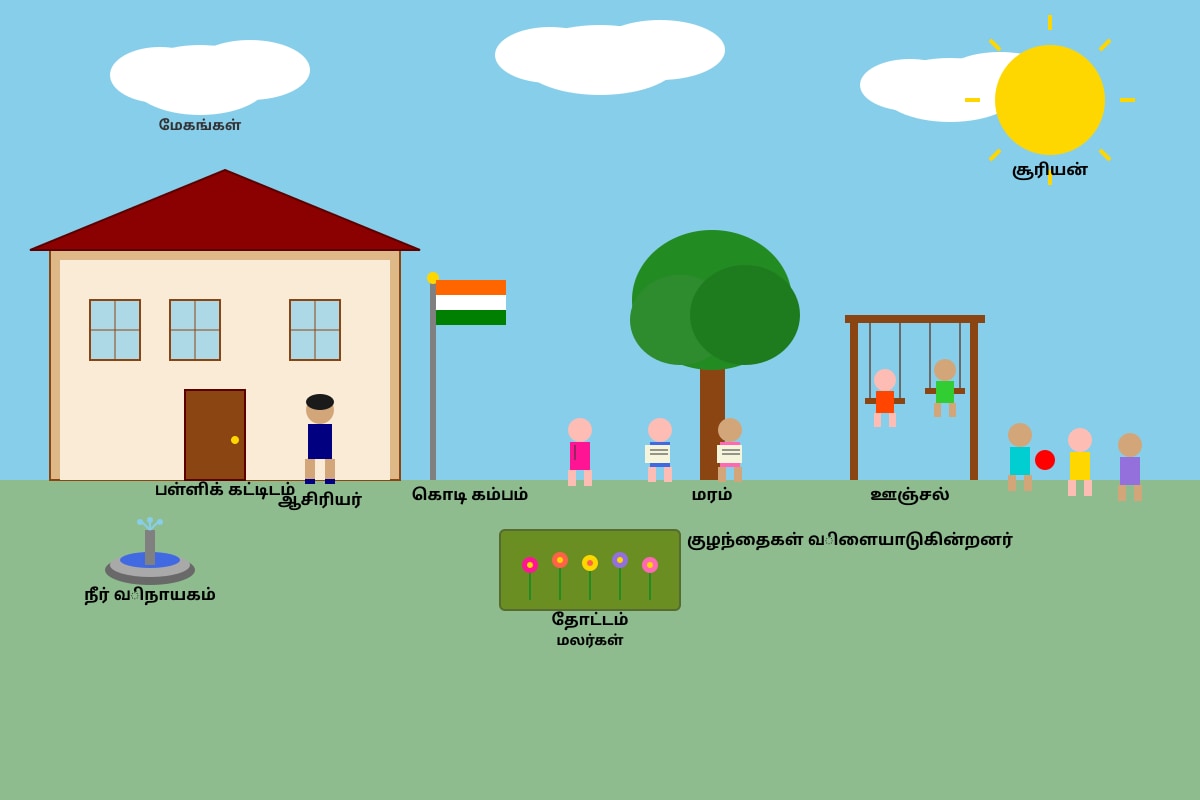
படத்தில் ஒரு பள்ளி காட்சி தெரிகிறது. பல குழந்தைகள் விளையாடுகிறார்கள். சில குழந்தைகள் ஊஞ்சலில் ஊஞ்சலாடுகிறார்கள். மரத்தின் கீழ் சில குழந்தைகள் புத்தகம் படிக்கிறார்கள். ஆசிரியர் பள்ளிக் கட்டிடத்தின் அருகே நிற்கிறார். பள்ளியில் கொடி மரம் இருக்கிறது. பூக்கள் அழகாக மலர்கின்றன.
Translation: The picture shows a school scene. Many children are playing. Some children are swinging on the swings. Some children are reading books under a tree. A teacher is standing near the school building. There is a flagpole at the school. The flowers are blooming beautifully.
Marking scheme:
- 4 marks: 4 or more complete, grammatically correct Tamil sentences with good vocabulary
- 3 marks: 3 complete sentences with minor errors
- 2 marks: 2 sentences or sentences with significant errors
- 1 mark: 1 sentence or very limited response
- 0 marks: No response or completely irrelevant answer
Common mistakes: Students may use English words instead of Tamil. Encourage pure Tamil vocabulary.
Question 12. [3 marks — 1 mark per answer]
(a) ஆறு குழந்தைகள் விளையாடுகிறார்கள். (Six children are playing.) (Accept any reasonable number based on what is visible in the image.)
(b) ஆசிரியர் பள்ளிக் கட்டிடத்தின் அருகே நிற்கிறார். (The teacher is standing near the school building.)
(c) மரத்தின் கீழ் குழந்தைகள் புத்தகம் படிக்கிறார்கள். (Children are reading books under the tree.)
Marking notes: Award 1 mark per correct answer. Accept answers that accurately describe the image.
Question 13. [4 marks]
Sample answer (in Tamil):
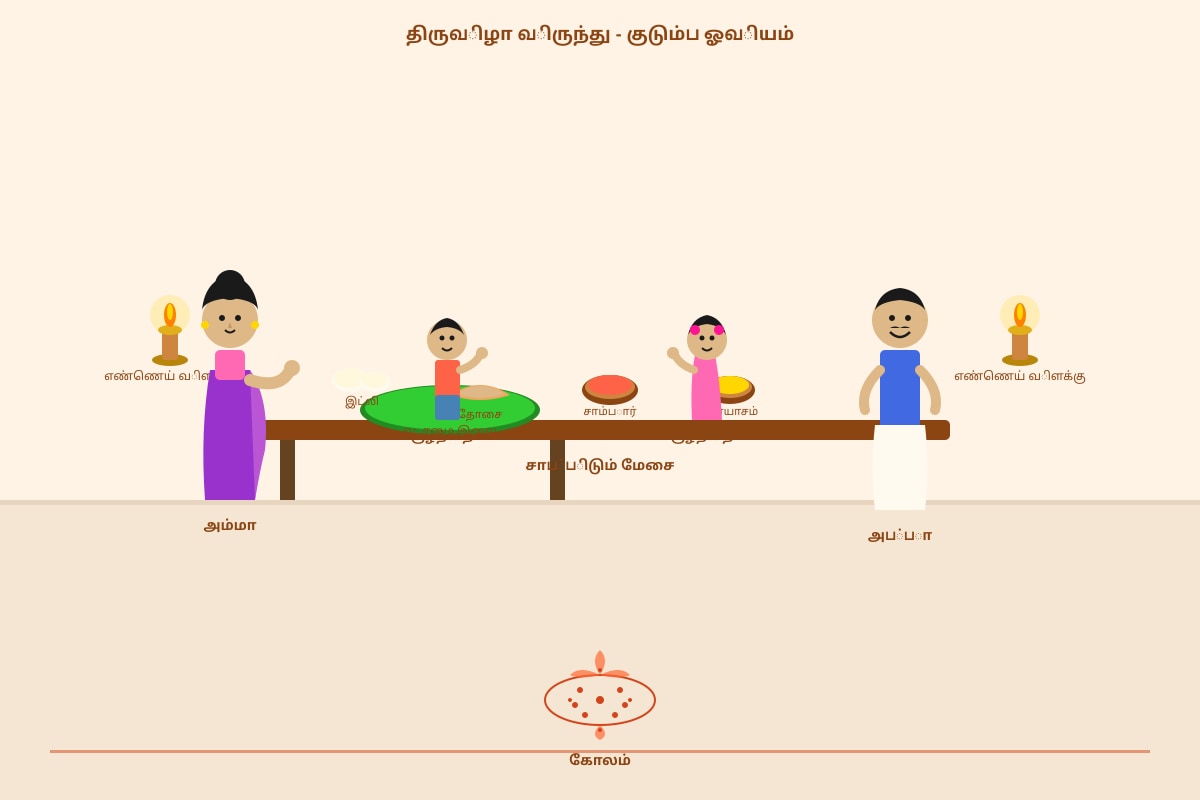
படத்தில் ஒரு குடும்பம் பண்டிகை நாளைக் கொண்டாடுகிறது. அம்மா உணவைப் பரிமாறுகிறார். நான்கு பேர் மேசையில் அமர்ந்திருக்கிறார்கள். வாழை இலையில் இட்லி, தோசை, சாம்பார், பாயாசம் வைக்கப்பட்டிருக்கின்றன. வீட்டில் நிலவிளக்கு எரிகிறது. வாசலில் கோலம் போடப்பட்டிருக்கிறது.
Translation: The picture shows a family celebrating a festival. Mother is serving food. Four people are sitting at the table. Idli, dosa, sambar, and payasam are placed on banana leaves. Oil lamps are lit in the house. Kolam is drawn at the entrance.
Marking scheme:
- 4 marks: 4 or more complete, grammatically correct Tamil sentences with good vocabulary
- 3 marks: 3 complete sentences with minor errors
- 2 marks: 2 sentences or sentences with significant errors
- 1 mark: 1 sentence or very limited response
Question 14. [3 marks — 1 mark per answer]
(a) அம்மா உணவைப் பரிமாறுகிறார். (Mother is serving the food.)
(b) மேசையில் இட்லி, தோசை, சாம்பார், பாயாசம் இருக்கின்றன. (Idli, dosa, sambar, and payasam are on the table.)
(c) வீட்டின் வாசலில் கோலம் இருக்கிறது. (There is kolam at the entrance of the house.)
Marking notes: Award 1 mark per correct answer.
Question 15. [4 marks]
Sample answer (in Tamil):
படத்தில் ஒரு சந்தை காட்சி தெரிகிறது. பழக் கடையில் மாம்பழம், வாழைப்பழம், கொய்யாப்பழம் விற்கப்படுகின்றன. காய்கறிக் கடையில் தக்காளி, கத்திரிக்காய், முருங்கைக்காய் இருக்கின்றன. பூக் கடையில் மல்லிகை, ரோஜா பூக்கள் இருக்கின்றன. ஒரு வியாபாரி பழங்களை எடை போடுகிறார். அம்மாவும் குழந்தையும் காய்கறிகளை வாங்குகிறார்கள்.
Translation: The picture shows a market scene. Mangoes, bananas, and guavas are sold at the fruit stall. Tomatoes, brinjals, and drumsticks are at the vegetable stall. Jasmine and roses are at the flower stall. A vendor is weighing fruits. A mother and child are buying vegetables.
Marking scheme:
- 4 marks: 4 or more complete, grammatically correct Tamil sentences with good vocabulary
- 3 marks: 3 complete sentences with minor errors
- 2 marks: 2 sentences or sentences with significant errors
- 1 mark: 1 sentence or very limited response
Question 16. [3 marks]
Sample answer (in Tamil):
நான் உங்கள் பிறந்த நாள் விருந்துக்கு வருவதில் மிகவும் மகிழ்ச்சியடைகிறேன். நன்றி சொல்கிறேன்! விருந்து எந்த நேரத்தில் தொடங்கும்? நான் சரியான நேரத்தில் வருவேன்.
Translation: I am very happy to come to your birthday party. Thank you! What time does the party start? I will come at the right time.
Marking scheme:
- 3 marks: 3 or more complete Tamil sentences; expresses happiness, thanks, and asks about the time
- 2 marks: 2 sentences or missing one element (e.g., did not ask about time)
- 1 mark: 1 sentence or very limited response
- 0 marks: No response or completely irrelevant
Common mistakes: Students may forget to ask about the time. Remind them to address all parts of the question.
Question 17. [3 marks]
Sample answer (in Tamil):
நான்: "ஐயா, எனக்கு ஒரு கதைப் புத்தகம் வேண்டும். நீங்கள் உதவ முடியுமா?" வியாபாரி: "ஆமா, இங்கே பல கதைப் புத்தகங்கள் இருக்கின்றன. எந்த வகை கதை உங்களுக்கு பிடிக்கும்?" நான்: "எனக்கு சாதனையாளர்களின் கதை பிடிக்கும்."
Translation: Me: "Sir, I need a storybook. Can you help me?" Shopkeeper: "Yes, there are many storybooks here. What kind of story do you like?" Me: "I like stories about achievers."
Marking scheme:
- 3 marks: 3 or more complete Tamil sentences; polite request, clear communication
- 2 marks: 2 sentences or somewhat unclear
- 1 mark: 1 sentence or very limited response
Question 18. [3 marks]
Sample answer (in Tamil):
"நண்பா, வருத்தப்படாதே. ஒரு தேர்வில் தோல்வி அடைந்தாலும் பயப்பட வேண்டாம். நீ நன்றாக முயற்சி செய்தால் அடுத்த தேர்வில் நிச்சயம் வெற்றி பெவாய். நான் உனக்கு உதவ முடியும். நம்ம சேர்ந்து படிப்போம்."
Translation: "Friend, don't be sad. Even if you failed one test, don't be afraid. If you work hard, you will definitely pass the next test. I can help you. Let's study together."
Marking scheme:
- 3 marks: 3 or more complete Tamil sentences; shows empathy, encouragement, and offers help
- 2 marks: 2 sentences or missing one element
- 1 mark: 1 sentence or very limited response
Question 19. [3 marks]
Sample answer (in Tamil):
"பாட்டி, இந்த கோவில் பற்றி சொல்லுங்கள். இது எந்த கடவுளின் கோவில்? இங்கே நாம் என்ன செய்ய வேண்டும்? என்ன வழிபாடு செய்யலாம்? பாட்டி, எனக்கு விளக்கமாக சொல்லுங்கள்."
Translation: "Grandmother, please tell me about this temple. Which god's temple is this? What should we do here? What prayers can we do? Grandmother, please explain to me clearly."
Marking scheme:
- 3 marks: 3 or more complete Tamil sentences; asks relevant questions about the temple
- 2 marks: 2 sentences or somewhat unclear
- 1 mark: 1 sentence or very limited response
Question 20. [4 marks]
Sample answer (in Tamil):
"பொங்கல் பண்டிகையில் என் குடும்பம் மிகவும் மகிழ்ச்சியாக கொண்டாடுகிறது. நாங்கள் பொங்கல் பானையில் பாயசம் சமைக்கிறோம். வீட்டின் முன் கோலம் போடுகிறோம். நாங்கள் புத்தாண்டு வணக்கம் சொல்லி பெரியவர்களிடம் அன்பு தெரிவிக்கிறோம். நண்பர்களை விருந்தில் அழைக்கிறோம்."
Translation: "My family celebrates Pongal festival very happily. We cook sweet rice in a Pongal pot. We draw kolam in front of the house. We greet elders and show them love. We invite friends to the feast."
Marking scheme:
- 4 marks: 4 or more complete Tamil sentences; describes at least 3 Pongal activities with good vocabulary
- 3 marks: 3 sentences or describes 2–3 activities
- 2 marks: 2 sentences or limited description
- 1 mark: 1 sentence or very limited response
- 0 marks: No response or completely irrelevant
Common mistakes: Students may describe generic festival activities instead of Pongal-specific ones. Encourage them to mention Pongal-specific traditions like cooking Pongal, kolam, and Mattu Pongal.
End of Answer Key
Total: 40 marks