AI Generated Quiz
Primary 5 Higher Tamil Speaking Quiz
Free P5 Higher Tamil Speaking quiz, AI version, with questions, answers, and syllabus-aligned practice for Singapore students.
These static practice materials are generated from the site's syllabus and paper-generation workflow, with source and model context shown so students and parents can evaluate the material before use.
Questions
Free quiz and exam paper access
Enter your details to view this paper
Your access is remembered on this device.
Answers
Primary 5 Higher Tamil Quiz - Speaking - Answer Key
Total Marks: 40
Section A: Reading Aloud (10 marks)
General Marking Notes for Section A:
- Pronunciation (1 mark per sentence): Award 1 mark if the student pronounces all words correctly. Deduct marks for significant mispronunciations that change the meaning of the word.
- Fluency (1 mark per sentence): Award 1 mark if the student reads smoothly without long pauses, stuttering, or hesitation. Deduct marks for frequent pauses or stumbling over words.
- Common Mistake: Students may struggle with the pronunciation of ள, ழ, ற, and ன sounds. Pay special attention to these.
- Marking Descriptor for each sentence:
- 2 marks: Excellent pronunciation and fluency. No errors.
- 1 mark: Good but with minor errors in pronunciation or fluency.
- 0 marks: Poor pronunciation and fluency; unable to read the sentence.
1. Sentence: "தமிழ் மொழி மிகப் பழமையான மொழிகளில் ஒன்றாகும்." (2 marks)
- Answer: The student reads the sentence aloud.
- Explanation: The student must correctly pronounce "தமிழ்" (Tamil), "மிகப்" (very), "பழமையான" (ancient), and "ஒன்றாகும்" (is one of). The pause after "மிகப்" should be natural.
2. Sentence: "உலகில் பல கோடி மக்கள் தமிழ் பேசுகிறார்கள்." (2 marks)
- Answer: The student reads the sentence aloud.
- Explanation: The student must correctly pronounce "உலகில்" (in the world), "கோடி" (crores/ten millions), "மக்கள்" (people), and "பேசுகிறார்கள்" (speak). The word "கோடி" is often mispronounced.
3. Sentence: "தமிழ் இலக்கியம் சங்க காலம் முதல் இன்று வரை வளர்ந்து வருகிறது." (2 marks)
- Answer: The student reads the sentence aloud.
- Explanation: Focus on "இலக்கியம்" (literature), "சங்க காலம்" (Sangam period), "முதல்" (from), and "வளர்ந்து வருகிறது" (has been growing). The compound word "வளர்ந்து வருகிறது" should be read smoothly.
4. Sentence: "தமிழர்கள் தங்கள் மொழியைப் பாதுகாப்பதில் மிகுந்த அக்கறை காட்டுகிறார்கள்." (2 marks)
- Answer: The student reads the sentence aloud.
- Explanation: Key words are "தமிழர்கள்" (Tamils), "பாதுகாப்பதில்" (in protecting), "மிகுந்த" (great), "அக்கறை" (care/interest), and "காட்டுகிறார்கள்" (show). The 'ப்' in "மொழியைப்" is a pulli (dot) that should be lightly pronounced.
5. Sentence: "பள்ளிகளில் தமிழ் கற்பிப்பதும், தமிழ் விழாக்களைக் கொண்டாடுவதும் இதற்கு எடுத்துக்காட்டாகும்." (2 marks)
- Answer: The student reads the sentence aloud.
- Explanation: This is the longest sentence. Focus on "கற்பிப்பதும்" (teaching), "விழாக்களைக்" (festivals), "கொண்டாடுவதும்" (celebrating), and "எடுத்துக்காட்டாகும்" (is an example). The student should pause slightly at the comma.
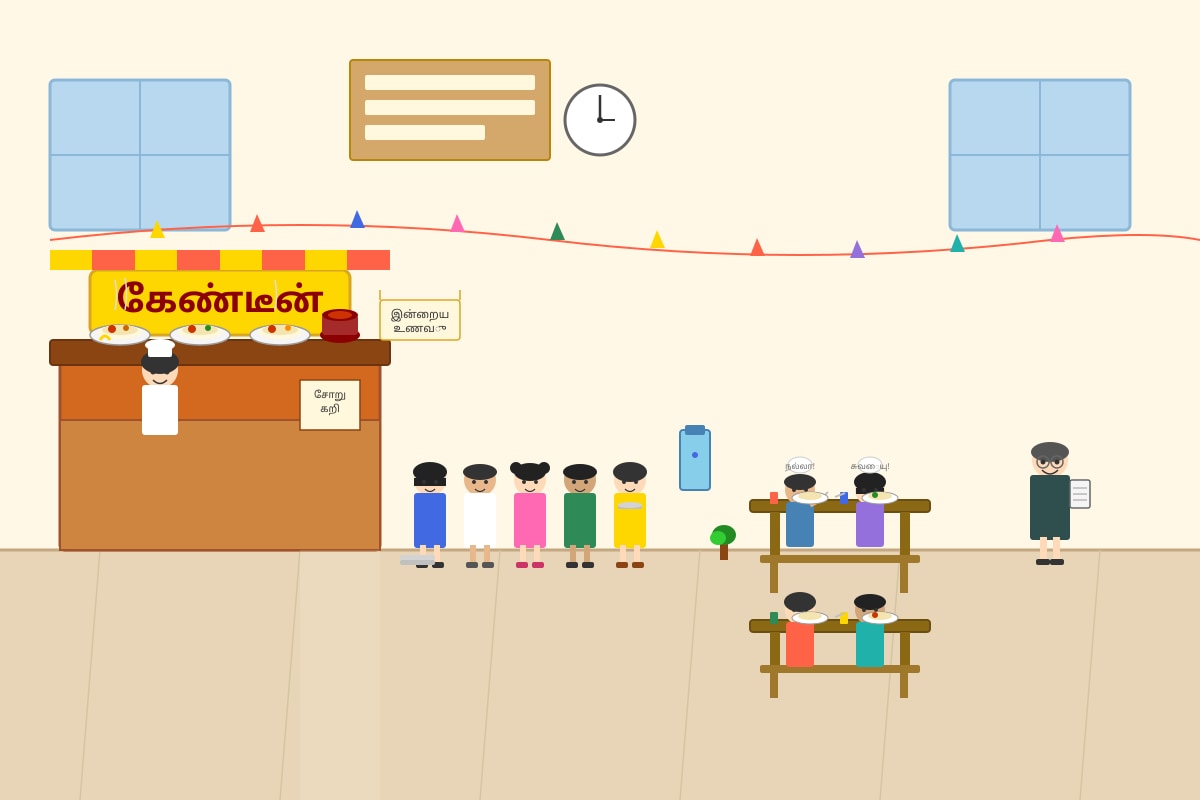
Section B: Picture Description (10 marks)
General Marking Notes for Section B:
- Content (1 mark per question): Award 1 mark if the answer is relevant to the picture and the question.
- Language (1 mark per question): Award 1 mark for grammatically correct sentences and appropriate vocabulary.
- Common Mistake: Students may give very short, one-word answers. Encourage full sentences.
- Marking Descriptor for each question:
- 2 marks: Excellent description with relevant details and good language.
- 1 mark: Basic description with some relevant details but minor language errors.
- 0 marks: Irrelevant answer or unable to respond.
6. Question: படத்தில் நீங்கள் என்ன பார்க்கிறீர்கள்? சுருக்கமாக விளக்குங்கள். (2 marks)
- Answer: பள்ளி கேண்டீன் ஒன்றை நான் பார்க்கிறேன். அங்கு மாணவர்கள் வரிசையில் நின்று உணவு வாங்குகிறார்கள். சில மாணவர்கள் மேசையில் அமர்ந்து சாப்பிட்டுக் கொண்டிருக்கிறார்கள். ஒரு ஆசிரியரும் அங்கு இருக்கிறார்.
- Explanation: The student should give a general overview of the picture. Key elements to mention: school canteen, students queuing, students eating, teacher. Award marks for mentioning at least two of these elements in a full sentence.
7. Question: படத்தில் உள்ள மாணவர்கள் என்ன செய்து கொண்டிருக்கிறார்கள்? (2 marks)
- Answer: சில மாணவர்கள் உணவு வாங்க வரிசையில் நிற்கிறார்கள். இன்னும் சில மாணவர்கள் மேசையில் அமர்ந்து உணவு சாப்பிட்டுப் பேசிக் கொண்டிருக்கிறார்கள்.
- Explanation: The student should describe the actions of the students. Key actions: queuing, buying food, sitting, eating, talking. Award marks for describing at least two different actions.
8. Question: படத்தில் ஒரு ஆசிரியர் இருக்கிறாரா? அவர் என்ன செய்து கொண்டிருக்கிறார்? (2 marks)
- Answer: ஆம், படத்தில் ஒரு ஆசிரியர் இருக்கிறார். அவர் மாணவர்களைக் கவனித்துக் கொண்டு புன்னகையுடன் நிற்கிறார்.
- Explanation: The student must first confirm the teacher's presence (ஆம், இருக்கிறார்). Then describe the teacher's action: supervising, watching, or smiling. Award marks for both parts.
9. Question: இந்த இடம் எப்படிப்பட்ட இடம்? இங்கு என்ன நடக்கிறது? (2 marks)
- Answer: இது பள்ளி கேண்டீன். இங்கு மாணவர்கள் இடைவேளையின் போது உணவு சாப்பிடுகிறார்கள். இது மிகவும் மகிழ்ச்சியான இடமாக இருக்கிறது.
- Explanation: The student should identify the place (school canteen) and describe the main activity (students eating during recess). Award marks for correctly identifying the place and the activity.
10. Question: நீங்கள் இந்த இடத்தில் இருந்தால், நீங்கள் என்ன செய்வீர்கள்? (2 marks)
- Answer: நான் இந்த இடத்தில் இருந்தால், என் நண்பர்களுடன் அமர்ந்து உணவு சாப்பிட்டுப் பேசுவேன். பிறகு, விளையாடச் செல்வேன்.
- Explanation: This is a personal response question. Any reasonable answer is acceptable as long as it is related to the canteen setting. Award marks for a clear, logical response in a full sentence.
Section C: Oral Response to Situations (10 marks)
General Marking Notes for Section C:
- Appropriateness (1 mark per question): Award 1 mark if the response is suitable for the situation.
- Language (1 mark per question): Award 1 mark for grammatically correct and polite language.
- Common Mistake: Students may use very informal or impolite language.
- Marking Descriptor for each question:
- 2 marks: Excellent response that is perfectly appropriate and well-expressed.
- 1 mark: Adequate response with minor issues in appropriateness or language.
- 0 marks: Inappropriate response or unable to respond.
11. Question: உங்கள் நண்பர் உங்கள் பிறந்தநாளுக்கு பரிசு கொடுத்தார். நீங்கள் என்ன சொல்வீர்கள்? (2 marks)
- Answer: "நன்றி நண்பா! இந்தப் பரிசு மிகவும் பிடித்திருக்கிறது. நீ எனக்கு நினைவு வைத்ததற்கு மிக்க நன்றி."
- Explanation: The student should express gratitude. Key phrases: "நன்றி" (thank you), "பிடித்திருக்கிறது" (I like it). Award marks for a polite and appreciative response.
12. Question: நீங்கள் நூலகத்தில் படித்துக் கொண்டிருக்கும்போது, உங்கள் நண்பர் சத்தமாக பேசுகிறார். நீங்கள் அவரிடம் என்ன சொல்வீர்கள்? (2 marks)
- Answer: "தயவுசெய்து சத்தமாகப் பேசாதே. நூலகத்தில் அமைதியாக இருக்க வேண்டும். நாம் பிறகு பேசலாம்."
- Explanation: The student should politely ask for silence. Key phrases: "தயவுசெய்து" (please), "சத்தமாகப் பேசாதே" (don't speak loudly), "அமைதியாக" (quietly). Award marks for a polite and reasonable request.
13. Question: உங்கள் வகுப்புத் தலைவர் தேர்தலில் நீங்கள் போட்டியிட விரும்புகிறீர்கள். உங்கள் நண்பர்களிடம் என்ன சொல்லி வாக்கு கேட்பீர்கள்? (2 marks)
- Answer: "அன்புள்ள நண்பர்களே, நான் வகுப்புத் தலைவர் தேர்தலில் போட்டியிடுகிறேன். நான் எல்லோருக்கும் உதவியாக இருப்பேன். தயவுசெய்து எனக்கு வாக்களியுங்கள்."
- Explanation: The student should give a short campaign speech. Key elements: introduce themselves, state their intention, make a promise, and ask for votes. Award marks for a clear and persuasive request.
14. Question: நீங்கள் ஒரு கடையில் பொருள் வாங்கினீர்கள். கடைக்காரர் உங்களுக்கு அதிகமான பணத்தைத் திருப்பிக் கொடுத்துவிட்டார். நீங்கள் என்ன செய்வீர்கள்? (2 marks)
- Answer: நான் கடைக்காரரிடம் சென்று, "ஐயா, நீங்கள் எனக்கு அதிகமான பணம் திருப்பிக் கொடுத்துவிட்டீர்கள். இதோ உங்கள் பணம்" என்று சொல்லி மீதிப் பணத்தைத் திருப்பிக் கொடுப்பேன்.
- Explanation: The student should demonstrate honesty. Key actions: inform the shopkeeper and return the extra money. Award marks for a clear explanation of the honest action.
15. Question: உங்கள் தம்பி/தங்கை வீட்டுப்பாடம் செய்ய மறுக்கிறார். நீங்கள் அவருக்கு என்ன அறிவுரை சொல்வீர்கள்? (2 marks)
- Answer: "வீட்டுப்பாடம் செய்வது மிகவும் முக்கியம். அது நமக்குப் பாடங்களைப் புரிந்துகொள்ள உதவும். நீ முதலில் வீட்டுப்பாடத்தை முடித்துவிட்டு, பிறகு விளையாடலாம்."
- Explanation: The student should advise the sibling to do homework. Key points: explain the importance of homework, suggest a plan (finish first, play later). Award marks for a logical and encouraging piece of advice.
Section D: Topic Presentation (10 marks)
General Marking Notes for Section D:
- Content (1 mark per question): Award 1 mark if the answer is relevant to the question and the overall topic.
- Fluency and Coherence (1 mark per question): Award 1 mark if the student speaks in a connected, logical manner without long pauses.
- Common Mistake: Students may go off-topic or give very short answers.
- Marking Descriptor for each question:
- 2 marks: Excellent response that is detailed, relevant, and fluent.
- 1 mark: Basic response that is relevant but lacks detail or fluency.
- 0 marks: Irrelevant response or unable to speak.
16. Question: உங்களுக்குப் பிடித்த விடுமுறை நாள் எது? அது ஏன் உங்களுக்குப் பிடித்தது? (2 marks)
- Answer: எனக்குப் பிடித்த விடுமுறை நாள் தீபாவளி. ஏனென்றால், அந்த நாளில் புது உடை உடுத்துவது, இனிப்புகள் சாப்பிடுவது, பட்டாசு வெடிப்பது போன்ற பல வேடிக்கையான விஷயங்கள் இருக்கும்.
- Explanation: The student must name a holiday (e.g., தீபாவளி, பொங்கல், ஆங்கிலப் புத்தாண்டு) and give a reason. Any reasonable holiday and reason are acceptable. Award marks for a clear connection between the holiday and the reason.
17. Question: அந்த நாளில் நீங்கள் என்ன செய்வீர்கள்? (2 marks)
- Answer: அந்த நாளில் நான் அதிகாலையில் எழுந்து குளித்துவிட்டு, புது உடை உடுத்துவேன். பிறகு, கோயிலுக்குச் சென்று வந்து, வீட்டில் உள்ள பெரியவர்களை வணங்குவேன். பின்னர், நண்பர்களுடன் சேர்ந்து பட்டாசு வெடிப்பேன்.
- Explanation: The student should describe 2-3 activities they do on that day. Award marks for a sequence of activities that are typical for the chosen holiday.
18. Question: அந்த நாளில் நீங்கள் யாருடன் நேரத்தை செலவிடுவீர்கள்? (2 marks)
- Answer: நான் என் குடும்பத்தினருடன் நேரத்தை செலவிடுவேன். அம்மா, அப்பா, தம்பி, தாத்தா, பாட்டி அனைவருடனும் சேர்ந்து மகிழ்ச்சியாக இருப்பேன். மாலையில் நண்பர்களையும் சந்திப்பேன்.
- Explanation: The student should mention family members and/or friends. Award marks for naming specific people (e.g., parents, siblings, grandparents, friends).
19. Question: அந்த நாளில் நீங்கள் சிறப்பாகச் சாப்பிடும் உணவு எது? (2 marks)
- Answer: தீபாவளி நாளில் நாங்கள் சிறப்பாக முறுக்கு, லட்டு, சீடை போன்ற பல இனிப்புகளைச் செய்வோம். எனக்கு மிகவும் பிடித்த உணவு முறுக்கு.
- Explanation: The student should name a specific food item associated with the holiday. Award marks for naming a relevant and traditional food item.
20. Question: அந்த விடுமுறை நாள் ஏன் முக்கியமானது என்று நினைக்கிறீர்கள்? (2 marks)
- Answer: தீபாவளி நாள் முக்கியமானது, ஏனென்றால் அது தீமைக்கு எதிராக நன்மையின் வெற்றியைக் கொண்டாடுகிறது. மேலும், இது குடும்பத்தினர் அனைவரும் ஒன்று சேர்ந்து மகிழ்வதற்கான ஒரு நாளாகும்.
- Explanation: The student should explain the cultural, religious, or personal significance of the holiday. Award marks for a thoughtful explanation that goes beyond just "it's fun."