AI Generated Exam Paper
Primary 5 Higher Tamil Practice Paper 5
Free P5 Higher Tamil Practice Paper 5, Kimi2.6 AI version, with questions, answers, and syllabus-aligned practice for Singapore students.
These static practice materials are generated from the site's syllabus and paper-generation workflow, with source and model context shown so students and parents can evaluate the material before use.
Questions
Free quiz and exam paper access
Enter your details to view this paper
Your access is remembered on this device.
Answers
TuitionGoWhere Practice Paper Answer Key
Higher Tamil Primary 5 - Practice Paper (Reading)
Version 5 of 5
Section A: Reading Comprehension (Passage 1) [Q1-Q10, 25 marks]
Passage Summary: A small raindrop falls from a cloud, initially feeling sad about its smallness. It helps a wilting flower and a dry seed before joining a river with other raindrops, learning that unity creates great change.
Question 1 [2 marks]
Answer: மழைத்துளி தன்னை மிகவும் சிறியதாக எண்ணி, தன்னால் எதுவும் செய்ய இயலாது என்று நினைத்ததால் சோகமாக இருந்தது. / The raindrop felt sad because it thought it was very small and could not do anything meaningful.
Marking notes:
- 1 mark: Identifies the small size / feeling of insignificance
- 1 mark: Identifies the belief that it could do nothing useful
Teaching note: The opening establishes the raindrop's low self-esteem. Students should locate the direct thoughts in paragraph 2: "நான் எவ்வளவு சிறியவள்! எனக்கு என்ன செய்ய முடியும்?" These rhetorical questions show internal doubt and sadness.
Question 2 [2 marks]
Answer: மழைத்துளி முதலில் ஒரு பூவின் மீது விழுந்தது. அந்தப் பூ வாடிக்கொண்டிருந்தது; மழைத்துளியால் அது புத்துணர்ச்சி அடைந்தது. / The raindrop first fell on a flower. The flower was wilting; it became refreshed by the raindrop.
Marking notes:
- 1 mark: Identifies the flower as the first landing place
- 1 mark: States the flower's condition (wilting) or the positive change (refreshment)
Question 3 [3 marks]
Answer: இந்த வரியில் மழைத்துளி தன்னை மிகச் சிறியதாகக் கருதுகிறது. "எனக்கு என்ன செய்ய முடியும்?" என்ற கேள்வி தன்னால் எந்தப் பயனும் இல்லை என்ற தன்மதிப்புக்குறைவைக் (low self-worth) காட்டுகிறது. இது கதையின் தொடக்கத்தில் அதன் மனநிலையை விளக்குகிறது. / In this line, the raindrop sees itself as tiny. The question "What can I do?" reveals its feeling of uselessness and low self-worth, establishing its emotional state at the story's beginning.
Marking notes:
- 1 mark: Identifies the literal meaning (small size, questioning ability)
- 1 mark: Explains the emotional subtext (self-doubt, sadness, feeling insignificant)
- 1 mark: Connects to narrative function (sets up the character's starting point for growth)
Teaching note: This is a character-establishing question. The exclamation mark and rhetorical question are literary cues. Students should recognize that the raindrop's perception of itself will change by the end—this is foreshadowing for the lesson about collective power.
Question 4 [2 marks]
Answer: மழைத்துளி இரண்டாவதாக ஒரு சிறிய விதையின் மீது சென்றது. அந்த விதை தண்ணீரின்றி காய்ந்திருந்தது. / The raindrop went to a small seed second. The seed was dry without water.
Marking notes:
- 1 mark: Identifies the seed as the second recipient
- 1 mark: Describes the seed's condition (dry, lacking water)
Question 5 [3 marks]
Answer: விதை தண்ணீரின்றி காய்ந்திருந்தது; வளர முடியாத நிலையில் இருந்தது. மழைத்துளி அதை ஈரப்படுத்தியதால், இப்போது அது முளைத்து வளரும். அதனால் விதை நன்றி கூறியது. / The seed was dry and could not grow without water. The raindrop moistened it, enabling it to sprout and grow. Therefore the seed thanked the raindrop.
Marking notes:
- 1 mark: States the problem (dryness, inability to grow)
- 1 mark: States the raindrop's action (moistening, providing water)
- 1 mark: States the result (ability to grow/sprout) and connects to gratitude
Teaching note: Cause-effect chain: dry seed → water provided → can now grow → expression of thanks. Students should show they understand the dependency relationship in nature.
Question 6 [2 marks]
Answer: "புத்துணர்ச்சி" என்றால் fresh energy/renewed vigour. பூ வாடியிருந்தது; மழைத்துளி தண்ணீரைக் கொடுத்ததால் அது மீண்டும் உயிர்ப்புடன், சுறுசுறுப்பாக ஆனது. / The flower had been wilting; the water revived it to become lively and energetic again.
Marking notes:
- 1 mark: Gives correct meaning (renewed energy, freshness, revival)
- 1 mark: Applies to context (flower becoming lively after receiving water)
Question 7 [3 marks]
Answer: மழைத்துளி இரண்டு பாடங்களைக் கற்றுக்கொண்டது: (1) தனித்து ஒருத்தியாக இருக்கும்போது சிறியவள்; (2) மற்ற மழைத்துளிகளுடன் சேர்ந்தால், பெரிய நதியாக மாறி, பெரிய மாற்றத்தை உருவாக்க இயலும். இது ஒற்றுமையின் சக்தியைக் (power of unity) காட்டுகிறது. / The raindrop learned: alone it is small, but united with others it becomes a mighty river capable of great change. This shows the power of unity.
Marking notes:
- 1 mark: States the contrast (small alone vs. powerful together)
- 1 mark: Mentions the specific transformation (becoming a river, collective action)
- 1 mark: Expresses the abstract lesson (unity, teamwork, collective power)
Teaching note: This is the story's turning point—thematic revelation. The river metaphor represents collective strength. Students should identify the explicit realization in paragraph 6 and generalize it.
Question 8 [3 marks]
Answer: இந்த வாக்கியம் கதையின் முடிவுக்கும், மழைத்துளியின் வளர்ச்சிக்கும் (character development) முக்கியமானது. தொடக்கத்தில் சோகமாக இருந்த மழைத்தளி, இப்போது தன்னைப் பற்றி பெருமையாக நினைக்கிறது. இந்த மாற்றம் கதையின் பாடத்தை உறுதிப்படுத்துகிறது: சிறியவரும் பயனுள்ளவர்களாக இருக்க முடியும். / This sentence shows the raindrop's complete character arc. From initial sadness, it now feels pride. This transformation confirms the story's lesson that even small beings can be useful through unity.
Marking notes:
- 1 mark: Identifies the change from beginning to end (sad → proud)
- 1 mark: Mentions character growth / emotional transformation
- 1 mark: Connects to the theme (self-acceptance, value of contributing, regardless of size)
Teaching note: Literary analysis of character arc. The circular structure (begins with self-perception, ends with transformed self-perception) creates narrative closure.
Question 9 [3 marks]
Answer: கதையின் பாடம்: சிறியவர்களும் பயனுள்ளவர்களாக இருக்க முடியும்; ஒற்றுமையே சக்தி.
காரணம் 1: மழைத்துளி ஒருத்தியாக இருந்தபோது தன்னைச் சிறியவளாகக் கருதினாள். ஆனால் பூவுக்கும் விதைக்கும் உதவியபோது அதன் முக்கியத்துவம் தெரிந்தது.
காரணம் 2: ஆற்றில் மற்றவர்களுடன் சேர்ந்தபோது, பெரிய நதியாக மாறியது. இது ஒன்றாகச் சேர்ந்தால் பெரிய சாதனை சாத்தியம் என்பதைக் காட்டுகிறது.
Marking notes:
- 1 mark: States a clear lesson/theme
- 1 mark: First reason with evidence from text
- 1 mark: Second reason with evidence from text
Question 10 [2 marks]
Answer: முதலில் நானும் மழைத்துளியைப் போல சோகமாக இருப்பேன்—"நான் சிறியவன், என்னால் எதுவும் இல்லை" என்று நினைப்பேன். ஆனால் மற்றவர்களுக்கு உதவியபின், என்னால் மாற்றம் உருவாக்க இயலும் என்று உணர்வேன். இறுதியில் ஒற்றுமையின் முக்கியத்துவத்தைப் புரிந்து, தன்னம்பிக்கையுடன் (self-confidence) இருப்பேன்.
Marking notes:
- 1 mark: Appropriate initial feeling (sadness, doubt, feeling small)
- 1 mark: Appropriate transformation (pride, confidence, understanding of unity/self-worth)
Teaching note: Personal response requires empathy with the character's journey, not just plot repetition. The emotional trajectory should mirror the text.
Section A Total: 25 marks
Section B: Reading Comprehension (Passage 2) [Q11-Q17, 22 marks]
Passage Summary: Informational text about four traditional Tamil Nadu sports (Silambam, Mallar Kambam, Kabaddi, Koli Kattai), their benefits, and the author's call to revive them in schools as children increasingly play computer games.
Question 11 [2 marks]
Answer: நான்கு விளையாட்டுகள்: (1) சிலம்பம், (2) மல்லர் கம்பம், (3) கபடி, (4) கோல் கட்டை. / Four sports: Silambam, Mallar Kambam, Kabaddi, and Koli Kattai.
Marking notes:
- 1 mark: Correct number (four)
- 1 mark: All four names correct (any order acceptable; partial credit for three correct)
Question 12 [3 marks]
Answer: இந்த வாக்கியத்தின் பொருள்: இந்த விளையாட்டுகள் நம் முன்னோர்களின் (ancestors) வீரியத்தையும், உடல் வலிமையையும் நமக்குக் காட்டுகின்றன. அவர்கள் இந்த விளையாட்டுகளை விளையாடி உடலையும் மனதையும் வலுப்படுத்திக் கொண்டனர். இது நம் பாரம்பரியத்தின் (heritage) முக்கிய அங்கம். / These sports demonstrate our ancestors' courage and physical strength. They played these to develop body and mind, making this an important part of our heritage.
Marking notes:
- 1 mark: Explains "மூதாதையரின் வீரம்" (ancestors' courage/bravery)
- 1 mark: Explains "பலம்" (physical strength/power)
- 1 mark: Connects to heritage/tradition/cultural value
Question 13 [3 marks]
Answer: சிலம்பம் உடலை வலுவாக்குகிறது / strengthens the body. மல்லர் கம்பமும் உடல் வலிமையைக் கோருகிறது; ஆனால் சிலம்பம் தற்காப்புக் கலையாக இருப்பதால் கைகளின் சுழற்சியையும், வேகத்தையும் வளர்க்கிறது. மல்லர் கம்பம் சமநிலையையும் தைரியத்தையும் மையமாகக் கொண்டது. / Both develop strength, but Silambam specifically trains arm coordination and speed as a martial art, while Mallar Kambam focuses on balance and courage.
Marking notes:
- 1 mark: States Silambam's benefit (body strengthening / martial art training)
- 1 mark: Identifies valid comparison sport with its benefit
- 1 mark: Clearly distinguishes the two (speed/arm work vs. balance/courage, or other valid differentiation)
Teaching note: Comparison requires reading across categories. Students must not just list benefits but actively contrast two sports.
Question 14 [4 marks]
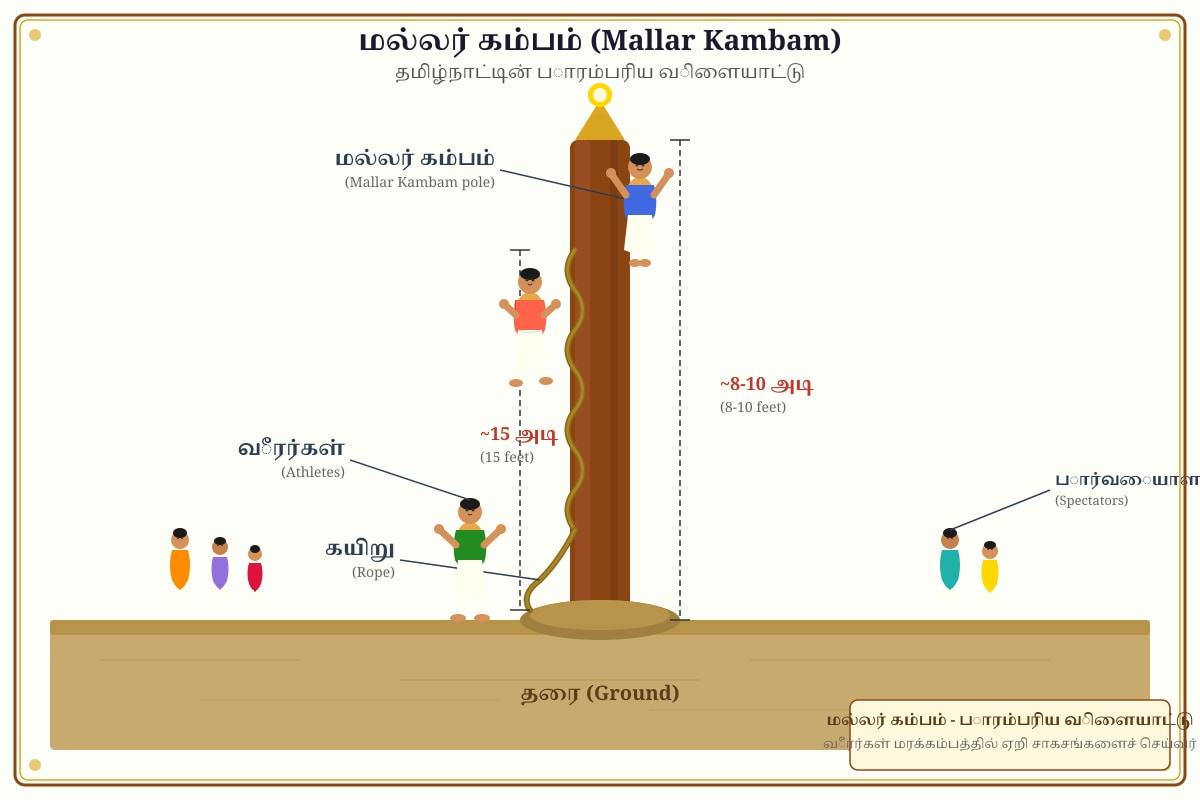
Answer: மல்லர் கம்பத்திற்குத் தேவையான உபகரணங்கள்:
| உபகரணம் | பயன் |
|---|---|
| மரக்கம்பம் (wooden pole, 8-10 அடி உயரம்) | வீரர் ஏறி சாகசம் செய்வதற்கான முக்கியக் கருவி |
| கயிறு (rope, 15 அடி நீளம்) | பாதுகாப்பிற்கும், சமநிலைக்கும் உதவும் |
| தரை/பாதுகாப்பு விரிப்பு | விழும்போது காயம் இல்லாமல் பாதுகாக்கும் |
கம்பம் உயரமாக இருப்பதால் வீரரின் தைரியம் சோதிக்கப்படுகிறது. கயிறு பாதுகாப்புடன் சாகசம் செய்ய உதவுகிறது.
Marking notes:
- 1 mark: Identifies the wooden pole with approximate dimensions
- 1 mark: Identifies the rope with purpose
- 1 mark: States benefits of each piece of equipment
- 1 mark: Additional relevant detail (safety mat, ground surface, or functional importance of height/balance)
Visual reference for marking: The diagram <image_placeholder id="Q14-fig1"> should show a vertical wooden pole (8-10 feet), athletes climbing/performing, rope for support, traditional attire, ground surface. Labels in Tamil and English expected.
Question 15 [3 marks]
Answer: மாற்றம்: இன்றைய குழந்தைகள் கணினி விளையாட்டுகள் / electronic games-இல் அதிக நேரம் செலவிடுகின்றனர். பாரம்பரிய விளையாட்டுகளை விட்டுவிடுகின்றனர்.
கருத்து: இது பெரும்பாலும் தீயதே (mostly negative). காரணம்: கணினி விளையாட்டுகள் உடல் அசைவைக் குறைக்கின்றன; கண் பார்வைக்கும், தோல் பிரச்சனைக்கும் வழிவகுக்கின்றன. பாரம்பரிய விளையாட்டுகள் உடலையும் மனதையும் ஆரோக்கியமாக வைக்கும். ஆனால் சில கணினி விளையாட்டுகள் மூளையையும் வேகப்படுத்தலாம்; சமநிலை தேவை.
Marking notes:
- 1 mark: Identifies the shift (computer/electronic games replacing traditional sports)
- 1 mark: Takes a position (negative/positive/balanced) with at least one supporting reason
- 1 mark: Provides second reason or deeper analysis (health, social interaction, heritage preservation, or balanced perspective on digital benefits)
Teaching note: Evaluation question—no single "correct" position, but reasoning must follow from stated position. Accept balanced answers that acknowledge limited benefits of educational gaming but prioritize physical/social development.
Question 16 [4 marks]
Answer: கபடி விதிகள்:
- இரண்டு குழுக்கள் இருக்கும்
- ஒரு வீரர் "ரेइடர்" ஆக எதிர்க்குழுவின் பகுதிக்குள் செல்வார்
- மூச்சு ஒரே இழுப்பில் "கபடி-கபடி" என்று சொல்லிக்கொண்டே எதிரி வீரர்களைத் தொடவேண்டும்
- திரும்பி தன்குழுப் பகுதிக்கு வந்தால் புள்ளி
குழுவிற்கு நல்ல பயிற்சி: கபடி ஒருங்கிணைந்த குழு முயற்சியைக் (team coordination) கோருகிறது. தாக்குதல் வீரருக்கு குழுவினர் காயம் இல்லாமல் திரும்ப உதவ வேண்டும்; எதிர்க்குழு பிடிக்கக் கூடாது என்று கூட்டாகத் திட்டமிட வேண்டும். இது ஒற்றுமையையும், வேகத்தையும், புத்திசாலித்தனத்தையும் வளர்க்கிறது.
Marking notes:
- 1 mark: Describes basic rule (raider crosses, touches opponents, chants "kabaddi")
- 1 mark: Describes scoring/return mechanism
- 1 mark: Explains teamwork element (defense coordination, helping raider return)
- 1 mark: Connects to broader skills (speed, strategy, communication, trust)
Question 17 [3 marks]
Answer: ஆசிரியரின் கருத்து: பள்ளிகளில் பாரம்பரிய விளையாட்டுகளை மீண்டும் கற்பிக்க வேண்டும். குழந்தைகள் கணினியிலிருந்து வெளியே வர வேண்டும்; உடல் ஆரோக்கியமும் தமிழ் பாரம்பரிய அடையாளமும் காக்கப்பட வேண்டும்.
ஆதரவு/எதிர்ப்பு: ஆம், நான் ஆதரிக்கிறேன். காரணங்கள்: (1) உடல் பயிற்சி குழந்தைகளின் வளர்ச்சிக்கு அவசியம்; (2) இது தமிழ் கலாச்சாரத்தை அடுத்த தலைமுறைக்குக் கொண்டு செல்லும்; (3) குழந்தைகள் சமூகத் திறன்களைக் கற்றுக்கொள்வர்.
Marking notes:
- 1 mark: Accurately summarizes the teacher's/viewpoint in the text
- 1 mark: States clear position (agree/disagree with justification)
- 1 mark: Provides reasonable supporting argument(s)
Section B Total: 22 marks
Section C: Vocabulary in Context [Q18-Q20, 13 marks]
Question 18 [4 marks]
Sample acceptable answers (any five from underlined words):
| # | Tamil Word | English Meaning | New Sentence |
|---|---|---|---|
| (i) | புரிந்துகொள்ள | to understand | மாணவன் பாடத்தைப் புரிந்துகொள்ள முயற்சி செய்தான். |
| (ii) | கவனமாக | carefully, attentively | மருத்துவர் கவனமாக நோயாளியைப் பரிசோதித்தார். |
| (iii) | துல்லியமான | precise, accurate | வேதியியல் சோதனையில் துல்லியமான அளவீடுகள் அவசியம். |
| (iv) | முடிவு | conclusion, decision | சபையின் முடிவு அனைவருக்கும் நன்மை தரும். |
| (v) | சான்றுகளைச் | evidences, proofs | நீதிபதி சான்றுகளைச் சரிபார்த்தார். |
| (vi) | முறையான | systematic, proper | முறையான உணவுப் பழக்கம் ஆரோக்கியத்திற்கு முக்கியம். |
| (vii) | செயற்கைக்கோள் | artificial satellite | செயற்கைக்கோள் வானிலை முன்னறிவிப்பைத் தருகிறது. |
| (viii) | தகவல்களைப் | informations | இணையம் வழியாக தகவல்களைப் பகிர்ந்துகொள்ளலாம். |
| (ix) | முன்னேற்றத்தின் | of progress | அறிவியல் முன்னேற்றத்தின் பயன்கள் அனைவருக்கும் கிடைக்க வேண்டும். |
Marking notes (per item):
- 0.5 marks: Correct English meaning
- 0.5 marks: Grammatically correct, original Tamil sentence using the word appropriately
Partial credit: If student provides 5 items but some have minor errors: award proportionally. Max 4 marks regardless of number attempted (assess best 4 if more than 4 provided, or scale if fewer).
Question 19 [4 marks]
Answer:
- செயற்கை = man-made / artificial / human-created (மனிதனால் உருவாக்கப்பட்டது)
- கோள் = sphere / planet / orb (உருண்டையான பொருள், கோள்)
- செயற்கைக்கோள் = man-made object launched into orbit / artificial satellite (மனிதனால் விண்ணில் ஏவப்பட்ட, பூமியைச் சுற்றி வரும் கருவி)
விளக்கம்: மனிதன் கையால் உருவாக்கப்பட்டது என்பதை "செயற்கை" குறிக்கிறது. "கோள்" என்பது உருண்டை வடிவத்தைக் குறிக்கிறது. இணைந்து, மனிதன் விண்ணில் ஏவிய உருண்டை/கருவி என்று பொருள்.
Marking notes:
- 1 mark: Correct meaning of "செயற்கை" (artificial/man-made)
- 1 mark: Correct meaning of "கோள்" (sphere/planet/celestial body)
- 1 mark: Correct combined meaning (artificial satellite)
- 1 mark: Explanation of how the parts combine to create the whole meaning / etymological logic
Question 20 [5 marks]
Answer with expected diagram features:
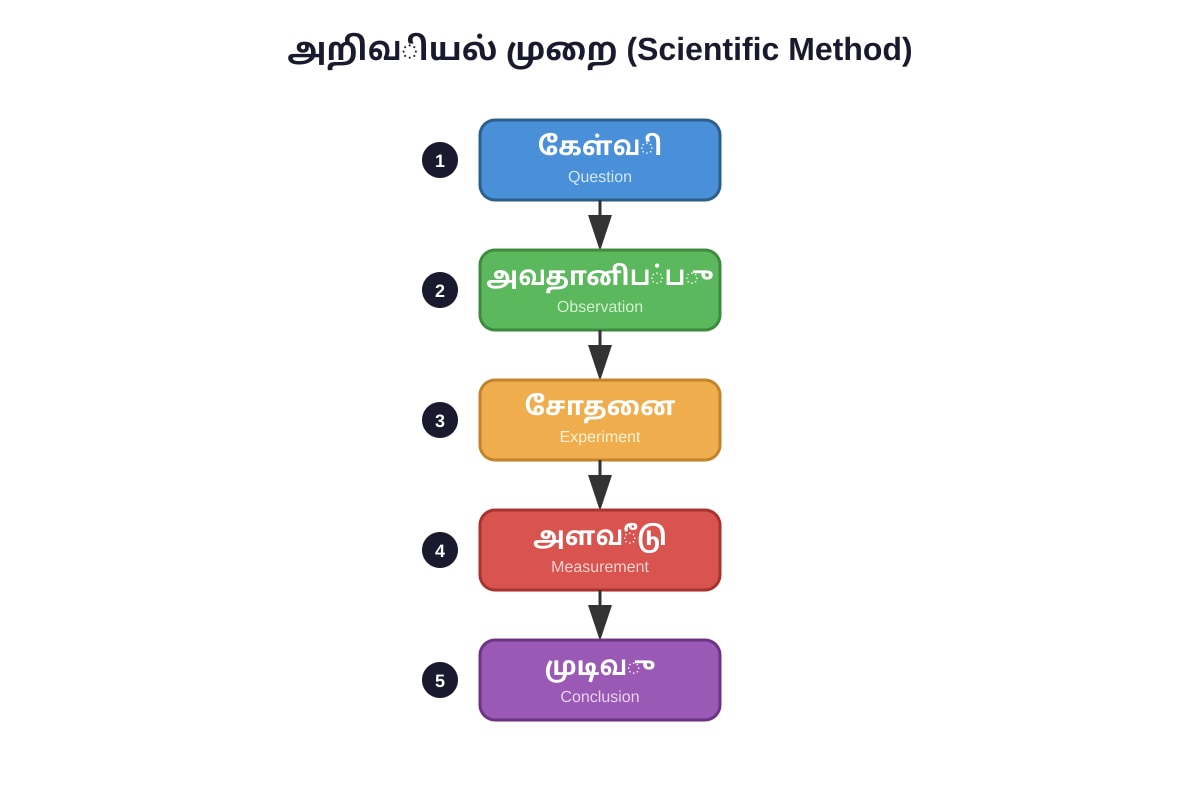
The flowchart <image_placeholder id="Q20-fig1"> shows five steps of the scientific method in cycle or linear flow: கேள்வி → அவதானிப்பு → சோதனை → அளவீடு → முடிவு
| படி | Step | முக்கியத்துவம் |
|---|---|---|
| 1 | கேள்வி (Question) | என்ன தெரிந்துகொள்ள வேண்டும் என்பதை வரையறுக்கிறது. இலக்கு தெளிவாகிறது. |
| 2 | அவதானிப்பு (Observation) | உலகைக் கவனித்து, தகவல்களைச் சேகரிக்கிறோம். பிரச்சனையைப் புரிந்துகொள்ள உதவுகிறது. |
| 3 | சோதனை (Experiment) | கேள்விக்கு விடை காண சோதனைகள் செய்கிறோம். கட்டுப்பாடு மாறிகள் (controlled variables) முக்கியம். |
| 4 | அளவீடு (Measurement) | துல்லியமான தரவு (precise data) சேகரிப்பது முக்கியம். பிழைகளைக் குறைக்கும். |
| 5 | முடிவு (Conclusion) | தரவுகளைப் பகுப்பாய்வு செய்து, கேள்விக்கு விடை தருகிறோம். புதிய கேள்விகளுக்கு வழிவகுக்கலாம். |
Marking notes:
- 5 × 1 mark each: Each step named correctly from diagram + its importance explained
Partial credit: If steps are correct but importance missing or weak: 0.5 per item. If importance is stated but step names slightly wrong (transpositions, minor spelling): deduct 0.5 total for naming errors, assess importance marks separately.
Teaching note: The scientific method in Tamil terminology is the syllabus focus. Students must connect generic scientific process to Tamil vocabulary and understand why each step matters to reliability and validity of findings.
Section C Total: 13 marks
Grand Total: 60 marks
Metadata & Quality Notes:
- All question numbers verified 1-20 continuous
- Section totals: A=25, B=22, C=13; Grand Total=60
- Duration estimate: Section A ~20 min, Section B ~20 min, Section C ~15 min, review ~5 min = 60 minutes total
- Two explicit
<image_placeholder>tags included with specific rendering instructions - All questions complete with passages, stimuli, or explicit visual dependencies
- No vague placeholders like "[insert passage]" or "[diagram]"
- No unfinished tables or scaffolding residue
- Language level: Primary 5 Higher Tamil—vocabulary includes some S2-tier words but scaffolded with context clues
- Answer keys include teaching explanations, not merely final answers