AI Generated Exam Paper
Primary 5 Higher Tamil Practice Paper 4
Free P5 Higher Tamil Practice Paper 4, Kimi2.6 AI version, with questions, answers, and syllabus-aligned practice for Singapore students.
These static practice materials are generated from the site's syllabus and paper-generation workflow, with source and model context shown so students and parents can evaluate the material before use.
Questions
Free quiz and exam paper access
Enter your details to view this paper
Your access is remembered on this device.
Answers
TuitionGoWhere Practice Paper (AI) - Higher Tamil Primary 5
Answer Key — Version 4 of 5
Subject: Higher Tamil
Level: Primary 5
Total Marks: 60
Section A: வாசிப்பு புரிதல் (Reading Comprehension I) — 20 marks
Q1 [2 marks]
Answer: "உயிர்களின் உயிர் நாடி" என்பது உவமை அல்லது உருவகம். நாடி = இதயத் துடிப்பு/இரத்த ஓட்டம். நீர் இல்லாவிட்டால் உயிர்கள் வாழ முடியாது; நாடி நின்றால் உயிர் பிரிவது போல, நீர் இல்லாவிட்டால் உயிர்கள் அழிவதுடன் ஒப்பிடப்பட்டுள்ளது.
Marking: 1 mark for identifying "life-giving/necessary for survival"; 1 mark for explaining the metaphor (connection between pulse/life thread and water's essential nature)
Q2 [2 marks]
Answer: சுமார் 60 சதவிகிதம் (approximately 60 percent)
Marking: 2 marks for exact number from passage; 1 mark if "சுமார்" approximated but correct number given; 0 marks for incorrect percentage
Q3 [2 marks]
Answer: இவை நதிகள் (rivers). இவை விவசாயத்திற்கு உதவுகின்றன / பாசனத்திற்கு தண்ணீர் வழங்குகின்றன.
Marking: 1 mark for identifying as rivers; 1 mark for explaining their use in agriculture/irrigation
Q4 [3 marks]
Answer:
- முதல் காரணம்: மாசுபாடு (pollution) — தொழிற்சாலைக் கழிவுகள், குப்பைகள், எரிப்பொருட்கள் ஆகியவை நதிகளில் கலந்து நீரை அசுத்தமாக்குகின்றன
- இரண்டாம் காரணம்: மணல் கொள்ளை (sand mining/illegal sand extraction) — நதிக்கரைகளில் அதிகமான மணல் அகற்றப்படுவதால் நதியின் இயற்கை ஓட்டம் மாறுகிறது, நீர்நிலை பாதிக்கப்படுகிறது
Marking: 1 mark for each cause identified (max 2); 1 mark for explanation of either cause; deduct 0.5 for incomplete Tamil expression
Q5 [3 marks]
Answer: அது செலவு கூடுதலானது (it is very expensive/costly). கடல் நீரைக் குடிநீராக்க கரைப்படுத்தல் (desalination) செயல்முறைகள் செலவு அதிகமானவை; பெரிய தொழிற்சாலைகள், மின்சாரம், பராமரிப்பு ஆகியவை தேவைப்படுவதால் ஏழை நாடுகளுக்கும், சிறிய ஊர்களுக்கும் இது எளிதான தீர்வு அல்ல.
Marking: 1 mark for identifying high cost; 2 marks for explaining why (infrastructure, energy, maintenance); or 1 mark for partial explanation
Q6 [2 marks]
Answer: வீட்டுக் கூரைகளில் மழைநீரைச் சேகரித்து, குழாய் வழியாக கிணறுகள் அல்லது சேமிப்புத் தொட்டிகளில் சேமிக்கலாம். இதை மழைநீர் சேகரிப்பு முறை (rainwater harvesting) என்கிறோம்.
Marking: 1 mark for mentioning roof/collection; 1 mark for mentioning storage tank/well; 2 marks for complete coherent method
Q7 [3 marks]
Answer: "சிறுசேமிப்பு பெருவெடுப்பு" = சிறிய சேமிப்புகள் கூடி பெரிய பயனைத் தரும். நீர் சேமிப்பில்: ஒவ்வொரு நாளும் குழாயை மூடி நீரை மிச்சப்படுத்துதல், குறைந்த நேரம் குளித்தல், கழிப்பறையில் குறைந்த நீரைப் பயன்படுத்தும் கருவிகளைப் பொருத்துதல் — இவை தனித்தனியே சிறிய சேமிப்புகள்; ஆனால் அவை கூடி ஆண்டுக்கு ஆயிரக்கணக்கான லிட்டர் நீரைக் காப்பாற்றும்.
Marking: 1 mark for explaining the proverb's meaning; 2 marks for specific water-saving examples with connection to cumulative effect
Q8 [3 marks]
Answer:
- குழாயை மூடாமல் பற்பநீர் கொப்பளிப்பதைத் தவிர்த்தல் — குழாய் விட்டுச் செல்லும் போது நிமிடத்திற்கு 6-12 லிட்டர் நீர் வீணாகும்
- அதிக நேரம் குளிப்பதைத் தவிர்த்தல் — குளியல் ஒவ்வொரு நிமிடமும் 10-20 லிட்டர் நீரைப் பயன்படுத்தும்
இவை முக்கியம் ஏனெனில், நீர் வரம்புரிமை (finite resource); இன்றைய வீணாக்கல் நாளைய தட்டுப்பாட்டை உருவாக்கும்.
Marking: 1 mark for each method (max 2); 1 mark for explaining importance with reasoning; accept equivalent reasonable answers
Section B: சொற்பொருள் கண்டறிதல் மற்றும் பயன்பாடு (Vocabulary in Context) — 20 marks
Q9 [2 marks]
Answer: அ) பகுதி
Explanation: "அங்கம்" = part/limb/constituent part. இயற்கையின் முக்கிய அங்கம் = an important part of nature. Other options: எதிரி = enemy, போட்டி = competition, விளையாட்டு = game/play — none fit context.
Q10 [2 marks]
Answer: இ) கழிவு
Explanation: "மாசுபாடு" = pollution, contamination. கழிவு = waste, which causes pollution. அ) and ஆ) mean cleanliness/purity (opposites); ஈ) means order — irrelevant.
Q11 [2 marks]
Answer: அ) குடிக்கத் தகுந்த நீராக மாற்றும்
Explanation: "குடிநீராக்கும்" = making into drinking water (குடி + நீர் + ஆக்கும்). Root: குடி = drink. Desalination makes seawater potable. Other options misinterpret the morphological structure.
Q12 [2 marks]
Answer: இ) மலிவு
Explanation: "செலவு கூடுதல்" = high cost/expensive. Its opposite is மலிவு = cheap/inexpensive. வருமானம் = income (not direct opposite); மிச்சம் = savings (different concept); சிக்கனம் = economy/thrift (related but not antonym).
Q13 [2 marks]
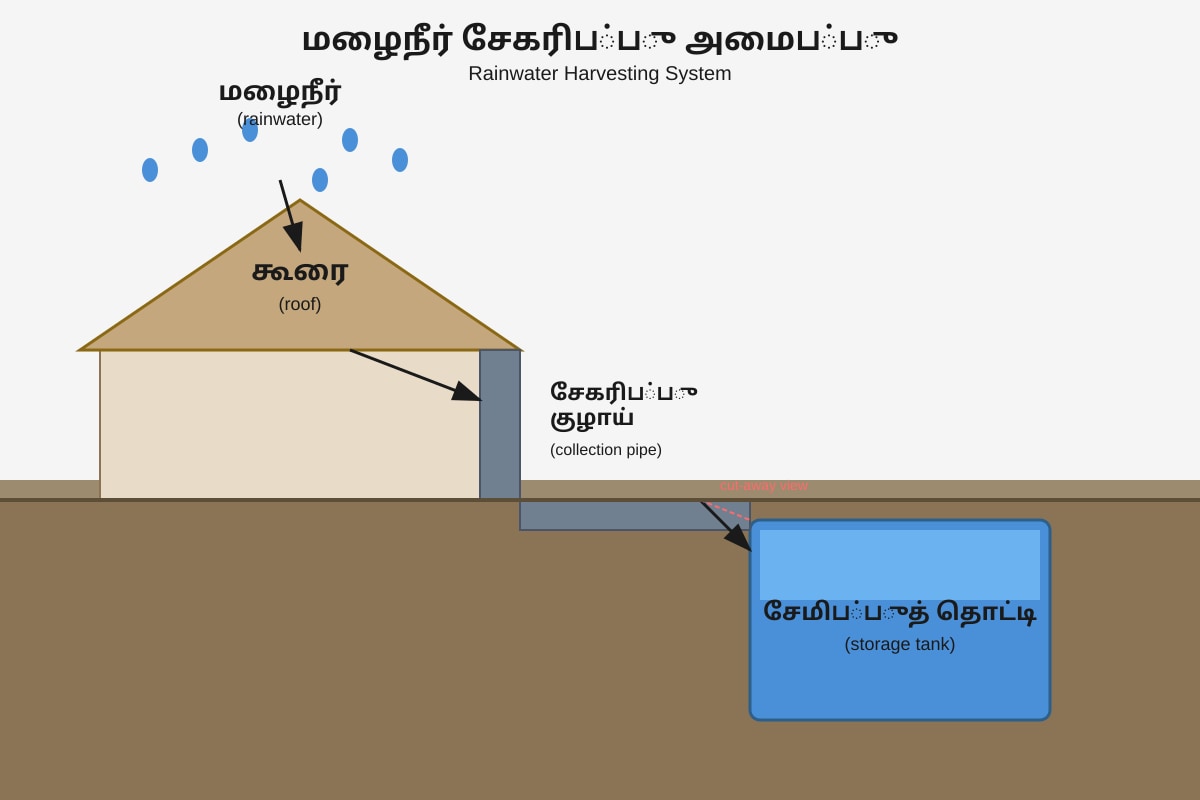
Answer: மழைநீர் சேகரிப்பு (rainwater harvesting / மழைநீரைச் சேகரித்தல்)
Explanation: The diagram shows கூரை (roof) → சேகரிப்பு குழாய் (collection pipe) → சேமிப்புத் தொட்டி (storage tank). This is the household rainwater harvesting system described in the passage. Expected visual: sloped roof with gutter, downpipe leading to cylindrical underground tank.
Marking: 2 marks for correct identification; 1 mark for partial identification with relevant components named
Q14 [3 marks]
Answer:
"எதிர்கால சந்ததியினர்" = future generations (our children, grandchildren, those who come after us).
இந்த அழைப்பு = நாம் இன்று சேமிக்கும் நீர் அல்லது வீணாக்கும் நீர், எதிர்காலத்தில் அவர்களின் வாழ்வைப் பாதிக்கும். நாம் கடனாளிகளாக இல்லாமல், காப்பவர்களாக இருக்க வேண்டும்.
Marking: 1 mark for identifying future generations; 2 marks for explaining the call to responsibility/stewardship
Q15 [3 marks]
Answer:
உவமை அழகு: சிறிய "துளி" (drop) → பெரிய "அமுது" (nectar/ambrosia of immortality). இது அளவில் சிறியது, ஆனால் மதிப்பில் பெரியது என்ற கருத்தைக் காட்டுகிறது.
துளி = சிறிய அளவு, ஆனால் பல துளிகள் கூடி ஆறாகும்.
அமுது = தேவர்களின் பானம், மரணமில்லா வாழ்வுக்கானது; இங்கு நீர் = வாழ்வுக்கு அவசியமானது.
Marking: 1 mark for explaining the metaphor's structure (small → precious); 1 mark for "துளி" analysis; 1 mark for "அமுது" analysis and connection to water's life-giving nature
Q16 [2 marks]
Answer: ஆ) சிறிய சேமிப்புகள் கூடி பெரிய பயனைத் தரும்
Explanation: Proverb: சிறு சேமிப்பு பெரு வெடுப்பு (savings, though small, accumulate to great benefit). வெடுப்பு = explosion/massive result. "Drop by drop fills the pot" = English equivalent. Other options distort the meaning.
Q17 [2 marks]
Answer: இ) அளவோடு பயன்படுத்துதல்
Explanation: "மிதமாகப் பயன்படுத்துதல்" = using moderately, with restraint, not excessively. அளவோடு = with measure/limit. வீணாக்குதல் = wasting (opposite); தேவையற்ற பயன்பாடு = unnecessary use (negative); தடைசெய்தல் = prohibiting (too strong).
Section C: விரிவான வாசிப்பு புரிதல் (Reading Comprehension II) — 20 marks
Q18 [4 marks]
Answer:
அழி 1: "தெளி" = தெளிதல்/தெளிவாதல் மற்றும் ஒலிப்பு "துளி" (drop) என்பதை ஒத்தது. தெளிவான, சுத்தமான நீர்த்துளி என்ற கருத்து.
அழி 2: "தெளி" = சிறியது, மிகச்சிறியது, ஆனால் முக்கியமானது. நீர்த்துளி ஒன்று மட்டுமே பெரும் மழையாக மாறும்; அதுபோல் தனித்த மனித செயலும் மாற்றத்தைக் கொண்டுவரும்.
Marking: 2 marks for each well-developed point; 1 mark for partial point with some linguistic awareness
Q19 [6 marks]
Answer structure (mark breakdown):
| Stage | Description | Marks |
|---|---|---|
| மழை (Rain) | தெளி மேகத்திலிருந்து மழைத்துளியாக விழுகிறது | 1 |
| நிலப்பரப்பு (Earth/Surface) | நெல் வயலில் விழுந்து, நெல் தாளின் வளர்ச்சிக்கு உதவுகிறது | 1 |
| ஆவியாதல் (Evaporation) | சூரியனின் வெப்பத்தால் ஆவியாகிறது | 1 |
| மேகம் (Cloud) | ஆவியான நீர் மீண்டும் மேகமாகக் கூடுகிறது | 1 |
| மீண்டும் மழை (Rain again) | மேகத்திலிருந்து மீண்டும் மழையாக விழத் தயாராகிறது | 1 |
| Cycle continuity | இது முடிவற்ற சுழற்சி; நீர் அழிவதில்லை, மாற்றமடைகிறது | 1 |
Full expected answer: தெளி முதலில் மேகத்திலிருந்து மழையாகப் பூமிக்கு வருகிறது. பின்னர் நெல் வயலில் விழுந்து நெலுக்கு உயிர் தருகிறது. சூரிய வெப்பத்தால் அது ஆவியாகி வானத்துக்குச் செல்கிறது. அங்கு மீண்டும் மேகமாகக் கூடுகிறது. இறுதியில் மீண்டும் மழையாக விழத் தயாராகிறது. இந்த சுழற்சி தொடர்ந்து நடைபெறுகிறது.
Q20 [10 marks]
Expected response structure and content points:
| Aspect | Content Points | Marks |
|---|---|---|
| Understanding the quote | Recognizing "change ≠ loss" principle from story | 2 |
| Water cycle connection | Water transforms (liquid→gas→liquid) but is never destroyed | 2 |
| Water conservation link | Human responsibility to preserve this cycle, not disrupt it | 2 |
| Personal application | Individual actions matter; small savings preserve the cycle | 2 |
| Coherent Tamil expression | Grammar, vocabulary, flow, minimum 4 sentences | 2 |
Model answer framework:
"நான் இழந்தது இல்லை; நான் மாறிவிட்டேன் மட்டுமே" என்ற வாக்கியம் நமக்கு மாற்றம் என்பது அழிவு அல்ல என்ற பாடத்தைத் தருகிறது. நீர் ஆவியாகி மீண்டும் மழையாக மாறுவது போல, நமது செயல்களும் நேர்மறையான மாற்றத்தைக் கொண்டுவரலாம். நீர் சேமிப்பில், நாம் நீரை "இழக்க" வேண்டியதில்லை; அதன் பயன்பாட்டை மாற்றி, மிதமாகப் பயன்படுத்தலாம். தெளியைப் போல் ஒவ்வொரு மனிதனின் சிறிய மாற்றமும் சுற்றுச்சூழலுக்குப் பெரிய பயனைத் தரும். இன்று நாம் சேமிக்கும் ஒவ்வொரு துளி நீரும், நாளைய சந்ததியினருக்கு அவர்களது "தெளி" பயணத்தைத் தொடர வழிவகுக்கும்.
Marking descriptors for 6-10 mark range:
- 8–10: All points covered, strong synthesis, elegant Tamil, explicit connection between philosophical quote and practical conservation
- 6–7: Most points covered, adequate connection, minor language issues
- 4–5: Partial understanding, weak synthesis, adequate language
- 0–3: Misunderstanding of quote, no conservation connection, or very poor language
Grand Total: 60 marks
End of Answer Key