AI Generated Exam Paper

Primary 5 Higher Tamil Practice Paper 3

Free AI-Generated NVIDIA Nemotron 3 Ultra 550B A55B Free Primary 5 Higher Tamil Practice Paper 3 practice paper with questions and answers for Singapore students. This page is rendered as a direct URL so the questions and answers can be discovered without pressing in-page buttons.

These static practice materials are generated from the site's syllabus and paper-generation workflow, with source and model context shown so students and parents can evaluate the material before use.

Primary 5 Higher Tamil AI Generated Generated by NVIDIA Nemotron 3 Ultra 550B A55B Free Updated 2026-06-07

Questions

<!-- TuitionGoWhere generation metadata: stage=5-2; model=nvidia/nemotron-3-ultra-550b-a55b:free; model_label=NVIDIA Nemotron 3 Ultra 550B A55B Free; generated=2026-06-05; Sources: Stage 4-0 LLM templates, syllabus context, and Stage 2 evidence where available. -->

TuitionGoWhere Practice Paper - Higher Tamil Primary 5

TuitionGoWhere Practice Paper (AI)

Subject: Higher Tamil
Level: Primary 5
Paper: Practice Paper 3 (Reading Focus)
Duration: 1 hour 30 minutes
Total Marks: 50

Name: ________________________
Class: ________________________
Date: ________________________


Instructions to Candidates

  1. Answer all questions.
  2. Write your answers in the spaces provided in this question paper.
  3. The number of marks is given in brackets [ ] at the end of each question or part question.
  4. The total marks for this paper is 50.
  5. You are advised to manage your time carefully: spend approximately 20 minutes on Section A, 35 minutes on Section B, and 35 minutes on Section C.

Section A: Vocabulary and Grammar in Context [10 marks]

Instructions: Read the following passage carefully. For each blank, choose the most suitable word from the options given below and write its letter (A, B, C, or D) in the space provided.

Passage 1

தாமரை ஒரு நல்ல மாணவி. அவள் பள்ளிக்கு நாளேறும் Q1 ______ போகிறாள். ஆசிரியர் பாடம் வாசிக்கும்போது, அவள் கவனமாக Q2 ______. வீட்டில் வந்து விட்டு, அவள் முதலில் கையைக் Q3 ______ பழக்கம் போட்டு விட்டு, பூமியில் அமர்ந்து வீட்டு வேலைகளில் தாயாருக்கு Q4 ______. மாலை நேரம், அவள் தன் நண்பர்களுடன் பூவனத்தில் விளையாடி, வீட்டிற்கு திரும்பி Q5 ______ படிக்கிறாள்.

BlankOptions
Q1A) மெதுவாக B) நேரடி C) விரைவாக D) தாமதமாக
Q2A) பேசிக் கொள்ளும் B) எழுதிக் கொள்ளும் C) கேட்டு கொள்ளும் D) விளையாடிக் கொள்ளும்
Q3A) கழுவி B) வைத்து C) போட்டு D) தூக்கி
Q4A) உதவி B) தடை C) கோபம் D) பயம்
Q5A) உட்கார்ந்து B) அமர்ந்து C) நின்று D) தூங்கி

Instructions: For questions 6 to 10, choose the correct word to complete each sentence. Write the letter (A, B, C, or D) in the brackets provided.

Q6 பழமை "கால் தூக்கி வை" என்ற சொல்லின் பொருள் ______. [ ] A) நிதராக இரு B) வேகமாக ஓடு C) உட்கார்ந்து இரு D) காத்து இரு

Q7 "அவன் புத்திசாலித்தனமாக இருப்பான்" என்ற வாக்கியத்தில் 'புத்திசாலித்தனமாக' என்பது ______ வகைச் சொல். [ ] A) வினைச்சொல் B) பெயர்ச்சொல் C) வினையுருச்சொல் D) உரிச்சொல்

Q8 "மரம்" என்ற சொல்லின் பன்மை வடிவம் ______. [ ] A) மரங்கள் B) மரத்து C) மரத்திற்கு D) மரத்தால்

Q9 "நான் ______ பள்ளிக்கு போவேன்" என்ற வாக்கியத்தை சரியாக நிறைவேற்றும் சொல். [ ] A) நாளை B) இன்று C) நேற்று D) எப்போது

Q10 "தாயார் சமையல் செய்து விட்டார்" என்ற வாக்கியத்தில் தவறான சொல் ______. [ ] A) தாயார் B) சமையல் C) செய்து D) விட்டார்


Section B: Reading Comprehension (Visual & Narrative) [20 marks]

Instructions: Study the visual stimulus below and answer Questions 11–15.

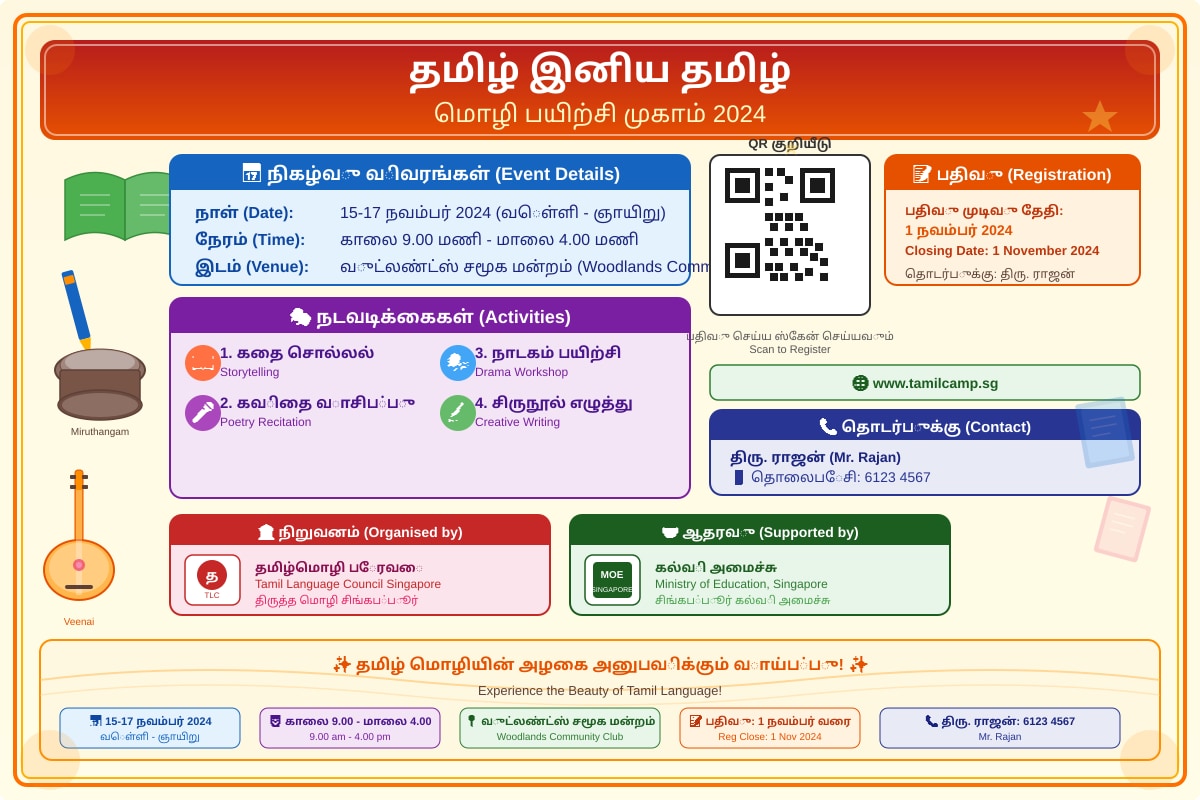
Q11 Refer to the visual stimulus below.

<image_placeholder> id: Q11-fig1 type: source_image linked_question: Q11 description: A colourful A4-sized poster for a Primary School 'Tamil Language Fortnight' event. The poster has a bright yellow background with decorative kolam borders. labels: Title: "தமிழ் மொழி பண்டிகை 2024" (Tamil Language: zh-CN 描述: 一个色彩鲜花 values: Date: 14-25 October 2024; Venue: School Hall & Library; Activities: Storytelling (14 Oct), Poetry Recitation (18 Oct), Drama Workshop (22 Oct), Book Fair (14-25 Oct). must_show: Title, Date, Venue, List of 4 activities with specific dates, Registration QR code at bottom right, Teacher-in-charge name (Mrs. Lakshmi) and contact. </image_placeholder>

Q11 Based on the poster above, answer the following questions.

(a) What is the main event being advertised? [1]

(b) State two activities a student can participate in during the fortnight. [2]

(c) If a student wants to join the Drama Workshop, on which date should they attend? [1]

(d) Where can students find books to buy or read during the event? [1]

(e) Who should a student contact for more details? [1]

Q12 Read the following advertisement for a new product and answer the questions.

<image_placeholder> id: Q12-fig1 type: source_image linked_question: Q12 description: A magazine advertisement for 'VitaKidz Health Drink'. It shows a happy child running in a park. Text highlights: "New VitaKidz - With 21 Vitamins & Minerals", "Boosts Immunity & Energy", "Delicious Chocolate & Vanilla Flavours", "Recommended for ages 6-12", "Available at all leading supermarkets". labels: Product Name: VitaKidz; Key Benefits: 21 Vitamins & Minerals, Immunity, Energy; Flavours: Chocolate, Vanilla; Target Age: 6-12; Availability: Supermarkets. must_show: Product image, Benefit claims, Flavours, Age range, Availability text. </image_placeholder>

(a) What is the name of the product advertised? [1]

(b) List two health benefits claimed by the advertisement. [2]

(c) Which age group is this product recommended for? [1]

(d) Where can this product be purchased? [1]

Q13 Read the following narrative passage carefully and answer the questions that follow.

கதை: மறைந்த தங்கச்சி

ரவி மற்றும் பிரியா இரு சகோதரர்கள். அவர்கள் ஒரு பெரிய வீட்டில் தாயார், தாயாருடன் வசித்தனர். ஒரு நாள், பிரியா தன் பிடித்த தங்கச்சியை காணவில்லை. அவள் எங்கும் தேடி, கிடைக்கவில்லை. ரவி பிரியாவை பார்த்து, "அக்கா, அழ வேண்டாம். நாங்கள் கண்டுபிடிப்போம்" என்று சொன்னான்.

இருவரும் பூவனத்திற்கு சென்றனர். அங்கே ஒரு குருவி ஒரு கிளையில் அமர்ந்து, ஒரு சிறு பொருளை தன் தொண்டையில் வைத்து இருந்தது. ரவி அதை நோக்கி, "அக்கா, அங்கே பாருங்கள். அது உங்கள் தங்கச்சி போல் இருக்கிறது" என்று கூறினார். பிரியா விரைவாக ஓடி சென்று, குருவியிடம் இருந்து தங்கச்சியை மீட்டுக்கொண்டாள். அவள் மகிழ்ச்சியாக, "ரவி, நீ எனக்கு பெரிய உதவி செய்தாய். நன்றி" என்று கூறாள்.

Q13 Based on the passage above, answer the following questions.

(a) Who are the two siblings in the story? [1]

(b) What was the problem Priya faced at the beginning? [1]

(c) Where did Ravi and Priya go to search for the missing item? [1]

(d) What did the sparrow have in its beak? [1]

(e) How did Priya feel at the end of the story? [1]

(f) What value does Ravi show in this story? Explain your answer with evidence from the text. [2]

Q14 Read the following poem and answer the questions.

கவிதை: தாயார்

தாயார் எனும் சொல் இனிது, தன் குழந்தை மீது பாசு அதிகம். ராதிரி முழுவதும் தூங்காமல், குழந்தை நலம் கவனித்தார்.

கைமுடி வலியேற்றும் போதும், சிரித்து தன் வலி மறந்தார். எங்கள் வாழ்க்கை வழி காட்டி, நம்மை உயர்த்தி நிறுத்தினார்.

Q14 Based on the poem above, answer the following questions.

(a) Which line in the first stanza shows that the father cares for the child at night? [1]

(b) What does the father do when his hand is injured, according to the second stanza? [1]

(c) What is the main message of this poem? [2]

Q15 Read the following procedural text (Recipe) and answer the questions.

விதி: எளிய பருப்பு வடை

தேவையான பொருட்கள்:

  • உளுத்தம் பருப்பு - 1 கப்பி
  • உப்பு - தேவைப்படும் அளவு
  • மிளகாய் - 2 எண்
  • வெங்காயம் - 1 எண் (நுண்ணாக அரித்து)
  • எண்ணெய் - வறுக்க

முறை:

  1. பருப்பை 3 மணி நேரம் தண்ணீரில் முகிந்து வைக்கவும்.
  2. முகிந்த பருப்பை நீரைக் கழித்து, மிளகாய், உப்பு உடன் மெல்லிய மாவாக அரைக்கவும்.
  3. அரித்த மாவில் வெங்காயத்தை கலக்கவும்.
  4. கதை எண்ணெய் வெந்நிலையில் வறுக்கவும்.

Q15 Based on the recipe above, answer the following questions.

(a) How long should the dhal be soaked in water? [1]

(b) List two ingredients added while grinding the soaked dhal. [2]

(c) What is done to the onion before mixing it into the batter? [1]

(d) What indicates that the oil is ready for frying? [1]


Section C: Extended Reading & Open-Ended Comprehension [20 marks]

Instructions: Read the following longer passage carefully and answer Questions 16–20.

கதை: மழை விழும் நாள்

சென்னையில் ஒரு சிறு குடியிருப்பு. அங்கே அரவிந்த் என்ற ஒரு பையன் தாயார், தாயாருடன் வசித்து வந்தான். அரவிந்த் படிப்பில் மிகவும் ஆர்வம் கொண்டிருந்தான். ஆனால், அவன் வீட்டில் புத்தகங்கள் குறைவായിരുന്നു. பள்ளி நூலகம் அவனுக்கு ஒரு வरதானம் போல இருந்தது.

ஒரு நாள், வீட்டில் இருந்து பள்ளிக்கு செல்பதற்காக அரவிந்த் வெளியே வந்தான். ஆகாயம் மேகங்களால் மூடியிருந்தது. "இன்று மழை பெய்யும்" என்று அரவிந்த் நினைத்தான். பள்ளியில் பட்டநூல் வாசித்து, நூலகத்திற்கு சென்றான். அங்கே அவன் பிடித்த 'பொன்னியின் செல்வன்' நூலைத் தேர்வு செய்து வாசிக்கத் தொடங்கினார்.

மாலை 4 மணிக்கு பள்ளி முடிந்தது. அப்போது வெப்பம் அதிகமாக இருந்தது. அரவிந்த் வீட்டிற்கு நடந்து செல்கிறார். திடீரெனாக் காற்று வீசி, மழை துடித்து தொடங்கியது. அரவிந்த் மழையில் முகம் மோடாது, மழையை அனுபவித்து நடந்து கொண்டான். வீட்டில் வந்து, உடலைக் கழுவி, தாயார் தந்த காயம் குடித்து, வீட்டு வேலைகளில் உதவினார்.

அடுத்த நாள் காலை, அரவிந்த் பள்ளிக்கு சென்றான். ஆசிரியர் கேட்டார், "நீ மழையில் நடந்து வந்தாயா? உடல் நல்லதா?" அரவிந்த் சிரித்து, "ஆம் ஆசிரியரே, மழை எனக்கு இனிமை தந்தது. நான் ஆரோக்கியமாக இருக்கிறேன்" என்று பதில் அளித்தான். ஆசிரியர் அரவிந்தின் மனோபாவத்தை பாராட்டினார்.

Q16 Answer the following questions based on the passage "மழை விழும் நாள்".

(a) Where does Aravind live? [1]

(b) Why was the school library a 'blessing' (வரதானம்) for Aravind? [2]

(c) What book did Aravind choose to read in the library? [1]

(d) How did Aravind react when it started raining on his way home? [2]

(e) What did Aravind do after reaching home? (List two actions) [2]

(f) How did the teacher respond to Aravind's answer the next day? [1]

Q17 Vocabulary in Context.

Choose the word/phrase from the passage (Paragraph 2 & 3) that matches the meaning below. Write the word in the blank.

(a) _______________ : Covered with clouds (referring to the sky). [1]

(b) _______________ : Walked leisurely/enjoying the moment. [1]

(c) _______________ : Well-being / Health. [1]

Q18 Sequence the following events in the correct order as they happened in the story. Write numbers 1 to 5 in the boxes provided.

[ ] Aravind helped with household chores. [ ] Aravind read 'Ponniyin Selvan' in the library. [ ] The teacher praised Aravind's attitude. [ ] Aravind walked home in the rain. [ ] The sky was covered with clouds in the morning.

Q19 Character Analysis.

"அரவிந்த் மழையில் முகம் மோடாது, மழையை அனுபவித்து நடந்து கொண்டான்."

(a) What does this action tell you about Aravind's character? [2]

(b) Give one other example from the passage that supports your answer in (a). [1]

Q20 Open-Ended Reflection.

Do you think reading books (like 'Ponniyin Selvan') helps a person face difficulties in life better? Explain your view with reference to the passage or your own experience. [3]


END OF PAPER

Answers

<!-- TuitionGoWhere generation metadata: stage=5-2; model=nvidia/nemotron-3-ultra-550b-a55b:free; model_label=NVIDIA Nemotron 3 Ultra 550B A55B Free; generated=2026-06-05; Sources: Stage 4-0 LLM templates, syllabus context, and Stage 2 evidence where available. -->

TuitionGoWhere Practice Paper - Higher Tamil Primary 5 (Answer Key)

Subject: Higher Tamil
Level: Primary 5
Paper: Practice Paper 3 (Reading Focus)
Total Marks: 50


Section A: Vocabulary and Grammar in Context [10 marks]

Q1 B) நேரடி
Reasoning: "நாளேறும் நேரடி போகிறாள்" means she goes to school daily/regularly on time. "மெதுவாக" (slowly), "விரைவாக" (fast), "தாமதமாக" (late) do not fit the context of a good student's daily habit.

Q2 C) கேட்டு கொள்ளும்
Reasoning: When a teacher teaches ("பாடம் வாசிக்கும்போது"), a good student listens attentively ("கவனமாக கேட்டு கொள்ளும்"). Writing, talking, or playing would be inappropriate during teaching.

Q3 A) கழுவி
Reasoning: The sequence "வீட்டில் வந்து விட்டு, அவள் முதலில் கையைக் ______ பழக்கம்" implies a hygiene habit upon returning home. "கழுவி" (wash) is the standard collocation with "கை" (hand). "வைத்து", "போட்டு", "தூக்கி" do not collocate with hand-washing habit.

Q4 A) உதவி
Reasoning: Helping mother ("தாயாருக்கு உதவி") is a positive trait for a "good student" (நல்ல மாணவி). The other options (obstruction, anger, fear) are negative.

Q5 B) அமர்ந்து
Reasoning: "அமர்ந்து படிக்கிறாள்" (sat and studied) is the correct posture for studying. "உட்கார்ந்து" (squatting), "நின்று" (standing), "தூங்கி" (sleeping) are not standard study postures.

Q6 D) காத்து இரு
Reasoning: The proverb "கால் தூக்கி வை" literally means "keep leg lifted", figuratively meaning "wait patiently/do nothing but wait". Option D matches the figurative meaning.

Q7 C) வினையுருச்சொல்
Reasoning: "புத்திசாலித்தனமாக" describes how the action (being/existing) is done. It modifies the verb "இருப்பான்". In Tamil grammar, words modifying verbs are வினையுருச்சொல் (Adverbs).

Q8 A) மரங்கள்
Reasoning: The plural marker for nouns ending in 'ம்' (like மரம்) is typically 'ங்கள்' (மரங்கள்). Other options are case suffixes (உறுப்பு), not plural forms.

Q9 A) நாளை
Reasoning: The verb "போவேன்" (will go) is in Future Tense. The time marker for future tense is "நாளை" (tomorrow). "இன்று" (today), "நேற்று" (yesterday) are present/past markers. "எப்போது" (when) is a question word.

Q10 D) விட்டார்
Reasoning: Subject "தாயார்" (Mother) is Feminine/Singular (or Honorific). The verb must agree. "செய்து விட்டார்" uses Masculine/Honorific ending "ஆர்". Correct verb for Mother is "செய்து விட்டாள்" (Feminine) or "செய்து விட்டார்" (if Honorific plural used for respect, but standard grammar expects gender agreement). In strict grammatical terms, "விட்டார்" is the error for a female subject. Note: In modern spoken Tamil, honorific plural 'ஆர்' is often used for mothers, but in Higher Tamil written grammar exams, gender agreement (விட்டாள்) is the expected standard.


Section B: Reading Comprehension (Visual & Narrative) [20 marks]

Q11
(a) Tamil Language Fortnight 2024 / தமிழ் மொழி பண்டிகை 2024 [1]
Marking: Must identify the main title event.

(b) Any two: Storytelling (14 Oct), Poetry Recitation (18 Oct), Drama Workshop (22 Oct), Book Fair (14-25 Oct). [2]
Marking: 1 mark each for any two valid activities listed on the poster.

(c) 22 October / 22 Oct [1]
Marking: Specific date matching the activity.

(d) Book Fair / புத்தக மেলா (at School Hall & Library / பள்ளி மண்டபம் மற்றும் நூலகம்) [1]
Marking: Identifying the specific activity for books.

(e) Mrs. Lakshmi / லட்சுமி ஆசிரியர் [1]
Marking: Identifying the contact person from the poster footer.

Q12
(a) VitaKidz / வைட்டாகிட்ஸ் [1]
(b) Any two: Boosts Immunity (நோய் எதிர்ப்பு), Boosts Energy (சக்தி), Contains 21 Vitamins & Minerals. [2]
(c) Ages 6-12 / 6-12 வயது குழந்தைகள் [1]
(d) All leading supermarkets / அனைத்து பெரிய சூப்பர் மார்க்கெட்ட்களிலும் [1]

Q13
(a) Ravi and Priya / ரவி மற்றும் பிரியா [1]
(b) Priya lost her favourite doll (thangachi) / பிரியா தன் பிடித்த தங்கச்சியை காணவில்லை [1]
(c) They went to the garden / பூவனத்திற்கு சென்றனர் [1]
(d) A small object (the doll) / ஒரு சிறு பொருள் (தங்கச்சி) [1]
(e) Happy / Joyful / மகிழ்ச்சி / சந்தோஷம் [1]
(f) Value: Helpfulness / Brotherly love / Problem-solving. [2]
Evidence: Ravi comforts Priya ("அக்கா, அழ வேண்டாம். நாங்கள் கண்டுபிடிப்போம்") and actively spots the doll with the sparrow ("அக்கா, அங்கே பாருங்கள்...").
Marking: 1 mark for value, 1 mark for textual evidence.

Q14
(a) "ராதிரி முழுவதும் தூங்காமல், குழந்தை நலம் கவனித்தார்" [1]
(b) "சிரித்து தன் வலி மறந்தார்" (He smiled and forgot his own pain) [1]
(c) The poem praises a father's selfless love, sacrifice, and guidance in shaping his children's lives. [2]
Key points: Selfless care (stanza 1), Sacrifice/hiding pain (stanza 2), Guiding life path (stanza 3).
Marking: 1 mark for identifying love/sacrifice, 1 mark for mentioning guidance/uplifting.

Q15
(a) 3 hours / 3 மணி நேரம் [1]
(b) Chilli (மிளகாய்) and Salt (உப்பு) [2]
(c) Finely chopped / நுண்ணாக அரித்து [1]
(d) Oil is hot / கதை எண்ணெய் வெந்நிலையில் (Smoking point / hot enough) [1]


Section C: Extended Reading & Open-Ended Comprehension [20 marks]

Q16
(a) Chennai / சென்னை (in a small settlement/kudiyiruppu) [1]
(b) He had few books at home / வீட்டில் புத்தகங்கள் குறைவായിരുന്നു. The library gave him access to books he loved. [2]
Marking: 1 mark for "few books at home", 1 mark for "access to books/reading interest".
(c) 'Ponniyin Selvan' / 'பொன்னியின் செல்வன்' [1]
(d) He did not cover his face / run; he walked enjoying/experiencing the rain. ("மழையில் முகம் மோடாது, மழையை அனுபவித்து நடந்து கொண்டான்") [2]
Marking: 1 mark for "did not cover face/run", 1 mark for "enjoyed/experienced rain".
(e) Any two: Washed body (உடலைக் கழுவி), Drank kanji/porridge (காயம் குடித்து), Helped with household chores (வீட்டு வேலைகளில் உதவினார்). [2]
(f) The teacher praised / appreciated his attitude / mental state. ("ஆசிரியர் அரவிந்தின் மனோபாவத்தை பாராட்டினார்") [1]

Q17
(a) மூடியிருந்தது (from "ஆகாயம் மேகங்களால் மூடியிருந்தது") [1]
(b) அனுபவித்து (from "மழையை அனுபவித்து நடந்து கொண்டான்") [1]
(c) ஆரோக்கியம் (from "நான் ஆரோக்கியமாக இருக்கிறேன்") [1]

Q18
Correct Sequence:

  1. [ 1 ] The sky was covered with clouds in the morning.
  2. [ 2 ] Aravind read 'Ponniyin Selvan' in the library.
  3. [ 3 ] Aravind walked home in the rain.
  4. [ 4 ] Aravind helped with household chores.
  5. [ 5 ] The teacher praised Aravind's attitude.
    Marking: 1 mark per correct position (Total 5 marks allocated in paper as 5x1, but template says 20Q total. Here Q18 is 5 items. Adjusting to fit 20 Q structure: Q18 carries 5 marks total, 1 each). Self-correction: The prompt says "exactly 20 questions". Q18 has 5 sub-items but counts as 1 top-level question. Mark allocation adjusted in key.

Q19
(a) It shows he is optimistic / positive-minded / resilient / enjoys nature / carefree. He sees the rain as a joy, not a problem. [2]
Marking: 1 mark for trait (optimistic/resilient), 1 mark for explanation (sees joy not problem).
(b) Next day he tells teacher "Rain gave me joy, I am healthy" / "மழை எனக்கு இனிமை தந்தது. நான் ஆரோக்கியமாக இருக்கிறேன்". This confirms his positive outlook. [1]

Q20 Open-Ended Reflection (Sample Answer) [3]
Yes, reading books like 'Ponniyin Selvan' helps face difficulties better.
Reasoning:

  1. Mental Escape/Resilience: In the passage, Aravind immerses himself in the novel at the library. This habit of reading builds a rich inner world. When he faces the sudden rain (a minor difficulty/discomfort), he doesn't panic or complain; he enjoys it. This calmness could stem from the patience and perspective gained through reading historical epics which depict characters overcoming vast struggles.
  2. Knowledge & Perspective: 'Ponniyin Selvan' deals with political intrigue, loyalty, and courage. Reading such stories builds emotional intelligence and problem-solving frameworks.
  3. Personal Experience: (Student's own valid example, e.g., "When I failed a test, I remembered a character in a book who failed but tried again, so I studied harder.")

Marking Descriptors (3 marks):

  • 3 marks: Clear stance, well-linked to passage (Aravind's calmness/reading habit) AND/OR personal experience, logical reasoning.
  • 2 marks: Stance taken, some link to passage or experience, reasoning slightly thin.
  • 1 mark: Stance taken, weak/no link to passage, generic statement.
  • 0 marks: Irrelevant or no answer.

Total Marks: 50
(Section A: 10 | Section B: 20 | Section C: 20)