AI Generated Quiz
Primary 5 English Oral Quiz
Free P5 English Oral quiz, HY3 AI version, with questions, answers, and syllabus-aligned practice for Singapore students.
These static practice materials are generated from the site's syllabus and paper-generation workflow, with source and model context shown so students and parents can evaluate the material before use.
Questions
Primary 5 English Quiz - Oral
Name: ___________________________
Class: ___________________________
Date: ___________________________
Score: _______ / 20
Duration: 30 minutes
Total Marks: 20
Instructions:
This quiz tests your understanding of oral communication skills at the Primary 5 level. Read each question carefully. For multiple-choice questions, circle the correct letter. For written questions, write your answer in the space provided. This content is syllabus-first and generated from inferred templates; it is not derived from past-year exam papers.
Section A: Understanding Oral Communication (Questions 1–5)
Each question is worth 1 mark.
1. Which of the following is the best reason for making eye contact during a oral presentation?
(A) To show the teacher you are awake
(B) To connect with your listeners and show confidence
(C) To read notes hidden in your lap
(D) To avoid speaking too quickly
2. In a group discussion, what does "active listening" mean?
(A) Waiting for your turn to speak
(B) Paying attention and responding to what others say
(C) Writing down every word spoken
(D) Asking the teacher to repeat the question
3. Which phrase shows polite disagreement in a discussion?
(A) "You are completely wrong."
(B) "I don't think that is correct because…"
(C) "Nobody agrees with you."
(D) "That is a stupid idea."
4. Why should you vary your tone of voice when speaking?
(A) To confuse the audience
(B) To keep the audience interested and show meaning
(C) Because the teacher asked you to
(D) To speak more quietly
5. What is a clear purpose of using gestures while speaking?
(A) To distract from mistakes
(B) To help explain ideas and show enthusiasm
(C) To look busy
(D) To copy a friend
Section B: Planning and Organising a Talk (Questions 6–10)
Each question is worth 1 mark unless stated.
6. Before giving a short oral talk, the best first step is to:
(A) Memorise a full script
(B) Decide your purpose and main points
(C) Choose a funny costume
(D) Ask a friend to read it
7. A good oral talk should have:
(A) No beginning or end
(B) A clear beginning, middle, and end
(C) Only one sentence
(D) Random topics
8. Which of these is a useful note format for a talk?
(A) Full paragraph script
(B) Keyword cards with main ideas
(C) Blank paper
(D) A novel
9. When explaining your opinion in a talk, you should:
(A) Give no reasons
(B) Give reasons and examples
(C) Shout louder
(D) Change the topic
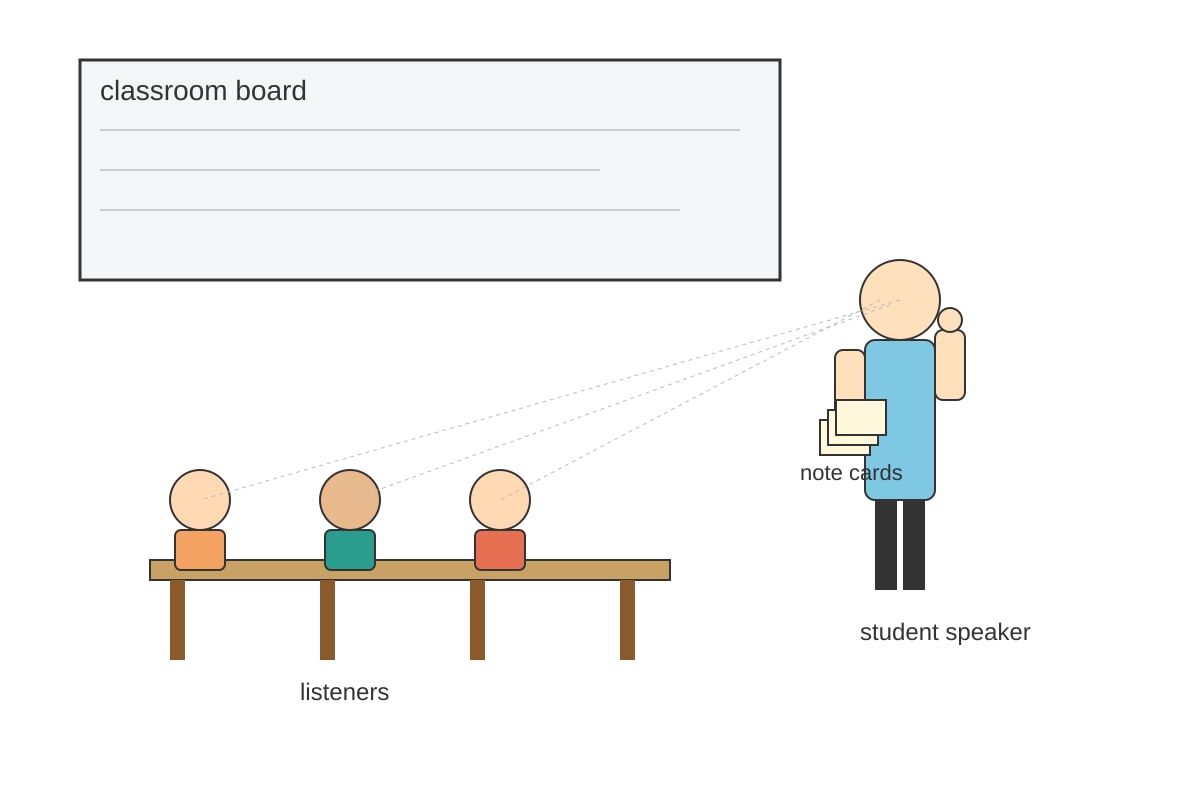
10. (2 marks) Look at the picture of a student giving a talk.
Image pending generation: figure for Q10.
Based on the picture, give two good oral presentation habits the student is showing.
(a) ________________________________________________________
(b) ________________________________________________________
Section C: Responding and Discussing (Questions 11–15)
Each question is worth 1 mark.
11. If a classmate says, "I think recycling is a waste of time," a good response is:
(A) "You are silly."
(B) "Can you explain why you think so?"
(C) "Everyone knows you are wrong."
(D) Ignore them.
12. Which question shows you are thinking critically about a speaker's point?
(A) "How old are you?"
(B) "What evidence do you have for that claim?"
(C) "What is your favourite colour?"
(D) "Can I leave?"
13. In a paired oral task, what should you do after your partner speaks?
(A) Repeat exactly the same point
(B) Add to or comment on their idea
(C) Start a new unrelated topic
(D) Laugh
14. What is a sign that a discussion is going well?
(A) Only one person speaks
(B) People listen and build on each other's ideas
(C) Everyone argues loudly
(D) No one understands
15. Which is the best way to disagree respectfully?
(A) "I see your point, but I believe…"
(B) "You must be joking."
(C) "That is the worst idea."
(D) "Whatever."
Section D: Applying Oral Skills (Questions 16–20)
Each question is worth 1 mark unless stated.
16. Your teacher asks you to describe a picture of a busy market. Which opening is best?
(A) "I don't know."
(B) "This picture shows a busy market with many stalls and people."
(C) "Once upon a time there was a dog."
(D) "Can someone else do it?"
17. When reading aloud a story, you should:
(A) Mumble quickly
(B) Use expression and pause at punctuation
(C) Skip hard words
(D) Sing the words
18. (2 marks) You are given this situation: "Persuade your class that bringing a water bottle to school is a good habit." Write two points you would say.
(a) ________________________________________________________
(b) ________________________________________________________
19. Which of these is a good way to end an oral talk?
(A) "That's all, bye."
(B) "In conclusion, I have shown that…"
(C) Walk off silently
(D) "Any questions? No? Good."
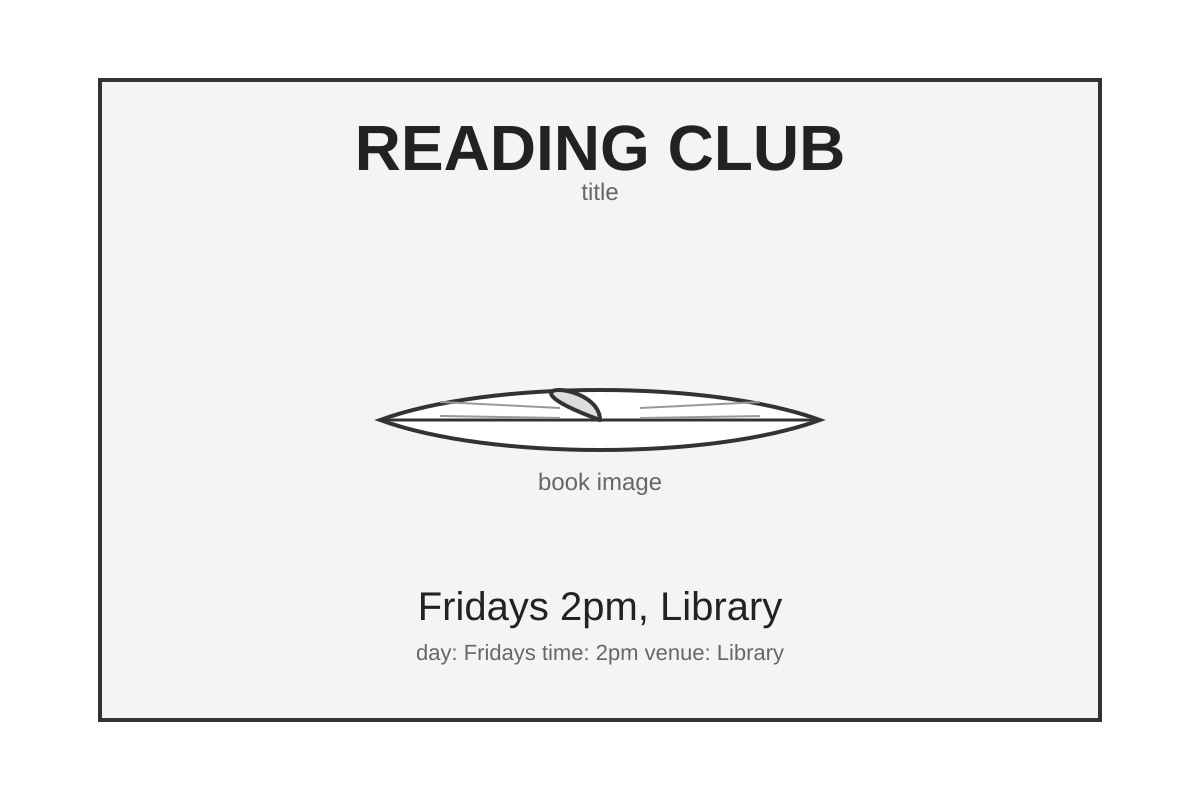
20. A poster shows a "Reading Club" with a time and place.
Image pending generation: source_image for Q20.
What would you say to invite a friend to join, based on the poster?
Answers
Primary 5 English Quiz - Oral: Answer Key
Total Marks: 20
Topic: Oral communication (syllabus-first, inferred templates)
Section A: Understanding Oral Communication
1. (B)
Teaching note: Eye contact helps a speaker connect with the audience and shows confidence. (A) is not the purpose; (C) is dishonest; (D) is unrelated.
Mark: 1
2. (B)
Teaching note: Active listening means focusing on the speaker and responding thoughtfully, not just waiting or writing everything.
Mark: 1
3. (B)
Teaching note: "I don't think that is correct because…" is polite and gives a reason. The other options are rude.
Mark: 1
4. (B)
Teaching note: Varying tone keeps listeners engaged and shows meaning (e.g., excitement vs. seriousness).
Mark: 1
5. (B)
Teaching note: Gestures help explain and show enthusiasm; they are not for distraction.
Mark: 1
Section B: Planning and Organising a Talk
6. (B)
Teaching note: First decide purpose and main points; memorising a full script is not advised for natural talk.
Mark: 1
7. (B)
Teaching note: A clear structure (beginning, middle, end) helps the audience follow.
Mark: 1
8. (B)
Teaching note: Keyword cards prompt you without reading a script.
Mark: 1
9. (B)
Teaching note: Opinions need reasons/examples to be convincing.
Mark: 1
10. (2 marks)
Expected visual: Student with straight posture, looking at listeners, holding note cards, one hand gesturing.
Answers:
(a) Making eye contact with listeners (not reading from cards).
(b) Using note cards to guide, not full script; or using a hand gesture to explain.
Marking: 1 mark each correct habit linked to picture.
Common mistake: Saying "memorised script" – picture shows cards, not script.
Section C: Responding and Discussing
11. (B)
Teaching note: Asking "Can you explain why?" shows respect and extends discussion.
Mark: 1
12. (B)
Teaching note: Asking for evidence checks the speaker's reasoning – critical listening.
Mark: 1
13. (B)
Teaching note: Add or comment on partner's idea to build the talk.
Mark: 1
14. (B)
Teaching note: Good discussion = listen and build ideas.
Mark: 1
15. (A)
Teaching note: "I see your point, but…" respects then contrasts.
Mark: 1
Section D: Applying Oral Skills
16. (B)
Teaching note: Descriptive opening names the scene clearly.
Mark: 1
17. (B)
Teaching note: Expression and pauses show understanding of text.
Mark: 1
18. (2 marks)
Example points:
(a) Keeps you hydrated and healthy during lessons.
(b) Saves money and reduces plastic waste from buying drinks.
Marking: 1 mark per clear, relevant persuasive point.
Note: Accept any two sensible reasons.
19. (B)
Teaching note: A closing summary signals end and reinforces message.
Mark: 1
20. (1 mark)
Expected visual: Poster with "READING CLUB", Fridays 2pm, Library.
Answer: "There is a Reading Club on Fridays at 2pm in the Library. Let's join together!" (must mention club, time/day, place, invite)
Mark: 1 for including poster details and invitation.
Common mistake: Forgetting time or venue from poster.
Free quiz and exam paper access
Enter your details to view this paper
Your access is remembered on this device.