From Real Exams Exam Paper
Primary 5 English Weighted Assessment 1 (Term 1) Paper 4
Free P5 English WA1 Paper 4, Exam version, with questions, answers, and syllabus-aligned practice for Singapore students.
These static practice materials are generated from the site's syllabus and paper-generation workflow, with source and model context shown so students and parents can evaluate the material before use.
Questions
TUITIONGOWHERE PRIMARY SCHOOL
2026 WEIGHTED ASSESSMENT 1
ENGLISH LANGUAGE
PRIMARY 5
Name: _____________________ ( )
Class: P5 _____
Date: 12 March 2026
Duration: 1 hour 50 minutes
Parent's Signature: _____________________
| Section | Marks |
|---|---|
| A: Grammar MCQ | /10 |
| B: Vocabulary Cloze | /10 |
| C: Grammar Cloze | /10 |
| D: Editing | /10 |
| E: Synthesis & Transformation | /10 |
| F: Comprehension | /20 |
| G: Situational Writing | /15 |
| H: Continuous Writing | /15 |
| TOTAL | /100 |
INSTRUCTIONS TO PUPILS
DO NOT TURN OVER THE PAGES UNTIL YOU ARE TOLD TO DO SO
Follow all instructions carefully.
There are 8 sections in this booklet.
Answer ALL questions.
You may use a dictionary for this paper.
Section A: Grammar MCQ (10 marks)
Questions 1 to 10 carry 1 mark each.
For each question, four options are given. One of them is the correct answer.
Write your choice (1, 2, 3 or 4) in the brackets provided.
1. Sarah _________ piano lessons since she was seven years old.
(1) takes
(2) took
(3) has been taking
(4) will take
Answer: ( )
2. The coach encouraged his players _________ their best in the final match.
(1) trying
(2) try
(3) to try
(4) tried
Answer: ( )
3. _________ he practised daily, he could not master the difficult piece.
(1) Since
(2) Although
(3) Because
(4) If
Answer: ( )
4. Not only the captain _________ the crew members were experienced sailors.
(1) and
(2) but
(3) or
(4) so
Answer: ( )
5. The park _________ we often visit has beautiful cherry blossoms.
(1) who
(2) where
(3) which
(4) whose
Answer: ( )
6. If it _________ tomorrow, we would have to cancel the picnic.
(1) rains
(2) rained
(3) will rain
(4) would rain
Answer: ( )
7. The children were _________ tired that they fell asleep immediately.
(1) very
(2) too
(3) so
(4) quite
Answer: ( )
8. Mother warned us _________ near the construction site.
(1) not play
(2) not to play
(3) not playing
(4) don't play
Answer: ( )
9. The baker _________ fresh bread every morning before dawn.
(1) bake
(2) bakes
(3) baking
(4) baked
Answer: ( )
10. When the ambulance arrived, the injured man _________ to the hospital.
(1) takes
(2) took
(3) was taken
(4) had been taken
Answer: ( )
Section B: Vocabulary Cloze (10 marks)
Study the passage carefully. Fill in each blank with a suitable word.
Singapore's Education System
Singapore's education system is widely (11) _________ as one of the best in the world. The government places great (12) _________ on providing quality education for all children, regardless of their background.
Students in Singapore follow a structured curriculum that (13) _________ core subjects such as English, Mathematics, and Science. The education system is designed to help students develop both academic knowledge and (14) _________ skills such as critical thinking and problem-solving.
One unique (15) _________ of Singapore's education is the emphasis on bilingual learning. All students are required to learn English as their first language and a mother tongue as their (16) _________ language. This policy helps preserve cultural heritage while ensuring students can communicate effectively in the global (17) _________.
The education system also provides various (18) _________ for students with different interests and abilities. There are specialised programmes for students who excel in sports, arts, or academics. This ensures that every child can (19) _________ their potential and contribute meaningfully to society.
Teachers in Singapore are highly (20) _________ and undergo continuous professional development to enhance their teaching methods and stay updated with educational innovations.
Section C: Grammar Cloze (10 marks)
Fill in each blank with a suitable word.
Newton Food Centre
Newton Food Centre (21) _________ one of Singapore's most famous hawker centres. Located in the heart of the city, it (22) _________ been serving delicious local food to residents and tourists for decades.
The food centre (23) _________ originally built in the 1970s as part of the government's effort to relocate street hawkers (24) _________ proper facilities. Today, it houses over 100 food stalls (25) _________ offer a wide variety of local and international cuisines.
Visitors (26) _________ expect to find popular dishes such as satay, carrot cake, and Hainanese chicken rice. The centre (27) _________ particularly famous for its seafood stalls, where customers can enjoy fresh crabs, prawns, and fish (28) _________ various cooking styles.
Newton Food Centre operates (29) _________ the evening until late at night, making it a popular destination for supper. Despite being more expensive than other hawker centres, it continues to attract large crowds (30) _________ of its convenient location and quality food.
Section D: Editing (10 marks)
There are 10 errors in the following passage. They could be in spelling, grammar or punctuation. Underline each error and write the correction in the space provided.
My First Swimming Lesson
Last wednesday, I attended my first swimming lesson at the community centre. I was both excited and nervous because I have never learn how to swim before.
When I arrived at the pool, my instructor introduce himself as Coach Ben. He was very paitient and understanding. First, he taught me how to float on the water. It was more difficult than I had imagine.
Coach Ben showed me the proper breathing tecnique and how to kick my legs. I practice for about an hour, but I still could not swim across the pool. However, I was determine to continue trying.
By the end of the lesson, I could float for a few second without Coach Ben's help. I felt proud of my progres even though there was still much to learn.
I am looking forward to my next lesson and hope to swim independantly soon.
Errors and Corrections:
- _________________ → _________________
- _________________ → _________________
- _________________ → _________________
- _________________ → _________________
- _________________ → _________________
- _________________ → _________________
- _________________ → _________________
- _________________ → _________________
- _________________ → _________________
- _________________ → _________________
Section E: Synthesis and Transformation (10 marks)
For each of the following items, complete the second sentence so that it means the same as the first. Use the word given in brackets. Do not change this word. You must use between 2 and 5 words including the word given.
Example:
The weather was so hot that we decided to go swimming.
It was _________ that we decided to go swimming. (such)
Answer: such hot weather
41. "I have completed my assignment," announced Jenny.
Jenny announced that _________ completed her assignment. (she)
42. Smoking is prohibited in this building.
People _________ smoke in this building. (must)
43. We moved to this neighbourhood three years ago.
We _________ in this neighbourhood for three years. (have)
44. The mountain was too high for the hikers to climb in one day.
It was _________ high mountain that the hikers could not climb it in one day. (such)
45. Although the weather was bad, the flight departed on time.
_________ the bad weather, the flight departed on time. (in)
Section F: Comprehension (20 marks)
Read the passage below and answer questions 46 to 55.
The Importance of Friendship
Friendship is one of life's greatest treasures. Having good friends makes us happier, healthier, and more resilient when facing challenges. However, building and maintaining meaningful friendships requires effort and understanding from both parties.
Good friends share certain important qualities. They are trustworthy and keep secrets when asked. They show empathy by listening carefully and offering support during difficult times. True friends also celebrate each other's successes without feeling jealous or envious.
Research has shown that friendships have significant benefits for our physical and mental health. People with strong social connections tend to live longer and have lower rates of depression and anxiety. Friends can also motivate us to adopt healthier habits, such as exercising regularly or eating nutritious food.
Children who have good friendships often develop better social skills and perform better academically. They learn important life skills such as cooperation, communication, and conflict resolution through their interactions with friends. These skills prove valuable throughout their lives.
However, not all friendships are positive. Toxic friendships can be harmful and should be avoided. Signs of a toxic friendship include constant criticism, manipulation, and one-sided relationships where one person always gives while the other only takes. It's important to recognize these warning signs and distance ourselves from such relationships.
Building new friendships can be challenging, especially for shy individuals. Some effective strategies include joining clubs or activities based on personal interests, volunteering for community service, or simply being open to conversations with classmates or colleagues. The key is to be genuine and show interest in others.
Maintaining existing friendships also requires ongoing effort. Regular communication, spending quality time together, and being reliable are essential. It's also important to forgive minor mistakes and work through disagreements respectfully.
In today's digital age, many people maintain friendships through social media and messaging apps. While technology can help us stay connected, it should not replace face-to-face interactions entirely. Nothing can substitute for the warmth and connection of spending time together in person.
46. According to the passage, what are three important qualities of good friends?
(a) ____________________________________________________________
(b) ____________________________________________________________
(c) ____________________________________________________________ (3 marks)
47. What are two health benefits of having strong friendships mentioned in the passage?
(a) ____________________________________________________________
(b) ____________________________________________________________ (2 marks)
48. How do friendships help children academically according to the passage?
_________________________________________________________________ (2 marks)
49. What does the term "toxic friendships" mean in the context of this passage?
_________________________________________________________________ (2 marks)
50. List three signs of a toxic friendship mentioned in the passage.
(a) ____________________________________________________________
(b) ____________________________________________________________
(c) ____________________________________________________________ (3 marks)
51. Give two strategies mentioned in the passage for building new friendships.
(a) ____________________________________________________________
(b) ____________________________________________________________ (2 marks)
52. What three things are essential for maintaining existing friendships?
(a) ____________________________________________________________
(b) ____________________________________________________________
(c) ____________________________________________________________ (3 marks)
53. According to the author, what is the limitation of maintaining friendships through social media?
_________________________________________________________________ (2 marks)
54. Do you think it's better to have many casual friends or a few close friends? Give reasons to support your answer.
_________________________________________________________________ (3 marks)
55. Based on your own experience, what advice would you give to someone who finds it difficult to make friends?
_________________________________________________________________ (2 marks)
Section G: Situational Writing (15 marks)
You recently participated in a school exchange programme with students from Japan. Write a thank you card to your host family, the Nakamuras, expressing your gratitude for their hospitality and sharing some memorable moments from your stay.
In your thank you card, you should:
- thank them for their kindness and hospitality
- mention specific activities or experiences you enjoyed
- describe what you learned about Japanese culture
- express your hope to stay in touch and possibly visit again
Write between 120-150 words.
Dear Mr. and Mrs. Nakamura and family,
With love and gratitude, [Your name]
Section H: Continuous Writing (15 marks)
Choose ONE of the following topics and write a composition of about 150-200 words.
Topic 1: "A Lesson I Learned the Hard Way"
Write about a time when you made a mistake that taught you an important lesson. Describe what happened and what you learned from the experience.
Topic 2: "If I Could Change One Thing About My School"
Describe one aspect of your school that you would like to change and explain why. Discuss how this change would benefit students.
Topic 3: Look at the picture below. Write a story based on what you see.
*
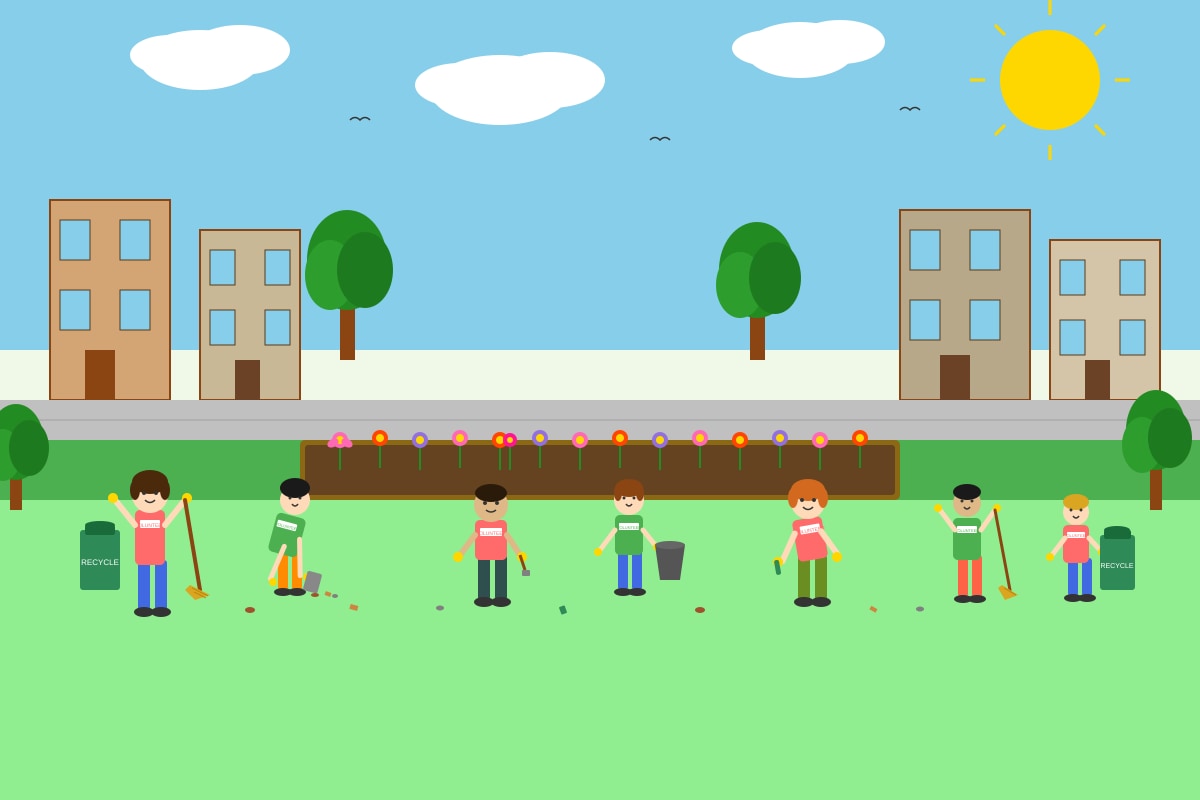
Generated picture for this question.
Use this space to plan your composition:
Beginning: ________________________________________________
Middle: ___________________________________________________
End: ______________________________________________________
Write your composition here:
End of Paper
Do not write in this space
Free quiz and exam paper access
Enter your details to view this paper
Your access is remembered on this device.
Answers
TUITIONGOWHERE PRIMARY SCHOOL
2026 WEIGHTED ASSESSMENT 1 - ANSWER KEY
ENGLISH LANGUAGE
PRIMARY 5
Section A: Grammar MCQ (10 marks)
1. (3) has been taking - Present perfect continuous for action starting in past and continuing
2. (3) to try - Infinitive after "encouraged"
3. (2) Although - Contrast conjunction
4. (2) but - "Not only...but" construction
5. (3) which - Relative pronoun for things (park)
6. (2) rained - Second conditional structure
7. (3) so - "So...that" construction
8. (2) not to play - Infinitive negative after "warned"
9. (2) bakes - Simple present for habitual action
10. (4) had been taken - Past perfect passive
Section B: Vocabulary Cloze (10 marks)
11. recognised/regarded 12. emphasis/importance 13. includes/covers 14. practical/life 15. feature/aspect 16. second 17. community/economy 18. opportunities/pathways 19. reach/achieve 20. qualified/trained
Section C: Grammar Cloze (10 marks)
21. is 22. has 23. was 24. into/to 25. that/which 26. can 27. is 28. in 29. from 30. because
Section D: Editing (10 marks)
31. wednesday → Wednesday 32. learn → learned 33. introduce → introduced 34. paitient → patient 35. imagine → imagined 36. tecnique → technique 37. practice → practised 38. determine → determined 39. second → seconds 40. progres → progress
Section E: Synthesis and Transformation (10 marks)
41. she had 42. must not 43. have been living 44. such a 45. In spite of