AI Generated Quiz
Primary 4 Tamil Writing Quiz
Free P4 Tamil Writing quiz, AI version, with questions, answers, and syllabus-aligned practice for Singapore students.
These static practice materials are generated from the site's syllabus and paper-generation workflow, with source and model context shown so students and parents can evaluate the material before use.
Questions
Free quiz and exam paper access
Enter your details to view this paper
Your access is remembered on this device.
Answers
Primary 4 Tamil Quiz - Writing - Answer Key
Total Marks: 40
Section A: சொல்வதெழுதுதல் (Dictation) (5 Questions, 5 Marks)
Instructions for Teacher: Read each word aloud clearly twice. Give students time to write the word.
Answer Key:
-
Answer: (Example: பள்ளி) [1 mark] (Teacher to choose 5 words from the P4 syllabus, e.g., பள்ளி, புத்தகம், மரம், வீடு, நன்றி)
-
Answer: (Example: புத்தகம்) [1 mark]
-
Answer: (Example: மரம்) [1 mark]
-
Answer: (Example: வீடு) [1 mark]
-
Answer: (Example: நன்றி) [1 mark]
Marking Notes:
- Award 1 mark for each correctly spelled word.
- Deduct 0.5 marks for minor spelling errors (e.g., missing a dot on a letter, incorrect vowel sign).
- Do not award marks if the word is unrecognizable.
Section B: வாக்கியம் எழுதுதல் (Sentence Writing) (5 Questions, 10 Marks)
General Marking Scheme for each question (2 marks):
- 2 marks: A complete, grammatically correct sentence that accurately describes the picture and uses the given word correctly.
- 1 mark: A sentence that is mostly correct but has a minor grammatical error or does not fully describe the picture.
- 0 marks: No sentence written, or the sentence is completely unrelated to the picture or the given word.
-
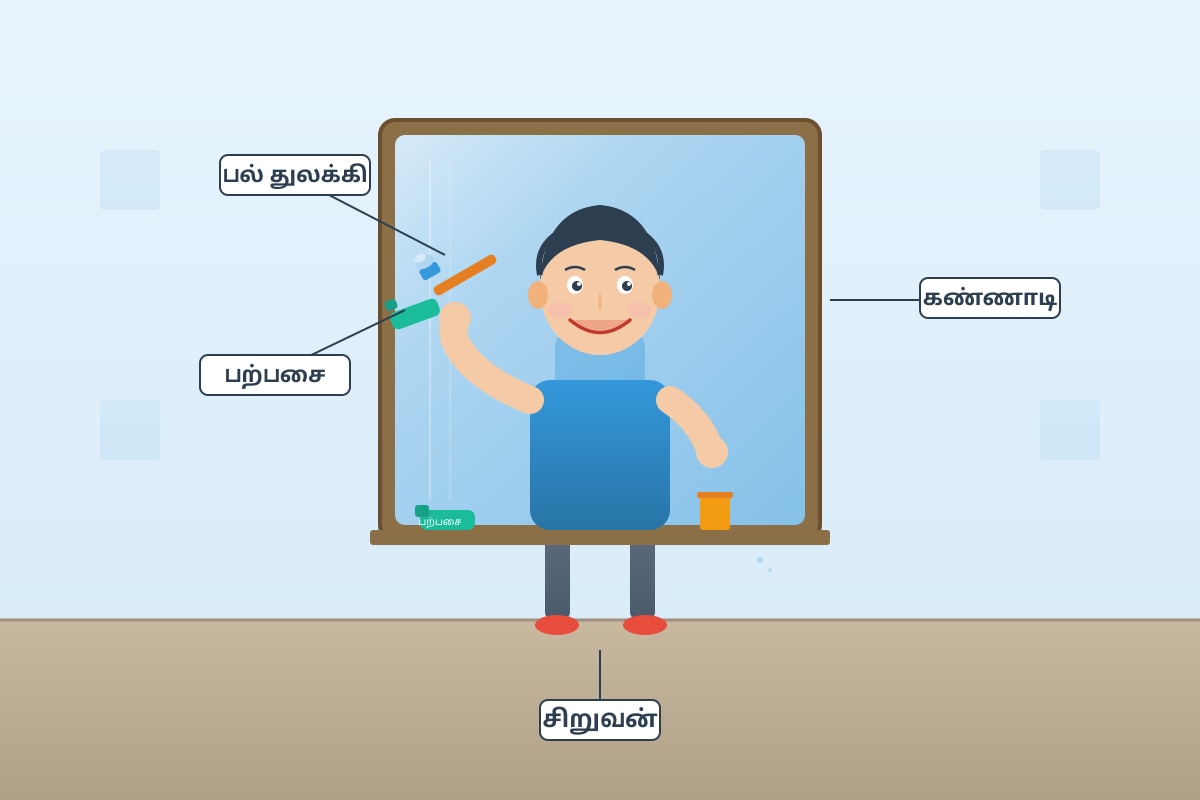
Answer: பையன் பல் துலக்குகிறான். (The boy is brushing his teeth.) [2 marks] Explanation: The picture shows a boy brushing his teeth. The word "பல்" (tooth) is used correctly in the sentence. The verb "துலக்குகிறான்" (is brushing) is in the correct present tense and matches the subject "பையன்" (boy).
-
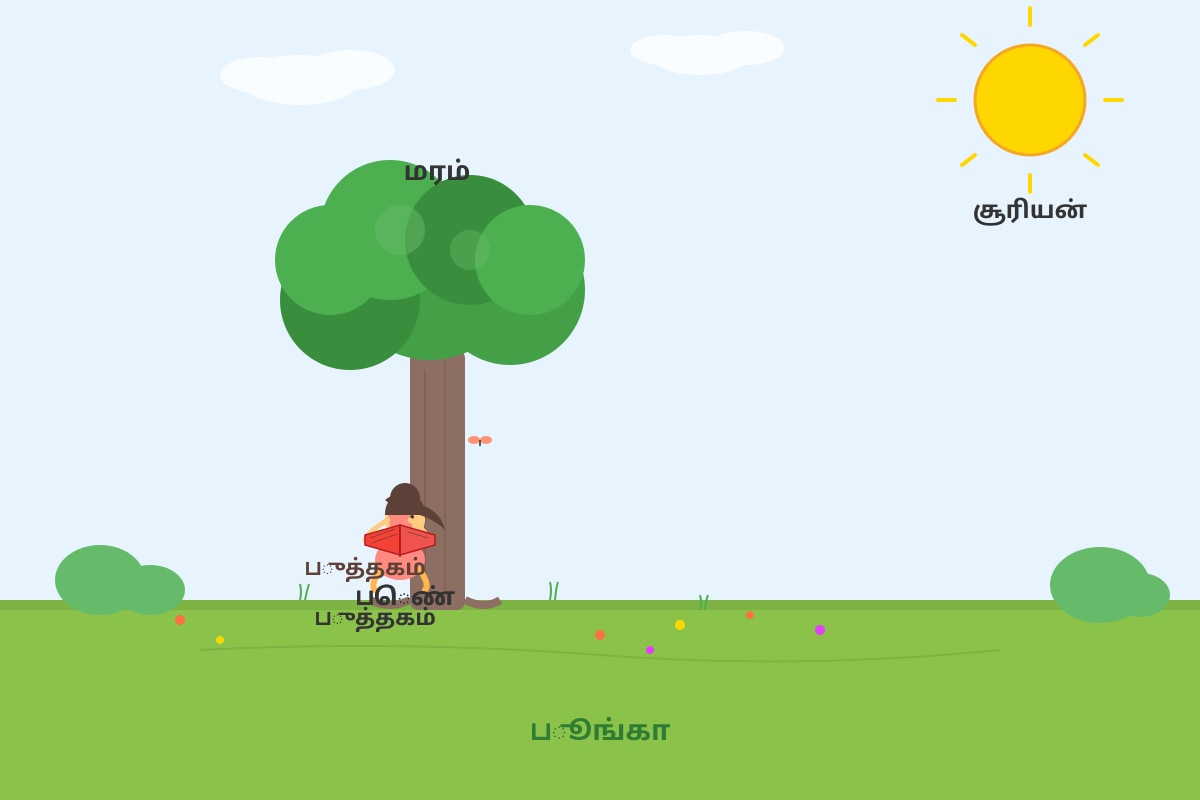
Answer: பெண் புத்தகம் படிக்கிறாள். (The girl is reading a book.) [2 marks] Explanation: The picture shows a girl reading a book under a tree. The word "புத்தகம்" (book) is used correctly. The verb "படிக்கிறாள்" (is reading) is in the correct present tense and matches the subject "பெண்" (girl).
-
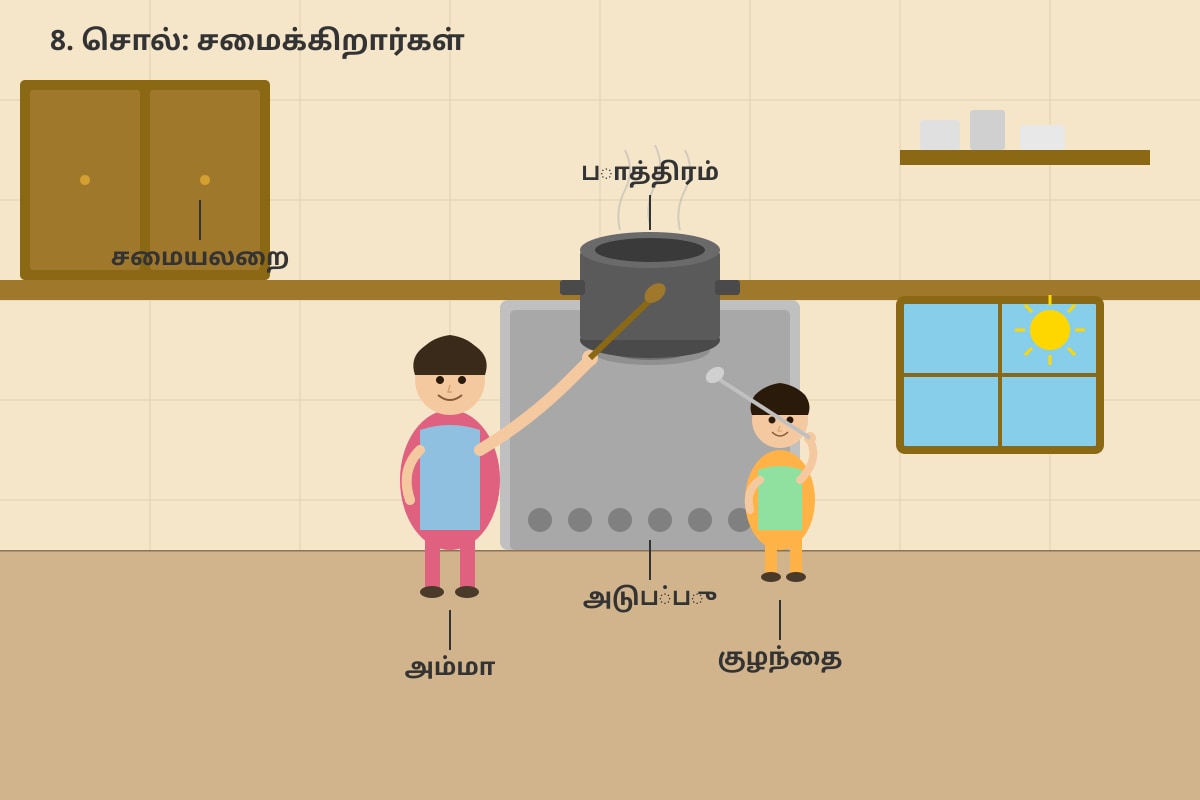
Answer: அம்மாவும் குழந்தையும் சமைக்கிறார்கள். (Mother and child are cooking.) [2 marks] Explanation: The picture shows a mother and child cooking together. The word "சமைக்கிறார்கள்" (are cooking) is used correctly. The plural verb matches the plural subject "அம்மாவும் குழந்தையும்" (mother and child).
-
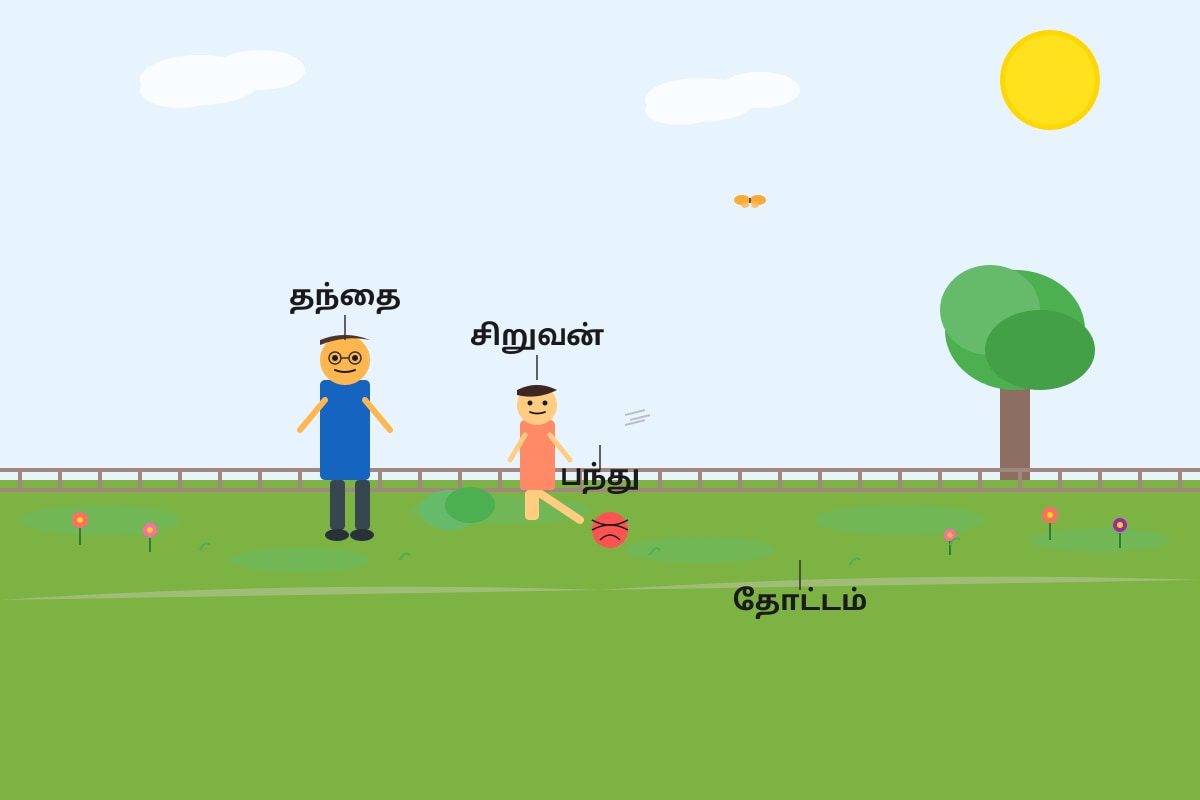
Answer: பையனும் அப்பாவும் விளையாடுகிறார்கள். (The boy and father are playing.) [2 marks] Explanation: The picture shows a boy and his father playing with a ball. The word "விளையாடுகிறார்கள்" (are playing) is used correctly. The plural verb matches the plural subject.
-
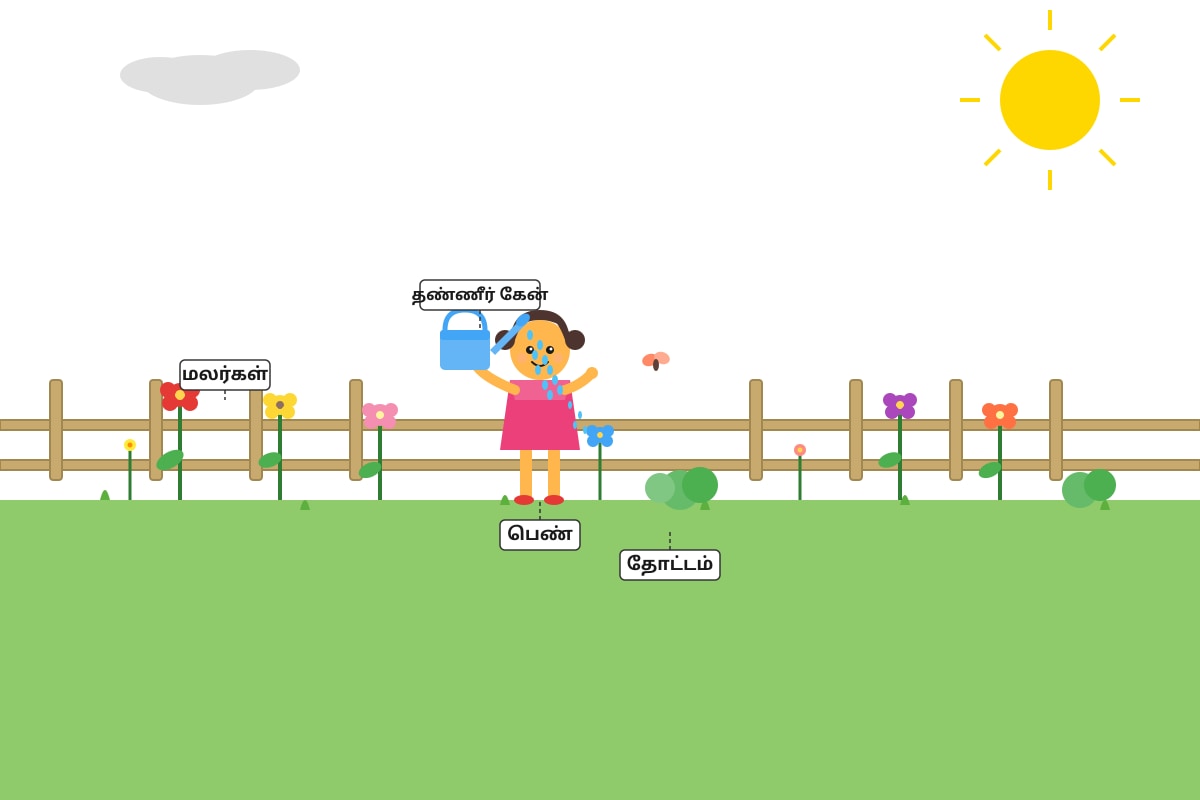
Answer: பெண் பூக்களுக்குத் தண்ணீர் ஊற்றுகிறாள். (The girl is watering the flowers.) [2 marks] Explanation: The picture shows a girl watering flowers. The word "தண்ணீர்" (water) is used correctly. The sentence structure is grammatically sound.
Section C: கட்டுரை எழுதுதல் (Essay Writing) (1 Question, 10 Marks)
Answer Key (Sample Essay):
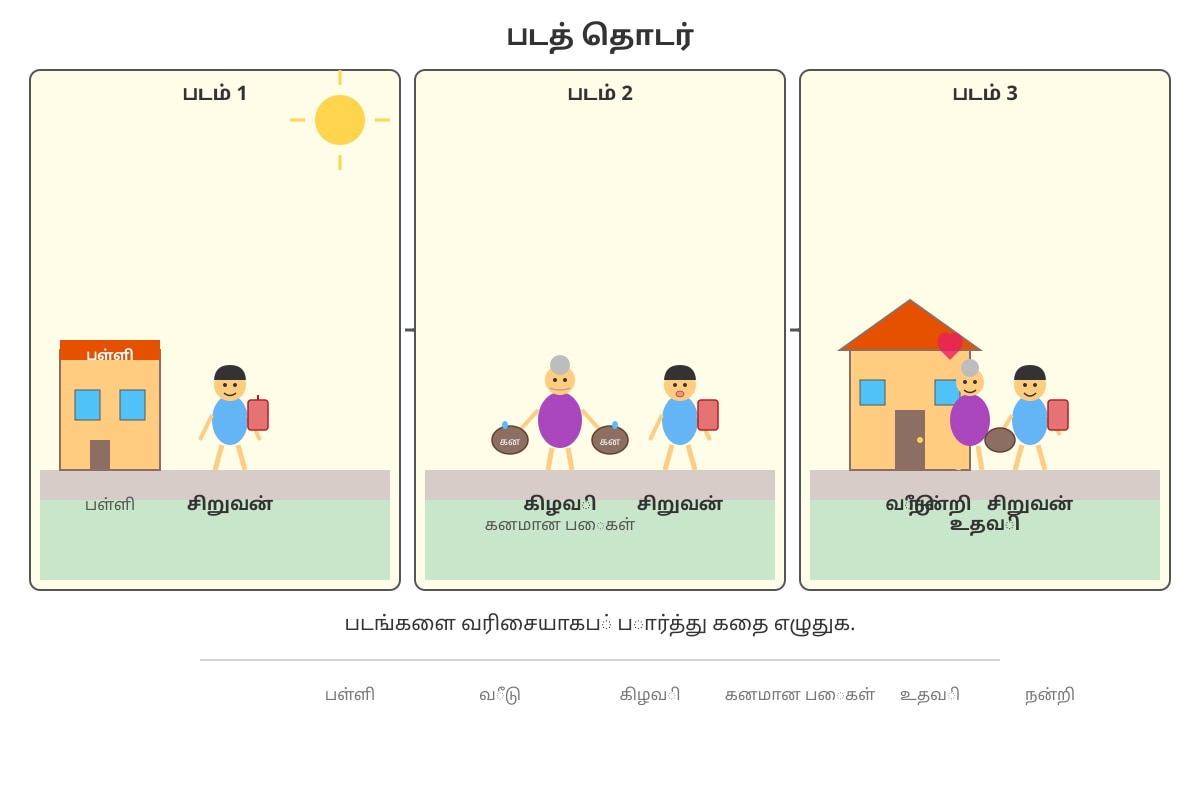
ஒரு நாள் மாலை, ரமேஷ் பள்ளியிலிருந்து வீட்டிற்கு நடந்து சென்று கொண்டிருந்தான். வழியில் ஒரு கிழவி கனமான பைகளைச் சுமந்து கொண்டு மிகவும் சிரமப்பட்டுக் கொண்டிருந்தார். ரமேஷ் உடனே ஓடிச்சென்று, "பாட்டி, நான் உங்களுக்கு உதவி செய்யட்டுமா?" என்று கேட்டான். கிழவி மிகவும் மகிழ்ச்சியடைந்து, "நன்றி குழந்தாய்!" என்றார். ரமேஷ் அந்தக் கனமான பைகளைத் தூக்கிக் கொண்டு, கிழவியின் வீடு வரை சென்றான். கிழவி ரமேஷுக்கு மிக்க நன்றி தெரிவித்தார். ரமேஷ் மிகவும் மகிழ்ச்சியாக உணர்ந்தான். பிறருக்கு உதவி செய்வது மிகவும் நல்லது என்று அவன் நினைத்தான்.
Marking Scheme (10 marks):
| Criteria | Excellent (3-2.5 marks) | Good (2-1.5 marks) | Satisfactory (1-0.5 marks) | Needs Improvement (0 marks) |
|---|---|---|---|---|
| Content & Ideas (3 marks) | Story is complete, creative, and clearly follows the picture sequence. All key events are included. | Story is mostly complete and follows the picture sequence. Most key events are included. | Story is partially complete or does not fully follow the picture sequence. Some key events are missing. | Story is incomplete or unrelated to the pictures. |
| Language & Grammar (3 marks) | Excellent use of vocabulary and grammar. Sentences are well-structured and error-free. | Good use of vocabulary and grammar. Few minor errors that do not affect understanding. | Satisfactory use of vocabulary and grammar. Several errors that may affect understanding. | Poor use of vocabulary and grammar. Many errors that make the story difficult to understand. |
| Organization (2 marks) | Story has a clear beginning, middle, and end. Ideas are logically connected. | Story has a beginning, middle, and end. Most ideas are logically connected. | Story lacks a clear structure. Ideas are not well-connected. | Story has no clear structure. |
| Word Count (2 marks) | 60 words or more. | 50-59 words. | 40-49 words. | Less than 40 words. |
Common Mistakes:
- Not using the helping words provided.
- Writing a story that is too short (less than 60 words).
- Grammatical errors in verb conjugation (e.g., using wrong tense).
- Not following the sequence of events in the pictures.
Section D: இலக்கணம் மற்றும் மொழிமரபுகள் (Grammar & Language Conventions) (9 Questions, 15 Marks)
Fill in the blanks with the correct word. (Questions 12-16)
-
Answer: சென்றேன் [1 mark] Explanation: The word "நேற்று" (yesterday) indicates past tense. Therefore, the verb must be in the past tense. "சென்றேன்" means "I went," which is the correct past tense form for the first person singular (நான்).
-
Answer: இருக்கிறார்கள் [1 mark] Explanation: The word "இப்போது" (now) indicates present tense. Therefore, the verb must be in the present tense. "இருக்கிறார்கள்" means "they are," which is the correct present tense form for the third person plural (அவர்கள்).
-
Answer: போவோம் [1 mark] Explanation: The word "நாளை" (tomorrow) indicates future tense. Therefore, the verb must be in the future tense. "போவோம்" means "we will go," which is the correct future tense form for the first person plural (நாங்கள்).
-
Answer: அழகான [1 mark] Explanation: The word "புத்தகத்தை" (book) is a noun. We need an adjective to describe the noun. "அழகான" is an adjective meaning "beautiful." "அழகாக" is an adverb meaning "beautifully." So, "அழகான புத்தகம்" (beautiful book) is correct.
-
Answer: பெரிதாக [1 mark] Explanation: The word "பெய்தது" (rained) is a verb. We need an adverb to describe how it rained. "பெரிதாக" is an adverb meaning "heavily" or "a lot." "பெரிய" is an adjective meaning "big." So, "மழை பெரிதாக பெய்தது" (It rained heavily) is correct.
Rewrite the sentences correctly. (Questions 17-20)
-
Answer: நான் ஒரு ஆப்பிள் சாப்பிட்டேன். (The sentence is already correct.) [2 marks] Explanation: The sentence is grammatically correct. "ஒரு" is the correct indefinite article (a/an) in Tamil. The verb "சாப்பிட்டேன்" (I ate) is in the correct past tense and matches the subject "நான்" (I).
-
Answer: அவன் பள்ளிக்குப் போகிறான். [2 marks] Explanation: The original sentence "அவன் பள்ளி போகிறான்" is missing the dative case marker "-க்கு" (to). In Tamil, when you go to a place, you must add the suffix "-க்கு" to the place name. So, "பள்ளி" (school) becomes "பள்ளிக்கு" (to school). The correct sentence is "அவன் பள்ளிக்குப் போகிறான்" (He is going to school).
-
Answer: நேற்று நான் பூங்காவில் விளையாடினேன். (The sentence is already correct.) [2 marks] Explanation: The sentence is grammatically correct. "நேற்று" (yesterday) is correctly placed at the beginning. "பூங்காவில்" (in the park) uses the locative case marker "-இல்" (in). The verb "விளையாடினேன்" (I played) is in the correct past tense and matches the subject "நான்" (I).
-
Answer: இது ஒரு புதிய புத்தகம். [2 marks] Explanation: The original sentence "இது ஒரு புது புத்தகம்" uses the incorrect form of the adjective "புது" (new). The correct adjective form is "புதிய" (new). So, the correct sentence is "இது ஒரு புதிய புத்தகம்" (This is a new book).
Marking Notes for Questions 17-20:
- Award 2 marks for a completely correct rewrite.
- Award 1 mark if the student identifies the error but makes a minor mistake in the correction.
- Award 0 marks if the student does not identify the error or makes an incorrect correction.