AI Generated Quiz
Primary 4 Tamil Speaking Quiz
Free P4 Tamil Speaking quiz, AI version, with questions, answers, and syllabus-aligned practice for Singapore students.
These static practice materials are generated from the site's syllabus and paper-generation workflow, with source and model context shown so students and parents can evaluate the material before use.
Questions
Free quiz and exam paper access
Enter your details to view this paper
Your access is remembered on this device.
Answers
Primary 4 Tamil Quiz - Speaking - Answer Key
Name: _________________________
Class: _________________________
Date: _________________________
Score: ________ / 40
Total Marks: 40
Section A: உயிரெழுத்துகள் மற்றும் மெய்யெழுத்துகள் (Vowels and Consonants) – Questions 1–5
1. 🎤 சரியான உச்சரிப்புடன் பின்வரும் உயிரெழுத்துகளை வரிசையாகச் சொல்லுங்கள். (Say the following vowels aloud in order with correct pronunciation.)
Answer: அ [a] (short 'a'), ஆ [aː] (long 'aa'), இ [i] (short 'i'), ஈ [iː] (long 'ee'), உ [u] (short 'u'), ஊ [uː] (long 'oo').
Marking Notes:
- 2 marks: All six vowels said correctly and in order, with correct short/long distinction.
- 1 mark: 4–5 vowels correct, or minor order error.
- 0 marks: Less than 4 correct, major order errors.
- Key concept: உயிரெழுத்துகள் (vowels) are the 12 basic sounds of Tamil. குறில் (short) and நெடில் (long) pairs are crucial. The length of the vowel changes the meaning of words (e.g., அடி (adi - foot) vs. ஆடி (aadi - danced)).
Common Mistake: Students may confuse the length or mispronounce 'இ' (i) and 'ஈ' (ee). Practice elongating the long vowels.
2. 🎤 பின்வரும் சொற்களைச் சரியான உச்சரிப்புடன் சொல்லுங்கள். 'ல', 'ள', 'ழ' ஆகிய எழுத்துகளைக் கவனியுங்கள். (Say the following words with correct pronunciation. Pay attention to the letters 'ல', 'ள', 'ழ'.)
Answers: (a) பலா - palā (jackfruit) - 'ல' is pronounced with the tip of the tongue touching the upper teeth ridge (dental). (b) வாழை - vāzhai (banana) - 'ழ' is pronounced with the tongue curled back and touching the hard palate (retroflex). (c) குளம் - kuḷam (pond) - 'ள' is also retroflex, but with the tongue touching further back than for 'ழ'.
Marking Notes:
- 2 marks: All three words pronounced correctly with accurate distinction between ல, ள, ழ.
- 1 mark: Two words correct, or minor errors in retroflex/dental distinction.
- 0 marks: Less than two correct or major mispronunciations.
- Key concept: ல-ள-ழ are three distinct retroflex/dental sounds in Tamil. This is one of the most important phoneme distinctions for Tamil learners. மேலே (mēlē - up) vs. மேழே (mēzhē - a type of plough, rare) vs. மேளே (mēḷē - on the chest). In this case, பலா, வாழை, குளம் are common words to distinguish dental and retroflex.
Common Mistake: Students often nasalize or incorrectly palatalize these sounds. Practice feeling the tongue position: dental (ல) - tip touches upper teeth; retroflex (ள,ழ) - tip curls back to touch the palate. For 'ழ', the tongue tip curls further back and the sides touch the palate.
3. 🎤 பின்வரும் எழுத்துகளைக் கொண்டு உயிர்மெய் எழுத்துகளை உருவாக்கிச் சொல்லுங்கள். (Form and say the உயிர்மெய் (vowel-consonant combination) letters using the following.)
Answer: க் + ஆ = கா (kā)
Explanation: உயிர்மெய் எழுத்துகள் (vowel-consonant combination letters) are formed by combining a மெய் (consonant) with an உயிர் (vowel). Here, the consonant 'க்' (k) is combined with the vowel 'ஆ' (ā). The resulting letter is 'கா', which represents the sound 'kā'.
Marking Notes:
- 2 marks: Correctly forms and says 'கா'.
- 1 mark: Forms the letter but mispronounces (e.g., says 'க' instead of 'கா').
- 0 marks: Incorrect combination or does not attempt.
- Key concept: This is a fundamental concept in Tamil orthography. Every consonant is inherently linked to a vowel, and the shape changes when combined. Knowing உயிர்மெய் is crucial for reading and writing.
Common Mistake: Students may confuse 'கா' (kā) with 'க' (ka). The difference is the length of the vowel and the shape of the letter. 'கா' has a horizontal line attached (the vowel marker for ஆ).
4. 🎤 பின்வரும் ஒலிவேறுபாடுகளை உணர்ந்து சரியாக உச்சரியுங்கள். (Pronounce the following pairs correctly, being aware of the sound differences.)
Answers: (a) நான் [nāṉ] (I/me) – ணான் [ṇāṉ] (a type of indigenous medicine, or a name). 'ந' is dental, 'ண' is retroflex. (b) மரம் [maram] (tree) – மறம் [maṟam] (forgetfulness). 'ர' is dental/alveolar, 'ற' is retroflex.
Marking Notes:
- 2 marks: Both pairs pronounced correctly with clear distinction.
- 1 mark: One pair correct, or minor mispronunciation.
- 0 marks: No correct distinction.
- Key concept: ன-ண (n-ṇ) and ர-ற (r-ṟ) are other important retroflex/dental pairs. The difference in the first pair changes the grammatical person (நான் vs ணான் is a different word). The second pair changes the entire word meaning (tree vs. forgetfulness).
Common Mistake: Speakers of languages that don't distinguish retroflex/dental will find this very difficult. Practice curling the tongue for retroflex (ண, ற) and keeping it flat for dental (ந, ர). The word மறம் (forgetfulness) is not common, but the sound distinction is tested in listening comprehension.
5. 🎤 பின்வரும் வாக்கியத்தைச் சரளமாகவும் தெளிவாகவும் சொல்லுங்கள். (Say the following sentence fluently and clearly.)
Answer: எனக்குப் பிடித்த பழம் வாழைப்பழம். (Eṉakkup piṭitta paḻam vāḻaippaḻam.) Translation: My favourite fruit is the banana.
Explanation: This sentence tests overall fluency. The word 'எனக்குப்' has a 'p' sandhi (link sound) between 'எனக்கு' and 'பிடித்த'. The word 'வாழைப்பழம்' also has a 'ப்' sandhi between 'வாழை' and 'பழம்'. The student must also correctly pronounce the 'ழ' and 'ள' sounds.
Marking Notes:
- 2 marks: The sentence is spoken fluently (no hesitations), clearly (all sounds pronounced correctly), and with correct sandhi.
- 1 mark: Minor errors in pronunciation (e.g., one of the 'ழ' or 'ள' sounds is not perfect), or slight hesitation.
- 0 marks: Major hesitations or multiple pronunciation errors.
- Key concept: Fluency (சரளம்) is about flow and rhythm, not just individual sounds. Clarity (தெளிவு) is about articulation. Sandhi (linking) is an important and tested grammar point.
Common Mistake: Students may pause unnaturally between words or miss the sandhi 'ப்' sound. The common mistake is to say 'எனக்கு பிடித்த' or 'வாழை பழம்' without the linking 'ப்'.
Section B: உரையாடல் மற்றும் கதைசொல்லல் (Conversation and Storytelling) – Questions 6–15
6. 🎤 உங்கள் வீட்டில் யார் யார் இருக்கிறார்கள்? உங்கள் குடும்பத்தைப் பற்றிச் சுருக்கமாகச் சொல்லுங்கள்.
Expected Response: The student should name the members of their family (e.g., அப்பா, அம்மா, அண்ணன்/தம்பி, அக்கா/தங்கை, தாத்தா, பாட்டி, etc.) and perhaps state the total number of members. Example: "என் வீட்டில் அப்பா, அம்மா, நான், என் தம்பி ஆகிய நான்கு பேர் இருக்கிறோம். நாங்கள் ஒரு சிறிய குடும்பம்."
Marking Notes:
- 2 marks: Names at least 3 family members correctly and forms a complete sentence.
- 1 mark: Names 2 members or uses single words without sentence formation.
- 0 marks: No answer or gibberish.
- Key concept: Assessing the ability to describe one's family (domain: குடும்பம்). This question tests vocabulary for family members and the ability to form simple present tense sentences.
7. 🎤 உங்களுக்குப் பிடித்த பள்ளிப் பாடம் எது? ஏன்?
Expected Response: The student should name one subject and give a reason. Example: "எனக்குப் பிடித்த பாடம் தமிழ். ஏனென்றால் நான் கதைகளை வாசிக்க விரும்புகிறேன்." or "எனக்குப் பிடித்த பாடம் கணிதம். ஏனென்றால் எண்கள் மீது எனக்கு ஆர்வம் உண்டு."
Marking Notes:
- 2 marks: Correct subject named with a clear reason in a full sentence.
- 1 mark: Subject named but reason is vague or sentence is incomplete.
- 0 marks: No answer or unrelated answer.
- Key concept: Assessing opinion formation and reasoning (domain: பள்ளி). The student must use the phrase 'ஏனென்றால்' (because) to give a reason.
8. 🎤 நீங்கள் காலையில் எழுந்ததும் என்னென்ன செய்வீர்கள்? வரிசையாகச் சொல்லுங்கள்.
Expected Response: The student should list at least 3 actions in sequence using time-ordered words (முதலில், பிறகு, அதற்குப் பின், இறுதியாக). Example: "முதலில் நான் பல் துலக்குவேன். பிறகு குளிப்பேன். அதற்குப் பின், சீருடை அணிவேன். இறுதியாக, காலை உணவு சாப்பிடுவேன்."
Marking Notes:
- 2 marks: 3–4 actions listed in correct sequence with connecting words (முதலில், பிறகு, etc.).
- 1 mark: Actions mentioned but sequence is confusing or no connecting words.
- 0 marks: No answer or only 1 action.
- Key concept: Assessing sequential narration (domain: நான்). This tests the use of discourse markers (உரைக்குறிகள்) to show order.
9. 🎤 உங்கள் நண்பருக்கு உதவி செய்த அனுபவம் பற்றிச் சொல்லுங்கள்.
Expected Response: The student should describe a specific incident. Example: "ஒருநாள் என் நண்பர் வகுப்பில் பாடம் புரியவில்லை. நான் அவருக்குப் பாடத்தை விளக்கிக் கொடுத்தேன். அதில் அவருக்கு மிகவும் மகிழ்ச்சி. எனக்கும் மகிழ்ச்சியாக இருந்தது."
Marking Notes:
- 2 marks: Clear incident described with at least 2–3 sentences showing the problem, the help given, and the outcome.
- 1 mark: Incident mentioned but details are minimal or unclear.
- 0 marks: No answer or irrelevant.
- Key concept: Assessing personal experience narration and vocabulary related to helping others (domain: பள்ளி, சமூகம்). Focus on the ability to tell a simple story (கதைசொல்லல்).
10. 🎤 நீங்கள் சமீபத்தில் பார்த்த திரைப்படம்/நிகழ்ச்சி பற்றிச் சொல்லுங்கள். அது உங்களுக்குப் பிடித்ததா? ஏன்?
Expected Response: The student should name the movie/show, give their opinion (liked/disliked), and provide at least one reason. Example: "நான் சமீபத்தில் 'சின்ன தம்பி' என்ற திரைப்படம் பார்த்தேன். எனக்கு மிகவும் பிடித்திருந்தது. கதை மிகவும் சுவாரசியமாக இருந்தது."
Marking Notes:
- 2 marks: Movie/show named, opinion stated, and clear reason given.
- 1 mark: Movie named but no opinion or reason.
- 0 marks: No answer or unrelated.
- Key concept: Assessing opinion and justification (domain: நான்). Tests vocabulary for describing entertainment (சுவாரசியம், மகிழ்ச்சி, etc.).
11. 🎤 தீபாவளி எப்படிக் கொண்டாடினீர்கள்?
Expected Response: The student should describe how they celebrated Deepavali (domain: சமூகம்/நாடு). Example: "நான் தீபாவளியன்று அதிகாலையில் எழுந்து எண்ணெய் குளித்தேன். புது உடை அணிந்தேன். கோயிலுக்கு சென்றேன். பிறகு நண்பர்களுடன் பட்டாசு வெடித்தேன்."
Marking Notes:
- 2 marks: Describes at least 3 activities related to Deepavali in a logical sequence.
- 1 mark: Mentions 1–2 activities or details are vague.
- 0 marks: No answer or unrelated.
- Key concept: Assessing cultural festival narrative. This is a common topic for speaking assessments.
12. 🎤 உங்கள் பள்ளி நூலகம் பற்றி மூன்று வாக்கியங்களில் சொல்லுங்கள்.
Expected Response: Three clear sentences describing the library. Example: "எங்கள் பள்ளியில் ஒரு பெரிய நூலகம் உள்ளது. அதில் நிறைய புத்தகங்கள் உள்ளன. நான் ஒவ்வொரு வெள்ளிக்கிழமையும் நூலகத்திற்குச் செல்வேன்."
Marking Notes:
- 2 marks: Three complete sentences with accurate information.
- 1 mark: Two sentences, or sentences are incomplete/incorrect.
- 0 marks: Less than one correct sentence.
- Key concept: Assessing structured description (domain: பள்ளி). Focus on the ability to produce a mini-paragraph.
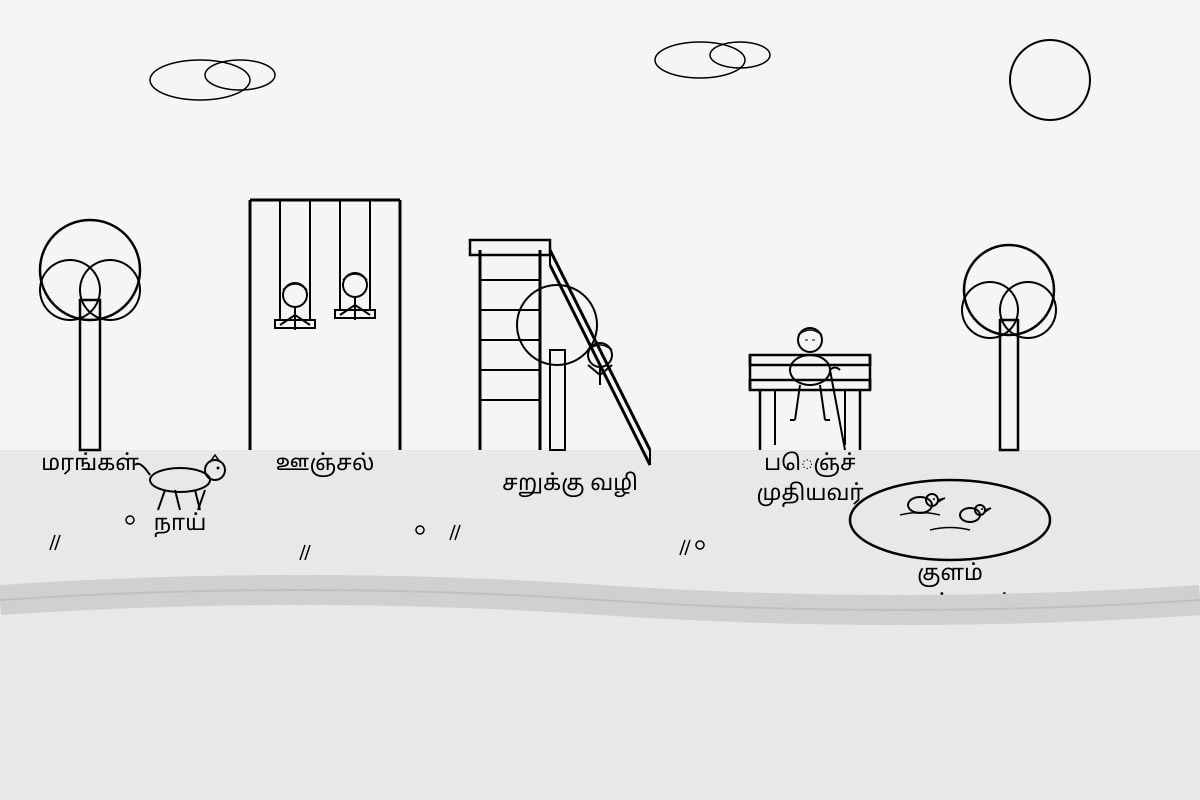
13. 🎤 கீழே கொடுக்கப்பட்டுள்ள படத்தைப் பார்த்து, அதில் உள்ள காட்சியை விளக்குங்கள்.
Image Description: A simple black-and-white line drawing of a park. There are two children on a swing. One child is sliding down a slide. An elderly person is sitting on a bench. A dog is running on the grass. In the background are trees and a small pond with ducks.
Expected Response: The student should describe the picture. Example: "இது ஒரு பூங்கா காட்சியாகும். இரண்டு குழந்தைகள் ஊஞ்சலில் விளையாடுகிறார்கள். ஒரு குழந்தை சறுக்கு மரத்தில் சறுக்குகிறது. ஒரு பெரியவர் பெஞ்சில் அமர்ந்திருக்கிறார். ஒரு நாய் புற்களில் ஓடுகிறது. மரங்களும் ஒரு குளமும் உள்ளன."
Marking Notes:
- 2 marks: Describes at least 4 elements from the picture correctly in complete sentences.
- 1 mark: Describes 2–3 elements but sentences are incomplete or grammar is weak.
- 0 marks: Describes less than 2 elements.
- Key concept: Picture description (சித்திரம் விளக்குதல்) is a standard assessment format. Tests vocabulary for objects, actions, and prepositions of place (இல், மீது, அருகில்).
14. 🎤 'கருணை' (compassion) என்ற வார்த்தைக்கு என்ன பொருள்? உங்கள் வாழ்க்கையில் கருணை காட்டிய ஒரு சந்தர்ப்பத்தைச் சொல்லுங்கள்.
Expected Response: The student should define 'compassion' and give a personal example. Example: "கருணை என்றால் மற்றவர்கள் மீது அன்பும், இரக்கமும் கொள்வது. நான் ஒருமுறை தெருவில் விழுந்த வயதானவருக்கு உதவினேன். அது கருணை காட்டும் செயலாகும்."
Marking Notes:
- 2 marks: Correct meaning given AND a clear personal example provided.
- 1 mark: Meaning given but no example, OR example but no meaning.
- 0 marks: No answer or incorrect.
- Key concept: Assessing vocabulary meaning and application to real life (domain: சமூகம், விழுமியங்கள்). This connects to the syllabus theme of நல்லொழுக்கம் (values).
15. 🎤 சிங்கப்பூரில் நீங்கள் மிகவும் விரும்பும் இடம் எது? ஏன் மூன்று காரணங்களைச் சொல்லுங்கள்.
Expected Response: The student should name a place in Singapore and give 3 reasons. Example: "சிங்கப்பூரில் நான் மிகவும் விரும்பும் இடம் சென்டோசா. முதலில், அங்கு கடற்கரை மிகவும் அழகாக இருக்கிறது. இரண்டாவதாக, பல பொழுதுபோக்கு இடங்கள் உள்ளன. மூன்றாவதாக, அங்கு எனது குடும்பத்துடன் மகிழ்ச்சியாக நேரம் செலவிட முடியும்."
Marking Notes:
- 2 marks: Place named and three distinct reasons given using sequencers (முதலில், இரண்டாவதாக, மூன்றாவதாக).
- 1 mark: Place named with only 1–2 reasons, or reasons are repeated.
- 0 marks: No answer or place not in Singapore.
- Key concept: Assessing structured opinion with multiple reasons (domain: நாடு). Tests use of enumeration markers (sequencers).
Section C: முறையான பேச்சு (Formal Speech) – Questions 16–20
16. 🎤 எதிர்வரும் தேசிய தின கொண்டாட்டத்தில், நீங்கள் சிங்கப்பூர் பற்றி ஒரு சிறு உரை நிகழ்த்த வேண்டும். உங்கள் உரைக்குத் தொடக்க வாக்கியங்களைச் சொல்லுங்கள்.
Expected Response: The opening should include a greeting and introduce the topic. Example: "வணக்கம். எனது பெயர் [மாணவர் பெயர்]. நான் [வகுப்பு] வகுப்பில் படிக்கிறேன். இன்று நான் சிங்கப்பூர் பற்றி உங்களுடன் பகிர்ந்து கொள்ள விரும்புகிறேன்."
Marking Notes:
- 2 marks: Proper greeting (வணக்கம்), self-introduction (name, class), and clear topic introduction.
- 1 mark: Greeting and name mentioned but no topic introduction.
- 0 marks: No greeting or barely coherent.
- Key concept: Formal speech opening (உரை) requires a standard format. This tests understanding of formal register and discourse markers for starting a speech.
17. 🎤 உங்கள் பள்ளியில் 'சுற்றுச்சூழல் தினம்' கொண்டாடப்படுகிறது. சுற்றுச்சூழலைப் பாதுகாக்க நாம் என்ன செய்ய வேண்டும் என்று உங்கள் நண்பர்களிடம் சொல்லுங்கள்.
Expected Response: The student should give practical advice. Example: "சுற்றுச்சூழலைப் பாதுகாக்க நாம் குப்பைகளைக் குப்பைத் தொட்டியில் போட வேண்டும். மரங்களை வெட்டக் கூடாது. தண்ணீரை வீணாக்கக் கூடாது. மின்சாரத்தை மிச்சப்படுத்த வேண்டும்."
Marking Notes:
- 2 marks: Gives 3 appropriate actions with imperative forms (வேண்டும்/கூடாது).
- 1 mark: Gives 1–2 actions, or uses incorrect verb forms.
- 0 marks: No answer or unrelated.
- Key concept: Persuasive speech and environmental vocabulary (domain: உலகம்). Tests use of 'வேண்டும்' (must) and 'கூடாது' (must not).
18. 🎤 ஒரு நண்பர் வீட்டிற்கு விருந்துக்கு அழைத்துள்ளார். நீங்கள் எப்படி நன்றி தெரிவிப்பீர்கள்? மூன்று வாக்கியங்களில் சொல்லுங்கள்.
Expected Response: Example: "நண்பரே, உங்கள் அழைப்பிற்கு மிக்க நன்றி. நேற்றைய விருந்து மிகவும் சிறப்பாக இருந்தது. உங்கள் குடும்பத்தினருடன் நேரம் செலவிட்டது மிகவும் மகிழ்ச்சியாக இருந்தது."
Marking Notes:
- 2 marks: Three complete, polite sentences expressing thanks.
- 1 mark: One or two sentences, or not adequately thankful.
- 0 marks: No answer or rude content.
- Key concept: Expressing gratitude (நன்றி தெரிவித்தல்) is a key social function (domain: சமூகம்). Tests polite register and appropriate vocabulary.
19. 🎤 ஒரு கடையில் பொருள் வாங்கும்போது, கடைக்காரரிடம் நீங்கள் என்ன சொல்வீர்கள்? உரையாடலை முழுமையாகச் சொல்லுங்கள்.
Expected Response: A full dialogue: Student: "வணக்கம். எனக்கு ஒரு பேனா வேண்டும்." Shopkeeper: "இந்தப் பேனா எப்படி?" Student: "இது எவ்வளவு?" Shopkeeper: "இது இரண்டு டாலர்." Student: "சரி, இதைத் தருகிறேன். இதோ பணம்." Shopkeeper: "நன்றி. வருக." Student: "நன்றி. வருகிறேன்."
Marking Notes:
- 2 marks: Complete dialogue with greeting, asking for item, asking price, paying, and thanking.
- 1 mark: Incomplete or only one side of the conversation.
- 0 marks: No answer.
- Key concept: Transactional dialogue (கடை உரையாடல்) is a standard speaking test scenario. Tests the full interaction structure (domain: சமூகம்).
20. 🎤 உங்கள் வகுப்புத் தலைவர் தேர்தலில் நிற்கிறீர்கள். ஏன் உங்களைத் தேர்ந்தெடுக்க வேண்டும் என்று வகுப்பு நண்பர்களிடம் சொல்லுங்கள். (நான்கு வாக்கியங்கள்)
Expected Response: Example: "என் நண்பர்களே, நான் வகுப்புத் தலைவராக நிற்கிறேன். நான் பொறுப்புள்ள மாணவன். நான் ஆசிரியர்களுக்கும் மாணவர்களுக்கும் உதவுவேன். என்னைத் தேர்ந்தெடுத்து ஆதரியுங்கள். நன்றி."
Marking Notes:
- 2 marks: Four complete persuasive sentences, with introduction and polite ending.
- 1 mark: 2–3 sentences, or not adequately persuasive.
- 0 marks: No answer or irrelevant.
- Key concept: Persuasive speech (தேர்தல் உரை) with a specific structure (domain: பள்ளி). This tests the ability to argue a case formally.
General Marking Guidelines for Speaking:
The marks are divided as follows for each 🎤 question:
- Content (1 mark): Did the student answer the question with relevant, accurate information?
- Delivery (1 mark): Was the pronunciation clear? Was the speech fluent? Were the sounds correct?
Total: 40 marks