AI Generated Quiz
Primary 4 Tamil Reading Quiz
Free P4 Tamil Reading quiz, AI version, with questions, answers, and syllabus-aligned practice for Singapore students.
These static practice materials are generated from the site's syllabus and paper-generation workflow, with source and model context shown so students and parents can evaluate the material before use.
Questions
Free quiz and exam paper access
Enter your details to view this paper
Your access is remembered on this device.
Answers
Primary 4 Tamil Quiz - Reading - Answer Key
Total Marks: 20
Section A: Reading Comprehension (Questions 1–10)
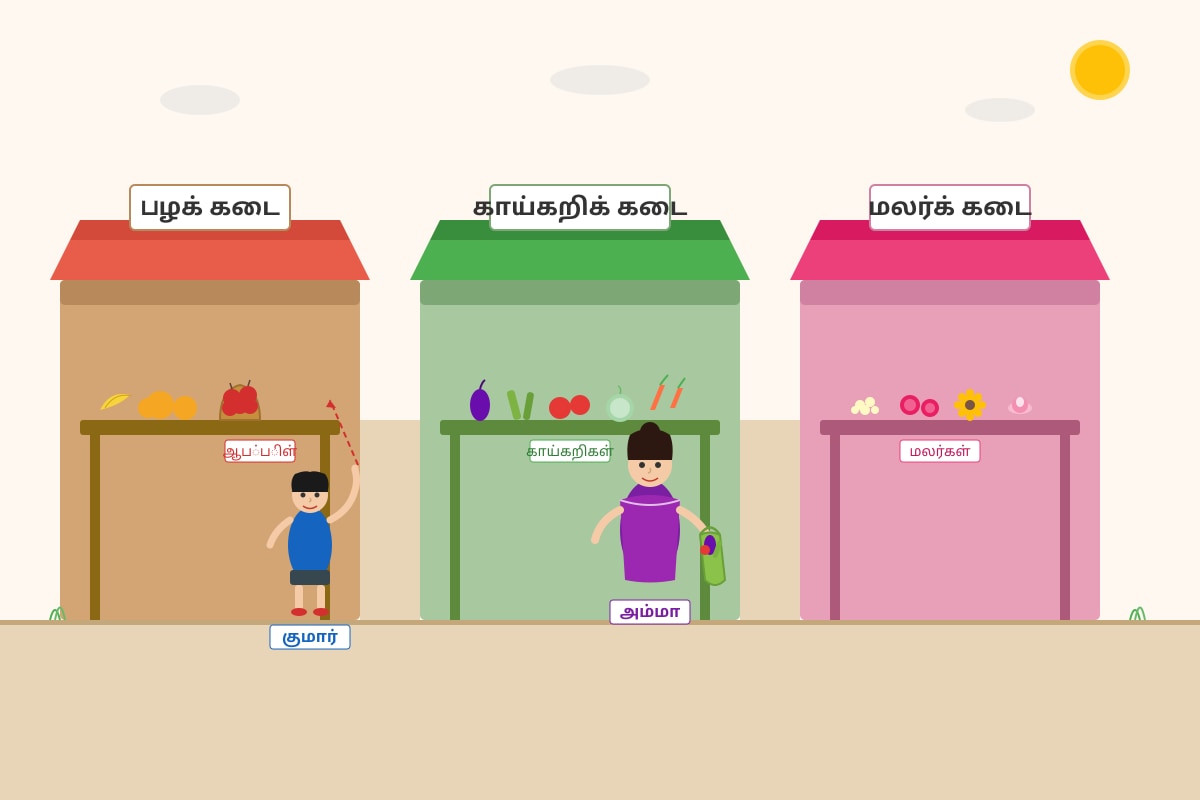
Passage 1: குமார் மற்றும் அவனது அம்மா சந்தைக்குச் சென்றனர்.
1. குமார் யாருடன் சந்தைக்குச் சென்றான்?
- Answer: குமார் தனது அம்மாவுடன் சந்தைக்குச் சென்றான்.
- Marks: 1
- Explanation: The passage clearly states "குமார் மற்றும் அவனது அம்மா சந்தைக்குச் சென்றனர்" which means "Kumar and his mother went to the market." So the answer is that he went with his mother.
- Common mistake: Students might write just "அம்மா" without the possessive form. The full answer "அவனது அம்மா" or "தனது அம்மா" is more precise.
2. சந்தையில் என்னென்ன கடைகள் இருந்தன? இரண்டு பெயர்களை எழுதுக.
- Answer: பழக் கடை, காய்கறிக் கடை (or மலர்க் கடை)
- Marks: 2 (1 mark for each correct stall name)
- Explanation: The passage mentions three stalls: பழக் கடை (fruit stall), காய்கறிக் கடை (vegetable stall), and மலர்க் கடை (flower stall). Students need to name any two.
- Teaching note: Help students identify the key words: பழம் (fruit), காய்கறி (vegetable), மலர் (flower). These are common Tamil words for everyday items.
3. குமார் பழக் கடையில் எதைப் பார்த்தான்?
- Answer: குமார் பழக் கடையில் சிவப்பு ஆப்பிள்களைப் பார்த்தான்.
- Marks: 1
- Explanation: The passage says "குமார் பழக் கடையில் சிவப்பு ஆப்பிள்களைப் பார்த்தான்" meaning "Kumar saw red apples at the fruit stall."
- Key vocabulary: சிவப்பு = red, ஆப்பிள் = apple.
4. குமாரின் அம்மா காய்கறிக் கடையில் என்ன வாங்கினார்?
- Answer: குமாரின் அம்மா காய்கறிக் கடையில் கத்திரிக்காய், முருங்கைக்காய் வாங்கினார்.
- Marks: 1
- Explanation: The passage states "அவனது அம்மா காய்கறிக் கடையில் கத்திரிக்காய், முருங்கைக்காய் வாங்கினார்" meaning "His mother bought brinjal and drumstick at the vegetable stall."
- Teaching note: கத்திரிக்காய் = brinjal/eggplant, முருங்கைக்காய் = drumstick (a type of vegetable). These are common vegetables in Tamil cuisine.
5. குமாருக்கு சந்தை பிடித்திருக்கிறதா? ஏன்?
- Answer: ஆம், குமாருக்கு சந்தை மிகவும் பிடித்திருந்தது. ஏனென்றால் சந்தையில் பல கடைகள் இருந்தன, அவன் பல வண்ணமயமான பொருட்களைப் பார்த்தான்.
- Marks: 2 (1 mark for correct yes/no answer, 1 mark for a reasonable explanation)
- Explanation: The passage ends with "குமாருக்கு சந்தை மிகவும் பிடித்திருந்தது" meaning "Kumar liked the market very much." Students should infer a reason from the passage, such as seeing many stalls or colourful items.
- Marking note: Accept any reasonable explanation that shows understanding of the passage.
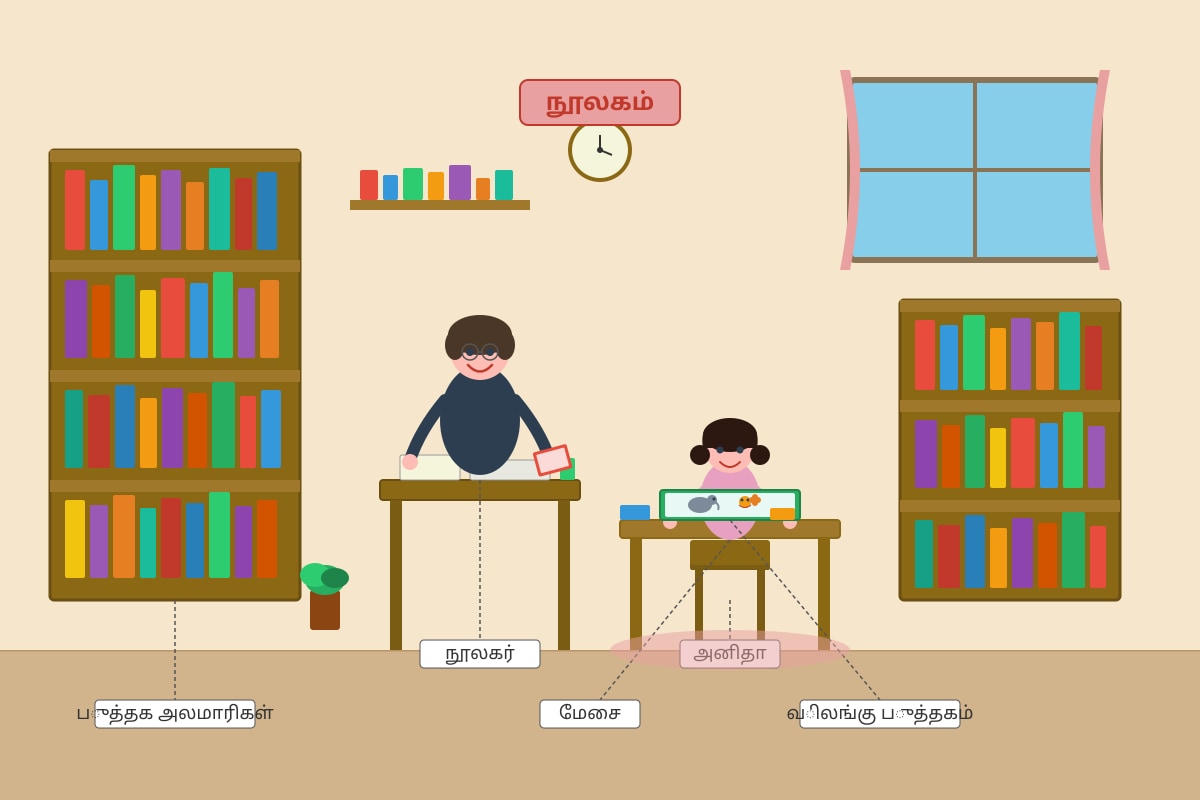
Passage 2: அனிதா நூலகத்திற்குச் சென்றாள்.
6. அனிதா எங்குச் சென்றாள்?
- Answer: அனிதா நூலகத்திற்குச் சென்றாள்.
- Marks: 1
- Explanation: The first sentence of the passage is "அனிதா நூலகத்திற்குச் சென்றாள்" meaning "Anitha went to the library."
- Key vocabulary: நூலகம் = library.
7. நூலகத்தில் என்ன இருந்தது?
- Answer: நூலகத்தில் பல புத்தகங்கள் இருந்தன.
- Marks: 1
- Explanation: The passage says "அங்கே பல புத்தகங்கள் இருந்தன" meaning "There were many books there."
- Teaching note: புத்தகம் = book. The plural form is புத்தகங்கள்.
8. அனிதா எந்தப் புத்தகத்தை எடுத்துப் படித்தாள்?
- Answer: அனிதா விலங்குகள் பற்றிய புத்தகத்தை எடுத்துப் படித்தாள்.
- Marks: 1
- Explanation: The passage states "அவள் விலங்குகள் பற்றிய புத்தகத்தை எடுத்துப் படித்தாள்" meaning "She took and read a book about animals."
- Key vocabulary: விலங்கு = animal.
9. நூலகர் அனிதாவுக்கு என்ன கொடுத்தார்?
- Answer: நூலகர் அனிதாவுக்கு ஒரு அழகான கதைப் புத்தகத்தைக் கொடுத்தார்.
- Marks: 1
- Explanation: The passage says "நூலகர் அவளுக்கு ஒரு அழகான கதைப் புத்தகத்தைக் கொடுத்தார்" meaning "The librarian gave her a beautiful storybook."
- Key vocabulary: நூலகர் = librarian, கதைப் புத்தகம் = storybook.
10. அனிதா எப்படி வீட்டிற்குச் சென்றாள்?
- Answer: அனிதா மகிழ்ச்சியாக வீட்டிற்குச் சென்றாள்.
- Marks: 1
- Explanation: The passage ends with "அனிதா மகிழ்ச்சியாக வீட்டிற்குச் சென்றாள்" meaning "Anitha went home happily."
- Key vocabulary: மகிழ்ச்சி = happiness. மகிழ்ச்சியாக = happily (adverb form).
Section B: Vocabulary in Context (Questions 11–15)
11. நான் நேற்று ஒரு நல்ல கதையை ____________________.
- Answer: வாசித்தேன்
- Marks: 1
- Explanation: The sentence means "Yesterday I ________ a good story." The correct word is "வாசித்தேன்" (read). The context is about reading a story, and the past tense first-person form is needed.
- Grammar note: வாசி (read) + த் + ஏன் = வாசித்தேன் (I read - past tense). The suffix "-ஏன்" indicates first person singular past tense.
12. நான் காலையில் பாலும் ரொட்டியும் ____________________.
- Answer: சாப்பிட்டேன்
- Marks: 1
- Explanation: The sentence means "In the morning I ________ milk and bread." The correct word is "சாப்பிட்டேன்" (ate). Drinking milk and eating bread is a common breakfast activity.
- Grammar note: சாப்பிடு (eat) + ட் + ஏன் = சாப்பிட்டேன் (I ate - past tense).
13. நான் பள்ளியில் ஒரு கடிதம் ____________________.
- Answer: எழுதினேன்
- Marks: 1
- Explanation: The sentence means "I ________ a letter at school." The correct word is "எழுதினேன்" (wrote). Writing a letter is a common school activity.
- Grammar note: எழுது (write) + இன் + ஏன் = எழுதினேன் (I wrote - past tense).
14. நான் விளையாட்டு மைதானத்தில் ____________________.
- Answer: ஓடினேன்
- Marks: 1
- Explanation: The sentence means "I ________ in the playground." The correct word is "ஓடினேன்" (ran). Running is a common activity in a playground.
- Grammar note: ஓடு (run) + இன் + ஏன் = ஓடினேன் (I ran - past tense).
15. நான் தொலைக்காட்சியில் ஒரு நிகழ்ச்சியை ____________________.
- Answer: பார்த்தேன்
- Marks: 1
- Explanation: The sentence means "I ________ a programme on television." The correct word is "பார்த்தேன்" (watched/saw). Watching television programmes is a common activity.
- Grammar note: பார் (see/watch) + த் + ஏன் = பார்த்தேன் (I watched/saw - past tense).
Section C: Reading and Understanding (Questions 16–20)
16. இந்த அறிவிப்பு எதைப் பற்றியது?
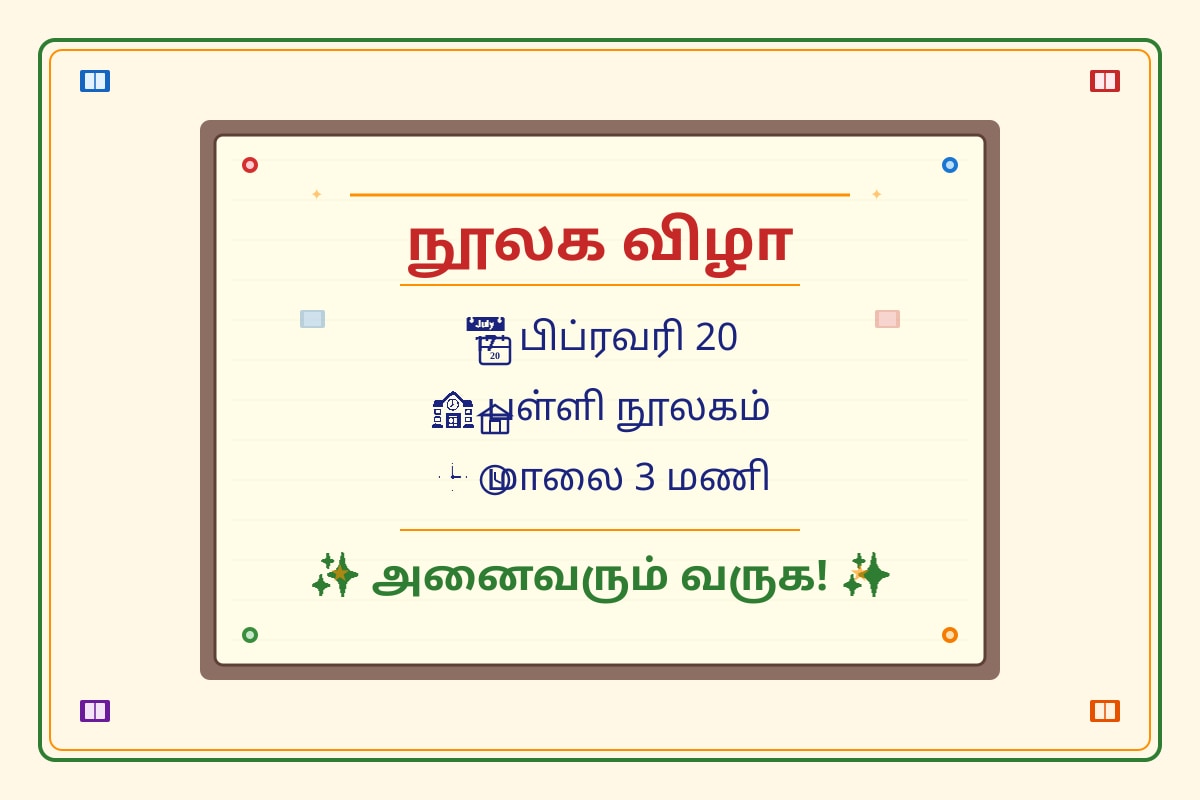
- Answer: இந்த அறிவிப்பு நூலக விழா பற்றியது.
- Marks: 1
- Explanation: The notice is about a "நூலக விழா" (Library Festival/Event). The title of the notice clearly states this.
- Key vocabulary: அறிவிப்பு = notice/announcement, விழா = festival/event.
17. நூலக விழா எப்போது நடைபெறும்?
- Answer: நூலக விழா பிப்ரவரி 20 அன்று நடைபெறும்.
- Marks: 1
- Explanation: The notice states "பிப்ரவரி 20" which means February 20. This is the date of the event.
- Teaching note: பிப்ரவரி = February. Months in Tamil are often borrowed from English.
18. நூலக விழா எங்கே நடைபெறும்?
- Answer: நூலக விழா பள்ளி நூலகத்தில் நடைபெறும்.
- Marks: 1
- Explanation: The notice states "பள்ளி நூலகம்" which means "School Library." This is the location of the event.
- Key vocabulary: பள்ளி = school.
19. நூலக விழா எந்த நேரத்தில் தொடங்கும்?
- Answer: நூலக விழா மாலை 3 மணிக்குத் தொடங்கும்.
- Marks: 1
- Explanation: The notice states "மாலை 3 மணி" which means "3 PM." This is the start time of the event.
- Key vocabulary: மாலை = evening, மணி = o'clock/time.
20. "அனைவரும் வருக!" என்ற வாக்கியத்தின் பொருள் என்ன?
- Answer: "அனைவரும் வருக!" என்ற வாக்கியத்தின் பொருள் "Everyone is welcome to come!" அல்லது "All are invited!"
- Marks: 1
- Explanation: This is a common Tamil phrase used in invitations. "அனைவரும்" means "everyone/all," "வருக" means "come" (in an inviting/requesting form). Together it means "Everyone please come!" or "All are welcome!"
- Grammar note: வருக is the imperative/invitational form of வா (come). It is a polite way to invite someone.
— End of Answer Key —