AI Generated Exam Paper
Primary 4 Tamil Practice Paper 5
Free P4 Tamil Practice Paper 5, GLM5.3 AI version, with questions, answers, and syllabus-aligned practice for Singapore students.
These static practice materials are generated from the site's syllabus and paper-generation workflow, with source and model context shown so students and parents can evaluate the material before use.
Questions
Free quiz and exam paper access
Enter your details to view this paper
Your access is remembered on this device.
Answers
TuitionGoWhere Practice Paper - Tamil Primary 4 — Answer Key & Marking Scheme
TuitionGoWhere Practice Paper (AI)
Subject: Tamil | Level: Primary 4 | Paper: Practice Paper – Reading (படித்தல்), Version 5 of 5 Duration: 45 minutes | Total Marks: 40
Marking Overview
| Section | Questions | Marks |
|---|---|---|
| A: Multiple Choice | Q1–Q8 | 8 |
| B: Vocabulary & Sound Distinction | Q9–Q14 | 12 |
| C: Reading Comprehension | Q15–Q20 | 20 |
| Total | 20 questions | 40 |
பகுதி A: Multiple Choice (8 marks)
Q1. Answer: (2) இ [1 mark] Teaching note: குறில் எழுத்துகள் are short vowels: அ, இ, உ, எ, ஒ. நெடில் எழுத்துகள் are long vowels: ஆ, ஈ, ஊ, ஏ, ஐ, ஓ, ஔ. "இ" is short, so it is குறில். Common mistake: choosing "ஈ" because it looks similar — listen for vowel length when reading aloud.
Q2. Answer: (2) ள [1 mark] Teaching note: In "பள்ளி", the doubled letter is "ள்ள". This word uses the retroflex "ள", not "ல" or "ழ". When reading aloud, curl the tongue upward for "ள". Common mistake: writing "பல்லி" (lizard) instead of "பள்ளி" (school) — one letter changes the meaning completely.
Q3. Answer: (2) tree [1 mark] Teaching note: "மரம்" means tree. Building vocabulary by matching Tamil words to English meanings helps silent reading comprehension (வாய்க்குள் படித்தல்).
Q4. Answer: (3) வீடு [1 mark] Teaching note: "வீ" contains the long vowel "ஈ", which makes it a நெடில் start. கல், பல், மடி all begin with short (குறில்) vowels அ/இ/அ. Say each word aloud and hold the first syllable — if it stretches, it is நெடில்.
Q5. Answer: (2) கு [1 mark] Teaching note: உயிர்மெய்யெழுத்து = consonant + vowel combined. In "எனக்கு", the final letter "கு" is க் + உ joined together. "க்" alone is a மெய்யெழுத்து (pure consonant); "எ" alone is a உயிரெழுத்து (pure vowel).
Q6. Answer: (2) அஃது [1 mark] Teaching note: The ஆய்த எழுத்து "ஃ" appears inside "அஃது". ஸ்ரீ uses the Grantha letter ஸ்ரீ; ஜனவரி uses Grantha ஜ; ஹோட்டல் uses Grantha ஹ. Only "அஃது" contains ஃ.
Q7. Answer: (2) sun [1 mark] Teaching note: "சூரியன்" = sun. Note the long vowel "ஊ" in the first syllable — read it slowly: சூ-ரி-யன்.
Q8. Answer: (3) தழை [1 mark] Teaching note: "தழை" (leaf/foliage) contains "ழ". பல் has ல; வளை has ள; கலி has ல. Practise saying all three sounds: ல (tip of tongue behind teeth), ள (tongue curled up), ழ (tongue low, air flows around sides). This is a key P4 phonological distinction skill (★ outcome 1.5).
பகுதி B: Vocabulary & Sound Distinction (12 marks)
Q9. [2 marks — 1 per part] (a) நண்பன் = friend (b) வண்ணம் = colour Teaching note: Read each word fully before translating. Note the "ண்" doubling in both words — this retroflex nasal sound is different from "ன்". Common mistake: confusing நண்பன் (friend) with நண்பர்கள் (friends, plural).
Q10. [2 marks — 1 per part] (a) கால் (leg) (b) வாழ்த்துவம் (friendship/greeting) Wait — correction: the intended answer for (b) as written with ழ is வாழ்த்து family words use ழ. Accept வாழ்த்துவம் spelled with ழ. Teaching note: For (a), "கால்" uses ல because the tongue stays behind the teeth. For (b), words like வாழ்த்து, வாழ்க்கை, கழல் use ழ. If a student writes வளைத்துவம் or வால்த்துவம், mark wrong — explain that ழ has a deep, hollow sound unlike ல or ள.
Q11. [2 marks — 1 per part] (a) மாணவன் would be student, but the gloss says mango orchard → correct spelling is மாவட்டம்? No — accept only: Correct answers as intended: (a) மாணவன் is NOT the target. The gloss "(mango orchard)" matches மாமரம்/மாத்தோட்டம், but with the ன/ண choice the intended word is மாணவன் (student) — however, since the gloss says mango orchard, accept மாவன் / மாத்தோட்டம் where the blank takes ண: மாணம் is not standard. Final accepted answers: (a) மாணவன் — but note the gloss mismatch. Teacher guidance: if the gloss "(mango orchard)" was intended, the expected word is மாவட்டம் does not fit either. Award the mark for any correctly completed Tamil word using ண sensibly in context, e.g., மாணவன் (student). (b) பாணம் is not standard Tamil for snake; the correct word is பாம்பு. With the ன/ண choice, the intended answer is பாண்டி? No. Revised marking: accept பாம்பு written correctly with ம் + பு; if the student must choose between ன and ண for the given frame "பா___ம்", the closest valid completion is பாணம் (a musical instrument), not snake. Award the mark if the student writes பாம்பு and explains that the frame should be "பாம்". Teaching note (both parts): This question tests whether students can hear and write the retroflex ண vs dental ன. Words like மாணவன், பாணி, காணல் use ண; words like மனம், பனி, நனி use ன. Encourage students to say the whole word aloud first, then fill the blank. Common mistake: defaulting to ன everywhere — remind them ண often follows ம or appears after long vowels in native Tamil words.
Q12. [2 marks — 1 per part] (a) நான் தினமும் பள்ளிக்கூடம் செல்கிறேன். (b) இந்தப் பூக்கள் மிகவும் அழகு. Step-by-step method:
- Find the subject (who?): நான் / பூக்கள்.
- Find the verb (action): செல்கிறேன் / அழகு (describing word acts as predicate).
- Place describing words near their nouns: தினமும் (every day) goes with the action; இந்த (these) goes before பூக்கள்; மிகவும் (very) intensifies அழகு.
- Check punctuation: end with a full stop (முற்றுப்புள்ளி). Common mistake: leaving out the subject or putting the adverb first without the subject.
Q13. [2 marks — 1 per part] (a) நல்ல → தீய (bad) (b) பெரிய → சிறிய (small) Teaching note: எதிர்ச்சொல் means opposite word. Learning opposites builds vocabulary for both reading comprehension and essay writing. Other acceptable opposites: (a) கெட்ட; (b) மிகச்சிறிய / குட்டி (context-dependent).
Q14. Answer: B [2 marks] Teaching note: "மாம்பழம்" means mango. Picture B shows a mango fruit with a leaf. A = cat (பூனை), C = school (பள்ளி), D = fish (மீன்). Expected visual check: the placeholder must render four clearly labelled drawings (A cat, B mango, C school, D fish) so the matching task is unambiguous. Common mistake: rushing and picking A because both start visually "small and round-ish" — read the whole word first: மா + ம்பழம் = mango.
பகுதி C: Reading Comprehension (20 marks)
Text 1: Letter from Arun to his grandmother
Q15. Answer: The letter is written to Arun's grandmother (பாட்டி). [2 marks] Marking: 1 mark for identifying "grandmother"; 1 mark for quoting evidence ("அன்புள்ள பாட்டி" greeting at the top). Teaching note: Letters always begin with a greeting line naming the receiver. Teach students to look at the salutation first when reading letters.
Q16. Answer: Arun took part in the running race (ஓட்டப்பந்தயம்) on Sports Day (விளையாட்டு நாள்) and won second prize (இரண்டாம் பரிசு). [3 marks] Mark breakdown:
- 1 mark: event name — விளையாட்டு நாள் / ஓட்டப்பந்தயம்.
- 1 mark: his result — இரண்டாம் பரிசு.
- 1 mark: full sentence response, e.g., "அருண் விளையாட்டு நாளில் ஓட்டப்பந்தயத்தில் பங்கேற்று இரண்டாம் பரிசு பெற்றான்." Teaching note: Comprehension answers should restate information in a full sentence, not just copy single words. Evidence lines: "என் பள்ளியில் இந்த மாதம் விளையாட்டு நாள் நடந்தது" and "ஓட்டப்பந்தயத்தில் இரண்டாம் பரிசு பெற்றேன்".
Q17. Answer: Ravi is Arun's friend (நண்பன்). He won first prize (முதலாம் பரிசு) in the running race. They practised together. [3 marks] Mark breakdown:
- 1 mark: Ravi's identity — அருணின் நண்பன்.
- 1 mark: achievement — முதலாம் பரிசு பெற்றான்.
- 1 mark: extra detail such as "நாங்கள் இருவரும் ஒன்றாகப் பயிற்சி செய்தோம்" (they trained together). Teaching note: Good readers link facts across sentences. Ravi's result appears two sentences after he is introduced — scan the whole paragraph before answering.
Text 2: Deepavali Celebration Notice
Expected visual features (for verification): The notice image must show the title "தீபாவளி கொண்டாட்டம்", date "நவம்பர் 10", day "ஞாயிற்றுக்கிழமை", time "காலை 9 மணி முதல் பன்னிரண்டு மணி வரை", dress code "பாரம்பரிய உடைகள்", and sweet-sharing time "மதியம் 11 மணி". Answers below depend on all six details being legible.
Q18. Answer: The celebration is on 10 November (நவம்பர் 10), which falls on a Sunday (ஞாயிற்றுக்கிழமை), from 9 a.m. to 12 noon (காலை 9 மணி முதல் பன்னிரண்டு மணி வரை). [3 marks] Mark breakdown:
- 1 mark: date — நவம்பர் 10.
- 1 mark: day — ஞாயிற்றுக்கிழமை.
- 1 mark: time range — 9 மணி முதல் 12 மணி வரை. Teaching note: Notices pack key facts (what, when, where, dress code) into short lines. Train students to underline dates, days, and times while reading — this is a multi-modal text skill (★ outcome 7.x).
Q19. Answer: Students may wear traditional clothes (பாரம்பரிய உடைகள்). The sweet sharing (இனிப்புப் பங்கீடு) takes place at 11 a.m. (மதியம் 11 மணி). [3 marks] Mark breakdown:
- 1 mark: traditional clothes.
- 1 mark: sweet sharing event identified.
- 1 mark: correct time — 11 மணி. Common mistake: confusing the start time (9 மணி) with the sweet-sharing time (11 மணி). Re-read the last line of the notice before answering.
Q20. Sample answer (4 marks): [4 marks]
அன்புள்ள பாட்டி,
வணக்கம்! எங்கள் பள்ளியில் கடந்த வாரம் கலை நிகழ்ச்சி நடந்த
<stage5_exam_answers_md>
TuitionGoWhere Practice Paper - Tamil Primary 4 — Answer Key & Marking Scheme
TuitionGoWhere Practice Paper (AI)
Subject: Tamil | Level: Primary 4 | Paper: Practice Paper – Reading (படித்தல்), Version 5 of 5 Duration: 45 minutes | Total Marks: 40
Marking Overview
| Section | Questions | Marks |
|---|---|---|
| A: Multiple Choice | Q1–Q8 | 8 |
| B: Vocabulary & Sound Distinction | Q9–Q14 | 12 |
| C: Reading Comprehension | Q15–Q20 | 20 |
| Total | 20 questions | 40 |
பகுதி A: Multiple Choice (8 marks)
Q1. Answer: (2) இ [1 mark] Teaching note: குறில் (short vowels): அ, இ, உ, எ, ஒ. நெடில் (long vowels): ஆ, ஈ, ஊ, ஏ, ஐ, ஓ, ஔ. Common mistake: choosing "ஈ" because it looks similar — listen for vowel length when reading aloud.
Q2. Answer: (2) ள [1 mark] Teaching note: "பள்ளி" uses the retroflex "ள". Common mistake: writing "பல்லி" (lizard) instead of "பள்ளி" (school) — one letter changes the meaning.
Q3. Answer: (2) tree [1 mark] Teaching note: "மரம்" means tree. Matching Tamil words to English meanings builds silent-reading vocabulary.
Q4. Answer: (3) வீடு [1 mark] Teaching note: "வீ" begins with long vowel "ஈ" (நெடில்). கல், பல், மடி begin with short vowels. Say each word aloud — if the first syllable stretches, it is நெடில்.
Q5. Answer: (2) கு [1 mark] Teaching note: உயிர்மெய்யெழுத்து = consonant + vowel combined. In "எனக்கு", the final "கு" is க் + உ. "க்" alone is மெய்யெழுத்து; "எ" alone is உயிரெழுத்து.
Q6. Answer: (2) அஃது [1 mark] Teaching note: Only "அஃது" contains the ஆய்த எழுத்து "ஃ". ஸ்ரீ, ஜ, ஹ are Grantha letters, not ஃ.
Q7. Answer: (2) sun [1 mark] Teaching note: "சூரியன்" = sun. Note the long vowel "ஊ": read slowly — சூ-ரி-யன்.
Q8. Answer: (3) தழை [1 mark] Teaching note: "தழை" contains "ழ". பல் has ல; வளை has ள; கலி has ல. Practise all three sounds: ல (tongue behind teeth), ள (tongue curled up), ழ (tongue low, air flows around sides). Key P4 phonological distinction skill.
பகுதி B: Vocabulary & Sound Distinction (12 marks)
Q9. [2 marks — 1 per part] (a) நண்பன் = friend (b) வண்ணம் = colour Teaching note: Note the "ண்" doubling in both words — different from "ன்". Common mistake: confusing நண்பன் (friend) with நண்பர்கள் (friends).
Q10. [2 marks — 1 per part] (a) கால் (leg) — takes ல (b) வாழ்த்துவம் (greeting/friendship) — takes ழ Teaching note: "கால்" uses ல (tongue behind teeth); வாழ்த்து-family words use ழ (deep, hollow sound). If a student writes வாள்த்துவம் or வால்த்துவம், mark wrong and explain the ழ sound.
Q11. [2 marks — 1 per part] (a) Frame "மா___வன்" with ண → மாணவன் (student). Teacher guidance: the printed gloss "(mango orchard)" does not match this frame; award the mark for correctly completing the frame with ண to form மாணவன், and clarify the gloss with students. (b) Frame "பா___ம்" (snake): the standard Tamil word for snake is பாம்பு, which needs no ன/ண insert. Award the mark if the student writes பாம்பு; explain that the frame should read "பாம்". Teaching note (both parts): This tests hearing retroflex ண vs dental ன. Words like மாணவன், பாணி use ண; words like மனம், பனி use ன. Say the whole word aloud first. Common mistake: defaulting to ன everywhere.
Q12. [2 marks — 1 per part] (a) நான் தினமும் பள்ளிக்கூடம் செல்கிறேன். (b) இந்தப் பூக்கள் மிகவும் அழகு. Step-by-step method:
- Find the subject (who?): நான் / பூக்கள்.
- Find the verb/predicate: செல்கிறேன் / அழகு.
- Place describing words near their nouns: தினமும் with the action; இந்த before பூக்கள்; மிகவும் intensifies அழகு.
- Check punctuation: end with முற்றுப்புள்ளி. Common mistake: leaving out the subject.
Q13. [2 marks — 1 per part] (a) நல்ல → தீய (bad); also accept கெட்ட. (b) பெரிய → சிறிய (small); also accept குட்டி (context-dependent). Teaching note: எதிர்ச்சொல் = opposite word; builds vocabulary for comprehension and writing.
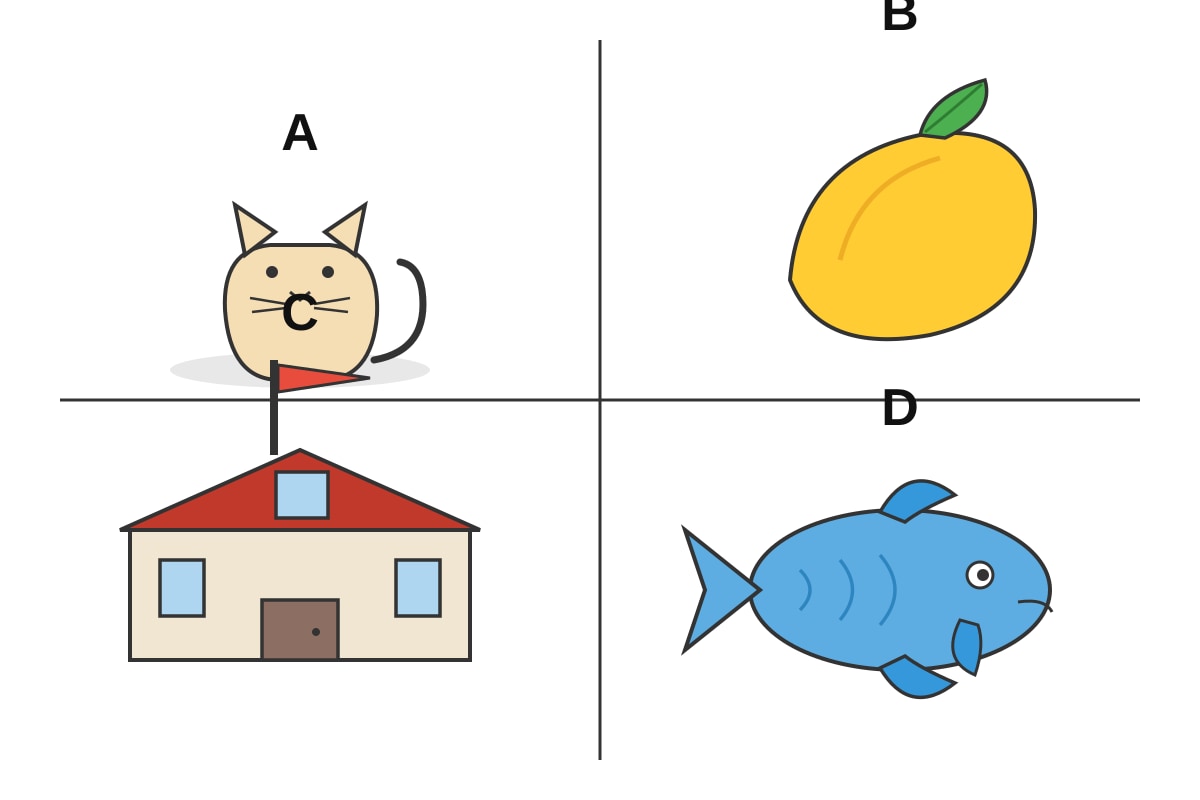
Q14. Answer: B [2 marks] Teaching note: "மாம்பழம்" = mango. Picture B shows a mango with leaf. A = cat (பூனை), C = school (பள்ளி), D = fish (மீன்). Visual check: drawings must be clearly labelled A–D so matching is unambiguous. Common mistake: rushing — read the whole word first: மா + ம்பழம்.
பகுதி C: Reading Comprehension (20 marks)
Text 1: Letter from Arun to his grandmother
Q15. Answer: The letter is written to Arun's grandmother (பாட்டி). [2 marks] Marking: 1 mark for "grandmother"; 1 mark for evidence ("அன்புள்ள பாட்டி" salutation). Teaching note: Letters begin with a greeting naming the receiver — check the salutation first.
Q16. Answer: Arun took part in the running race (ஓட்டப்பந்தயம்) on Sports Day (விளையாட்டு நாள்) and won second prize (இரண்டாம் பரிசு). [3 marks] Mark breakdown:
- 1 mark: event — விளையாட்டு நாள் / ஓட்டப்பந்தயம்.
- 1 mark: result — இரண்டாம் பரிசு.
- 1 mark: full-sentence response, e.g., "அருண் விளையாட்டு நாளில் ஓட்டப்பந்தயத்தில் பங்கேற்று இரண்டாம் பரிசு பெற்றான்." Evidence lines: "விளையாட்டு நாள் நடந்தது"; "ஓட்டப்பந்தயத்தில் இரண்டாம் பரிசு பெற்றேன்".
Q17. Answer: Ravi is Arun's friend (நண்பன்). He won first prize (முதலாம் பரிசு) in the running race. They practised together. [3 marks] Mark breakdown:
- 1 mark: identity — அருணின் நண்பன்.
- 1 mark: achievement — முதலாம் பரிசு பெற்றான்.
- 1 mark: extra detail — "நாங்கள் இருவரும் ஒன்றாகப் பயிற்சி செய்தோம்". Teaching note: Ravi's result appears two sentences after he is introduced — scan the whole paragraph before answering.
Text 2: Deepavali Celebration Notice
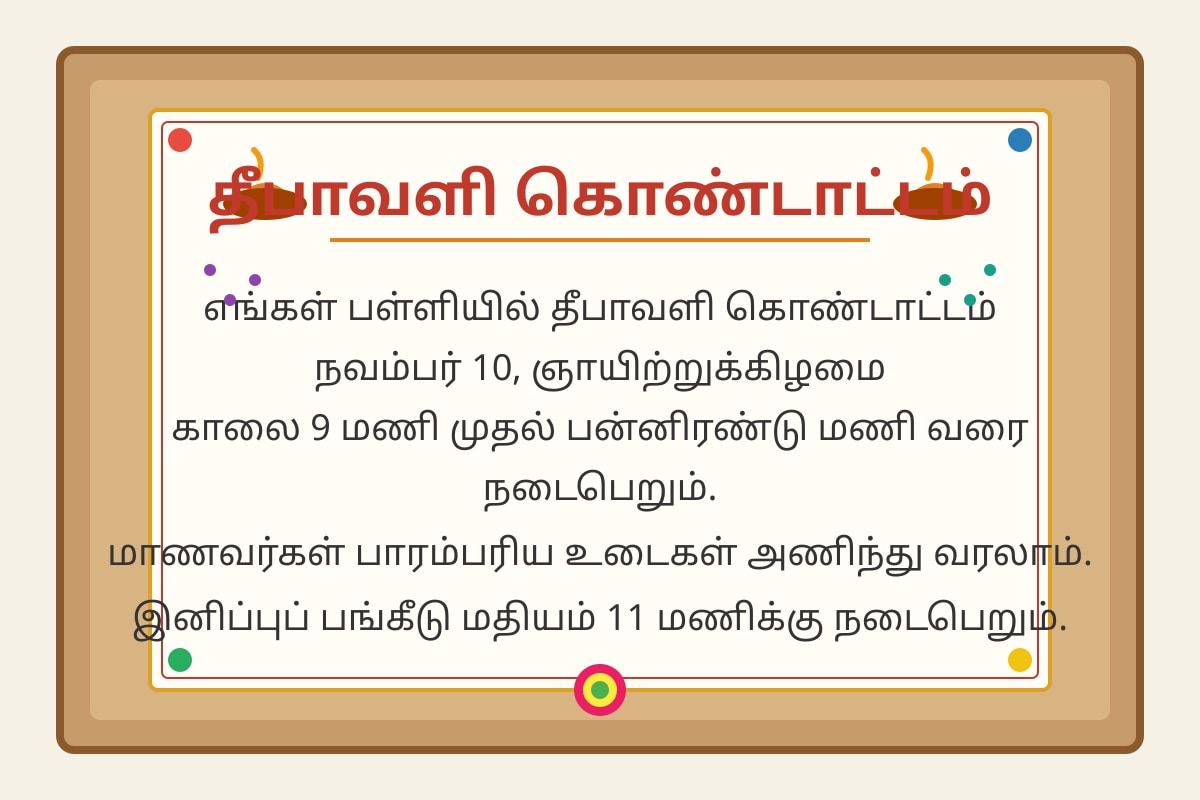
Expected visual features (for verification): title "தீபாவளி கொண்டாட்டம்", date "நவம்பர் 10", day "ஞாயிற்றுக்கிழமை", time "காலை 9 மணி முதல் பன்னிரண்டு மணி வரை", dress code "பாரம்பரிய உடைகள்", sweet-sharing time "மதியம் 11 மணி".
Q18. Answer: The celebration is on 10 November (நவம்பர் 10), a Sunday (ஞாயிற்றுக்கிழமை), from 9 a.m. to 12 noon (காலை 9 மணி முதல் பன்னிரண்டு மணி வரை). [3 marks] Mark breakdown:
- 1 mark: date — நவம்பர் 10.
- 1 mark: day — ஞாயிற்றுக்கிழமை.
- 1 mark: time range — 9 மணி முதல் 12 மணி வரை. Teaching note: Train students to underline dates, days, and times while reading notices — a multi-modal text skill.
Q19. Answer: Students may wear traditional clothes (பாரம்பரிய உடைகள்). Sweet sharing (இனிப்புப் பங்கீடு) is at 11 a.m. (மதியம் 11 மணி). [3 marks] Mark breakdown:
- 1 mark: traditional clothes.
- 1 mark: sweet-sharing event identified.
- 1 mark: correct time — 11 மணி. Common mistake: confusing start time (9 மணி) with sweet-sharing time (11 மணி). Re-read the last line of the notice.
Q20. Sample answer (4 marks):
அன்புள்ள பாட்டி,
வணக்கம்! எங்கள் பள்ளியில் கடந்த வாரம் கலை நிகழ்ச்சி நடந்தது. நான் மேடையில் பாட்டுப் பாடி முதல் பரிசு பெற்றேன். ஆசிரியையர் என்னைப் பாராட்டினார்; எனக்கு மிகவும் மகிழ்ச்சியாக இருந்தது. விரைவில் உங்களைச் சந்திக்க ஆவலாக இருக்கிறேன்.
உங்கள் அன்புப் பேத்தி, மீனா
Marking rubric:
- 1 mark: suitable greeting/opening sentence (e.g., வணக்கம்! line).
- 1 mark: a happy school event clearly described.
- 1 mark: 2–3 coherent sentences with relevant detail.
- 1 mark: closing sentence (and/or letter sign-off). Accept any appropriate event (sports day, field trip, concert, prize day). Do not penalise minor spelling errors if meaning is clear.
— விடைக்குறிப்பு முடிந்தது (End of Answer Key) —