AI Generated Quiz

Primary 4 Science Systems Quiz

Free AI-Generated Qwen3.7 Plus Primary 4 Science Systems quiz with questions and answers for Singapore students. This page is rendered as a direct URL so the questions and answers can be discovered without pressing in-page buttons.

These static practice materials are generated from the site's syllabus and paper-generation workflow, with source and model context shown so students and parents can evaluate the material before use.

Primary 4 Science AI Generated Generated by Qwen3.7 Plus Updated 2026-06-04

Questions

<!-- TuitionGoWhere generation metadata: stage=5-1; model=qwen/qwen3.7-plus; model_label=Qwen3.7 Plus; generated=2026-06-04; Sources: Stage 4-0 LLM templates, syllabus context, and Stage 2 evidence where available. -->

Primary 4 Science Quiz - Systems

Name: __________________________
Class: __________
Date: ______________
Score: ________ / 30

Duration: 45 minutes
Total Marks: 30

Instructions:

  1. Read each question carefully.
  2. For Section A, choose the correct answer and write the number (1, 2, 3, or 4) in the brackets provided.
  3. For Section B, write your answers in the spaces provided.
  4. This quiz covers the Plant System and the Human Digestive System.

Section A: Multiple Choice Questions (10 marks)

For each question, four options are given. Choose the correct answer and write its number in the brackets provided. Each question carries 1 mark.

1. Which part of the plant is mainly responsible for absorbing water and minerals from the soil? (1) Leaf (2) Stem (3) Root (4) Flower [ ]

2. What is the main function of the stem in a plant? (1) To make food for the plant (2) To transport water and food (3) To anchor the plant in the soil (4) To attract insects for pollination [ ]

3. In the human digestive system, where does the digestion of food begin? (1) Stomach (2) Mouth (3) Small Intestine (4) Large Intestine [ ]

4. Which of the following statements about the leaf is correct? (1) It supports the plant. (2) It absorbs water from the soil. (3) It makes food for the plant. (4) It stores undigested food. [ ]

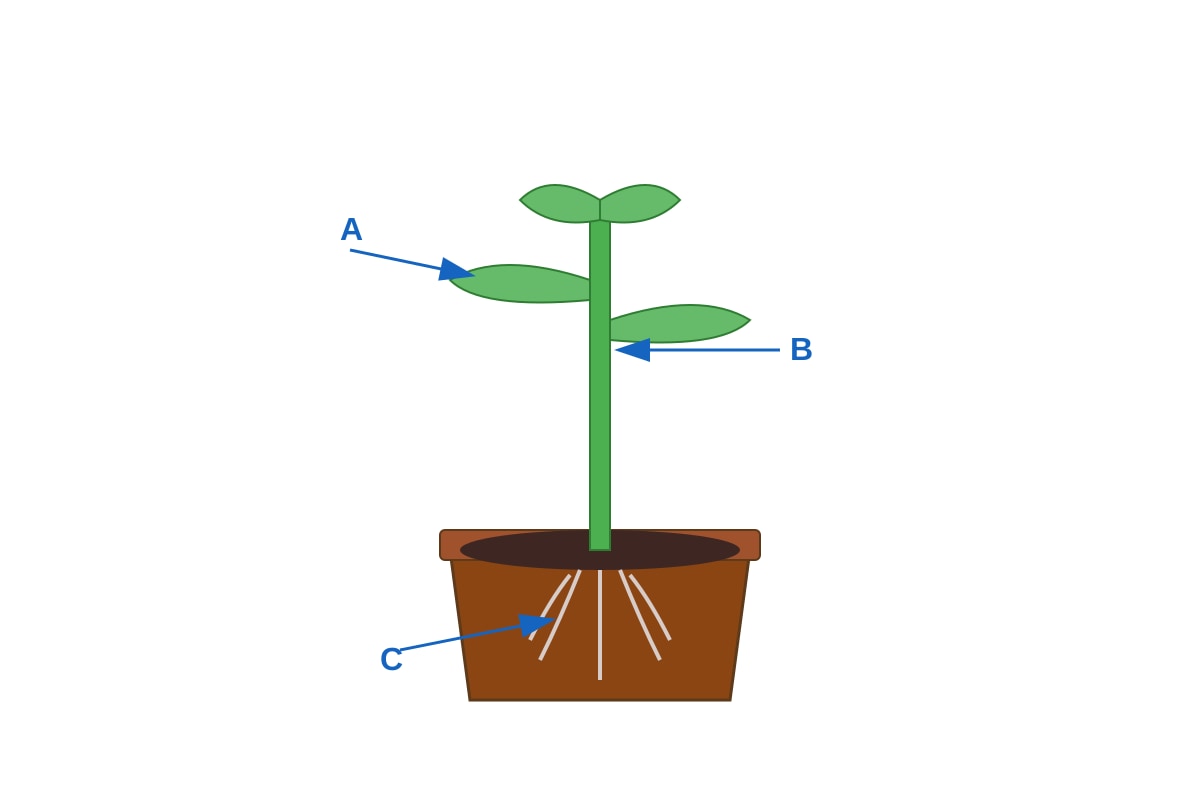
5. Look at the diagram below showing a plant system.

<image_placeholder> id: Q5-fig1 type: diagram linked_question: Q5 description: A simple diagram of a potted plant with three arrows pointing to different parts. Arrow A points to the green flat part, Arrow B points to the main upright stalk, Arrow C points to the underground part. labels: A, B, C values: None must_show: Clear distinction between leaf (A), stem (B), and root (C). </image_placeholder>

Which part labelled A, B, or C transports water to the leaves? (1) A only (2) B only (3) C only (4) A and B [ ]

6. Which organ in the digestive system churns and mixes food with digestive juices? (1) Mouth (2) Gullet (3) Stomach (4) Small Intestine [ ]

7. Why do plants need roots? (1) To make food using sunlight (2) To hold the plant firmly in the soil (3) To transport food to the flowers (4) To release oxygen into the air [ ]

8. What happens to the food that is not digested in the small intestine? (1) It is absorbed into the blood. (2) It moves to the large intestine. (3) It stays in the stomach. (4) It is sent back to the mouth. [ ]

9. Which of the following is NOT a part of the digestive system? (1) Heart (2) Mouth (3) Stomach (4) Intestines [ ]

10. A system is defined as: (1) A single part that works alone. (2) A group of parts that work together to perform a function. (3) A collection of different plants in a garden. (4) The process of making food. [ ]


Section B: Structured Questions (20 marks)

Write your answers in the spaces provided. The number of marks available is shown in brackets [ ] at the end of each question or part.

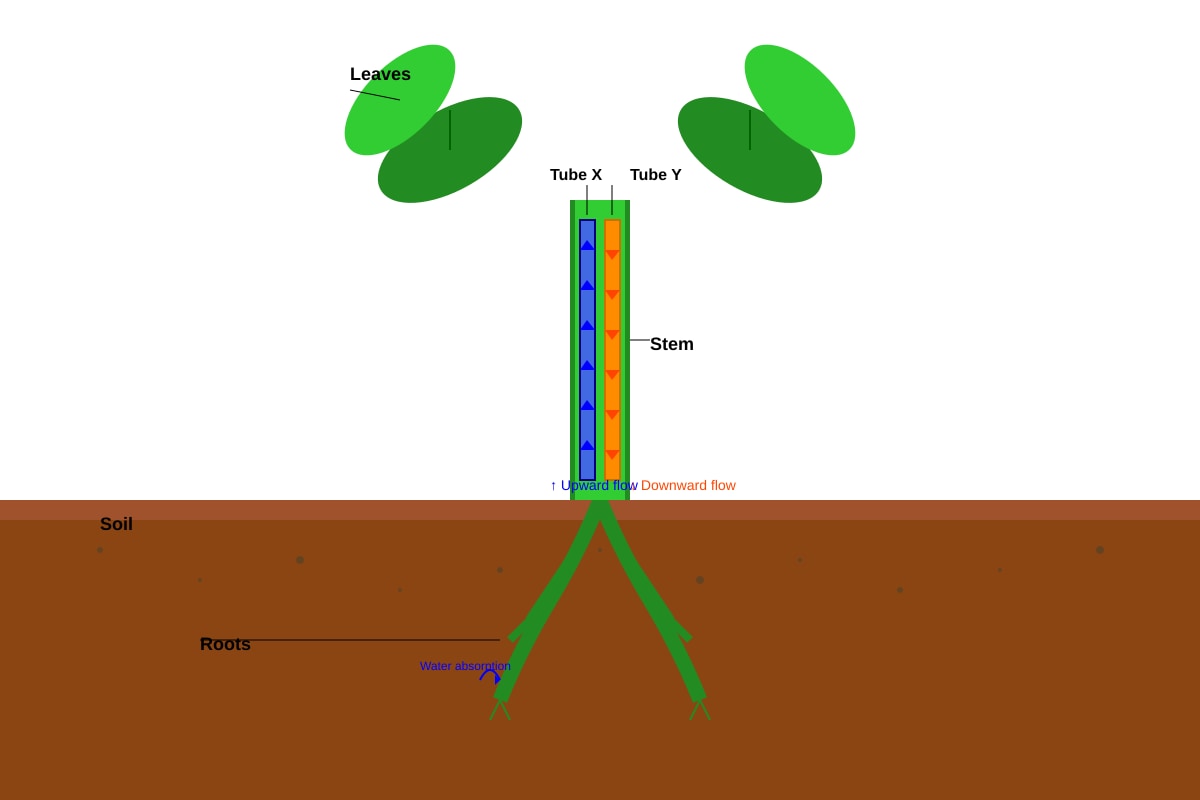
11. Study the diagram of the plant below.

<image_placeholder> id: Q11-fig1 type: diagram linked_question: Q11 description: A cross-section of a plant showing roots in soil, a stem, and leaves. Two tubes are highlighted inside the stem. One tube has arrows pointing up (blue), the other has arrows pointing down (orange). labels: Tube X (upward arrows), Tube Y (downward arrows) values: None must_show: Direction of flow clearly indicated by arrows. </image_placeholder>

(a) Name the part of the plant that absorbs water. _________________________________________________________________________ [1]

(b) What is the function of Tube X? _________________________________________________________________________ [1]

(c) If the roots of the plant are cut off, explain why the plant will eventually die.


_________________________________________________________________________ [2]

12. The table below shows the functions of three parts of the human digestive system.

PartFunction
ABreaks down food into smaller pieces by chewing.
BA muscular tube that pushes food from the mouth to the stomach.
CAbsorbs water from undigested food.

(a) Identify Part A. _________________________________________________________________________ [1]

(b) Identify Part B. _________________________________________________________________________ [1]

(c) Identify Part C. _________________________________________________________________________ [1]

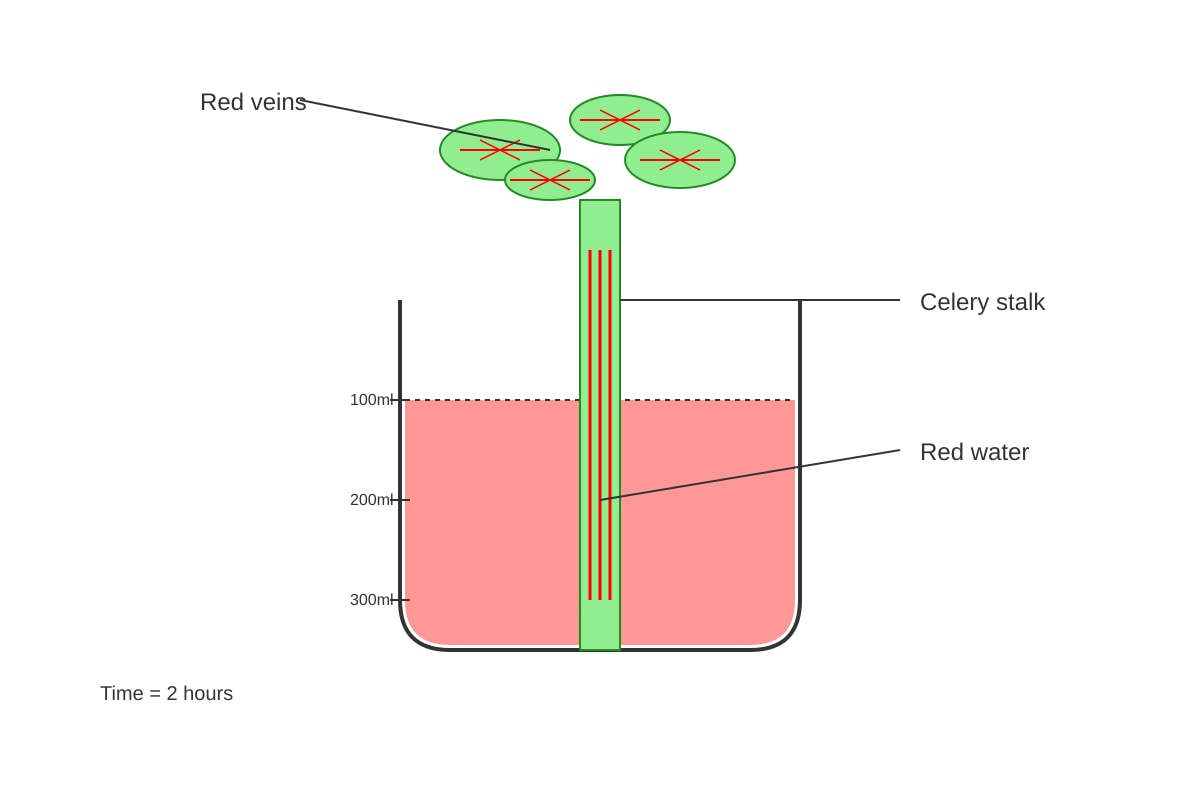
13. Ali conducted an experiment to find out which part of the plant transports water. He placed a white celery stick into a beaker of red-coloured water for 2 hours.

<image_placeholder> id: Q13-fig1 type: diagram linked_question: Q13 description: A beaker containing red liquid. A stalk of celery with leaves is placed in the liquid. The veins in the leaves and the stalk are shown turning red. labels: Red water, Celery stalk, Red veins values: Time = 2 hours must_show: The red colour moving up the stalk and into the leaf veins. </image_placeholder>

(a) After 2 hours, Ali cut the stem of the celery. What did he observe inside the stem? _________________________________________________________________________ [1]

(b) What does this observation tell you about the function of the stem? _________________________________________________________________________ [1]

(c) Why did Ali use white celery instead of green celery for this experiment? _________________________________________________________________________ [1]

14. Study the flow chart of the digestive system below.

Mouth \rightarrow Gullet \rightarrow Organ P \rightarrow Small Intestine \rightarrow Organ Q \rightarrow Anus

(a) Name Organ P. _________________________________________________________________________ [1]

(b) State one function of Organ P. _________________________________________________________________________ [1]

(c) What is the main function of the Small Intestine? _________________________________________________________________________ [1]

(d) Name Organ Q. _________________________________________________________________________ [1]

15. Explain why the digestive system is considered a "system".


_________________________________________________________________________ [2]

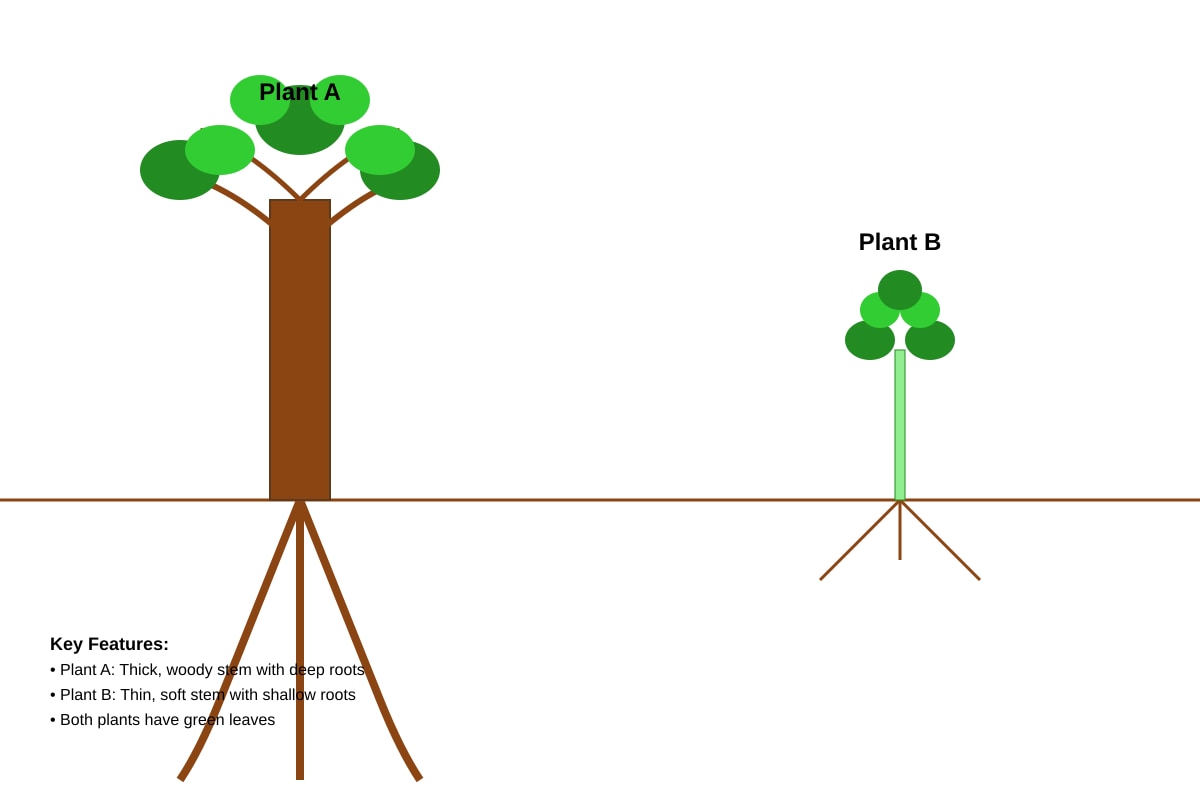
16. Look at the two plants below.

<image_placeholder> id: Q16-fig1 type: diagram linked_question: Q16 description: Plant A has a thick, woody stem and deep roots. Plant B has a thin, soft stem and shallow roots. Both have green leaves. labels: Plant A, Plant B values: None must_show: Contrast in stem thickness and root depth. </image_placeholder>

(a) Both plants have leaves. State the common function of the leaves in both plants. _________________________________________________________________________ [1]

(b) Plant A is a tree. How do its roots help it survive during a strong wind? _________________________________________________________________________ [1]

17. Sarah ate a meal consisting of rice and chicken. Trace the path of the rice from the time it enters her mouth until it leaves her body. Use the correct names of the organs.

Mouth \rightarrow ____________________ \rightarrow ____________________ \rightarrow Small Intestine \rightarrow ____________________ \rightarrow Anus [3]

18. A farmer noticed that his plants were wilting even though he had watered the soil heavily. He checked the stems and found they were damaged by insects.

(a) Why did the plants wilt?


_________________________________________________________________________ [2]

(b) Which part of the plant system was affected? _________________________________________________________________________ [1]

19. Differentiate between the function of the root and the function of the leaf.

PartFunction
Root_________________________________________________________________________
Leaf_________________________________________________________________________

[2]

20. "The stomach is the most important organ in the digestive system because it digests all the food." Do you agree with this statement? Explain your answer.


_________________________________________________________________________ [2]

*** End of Quiz ***

Answers

<!-- TuitionGoWhere generation metadata: stage=5-1; model=qwen/qwen3.7-plus; model_label=Qwen3.7 Plus; generated=2026-06-04; Sources: Stage 4-0 LLM templates, syllabus context, and Stage 2 evidence where available. -->

Primary 4 Science Quiz - Systems (Answer Key)

Section A: Multiple Choice Questions

1. (3)

  • Reasoning: Roots are the part of the plant located underground that absorb water and minerals from the soil. Leaves make food, stems transport, and flowers are for reproduction.

2. (2)

  • Reasoning: The stem supports the plant and contains tubes that transport water (from roots) and food (from leaves) to other parts of the plant.

3. (2)

  • Reasoning: Digestion begins in the mouth where teeth break down food physically and saliva begins chemical breakdown.

4. (3)

  • Reasoning: Leaves contain chlorophyll and use sunlight to make food for the plant through photosynthesis.

5. (2)

  • Reasoning: Part B is the stem. The stem contains tubes that transport water upwards from the roots to the leaves. Part A is the leaf (makes food), Part C is the root (absorbs water).

6. (3)

  • Reasoning: The stomach is a muscular bag that churns food and mixes it with digestive juices to break it down further.

7. (2)

  • Reasoning: Roots anchor the plant firmly in the soil, preventing it from falling over. They also absorb water, but option (2) specifically addresses the structural stability often tested in P4. Option (1) is the leaf's job.

8. (2)

  • Reasoning: Undigested food and water move from the small intestine to the large intestine, where water is absorbed.

9. (1)

  • Reasoning: The heart is part of the circulatory system, not the digestive system. The mouth, stomach, and intestines are all parts of the digestive system.

10. (2)

  • Reasoning: A system is defined as a group of parts working together to perform a specific function.

Section B: Structured Questions

11. (a) Root [1]

  • Teaching Note: Roots are always the part in contact with the soil for absorption.

(b) To transport water from the roots to the leaves. [1]

  • Teaching Note: Tube X has upward arrows, indicating water moving up.

(c) The plant cannot absorb water and minerals from the soil. Without water, the plant cannot make food and will die. [2]

  • Marking: 1 mark for "cannot absorb water", 1 mark for linking to survival/death.

12. (a) Mouth [1] (b) Gullet [1] (c) Large Intestine [1]

  • Teaching Note: Students must distinguish between Small Intestine (absorbs nutrients) and Large Intestine (absorbs water).

13. (a) He observed red lines/spots inside the stem. [1]

  • Teaching Note: The red dye travels with the water.

(b) The stem transports water. [1]

  • Teaching Note: The presence of red colour in the stem proves water moved through it.

(c) To make the red colour more visible/easier to observe. [1]

  • Teaching Note: Green celery might mask the red dye. White celery provides better contrast.

14. (a) Stomach [1] (b) To churn/mix food with digestive juices. [1] (c) To absorb digested food (nutrients) into the blood. [1]

  • Teaching Note: This is the primary function of the small intestine. (d) Large Intestine [1]

15. Because it consists of different organs (parts) such as the mouth, stomach, and intestines that work together to digest food and absorb nutrients. [2]

  • Marking: 1 mark for mentioning "different parts/organs", 1 mark for "working together".

16. (a) To make food for the plant. [1] (b) The deep and wide roots hold the tree firmly in the soil, preventing it from being uprooted by the wind. [1]

17. Mouth \rightarrow Gullet \rightarrow Stomach \rightarrow Small Intestine \rightarrow Large Intestine \rightarrow Anus [3]

  • Marking: 1 mark for each correct organ in the correct sequence.

18. (a) The damaged stems could not transport water from the roots to the leaves. Without water, the leaves wilted. [2]

  • Marking: 1 mark for "stem transports water", 1 mark for "leaves lack water/wilt". (b) Stem [1]

19.

PartFunction
RootAbsorbs water and minerals / Anchors the plant
LeafMakes food for the plant

[2]

  • Marking: 1 mark for each correct function.

20. No, I do not agree. [1] Explanation: Digestion involves many organs. The mouth breaks down food first, and the small intestine absorbs the nutrients. If the stomach was the only important organ, the other parts would not be needed. All parts work together as a system. [1]

  • Marking: 1 mark for disagreement, 1 mark for valid reasoning citing other organs or the concept of a system.
  • Common Mistake: Students may agree because the stomach is muscular. Correct reasoning requires understanding the system aspect.