AI Generated Quiz
Primary 4 Science Materials Quiz
Free P4 Science Materials quiz, HY3 AI version, with questions, answers, and syllabus-aligned practice for Singapore students.
These static practice materials are generated from the site's syllabus and paper-generation workflow, with source and model context shown so students and parents can evaluate the material before use.
Questions
Free quiz and exam paper access
Enter your details to view this paper
Your access is remembered on this device.
Answers
Primary 4 Science Quiz - Materials (Answer Key)
Total Marks: 30
Section A: 8 marks (Q1–8, 1 mark each)
Section B: 12 marks (Q9–14, 2 marks each)
Section C: 18 marks (Q15–20, 3 marks each)
Section A Answers
1. B (Brittle) [1]
Teaching note: Brittle means a material breaks easily when force is applied (like glass or dry clay). Hardness is resistance to scratching; flexible means can bend; absorbent means soaks water.
2. Permeable [1]
Teaching note: A permeable material has tiny holes or spaces that let water pass through (e.g., cloth, sponge). The opposite is waterproof/impermeable.
3. C (Metal) [1]
Teaching note: Metals such as iron, aluminium, and steel are good conductors of heat. Wood, plastic, rubber are poor conductors (insulators).
4. Flexible / absorbs shock / grippy [1]
Teaching note: Rubber is flexible and has good grip, so it stops feet from slipping and bends with movement.
5. C (Plastic sheet) [1]
Teaching note: Plastic sheet does not let water through. Cotton, paper, sponge all absorb or leak water.
6. Flexible [1]
Teaching note: Flexible means can be bent or shaped without breaking (e.g., rubber, cloth).
7. Transparent / clear (lets light through) [1]
Teaching note: Glass is transparent so we can see outside while being protected from weather. (Note: P4 syllabus does not require "transparent/translucent/opaque" terms, but "clear" or "lets light through" is acceptable.)
8. C (Nylon) [1]
Teaching note: Nylon is man-made (synthetic). Wood, cotton, rubber come from nature (plants/trees).
Section B Answers
9. [2]
Answer: Plastic bottle is better. (1) Plastic is waterproof so water will not leak. (1) Paper cup is absorbent and will become wet and break.
Teaching note: Property–use match: waterproof → holds liquid.
10. [2]
Answer: Metal spoon feels hotter. (1) Metal is a good conductor of heat, so heat from soup moves into spoon quickly. (1) Wood is poor conductor so stays cooler.
Teaching note: Conductor = material that lets heat flow easily.
11. [2]
Answer: Rubber – use: shoe soles / tyres (1). Glass – property: transparent / hard / waterproof (1).
Teaching note: Table tests linking property to everyday use.
12. [2]
Answer: Sponge has many small holes/spaces. (1) It soaks up and holds water inside those spaces. (1)
Teaching note: Absorbent = takes in liquid.
13. [2]
Answer: Mei Lin stayed dry. (1) Plastic is waterproof; cotton is absorbent and soaks rain. (1)
Teaching note: Raincoat must block water.
14. [2]
Answer: Any two: strong, good conductor of heat, does not break easily, can be shaped. (1+1)
Teaching note: Pot needs to transfer heat and be durable.
Section C Answers
15. [3]
(a) Cloth bag (strongest) – 1
(b) Plastic bag (waterproof) – 1
(c) Plastic does not let water pass through; cloth and paper absorb water – 1
Teaching note: Property determines function.
16. [3]
(a) Metal rod – 1
(b) Metal is a good heat conductor, so heat from water moves into it – 1
(c) Wooden stick (or plastic ruler) feels coolest as poor conductor – 1
Teaching note: Heat flows from hot to cold; conductor speeds this.
17. [3]
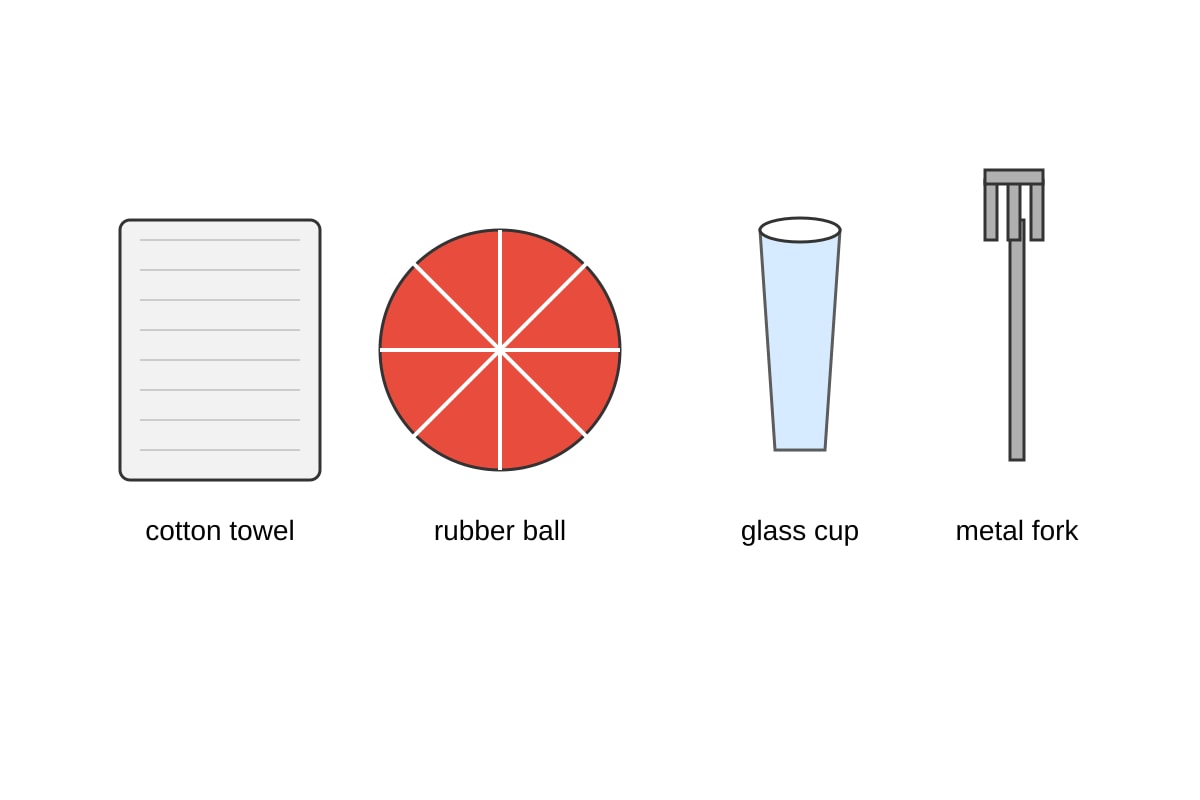
(a) Cotton towel: absorbent, used to dry body – 1
(b) Rubber ball: flexible/bouncy, used for play – 1
(c) Glass cup: transparent/hard, used to hold drinks – 1
Teaching note: Image shows labelled objects; pupil links material to property and use.
18. [3]
(a) Metal > plastic > wood (best to worst) – 1
(b) Touch each after 5 min and rate warmth, or use thermometer on each – 1
(c) Same water amount keeps test fair (only material changes) – 1
Teaching note: Fair test needs controlled variables.
19. [3]
(a) Plastic – 1
(b) Waterproof and strong (or light) – 2 (1 each)
(c) Paper absorbs water and tears when wet – 1 (can be merged with b reason)
Teaching note: Umbrella must block rain and last.
20. [3]
Answer: Properties help us pick right material. Example 1: Metal pot – good heat conductor for cooking. Example 2: Rubber soles – flexible/grippy for shoes. (1 for idea, 2 for examples)
Teaching note: Always match property to need.
Common mistakes to flag:
- Confusing "heat" and "temperature": heat is energy, temperature is how hot.
- Saying all plastics are flexible (some are hard).
- Using P5/P6 terms like "xylem" or "transparent" strictly (use "lets light through").