AI Generated Quiz
Primary 4 Science Light Quiz
Free P4 Science Light quiz, Nemo3 AI version, with questions, answers, and syllabus-aligned practice for Singapore students.
These static practice materials are generated from the site's syllabus and paper-generation workflow, with source and model context shown so students and parents can evaluate the material before use.
Questions
Free quiz and exam paper access
Enter your details to view this paper
Your access is remembered on this device.
Answers
Primary 4 Science Quiz - Light (Answer Key)
Total Marks: 40
Section A: Multiple-Choice Questions (10 marks)
| Qn | Answer | Explanation |
|---|---|---|
| 1 | C | The Sun is a natural source of light. Torch, candle flame, and lamp are man-made sources. |
| 2 | C | Light travels in a straight line. |
| 3 | B | Wooden door is opaque and does not allow light to pass through. Clear glass, clean water, and air are transparent. |
| 4 | B | A shadow is formed when an opaque object blocks light. |
| 5 | C | Clear plastic sheet is transparent (allows most light to pass through). Cardboard and aluminium foil are opaque; frosted glass is translucent. |
| 6 | C | Smooth, shiny surfaces like mirrors reflect light. |
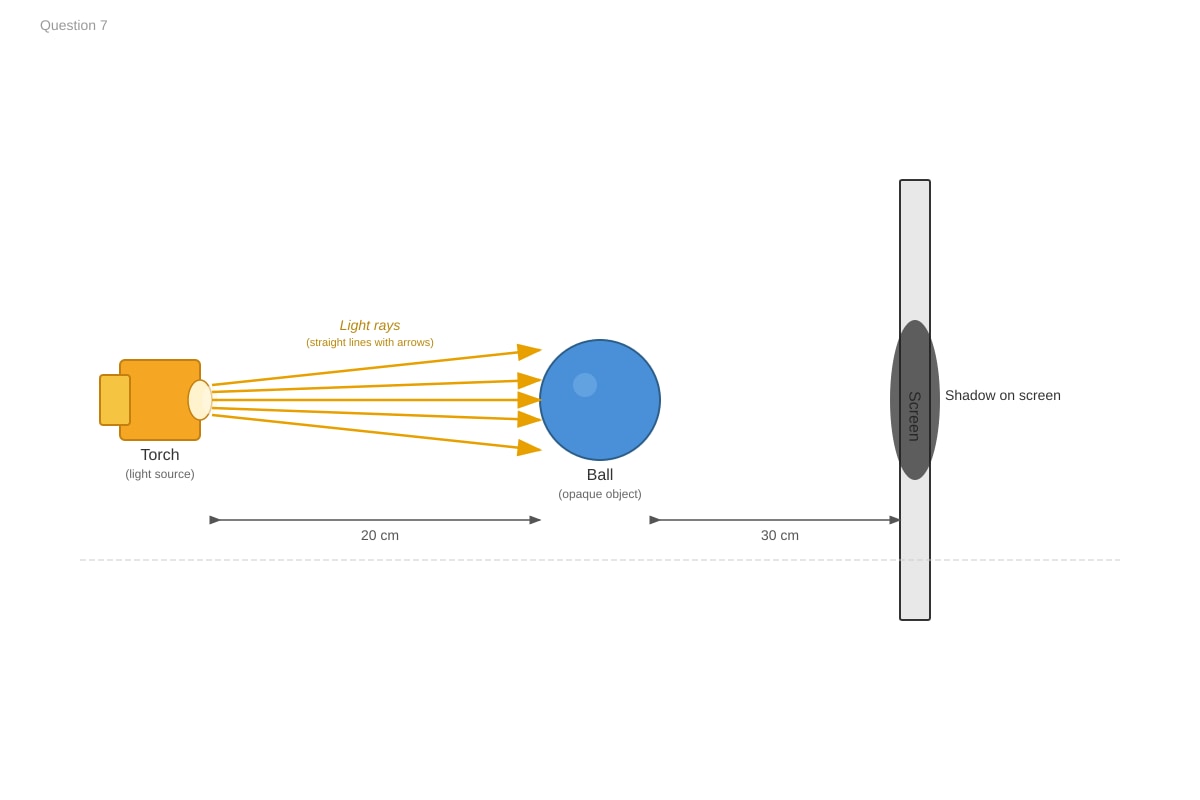
| 7 | C | Light travels in straight lines. The ball blocks the light, casting a shadow on the screen behind it. |
| 8 | C | Shadows are formed when light is blocked by an opaque object. They can be formed in daylight; they show shape but not colour; transparent objects do not form dark shadows. |
| 9 | B | Light changes direction (refracts) when it passes from one medium (air) to another (water) of different optical density. |
| 10 | C | Black cardboard is opaque and will block light completely to form a clear, dark shadow. Tracing paper, clear plastic, and tissue paper allow some or most light to pass through. |
Section B: Short Answer Questions (10 marks)
11. (2 marks - 1/2 mark each correct classification)
| Allows most light to pass through (Transparent) | Allows some light to pass through (Translucent) | Does not allow light to pass through (Opaque) |
|---|---|---|
| Clear glass window, Clean water | Sunglasses | Mirror, Wooden chopsticks, Aluminium foil |
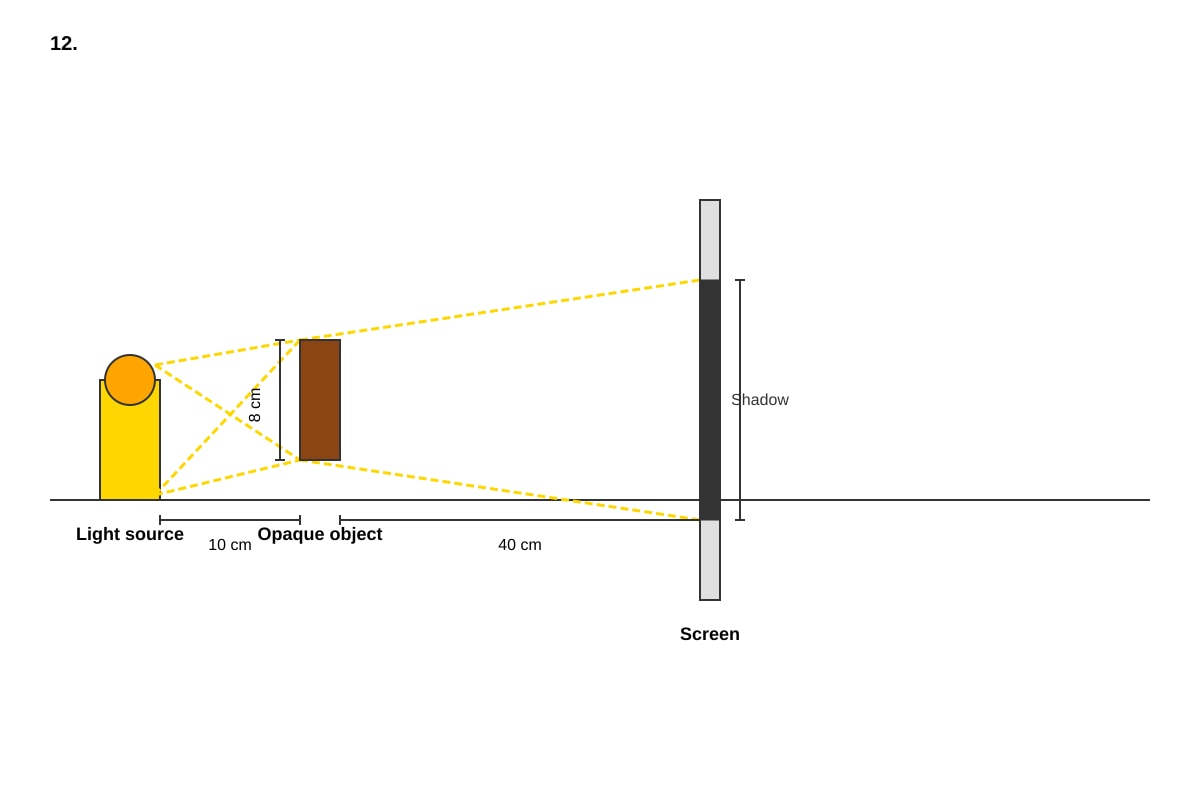
12. (2 marks) (a)
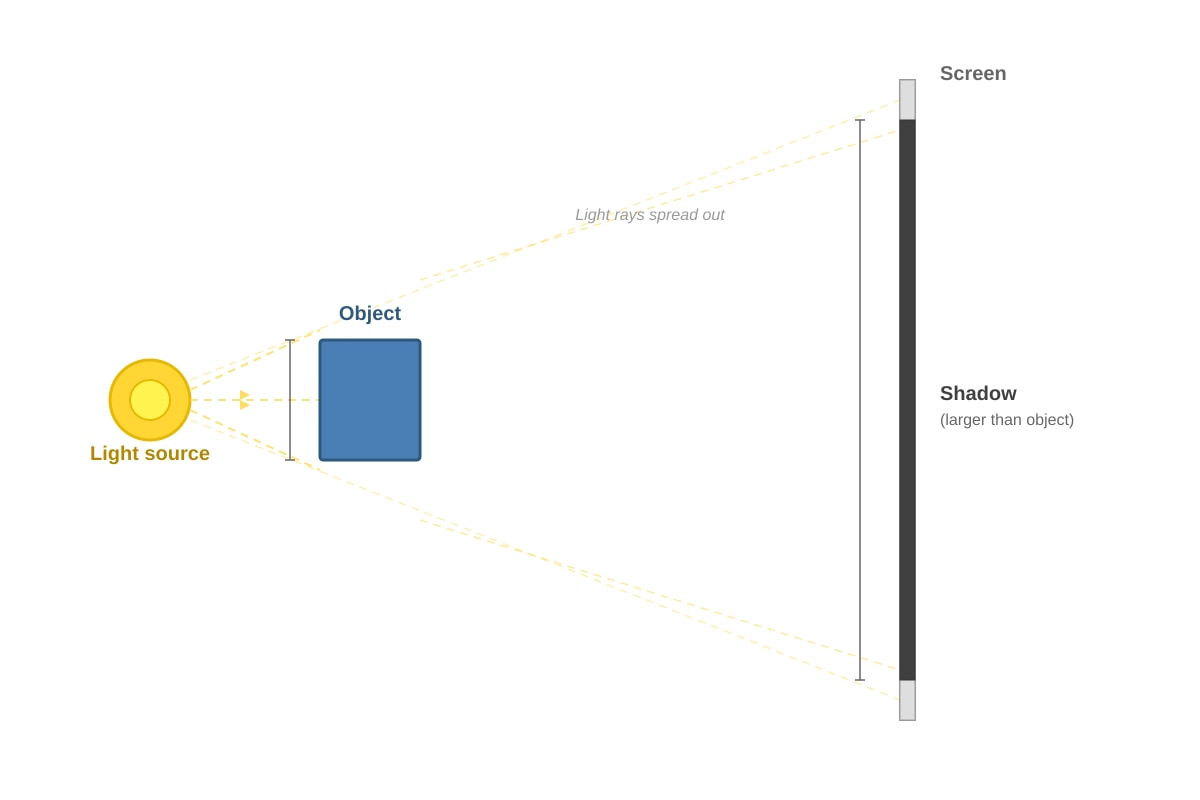
Generated diagram for this question.
(b) The shadow is larger than the object because light rays from the source diverge (spread out). The object blocks the central rays, and the outer rays continue to the screen, forming a magnified shadow. / The screen is further from the object than the light source is from the object.
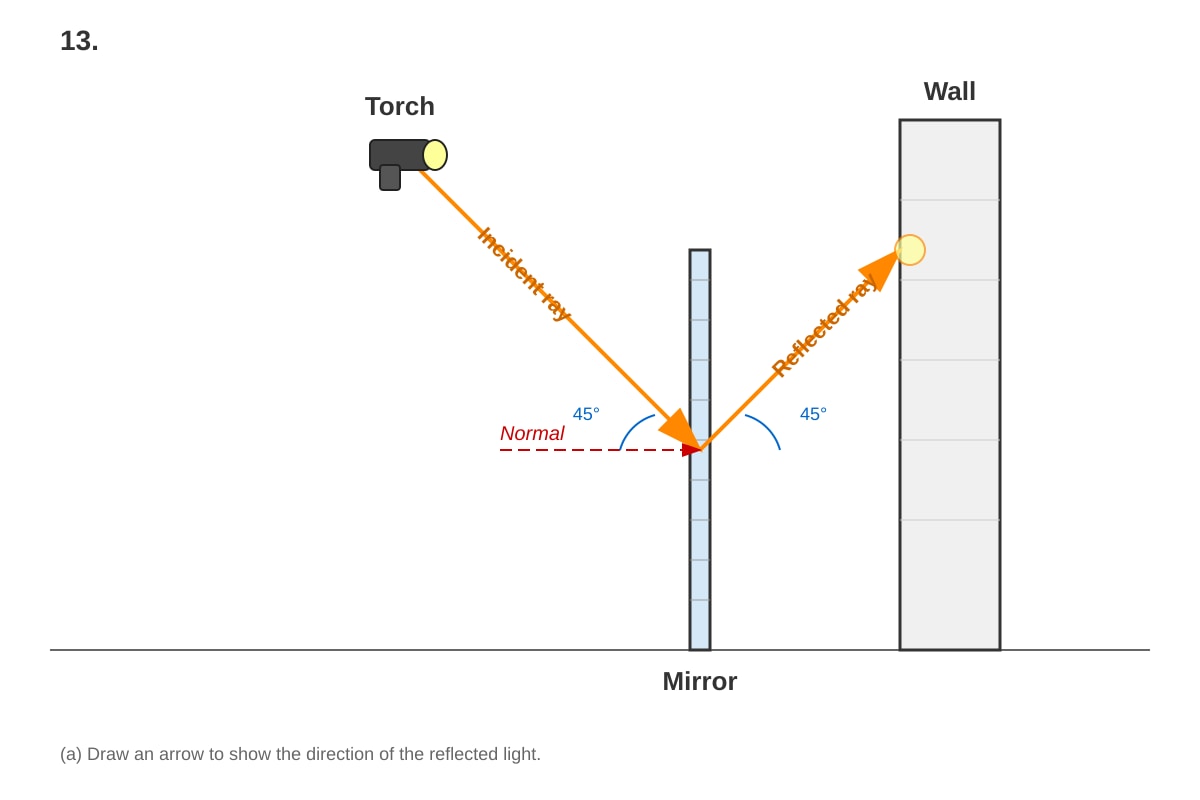
13. (2 marks) (a)
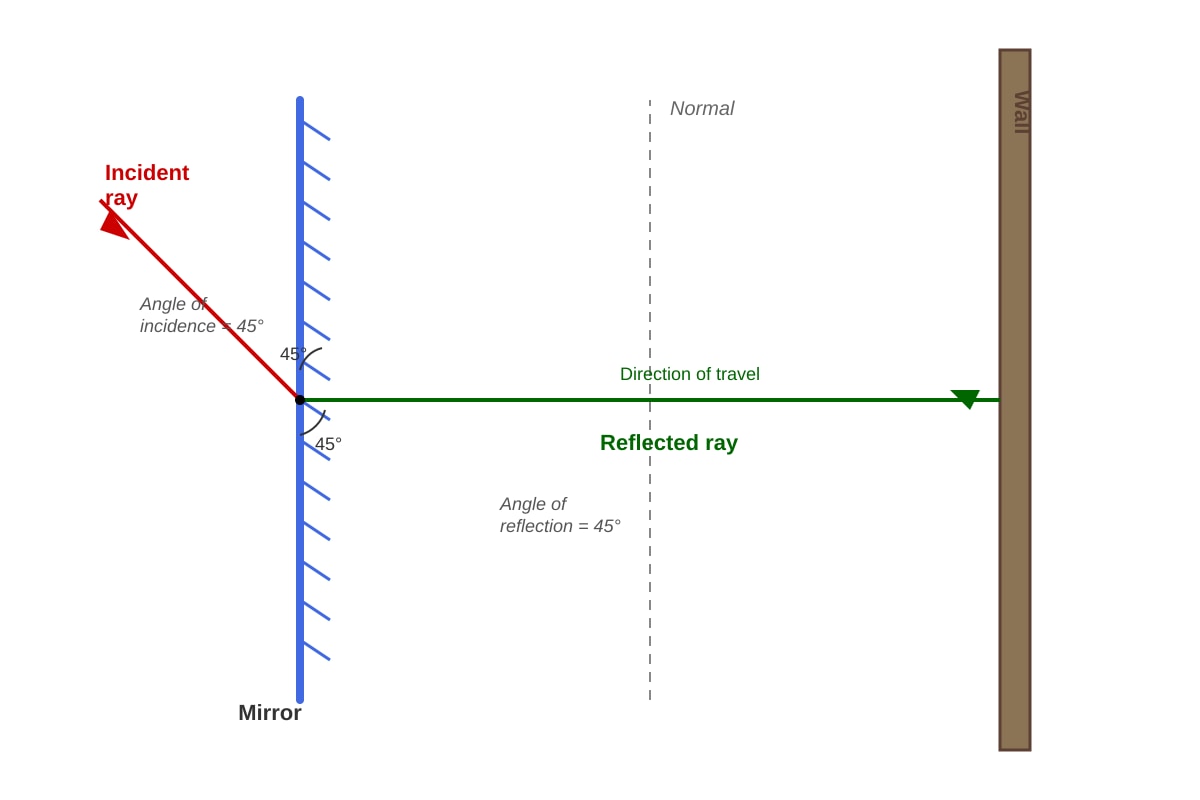
Generated diagram for this question.
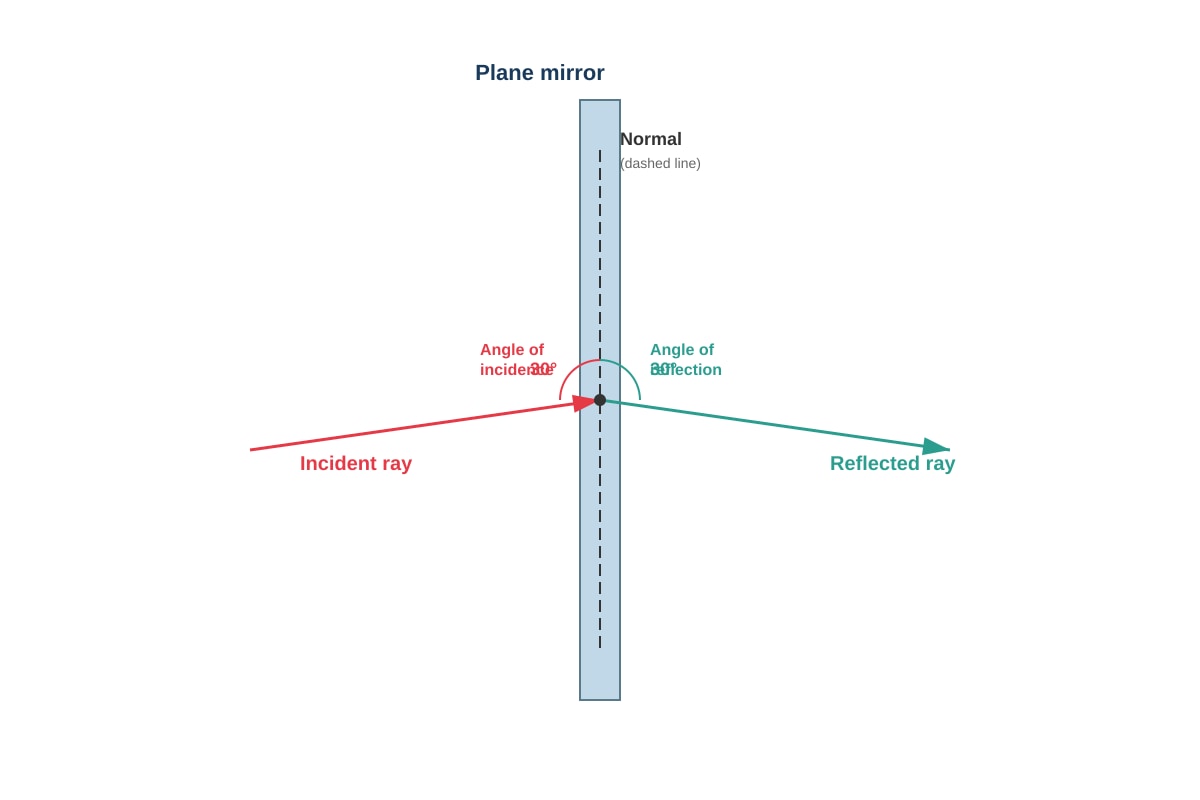
(b) The angle of incidence is equal to the angle of reflection.
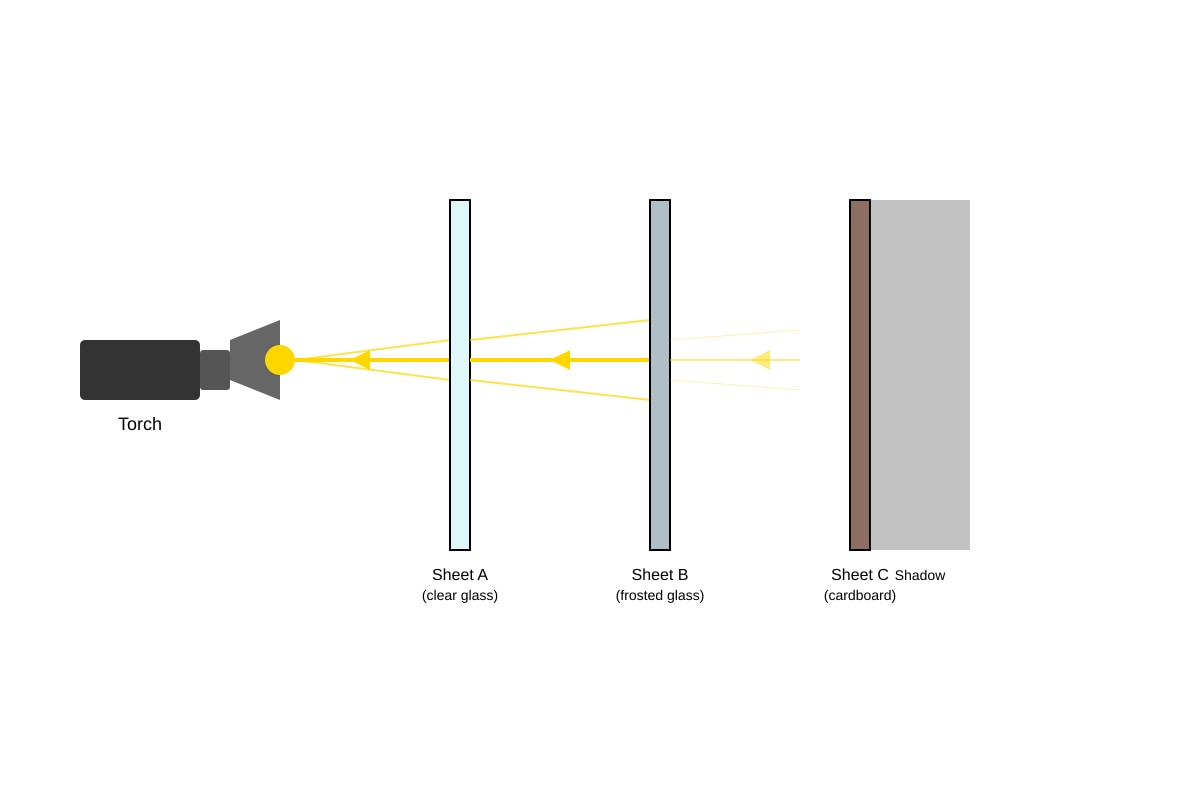
14. (2 marks) (a) Sheet A (clear glass) and Sheet B (frosted glass). Light passes through both, though Sheet B only allows some light through. (b) Sheet C (cardboard). It is opaque and blocks the light, forming a shadow on it (or behind it).
15. (2 marks - 1/2 mark each) (a) Light travels in a straight line. (b) A shadow is formed when an opaque object blocks light. (c) When light hits a mirror, it is reflected. (d) A clear glass window is transparent because it allows most light to pass through.
Section C: Structured / Open-Ended Questions (20 marks)
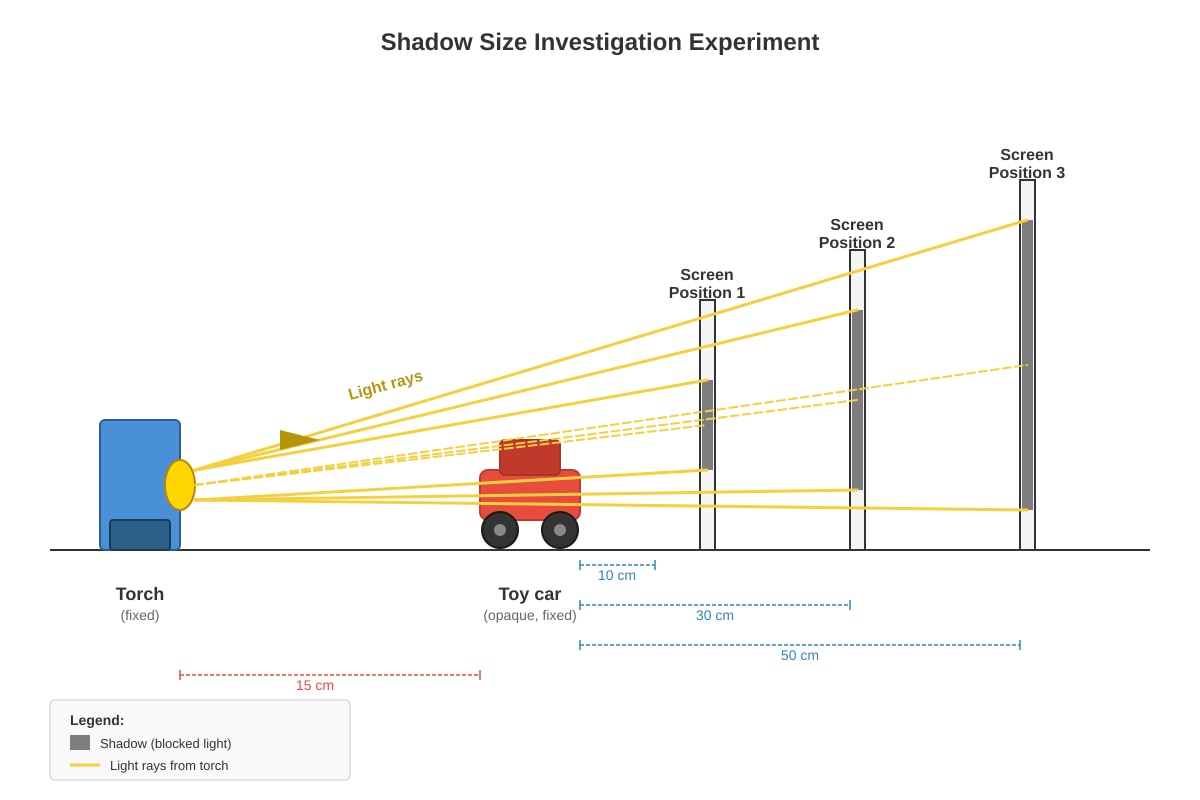
16. (5 marks) (a) The distance between the toy car (object) and the screen. [1] (b) The size of the shadow (on the screen). [1] (c) The distance between the torch and the toy car / The position of the torch and toy car / The brightness of the torch / The size of the toy car. (Any one) [1] (d) The size of the shadow increases as the screen moves further away. [1] Because light rays diverge (spread out) from the torch, so the blocked area on the screen becomes larger when the screen is further from the object. [1]
17. (5 marks) (a)
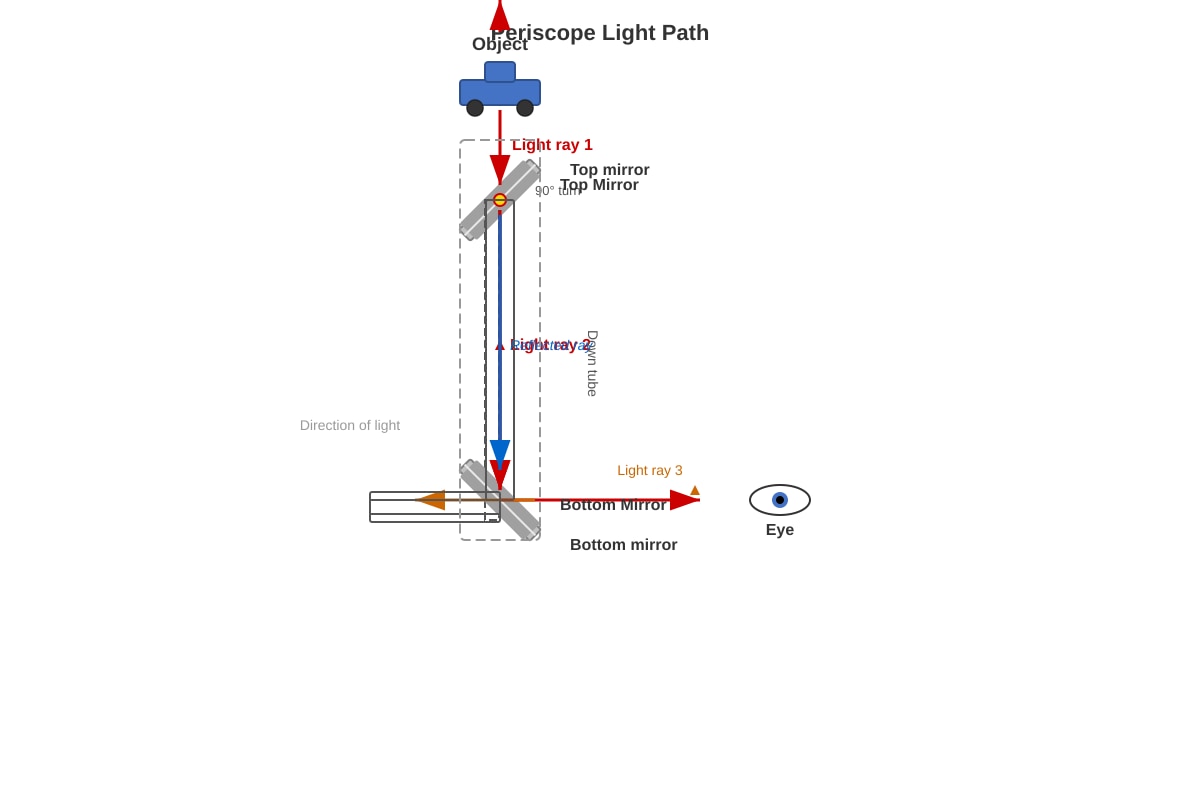
Generated diagram for this question.
[2] (b) The periscope uses two mirrors set at 45° to change the direction of light twice (by 90° each time). Light from the object reflects off the top mirror down the tube, then off the bottom mirror into the observer's eye, allowing them to see over obstacles or around corners. [2] (c) The mirror reflects light (or: smooth, shiny surface / obeys law of reflection). [1]
18. (5 marks) (a) Material W. [1] It is opaque / does not allow any light to pass through / forms a dark shadow, which blocks out sunlight effectively for sleeping. [1] (b) Material Y. [1] (Allows most light to pass through, no shadow formed = transparent) (c) Material X: Translucent (allows some light, faint shadow). [1] Material Z: Translucent (allows a little light, blurry shadow). [1] (Note: Both X and Z allow some light to pass through, so both are translucent. Opaque blocks all light.)
19. (5 marks) (a)
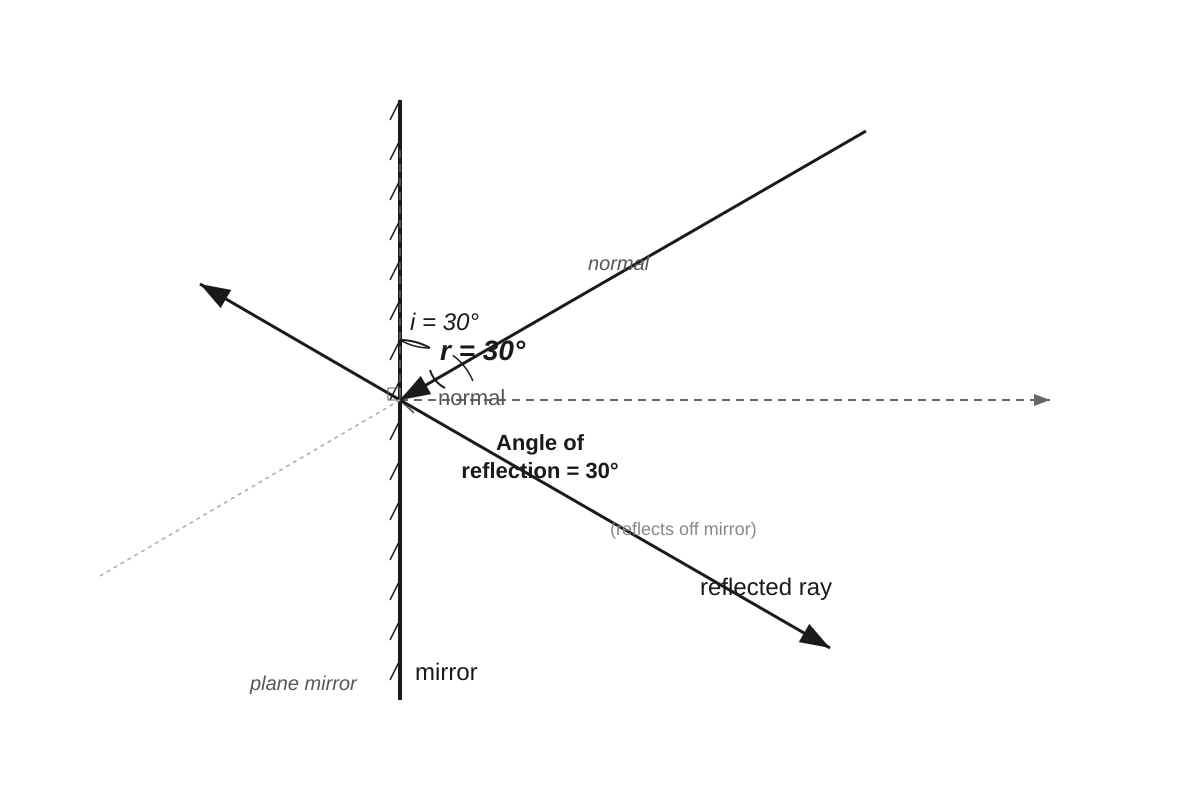
Generated diagram for this question.
[2] (b) 30° [1] (c) The angle of reflection decreases (becomes smaller). [1] (Because angle of incidence = angle of reflection) (d) Any one: Bathroom mirror, dressing mirror, rear-view mirror in vehicles, periscope, kaleidoscope, etc. [1]
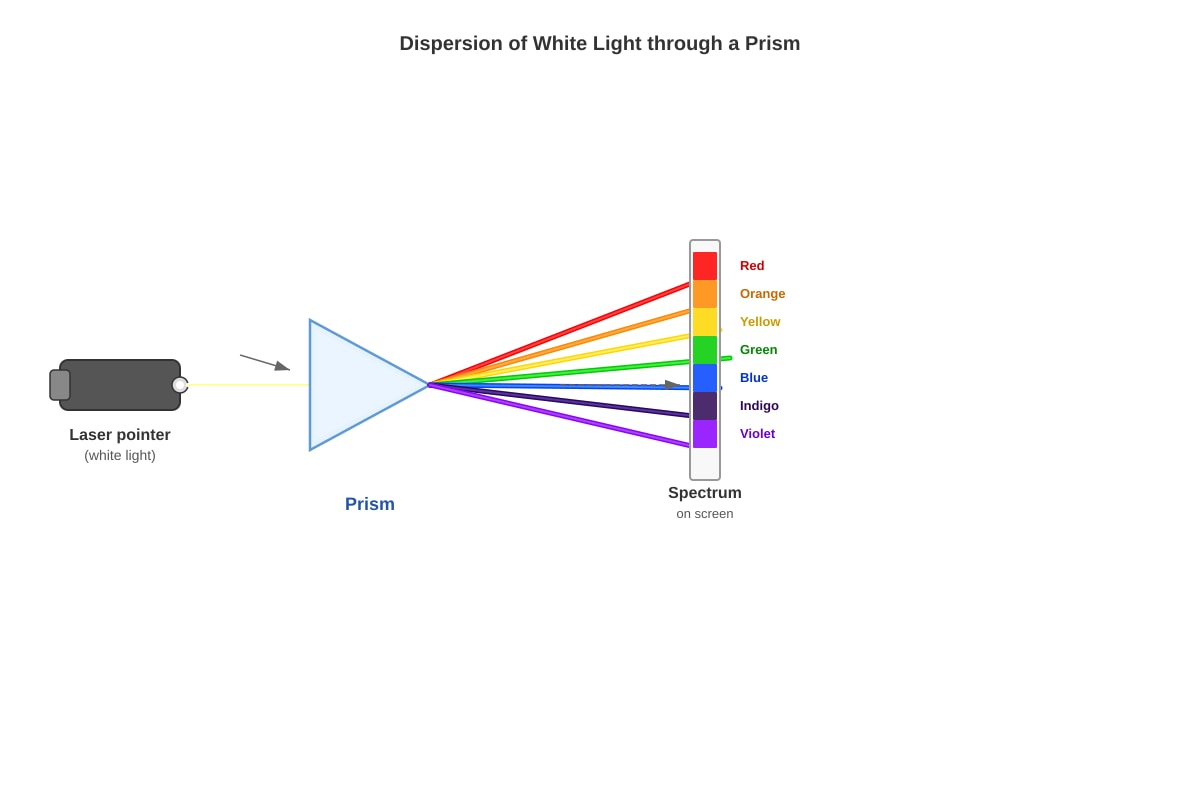
20. (5 marks) (a) Dispersion (of light). [1] (b) Red, Orange, Yellow, Green, Blue, Indigo, Violet (in this order). [2] (1 mark for correct colours, 1 mark for correct order) (c) White light is made up of seven colours. Different colours of light travel at different speeds in glass, so they refract (bend) by different amounts when entering and leaving the prism. This causes the white light to split into its component colours (spectrum). [2]
Marking Guide Summary:
- Section A: 10 × 1 = 10 marks
- Section B: 5 × 2 = 10 marks
- Section C: 4 × 5 = 20 marks
- Total: 40 marks