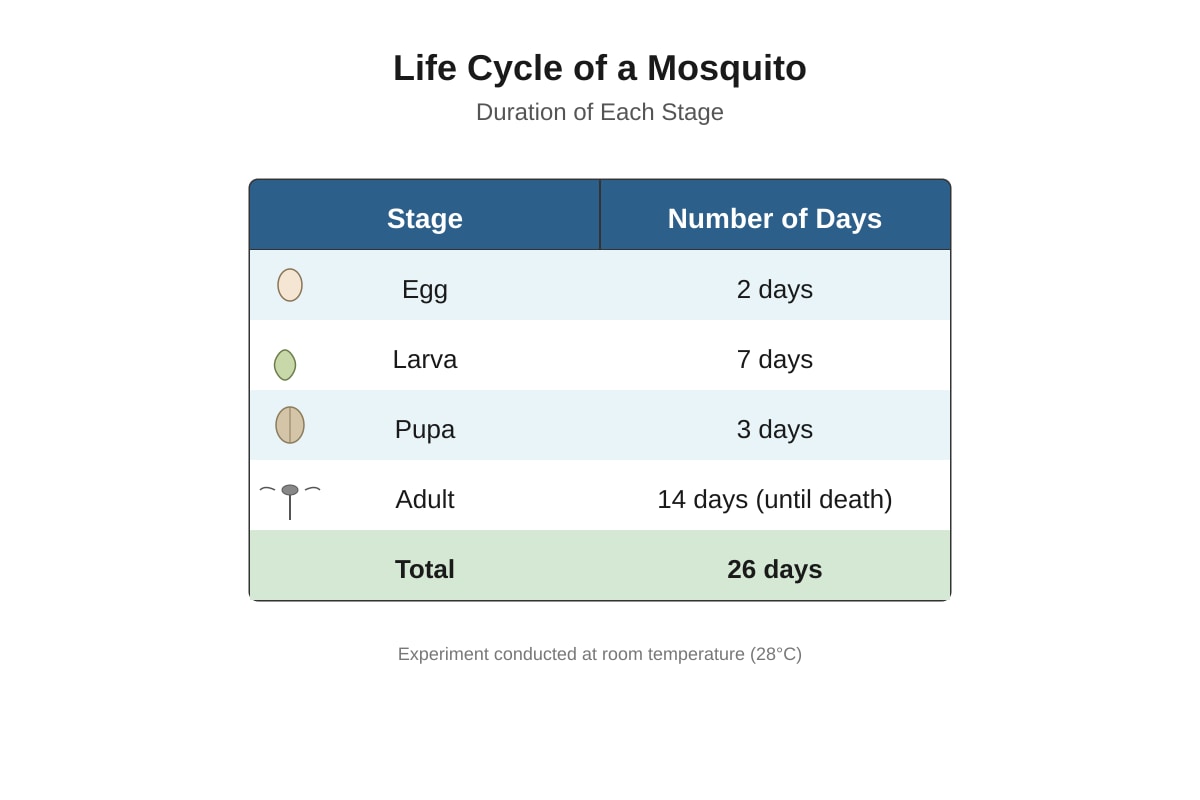
AI Generated Quiz
Primary 4 Science Life Cycles Quiz
Free AI-Generated NVIDIA Nemotron 3 Ultra 550B A55B Free Primary 4 Science Life Cycles quiz with questions and answers for Singapore students. This page is rendered as a direct URL so the questions and answers can be discovered without pressing in-page buttons.
These static practice materials are generated from the site's syllabus and paper-generation workflow, with source and model context shown so students and parents can evaluate the material before use.
Questions
Primary 4 Science Quiz - Life Cycles
Name: ___________________________
Class: Primary 4 _______
Date: _______________
Score: ______ / 40
Duration: 45 minutes
Total Marks: 40
Instructions:
- Answer all questions.
- Write your answers in the spaces provided.
- For multiple-choice questions, write the letter (A, B, C, or D) in the brackets provided.
- For open-ended questions, write your answers in complete sentences.
- Diagrams are not drawn to scale unless stated.
Section A: Multiple-Choice Questions (10 × 1 mark = 10 marks)
For each question, choose the correct answer and write its letter in the brackets provided.
1. Which of the following animals undergoes complete metamorphosis?
A. Grasshopper
B. Cockroach
C. Butterfly
D. Chicken
[ ]
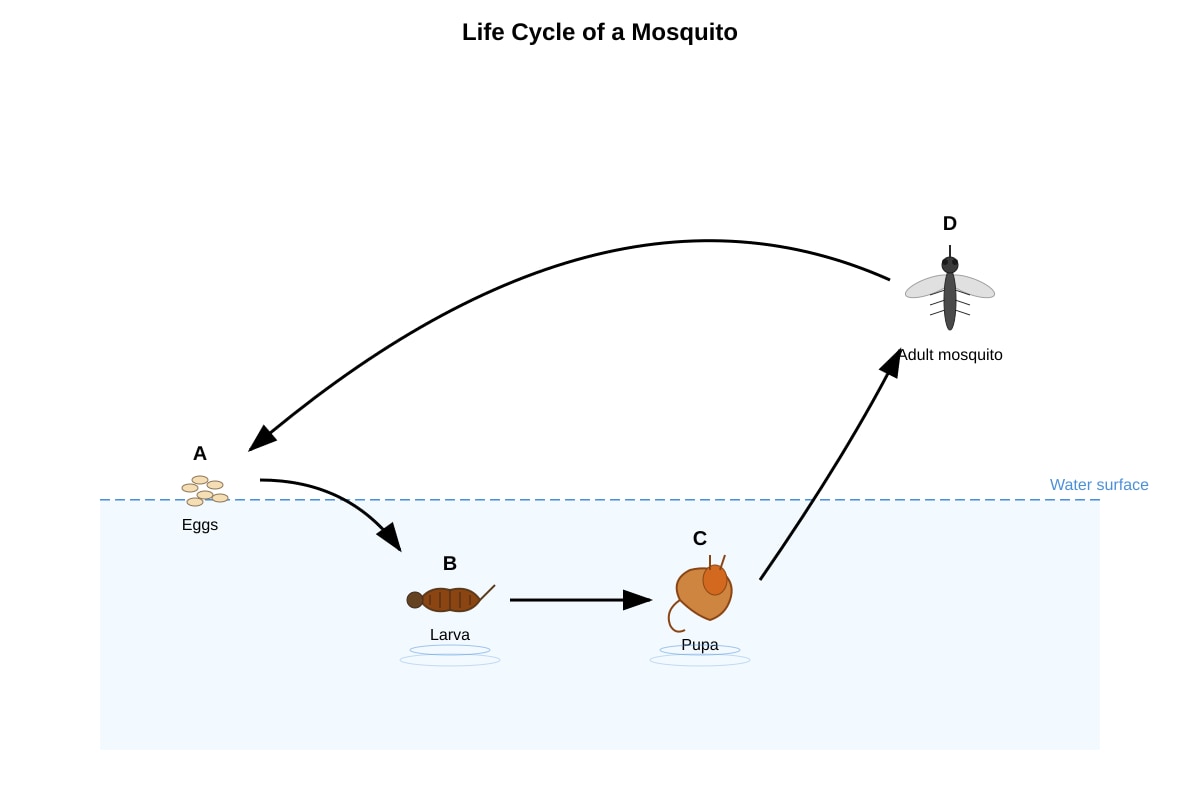
2. The diagram below shows the life cycle of a mosquito.
<image_placeholder>
id: Q1-fig1
type: diagram
linked_question: Q1
description: Life cycle of a mosquito showing four stages labelled A, B, C, D in a circular arrangement. Stage A: tiny oval eggs floating on water surface. Stage B: worm-like larva with distinct head and breathing tube at tail, hanging at water surface. Stage C: comma-shaped pupa with breathing trumpets, floating at water surface. Stage D: adult mosquito with wings, long legs, and proboscis, resting on a surface.
labels: A, B, C, D
values: None
must_show: Four distinct stages in correct cyclic order; arrows showing direction; aquatic environment for stages A, B, C; adult stage in air
</image_placeholder>
Which stage is the pupa?
A. Stage A
B. Stage B
C. Stage C
D. Stage D
[ ]
3. In the life cycle of a frog, which stage breathes through gills?
A. Egg
B. Tadpole
C. Froglet
D. Adult frog
[ ]
4. A mealworm beetle goes through four stages: egg → larva → pupa → adult.
This type of life cycle is called:
A. Incomplete metamorphosis
B. Complete metamorphosis
C. Direct development
D. Asexual reproduction
[ ]
5. Which statement about the nymph stage in incomplete metamorphosis is correct?
A. The nymph looks exactly like the adult but is smaller.
B. The nymph has wings and can fly.
C. The nymph moults several times as it grows.
D. The nymph lives in water while the adult lives on land.
[ ]
6. Study the table below.
| Animal | Young Stage | Number of Stages |
|---|---|---|
| Butterfly | Caterpillar | 4 |
| Grasshopper | Nymph | 3 |
| Frog | Tadpole | 4 |
| Chicken | Chick | 3 |
Which animal has a three-stage life cycle and its young resembles the adult?
A. Butterfly
B. Grasshopper
C. Frog
D. Chicken
[ ]
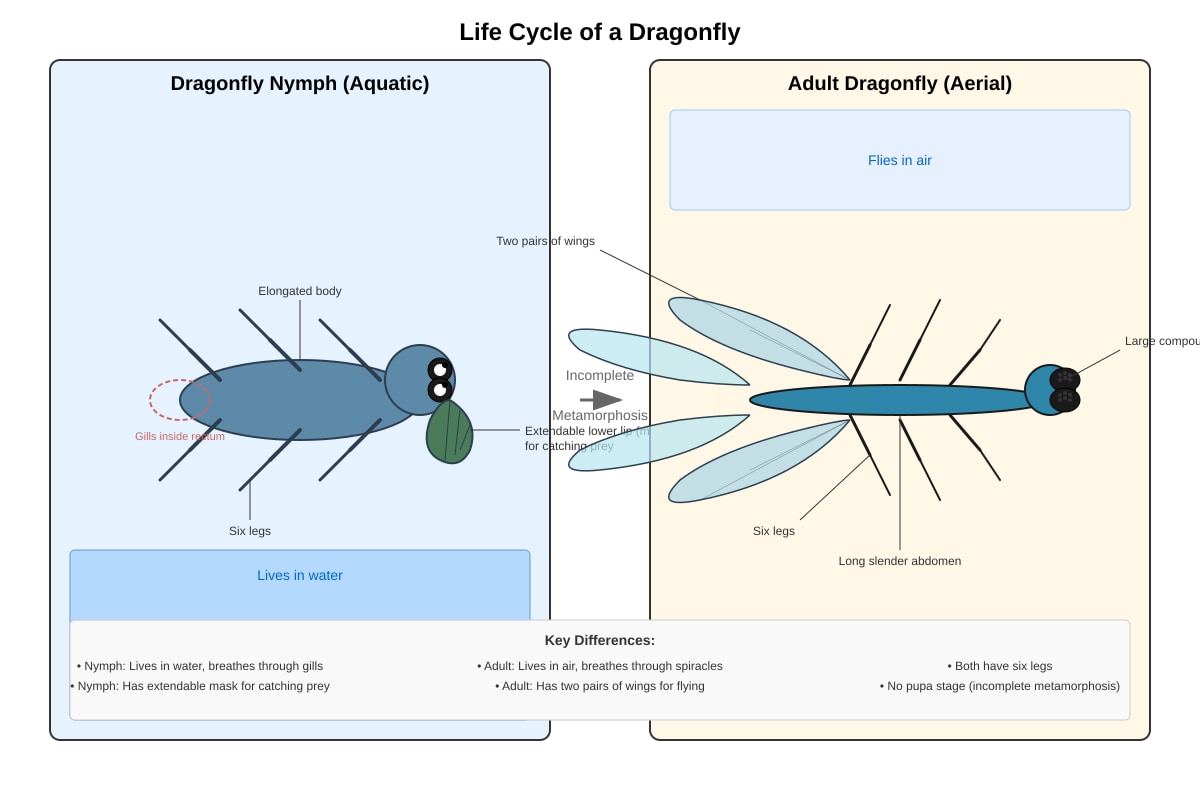
7. The diagram shows a grasshopper nymph and an adult grasshopper.
<image_placeholder>
id: Q7-fig1
type: diagram
linked_question: Q7
description: Side-by-side comparison of a grasshopper nymph (left) and adult grasshopper (right). Nymph: wingless, smaller, body proportions similar to adult. Adult: fully developed wings extending beyond abdomen, larger size. Both have six legs, antennae, and large hind legs for jumping.
labels: Nymph, Adult; Wings (absent on nymph, present on adult)
values: None
must_show: Clear visual difference in wing development; similar body structure; size difference
</image_placeholder>
What is the main difference between the nymph and the adult?
A. The nymph has six legs; the adult has eight legs.
B. The nymph has no wings; the adult has wings.
C. The nymph lives in water; the adult lives on land.
D. The nymph eats plants; the adult eats meat.
[ ]
8. Which of the following animals does NOT lay eggs?
A. Mosquito
B. Butterfly
C. Cockroach
D. Mouse
[ ]
9. During the pupa stage of a butterfly:
A. The caterpillar eats a lot and grows rapidly.
B. The caterpillar spins a silk pad and hangs upside down.
C. The body tissues break down and reorganise into the adult form.
D. The adult butterfly lays eggs on a leaf.
[ ]
10. A student observes an insect that hatches from an egg into a small wingless form that looks like a tiny version of the adult. It moults several times before becoming an adult with wings.
This insect most likely undergoes:
A. Complete metamorphosis
B. Incomplete metamorphosis
C. No metamorphosis
D. Internal fertilisation only
[ ]
Section B: Short-Answer Questions (5 × 2 marks = 10 marks)
Write your answers in the spaces provided. Use complete sentences where appropriate.
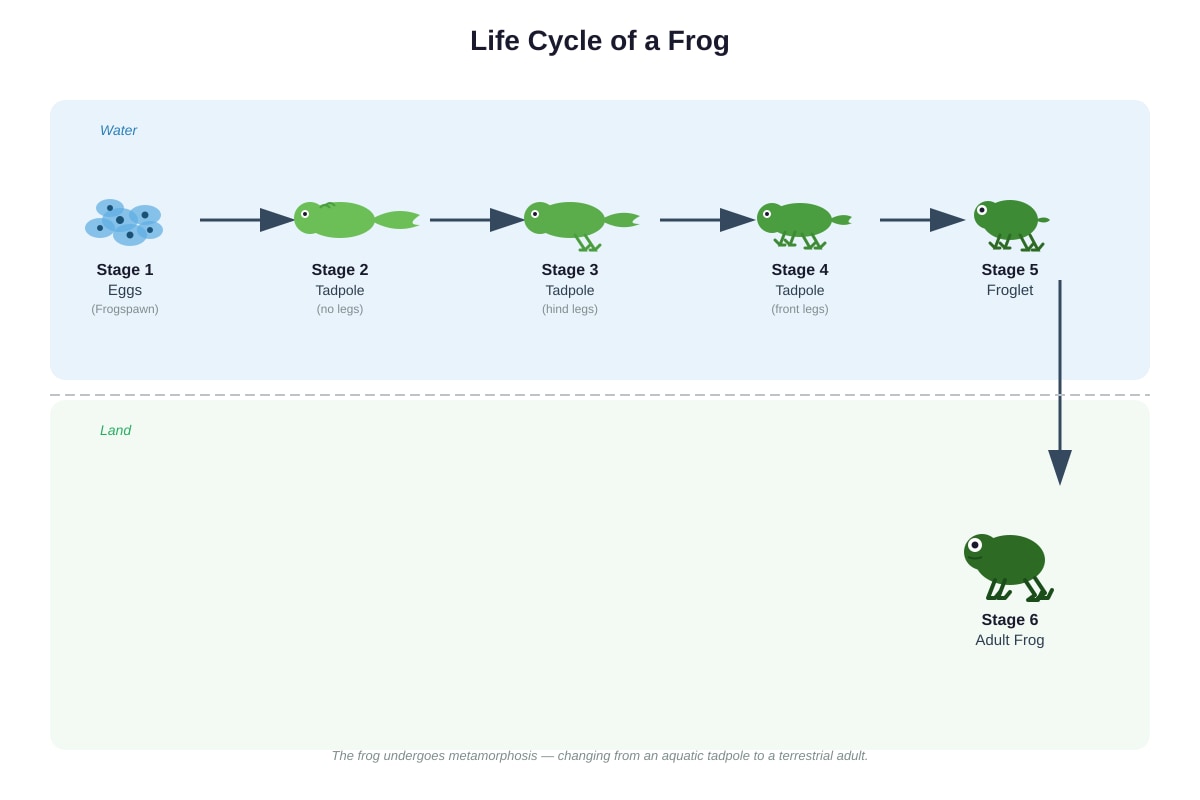
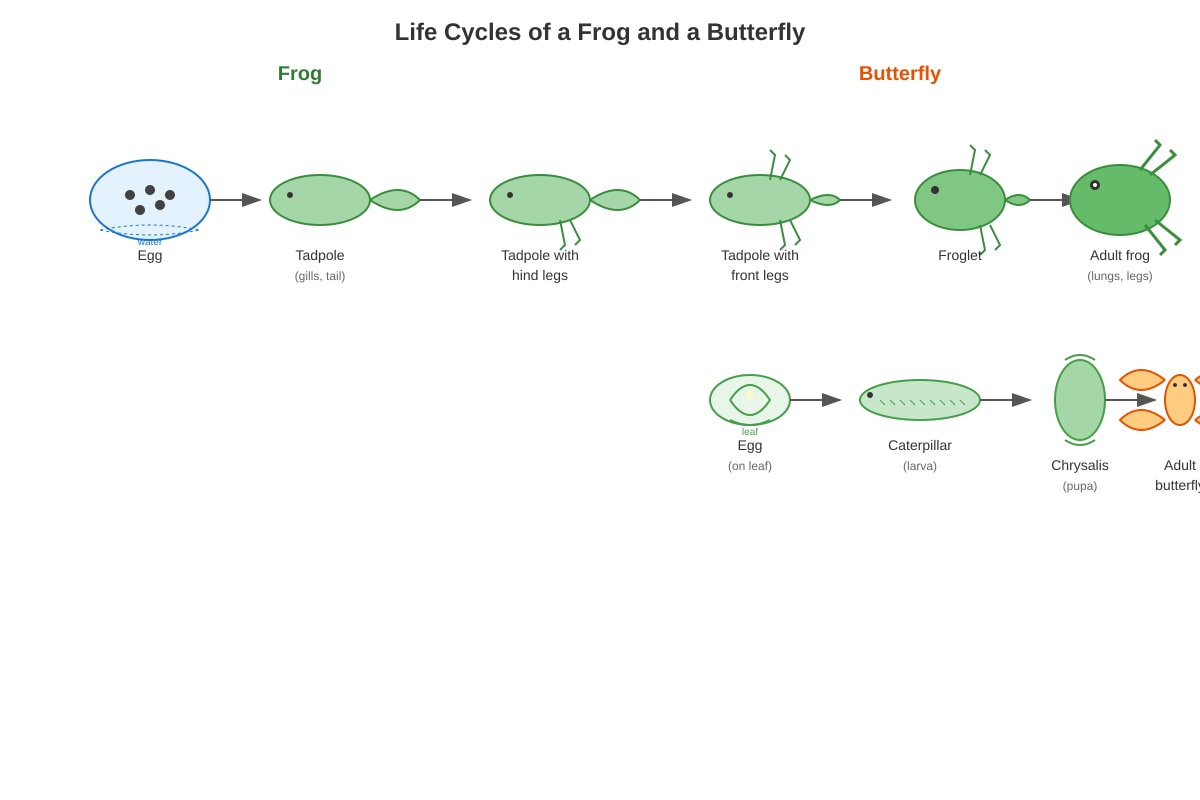
11. The diagram below shows the life cycle of a frog.
<image_placeholder>
id: Q11-fig1
type: diagram
linked_question: Q11
description: Frog life cycle diagram with four stages in a circle: Eggs (jelly-like mass in water) → Tadpole (aquatic, tail, gills) → Froglet (developing legs, tail shrinking, lungs forming) → Adult Frog (four legs, no tail, lungs, lives on land and water). Arrows show direction.
labels: Egg, Tadpole, Froglet, Adult Frog
values: None
must_show: Four distinct stages; aquatic to terrestrial transition; tail absorption; leg development; gills to lungs
</image_placeholder>
(a) Name the stage labelled X in the diagram.
_________________________________________________________ [1]
(b) State one difference in breathing method between the tadpole and the adult frog.
_________________________________________________________ [1]
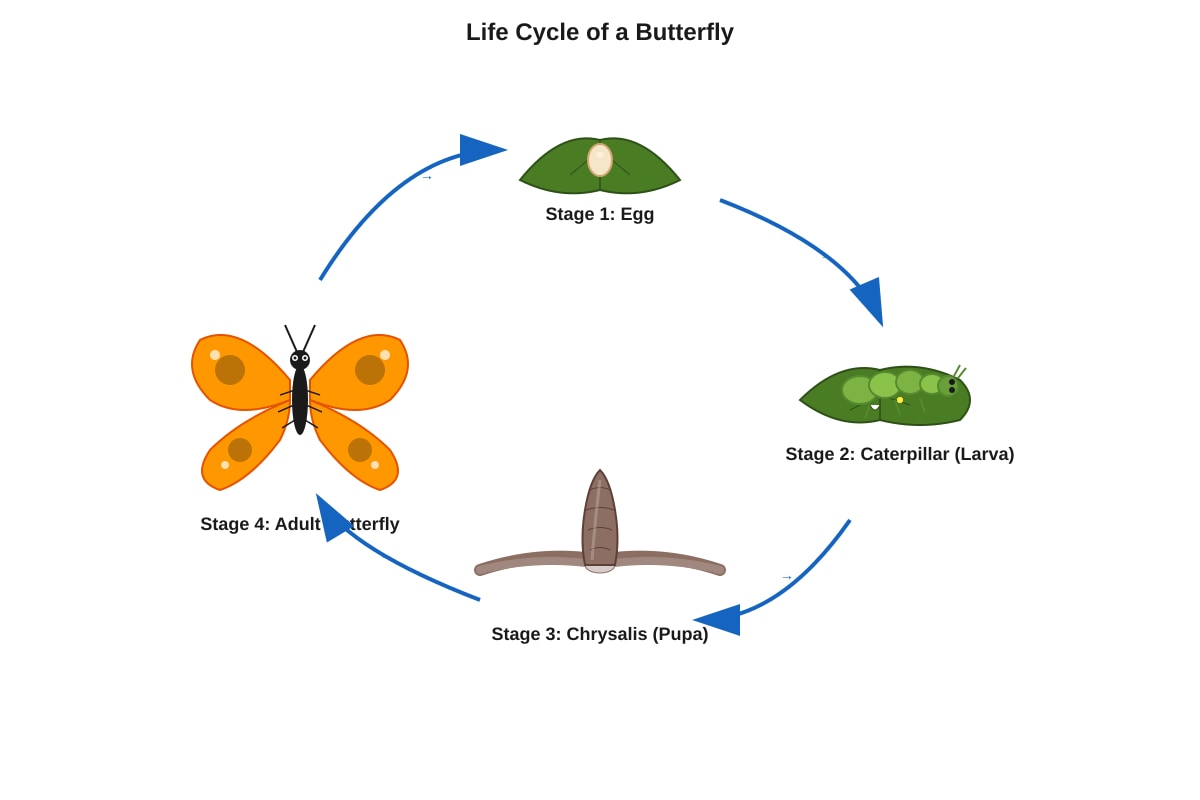
12. The diagram shows the life cycle of a butterfly.
<image_placeholder>
id: Q12-fig1
type: diagram
linked_question: Q12
description: Butterfly life cycle with four stages: Egg (on leaf) → Larva/Caterpillar (eating leaf) → Pupa/Chrysalis (hanging from branch) → Adult Butterfly (flying, feeding on nectar). Arrows show cyclic order.
labels: Egg, Larva (Caterpillar), Pupa (Chrysalis), Adult Butterfly
values: None
must_show: Four stages; caterpillar eating; chrysalis hanging; adult with wings; host plant
</image_placeholder>
(a) At which stage does the butterfly eat the most?
_________________________________________________________ [1]
(b) Explain why the caterpillar needs to eat a lot at this stage.
_________________________________________________________ [1]
13. Complete the table below by filling in the missing information.
| Animal | Type of Metamorphosis | Stages in Life Cycle | Young Stage Name |
|---|---|---|---|
| Mosquito | Complete | 4 | (a) _______________ |
| Cockroach | (b) _______________ | 3 | Nymph |
| Frog | Complete* | 4 | Tadpole |
*Frog metamorphosis is considered complete due to drastic change in form and habitat.
[2]
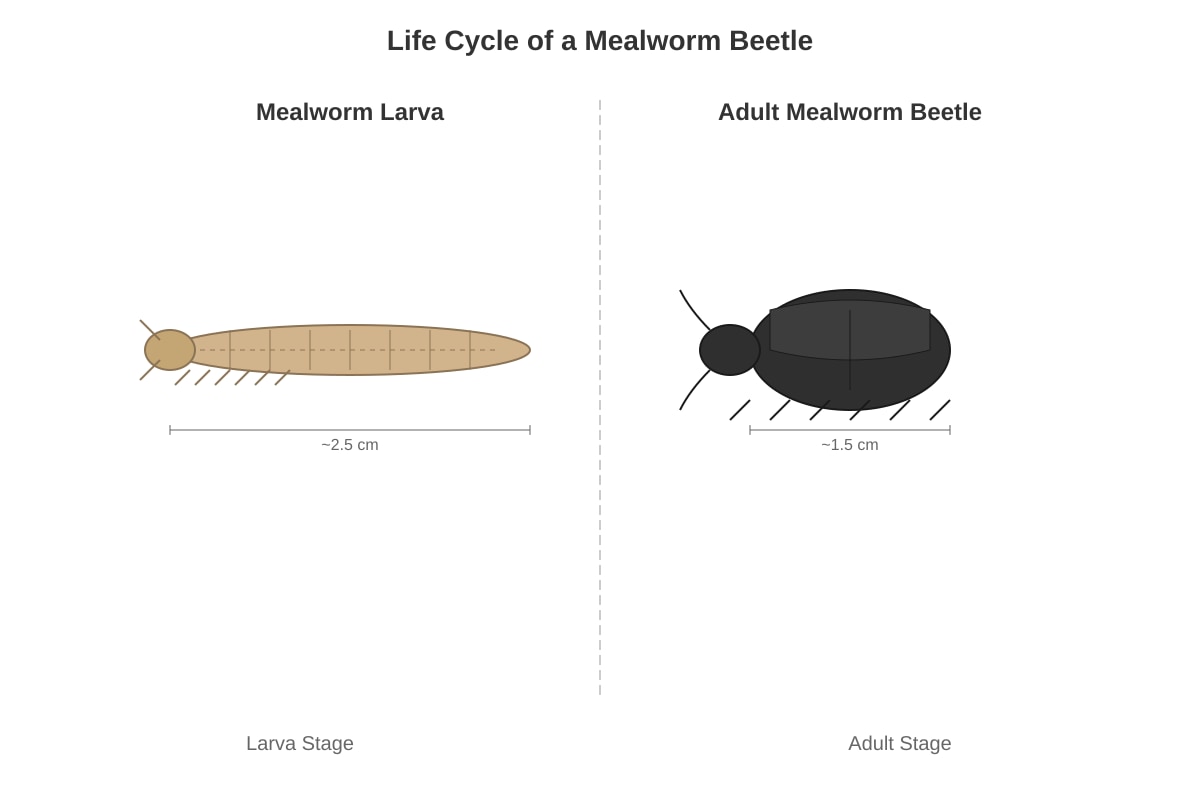
14. The diagram below shows a mealworm beetle life cycle.
<image_placeholder>
id: Q14-fig1
type: diagram
linked_question: Q14
description: Mealworm beetle life cycle: Egg → Larva (mealworm, worm-like, segmented) → Pupa (white, immobile, curved) → Adult Beetle (dark, hard wing cases, six legs). Arrows show direction.
labels: Egg, Larva (Mealworm), Pupa, Adult Beetle
values: None
must_show: Four distinct stages; larva worm-like; pupa immobile; adult with hardened wing cases (elytra)
</image_placeholder>
(a) The mealworm is the larva stage. State one observable difference between the larva and the pupa.
_________________________________________________________ [1]
(b) Why is the pupa stage described as a non-feeding stage?
_________________________________________________________ [1]
15. A grasshopper undergoes incomplete metamorphosis.
(a) How many stages are there in its life cycle?
_________________________________________________________ [1]
(b) The young grasshopper (nymph) moults several times. Explain why moulting is necessary.
_________________________________________________________ [1]
Section C: Structured / Open-Ended Questions (5 × 4 marks = 20 marks)
16. The diagram below shows the life cycles of a butterfly (complete metamorphosis) and a grasshopper (incomplete metamorphosis).
<image_placeholder>
id: Q16-fig1
type: diagram
linked_question: Q16
description: Two side-by-side life cycle diagrams. Left: Butterfly - Egg → Caterpillar (Larva) → Chrysalis (Pupa) → Adult Butterfly. Right: Grasshopper - Egg → Nymph (wingless, moults 5-6 times) → Adult Grasshopper (winged). Arrows show progression. No pupa stage for grasshopper.
labels: Butterfly: Egg, Larva, Pupa, Adult; Grasshopper: Egg, Nymph, Adult
values: Number of moults for grasshopper nymph: 5-6
must_show: Clear contrast: 4 stages vs 3 stages; presence vs absence of pupa; nymph resembles adult vs larva very different from adult
</image_placeholder>
(a) State one similarity between the two life cycles.
_________________________________________________________ [1]
(b) State two differences between the two life cycles.
Difference 1: _________________________________________________________
Difference 2: _________________________________________________________ [2]
(c) The grasshopper nymph moults 5–6 times before becoming an adult. What happens to the old exoskeleton after moulting?
_________________________________________________________ [1]
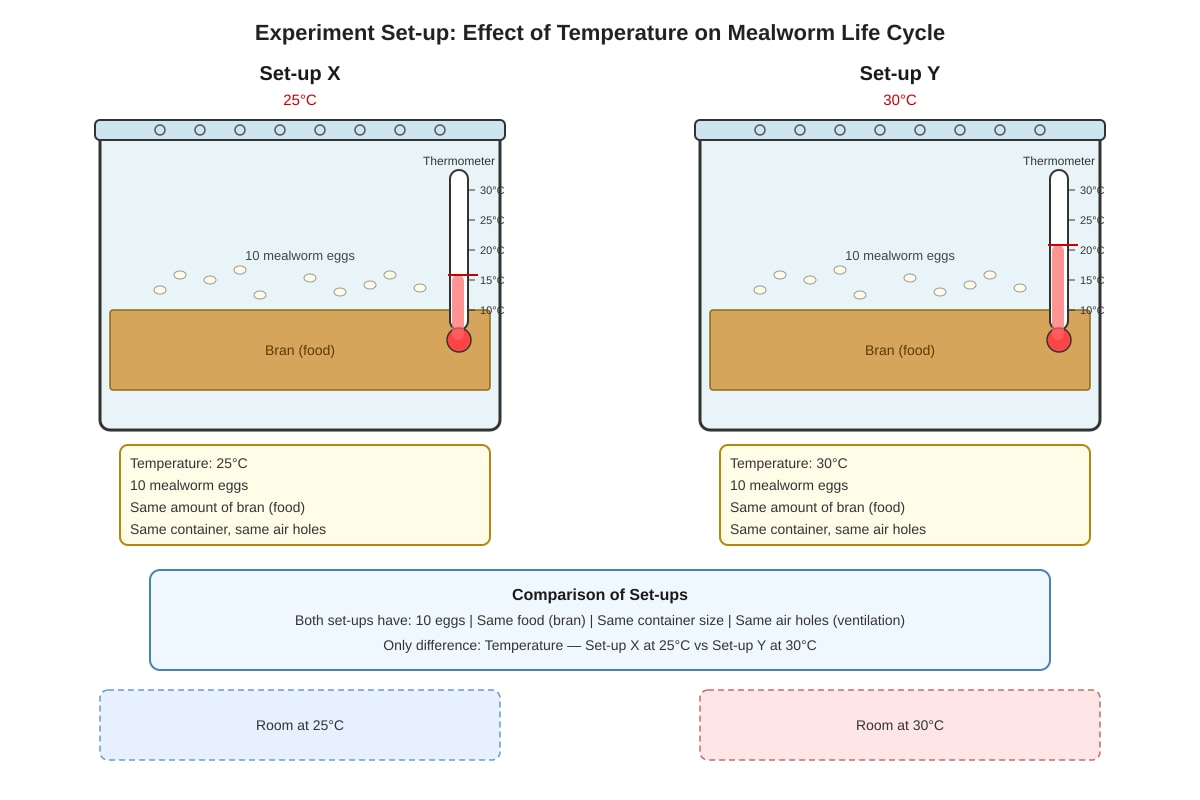
17. A student sets up an investigation to observe the life cycle of a mosquito. She places a container of water near a window and checks it daily.
<image_placeholder>
id: Q17-fig1
type: experimental_setup
linked_question: Q17
description: Clear plastic container with tap water, placed on a windowsill. A few dead leaves at bottom. No lid. Mosquito eggs (raft) floating on surface visible on Day 1. Magnifying glass beside container.
labels: Water, Mosquito egg raft, Dead leaves, Magnifying glass, Windowsill
values: Water volume: 200 mL; Container diameter: 10 cm; Room temperature: 28-30°C
must_show: Egg raft on water surface; open container; magnifying glass for observation; natural light
</image_placeholder>
(a) The student sees tiny wriggling organisms in the water after 2 days. What stage of the mosquito life cycle is this?
_________________________________________________________ [1]
(b) The student wants to prevent the mosquitoes from becoming adults. Suggest one thing she can do to the water.
_________________________________________________________ [1]
(c) Explain why removing stagnant water around homes helps to control the mosquito population.
_________________________________________________________ [2]
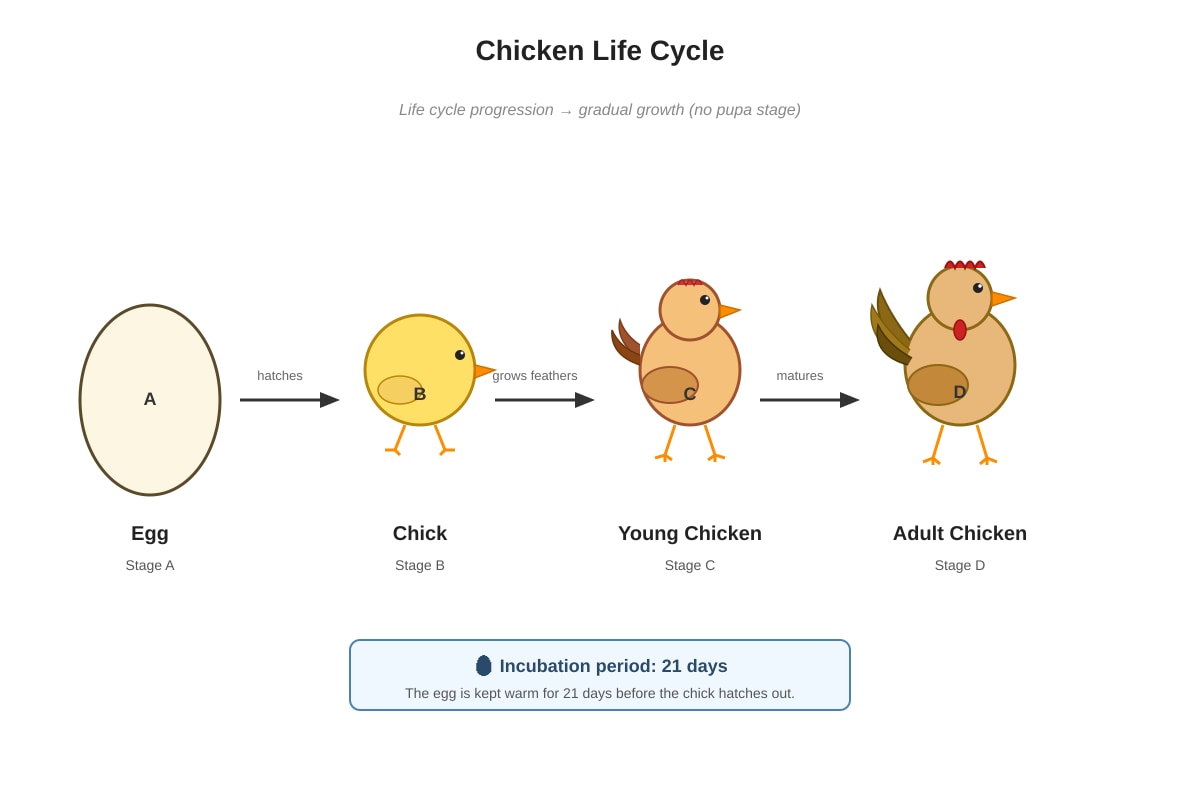
18. The diagram below shows a chicken life cycle.
<image_placeholder>
id: Q18-fig1
type: diagram
linked_question: Q18
description: Chicken life cycle: Egg → Chick (fluffy down feathers) → Young Chicken (growing feathers) → Adult Hen/Rooster (full feathers, comb, wattle). Arrows show progression. No metamorphosis.
labels: Egg, Chick, Young Chicken, Adult Hen/Rooster
values: Incubation period: 21 days
must_show: Three main stages after egg; gradual development; no drastic change in form; feathers replace down
</image_placeholder>
(a) The chicken life cycle has three stages after the egg. Name the three stages.
_________________________________________________________ [1]
(b) How is the chicken life cycle different from the butterfly life cycle? State two differences.
Difference 1: _________________________________________________________
Difference 2: _________________________________________________________ [2]
(c) A hen sits on her eggs to keep them warm. Why is warmth necessary for the eggs to hatch?
_________________________________________________________ [1]
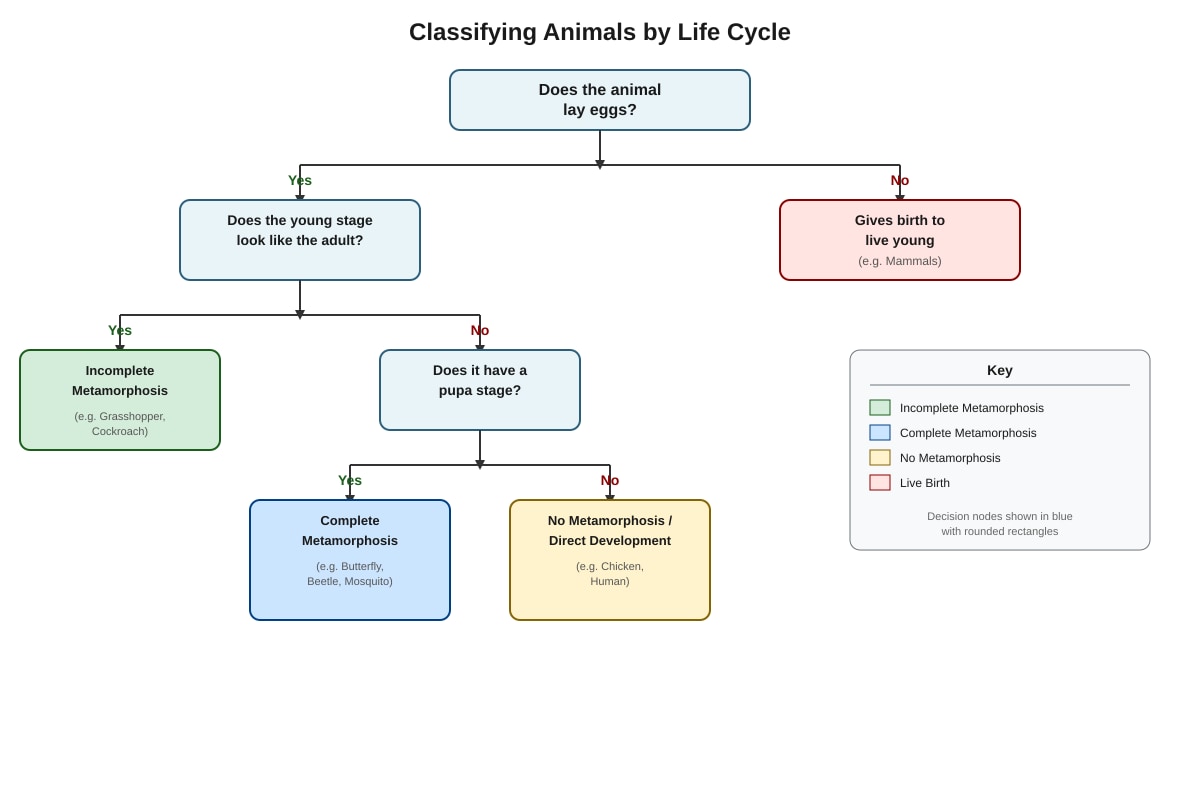
19. Study the flowchart below. It shows how to identify the type of metamorphosis an insect undergoes.
<image_placeholder> id: Q19-fig1 type: chart linked_question: Q19 description: Flowchart for identifying metamorphosis type. Start: Does the insect hatch from an egg? → Yes → Does the young stage (larva/nymph) look like the adult? → Yes → Does it have a pupa stage? → No → Incomplete Metamorphosis (3 stages: Egg, Nymph, Adult). → Yes → Complete Metamorphosis (4 stages: Egg, Larva, Pupa, Adult). → No (young looks different) → Does it have a pupa stage? → Yes → Complete Metamorphosis. → No → Other (e.g., spider). labels: Decision diamonds, Process boxes, Outcomes values: None must_show: Clear branching logic; key decision points: resemblance to adult, presence of pupa stage; correct classification outcomes </image_placeholder>
(a) An insect hatches from an egg. The young stage looks very different from the adult and there is a pupa stage. What type of metamorphosis does it undergo?
_________________________________________________________ [1]
(b) An insect hatches from an egg. The young stage looks like a small version of the adult but without wings. There is no pupa stage. What type of metamorphosis does it undergo?
_________________________________________________________ [1]
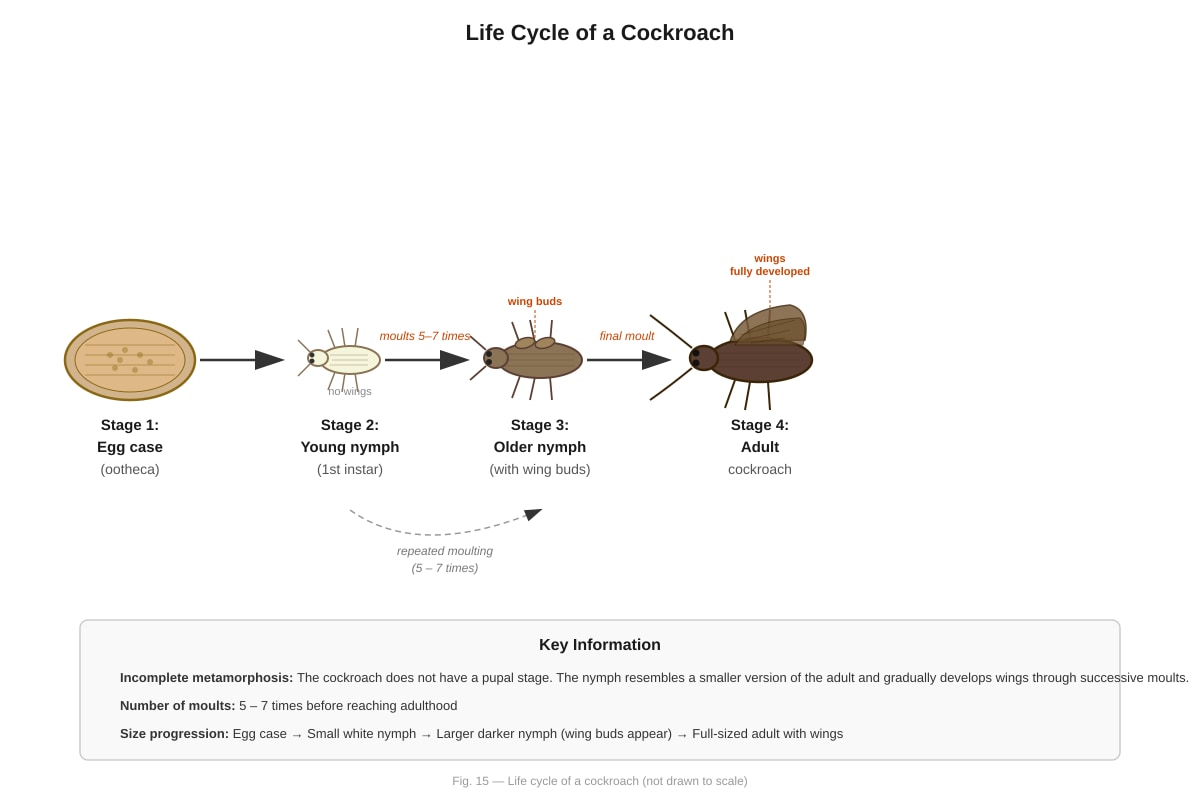
(c) A student finds an insect with the following characteristics:
- Hatches from an egg case (ootheca)
- Young stage is wingless and looks like the adult
- Undergoes multiple moults
- No pupa stage
Identify the insect and its type of metamorphosis.
Insect: _________________________________________________________
Type of metamorphosis: _________________________________________________________ [2]
20. The table below shows the number of days each stage lasts for a butterfly and a grasshopper under similar conditions.
| Stage | Butterfly (days) | Grasshopper (days) |
|---|---|---|
| Egg | 4 | 10 |
| Larva / Nymph | 14 | 30 |
| Pupa | 10 | — |
| Adult | 14 | 60 |
(a) Calculate the total number of days from egg to adult for the butterfly.
_________________________________________________________ [1]
(b) Calculate the total number of days from egg to adult for the grasshopper.
_________________________________________________________ [1]
(c) Based on the table, which insect spends a longer time as a young stage (larva or nymph) before becoming an adult? Explain your answer.
_________________________________________________________ [1]
(d) Suggest one reason why the grasshopper nymph stage takes longer than the butterfly larva stage.
_________________________________________________________ [1]
End of Quiz
Answers
Primary 4 Science Quiz - Life Cycles (Answer Key)
Total Marks: 40
Section A: Multiple-Choice Questions (10 × 1 mark = 10 marks)
1. C — Butterfly undergoes complete metamorphosis (egg → larva → pupa → adult). Grasshopper and cockroach undergo incomplete metamorphosis. Chicken has direct development (no metamorphosis).
2. C — Stage C is the comma-shaped pupa with breathing trumpets. Stage A = eggs, Stage B = larva, Stage D = adult.
3. B — Tadpoles are aquatic and breathe through gills. Froglets and adult frogs breathe through lungs and skin.
4. B — Four stages (egg, larva, pupa, adult) = complete metamorphosis.
5. C — Nymphs moult several times as they grow because their exoskeleton does not stretch. They shed the old exoskeleton to allow body expansion.
6. B — Grasshopper has 3 stages (egg, nymph, adult) and the nymph resembles the adult (wingless version). Butterfly has 4 stages. Frog has 4 stages but tadpole looks very different. Chicken has 3 stages but is not an insect.
7. B — The key difference in incomplete metamorphosis: nymphs are wingless; adults have fully developed wings.
8. D — Mouse is a mammal that gives birth to live young. Mosquito, butterfly, and cockroach all lay eggs.
9. C — During the pupa stage (inside chrysalis), the caterpillar's body tissues break down and reorganise into the adult butterfly's structures (wings, legs, antennae, etc.). This is called histolysis and histogenesis.
10. B — Young stage resembles adult (wingless), moults several times, no pupa stage = incomplete metamorphosis.
Section B: Short-Answer Questions (5 × 2 marks = 10 marks)
11.
(a) Tadpole (or Froglet — accept either if diagram label X points to that stage; based on standard sequence Egg → Tadpole → Froglet → Adult, X is likely Tadpole or Froglet).
Marking note: Award 1 mark for correct stage name matching the diagram label.
(b) Tadpole breathes through gills (in water); adult frog breathes through lungs (on land) and also through moist skin.
Key concept: Change in respiratory organ matches habitat change (aquatic → terrestrial).
12.
(a) Larva / Caterpillar stage
(b) The caterpillar eats a lot to store energy and nutrients for the pupa stage, during which it does not eat. The stored energy fuels the complete body reorganisation inside the chrysalis.
Key concept: Larva is the feeding/growth stage; pupa is non-feeding transformation stage.
13.
(a) Larva (or Wriggler — both accepted for mosquito young stage)
(b) Incomplete metamorphosis
Marking: 1 mark each. Cockroach: egg → nymph → adult (3 stages, no pupa).
14.
(a) Larva (mealworm) is worm-like, segmented, and mobile; pupa is curved, white, immobile, and does not eat. (Any one valid observable difference: shape, mobility, colour, feeding).
(b) The pupa does not have functional mouthparts for feeding. Its body is reorganising internally to form the adult beetle.
Key concept: Pupa is a non-feeding, transformational stage.
15.
(a) 3 stages (Egg, Nymph, Adult)
(b) The nymph has a hard exoskeleton that cannot stretch. To grow larger, it must shed (moult) the old exoskeleton and expand its body before the new one hardens.
Key concept: Exoskeleton limits growth; moulting allows size increase.
Section C: Structured / Open-Ended Questions (5 × 4 marks = 20 marks)
16.
(a) Both life cycles begin with an egg stage. (Or: Both have an adult stage that reproduces by laying eggs.)
1 mark for any valid similarity.
(b) Difference 1: Butterfly has 4 stages (egg, larva, pupa, adult); grasshopper has 3 stages (egg, nymph, adult).
Difference 2: Butterfly has a pupa stage; grasshopper does not.
Difference 3: Butterfly larva (caterpillar) looks very different from adult; grasshopper nymph resembles adult (except wings).
Any two valid differences, 1 mark each.
(c) The old exoskeleton is left behind / discarded. (Some insects eat it to recycle nutrients, but "left behind" is the standard answer.)
1 mark.
17.
(a) Larva (also called wriggler)
1 mark.
(b) Add a layer of oil on the water surface / cover the container with a fine mesh / change the water frequently / introduce fish that eat larvae. (Any one valid method.)
1 mark. Key concept: Prevent larvae from breathing at surface or prevent egg-laying.
(c) Mosquitoes lay eggs in stagnant water. The larvae and pupae develop in water. Removing stagnant water removes their breeding sites, so they cannot complete their life cycle.
2 marks: 1 for identifying water as breeding site, 1 for linking to life cycle interruption.
18.
(a) Chick, Young Chicken, Adult Hen/Rooster (or Chick, Pullet/Cockerel, Adult)
1 mark for all three in correct order.
(b) Difference 1: Chicken has 3 stages after egg; butterfly has 4 stages.
Difference 2: Chicken young (chick) resembles adult (gradual development); butterfly young (caterpillar) looks very different from adult.
Difference 3: Chicken has no metamorphosis / no pupa stage; butterfly undergoes complete metamorphosis with pupa stage.
Any two valid differences, 1 mark each.
(c) Warmth is needed for the embryo inside the egg to develop. The hen's body heat maintains the correct temperature (about 37–38°C) for incubation.
1 mark. Key concept: External incubation temperature required for bird embryo development.
19.
(a) Complete metamorphosis
1 mark. Path: young looks different → has pupa stage → complete.
(b) Incomplete metamorphosis
1 mark. Path: young looks like adult → no pupa stage → incomplete.
(c) Insect: Cockroach (or Grasshopper — both fit; cockroach specifically mentioned with egg case/ootheca)
Type of metamorphosis: Incomplete metamorphosis
2 marks: 1 for correct insect, 1 for correct metamorphosis type. Ootheca = cockroach egg case.
20.
(a) 4 + 14 + 10 + 14 = 42 days
1 mark. Working: Egg (4) + Larva (14) + Pupa (10) + Adult (14) = 42.
(b) 10 + 30 + 60 = 100 days (No pupa stage)
1 mark. Working: Egg (10) + Nymph (30) + Adult (60) = 100.
(c) Grasshopper. Its nymph stage lasts 30 days, while the butterfly larva stage lasts 14 days.
1 mark for correct identification with data support.
(d) The grasshopper nymph grows gradually through multiple moults (5–6 times), each taking time. The butterfly larva grows rapidly by continuous eating without moulting as many times / the butterfly larva stage is specialised for fast feeding and growth.
1 mark for any reasonable explanation: gradual growth via moults vs rapid continuous growth; different growth strategies.
Marking Summary
| Section | Questions | Marks per Question | Total |
|---|---|---|---|
| A | 1–10 | 1 | 10 |
| B | 11–15 | 2 | 10 |
| C | 16–20 | 4 | 20 |
| Total | 20 | 40 |
Common Mistakes to Watch For
- Confusing "nymph" and "larva": Nymph = incomplete metamorphosis (resembles adult); Larva = complete metamorphosis (very different from adult).
- Forgetting the pupa stage in complete metamorphosis (butterfly, mosquito, beetle, fly).
- Thinking frog has incomplete metamorphosis — frog has complete metamorphosis (drastic change: aquatic gill-breather → terrestrial lung-breather).
- Chicken has "3 stages" but no metamorphosis — it's direct development, not incomplete metamorphosis.
- Moulting reason: Not "to get wings" but "exoskeleton doesn't stretch, so must shed to grow".
- Stagnant water and mosquitoes: Link breeding site → eggs → larvae → pupae → adults. Remove water = break cycle.
Visual Placeholder Notes for Answer Key
- Q1-fig1, Q7-fig1, Q11-fig1, Q12-fig1, Q14-fig1, Q16-fig1, Q17-fig1, Q18-fig1, Q19-fig1: All diagrams/charts described in the question paper must be rendered with the specified labels, values, and features for the answers to be verifiable. The answer key references specific visual elements (e.g., "comma-shaped pupa", "wingless nymph", "ootheca").