AI Generated Quiz
Primary 4 Science Life Cycles Quiz
Free P4 Science Life Cycles quiz, HY3 AI version, with questions, answers, and syllabus-aligned practice for Singapore students.
These static practice materials are generated from the site's syllabus and paper-generation workflow, with source and model context shown so students and parents can evaluate the material before use.
Questions
Primary 4 Science Quiz - Life Cycles
Name: ___________________________
Class: ________
Date: ____________
Score: _______ / 40
Duration: 50 minutes
Total Marks: 40
Instructions:
- This quiz has 20 questions on the topic of Life Cycles.
- Section A: 10 multiple-choice questions (1 mark each).
- Section B: 6 short-answer questions (2 marks each).
- Section C: 4 structured questions with subparts (total 8 marks).
- Write your answers clearly in the spaces provided.
- This quiz is generated from syllabus-first templates. It is NOT based on past-year exam papers.
Section A (Questions 1–10, 1 mark each)
1. Which of the following shows the correct order of stages in the life cycle of a butterfly?
A. egg → nymph → adult
B. egg → larva → pupa → adult
C. egg → tadpole → adult
D. egg → pupa → larva → adult
2. A grasshopper goes through incomplete metamorphosis. Which stage is missing compared to a butterfly?
A. egg
B. nymph
C. pupa
D. adult
3. What is the young stage of a frog called?
A. larva
B. nymph
C. tadpole
D. pupa
4. Which insect's life cycle includes a stage that lives in water and uses a breathing tube?
A. butterfly
B. mosquito
C. grasshopper
D. cockroach
5. Why does a caterpillar need to change into a pupa?
A. to breathe underwater
B. to grow wings and become an adult
C. to lay eggs
D. to eat more leaves
6. A nymph of a cockroach looks most like a small version of the ______.
A. egg
B. larva
C. adult
D. tadpole
7. Which stage of the butterfly is most harmful to farmers?
A. egg
B. larva (caterpillar)
C. pupa
D. adult
8. Frogs lay their eggs in water because the tadpoles need to ______.
A. fly
B. breathe with lungs only
C. live and grow in water
D. molt on land
9. As a grasshopper nymph grows, it ______ several times to allow its body to get bigger.
A. sleeps
B. molts
C. drinks
D. splits
10. Which of the following is an example of complete metamorphosis?
A. hen → chick
B. egg → nymph → adult
C. egg → larva → pupa → adult
D. egg → tadpole → frog
Section B (Questions 11–16, 2 marks each)
11. Name the two types of metamorphosis and give one insect example for each.
12. State two differences between the life cycle of a butterfly and a grasshopper.
(1) __________________________________________________
(2) __________________________________________________
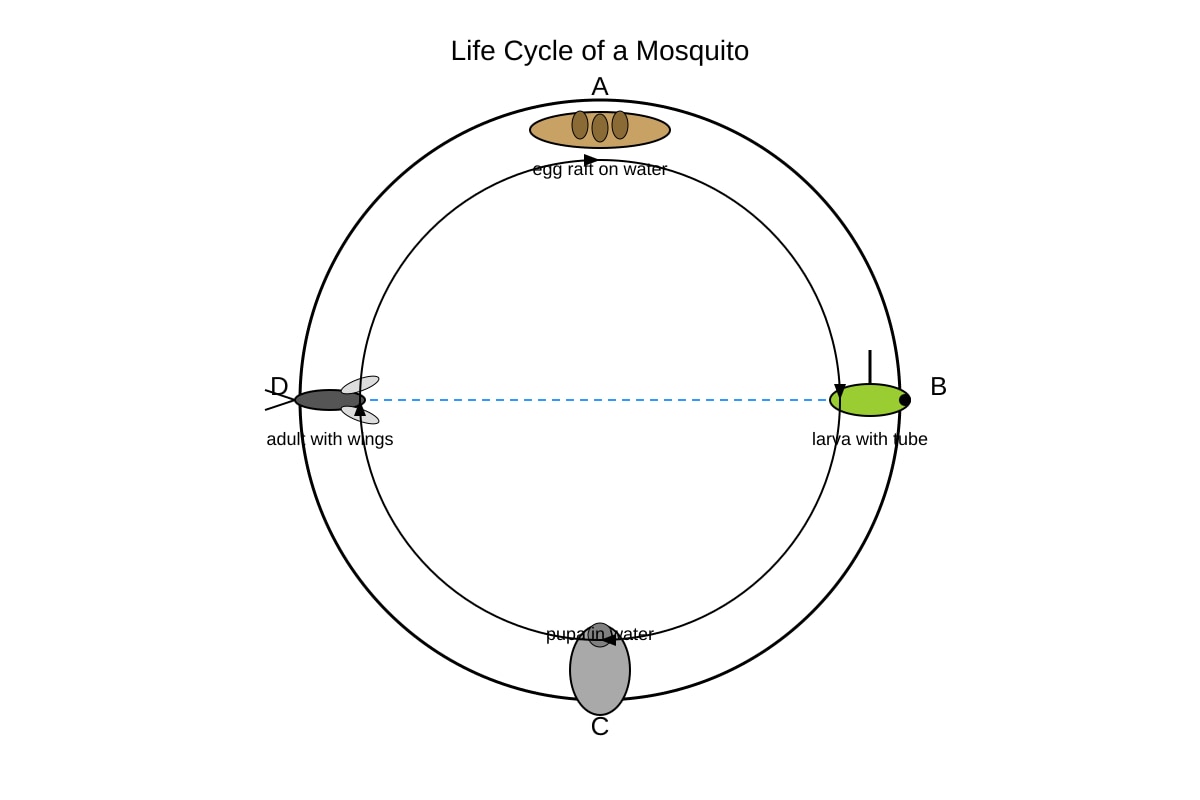
13. Study the life cycle diagram below.
Image pending generation: diagram for Q13.
Which two stages (write letters) spend their whole time in water? ______ and ______
14. Explain why farmers try to stop caterpillars from eating their crops.
15. A cockroach grows from an egg case to a nymph, then molts a few times before becoming an adult. State one similarity and one difference between a cockroach and a butterfly life cycle.
Similarity: ____________________________________________
Difference: ____________________________________________
16. Mosquitoes breed in still water. Suggest one way to stop mosquitoes from breeding and explain how it works.
Method: _______________________________________________
Explanation: ___________________________________________
Section C (Questions 17–20, structured)
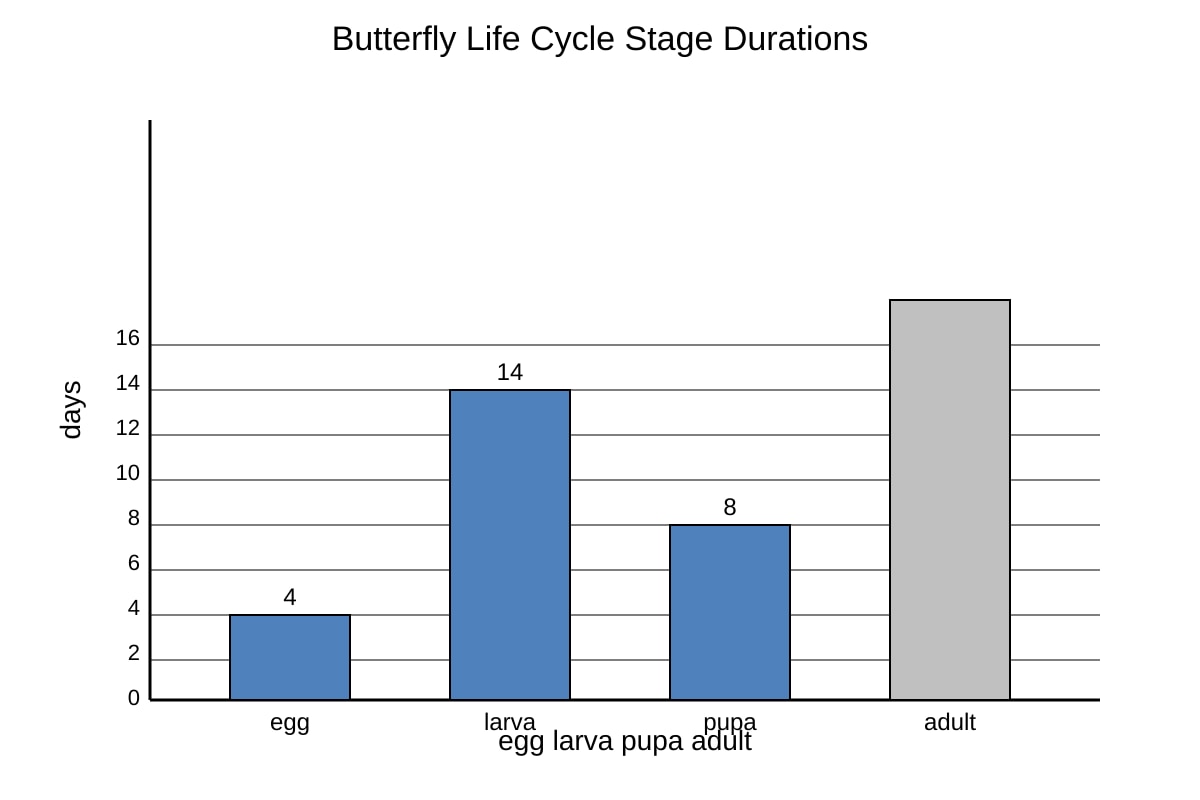
17. The bar chart shows the number of days for each stage in a butterfly's life cycle.
Image pending generation: bar_chart for Q17.
(a) How many days does the larva stage last? ______ (1 mark)
(b) Find the total number of days from egg to adult (egg + larva + pupa). Show your working. (2 marks)
Working: __________________________________________
Answer: ______ days
18. (a) What is metamorphosis? (1 mark)
(b) State one animal that goes through incomplete metamorphosis and one that goes through complete metamorphosis. (2 marks)
Incomplete: ______________ Complete: ______________
19. A student says: "A tadpole is a different animal from a frog."
(a) Is the student correct? ______ (1 mark)
(b) Explain your answer. (2 marks)
20. (a) Name the stage of a mosquito that floats on water as a raft. ______ (1 mark)
(b) Why must oil be spread on still water to prevent mosquito breeding? (2 marks)
Answers
Primary 4 Science Quiz - Life Cycles (Answer Key)
Total Marks: 40
Topic: Life Cycles (syllabus-first, not exam-derived)
Section A Answers (1 mark each)
1. B
Teaching note: Butterfly has complete metamorphosis: egg → larva (caterpillar) → pupa (chrysalis) → adult. Option A is grasshopper, C is frog, D has wrong order.
2. C
Teaching note: Grasshopper has egg → nymph → adult (incomplete, no pupa). Butterfly has pupa stage.
3. C
Teaching note: Young frog is tadpole, lives in water, then metamorphoses.
4. B
Teaching note: Mosquito larva and pupa live in water and use breathing tubes to get air.
5. B
Teaching note: Inside pupa, the caterpillar changes body shape and grows wings to become adult butterfly.
6. C
Teaching note: Nymph resembles small adult (no wings yet); this is incomplete metamorphosis.
7. B
Teaching note: Caterpillar (larva) eats leaves and damages crops.
8. C
Teaching note: Tadpoles are aquatic; they need water to live and grow before becoming frogs.
9. B
Teaching note: Molting = shedding old skin so body can enlarge.
10. C
Teaching note: Complete metamorphosis has four stages with pupa. A and D are not insects with metamorphosis types studied.
Section B Answers (2 marks each)
11. (2 marks)
- Complete metamorphosis (e.g., butterfly) — 1 mark
- Incomplete metamorphosis (e.g., grasshopper) — 1 mark
Teaching note: Define by presence/absence of pupa.
12. (2 marks)
Any two correct differences, 1 mark each:
(1) Butterfly has pupa stage; grasshopper does not.
(2) Butterfly larva (caterpillar) looks different from adult; grasshopper nymph looks like adult.
(Other acceptable: butterfly larva eats leaves, grasshopper nymph on land, etc.)
13. (2 marks)
B and C — 1 mark each.
Teaching note: Larva and pupa are fully aquatic; egg raft on water surface but not "whole time in water" same as larva/pupa; adult flies.
14. (2 marks)
Caterpillars eat leaves / plant parts (1 mark). This destroys crops and reduces food for people (1 mark).
Teaching note: Link larval stage to agricultural harm.
15. (2 marks)
Similarity: both are insects / both change form (1 mark).
Difference: cockroach has no pupa (incomplete), butterfly has pupa (complete) (1 mark).
16. (2 marks)
Method: cover water with oil / remove stagnant water (1 mark).
Explanation: oil blocks breathing tubes so larvae cannot breathe; or no water means no breeding place (1 mark).
Section C Answers
17. (a) 14 days (1 mark)
(b) Total = 4 + 14 + 8 = 26 days (2 marks: 1 for working, 1 for answer)
Working: egg (4) + larva (14) + pupa (8) = 26.
Teaching note: Read bar chart values; add only needed stages.
18. (a) Metamorphosis is the change in body form during an animal's life cycle. (1 mark)
(b) Incomplete: grasshopper / cockroach (1 mark); Complete: butterfly / mosquito (1 mark)
19. (a) No (1 mark)
(b) Tadpole is the young stage of a frog; it changes into a frog through metamorphosis. (2 marks: young stage 1, change 1)
20. (a) Egg (egg raft) (1 mark)
(b) Oil prevents larvae from reaching air using breathing tubes, so they cannot survive / breed. (2 marks: oil blocks tube 1, no air = death 1)
Free quiz and exam paper access
Enter your details to view this paper
Your access is remembered on this device.