AI Generated Quiz
Primary 4 Science Diversity Quiz
Free P4 Science Diversity quiz, Nemo3 AI version, with questions, answers, and syllabus-aligned practice for Singapore students.
These static practice materials are generated from the site's syllabus and paper-generation workflow, with source and model context shown so students and parents can evaluate the material before use.
Questions
Free quiz and exam paper access
Enter your details to view this paper
Your access is remembered on this device.
Answers
Primary 4 Science Quiz - Diversity (Answer Key)
Total Marks: 40
Section A: Multiple-Choice Questions (10 × 1 mark = 10 marks)
1. C — River stone is a non-living thing. Mushroom, moss, and fern are all living things (fungi and plants).
2. A — A plant growing towards sunlight (phototropism) shows a living thing responding to changes in its surroundings. The other options show non-living things moved by external forces.
3. A — Group X contains bacteria, yeast, and mould, which are all microorganisms (too small to be seen with the naked eye). Group Y contains rose plant, oak tree, and balsam plant, which are all plants.
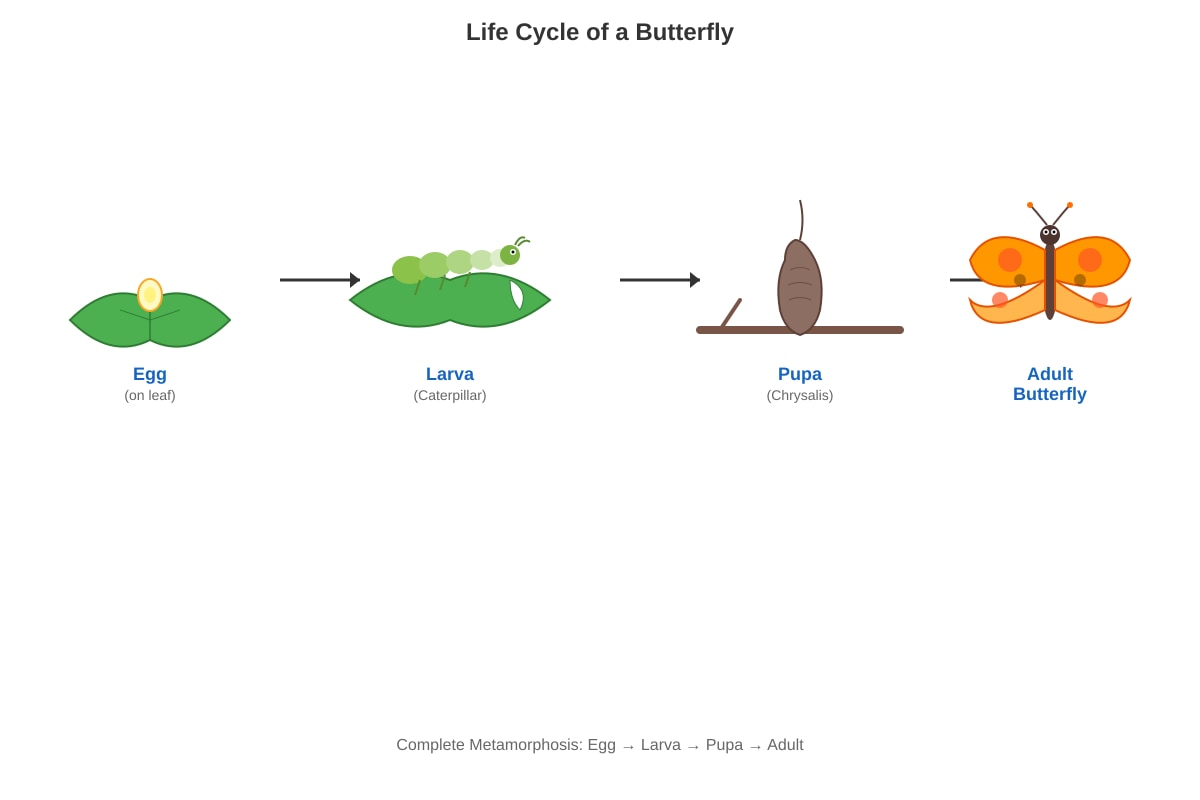
4. C — Butterfly undergoes complete metamorphosis (egg → larva/caterpillar → pupa/chrysalis → adult). Grasshopper and cockroach undergo incomplete metamorphosis. Chicken does not undergo metamorphosis.
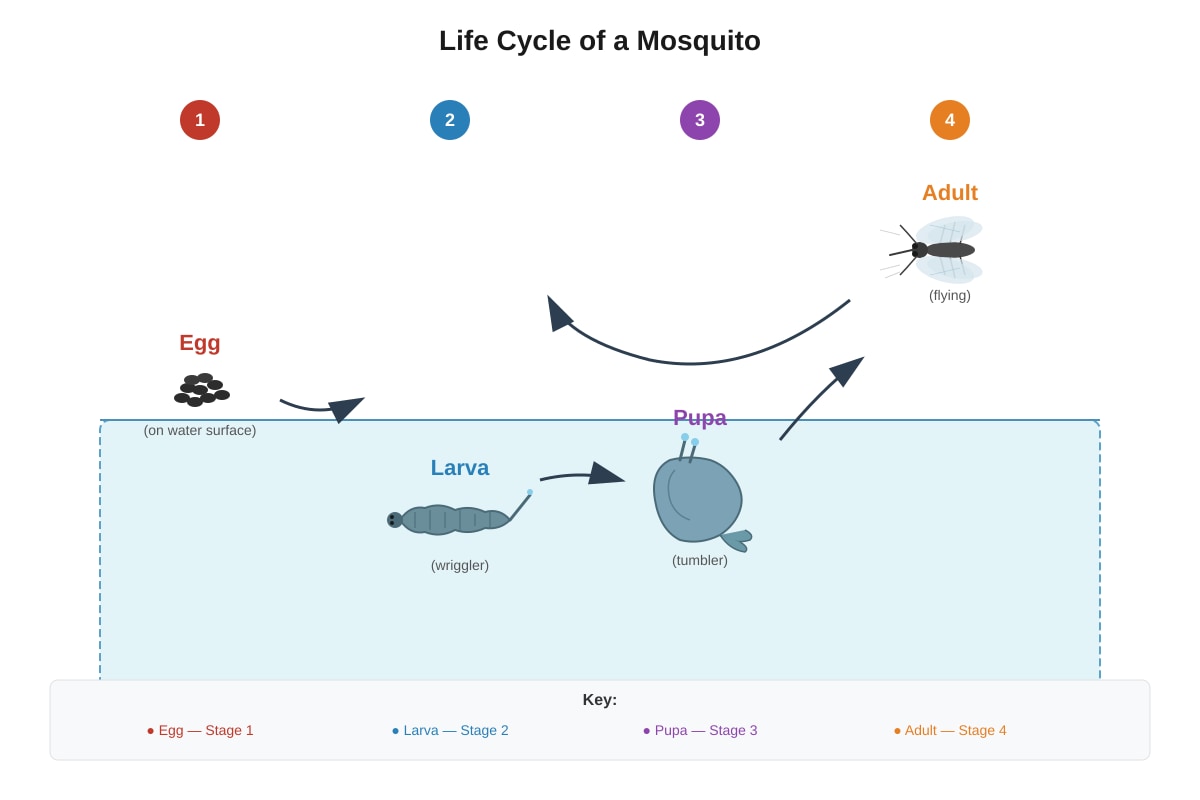
5. D — The adult mosquito flies and lives on land. Eggs, larvae (wrigglers), and pupae (tumblers) all live in water.
6. B — Bacteria are microscopic and can only be seen with a microscope. Not all bacteria are harmful (some are beneficial, e.g., in digestion, decomposition, food production). Bacteria are not plants (they lack chlorophyll and true nucleus). Bacteria reproduce by binary fission, not by laying eggs.
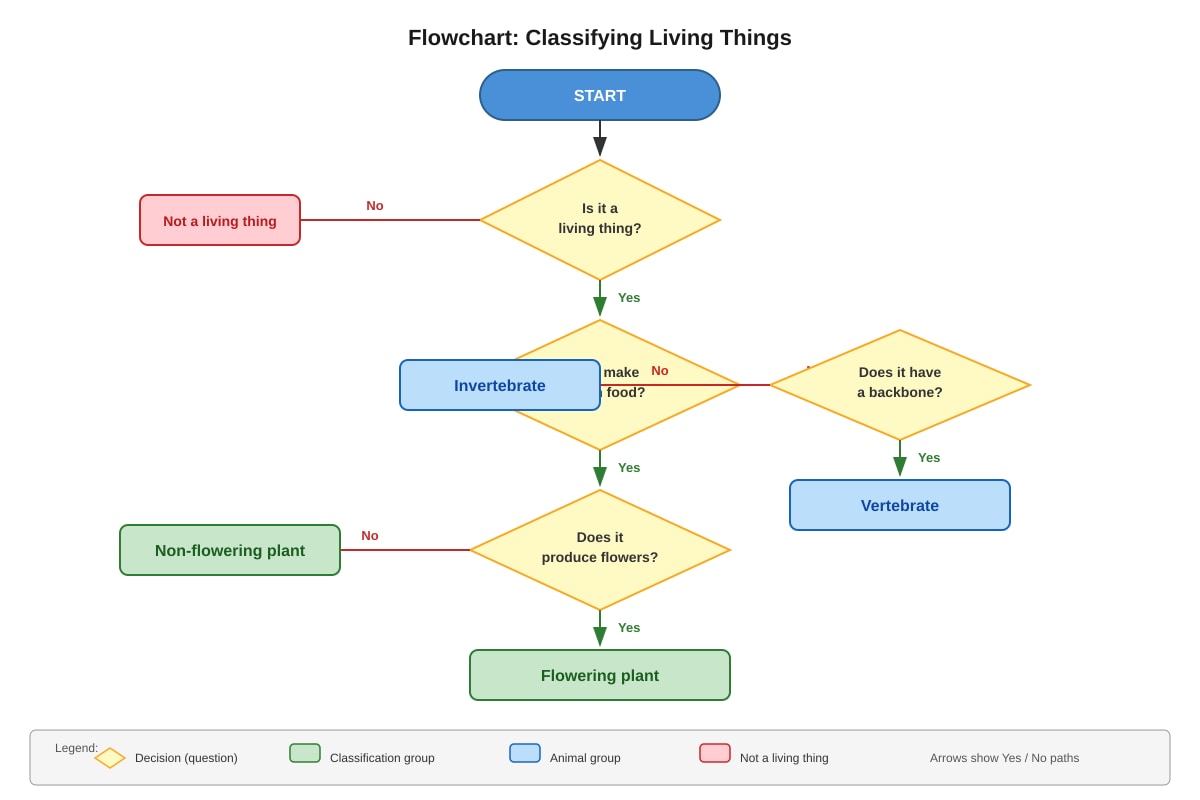
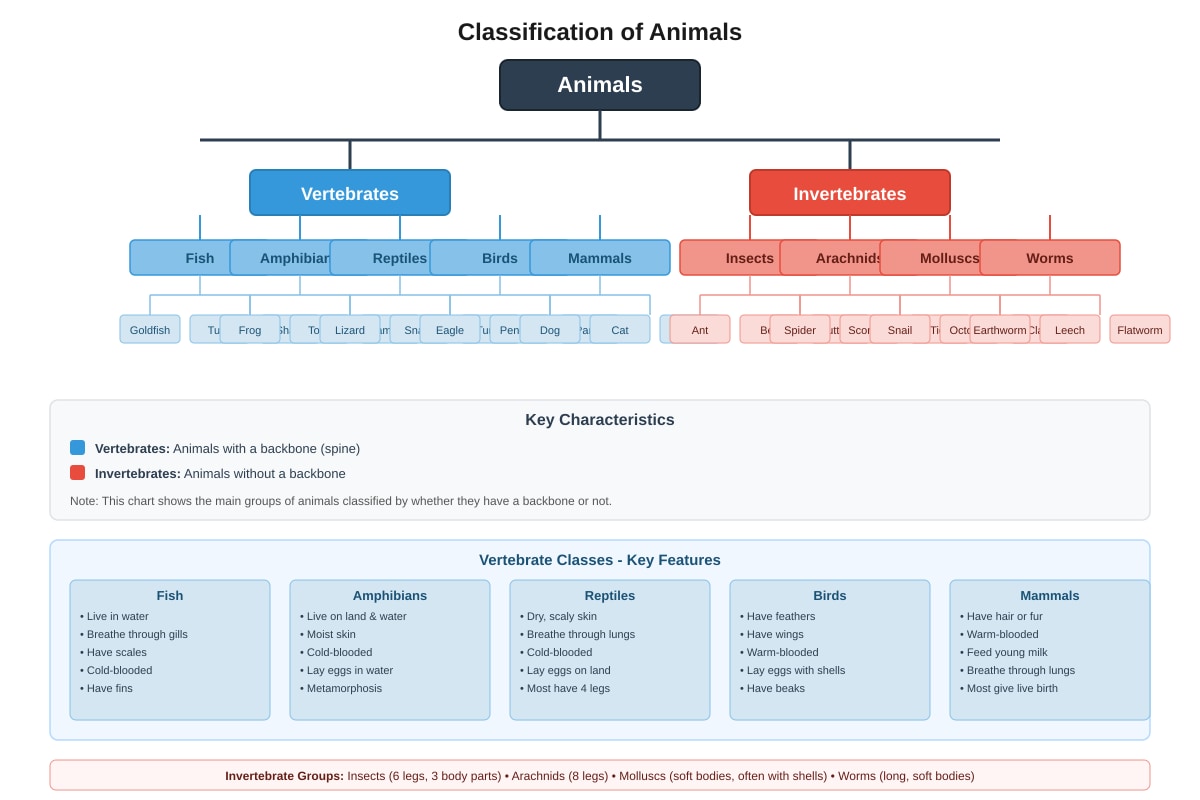
7. D — Following the flowchart: Cannot make own food → No backbone → Invertebrate.
8. C — Fungi do not have chlorophyll and cannot photosynthesise. They reproduce by spores, cannot make their own food (heterotrophic), and feed on dead/decaying matter (saprotrophic).
9. A — Organism W has hair and breathes through lungs, which are characteristics of mammals. X lays eggs (could be bird/reptile), Y has feathers (bird), Z has scales (reptile/fish).
10. B — Classification helps scientists study and understand living things better by organising them into groups based on shared characteristics. This makes it easier to identify, compare, and communicate about organisms.
Section B: Short-Answer Questions (5 × 2 marks = 10 marks)
11. Any two valid differences (1 mark each, max 2 marks):
- Flowering plants produce flowers and fruits; non-flowering plants do not produce flowers or fruits.
- Flowering plants reproduce by seeds (inside fruits); non-flowering plants reproduce by spores (e.g., ferns, mosses) or cones (e.g., conifers).
- Flowering plants have seeds enclosed in an ovary; non-flowering plants have naked seeds (conifers) or no seeds (ferns, mosses).
Accept other scientifically accurate differences.
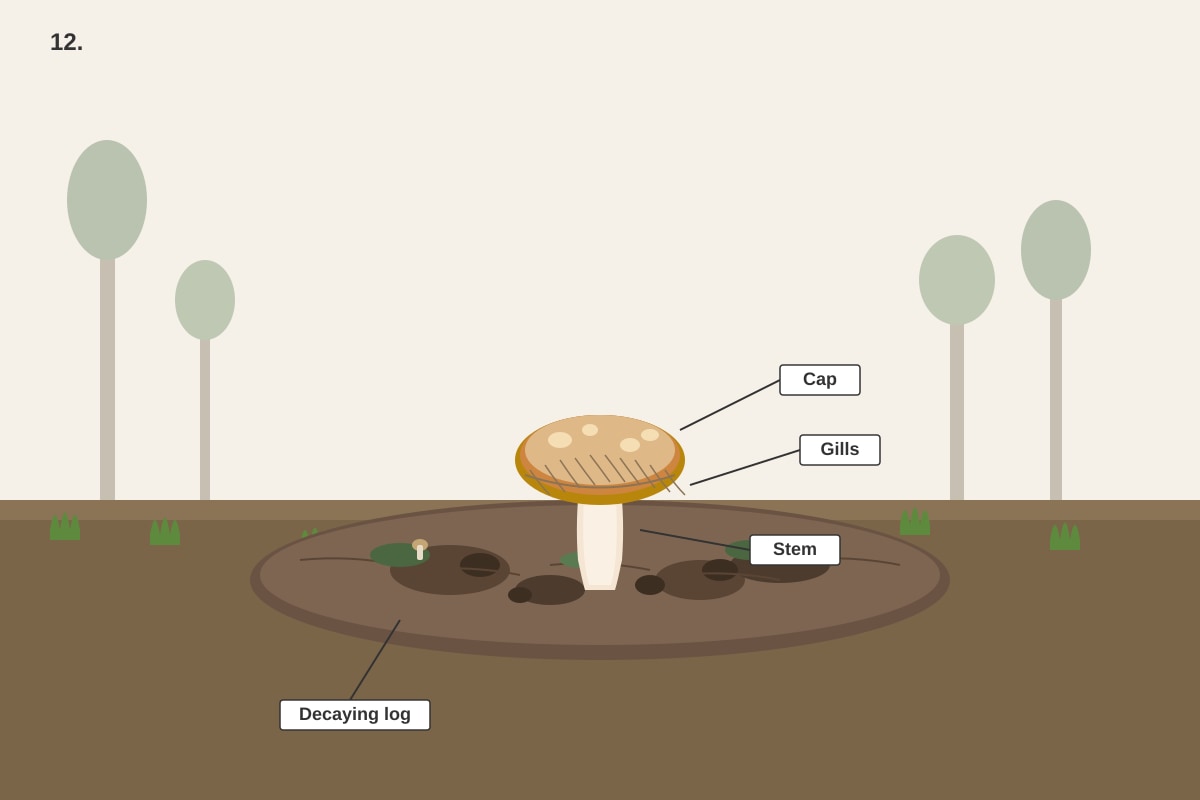
12. (a) No, a mushroom is not a plant. (1 mark)
(b) Mushrooms are fungi. They do not have chlorophyll, cannot make their own food (photosynthesise), and feed on dead/decaying matter (saprotrophs). Plants have chlorophyll and make their own food. (1 mark)
13. (1 mark each, max 3 marks but question worth 2 marks — award 2 marks for any two correct functions)
| Plant Part | Function |
|---|---|
| Leaf | Makes food for the plant through photosynthesis / traps sunlight for photosynthesis / gaseous exchange |
| Root | Absorbs water and mineral salts from the soil / anchors the plant firmly to the ground |
| Stem | Transports water and food to all parts of the plant / supports the plant / holds leaves up to sunlight |
Award 2 marks for any two correct functions. If all three correct, still max 2 marks.
14. (a) Chrysalis (1 mark)
(b) Any one valid difference (1 mark):
- Larva (caterpillar) has a long, segmented body with many legs; adult butterfly has three body parts (head, thorax, abdomen) and six legs.
- Larva eats leaves (chewing mouthparts); adult butterfly feeds on nectar (proboscis/siphoning mouthparts).
- Larva cannot fly; adult butterfly has wings and can fly.
- Larva does not reproduce; adult butterfly reproduces (lays eggs).
15. (1 mark per correct classification, max 2 marks for microorganisms, 2 marks for plants — but question worth 2 marks total, so award proportionally or 0.5 per item. Better: 2 marks for fully correct table.)
| Microorganisms | Plants |
|---|---|
| Bacteria | Fern |
| Mould | Rose plant |
| Yeast |
Microorganisms: Bacteria, Mould, Yeast (3 items). Plants: Fern, Rose plant (2 items). Award 1 mark for correct microorganisms group, 1 mark for correct plants group.
Section C: Structured / Open-Ended Questions (4 × 5 marks = 20 marks)
16. (a) Two characteristics of all vertebrates (1 mark each, max 2 marks):
- Have a backbone (vertebral column/spine).
- Have an internal skeleton (endoskeleton) made of bone or cartilage.
- Accept: Have a spinal cord protected by the backbone.
(b) Insects (1 mark)
(c) Explanation (2 marks):
- The animal has three body parts (head, thorax, abdomen), six legs, a pair of antennae, and an exoskeleton (hard outer covering). These are the defining characteristics of insects. (1 mark for listing characteristics, 1 mark for linking to insect group)
Marking note: Must mention at least three insect characteristics and state "insects" for full marks.
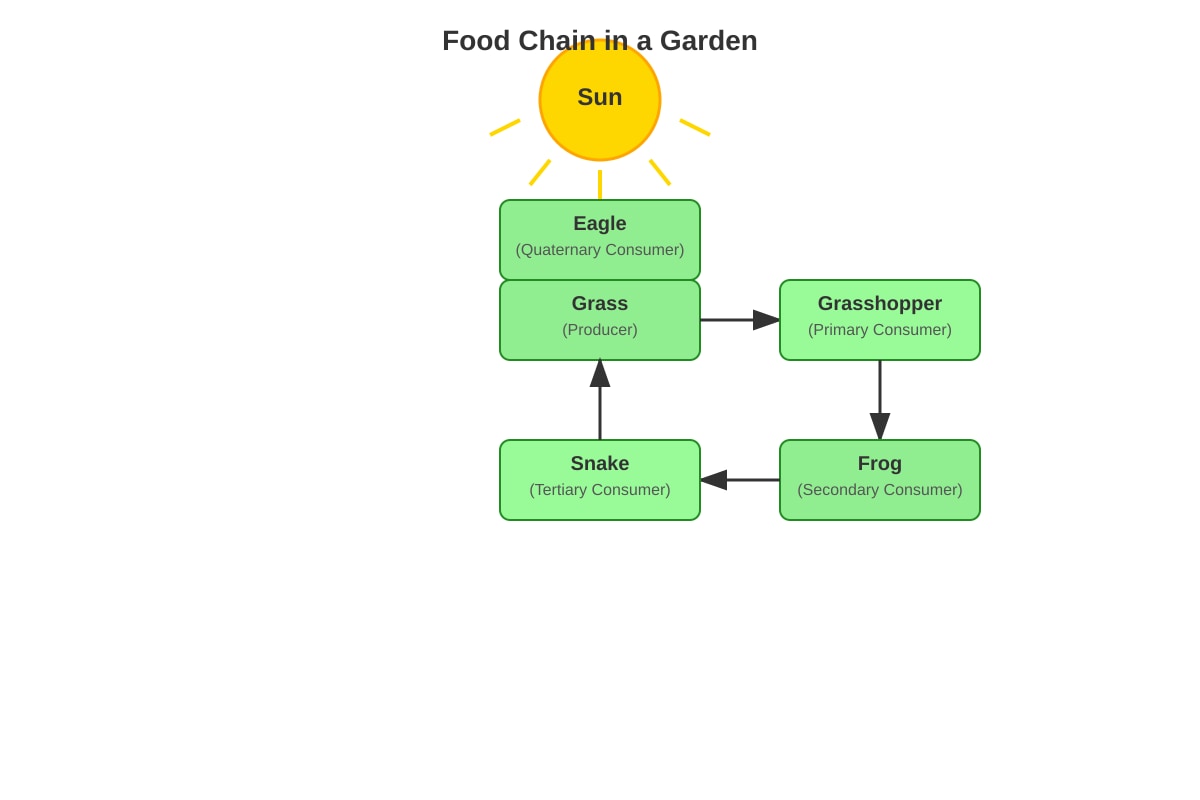
17. (a) Grass (1 mark) — It is a producer that makes its own food through photosynthesis.
(b) Effect on frog population (2 marks):
- The frog population will decrease (1 mark).
- Frogs feed on grasshoppers. If grasshoppers are removed, frogs lose their food source, leading to starvation and population decline (1 mark).
Accept: Frogs may eat other prey if available, but population likely decreases due to reduced food.
(c) Reason for fewer top predators (1 mark):
- Energy is lost at each trophic level (only about 10% transferred), so there is less energy available to support top predators.
- Or: Top predators require large territories and more food, so the environment can support fewer of them.
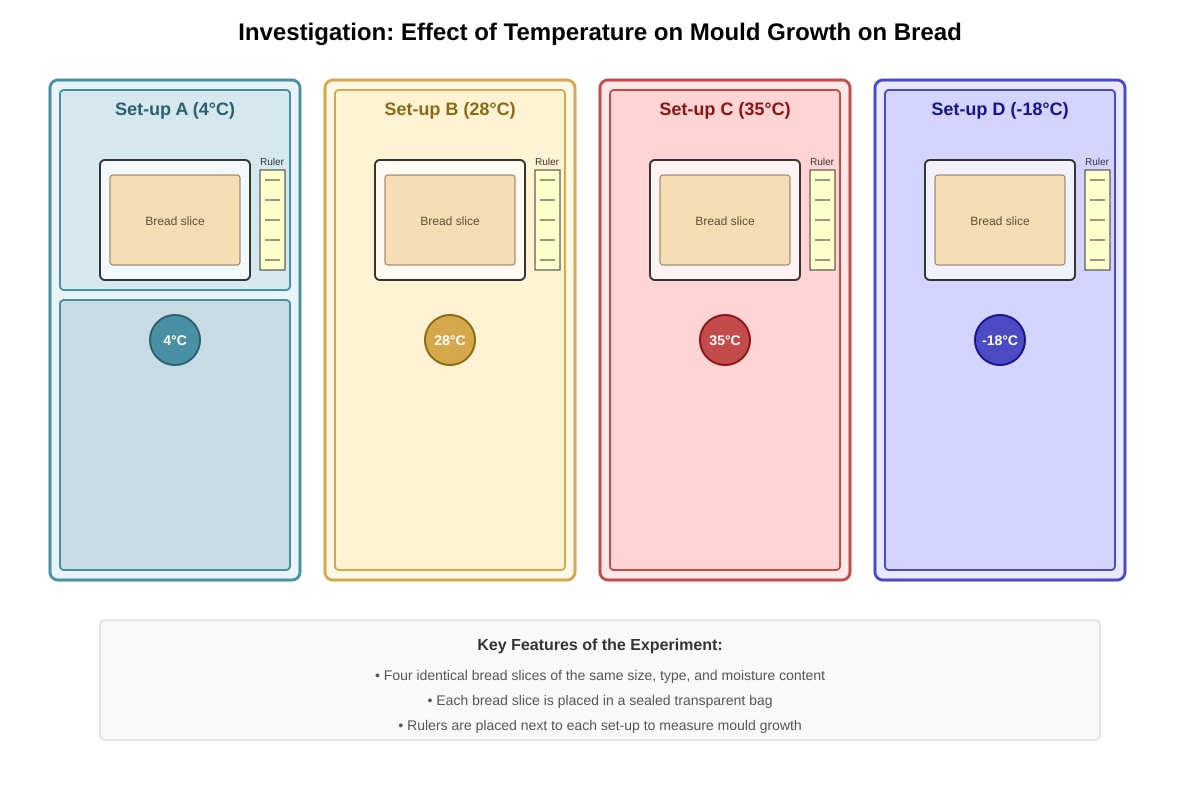
18. (a) Aim (1 mark):
- To find out how temperature affects the growth of mould on bread / To investigate the effect of temperature on mould growth.
(b) Set-up B (28°C) and Set-up C (35°C) (1 mark) — Both are warm temperatures; comparing them shows if warmer (35°C) is better than warm (28°C). Also accept B and D (cold vs warm) or C and D, but B and C best for "warm vs cold" comparison since D is freezing.
Marking note: Any pair that compares a warm and a cold set-up is acceptable (e.g., B and D, C and D). Must specify two set-ups.
(c) Controlled variable (1 mark) — Any one:
- Type/size of bread (same bread used)
- Moisture content of bread
- Size of bread slice
- Type of bag / sealing method
- Duration of experiment (5 days for all)
- Light exposure (all kept in same light conditions)
(d) Conclusion (2 marks):
- Mould grows best in warm temperatures (around 28°C to 35°C) (1 mark).
- Mould does not grow (or grows very slowly) in very cold temperatures (4°C and -18°C) (1 mark).
Accept: Mould requires warmth to grow; growth is inhibited at low temperatures.
19. (a) Animal D (1 mark) — Has moist skin, breathes through lungs and skin, lays eggs in water, lives on land and water (amphibian characteristics).
(b) Animal C (1 mark) — Has hair/fur, breathes through lungs, gives live birth (mammal characteristics).
(c) Two similarities between Animal B (bird) and Animal E (reptile) (1 mark each, max 2 marks):
- Both lay eggs (oviparous).
- Both breathe through lungs.
- Both have scales (birds have scales on legs/feet; reptiles have scales all over).
- Both are vertebrates (have backbone).
(d) Difference in breathing methods (1 mark):
- Animal A (fish) breathes through gills.
- Animal E (reptile) breathes through lungs.
20. (a) Classification (2 marks — 1 mark for correct plants, 1 mark for correct animals, 1 mark for correct fungi; but question worth 2 marks total, so scale accordingly. Better: 2 marks for fully correct table.)
| Plants | Animals | Fungi |
|---|---|---|
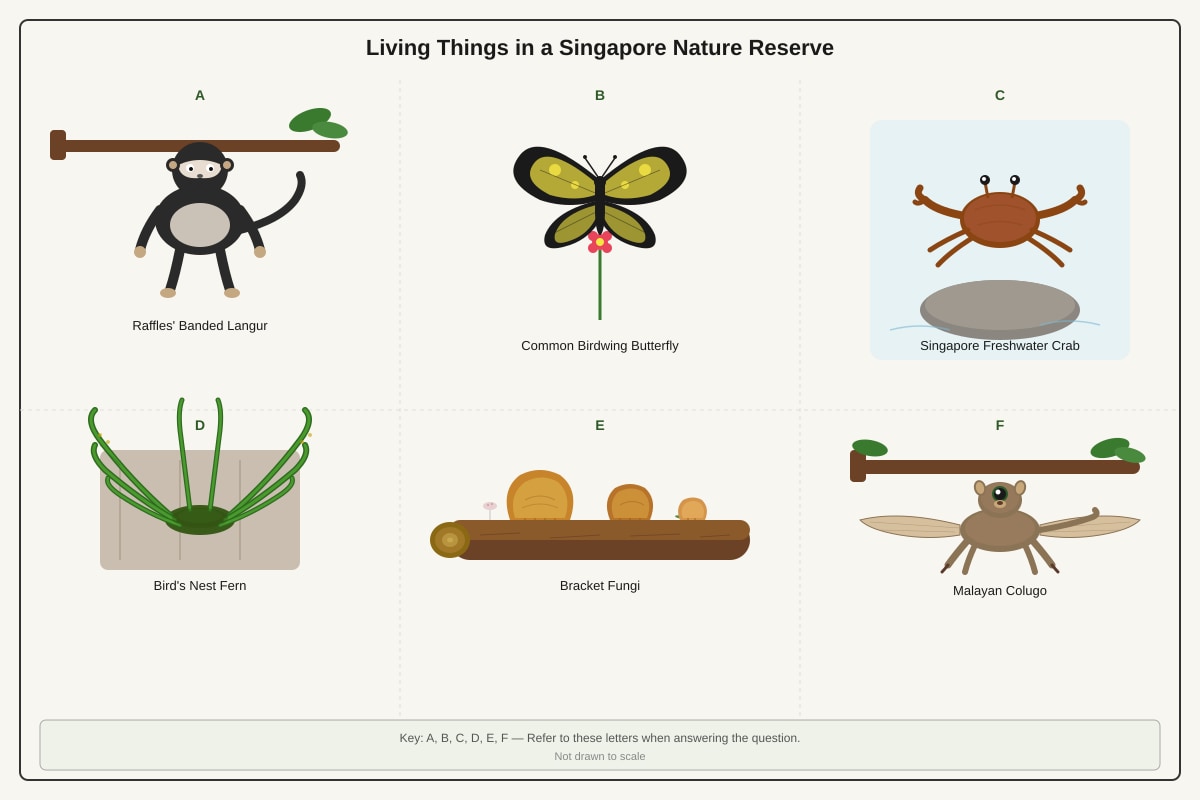
| Bird's Nest Fern | Raffles' Banded Langur | Bracket Fungi |
| Common Birdwing Butterfly | ||
| Singapore Freshwater Crab | ||
| Malayan Colugo |
Plants: Bird's Nest Fern (1). Animals: Raffles' Banded Langur, Common Birdwing Butterfly, Singapore Freshwater Crab, Malayan Colugo (4). Fungi: Bracket Fungi (1).
(b) Example answer (2 marks — 1 mark for adaptation, 1 mark for explanation):
Animal chosen: Common Birdwing Butterfly
Adaptation: Brightly coloured wings with warning patterns
How it helps: The bright colours warn predators that the butterfly is poisonous/distasteful, so predators avoid eating it, increasing its survival.
Other acceptable answers:
- Raffles' Banded Langur: Long limbs and tail for brachiation (swinging between trees) — helps move quickly through forest canopy to find food and escape predators.
- Singapore Freshwater Crab: Flattened body and strong claws — helps hide under rocks in streams and catch prey/defend itself.
- Malayan Colugo: Patagium (gliding membrane) — allows it to glide between trees to escape predators and access food without descending to ground.
Marking note: Must name a specific structural adaptation (body part/feature) and explain its survival function. Behavioural adaptations (e.g., "hides in burrow") are not structural.
End of Answer Key