From Real Exams Quiz
Primary 4 Science Systems Quiz
Free P4 Science Systems quiz, Nemo3 Exam version, with questions, answers, and syllabus-aligned practice for Singapore students.
These static practice materials are generated from the site's syllabus and paper-generation workflow, with source and model context shown so students and parents can evaluate the material before use.
Questions
Free quiz and exam paper access
Enter your details to view this paper
Your access is remembered on this device.
Answers
Primary 4 Science Quiz - Systems (Answer Key)
Total Marks: 40
Section A: Multiple-Choice Questions (10 marks)
1. Answer: (3) Absorbs water and minerals from the soil
Marks: 1
Explanation: Roots anchor the plant and absorb water and mineral salts from the soil. Making food is the function of leaves (photosynthesis). Transporting water is the function of the stem. Supporting the plant upright is mainly the function of the stem, though roots provide anchorage.
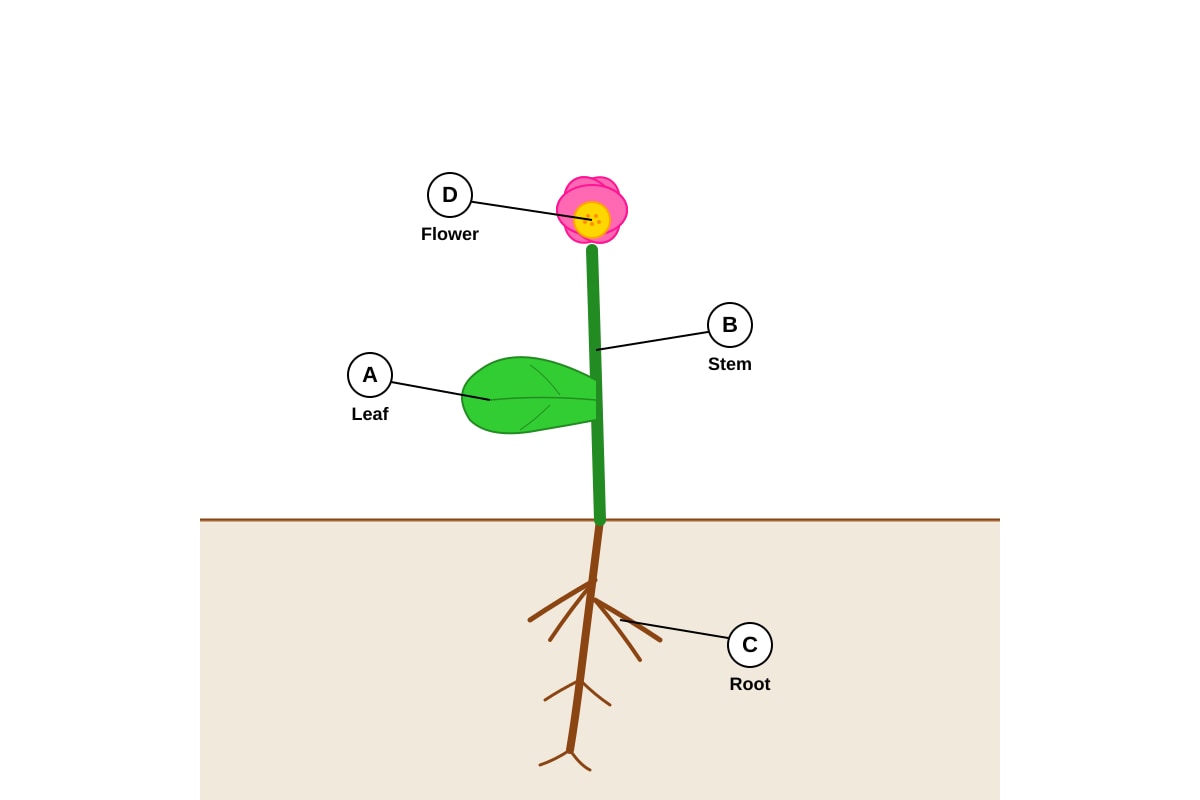
2. Answer: (2) B
Marks: 1
Explanation: The stem contains water-carrying tubes (xylem) and food-carrying tubes (phloem) that transport water, mineral salts, and food to all parts of the plant. Part B is the stem.
3. Answer: (3) Mouth
Marks: 1
Explanation: Digestion begins in the mouth where teeth chew food into smaller pieces and salivary glands secrete saliva containing enzymes (amylase) that start breaking down starch into simpler sugars.
4. Answer: (2) Stomach
Marks: 1
Explanation: The stomach wall produces gastric juice containing hydrochloric acid and enzymes (like pepsin) that digest proteins. The liver produces bile, the pancreas produces pancreatic juice, and salivary glands produce saliva.
5. Answer: (1) mouth; stomach
Marks: 1
Explanation: The gullet (oesophagus) is a muscular tube that connects the mouth to the stomach. It moves food down by peristalsis (rhythmic contractions). No digestion occurs in the gullet.
6. Answer: (3) It completes digestion and absorbs digested food into the blood.
Marks: 1
Explanation: The small intestine receives digestive juices from the pancreas and bile from the liver to complete digestion. Its inner wall has villi (finger-like projections) that increase surface area for absorption of digested nutrients into the bloodstream. Water absorption is the main function of the large intestine.
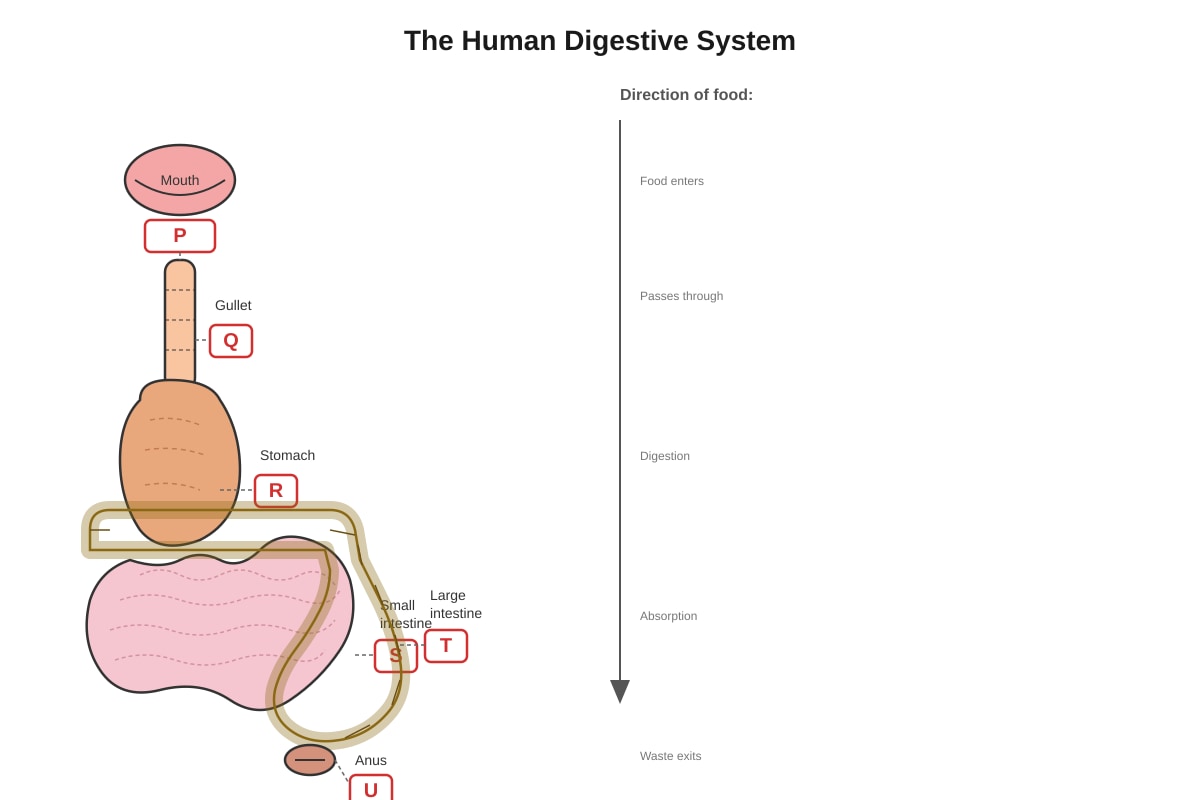
7. Answer: (3) S
Marks: 1
Explanation: Part S is the small intestine, where most absorption of digested food (nutrients) into the blood takes place due to the presence of villi.
8. Answer: (3) Gullet
Marks: 1
Explanation: The gullet (oesophagus) only transports food from the mouth to the stomach by peristalsis. It does not produce any digestive juices. Salivary glands produce saliva, the stomach produces gastric juice, and the pancreas produces pancreatic juice.
9. Answer: (2) Absorbs water from undigested food
Marks: 1
Explanation: The large intestine absorbs water and some mineral salts from the undigested food matter, forming semi-solid waste (faeces) which is stored in the rectum before removal through the anus.
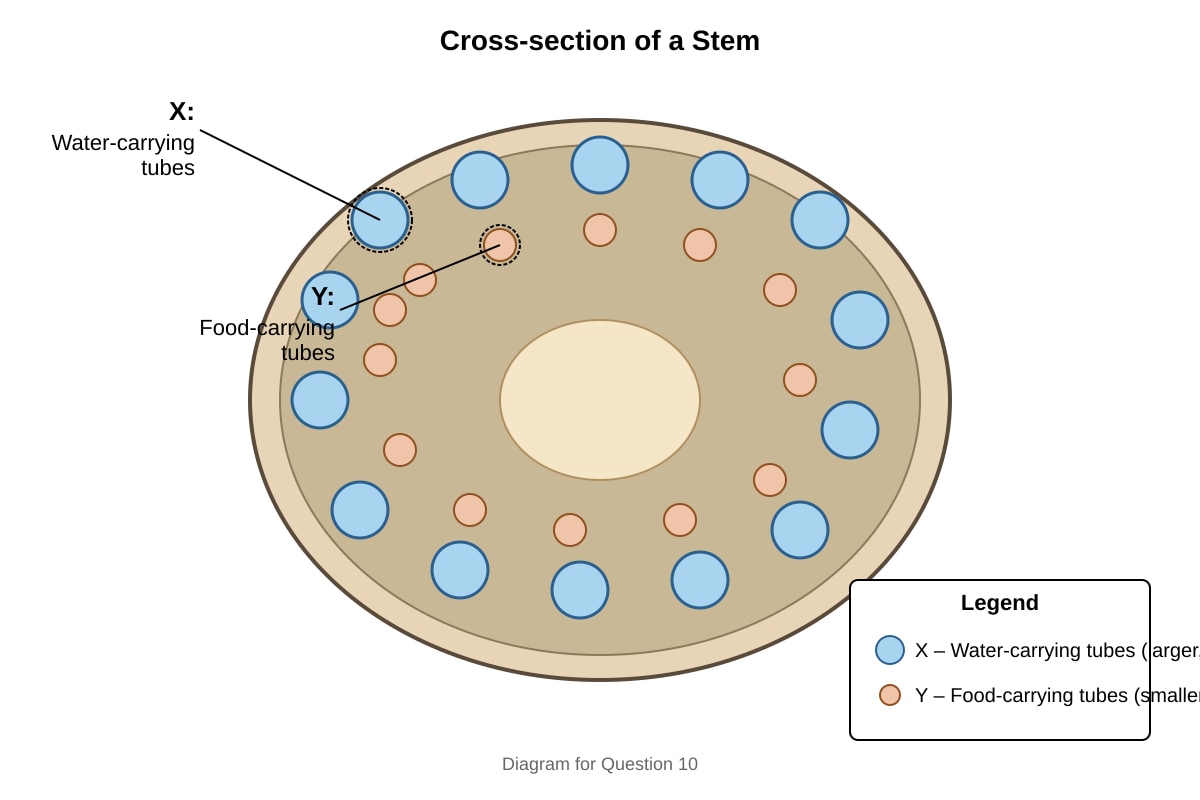
10. Answer: (1) Tube X carries water, Tube Y carries food
Marks: 1
Explanation: In a stem cross-section, the water-carrying tubes (xylem) are typically larger and located more towards the centre/inner side, while food-carrying tubes (phloem) are smaller and located towards the outer side. However, the key concept is that water-carrying tubes transport water and mineral salts from roots to leaves, and food-carrying tubes transport food from leaves to all parts.
Section B: Structured Questions (12 marks)
11.
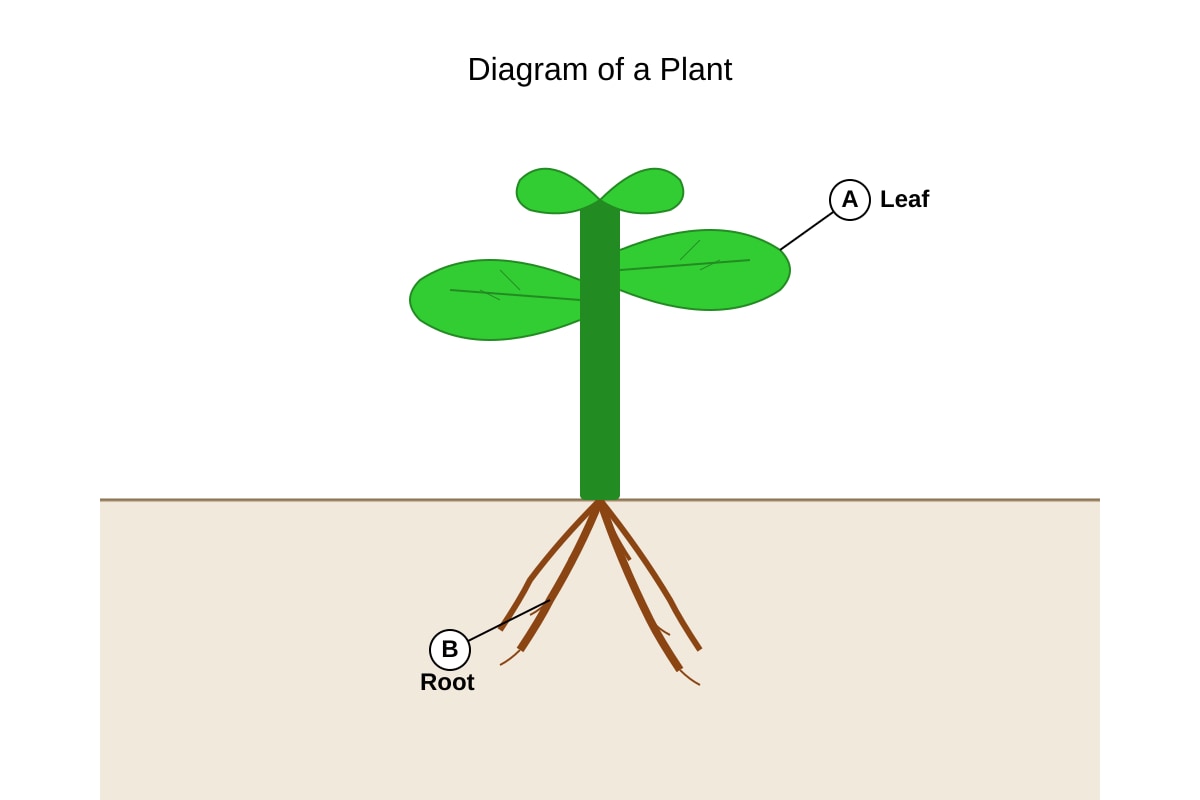
(a) Answer: Makes food for the plant (through photosynthesis). / Traps light energy to make food.
Marks: 1
Explanation: Leaves contain chlorophyll in chloroplasts that trap light energy to convert carbon dioxide and water into food (sugar) and oxygen during photosynthesis.
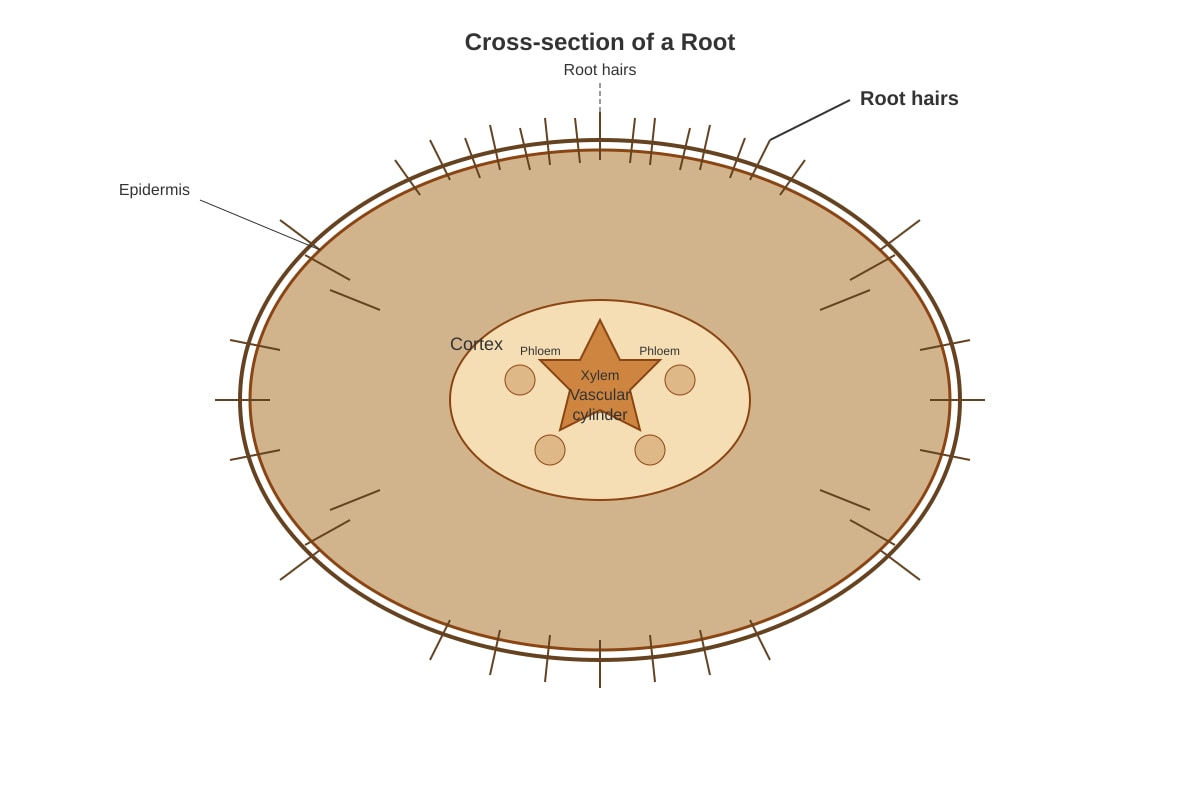
(b) Answer: Absorbs water and mineral salts from the soil. / Anchors the plant firmly to the ground.
Marks: 1
Explanation: Roots have root hairs that increase surface area for absorption of water and dissolved mineral salts. They also hold the plant in place.
12.
Answer:
| Plant Part | Function |
|---|---|
| Leaf | Makes food for the plant (photosynthesis) / Traps light to make food |
| Stem | Transports water and food to all parts of the plant / Supports the plant upright |
| Root | Absorbs water and mineral salts from the soil / Anchors the plant |
Marks: 2 (1 mark for each correct function, any two correct for full marks; typically 1 mark per row)
Explanation: Each plant part has specific functions. Leaf: photosynthesis. Stem: transport (water up, food down) and support. Root: absorption and anchorage.
13.
(a) Answer: Gastric juice
Marks: 1
Explanation: The stomach wall secretes gastric juice which contains hydrochloric acid and enzymes like pepsin to digest proteins.
(b) Answer: Digestion is completed and digested food is absorbed into the blood. / Food is mixed with digestive juices from the pancreas and bile, digestion is completed, and nutrients are absorbed.
Marks: 1
Explanation: The small intestine receives pancreatic juice and bile to complete digestion of carbohydrates, proteins, and fats. The digested nutrients are then absorbed through the villi into the bloodstream.
14.
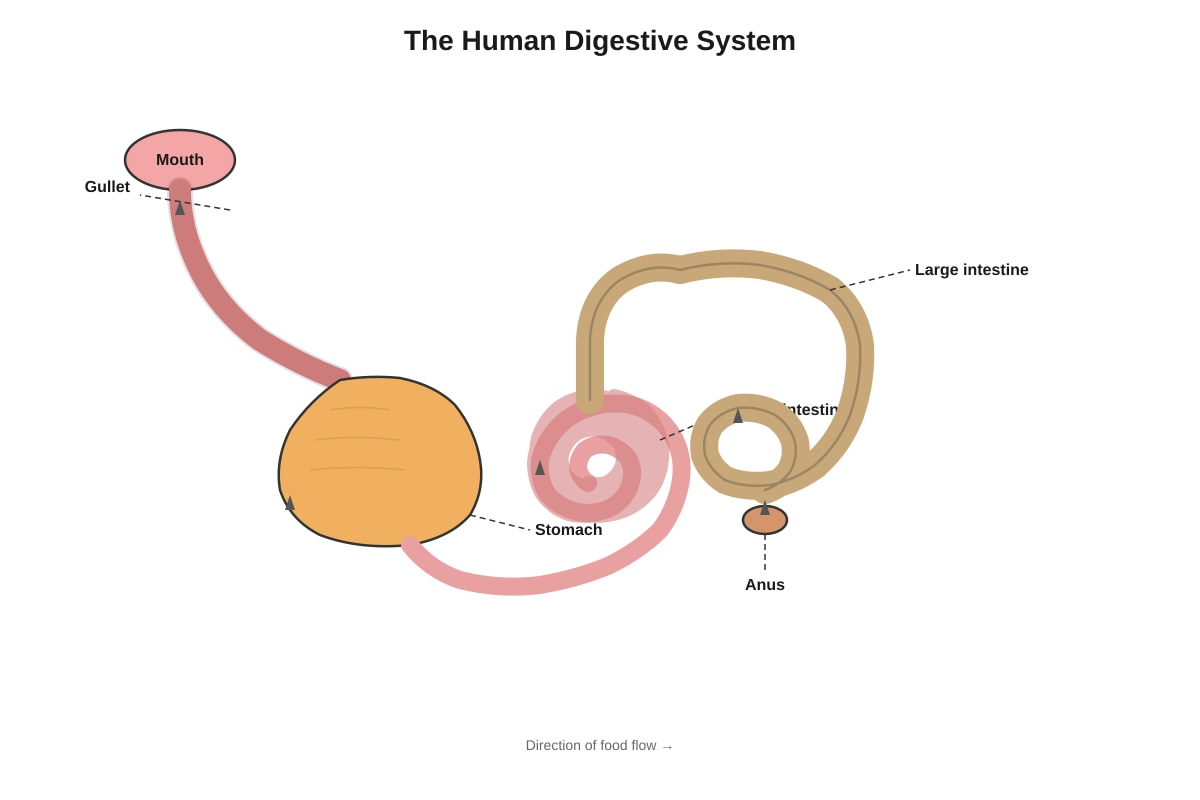
(a) Answer: Stomach
Marks: 1
Explanation: After passing through the gullet, food reaches the stomach (organ A) where it is churned and mixed with gastric juice.
(b) Answer: Large intestine
Marks: 1
Explanation: After the small intestine (organ B), undigested food passes to the large intestine (organ C) where water is absorbed.
15.
Answer:
| Organ | Digestion takes place | No digestion takes place |
|---|---|---|
| Mouth | ✓ | |
| Gullet | ✓ | |
| Stomach | ✓ | |
| Small intestine | ✓ | |
| Large intestine | ✓ |
Marks: 2 (1 mark for 3-4 correct, 2 marks for all 5 correct)
Explanation: Digestion occurs in the mouth (saliva), stomach (gastric juice), and small intestine (pancreatic juice, bile). The gullet only transports food. The large intestine only absorbs water; no digestive juices are secreted there.
16.
(a) Answer: Root hairs
Marks: 1
Explanation: Root hairs are tiny, hair-like extensions of root epidermal cells that greatly increase the surface area of the root.
(b) Answer: They increase the surface area of the root for absorption of water and mineral salts.
Marks: 1
Explanation: The large surface area provided by numerous root hairs allows more contact with soil water, enabling faster and more efficient absorption of water and dissolved minerals.
Section C: Open-Ended Questions (18 marks)
17.
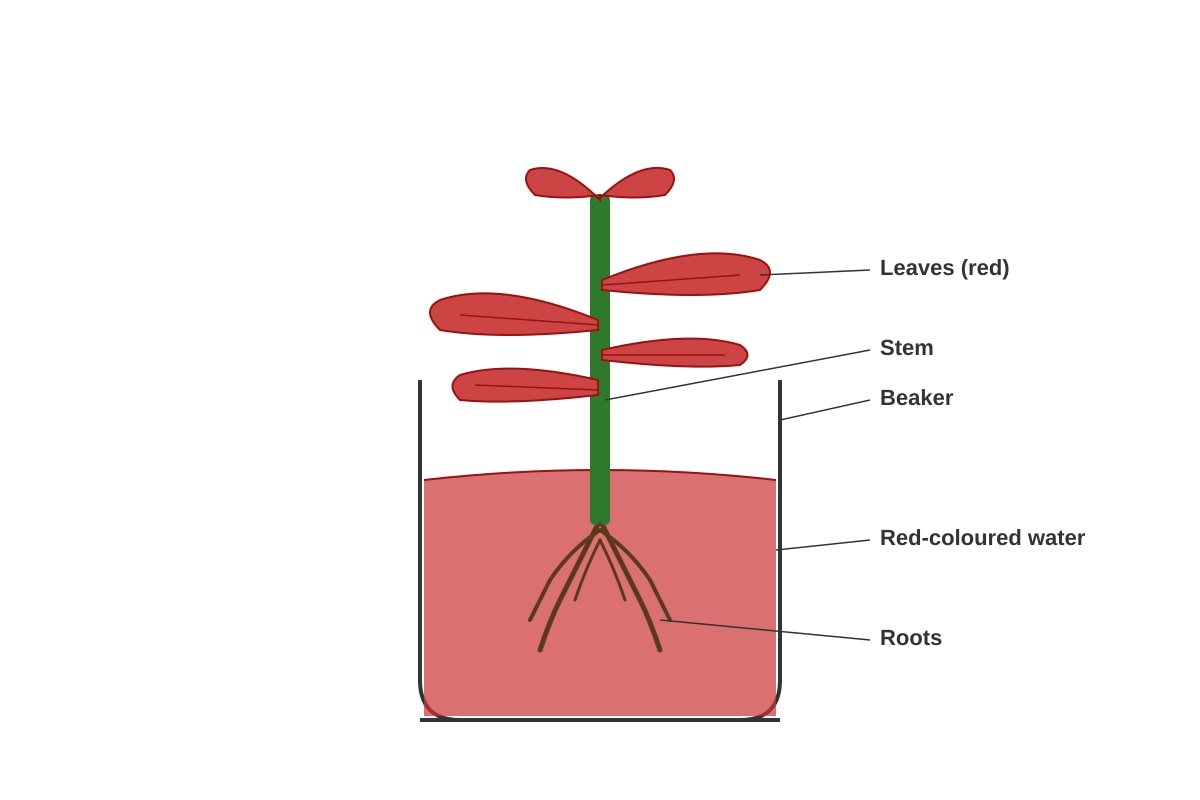
(a) Answer: The roots absorbed the red-coloured water. The water-carrying tubes in the stem transported the red-coloured water from the roots to the leaves.
Marks: 2 (1 mark for absorption by roots, 1 mark for transport by water-carrying tubes)
Explanation: Water (with dissolved red dye) is absorbed by root hairs, enters the water-carrying tubes (xylem) in the root, moves up through the stem's water-carrying tubes, and reaches the leaves, causing them to turn red. This demonstrates the transport function of the stem.
(b) Answer: Water-carrying tubes (xylem)
Marks: 1
Explanation: Water and dissolved substances (like the red dye) are transported upwards from roots to leaves through the water-carrying tubes.
18.
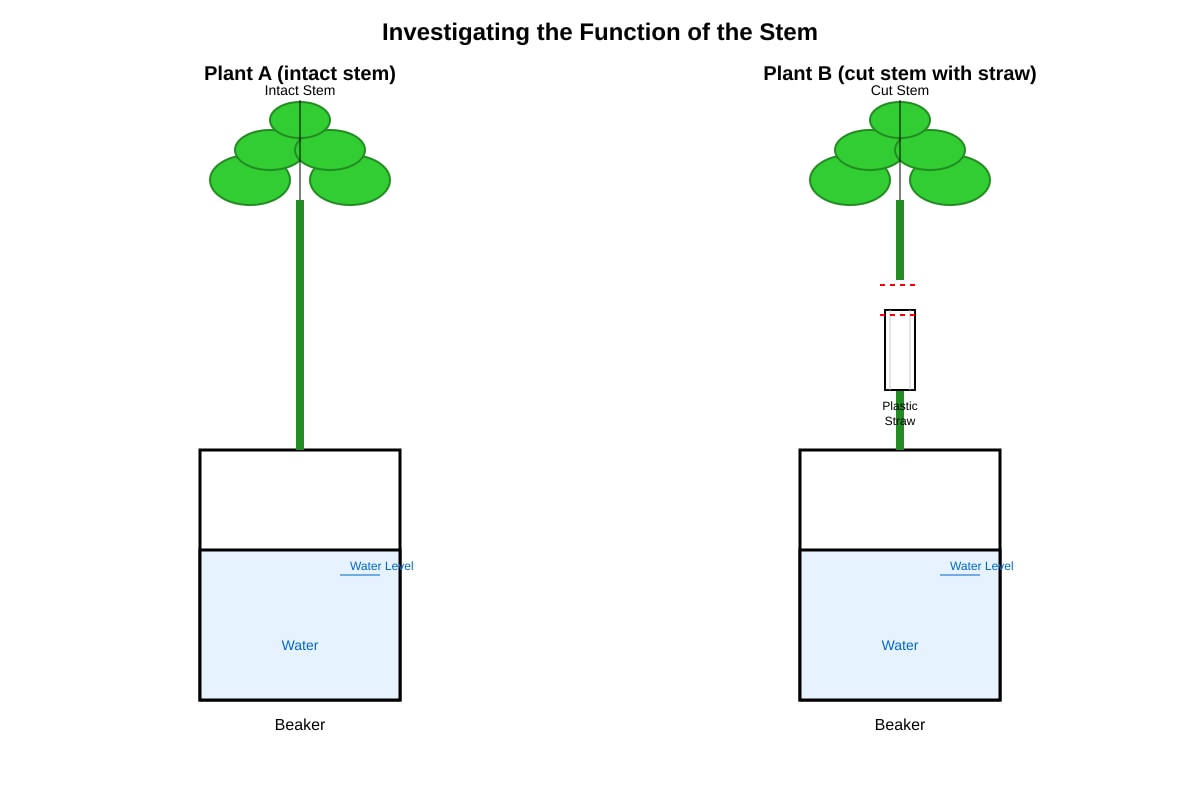
(a) Answer: To find out if the stem is needed to transport water to the leaves. / To investigate the function of the stem in transporting water.
Marks: 1
Explanation: The experiment compares a plant with an intact stem (Plant A) to one with a cut stem bridged by a straw (Plant B) to test if the stem's transport tubes are necessary for water movement.
(b) Answer: The stem of Plant B was cut, so the water-carrying tubes were broken. Water could not be transported from the roots to the leaves through the plastic straw, so the leaves wilted. Plant A had an intact stem with unbroken water-carrying tubes, so water reached its leaves and they stayed green.
Marks: 2 (1 mark for identifying broken water-carrying tubes in Plant B, 1 mark for explaining wilting due to lack of water transport)
Explanation: Cutting the stem severs the water-carrying tubes (xylem). A plastic straw cannot replace the function of these tubes. Without water transport, leaves lose water through transpiration faster than it is replaced, causing wilting.
19.
(a) Answer: Small intestine
Marks: 1
Explanation: The small intestine is where digestion is completed (with help from pancreatic juice and bile) and where almost all absorption of digested nutrients into the bloodstream occurs via villi.
(b) Answer: In the large intestine, water is absorbed from the undigested food. The remaining undigested food becomes semi-solid waste (faeces) which is stored in the rectum before being removed through the anus.
Marks: 2 (1 mark for water absorption, 1 mark for formation/removal of waste)
Explanation: The large intestine's main functions are water absorption and temporary storage of waste. No digestion occurs here.
20.
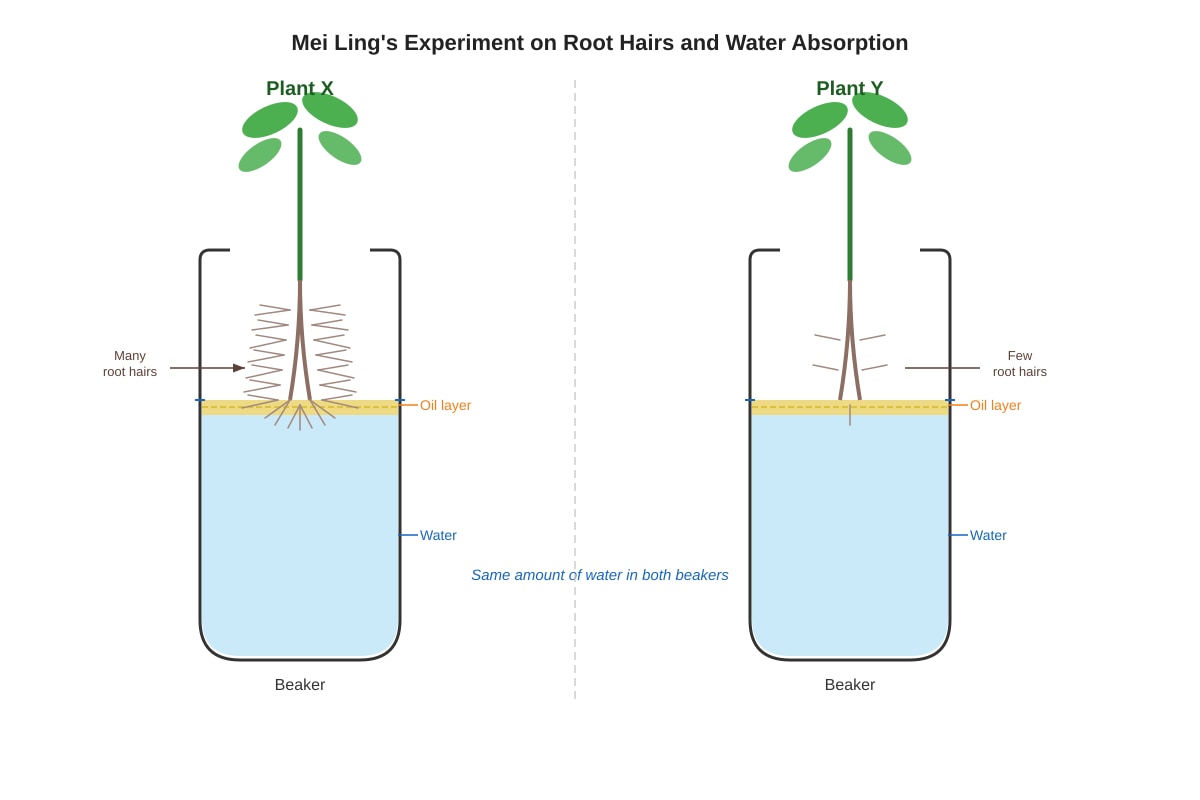
(a) Answer: The number of root hairs (many vs few)
Marks: 1
Explanation: The changed (independent) variable is the factor that is deliberately changed by the experimenter. Here, Mei Ling changes the number of root hairs between Plant X and Plant Y.
(b) Answer: The amount of water absorbed (or the water level in the beaker after two days)
Marks: 1
Explanation: The measured (dependent) variable is the factor that is observed or measured to see the effect of the changed variable. The water level drop indicates how much water was absorbed.
(c) Answer: To prevent evaporation of water from the beakers / To ensure any drop in water level is due to absorption by the plant only.
Marks: 1
Explanation: The oil layer acts as a barrier to stop water from evaporating into the air. This ensures a fair test — any difference in water level is due to the plant's roots absorbing water, not evaporation.
(d) Answer: The more root hairs a plant has, the more water it absorbs. / Root hairs increase the amount of water absorbed by the plant.
Marks: 1
Explanation: Plant X (many root hairs) absorbed more water (lower water level) than Plant Y (few root hairs). This shows that root hairs increase the surface area for absorption, allowing more water to be taken in.