From Real Exams Quiz
Primary 4 Science Systems Quiz
Free P4 Science Systems quiz, HY3 Exam version, with questions, answers, and syllabus-aligned practice for Singapore students.
These static practice materials are generated from the site's syllabus and paper-generation workflow, with source and model context shown so students and parents can evaluate the material before use.
Questions
Free quiz and exam paper access
Enter your details to view this paper
Your access is remembered on this device.
Answers
Primary 4 Science Quiz - Systems (Answer Key)
Total Marks: 40
Topic: Systems (Plant System & Human Digestive System)
Section A Answers (1 mark each)
-
D) Stomach
Teaching note: Stomach is part of the human digestive system, not a plant part. Plant system parts are leaf, stem, root. -
B) absorb water and minerals from the soil
Teaching note: Roots anchor the plant and take in water and dissolved minerals from the soil for the plant to use. -
B) Digestive system
Teaching note: The digestive system breaks food down so the body can absorb and use it for energy and growth. -
C) gullet
Teaching note: After chewing in the mouth, food goes down the gullet (also called food pipe) into the stomach. -
C) Leaf
Teaching note: Leaves contain green material that uses sunlight to make food for the plant (simple understanding at P4). -
B) human digestive system
Teaching note: Stomach is an organ in the human digestive system, not in plants or other systems listed. -
B) Carry water and food to different parts of the plant
Teaching note: Stem acts like a transport tube between roots and leaves. -
B) absorb nutrients from digested food
Teaching note: Small intestine absorbs useful nutrients into the body after stomach breaks food down. -
C) Excretory
Teaching note: P4 names five systems: digestive, respiratory, circulatory, skeletal, muscular. Excretory is not in the P4 list. -
B) Root
Teaching note: Roots hold the plant firmly in the soil so it does not fall.
Section B Answers (2 marks each)
-
Function of leaf: Makes food for the plant (using sunlight). (2 marks)
Marking: 1 mark for "makes food", 1 mark for mention of sunlight or general food production.
Teaching note: Leaf is the food-making factory of the plant system. -
Two systems and functions (2 marks, 1 per correct pair):
Example: Respiratory – helps us breathe (take in air). Circulatory – carries blood around body. Skeletal – supports body. Muscular – helps us move.
Teaching note: Choose any two from digestive, respiratory, circulatory, skeletal, muscular and give a correct function. -
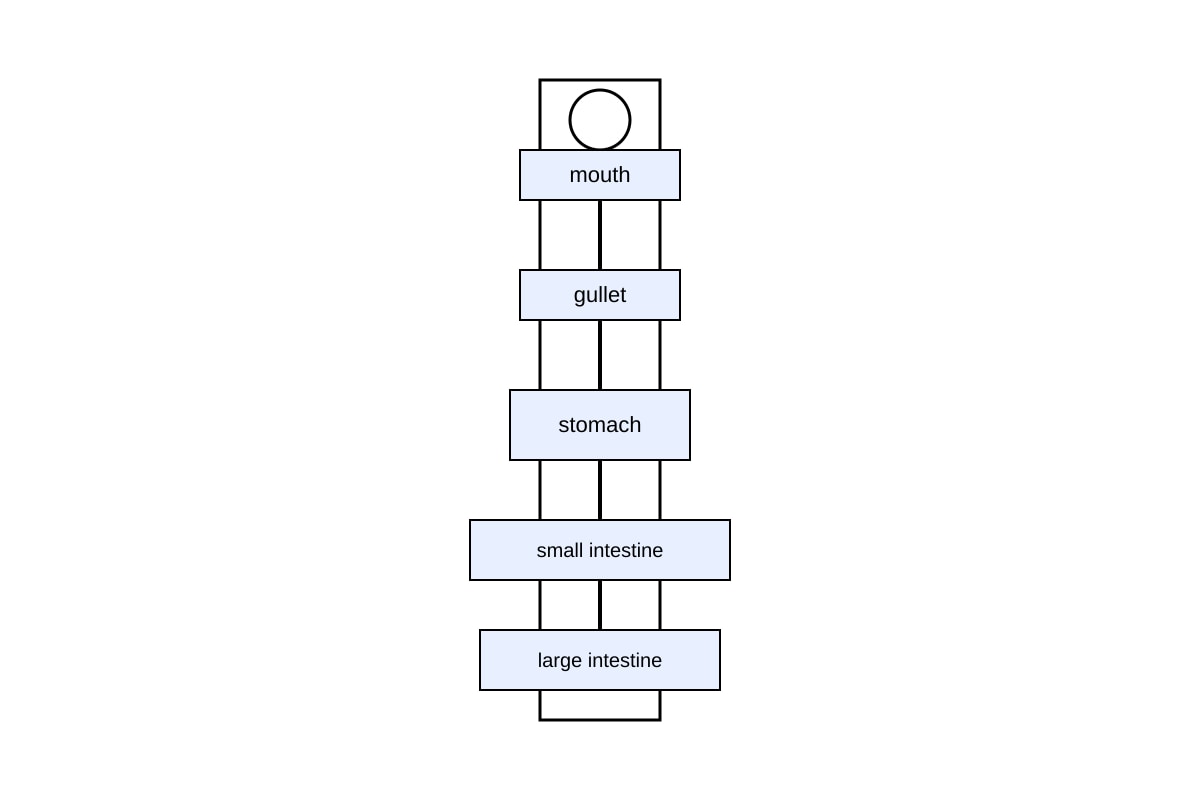
Correct order: mouth → gullet → stomach → small intestine → large intestine (2 marks)
Marking: 1 mark for first three correct, 1 mark for last two correct.
Teaching note: Food travels in this sequence in the digestive system. -
Explanation: Root absorbs water and minerals from soil and holds plant in ground, so plant gets what it needs and stays upright. (2 marks)
Marking: 1 mark for absorb water/minerals, 1 mark for anchor/support. -
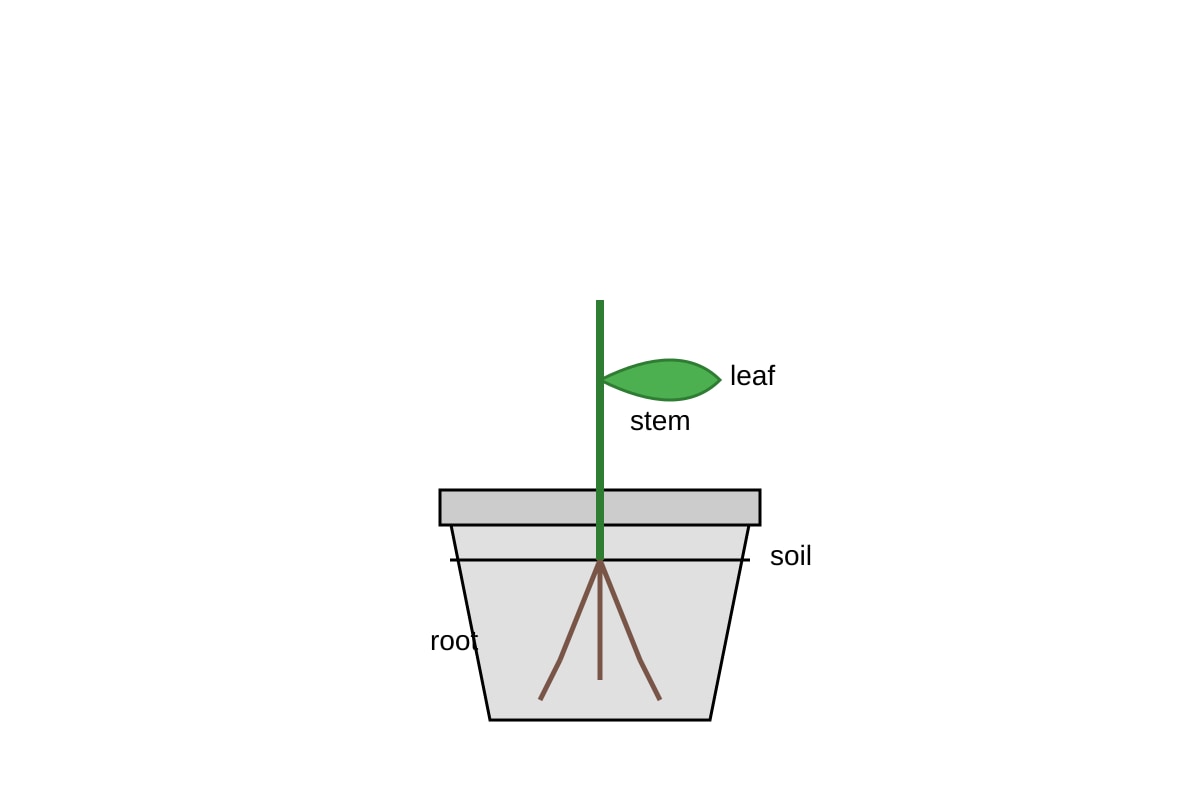
Water absorber: root (1 mark); Food maker: leaf (1 mark)
Teaching note: Diagram shows root below soil (absorbs water), leaf above (makes food). Must match labels in placeholder Q15-fig1. -
Function of large intestine: Absorbs water from undigested food / stores waste before it leaves body. (2 marks)
Marking: 1 for water absorption, 1 for waste storage mention.
Section C Answers
-
(a) Digestive system (1 mark)
(b) It breaks food into small nutrients the body can use for energy and growth. (1 mark)
Teaching note: Without it, body cannot get food energy. -
(a) Any two: leaf, stem, root (1 mark total)
(b) Functions: e.g. leaf–makes food; stem–carries water/food; root–absorbs water (1 mark for correct matching)
Marking: 0.5 each if two functions correct. -
(a) Gullet (1 mark)
(b) Small intestine (1 mark)
Teaching note: Use Q19-fig1 labels; gullet links mouth to stomach, small intestine is long coiled part after stomach. -
(a) Any three: digestive, respiratory, circulatory, skeletal, muscular (1 mark)
(b) Muscles pull on bones to help us move / bones give support while muscles contract. (1 mark)
Teaching note: Skeletal and muscular systems work as a team for movement.