From Real Exams Quiz
Primary 4 Science Materials Quiz
Free Exam-Derived NVIDIA Nemotron 3 Ultra 550B A55B Free Primary 4 Science Materials quiz with questions and answers for Singapore students. This page is rendered as a direct URL so the questions and answers can be discovered without pressing in-page buttons.
These static practice materials are generated from the site's syllabus and paper-generation workflow, with source and model context shown so students and parents can evaluate the material before use.
Questions
Primary 4 Science Quiz - Materials
Name: ___________________________
Class: Primary 4 _______
Date: _______________
Score: ______ / 40
Duration: 45 minutes
Total Marks: 40
Instructions:
- Answer all questions.
- For Section A, choose the correct answer and write its number (1, 2, 3, or 4) in the brackets provided.
- For Section B and C, write your answers in the spaces provided.
- The number of marks for each question is shown in brackets [ ].
Section A: Multiple-Choice Questions (10 × 1 mark = 10 marks)
For each question, four options are given. Choose the correct answer and write its number (1, 2, 3, or 4) in the brackets provided.
1. Which of the following is not a property of matter? [1]
(1) Has mass
(2) Occupies space
(3) Can be seen
(4) Can be measured
2. The diagram below shows three objects made of different materials.
<image_placeholder>
id: Q2-fig1
type: diagram
linked_question: Q2
description: Three objects labelled A, B, C. Object A is a metal spoon. Object B is a wooden ruler. Object C is a plastic cup.
labels: A: metal spoon, B: wooden ruler, C: plastic cup
values: None
must_show: Three distinct objects made of metal, wood, and plastic
</image_placeholder>
Which one of the following statements is correct? [1]
(1) Object A is flexible.
(2) Object B is waterproof.
(3) Object C is transparent.
(4) Object A is a good conductor of heat.
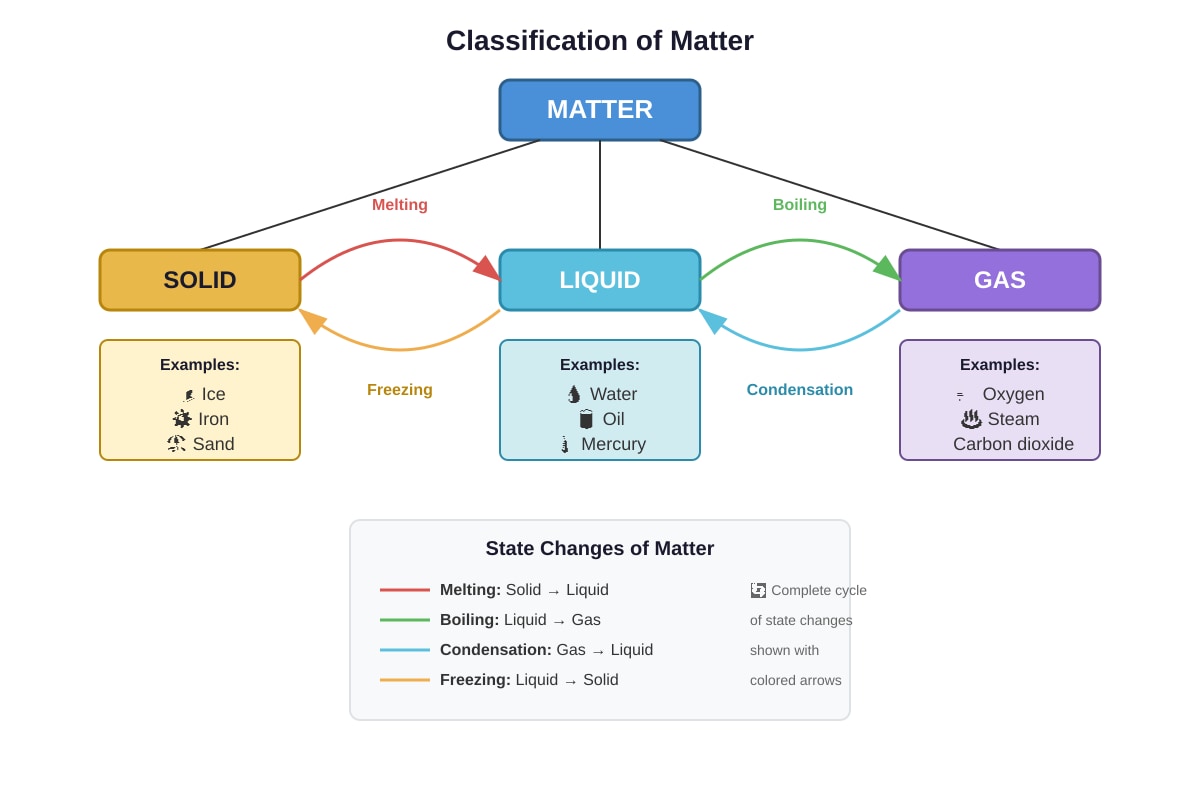
3. Matter exists in three states. Which of the following has a definite volume but no definite shape? [1]
(1) Oxygen gas
(2) Ice cube
(3) Orange juice
(4) Steel nail
4. Study the classification table below.
| Group X | Group Y |
|---|---|
| Sponge | Metal key |
| Cotton wool | Glass marble |
| Rubber band | Ceramic tile |
What property is used to classify the objects into Group X and Group Y? [1]
(1) Flexibility
(2) Transparency
(3) Strength
(4) Waterproof
5. Four materials are tested for their ability to absorb water. The results are shown below.
| Material | Mass before test (g) | Mass after test (g) |
|---|---|---|
| A | 10 | 25 |
| B | 10 | 10 |
| C | 10 | 18 |
| D | 10 | 11 |
Which material is most suitable for making a raincoat? [1]
(1) A
(2) B
(3) C
(4) D
6. The diagram below shows a syringe with its nozzle blocked. The plunger is pulled back.
<image_placeholder>
id: Q6-fig1
type: diagram
linked_question: Q6
description: A syringe with nozzle blocked by a finger. The plunger is pulled outward. Air inside the syringe expands.
labels: Plunger pulled back, Nozzle blocked, Air inside syringe
values: None
must_show: Syringe with blocked nozzle and plunger pulled back showing air expansion
</image_placeholder>
What does this experiment show about air? [1]
(1) Air has mass.
(2) Air occupies space.
(3) Air can be compressed.
(4) Air has no definite volume.
7. Which of the following objects is made of a material that is transparent, waterproof, and flexible? [1]
(1) Glass window
(2) Plastic cling wrap
(3) Metal foil
(4) Wooden chopstick
8. The diagram below shows a beaker of water placed on a hot plate. After some time, the water level decreases.
<image_placeholder>
id: Q8-fig1
type: diagram
linked_question: Q8
description: A beaker of water on a hot plate. Steam rising. Water level lower than initial mark.
labels: Hot plate, Beaker, Water, Steam, Initial water level, Final water level
values: None
must_show: Beaker on hot plate with steam rising and decreased water level
</image_placeholder>
What process causes the water level to decrease? [1]
(1) Freezing
(2) Melting
(3) Evaporation
(4) Condensation
9. A balloon is inflated and tied. It is then placed in a freezer for 30 minutes. When taken out, the balloon appears smaller. Which statement explains this observation? [1]
(1) The air inside the balloon lost mass.
(2) The air inside the balloon contracted.
(3) The balloon material became heavier.
(4) The air escaped from the balloon.
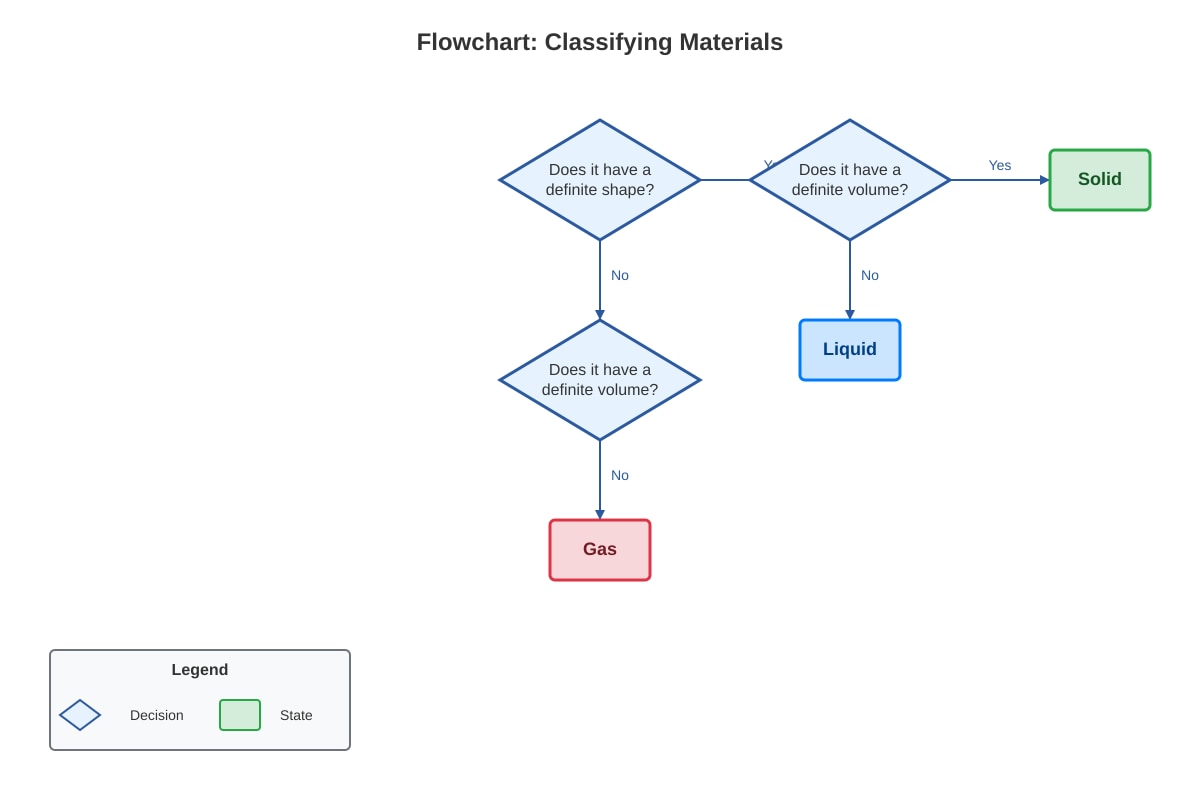
10. Study the flowchart below.
<image_placeholder> id: Q10-fig1 type: flowchart linked_question: Q10 description: Flowchart to identify state of matter. Start: Does it have a definite shape? Yes -> Solid. No -> Does it have a definite volume? Yes -> Liquid. No -> Gas. labels: Definite shape?, Definite volume?, Solid, Liquid, Gas values: None must_show: Complete flowchart with decision diamonds and three end states </image_placeholder>
Substance Z has a definite volume but no definite shape. What is the state of Substance Z? [1]
(1) Solid
(2) Liquid
(3) Gas
(4) Cannot be determined
Section B: Structured Questions (6 × 2 marks = 12 marks)
Write your answers in the spaces provided.
11. The diagram below shows three containers of different shapes, each containing 200 cm³ of water.
<image_placeholder>
id: Q11-fig1
type: diagram
linked_question: Q11
description: Three containers of different shapes (tall narrow, short wide, irregular) each filled with water to 200 cm³ mark.
labels: Container A, Container B, Container C, 200 cm³ water level
values: Volume = 200 cm³ for each
must_show: Three different shaped containers with same volume of water
</image_placeholder>
(a) State the property of liquids shown by the diagram above. [1]
(b) If the water from Container A is poured into Container B, will the volume of water change? Explain your answer. [1]
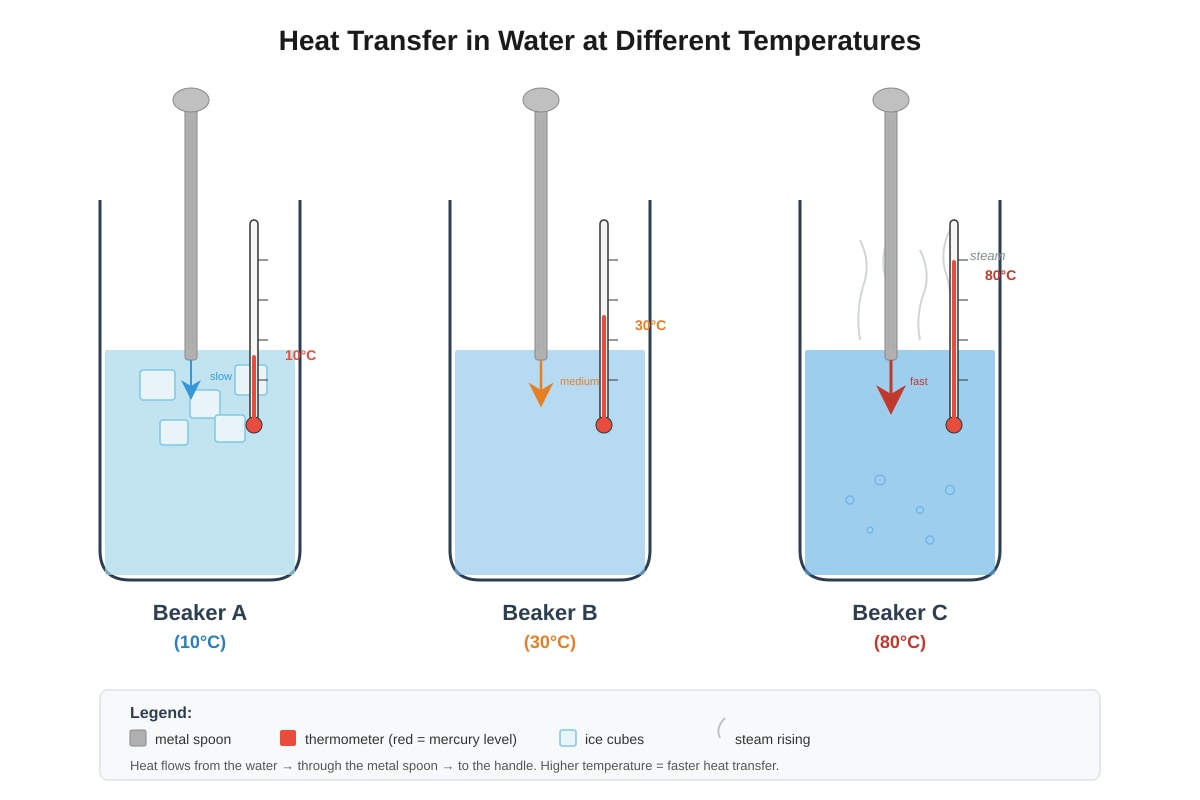
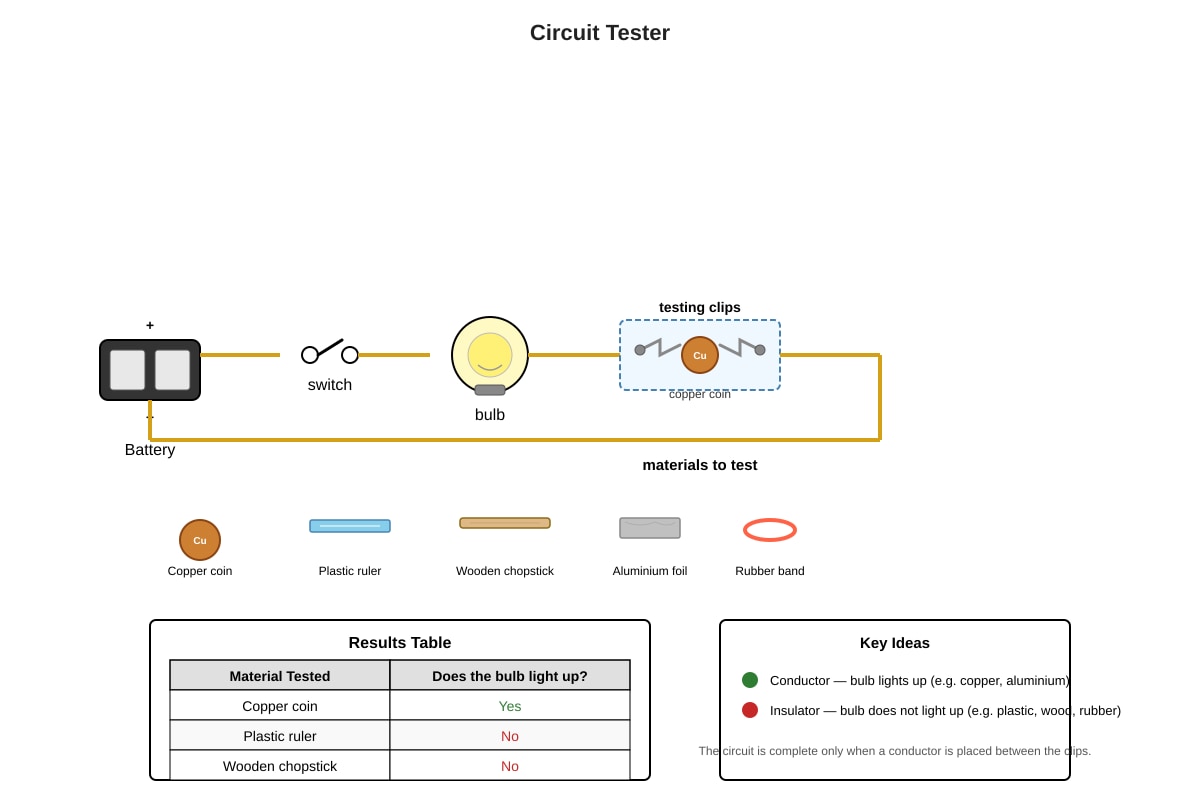
12. Jane wants to choose a material to make a handle for a frying pan. She tests four materials (W, X, Y, Z) by placing one end in hot water and measuring the temperature at the other end after 5 minutes.
| Material | Temperature at other end (°C) |
|---|---|
| W | 35 |
| X | 48 |
| Y | 28 |
| Z | 42 |
(a) Which material (W, X, Y, or Z) is the poorest conductor of heat? [1]
(b) Explain why this material is the most suitable for making the frying pan handle. [1]
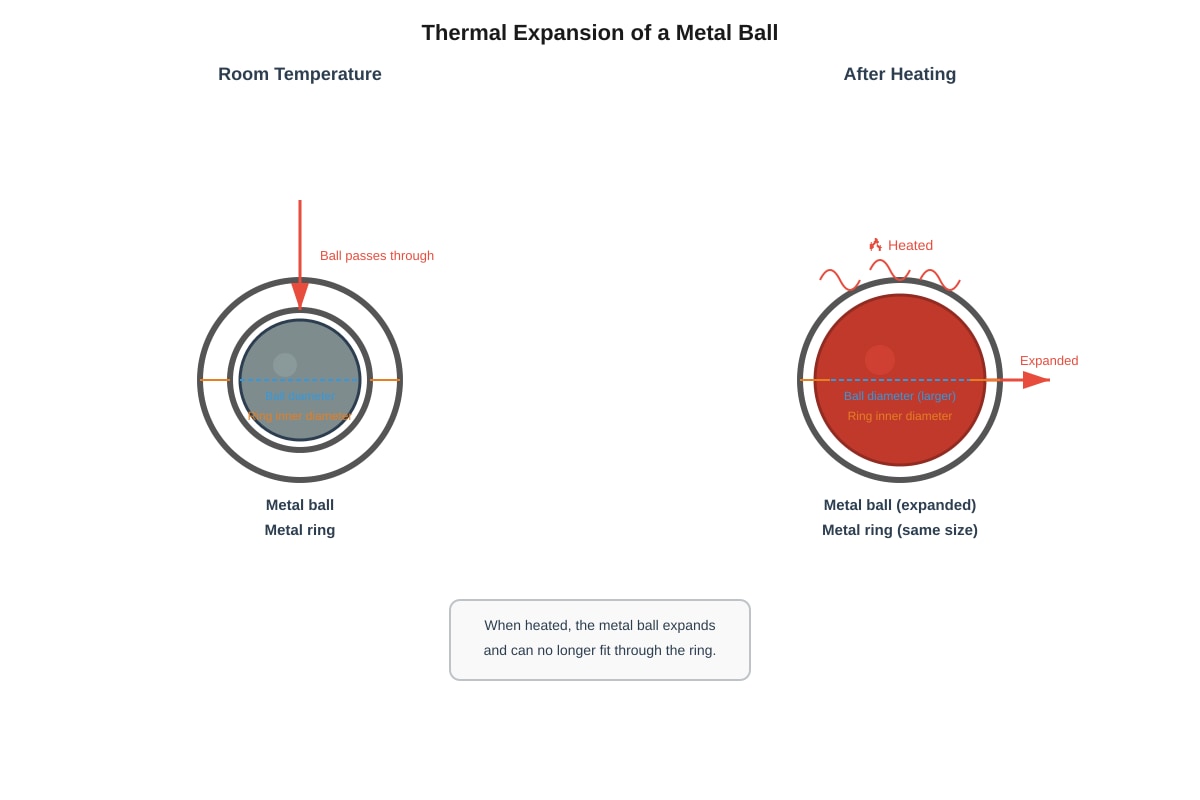
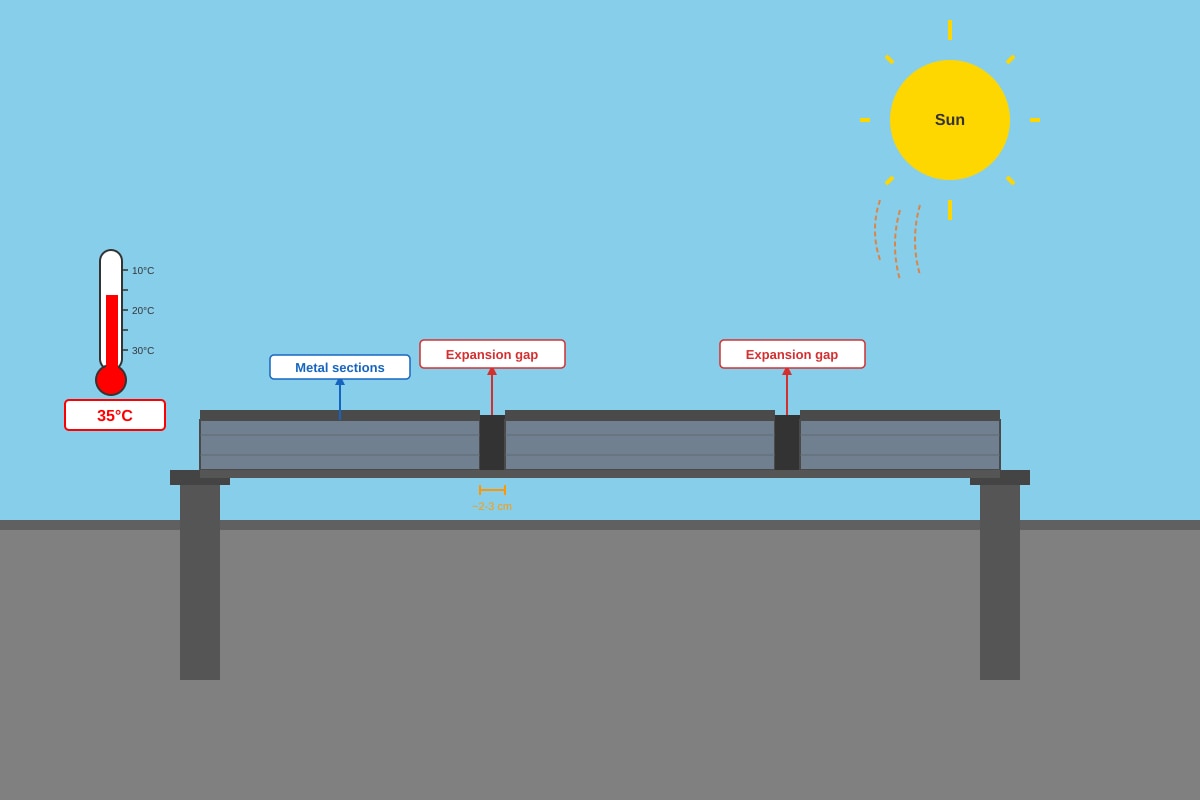
13. The diagram below shows a metal ball and a metal ring. At room temperature, the ball passes through the ring easily. When the ball is heated, it cannot pass through the ring.
<image_placeholder>
id: Q13-fig1
type: diagram
linked_question: Q13
description: Two diagrams side by side. Left: Metal ball passing through metal ring at room temperature. Right: Heated metal ball cannot pass through same ring.
labels: Room temperature: ball passes through, Heated: ball stuck, Metal ball, Metal ring
values: None
must_show: Ball passing through ring at room temp; ball too large for ring when heated
</image_placeholder>
(a) What happens to the metal ball when it is heated? [1]
(b) Explain why the ball cannot pass through the ring after heating. [1]
14. The table below shows the properties of four materials.
| Material | Flexible | Waterproof | Transparent | Strong |
|---|---|---|---|---|
| P | Yes | Yes | No | Yes |
| Q | No | Yes | Yes | No |
| R | Yes | No | No | Yes |
| S | No | Yes | Yes | Yes |
(a) Which material (P, Q, R, or S) is most suitable for making a raincoat? [1]
(b) State one property from the table that makes this material suitable for a raincoat. [1]
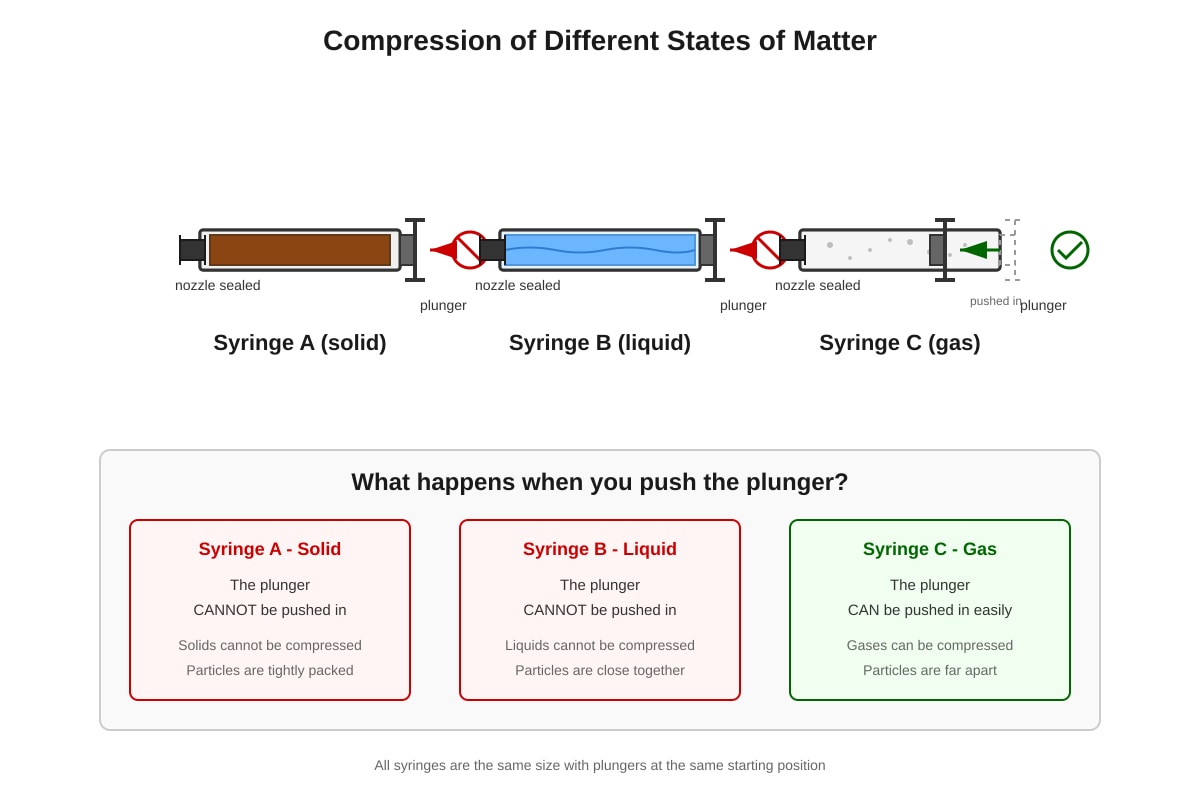
15. A syringe contains 30 cm³ of air. The nozzle is blocked and the plunger is pushed in until the air occupies 20 cm³.
(a) What is the new volume of air in the syringe? [1]
(b) State the property of gases demonstrated by this experiment. [1]
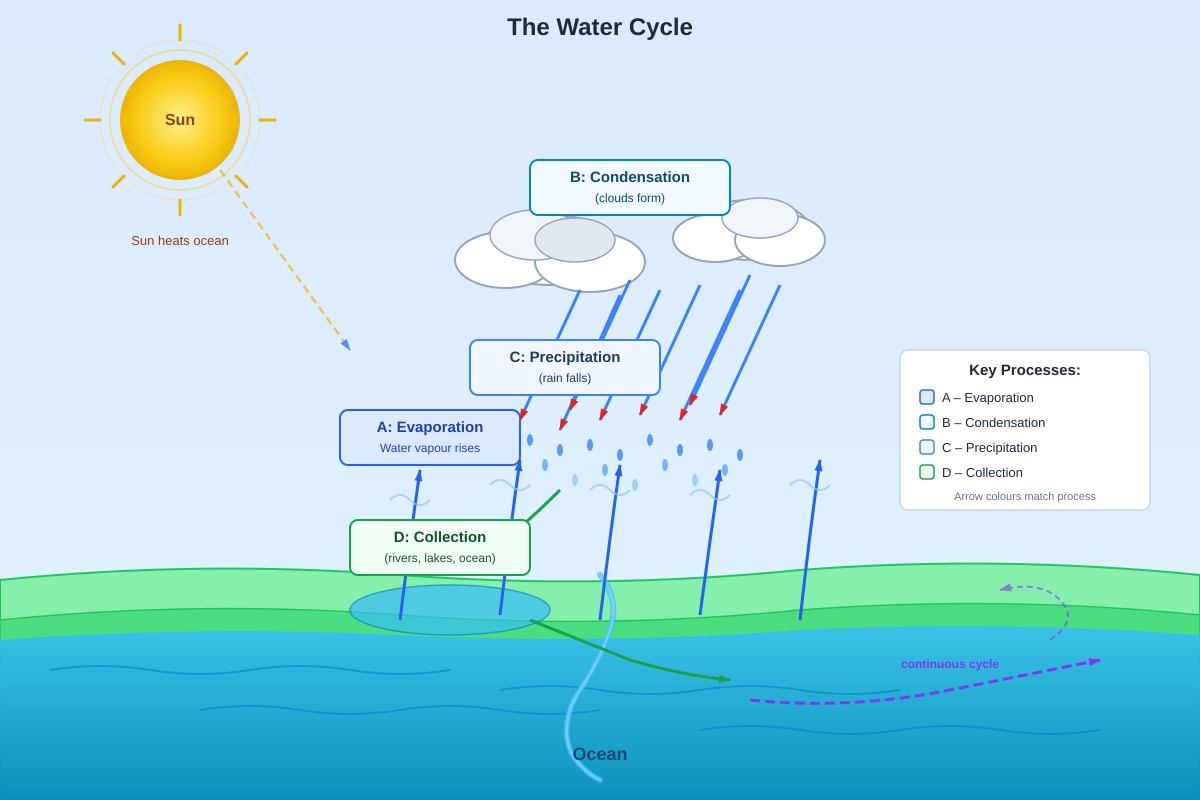
16. The diagram below shows the water cycle.
<image_placeholder>
id: Q16-fig1
type: diagram
linked_question: Q16
description: Water cycle diagram showing evaporation from sea, condensation forming clouds, precipitation as rain, collection in rivers/sea.
labels: Sun, Evaporation, Condensation, Clouds, Precipitation/Rain, Collection, Sea, River
values: None
must_show: Complete water cycle with all four processes labelled
</image_placeholder>
(a) Name the process that occurs at A (water vapour rising from the sea). [1]
(b) Name the process that occurs at B (water vapour turning into water droplets in clouds). [1]
Section C: Open-Ended Questions (4 × 3 marks + 2 × 4 marks = 20 marks)
Write your answers in the spaces provided.
17. Peter wants to find out which material (cotton, polyester, wool, or silk) absorbs the most water. He cuts four pieces of fabric of the same size and mass. He places each piece in a beaker of water for 5 minutes, then removes and weighs them.
(a) State one variable that Peter must keep the same to ensure a fair test. [1]
(b) State the changed variable (independent variable) in this experiment. [1]
(c) State the measured variable (dependent variable) in this experiment. [1]
18. The diagram below shows a cooking pot with a metal body and a plastic handle.
<image_placeholder>
id: Q18-fig1
type: diagram
linked_question: Q18
description: Cooking pot with metal body and plastic handle. Labels pointing to metal body and plastic handle.
labels: Metal body, Plastic handle
values: None
must_show: Pot with distinct metal body and plastic handle
</image_placeholder>
(a) Explain why the body of the pot is made of metal. [1]
(b) Explain why the handle is made of plastic. [1]
(c) Suggest one other property the plastic handle must have to be safe for use. [1]
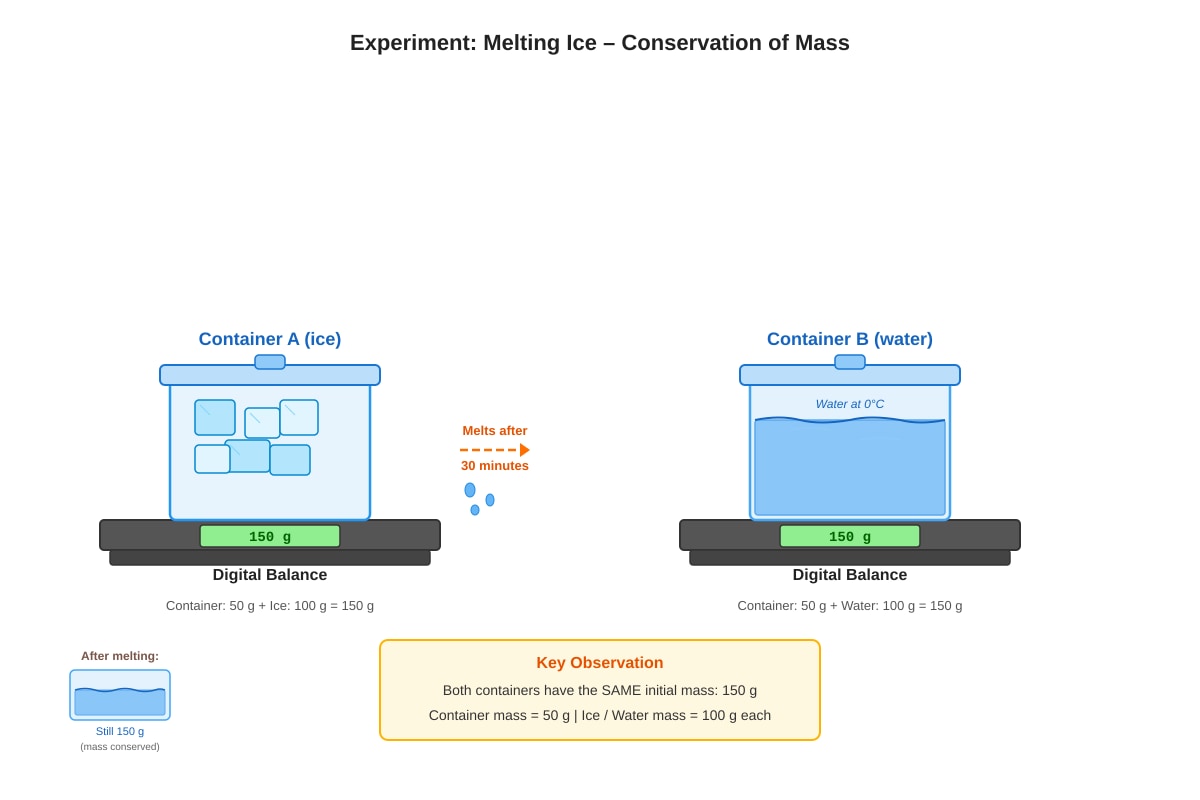
19. A beaker contains 150 cm³ of water at room temperature. Ice cubes are added and the water is stirred until all the ice melts. The final volume of water is 200 cm³.
(a) What is the volume of the ice cubes that melted? [1]
(b) State the change of state that occurs when ice melts. [1]
(c) During the melting process, the temperature of the ice-water mixture will remain the same / increase / decrease. Circle the correct answer. [1]
20. The diagram below shows a balloon filled with air.
<image_placeholder>
id: Q20-fig1
type: diagram
linked_question: Q20
description: A balloon filled with air. Left: Balloon at room temperature. Right: Balloon after being placed in the sun.
labels: Room temperature, After heating in sun, Balloon expands
values: None
must_show: Balloon before and after heating showing expansion
</image_placeholder>
(a) What happens to the volume of air inside the balloon when it is placed in the sun? [1]
(b) What happens to the shape of the balloon? [1]
(c) State the property of gases that explains your answers in (a) and (b). [1]
(d) Explain why a balloon left in a hot car on a sunny day may burst. [1]
Answers
Primary 4 Science Quiz - Materials (Answer Key)
Total Marks: 40
Section A: Multiple-Choice Questions (10 marks)
1. Answer: (3) Can be seen
Explanation: Matter is defined as anything that has mass and occupies space. Not all matter can be seen (e.g., air, gases). "Can be measured" is a consequence of having mass and volume, but "can be seen" is not a defining property of matter.
Mark: 1
2. Answer: (4) Object A is a good conductor of heat
Explanation: Object A is a metal spoon. Metals are good conductors of heat. Object B (wooden ruler) is not waterproof (wood absorbs water). Object C (plastic cup) is typically opaque or translucent, not transparent. Object A (metal) is not flexible.
Mark: 1
3. Answer: (3) Orange juice
Explanation: Liquids have a definite volume but no definite shape (they take the shape of their container). Oxygen gas has neither definite volume nor shape. Ice cube (solid) has both definite volume and shape. Steel nail (solid) has both definite volume and shape.
Mark: 1
4. Answer: (1) Flexibility
Explanation: Group X items (sponge, cotton wool, rubber band) are flexible. Group Y items (metal key, glass marble, ceramic tile) are rigid/not flexible. Transparency, strength, and waterproof properties do not consistently separate the two groups.
Mark: 1
5. Answer: (2) B
Explanation: A raincoat must be waterproof (not absorb water). Material B shows no increase in mass (10 g → 10 g), meaning it absorbed no water. Material A absorbed 15 g, C absorbed 8 g, D absorbed 1 g. B is the most waterproof.
Mark: 1
6. Answer: (3) Air can be compressed
Explanation: When the plunger is pulled back with the nozzle blocked, the air inside expands to fill the larger volume. This shows air has no definite volume and can be compressed/expanded. The experiment demonstrates compressibility of gases.
Mark: 1
7. Answer: (2) Plastic cling wrap
Explanation: Plastic cling wrap is transparent (see-through), waterproof (water beads off), and flexible (can stretch and wrap). Glass window is transparent and waterproof but not flexible. Metal foil is waterproof and flexible but not transparent. Wooden chopstick has none of these properties.
Mark: 1
8. Answer: (3) Evaporation
Explanation: Heating water causes it to change from liquid to gas (water vapour/steam), which escapes, reducing the water level. This is evaporation (occurs at surface, at any temperature, faster with heat). Boiling is a specific type of evaporation at boiling point.
Mark: 1
9. Answer: (2) The air inside the balloon contracted
Explanation: When cooled, gas particles lose kinetic energy, move closer together, and occupy less volume (contract). The mass of air remains the same (balloon is tied). The balloon material doesn't become heavier. No air escaped (balloon is tied).
Mark: 1
10. Answer: (2) Liquid
Explanation: Following the flowchart: No definite shape → check definite volume → Yes → Liquid. Liquids have definite volume but no definite shape.
Mark: 1
Section B: Structured Questions (12 marks)
11.
(a) Liquids have a definite volume but no definite shape / Liquids take the shape of their container. [1]
(b) No, the volume of water will not change. Liquids have a definite volume. [1]
Explanation: The volume of a liquid remains constant regardless of the container shape. Pouring from one container to another does not change the amount (volume) of liquid.
Total: 2 marks
12.
(a) Y [1]
(b) Material Y is the poorest conductor of heat (lowest temperature at the other end), so it will not get hot easily and will protect the user's hand from burns. [1]
Explanation: The lower the temperature at the far end, the slower heat travels through the material. A poor conductor (insulator) is needed for handles to prevent heat transfer to the hand.
Total: 2 marks
13.
(a) The metal ball expands / increases in size. [1]
(b) When heated, the metal ball gains heat and expands, becoming too large to fit through the ring. [1]
Explanation: Most solids expand when heated (particles vibrate more and move further apart). The ball's diameter increases, so it cannot pass through the same-sized ring.
Total: 2 marks
14.
(a) P [1]
(b) Flexible and waterproof (accept either one) [1]
Explanation: A raincoat must be waterproof to keep rain out and flexible to allow movement. Material P has both properties. Q is not flexible. R is not waterproof. S is not flexible.
Total: 2 marks
15.
(a) 20 cm³ [1]
(b) Gases can be compressed / Gases have no definite volume. [1]
Explanation: The plunger reduces the volume available to the gas. Gas particles are forced closer together, showing compressibility. The mass of air remains the same.
Total: 2 marks
16.
(a) Evaporation [1]
(b) Condensation [1]
Explanation: A: Sun heats sea water → liquid to gas (evaporation). B: Water vapour cools in atmosphere → gas to liquid droplets (condensation) forming clouds.
Total: 2 marks
Section C: Open-Ended Questions (20 marks)
17.
(a) Size of fabric pieces / Mass of fabric pieces / Volume of water / Time left in water / Temperature of water (any one) [1]
(b) Type of material (cotton, polyester, wool, silk) [1]
(c) Mass of water absorbed / Final mass of fabric / Amount of water absorbed [1]
Explanation: Fair test requires only one changed variable (material). All other conditions must be constant. The measured outcome is water absorption.
Total: 3 marks
18.
(a) Metal is a good conductor of heat, so it heats up quickly and evenly to cook food. [1]
(b) Plastic is a poor conductor of heat (insulator), so it stays cool and protects the hand from burns. [1]
(c) Heat resistant / Does not melt easily / Strong / Durable (any one) [1]
Explanation: The handle must not conduct heat to the hand. It must also withstand the heat from the pot body without melting or deforming.
Total: 3 marks
19.
(a) 50 cm³ (200 cm³ - 150 cm³ = 50 cm³) [1]
(b) Melting [1]
(c) Remain the same [1]
Explanation: During a change of state (melting), the temperature remains constant at the melting point (0°C for ice) until all solid has melted. The heat energy is used to overcome forces between particles, not raise temperature.
Total: 3 marks
20.
(a) The volume of air inside the balloon increases. [1]
(b) The shape of the balloon changes / expands / becomes larger. [1]
(c) Gases have no definite volume and no definite shape / Gases can be compressed and expand to fill their container. [1]
(d) The air inside the balloon gains heat from the sun, expands, and exerts greater pressure on the balloon walls until it bursts. [1]
Explanation: Heating a gas increases particle kinetic energy, causing expansion. In a confined balloon, this increases internal pressure. If pressure exceeds the balloon's elastic limit, it bursts.
Total: 4 marks