From Real Exams Quiz
Primary 4 Science Living Together Quiz
Free P4 Science Living Together quiz, Exam version, with questions, answers, and syllabus-aligned practice for Singapore students.
These static practice materials are generated from the site's syllabus and paper-generation workflow, with source and model context shown so students and parents can evaluate the material before use.
Questions
Free quiz and exam paper access
Enter your details to view this paper
Your access is remembered on this device.
Answers
Answer Key: Primary 4 Science Quiz - Living Together
Total Marks: 40
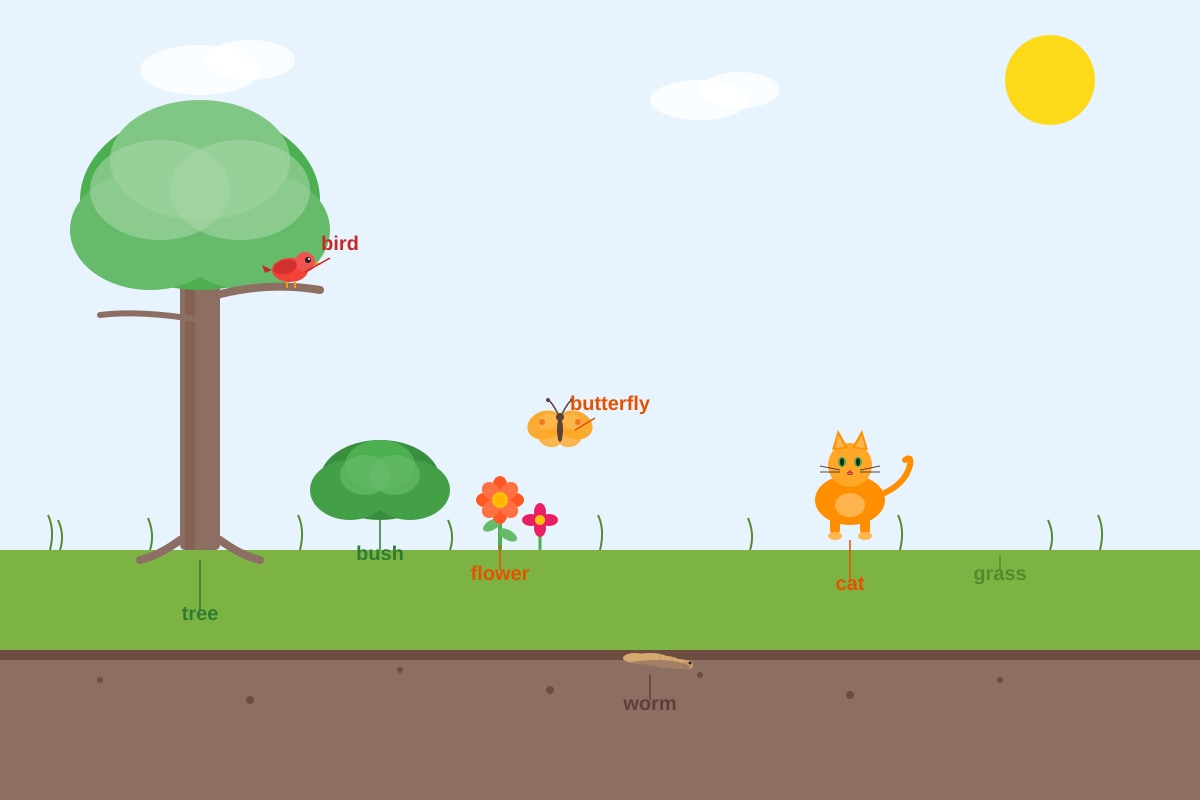
Section A: Multiple-Choice Questions (Questions 1 to 5)
Each question carries 2 marks.
1. Answer: B) All the plants and animals living in a garden
- Marks: 2
- Explanation: A community is made up of all the different populations of living things living together in a habitat. Option A is just one fish (a single organism). Option C is a non-living thing. Option D is a single tree (a single organism). Only option B describes a group of different living things in one place.
- Common Mistake: Students may choose A or D because they think of a single organism as a community. Remind them that a community includes many different kinds of living things.
2. Answer: B) population
- Marks: 2
- Explanation: A population is a group of organisms of the same kind (same species) living in the same place at the same time. All the rabbits are the same kind of animal, so they form a population.
- Common Mistake: Students may confuse "population" with "community". A community includes different populations. A habitat is the place where they live. An ecosystem is a larger system including both living and non-living things.
3. Answer: C) habitat
- Marks: 2
- Explanation: A habitat is the natural home or environment of an organism. It provides everything the organism needs to survive, such as food, water, shelter, and space.
- Common Mistake: Students may choose "environment" as it is a similar word. However, "habitat" is the specific term for the place where an organism lives.
4. Answer: B) A fish
- Marks: 2
- Explanation: A fish is adapted to live in water. A pond is a body of water, so it is a suitable habitat for a fish. Cacti live in deserts, polar bears live in cold Arctic regions, and camels live in deserts.
- Common Mistake: Students may not think about the specific needs of each animal. Remind them to match the animal to the habitat that provides its needs.
5. Answer: B) shelter
- Marks: 2
- Explanation: The bird uses the tree to build its nest. The nest provides a safe place for the bird to rest, raise its young, and hide from predators. This is a form of shelter.
- Common Mistake: Students may think the tree is the bird's food. While some birds eat seeds or fruits from trees, the question specifically says the bird "builds a nest" in the tree, which is for shelter.
Section B: Fill in the Blanks (Questions 6 to 10)
Each question carries 2 marks.
6. Answer: population
- Marks: 2
- Explanation: A population is defined as a group of organisms of the same species living in the same area at the same time. For example, all the oak trees in a forest form a population.
- Teaching Note: Emphasise the key phrase "same kind" to distinguish it from a community.
7. Answer: community
- Marks: 2
- Explanation: A community is made up of all the different populations (e.g., plants, animals, fungi) that live together and interact in a habitat.
- Teaching Note: Use the analogy of a neighbourhood. A population is like all the families with the same surname. A community is all the different families living in the neighbourhood.
8. Answer: habitat
- Marks: 2
- Explanation: A habitat is the natural environment where an organism lives. It provides food, water, shelter, and space.
- Teaching Note: Connect this to the idea of a "home" for the organism.
9. Answer: food
- Marks: 2
- Explanation: Living things depend on each other for many things, including food, shelter, and even protection. For example, bees depend on flowers for nectar, and flowers depend on bees for pollination.
- Teaching Note: Accept other reasonable answers like "protection" or "shelter" if the question is phrased differently. Here, "food" is the most direct and common answer.
10. Answer: predator
- Marks: 2
- Explanation: A predator is an animal that hunts, kills, and eats other animals. The animal that is hunted is called the prey.
- Teaching Note: Use examples like a lion (predator) hunting a zebra (prey).
Section C: Short Answer Questions (Questions 11 to 15)
Each question carries 3 marks.
11. Answer: Any two of the following:
- Population of birds
- Population of butterflies
- Population of worms
- Population of cats
- Population of trees
- Population of flowers
- Population of grass
- Marks: 1 mark for each correct population listed (max 2 marks). 1 mark for correctly identifying them as populations (e.g., "birds" instead of "a bird").
- Explanation: A population is a group of the same kind of organism. The garden has multiple birds, butterflies, etc., so each group is a population.
- Common Mistake: Students may list individual organisms (e.g., "the bird") instead of the population (e.g., "birds"). Remind them that a population is a group.
12. Answer: Any two of the following:
- Water (to live in and breathe)
- Food (e.g., small insects, plants)
- Shelter (e.g., hiding places among plants or rocks)
- Space (to swim and live)
- Marks: 1 mark for each correct need identified (max 2 marks). 1 mark for explaining how the pond provides it (e.g., "The pond provides water for the fish to swim in").
- Explanation: A habitat must provide all the basic needs of the organisms living there. For a fish, a pond provides water, food, and shelter.
- Teaching Note: Encourage students to think about what a fish needs to survive.
13. Answer:
- Food relationship: The bird is the predator, and the caterpillar is the prey.
- Explanation: The bird eats the caterpillar. The bird hunts and kills the caterpillar for food.
- Marks: 1 mark for identifying the relationship (predator-prey). 2 marks for a clear explanation.
- Explanation: A predator is an animal that eats other animals. The prey is the animal that is eaten. Here, the bird (predator) eats the caterpillar (prey).
- Common Mistake: Students may reverse the roles. Emphasise that the eater is the predator.
14. Answer:
- Predator: The snake
- Explanation: The snake eats the bird. The snake is a predator that hunts and eats other animals, including birds.
- Marks: 1 mark for identifying the snake. 2 marks for a clear explanation.
- Explanation: In the food chain described (grass → ants → birds → snake), the snake is at the top and eats the bird.
- Teaching Note: Remind students to look at who eats whom in the food chain.
15. Answer: Any one of the following:
- Living things need non-living things (like water, air, sunlight) to survive.
- Non-living things provide the resources (like food and shelter) that living things need.
- Without non-living things, the habitat would not be able to support life.
- Marks: 1 mark for a correct reason. 2 marks for a clear explanation.
- Explanation: A habitat is a combination of living (biotic) and non-living (abiotic) components. Non-living things like water, sunlight, and soil are essential for the survival of living things.
- Teaching Note: Use examples: plants need sunlight and water; animals need air and water.
Section D: Application and Explanation Questions (Questions 16 to 20)
Each question carries 4 marks.
16. Answer:
- Relationship: The increase in caterpillars provides more food for the birds, so the bird population increases.
- Explanation: The birds eat the caterpillars. When there are more caterpillars (prey), there is more food available for the birds (predators). This allows more birds to survive and reproduce, leading to an increase in the bird population.
- Marks: 2 marks for identifying the relationship (more food → more birds). 2 marks for a clear explanation.
- Explanation: This is a classic predator-prey relationship. An increase in prey often leads to an increase in predators.
- Common Mistake: Students may think the relationship is the other way around (more birds cause more caterpillars). Explain that birds eat caterpillars, so more caterpillars mean more food for birds.
17. Answer:
- What might happen: The fish might die or decrease in number.
- Explanation: Water plants provide food and shelter for the fish. They also produce oxygen through photosynthesis, which the fish need to breathe. Without the water plants, the fish would lose their food source, shelter, and oxygen supply.
- Marks: 2 marks for stating the likely outcome (fish die/decrease). 2 marks for a clear explanation mentioning at least one reason (food, shelter, or oxygen).
- Explanation: This question tests the understanding of interdependence in a habitat. All living things depend on each other.
- Teaching Note: Encourage students to think about all the roles plants play in a habitat.
18. Answer:
- Do you agree? No
- Explanation: A population is a group of organisms of the same kind living in the same place. A community is made up of all the different populations living together in a habitat. A community is larger and includes multiple populations.
- Marks: 1 mark for "No". 3 marks for a clear explanation distinguishing between population and community.
- Explanation: This is a common misconception. Use an example: In a pond, the population of fish is one group. The population of water plants is another group. All the populations together (fish, plants, insects, etc.) form the pond community.
- Common Mistake: Students may agree because both terms refer to groups. Emphasise that a population is one specific type of organism, while a community includes many types.
19. Answer:
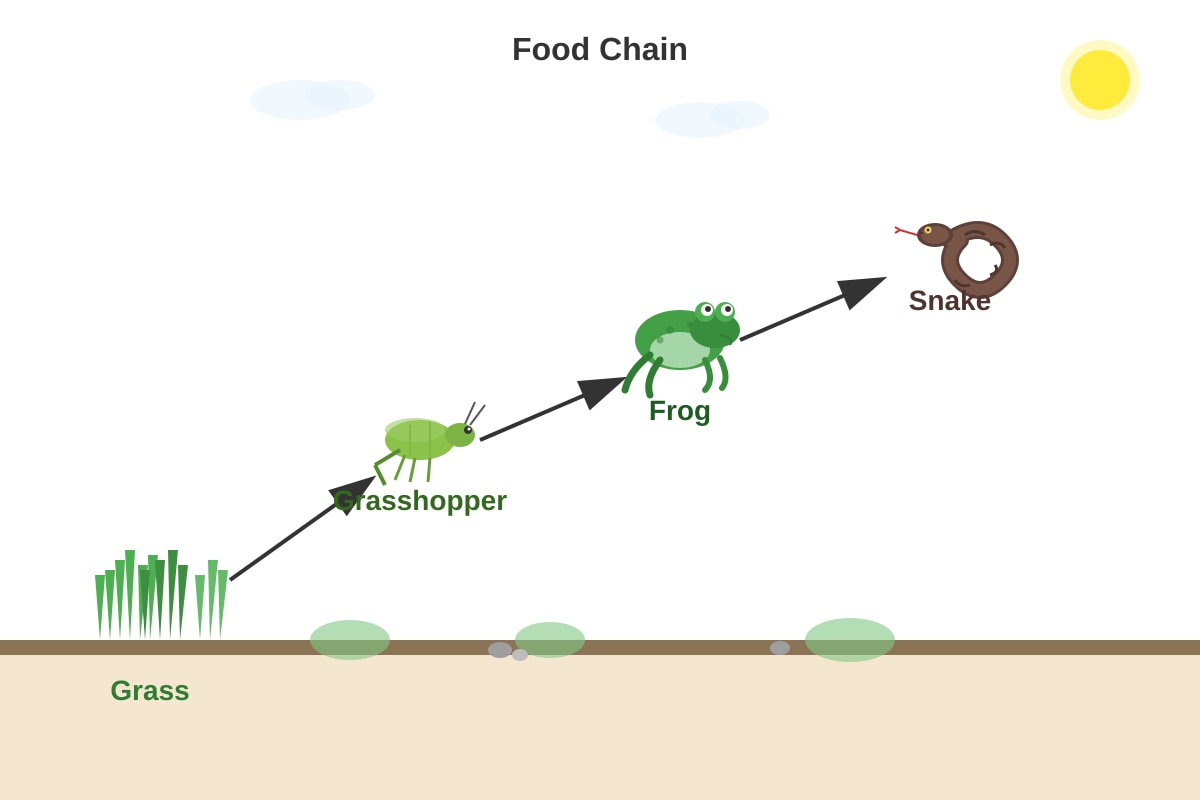
- Answer: The arrow represents the flow of energy (or "is eaten by").
- Explanation: In a food chain, the arrow points from the organism that is eaten to the organism that eats it. It shows the direction of energy transfer. For example, the arrow from grass to grasshopper means the grasshopper eats the grass, and energy from the grass goes to the grasshopper.
- Marks: 2 marks for stating the arrow represents "is eaten by" or "flow of energy". 2 marks for a clear explanation.
- Explanation: This is a fundamental concept in ecology. The arrow always points from the prey to the predator.
- Common Mistake: Students may think the arrow means "eats" (pointing from predator to prey). The correct interpretation is that the arrow points from the food to the eater.
20. Answer:
- What might happen: The number of deer might increase.
- Explanation: The wolves are predators that eat the deer. If the number of wolves decreases, fewer deer will be hunted and eaten. This means more deer will survive and reproduce, leading to an increase in the deer population.
- Marks: 2 marks for stating the likely outcome (deer increase). 2 marks for a clear explanation.
- Explanation: This is another example of a predator-prey relationship. A decrease in predators often leads to an increase in prey.
- Common Mistake: Students may think the deer will also decrease because there are fewer wolves to "control" them. Explain that fewer predators mean less hunting, so more prey survive.