From Real Exams Quiz
Primary 4 Science Life Cycles Quiz
Free P4 Science Life Cycles quiz, HY3 Exam version, with questions, answers, and syllabus-aligned practice for Singapore students.
These static practice materials are generated from the site's syllabus and paper-generation workflow, with source and model context shown so students and parents can evaluate the material before use.
Questions
Free quiz and exam paper access
Enter your details to view this paper
Your access is remembered on this device.
Answers
Primary 4 Science Quiz - Life Cycles (Answer Key)
Total Marks: 20
Topic: Life Cycles (Complete vs Incomplete Metamorphosis)
Section A Answers (1 mark each)
1. B
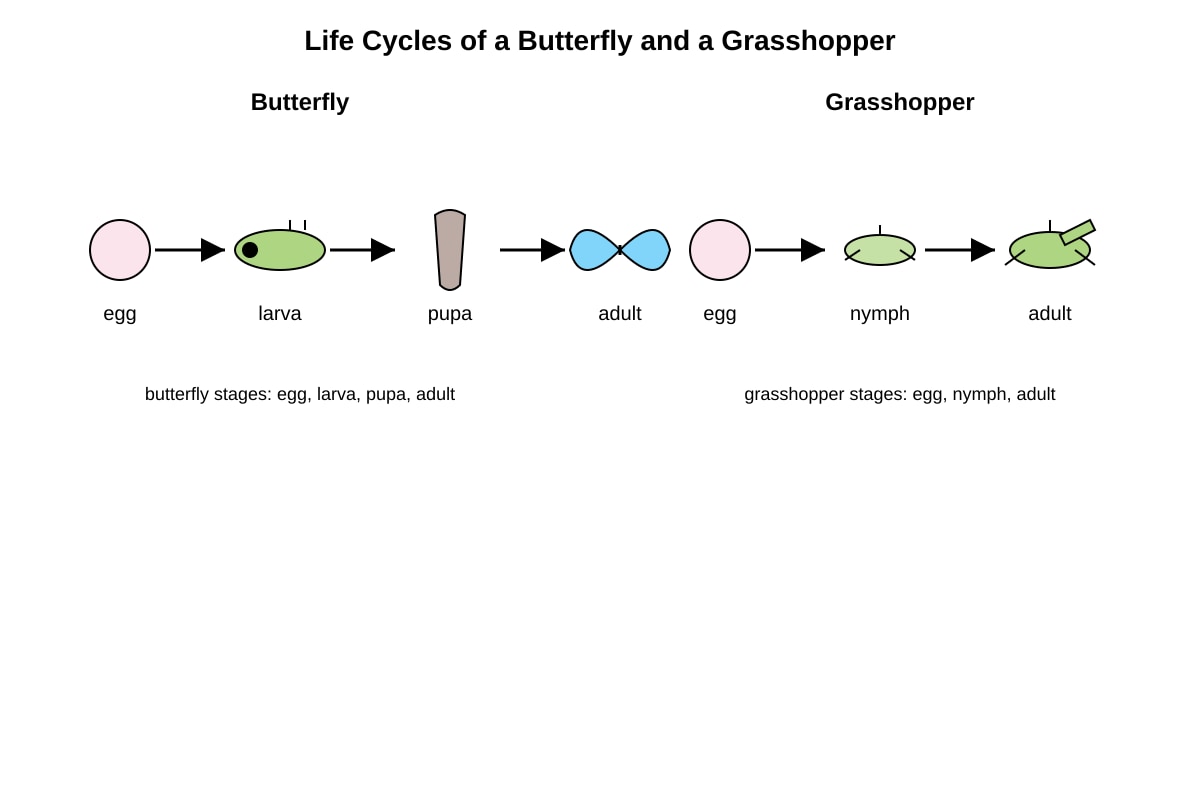
Teaching note: Butterflies go through complete metamorphosis: egg → larva (caterpillar) → pupa (chrysalis) → adult. Option B shows the correct sequence. Common mistake: confusing with incomplete metamorphosis (no pupa).
2. C
Teaching note: Grasshopper has egg → nymph → adult (incomplete metamorphosis). Butterfly has a pupa stage; grasshopper does not. Pupa is missing.
3. C
Teaching note: The young of a frog is called a tadpole. It lives in water and later changes into an adult frog. Larva is used for insects, nymph for incomplete-metamorphosis insects.
4. B
Teaching note: Caterpillar (larva) eats leaves and can destroy crops. Adults usually sip nectar and do less crop damage.
5. C
Teaching note: Mosquito larvae and pupae live in water and use a breathing tube to reach air at the surface. They do not have gills or lungs at this stage.
6. B
Teaching note: Frog eggs are laid and hatch in water; tadpoles are aquatic.
7. A
Teaching note: Shedding skin to grow is called molting. This is seen in grasshopper nymphs.
8. D
Teaching note: Cockroach has incomplete metamorphosis (egg case → nymph → adult), so no pupa stage. Butterfly, mosquito, beetle all have pupa (complete metamorphosis).
Section B Answers
9. larva (or caterpillar) (1 mark)
Teaching note: In butterfly life cycle, after egg comes larva, then pupa, then adult.
10. Both are insects / Both go through life cycle stages / Both change appearance / Both develop wings. (1 mark, any one)
Teaching note: Similarity should show they share a life process, not a difference.
11. Water is the habitat where eggs hatch and larvae/pupae live and breathe using tubes at the surface. (1 mark)
Teaching note: Without water, mosquito young cannot survive; water provides a place to live and grow.
12. It grows legs / loses tail / develops lungs / changes from aquatic to partly land life. (1 mark, any one)
Teaching note: Metamorphosis of frog includes gaining legs and losing tail.
13. (2 marks)
- 1 mark: Caterpillar is the feeding/larval stage.
- 1 mark: It eats and grows, storing energy for pupa and adult stages.
Teaching note: Larva must eat a lot to grow; this supports later transformation.
14. (2 marks)
- 1 mark: It sheds its old skin (molts).
- 1 mark: It becomes larger / develops wings a bit more each time.
Teaching note: Nymph cannot grow inside fixed skin, so molting lets body enlarge.
Section C Answers (2 marks each)
15. (2 marks, 1 mark per difference)
Accepted differences:
- Butterfly has pupa stage; grasshopper does not.
- Butterfly young (larva) does not look like adult; grasshopper young (nymph) looks like adult without wings.
- Butterfly larva is caterpillar; grasshopper young is nymph.
Teaching note: Diagram shows arrow sequences; use them to compare stages.
16. (2 marks)
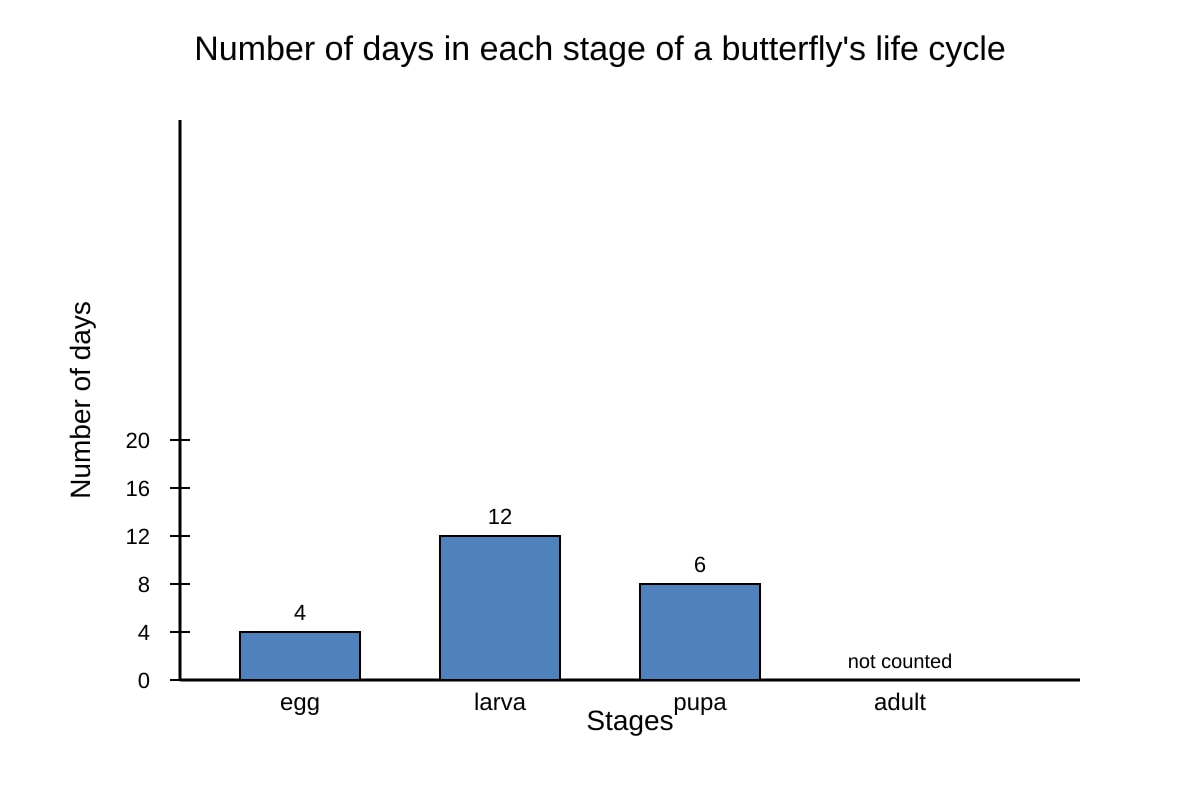
Working: egg (4) + larva (12) + pupa (6) = 22 days.
Final: 22 days.
(1 mark for correct addition, 1 mark for correct total)
Teaching note: Read bars: egg 4, larva 12, pupa 6. Adult not counted as development stage before becoming adult.
17. (2 marks)
- Insect group: butterfly (or moth) (1 mark)
- Problem: larva eats leaves, damages crops/vegetables (1 mark)
Teaching note: Caterpillar is larva of butterfly/moth; it feeds on plants.
18. (2 marks)
- Oil blocks air at water surface (1 mark)
- Larvae/pupae cannot use breathing tube to get air, so they die / cannot breed (1 mark)
Teaching note: Mosquito young need surface air; oil prevents this.
19. (2 marks, 1 mark for two correct cells)
| Type | Has pupa? | Young resembles adult? |
|---|---|---|
| Complete | Yes | No |
| Incomplete | No | Yes |
Teaching note: Complete = pupa present, young different; Incomplete = no pupa, young like adult.
20. (2 marks)
- Molting = shedding old skin/exoskeleton (1 mark)
- Needed because skin does not stretch; molting lets cockroach grow bigger each time (1 mark)
Teaching note: Nymphs molt to increase size and gradually form adult features like wings.