From Real Exams Quiz
Primary 4 Science Life Cycles Quiz
Free P4 Science Life Cycles quiz, Exam version, with questions, answers, and syllabus-aligned practice for Singapore students.
These static practice materials are generated from the site's syllabus and paper-generation workflow, with source and model context shown so students and parents can evaluate the material before use.
Questions
Free quiz and exam paper access
Enter your details to view this paper
Your access is remembered on this device.
Answers
Answer Key: Primary 4 Science Quiz - Life Cycles
Total Marks: 20
Section A: Multiple-Choice Questions (Questions 1 - 5)
1. B) Egg → Larva → Pupa → Adult (1 mark)
- Explanation: The life cycle of a butterfly is a classic example of complete metamorphosis. The correct order is: the female butterfly lays an egg. The egg hatches into a larva (caterpillar). The larva then forms a pupa (chrysalis). Finally, an adult butterfly emerges from the pupa.
- Common Mistake: Students often confuse the order of the larva and pupa stages, or think the pupa comes before the larva.
2. B) pupa stage (1 mark)
- Explanation: A grasshopper undergoes incomplete metamorphosis. Its life cycle has three stages: egg → nymph → adult. There is no pupa stage. A butterfly undergoes complete metamorphosis, which has four stages: egg → larva → pupa → adult. The key difference is the presence of the pupa stage.
- Common Mistake: Students might think the nymph stage is the one that is missing, but the nymph is the young stage of the grasshopper, which is present.
3. C) nymph (1 mark)
- Explanation: A nymph is the young form of an insect that undergoes incomplete metamorphosis, like a grasshopper or cockroach. It looks like a smaller version of the adult but lacks fully developed wings and reproductive organs. A larva (e.g., caterpillar) looks very different from the adult.
- Common Mistake: Students may confuse "nymph" with "larva". The key difference is that a nymph resembles the adult, while a larva does not.
4. C) Frog (1 mark)
- Explanation: Tadpoles are the larval stage of frogs and toads. They are aquatic, have gills and a tail, and undergo metamorphosis to become adult frogs.
- Common Mistake: Students might think tadpoles are a separate species or the young of fish.
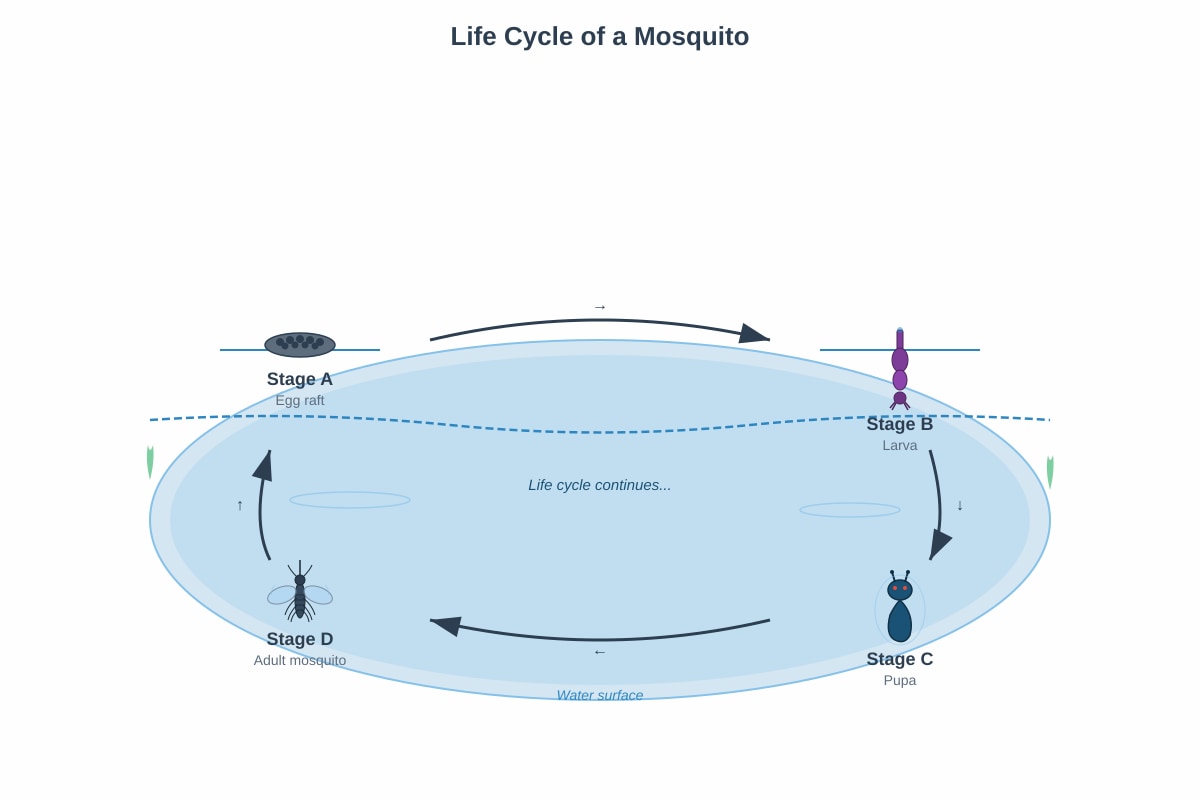
5. C) Stage A, Stage B, and Stage C (1 mark)
- Explanation: The mosquito's life cycle has four stages: egg, larva, pupa, and adult. The first three stages (egg, larva, and pupa) are all aquatic and spend their time in water. Only the adult mosquito is a flying insect that lives on land.
- Common Mistake: Students might think only the larva lives in water, forgetting that the eggs are laid on the water surface and the pupa also lives in the water.
Section B: Short-Answer Questions (Questions 6 - 15)
6. Larva (1 mark)
- Explanation: The caterpillar is the larval stage of a butterfly. This is the feeding and growing stage of the insect.
- Marking Note: Accept "caterpillar" or "larva". The question asks for the name of the stage, so "larva" is the most precise scientific term.
7. Molting (1 mark)
- Explanation: Molting is the process where an insect sheds its exoskeleton (outer skin) to allow its body to grow. Insects have a hard exoskeleton that does not grow with them, so they must shed it periodically.
- Marking Note: Accept "shedding its skin" or "moulting" (British spelling). The key concept is that the insect sheds its skin to grow.
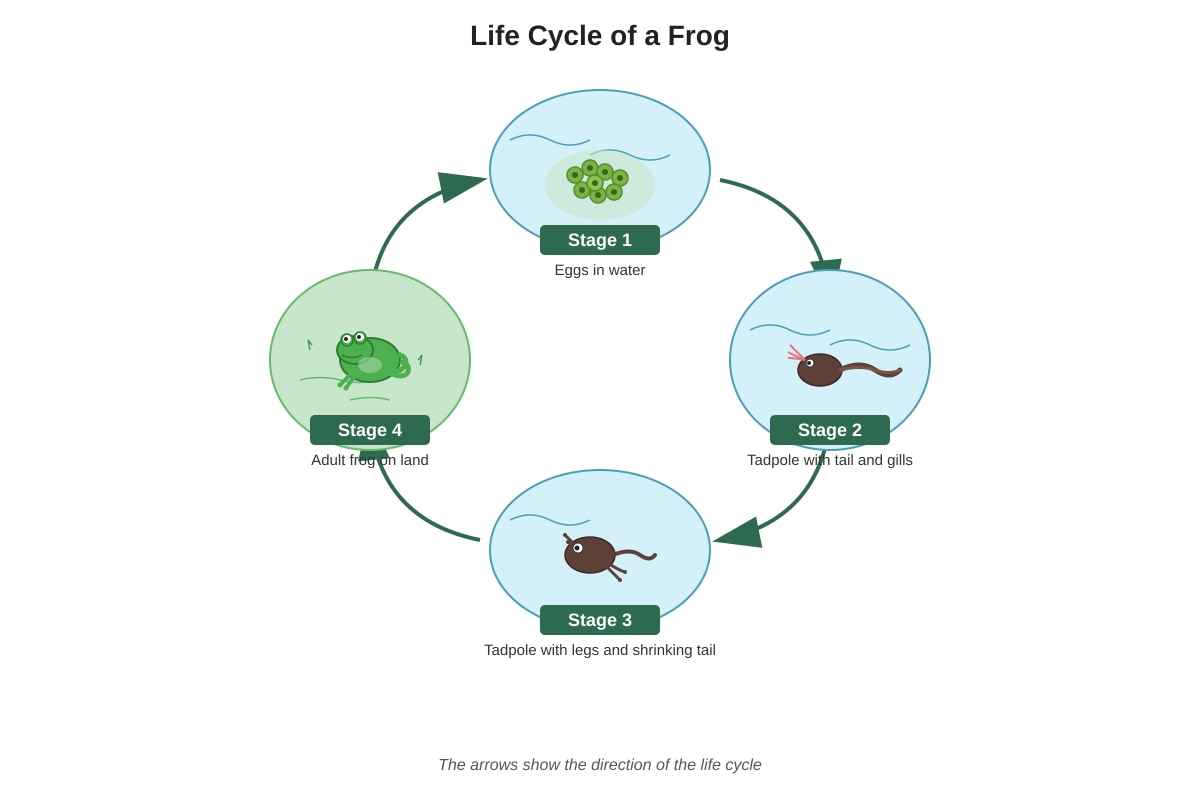
8. Stage 2 (Tadpole) (1 mark)
- Explanation: The tadpole is the fully aquatic stage of the frog's life cycle. It lives entirely in water, breathes with gills, and has a tail for swimming. Stage 3 (tadpole with legs) is also aquatic but is beginning to develop lungs and legs for life on land.
- Marking Note: Accept "Stage 2" or "tadpole". The question asks for the stage, so "Stage 2" is the most direct answer from the diagram.
9. Larva stage (1 mark)
- Explanation: The caterpillar is the larval stage of the butterfly. This is the stage where the insect does most of its eating and growing. Farmers consider this stage the most harmful because caterpillars eat large amounts of plant leaves, damaging crops.
- Marking Note: Accept "larva" or "caterpillar".
10. Incomplete metamorphosis does not have a pupa stage. (1 mark)
- Explanation: The main difference between the two types of metamorphosis is the presence of a pupa stage. Complete metamorphosis has four stages: egg, larva, pupa, and adult. Incomplete metamorphosis has three stages: egg, nymph, and adult. The nymph gradually grows into an adult without a resting pupal stage.
- Marking Note: Accept any answer that clearly states that incomplete metamorphosis lacks a pupa stage. For example: "Incomplete metamorphosis has no pupa stage" or "The grasshopper does not become a pupa."
11. 25 days (1 mark)
- Explanation: To find the total time from egg to adult, you need to add the duration of the egg, larva, and pupa stages. The adult stage is not included because the question asks for the time to develop into an adult.
- Working: 3 days (egg) + 14 days (larva) + 8 days (pupa) = 25 days.
- Common Mistake: Students might add the adult stage (30 days) to the total, getting 55 days. The question asks for the time to develop from an egg to an adult, so the adult stage itself is not part of the development time.
12. At the water surface (1 mark)
- Explanation: Mosquito larvae (wrigglers) have a breathing tube (siphon) at the end of their abdomen. They hang upside down from the water surface and use this tube to breathe air from above the water.
- Marking Note: Accept "at the surface of the water" or "above the water".
13. Grasshopper / Cockroach / Cricket (1 mark)
- Explanation: Insects that undergo incomplete metamorphosis have a nymph stage. Common examples include grasshoppers, cockroaches, crickets, and dragonflies.
- Marking Note: Accept any one correct example.
14. It gets shorter and eventually disappears. (1 mark)
- Explanation: As a tadpole undergoes metamorphosis to become a frog, its tail is gradually reabsorbed into its body. The nutrients from the tail are used to help grow legs and other adult features. The tail eventually disappears completely.
- Marking Note: Accept "It shrinks and is absorbed into the body" or "It disappears".
15. The oil forms a layer on the water surface, blocking the mosquito larvae from getting air. (1 mark)
- Explanation: Mosquito larvae need to come to the water surface to breathe air through their breathing tubes. A layer of oil on the water surface prevents them from doing this, causing them to suffocate and die. This is a common method of mosquito control.
- Marking Note: The answer must explain the cause-and-effect relationship: oil blocks the surface → larvae cannot breathe → larvae die.
Section C: Structured Questions (Questions 16 - 20)
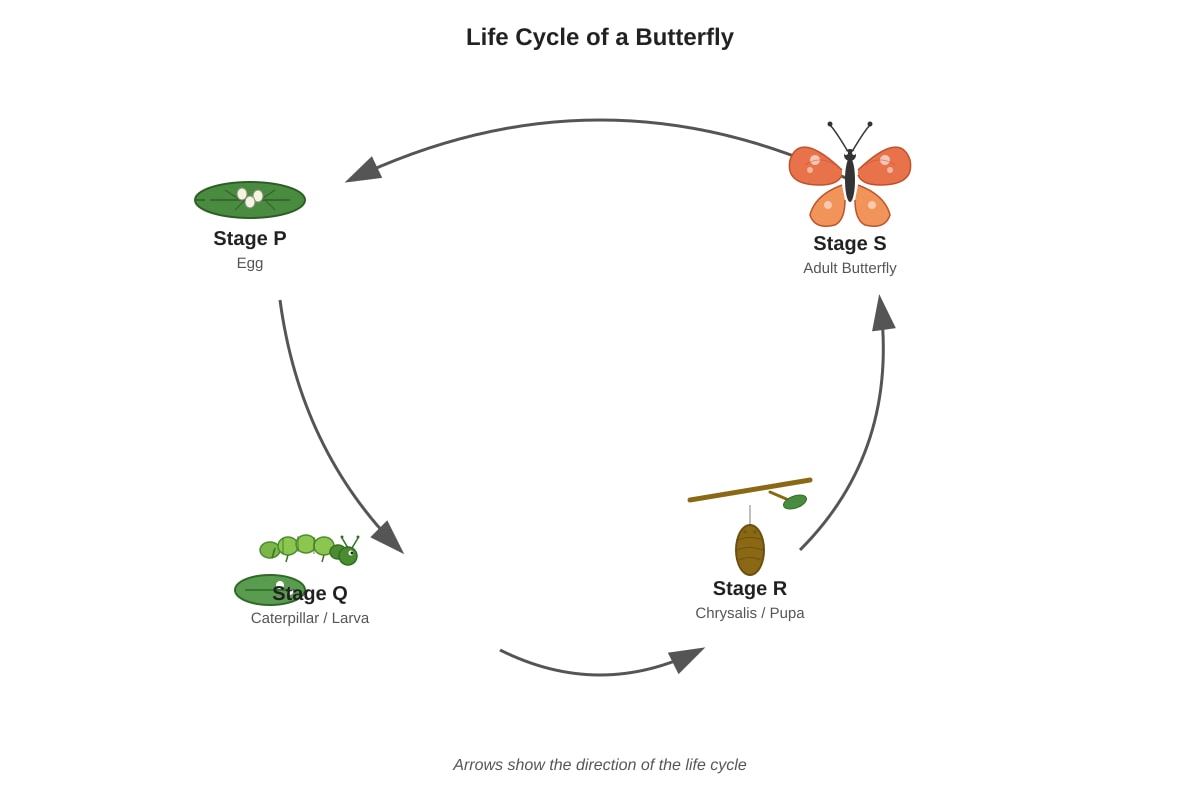
16. (a) Stage R (1 mark)
- Explanation: The pupa stage is the resting and transforming stage. In the diagram, Stage R shows the chrysalis (pupa) attached to a twig. The caterpillar transforms into a butterfly inside this case.
- Marking Note: Accept "Stage R" or "the chrysalis stage".
(b) The butterfly life cycle has a pupa stage, but the grasshopper life cycle does not. (1 mark)
- Explanation: This is the key difference between complete (butterfly) and incomplete (grasshopper) metamorphosis. The grasshopper goes from nymph to adult without a resting pupal stage.
- Marking Note: Accept any valid difference. For example: "A butterfly larva looks very different from the adult, but a grasshopper nymph looks like a smaller adult." (1 mark)
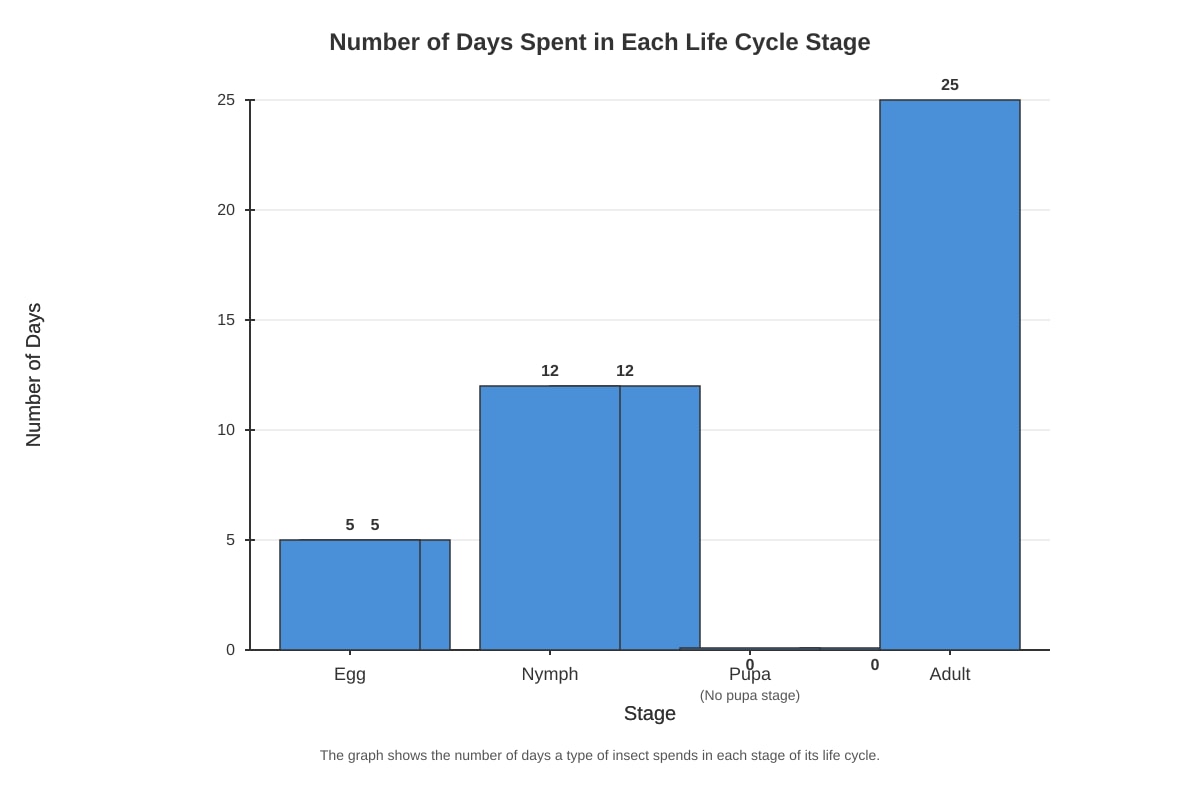
17. (a) Incomplete metamorphosis. The graph shows that the insect does not have a pupa stage (the bar for Pupa is at 0 days). (1 mark)
- Explanation: The defining feature of incomplete metamorphosis is the absence of a pupa stage. The insect goes directly from the nymph stage to the adult stage. The graph clearly shows this by having a bar of zero height for the pupa stage.
- Marking Note: Award 1 mark for correctly identifying "incomplete metamorphosis" AND providing a correct explanation referencing the lack of a pupa stage.
(b) 17 days (1 mark)
- Explanation: To find the total time from egg to adult, add the duration of the egg and nymph stages. The pupa stage is 0 days, so it is not added.
- Working: 5 days (egg) + 12 days (nymph) = 17 days.
- Marking Note: Award 1 mark for the correct answer. Do not award marks if the adult stage (25 days) is included.
18. (a) Pupa / Chrysalis (1 mark)
- Explanation: The hard case that a caterpillar forms around itself is called a pupa or chrysalis. Inside this case, the caterpillar's body breaks down and reorganizes into the body of a butterfly.
- Marking Note: Accept either "pupa" or "chrysalis".
(b) To protect the caterpillar while it transforms into a butterfly. (1 mark)
- Explanation: The pupa stage is a time of great change (metamorphosis). The caterpillar is very vulnerable during this time because it cannot move or defend itself. The hard case provides a safe, protective shell for this transformation to take place.
- Marking Note: The answer must convey the idea of protection during transformation. Accept: "To protect itself while it changes into a butterfly" or "It is a safe case for the caterpillar to change into an adult."
19. (a) Animal X (1 mark)
- Explanation: Animal X has a life cycle with four stages: egg, larva, pupa, and adult. This is the pattern of complete metamorphosis. Animal Y has a life cycle with three stages: egg, nymph, and adult. This is the pattern of incomplete metamorphosis.
- Marking Note: Award 1 mark for "Animal X".
(b) Both animals begin their life cycle as an egg. (1 mark)
- Explanation: All insects and many other animals begin their life cycle as an egg. This is a fundamental similarity between the two types of life cycles.
- Marking Note: Accept any valid similarity. For example: "Both animals change in appearance as they grow" (1 mark) or "Both animals eventually become adults" (1 mark).
20. (a) Nymph stage / Adult stage (1 mark)
- Explanation: Both the nymph and adult stages of a grasshopper eat plants. The nymph stage is often the most damaging because there are many of them and they are actively growing, requiring a lot of food. The adult stage also causes damage but may be more mobile.
- Marking Note: Accept either "nymph" or "adult" as both are feeding stages. The most common answer in exam contexts is the "nymph" stage because they are numerous and voracious.
(b) The nymph stage eats large amounts of plant leaves to grow. (1 mark)
- Explanation: The nymph stage is the primary feeding and growing stage for insects with incomplete metamorphosis. They need a lot of energy to grow, so they eat constantly. This constant feeding damages and destroys crops.
- Marking Note: The answer must link the stage to the act of eating/damaging crops. Accept: "Nymphs eat a lot of leaves to grow bigger" or "Adult grasshoppers eat the leaves of the rice plants."