From Real Exams Quiz
Primary 4 Science Diversity Quiz
Free P4 Science Diversity quiz, Nemo3 Exam version, with questions, answers, and syllabus-aligned practice for Singapore students.
These static practice materials are generated from the site's syllabus and paper-generation workflow, with source and model context shown so students and parents can evaluate the material before use.
Questions

Free quiz and exam paper access
Enter your details to view this paper
Your access is remembered on this device.
Answers
Primary 4 Science Quiz - Diversity (Answer Key)
Total Marks: 30
Section A: Multiple-Choice Questions (10 marks)
1. Answer: (3) River stone
Explanation: A river stone is a non-living thing. It does not need air, food, or water; it does not grow, reproduce, or respond to changes. Mushroom, moss, and fern are all living things (fungi and plants).
Mark: 1
2. Answer: (1) Fungi | Plants
Explanation: Group X contains Bacteria, Yeast, Mould — these are microorganisms, but Yeast and Mould are specifically fungi. Bacteria is a separate kingdom. However, in Primary 4 classification, Yeast and Mould are taught as fungi. Group Y contains Rose plant, Oak tree, Balsam plant — all are plants. Option (1) is the best fit as Fungi and Plants are the two main kingdoms represented. Option (2) is incorrect because Bacteria is not a fungus. Option (3) is incorrect because moss/fern are non-flowering but not in Group X. Option (4) describes roles, not classification groups.
Mark: 1
3. Answer: (3) Butterfly
Explanation: Insects have three body parts (head, thorax, abdomen), six legs, and usually two pairs of wings. Butterfly is an insect. Spider (8 legs, 2 body parts) is an arachnid. Centipede (many legs, many segments) is a myriapod. Earthworm (no legs, segmented) is an annelid.
Mark: 1
4. Answer: (3) C
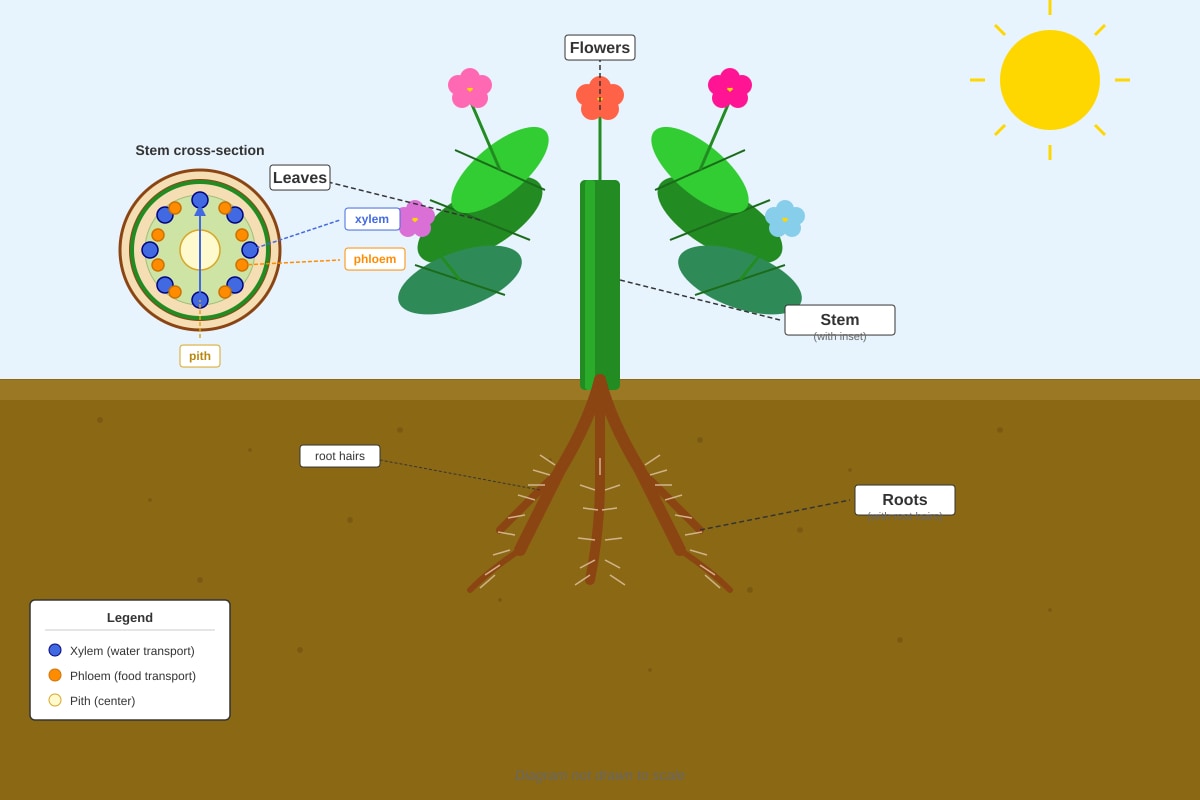
Explanation: Leaves (part C) contain chlorophyll and make food for the plant through photosynthesis. Roots (A) absorb water and minerals. Stem (B) transports water and food. Flowers (D) are for reproduction.
Mark: 1
5. Answer: (3) Ice, oil, oxygen
Explanation: Matter has mass and occupies space. Ice (solid), oil (liquid), and oxygen (gas) are all matter. Shadow, light, heat, and sound are forms of energy, not matter. Steam is matter (gaseous water), but light is not. Sand is matter, but light is not. Wood is matter, but heat and sound are not.
Mark: 1
6. Answer: (2) Liquid
Explanation: Solids have definite shape and volume. Liquids have definite volume but no definite shape (take shape of container). Gases have neither definite shape nor definite volume. Plasma is not taught at Primary 4.
Mark: 1
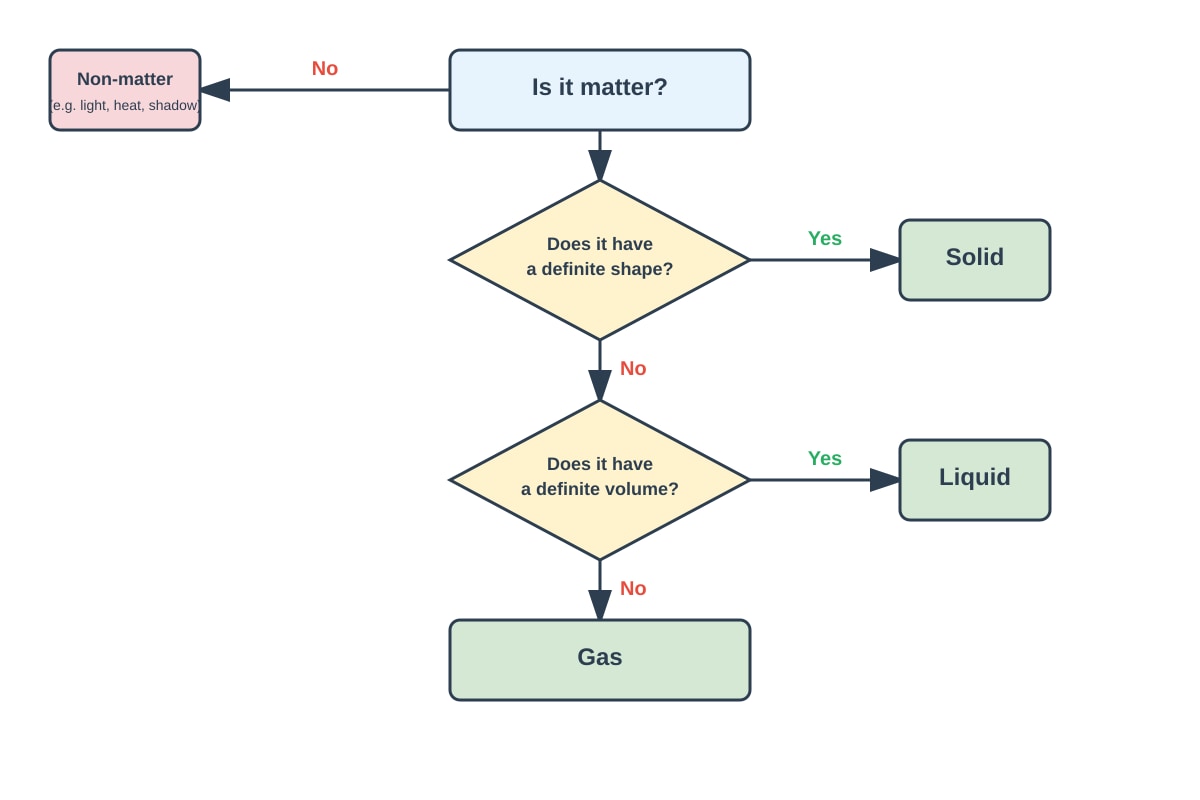
7. Answer: (3) A substance that has mass and occupies space, has no definite shape and no definite volume.
Explanation: Following the flowchart: Matter → No definite shape → No definite volume → Gas. Gases have mass and occupy space, but particles are far apart and move freely, so no fixed shape or volume.
Mark: 1
8. Answer: (2) Living things can move from place to place.
Explanation: This is not a universal characteristic of living things. Plants are living but cannot move from place to place (they move parts like leaves/flowers but not locomotion). The other three are key characteristics: need air/food/water, respond to changes, grow and reproduce.
Mark: 1
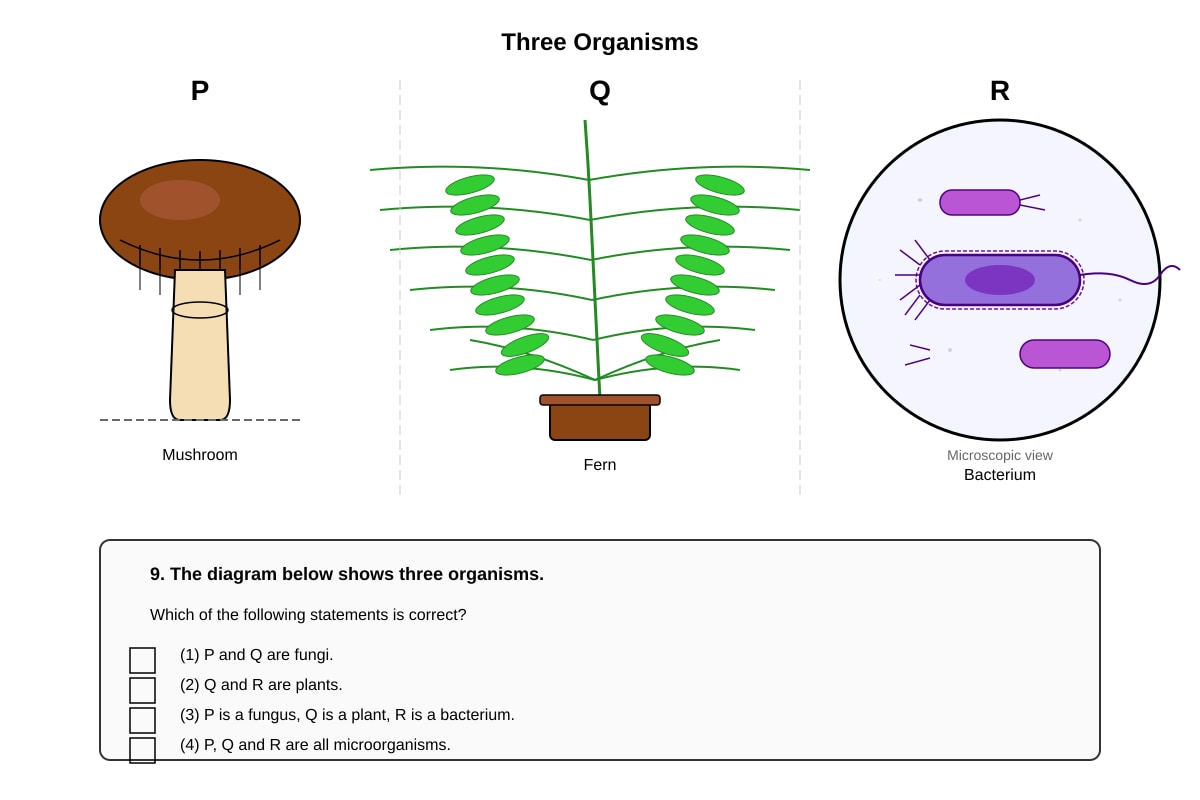
9. Answer: (3) P is a fungus, Q is a plant, R is a bacterium.
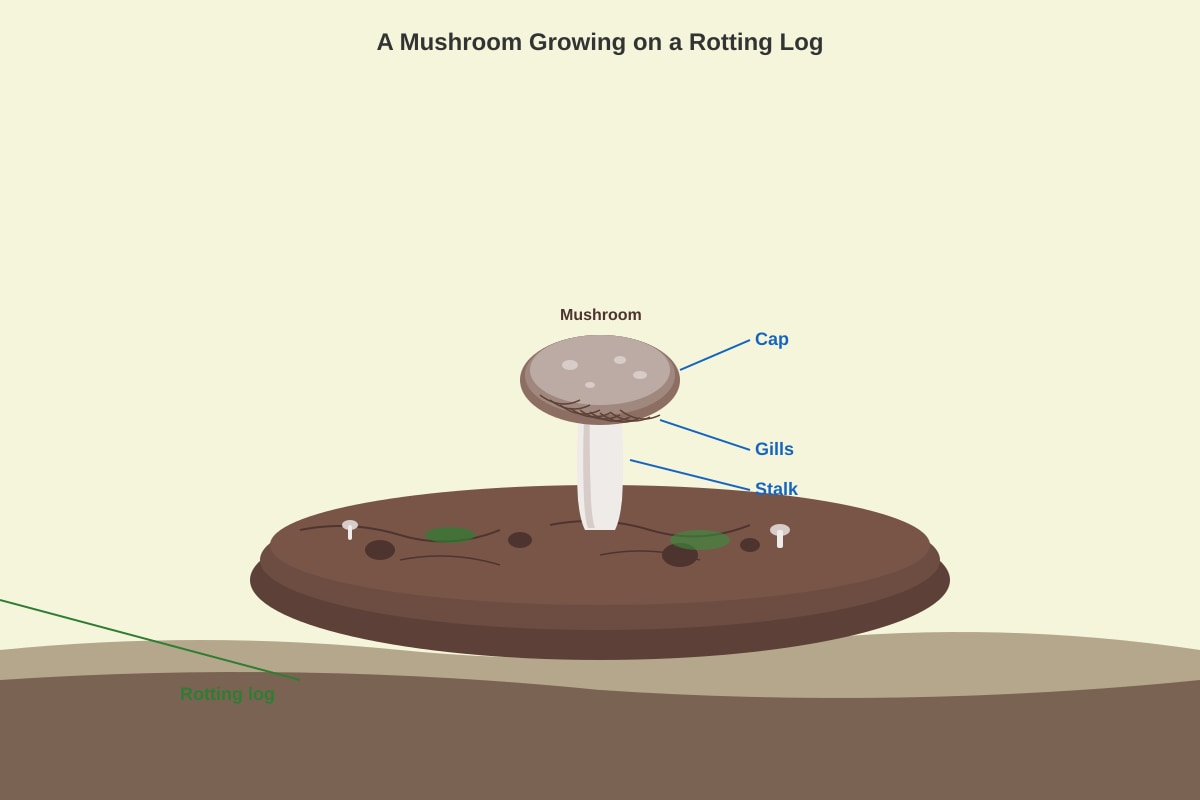
Explanation: P (mushroom) is a fungus. Q (fern) is a non-flowering plant. R (rod-shaped bacterium) is a bacterium (microorganism, not plant or fungus). Option (1) wrong: Q is not fungus. Option (2) wrong: R is not plant. Option (4) wrong: Mushroom and fern are macroscopic, not microorganisms.
Mark: 1
10. Answer: (2) good conductor
Explanation: The metal spoon felt hotter because it conducts heat faster from the hot water to the hand. Metals are good conductors of heat. Plastic is a poor conductor (insulator).
Mark: 1
Section B: Structured Questions (20 marks)
11.
(a) Any two of:
- It grows / increases in size.
- It reproduces (lays eggs).
- It responds to changes (e.g. flies away when disturbed).
- It needs air, food, and water.
- It moves (flies, hops).
Mark: 1 (any two correct characteristics)
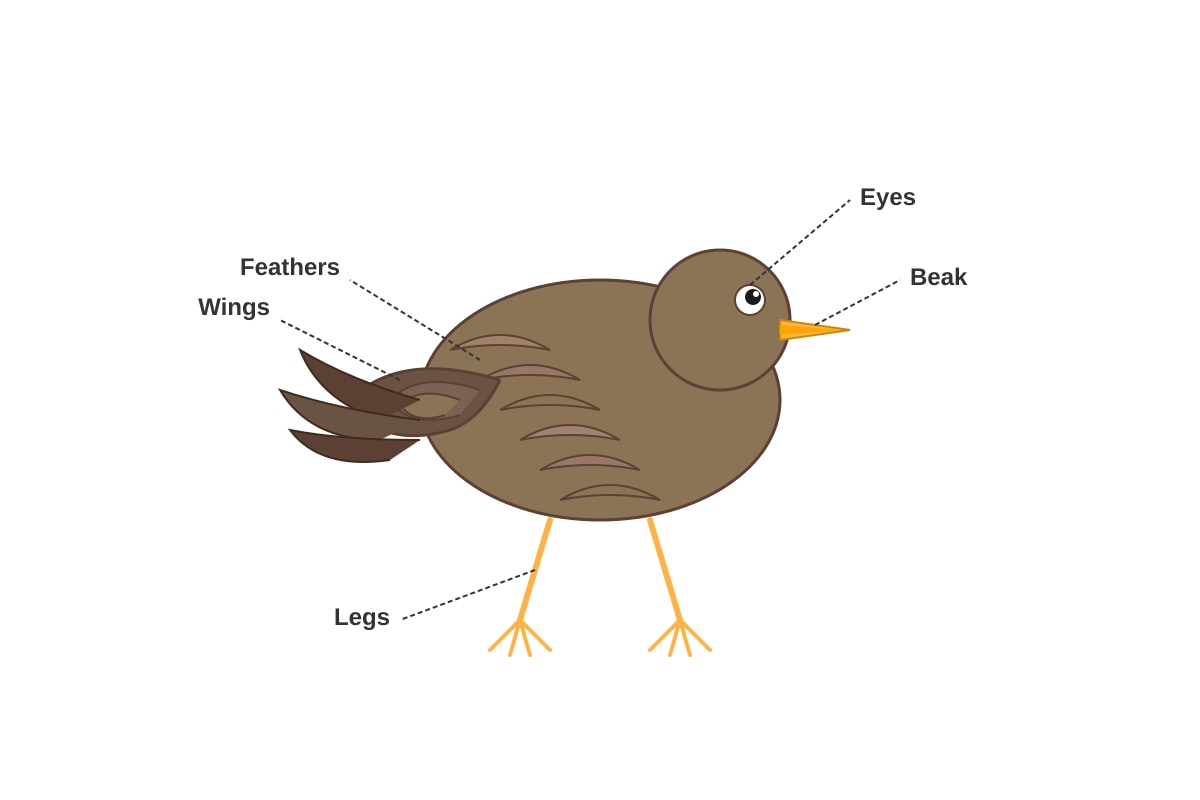
(b) Birds have feathers (or: birds lay eggs with hard shells / birds have beaks / birds have wings — but feathers are unique to birds).
Explanation: Mammals have hair/fur, give birth to live young (mostly), and feed young with milk. Feathers are exclusive to birds.
Mark: 1
12.
| Fungi | Bacteria | Plants |
|---|---|---|
| Mould | Bacteria | Fern |
| Yeast | Moss | |
| Mushroom |
Explanation:
- Fungi: Mould, Yeast, Mushroom (reproduce by spores, decomposers, no chlorophyll).
- Bacteria: Bacteria (single-celled microorganisms, distinct kingdom).
- Plants: Fern, Moss (non-flowering plants, have chlorophyll, make own food).
Mark: 2 (all 6 correctly placed = 2 marks; 4-5 correct = 1 mark; ≤3 correct = 0 marks)
13.
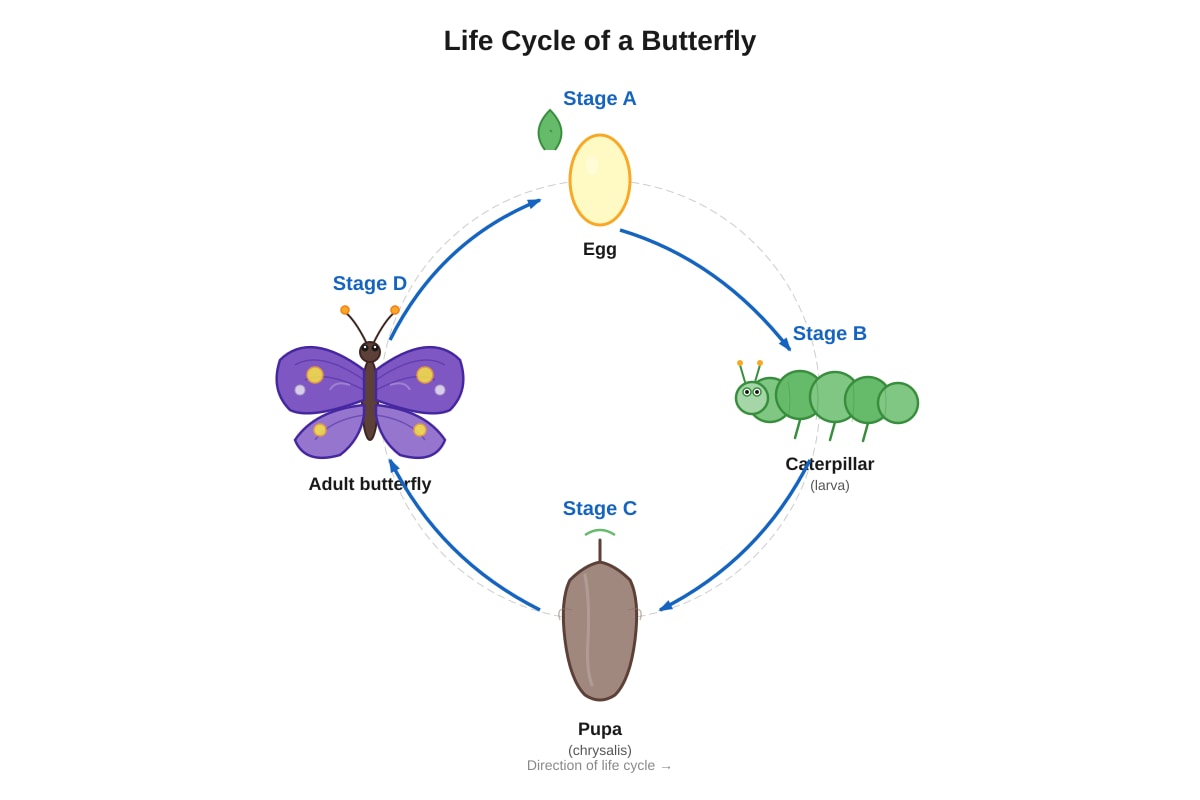
(a) Caterpillar (or Larva)
Mark: 1
(b) Any one difference:
- Stage B (caterpillar) has no wings; Stage D (adult butterfly) has wings.
- Stage B crawls; Stage D flies.
- Stage B eats leaves voraciously; Stage D feeds on nectar.
- Stage B is the feeding/growing stage; Stage D is the reproductive stage.
Mark: 1
14.
(a) Birds
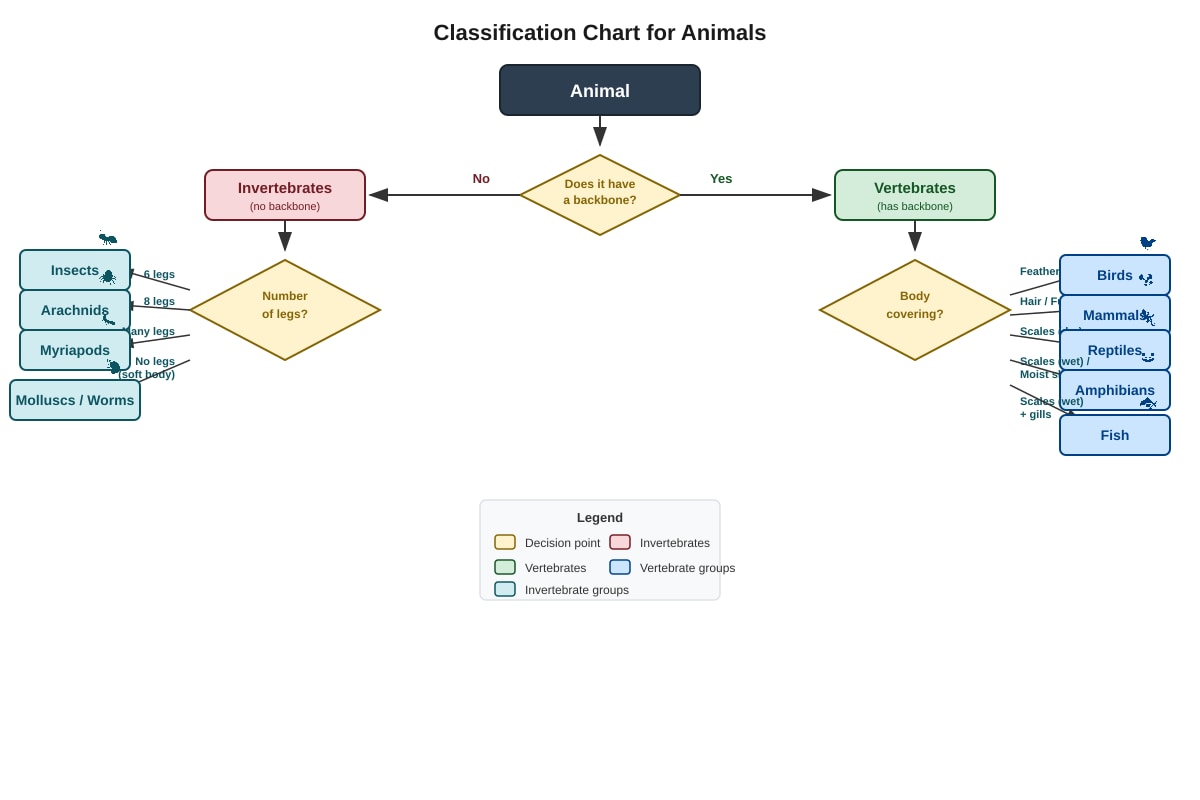
Explanation: Backbone → Vertebrate → Feathers → Birds.
Mark: 1
(b) Insects
Explanation: No backbone → Invertebrate → 6 legs → Insects.
Mark: 1
15.
(a) Liquid
Explanation: Material Y has mass, occupies space, no definite shape (takes container shape), definite volume, cannot be compressed — properties of a liquid.
Mark: 1
(b) Material Z is a gas.
Explanation: Material Z has mass and occupies space (so it is matter), but has no definite shape, no definite volume, and can be compressed — these are properties of a gas. Particles in a gas are far apart and move freely, allowing compression.
Mark: 1
16.
(a) Roots (specifically root hairs on the roots)
Explanation: Root hairs increase surface area for absorption of water and mineral salts from the soil.
Mark: 1
(b) Xylem (or water-carrying tubes)
Explanation: The stem contains xylem (transports water and minerals from roots to leaves) and phloem (transports food from leaves to other parts). Either "xylem" or "phloem" is acceptable, but "xylem" is the water-transporting tube.
Mark: 1
17.
(a) Condensation
Explanation: Process C shows gas changing to liquid (arrow from Gas to Liquid). This is condensation.
Mark: 1
(b) Lose heat
Explanation: During condensation, gas particles lose heat energy, slow down, move closer together, and form a liquid. Heat is released to the surroundings.
Mark: 1
18.
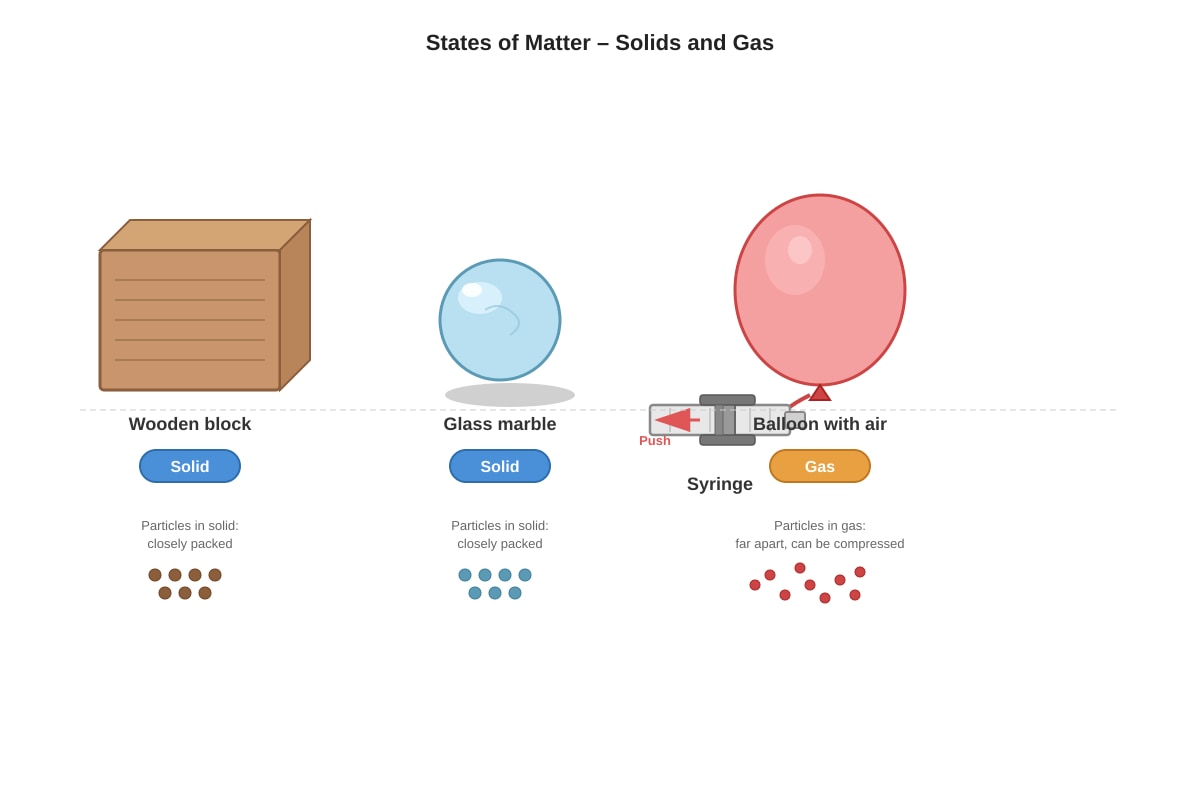
(a) Both are solids (or: both have definite shape and definite volume / both cannot be compressed easily).
Mark: 1
(b) Particles in a gas are far apart with large spaces between them, so they can be pushed closer together (compressed).
Explanation: In a gas, particles are randomly arranged and far apart. When the syringe is pushed, the particles are forced closer, reducing volume. In solids and liquids, particles are already close together, so they cannot be compressed much.
Mark: 1
19.
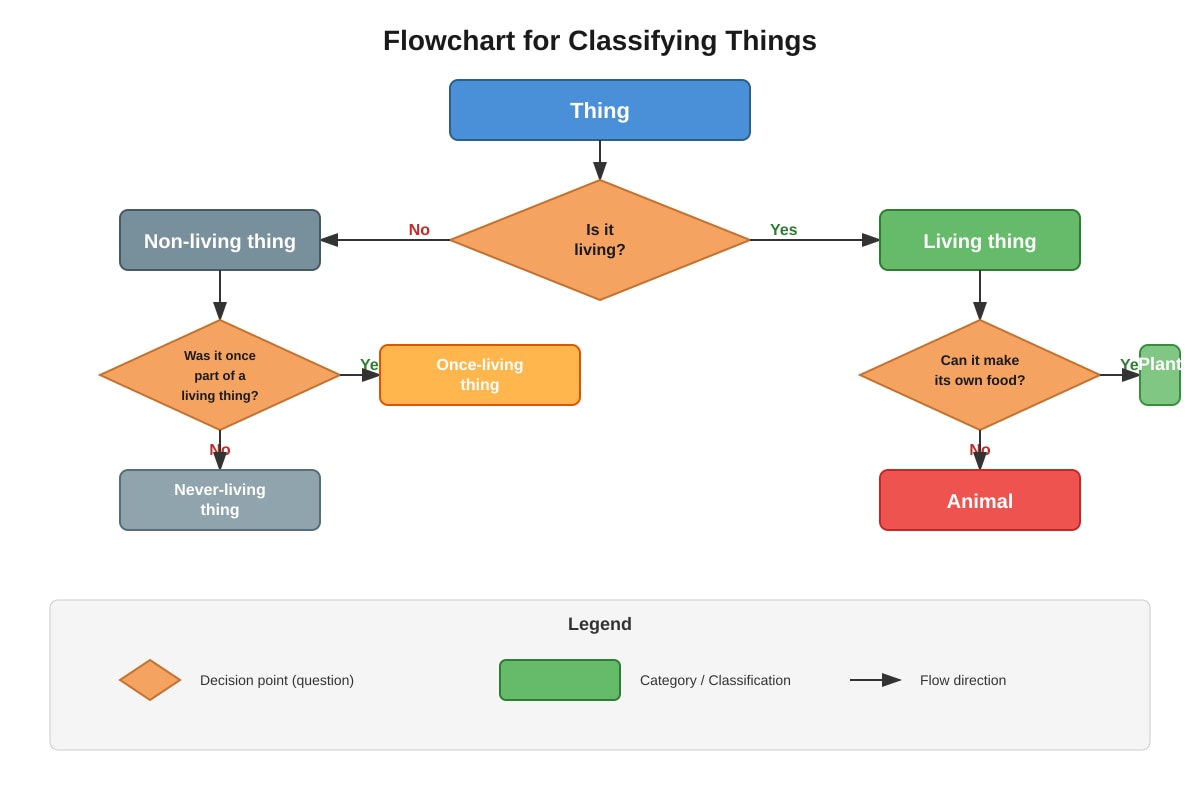
(a) A fallen leaf was once part of a living plant (it was alive when attached), but it is now dead and no longer carries out life processes.
Explanation: The flowchart: Non-living thing → Was it once part of a living thing? Yes → Once-living thing. A fallen leaf fits this.
Mark: 1
(b) Any one example: Rock / Stone / Sand / Water / Air / Metal / Plastic / Glass / Soil (mineral part)
Explanation: Never-living things were never alive and were never part of a living thing.
Mark: 1
20.
(a) Fungi obtain food by decomposing dead or decaying organic matter (or: they release enzymes onto dead matter to break it down externally, then absorb the nutrients).
Explanation: Fungi are saprotrophs/decomposers. They do not make their own food (no chlorophyll) and do not eat like animals.
Mark: 1
(b) They break down dead organisms and waste materials, returning nutrients to the soil for plants to use.
Explanation: As decomposers, fungi recycle nutrients (like nitrogen, phosphorus) back into the ecosystem, maintaining soil fertility and the nutrient cycle.
Mark: 1
Total: 30 marks
Marking Notes for Teachers:
- Section A: 1 mark each. No half marks.
- Section B:
- Q11(a): Accept any two valid characteristics of living things.
- Q12: Allocate 2 marks for fully correct table; 1 mark for 4-5 correct entries.
- Q13(b): Accept any clear, valid difference between larva and adult.
- Q15(b): Must identify Z as gas AND explain using properties (no definite shape/volume, compressible).
- Q16(b): Accept "xylem" or "water-carrying tubes"; "phloem" or "food-carrying tubes" also acceptable as the question asks for "one type of tube".
- Q18(b): Key concept: particles far apart → compressible. Must mention particle arrangement/spaces.
- Q19(a): Must link "once part of living thing" and "now dead".
- Q20(a): Must mention decomposing/breaking down dead matter externally.
- Q20(b): Must mention nutrient recycling/returning nutrients to soil.
Common Student Mistakes:
- Confusing bacteria with fungi (Q2, Q12).
- Thinking shadow, light, heat are matter (Q5).
- Stating "living things can move from place to place" as a universal characteristic (Q8).
- Confusing condensation with evaporation (Q17).
- Thinking gases have no mass (Q7, Q15).
- Not distinguishing once-living from never-living (Q19).
- Thinking fungi make their own food like plants (Q20).