AI Generated Exam Paper
Primary 4 Science Practice Paper 5
Free P4 Science Practice Paper 5, Kimi2.6 AI version, with questions, answers, and syllabus-aligned practice for Singapore students.
These static practice materials are generated from the site's syllabus and paper-generation workflow, with source and model context shown so students and parents can evaluate the material before use.
Questions
Free quiz and exam paper access
Enter your details to view this paper
Your access is remembered on this device.
Answers
TuitionGoWhere Practice Paper - Science Primary 4
Answer Key — Version 5 of 5
Section A: Multiple Choice (1 mark each)
1. B — They can reproduce (1 mark)
Teaching note: All living things can reproduce (make more of their own kind). Not all living things can fly (birds and insects can, but plants and fish cannot), have four legs (insects have six, birds have two), or speak. Reproduction is one of the seven life processes that all living things share: movement, respiration, sensitivity, growth, reproduction, excretion, and nutrition (remember "MRS GREN").
Common mistake: Students sometimes think all animals must move from place to place, but plants are living things that reproduce without moving around.
2. C — Cat (1 mark)
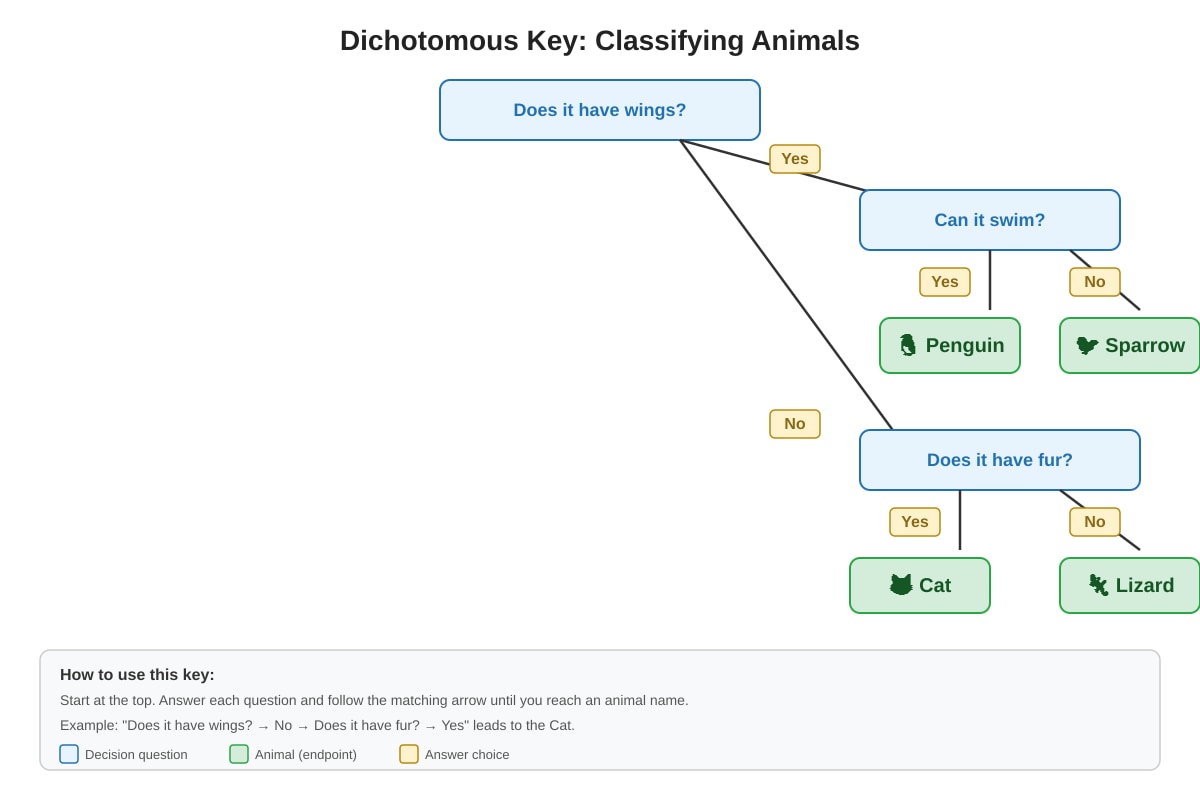
Teaching note: Follow the key step by step: "Does it have wings? → No" means you do not go to the winged branch (Penguin/Sparrow). Then "Does it have fur? → Yes" leads to Cat. This is how a dichotomous key works — at each step you choose between two options, and each choice leads you closer to the identification.
- Wings + swims → Penguin
- Wings + doesn't swim → Sparrow
- No wings + fur → Cat
- No wings + no fur → Lizard
3. C — Producers (1 mark)
Teaching note: Plants make their own food using sunlight, water, and carbon dioxide through photosynthesis. This makes them producers because they produce food energy in an ecosystem. Carnivores eat meat, herbivores eat plants, and decomposers break down dead material.
Key concept: Producers form the start of almost all food chains because they create energy-rich food from non-living sources.
4. C — Decomposers (1 mark)
Teaching note: Decomposers like fungi (mushrooms) and bacteria break down dead plants and animals, returning nutrients to the soil. They do not make their own food like producers, and they do not eat living things like consumers. Without decomposers, dead material would pile up and nutrients would not recycle back into the ecosystem.
5. B — The spiders would decrease in number (1 mark)
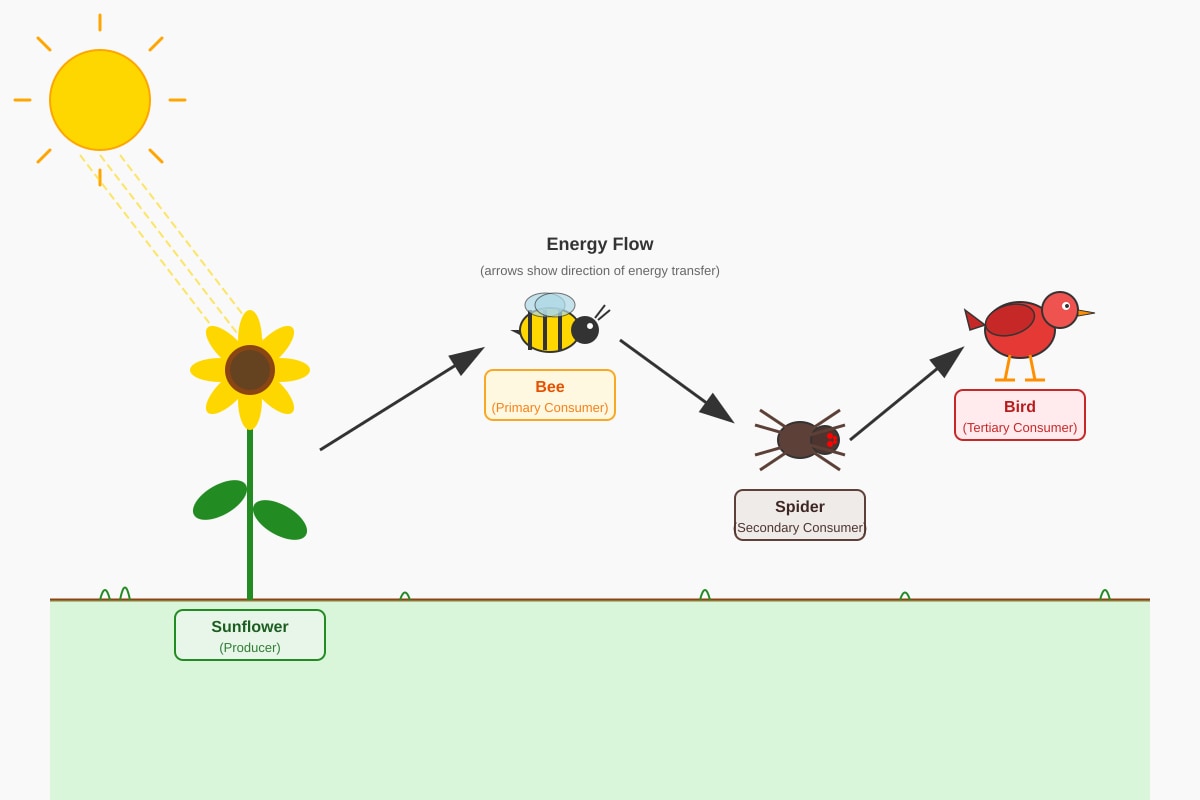
Teaching note: In a food chain, each organism depends on the one before it as a food source. The food chain here is: Sunflower → Bee → Spider → Bird. If bees die, spiders lose their food source. Without food, spiders cannot survive and reproduce, so their population decreases.
Reasoning chain: Remove one level → the level above it loses food → that population decreases. The birds would also be affected, but they do not "become producers" — animals cannot change their role in a food chain.
6. C — Metal spoon (1 mark)
Teaching note: Metals are good conductors of heat — they allow heat energy to pass through them quickly. This is why metal spoons get hot quickly if stirred in hot soup. Plastic, wood, and rubber are insulators — they slow down heat transfer and do not feel hot as quickly. Conductors feel hot or cold quickly because they transfer thermal energy efficiently; insulators feel neutral because they block this transfer.
7. B — Cotton (1 mark)
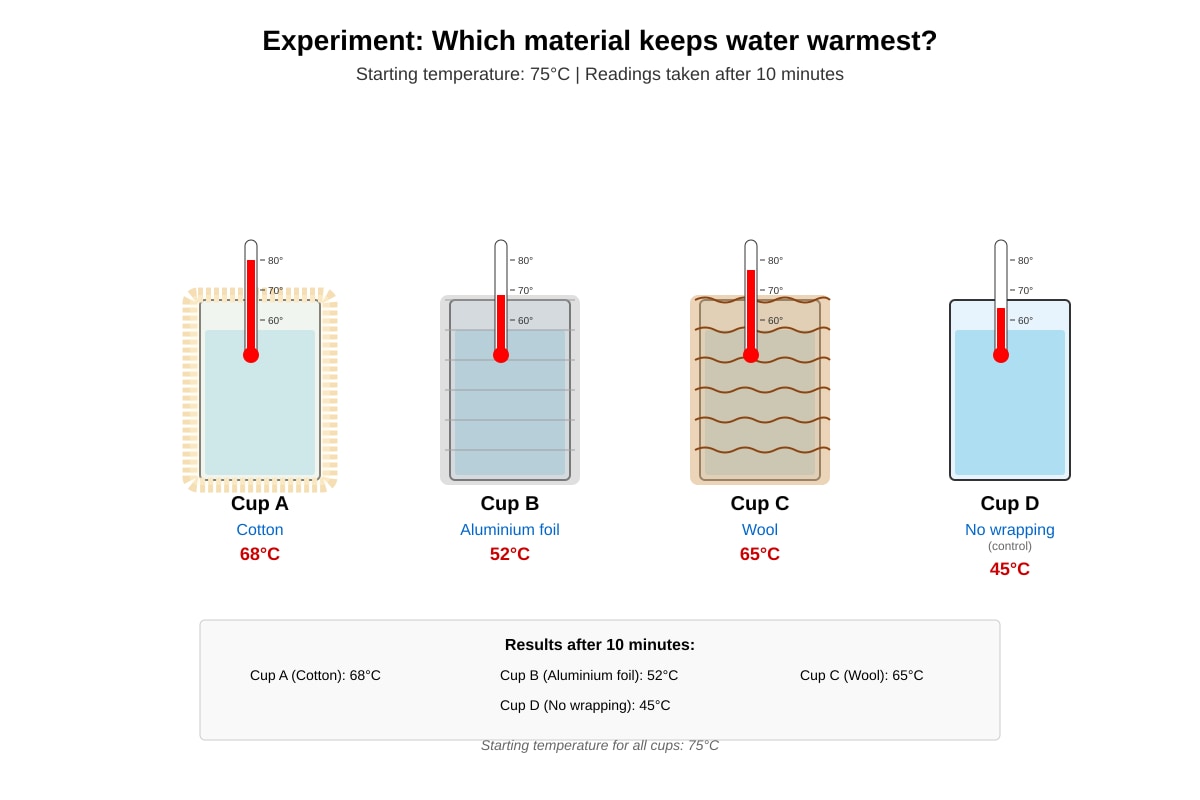
Teaching note: After 10 minutes, Cup A (cotton) has the highest temperature at 68°C, compared to C (wool, 65°C), B (aluminium foil, 52°C), and D (no wrapping, 45°C). This means cotton kept heat from leaving the water most effectively — it was the best insulator in this experiment.
Important note: Cotton traps air, which is a very good insulator. Aluminium foil actually reflects radiant heat but conducts heat well through contact, so in this setup it was less effective at keeping heat in. Wool also traps air but was slightly less effective than cotton in this particular test.
8. C — Solid (1 mark)
Teaching note:
| State | Fixed shape? | Fixed volume? |
|---|---|---|
| Solid | Yes | Yes |
| Liquid | No (takes shape of container) | Yes |
| Gas | No | No (spreads to fill space) |
Solids have particles tightly packed in a fixed arrangement, so they keep both shape and volume. Liquids have particles that can slide past each other, so they flow to fit the container but keep the same amount of space (volume). Gas particles move freely and spread out.
9. B — Melting (1 mark)
Teaching note: Melting is the change from solid to liquid when a substance is heated. Ice cream (solid, frozen) becomes liquid when it warms up. The sun provides heat energy that makes the particles in ice cream vibrate faster until they break free from their fixed positions and can flow.
- Evaporation: liquid → gas
- Melting: solid → liquid ✓
- Freezing: liquid → solid
- Condensation: gas → liquid
10. B — B (1 mark)
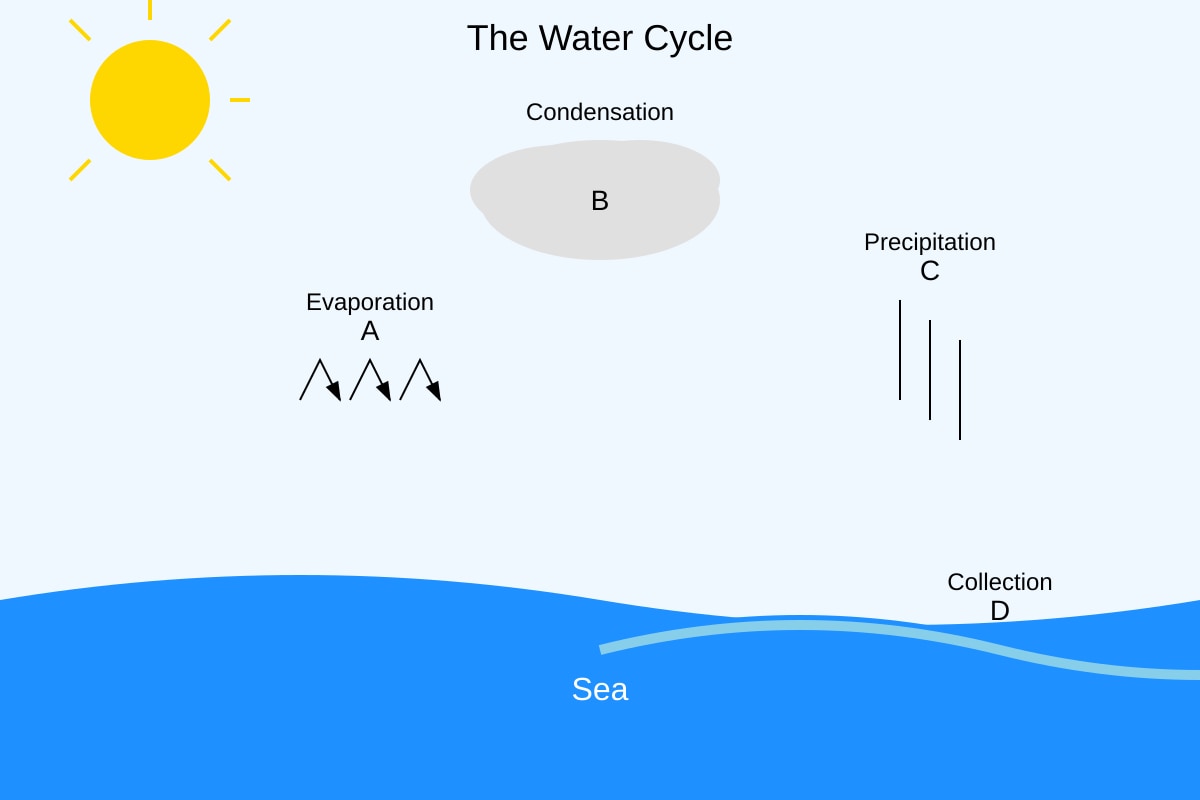
Teaching note: Condensation is the process where water vapour (gas) cools down and changes into tiny liquid water droplets, forming clouds.
- A (A) = Evaporation: liquid water heats up and becomes water vapour
- B (B) = Condensation: water vapour cools and forms cloud droplets ✓
- C (C) = Precipitation: water droplets get heavy and fall as rain
- D (D) = Collection: water gathers in rivers, lakes, and seas
Real-world connection: You see condensation when water droplets form on the outside of a cold drink glass — water vapour from the air touches the cold surface and turns to liquid.
Section B: Short Answer
11. (4 marks total)
(a) Animal P is a fish. (1 mark)
Reason: It has scales and no feathers, and it has a backbone but is not warm-blooded / is cold-blooded. (1 mark)
Marking: Correct identification (P) — 1 mark. Valid reason referring to scales and backbone/not warm-blooded — 1 mark. Accept: "cold-blooded" or "has scales" as partial; need reference to backbone or blood temperature for full mark.
(b) Animals Q and S are mammals. (1 mark for both correct; 0.5 if one correct)
Explanation: Both have backbones, no scales and no feathers, and are warm-blooded. Mammals have fur or hair, give birth to live young (mostly), and feed their young with milk. (1 mark)
Marking: Identification — up to 1 mark. Explanation must mention warm-blooded AND two mammal features (hair/fur, milk, live young). Give 1 mark for clear explanation with at least two valid points.
(c) Insects have six legs; spiders have eight legs. (1 mark)
Alternative answers: Insects have three body parts (head, thorax, abdomen); spiders have two body parts. / Insects usually have wings; spiders do not. / Insects have antennae; spiders do not.
Teaching note: Insects and spiders are both invertebrates (no backbone), but insects belong to a different group. These are key distinguishing features used in classification.
12. (4 marks total)
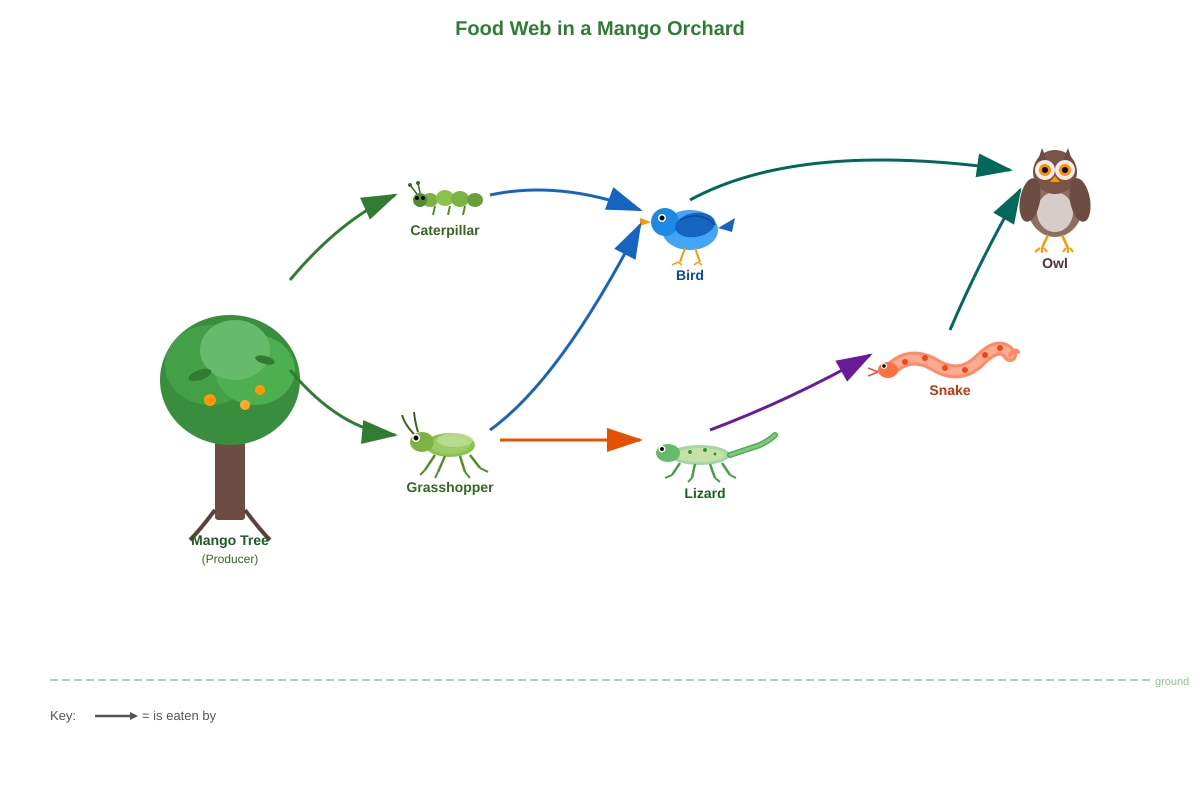
(a) Mango tree (1 mark)
Teaching note: Producers are organisms that make their own food through photosynthesis. Only plants do this. All other organisms in the food web are consumers that must eat other organisms.
(b) Mango tree → Caterpillar → Bird → Owl (1 mark)
Alternative: Mango tree → Grasshopper → Bird → Owl / Mango tree → Grasshopper → Lizard → Snake
Marking: Must start with producer. Must have four organisms with correct arrow direction (energy flow). Deduct 0.5 for wrong arrow or missing arrow.
(c) The lizard population would decrease. (1 mark)
Explanation: Lizards eat grasshoppers. If all grasshoppers die, lizards lose their food source. With no food, lizards would starve, die, and fail to reproduce. (1 mark)
Reasoning chain: Lose food source → cannot survive → population decreases. Accept "decrease/reduce/go down." Reject ambiguous answers without explanation of food loss.
13. (3 marks)
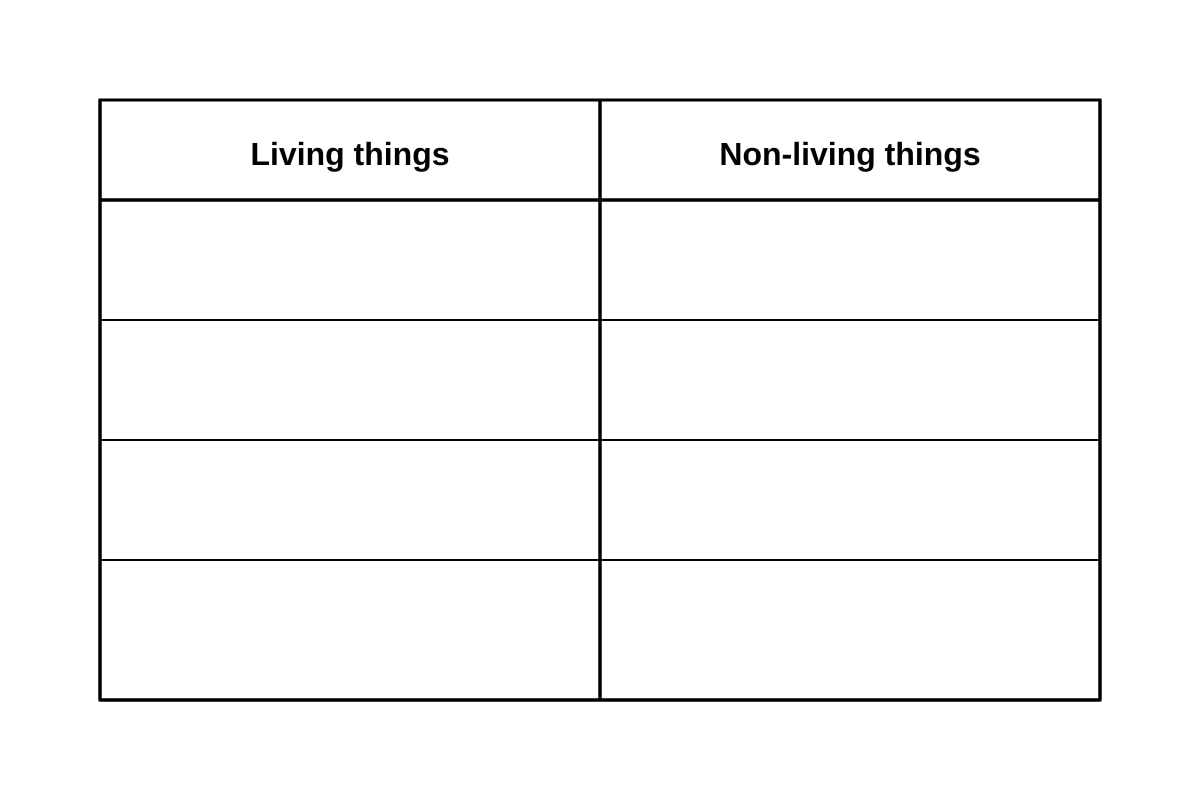
| Living things | Non-living things |
|---|---|
| Rose plant | Bucket |
| Butterfly | Rock |
| Earthworm | Water bottle |
Marking: Each correct placement — 0.5 mark (6 items × 0.5 = 3 marks). Deduct 0.5 per item for wrong column. Must have exactly three in each column for full marks; if columns unbalanced, mark correct items only.
Teaching note: Living things show MRS GREN life processes; non-living things do not. Water is non-living (not listed here, but commonly confused). Rocks were once living if fossilized, but most rocks are non-living mineral formations.
14. (3 marks total)
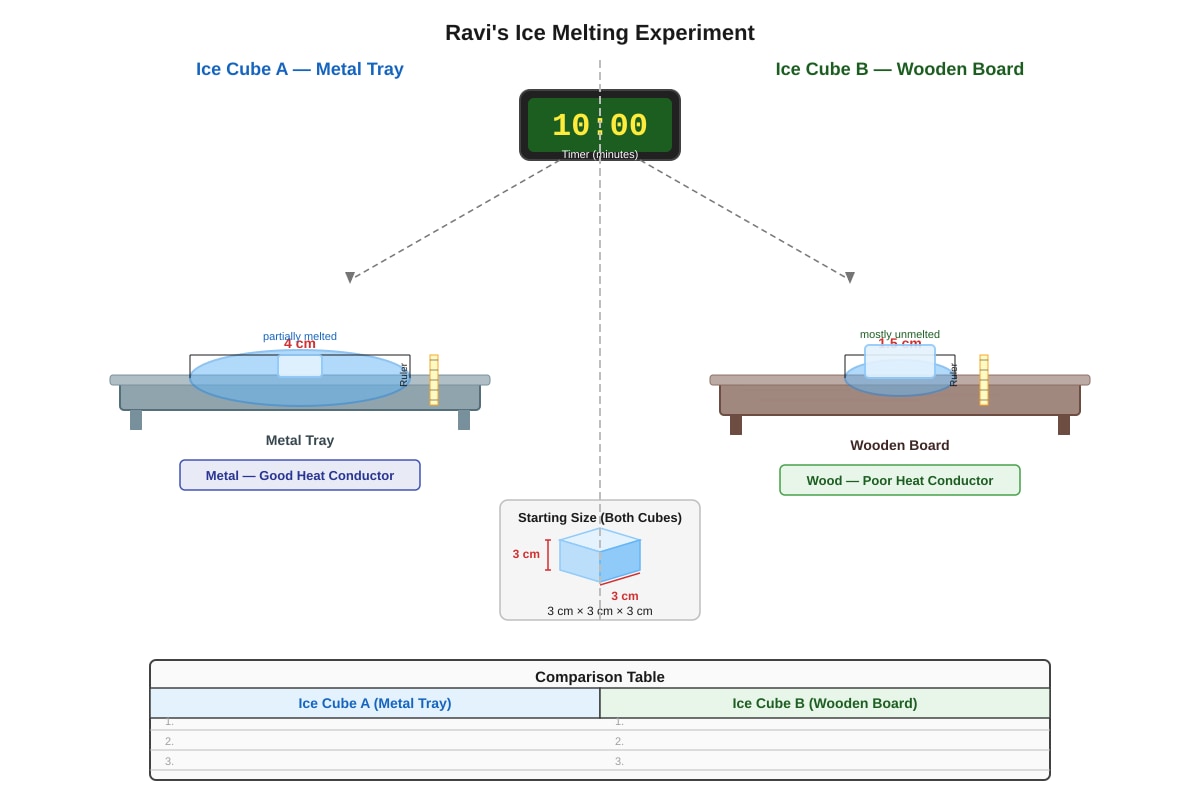
(a) Ice cube A (on metal tray) melted faster. (1 mark)
Explanation: Metal is a good conductor of heat. It allows heat from the surrounding air to pass quickly to the ice cube, making it melt faster. Wood is an insulator, so it slows down heat transfer to ice cube B. (1 mark)
Marking: Correct prediction with material named — 1 mark. Explanation must mention metal as good conductor/heat travels fast through metal, AND wood/plastic/insulator slows heat. Give 1 mark for complete explanation.
(b) Any one: Size/mass of ice cube; starting temperature of ice cubes; temperature of surrounding air; time left to melt; position in room (sun/shade). (1 mark)
Teaching note: A fair test changes only ONE variable (the material) and keeps everything else the same. This ensures any difference in result is caused by the material, not another factor.
15. (4 marks total)
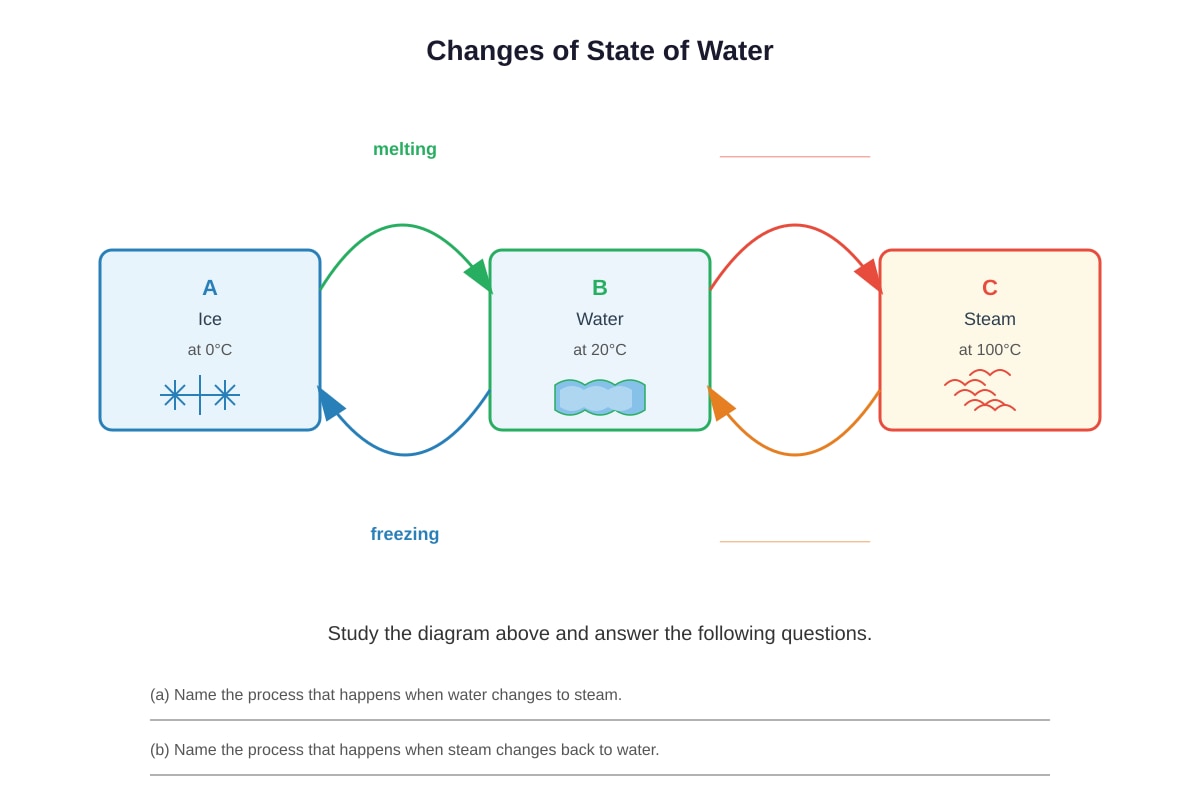
(a) Evaporation (1 mark)
(b) Condensation (1 mark)
(c) Condensation. (1 mark)
Explanation: Water vapour in the warm, humid air touches the cold surface of the glass. The cold surface cools the water vapour, turning it from gas to liquid water droplets. This is condensation. (1 mark)
Marking: Correct process named — 1 mark. Explanation must mention: warm/humid air, water vapour, cold glass surface, cools/changes to liquid. Give 1 mark for complete explanation with at least three of these elements.
Teaching note: Condensation happens on the outside of the glass because the glass surface is cold enough to cool water vapour from the surrounding air. It is not water leaking through the glass.
16. (4 marks total)
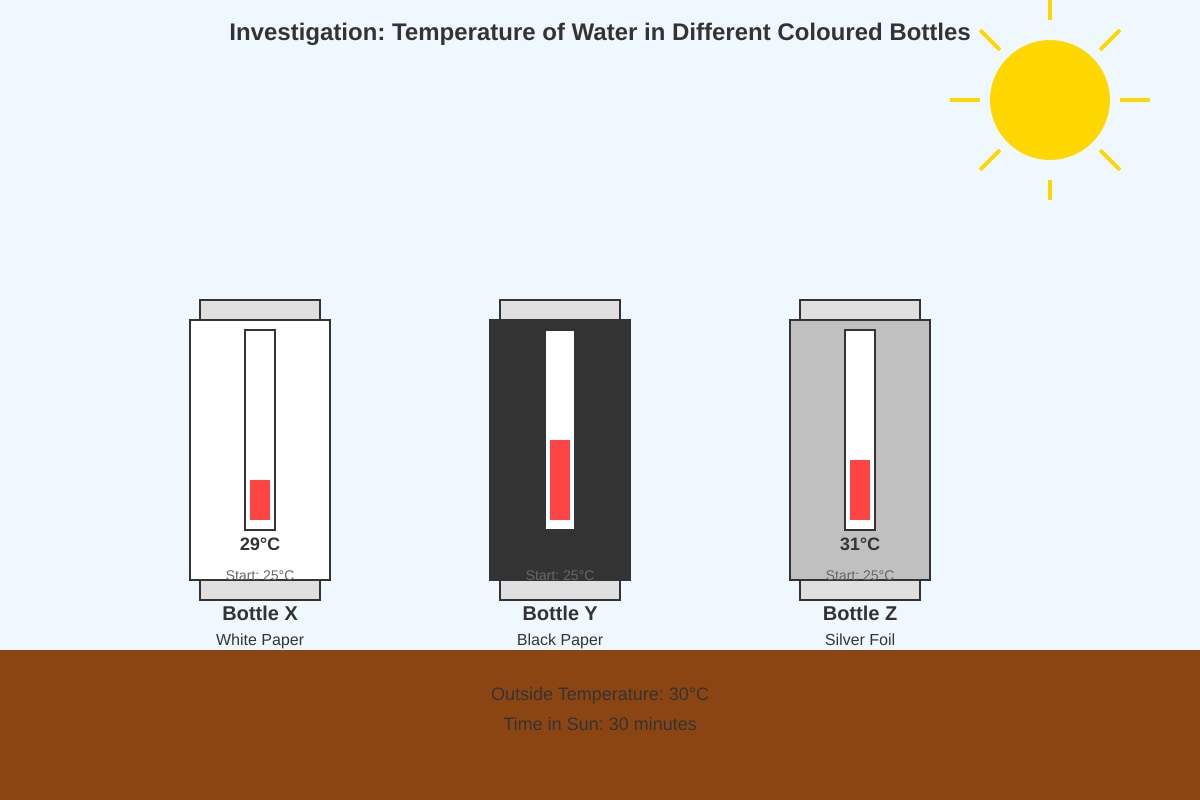
(a) Bottle Y (black paper) (1 mark)
(b) Black/dark surfaces are good absorbers of heat radiation (1 mark)
Explanation: Dark colours absorb most of the light and heat energy that falls on them. White and silver surfaces reflect heat away. The black paper absorbed more heat from the sun, warming the water inside more than the other bottles. (1 mark)
Marking: Must mention absorption of heat/thermal energy/radiation. Link dark colour to absorption. Explain why it's warmer than white/silver alternatives.
(c) Any one: Repeat the experiment and calculate an average; use more than one bottle of each colour; check thermometer readings carefully; ensure bottles are same distance from heat source; conduct on multiple days. (1 mark)
Teaching note: Reliability means getting consistent results that can be trusted. Repeating and averaging reduces the effect of random errors or unusual readings.
Section C: Open-Ended
17. (6 marks total)
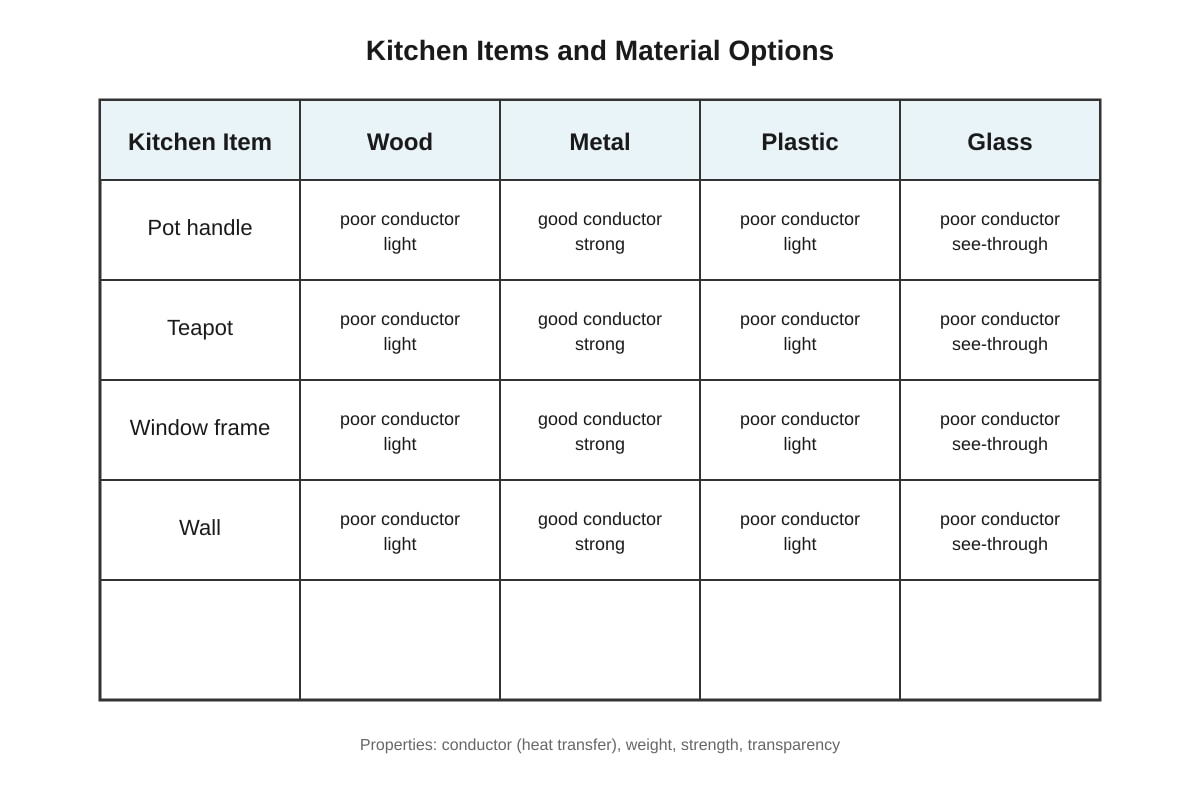
(a) Plastic or wood for the pot handle. (1 mark)
Explanation with heat transfer: (2 marks)
- Plastic and wood are poor conductors of heat (insulators). (1 mark)
- This means heat from the hot pot does not travel quickly to the handle, so the cook can hold it safely without getting burned. (1 mark)
Alternative: Metal would be dangerous because it conducts heat quickly to your hand.
Marking: Correct material with reason — 1 mark. Must explain property (poor conductor/insulator) AND purpose (safe to hold/prevents burning). Give full 3 marks for complete, clear explanation.
(b) (3 marks)
- Sunlight passes through the window as light energy. (1 mark)
- The wall absorbs this light energy and converts it to heat energy. (1 mark)
- The wall is an insulator/poor conductor, so the heat builds up and spreads slowly through the material, making it feel warm. (1 mark)
Alternative explanation: Sunlight carries thermal radiation. Dark or solid surfaces absorb this radiation. The absorbed energy makes particles in the wall vibrate faster, which we feel as increased temperature.
Marking: Must trace energy transfer from sun through window to wall, and explain heating of wall material. Give marks for: sunlight enters, absorption by wall, conversion to heat/particles vibrate.
18. (5 marks total)
(a) (2 marks)
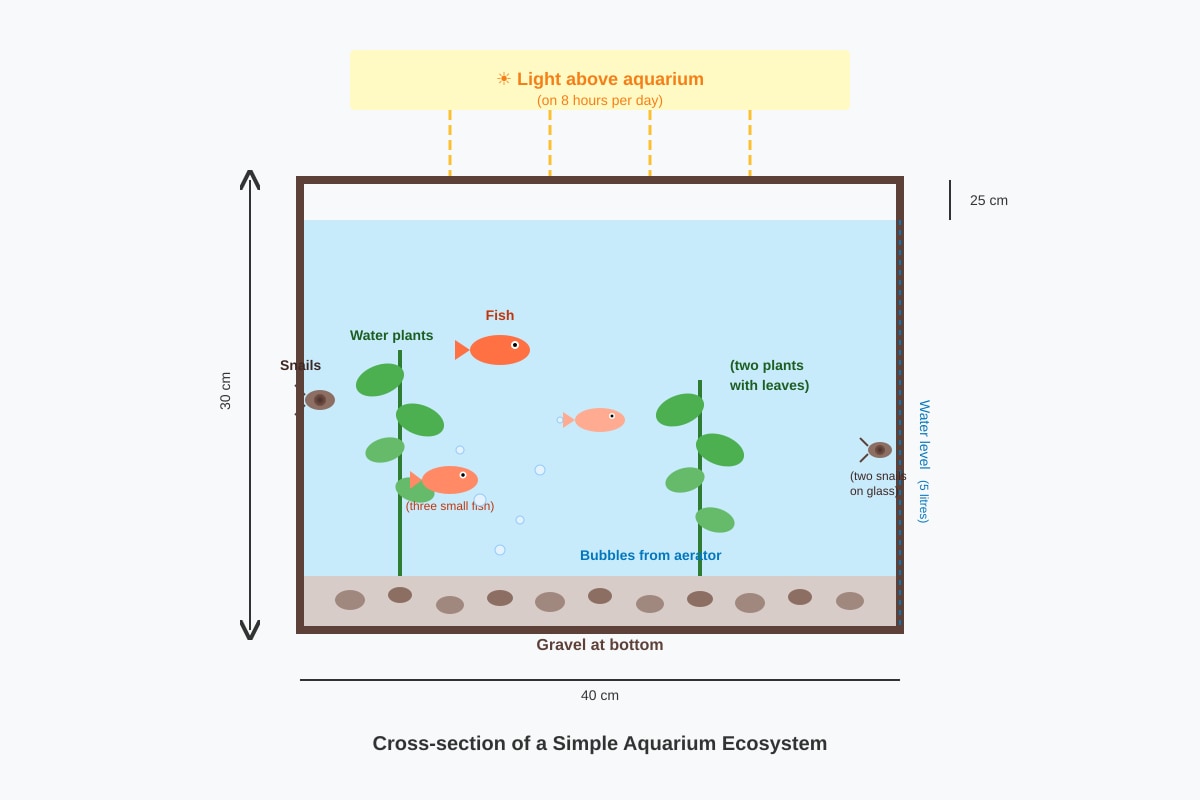
- Water plants produce oxygen during photosynthesis. (1 mark)
- Fish need oxygen to breathe/live (respiration), so the plants provide the oxygen dissolved in water that fish use. (1 mark)
Alternative: Plants also provide shelter/hiding places for fish.
Marking: Must link photosynthesis to oxygen production AND fish need for oxygen/respiration. Two distinct linked ideas for 2 marks.
(b) (3 marks)
Why water became cloudy: Too many fish produce too much waste (faeces/uneaten food/excess ammonia). The filter cannot clean it all. Bacteria grow, or waste particles cloud the water. (1 mark)
Problems: Fish may not get enough oxygen; waste builds up toxic ammonia; fish may die. (1 mark)
Solution: Remove some fish to reduce waste; clean the tank more often; get a bigger tank/better filter; feed less. (1 mark)
Marking: Cause — 1 mark (must mention waste/pollution from too many fish). Consequence — 1 mark. Solution — 1 mark (must be practical and address the cause).
19. (5 marks total)
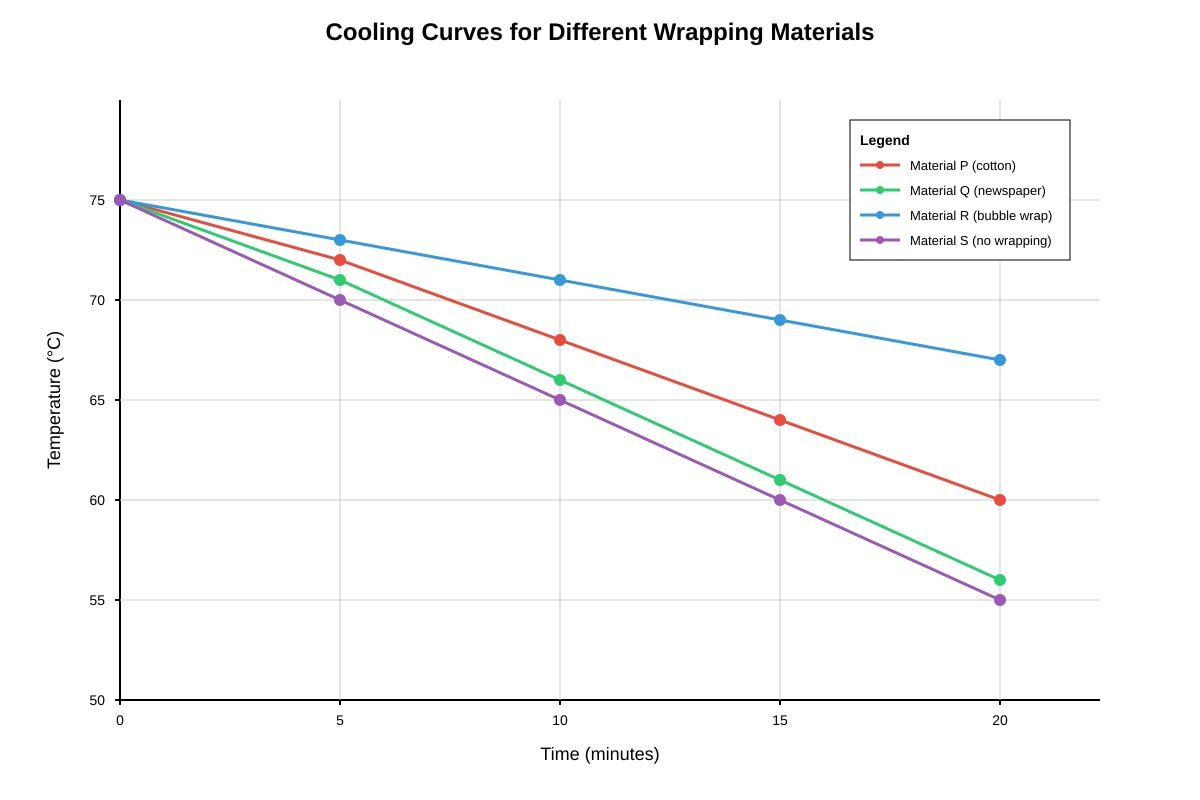
(a) Material R (bubble wrap) was the best insulator. (1 mark)
Explanation from graph: (1 mark)
After 20 minutes, R had the highest temperature (67°C), dropping only 8°C from the start. P dropped 15°C, Q dropped 19°C, and S (control, no wrapping) dropped 20°C. The smallest temperature drop means the least heat escaped, so R was the best insulator.
Marking: Must reference specific temperatures or temperature drops from graph data to earn explanation mark.
(b) (3 marks)
Judgment: Disagree or partially agree with qualification. (1 mark)
Evidence from data:
- Bubble wrap (R) is thin but was the best insulator. (0.5 mark)
- Newspaper (Q) is thicker than cotton (P) but was worse at insulating (Q dropped 19°C vs P's 15°C). (0.5 mark)
Scientific explanation: Thickness helps, but what matters more is trapping air. Materials with trapped air pockets (like bubble wrap) are good insulators regardless of thickness. Solid thick materials without air pockets may conduct heat well. (1 mark)
Marking: Must use data to contradict simple "thicker is always better" claim AND explain role of trapped air/material structure, not just thickness.
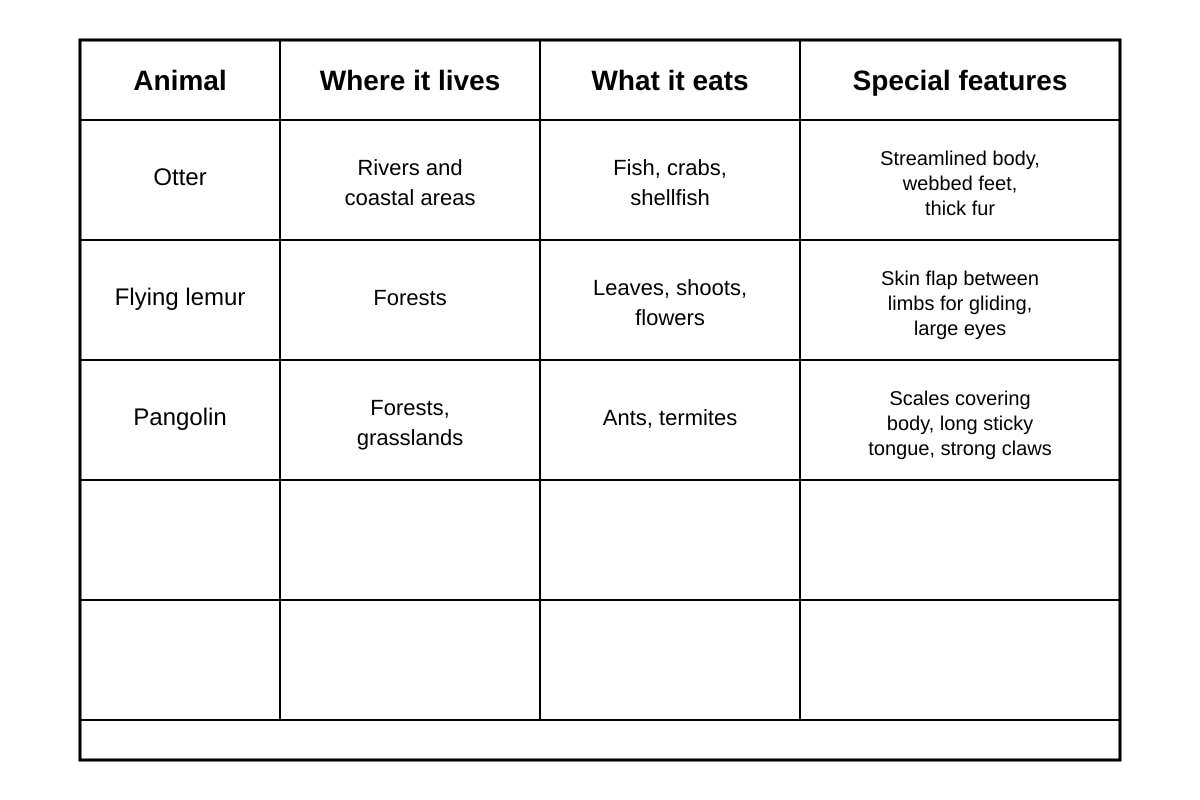
20. (7 marks total)
(a) (4 marks — 2 marks per feature, need two features)
Feature 1: Streamlined body (1 mark)
- Reduces water resistance/drag when swimming
- Allows faster movement through water to catch prey/escape predators (1 mark)
Feature 2: Webbed feet (1 mark)
- Act like paddles to push more water
- Powerful swimming for catching fish and moving against currents (1 mark)
Feature 3: Thick fur (1 mark)
- Traps air to keep body warm in water (insulation)
- Prevents heat loss in cooler river water (1 mark)
Marking: Two features required. For each: name feature — 1 mark. Explain how it helps survival in habitat — 1 mark. Must link to river/coastal environment (moving water, need to swim, temperature regulation).
(b) (3 marks)
Effect on animals: (2 marks)
- Trees provide food (leaves for flying lemurs, ants/termites for pangolins) — cutting trees removes food source. (1 mark)
- Trees provide shelter/habitat/nesting places — cutting trees leaves animals with nowhere to live, exposed to predators and weather. (1 mark)
- Animals may die, move away, or their populations decrease. (0.5 mark, bonus if mentioned)
Suggestion to protect them: (1 mark)
- Build only on cleared land/avoid forest areas
- Create wildlife corridors between forest patches
- Plant replacement trees elsewhere
- Set up nature reserve/protected area before building
Marking: Must have clear harm to food AND shelter for 2 marks. Solution must be practical and directly address the problem of tree loss.
END OF ANSWER KEY
Total Marks: 50