AI Generated Exam Paper
Primary 4 Science Practice Paper 5
Free P4 Science Practice Paper 5, HY3 AI version, with questions, answers, and syllabus-aligned practice for Singapore students.
These static practice materials are generated from the site's syllabus and paper-generation workflow, with source and model context shown so students and parents can evaluate the material before use.
Questions
TuitionGoWhere Practice Paper - Science Primary 4
TuitionGoWhere Practice Paper (AI) — Version 5
Subject: Science
Level: Primary 4
Paper: Practice Paper (Topic: Diversity)
Duration: 45 minutes
Total Marks: 40
Name: ______________________
Class: _________
Date: ____________
Instructions:
- This practice paper has 20 questions on the topic of Diversity.
- Section A: 10 multiple-choice questions (1 mark each).
- Section B: 6 short-answer questions (2 marks each).
- Section C: 4 structured questions (total 8 marks).
- Answer all questions in the spaces provided.
- Use a pencil to draw if needed.
Section A (10 marks)
Choose the correct answer. 1 mark each.
1. Which of the following is a living thing?
A) A wooden chair
B) A mosquito
C) A plastic cup
D) A stone
2. Which group does a fern belong to?
A) Non-flowering plant
B) Flowering plant
C) Mammal
D) Insect
3. Which animal breathes with gills?
A) Cat
B) Frog (adult)
C) Fish
D) Lizard
4. Which of these is a non-living thing that was once part of a living thing?
A) Cotton shirt
B) Iron rod
C) Glass bottle
D) Rubber ball
5. Which characteristic shows something is alive?
A) It is red in colour
B) It can move by itself
C) It is cold to touch
D) It is round in shape
6. Which of the following is a mammal?
A) Eagle
B) Dolphin
C) Snake
D) Frog
7. Which plant group has flowers and produces fruits with seeds?
A) Flowering plants
B) Ferns
C) Mosses
D) Algae
8. Which of these is NOT a characteristic of all living things?
A) Need food
B) Can reproduce
C) Made of plastic
D) Respond to surroundings
9. A mushroom is classified as a —
A) Plant
B) Animal
C) Fungus
D) Bacteria
10. Which of the following is a correct way to group objects by living/non-living?
A) Living: rock, dog / non-living: tree
B) Living: bacteria, rose / non-living: book
C) Living: car, cat / non-living: grass
D) Living: table, bird / non-living: fish
Section B (12 marks)
Answer in complete sentences where possible. 2 marks each.
11. State one difference between a flowering plant and a non-flowering plant.
12. Give two examples of animals that are vertebrates.
13. Explain why a dead leaf on the ground is considered non-living even though it came from a living plant.
14. Name one characteristic that both plants and animals share as living things.
15. Classify the following into living or non-living: spider, cloud, mango tree, bicycle.
16. Why are bacteria grouped as living things even though we cannot see them without a microscope?
Section C (8 marks)
Structured questions.
17. Study the group of objects below.
- Cat
- Rose plant
- Notebook
- Goldfish
- Sand
(a) List the living things. (1 mark)
(b) List the non-living things. (1 mark)
18.
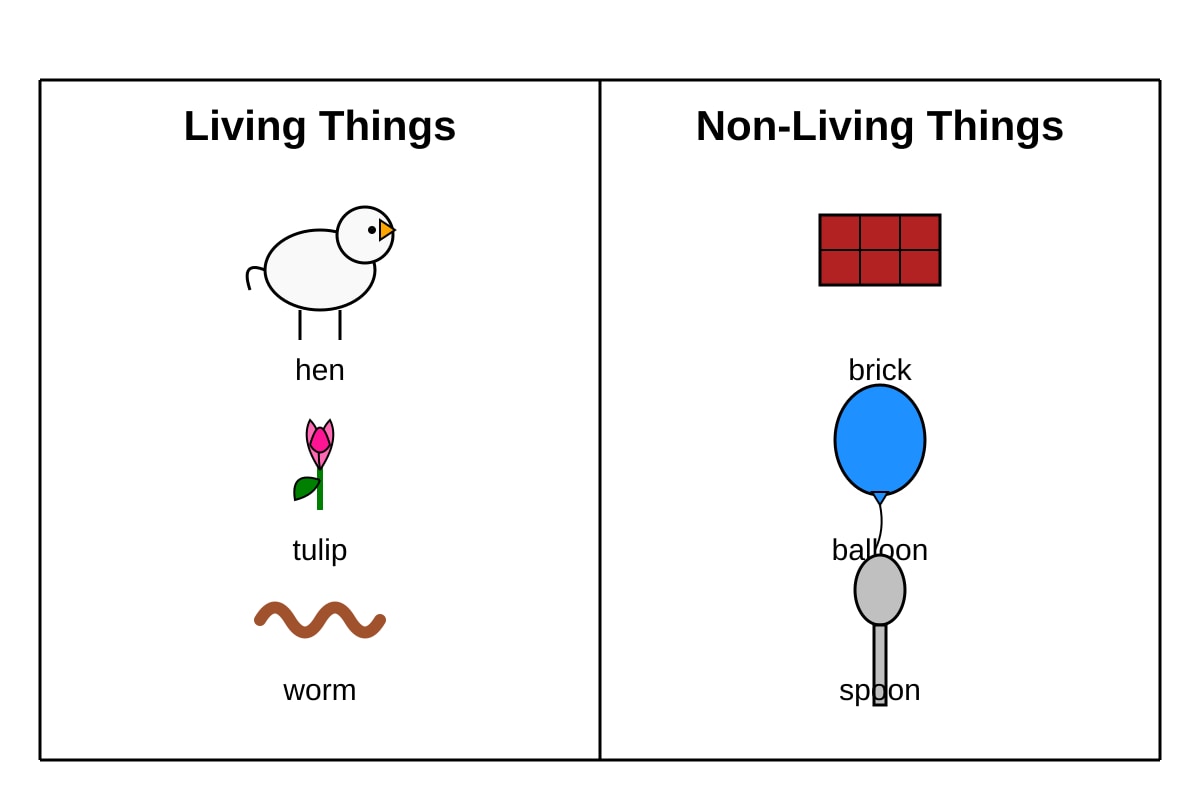
Image pending generation: diagram for Q18.
(a) Name two living things shown in the diagram. (1 mark)
(b) Name one non-living thing shown in the diagram. (1 mark)
19. A pupil says: "All things that move are living things."
(a) Is the pupil correct? (1 mark)
(b) Give one example to explain your answer. (1 mark)
20.
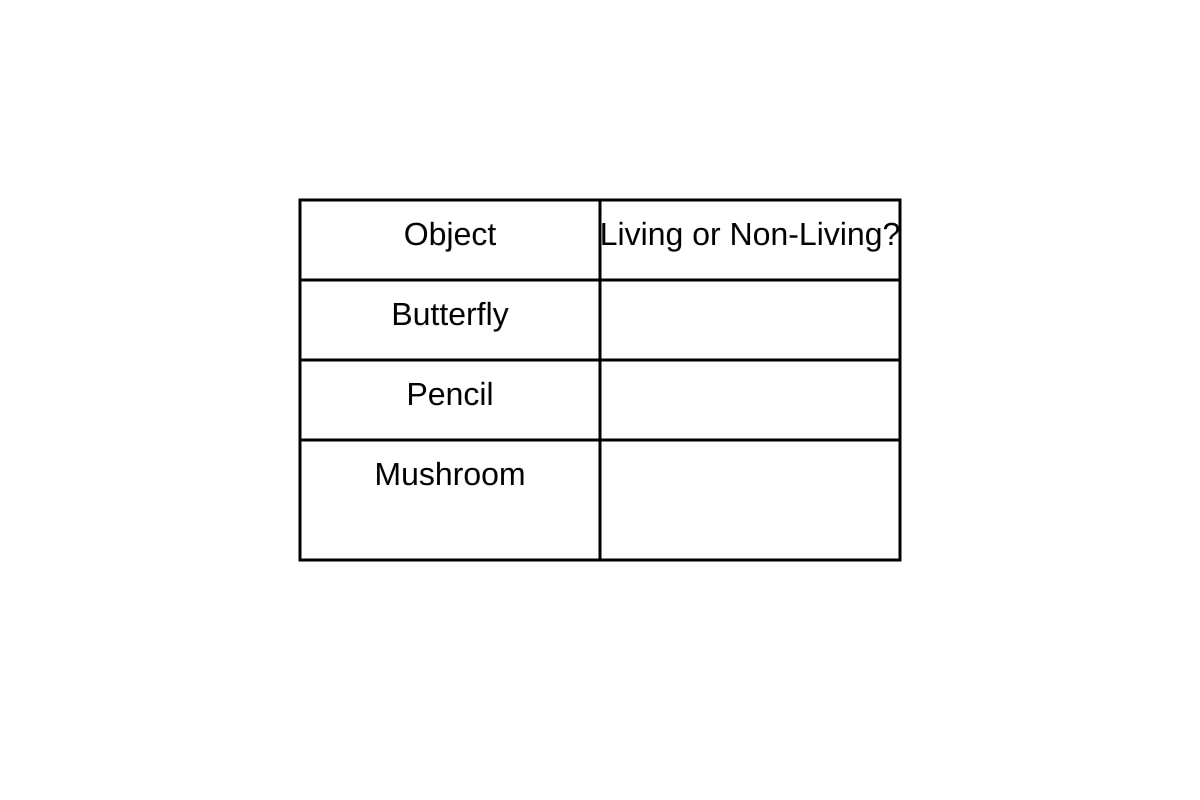
Image pending generation: table for Q20.
Fill in the table for each object. (2 marks, 1 mark for 2 correct)
Butterfly: __________
Pencil: __________
Mushroom: __________
End of Paper
Answers
TuitionGoWhere Practice Paper Answer Key — Science Primary 4 (Version 5)
Topic: Diversity
Total Marks: 40
Section A (10 marks)
- B (mosquito) — A mosquito is an insect and is alive. [1]
- A (non-flowering plant) — Ferns do not produce flowers or seeds in fruits. [1]
- C (fish) — Fish use gills to take in oxygen from water. [1]
- A (cotton shirt) — Cotton comes from the cotton plant (living), but the shirt is non-living. [1]
- B (can move by itself) — Movement is a sign of life, though not all living things move obviously. [1]
- B (dolphin) — Dolphins are mammals; they breathe air and feed milk to young. [1]
- A (flowering plants) — They have flowers and make fruits with seeds. [1]
- C (made of plastic) — Plastic is non-living material, not a trait of living things. [1]
- C (fungus) — Mushrooms are fungi, not plants or animals. [1]
- B (living: bacteria, rose / non-living: book) — Correct grouping by life status. [1]
Section B (12 marks)
-
Difference: Flowering plants produce flowers and seeds in fruits; non-flowering plants do not. [2]
Teaching note: P4 Diversity focuses on grouping plants by presence of flowers. -
Examples: Dog, fish (or any two vertebrates like cat, bird). [2]
Marking: 1 mark each correct example. -
Explanation: The leaf is non-living because it no longer carries out life processes such as growing or responding; it came from a living plant but is now dead. [2]
-
Characteristic: Both need food / can reproduce / respond to surroundings (any one). [2]
-
Classification: Living: spider, mango tree. Non-living: cloud, bicycle. [2]
Note: Cloud is non-living natural object. -
Reason: Bacteria are living because they are made of cells, reproduce, and respond to environment, even if tiny. [2]
Section C (8 marks)
-
(a) Living: cat, rose plant, goldfish. [1]
(b) Non-living: notebook, sand. [1] -
(a) Living things in diagram: hen, tulip, worm (any two). [1]
(b) Non-living thing: brick / balloon / spoon (any one). [1]
Image check: Diagram must show two columns with listed items. -
(a) No. [1]
(b) Example: A car moves but is non-living. [1] -
Butterfly: Living [1 for 2 correct]
Pencil: Non-living
Mushroom: Living
Table image must show these three objects; answer verifies classification.
Total: 10 + 12 + 8 = 40 marks. ✅
Free quiz and exam paper access
Enter your details to view this paper
Your access is remembered on this device.