AI Generated Exam Paper
Primary 4 Science Practice Paper 3
Free P4 Science Practice Paper 3, Nemo3 AI version, with questions, answers, and syllabus-aligned practice for Singapore students.
These static practice materials are generated from the site's syllabus and paper-generation workflow, with source and model context shown so students and parents can evaluate the material before use.
Questions
Free quiz and exam paper access
Enter your details to view this paper
Your access is remembered on this device.
Answers
TuitionGoWhere Practice Paper - Science Primary 4 (Answer Key)
Subject: Science
Level: Primary 4
Paper: Practice Paper 3 (Version 3 of 5)
Total Marks: 100
Section A: Multiple-Choice Questions (56 marks)
1. Answer: (3) Hibiscus, balsam, orchid
Explanation: Hibiscus, balsam, and orchid are all flowering plants. Mushroom, mould, toadstool, and bracket fungus are fungi. Yeast is a fungus. Algae are plant-like but not true plants. Bacteria are microorganisms.
2. Answer: (2) A spider is placed under Insects.
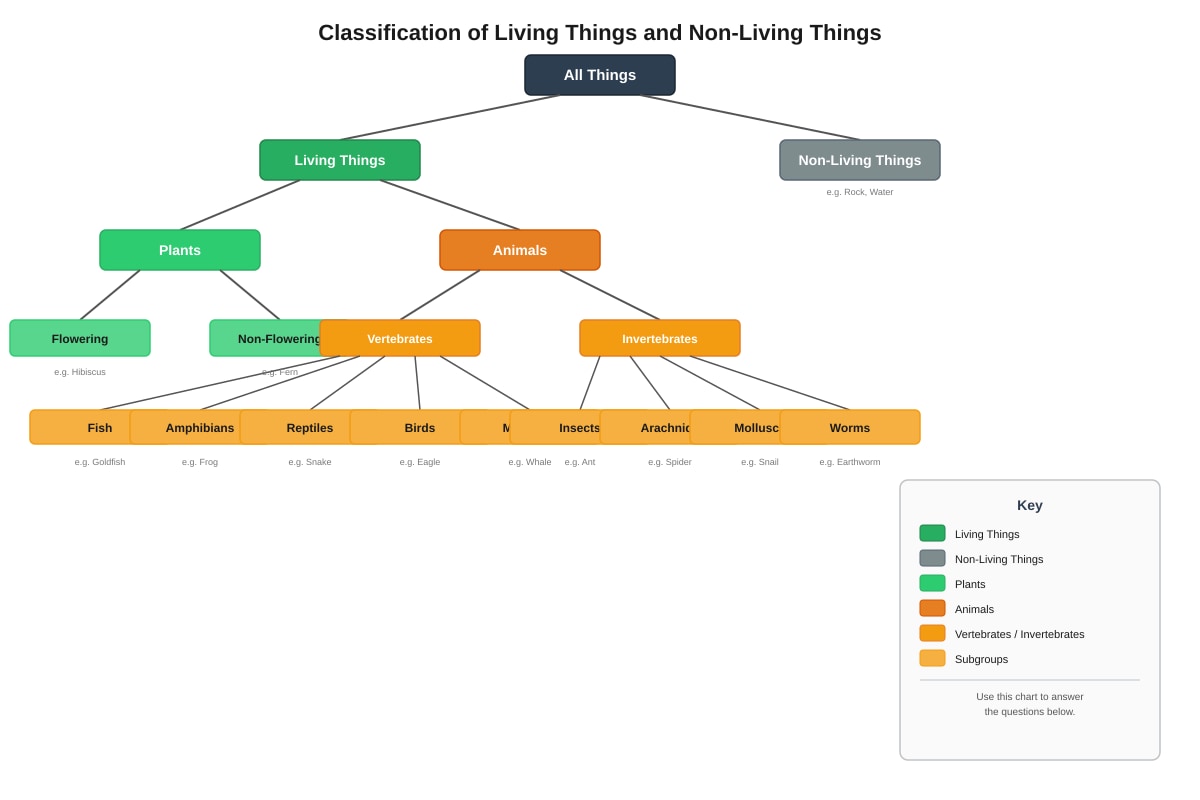
Explanation: Spiders are arachnids (8 legs, 2 body parts), not insects (6 legs, 3 body parts). Whales are mammals, snakes are reptiles, frogs are amphibians — all correctly classified.
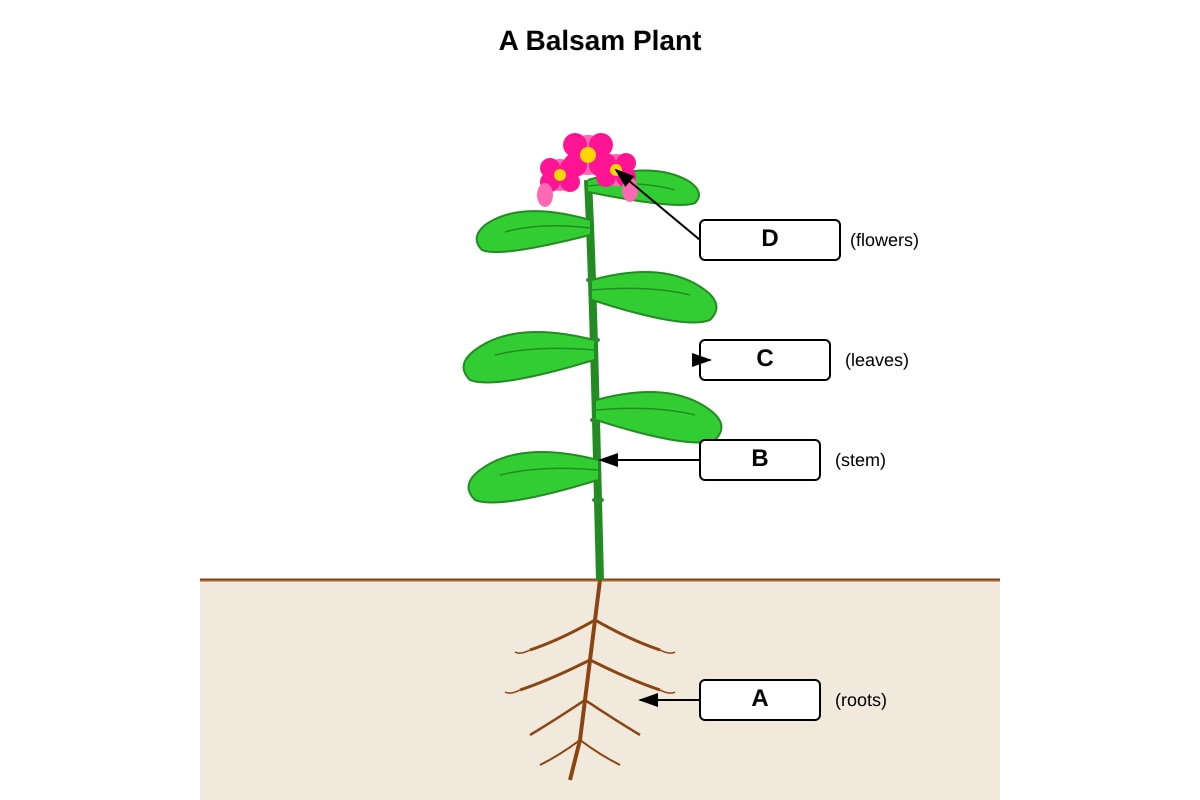
3. Answer: (3) C
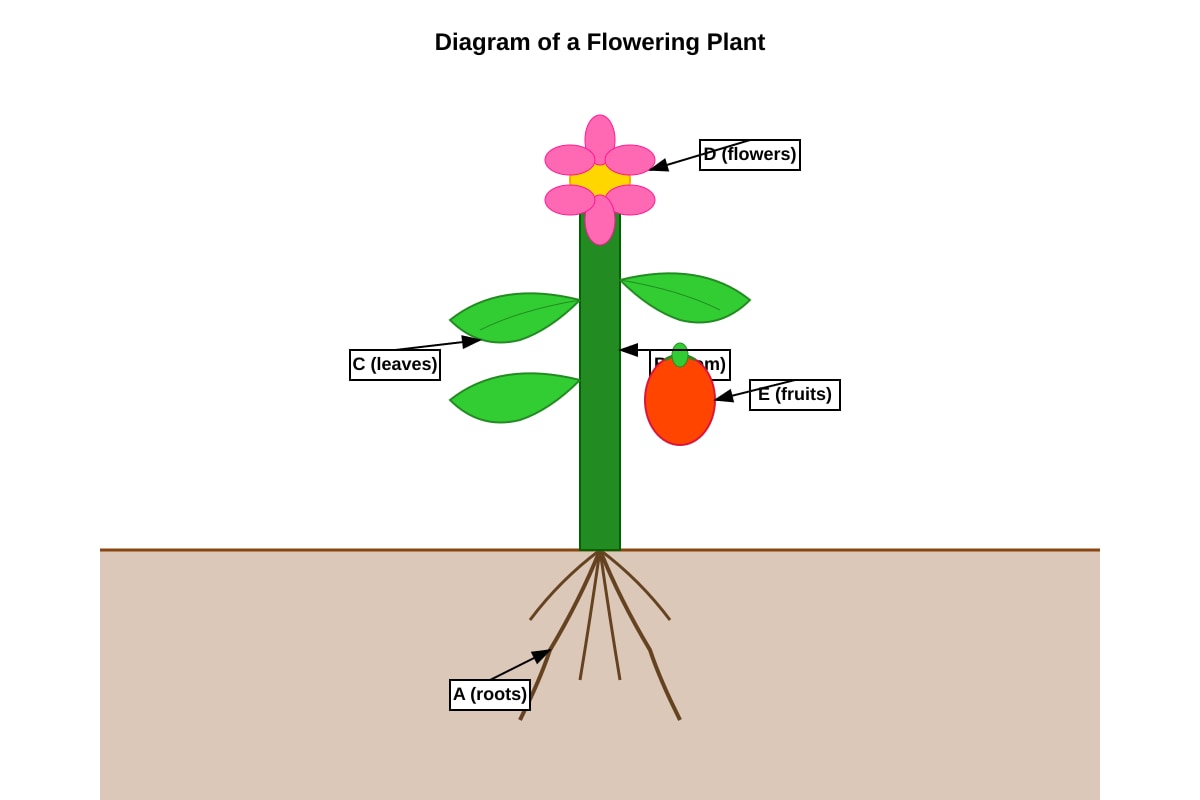
Explanation: Part C is the leaf. Leaves contain chlorophyll and make food for the plant through photosynthesis. Roots absorb water/minerals, stems transport, flowers are for reproduction.
4. Answer: (2) Both fungi and bacteria reproduce by spores.
Explanation: Fungi reproduce by spores. Some bacteria form endospores for survival. Neither makes their own food (both are decomposers/parasites). Both are living things. Yeast is a fungus; mould is also a fungus.
5. Answer: (2) Fungus
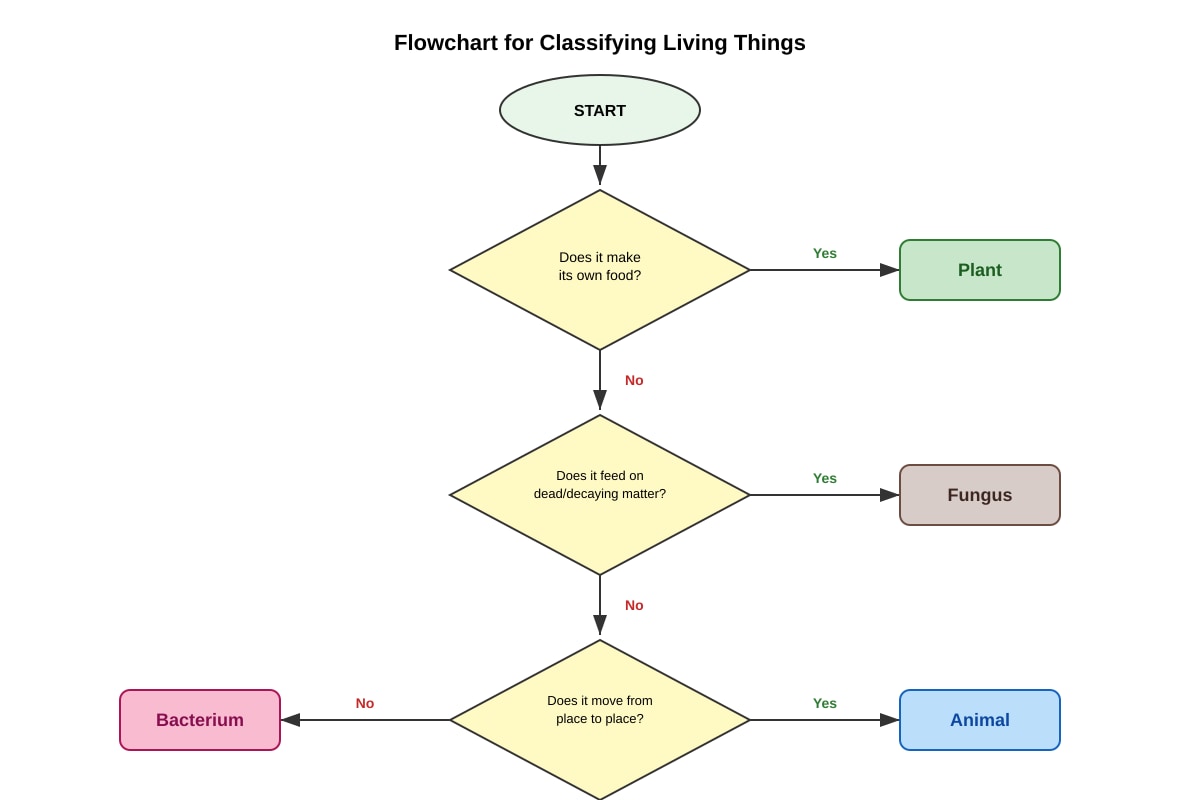
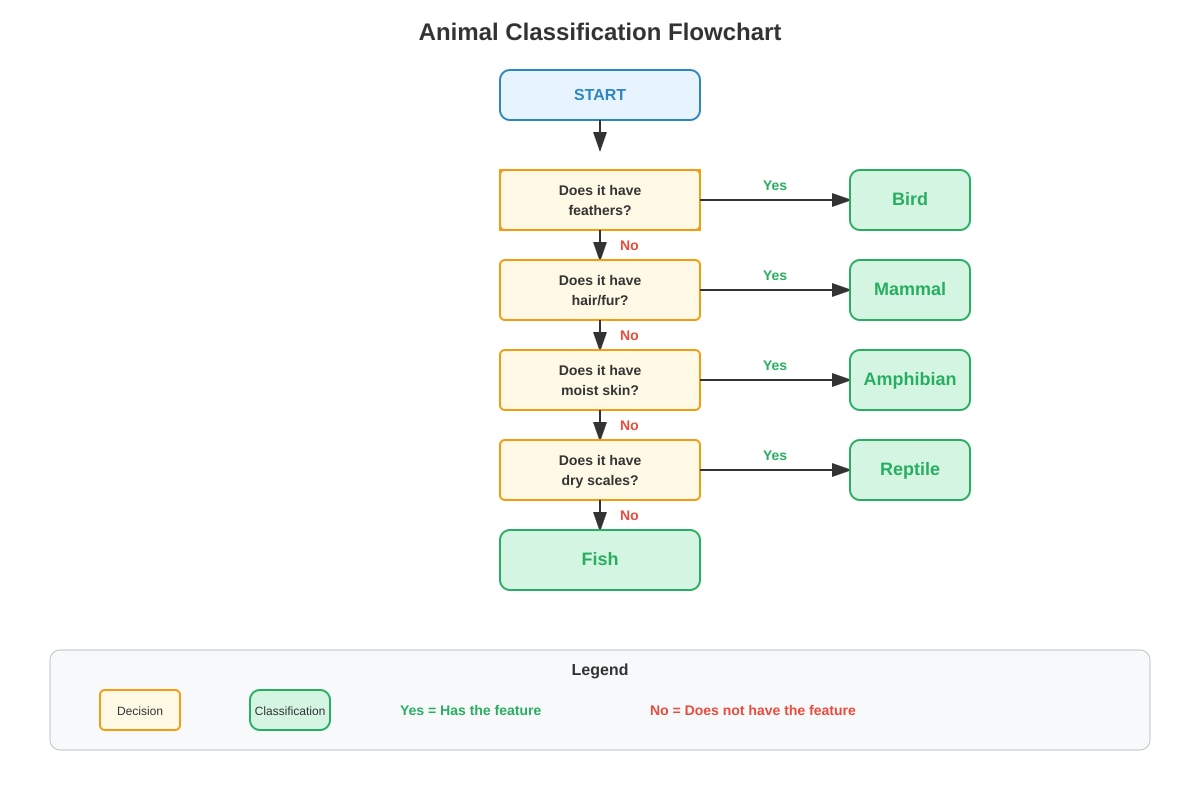
Explanation: Following the flowchart: Does not make own food → feeds on dead/decaying matter → does not move → Fungus.
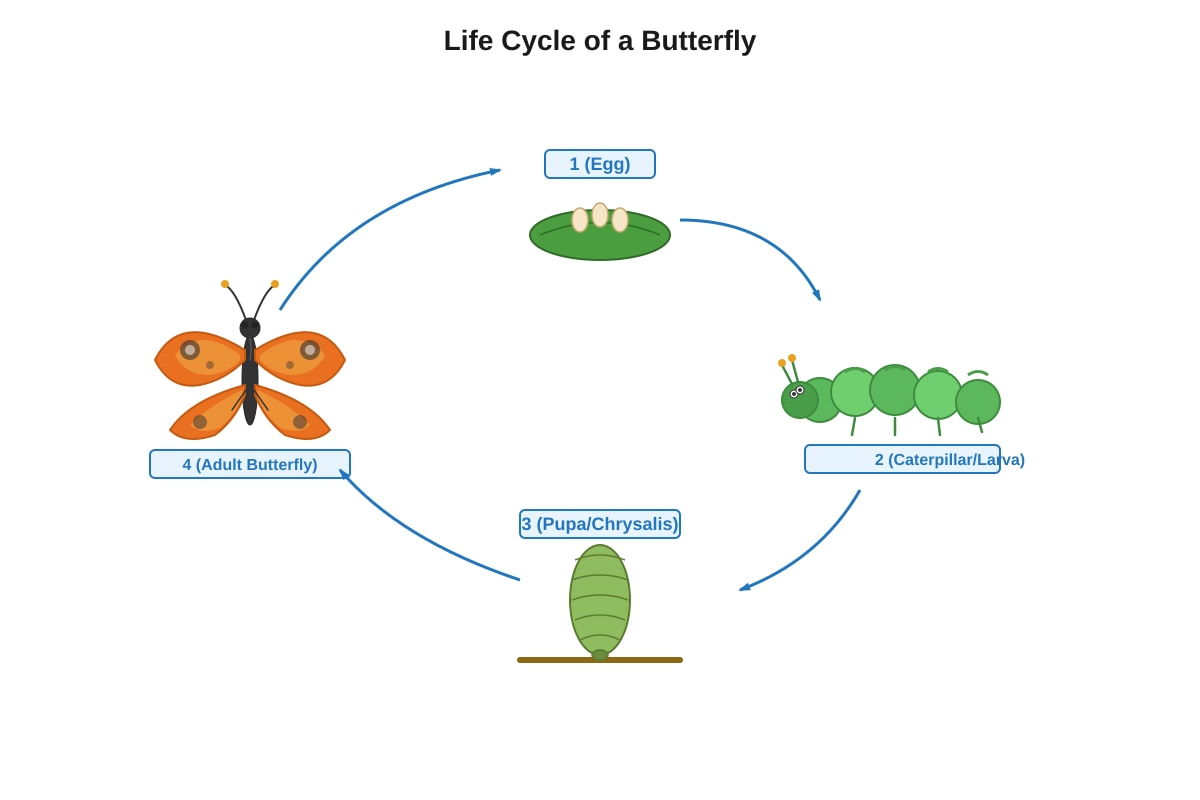
6. Answer: (3) Butterfly
Explanation: Butterfly undergoes complete metamorphosis (4 stages: egg, larva, pupa, adult). Grasshopper and cockroach have incomplete metamorphosis (3 stages: egg, nymph, adult). Chicken has a 3-stage life cycle (egg, chick, adult).
7. Answer: (2) Larva
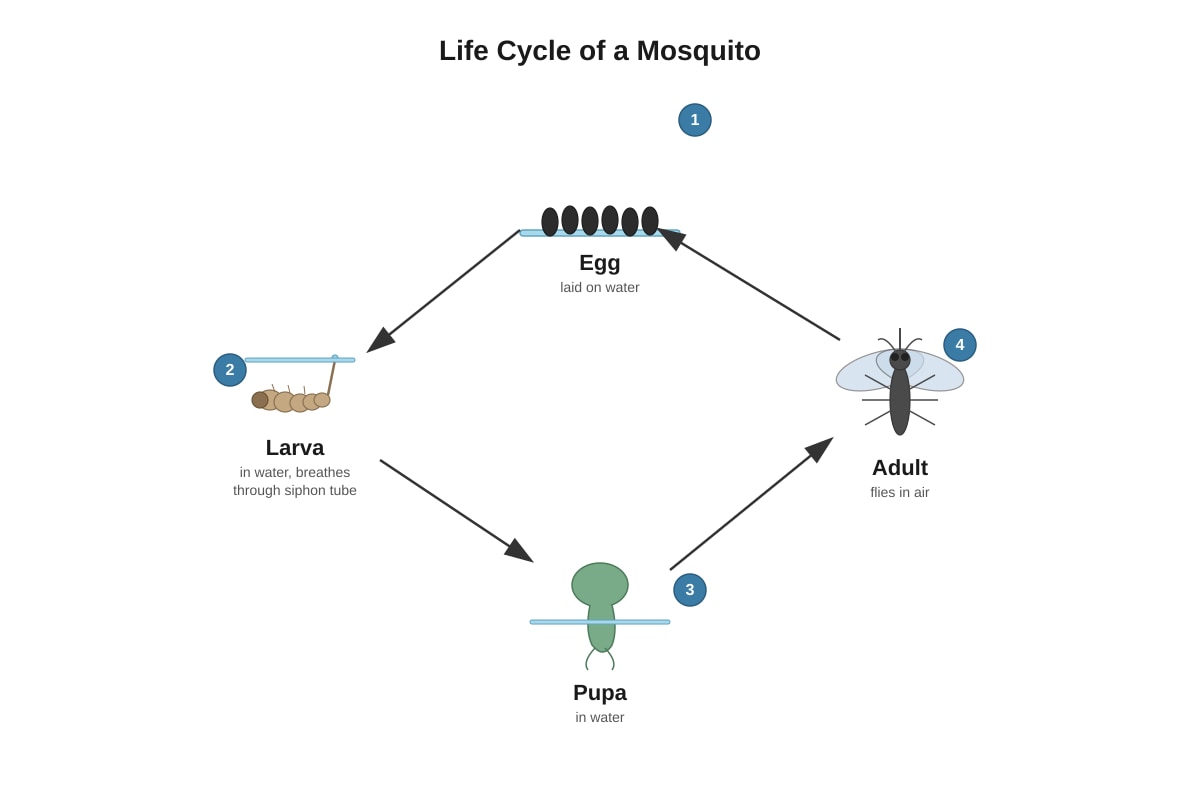
Explanation: Mosquito larvae (wrigglers) live in water and breathe through a siphon tube at the water surface. Pupae also live in water but breathe through trumpets. Eggs are laid on water. Adults are terrestrial/flying.
8. Answer: (4) Week 9: Adult
Explanation: Week 1: Eggs. Week 3: Larvae. Week 6: Pupae (motionless in hard cases). Week 9: Adults emerge.
9. Answer: (3) The fruit develops from the ovary after fertilisation.
Explanation: Correct sequence: Pollination → Fertilisation → Ovary develops into fruit, ovule develops into seed. Germination occurs after seed dispersal.
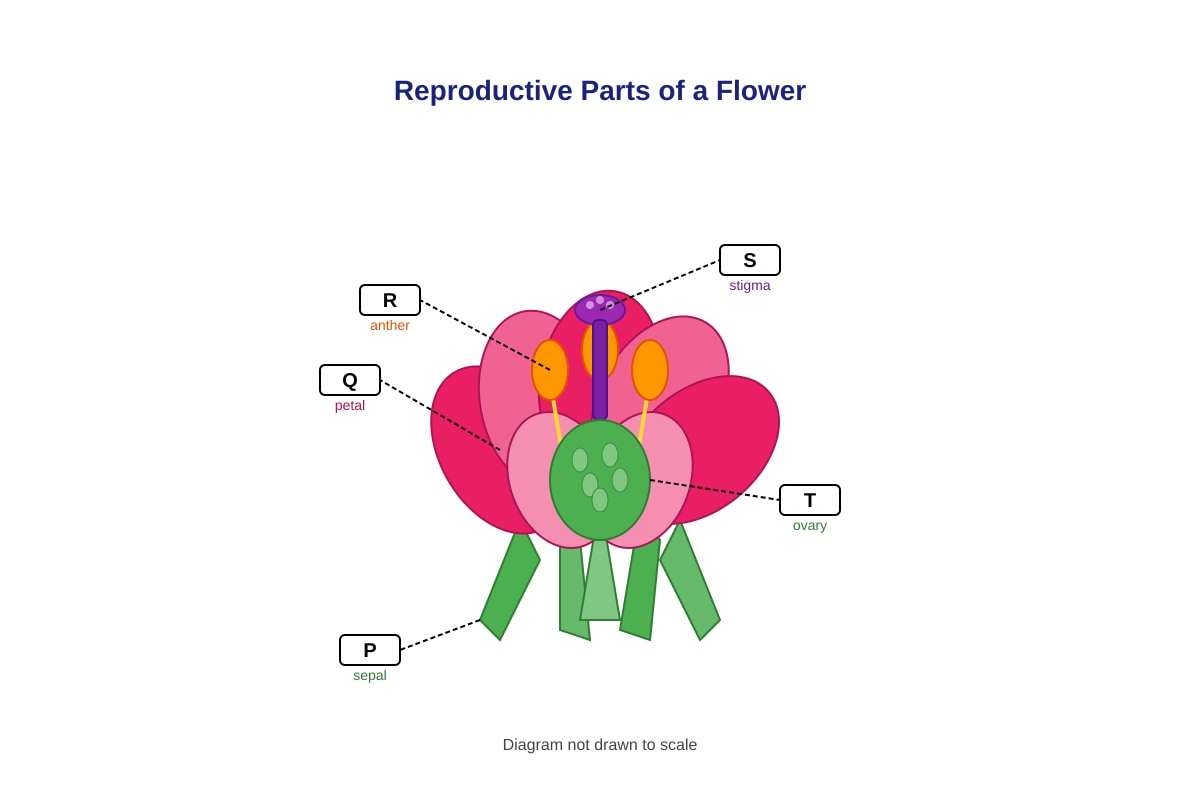
10. Answer: (3) R
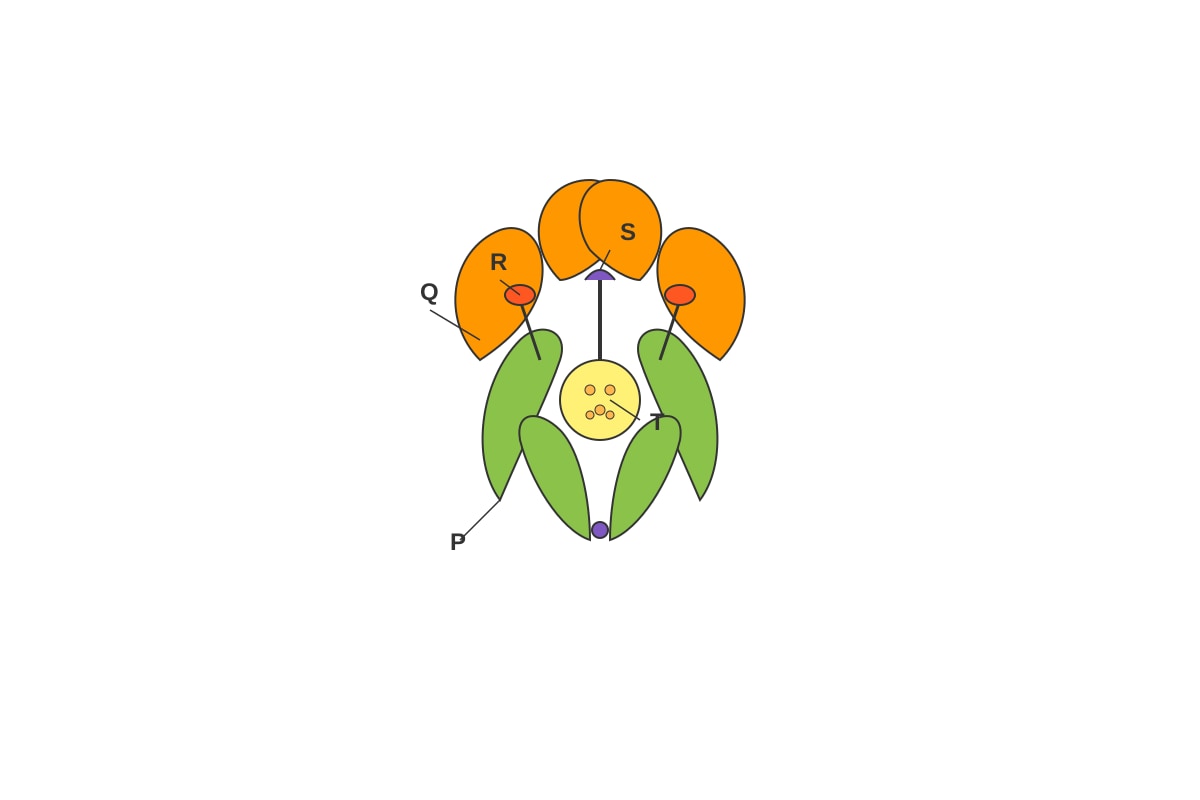
Explanation: R is the anther (part of stamen), which produces pollen grains. Stigma (S) receives pollen. Ovary (T) contains ovules.
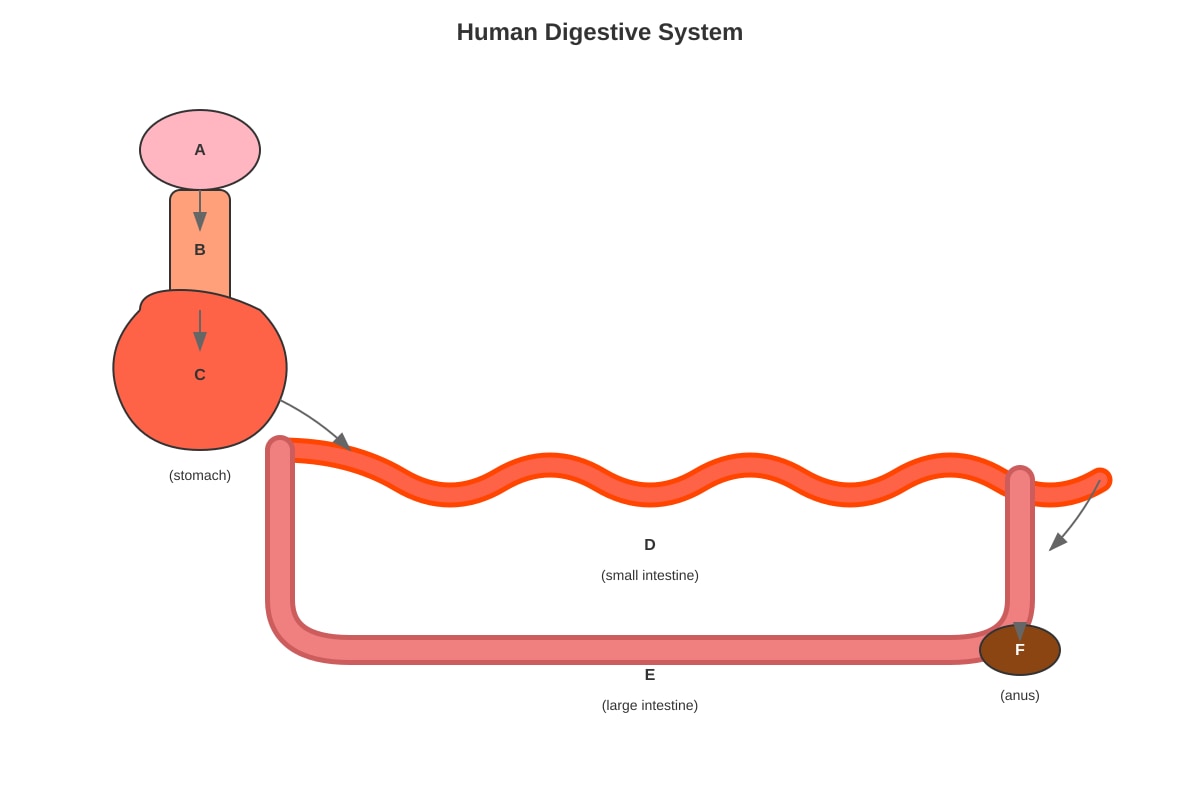
11. Answer: (4) D
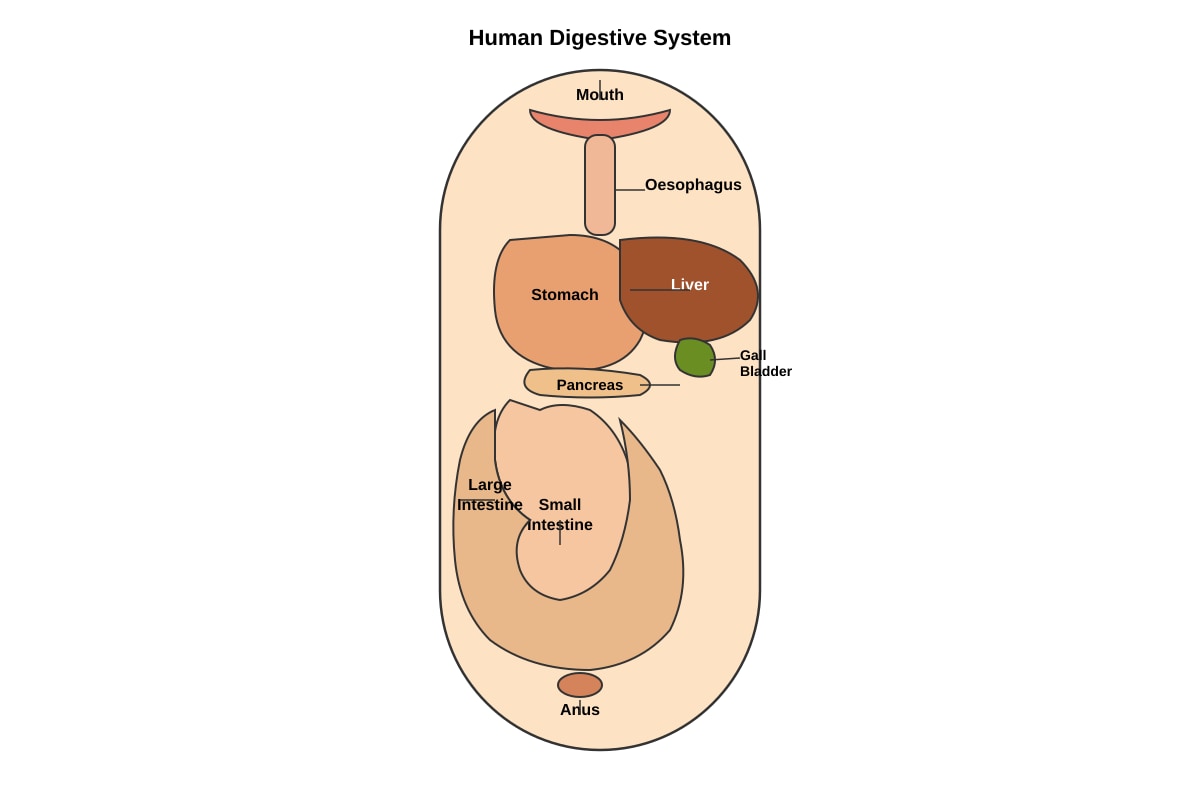
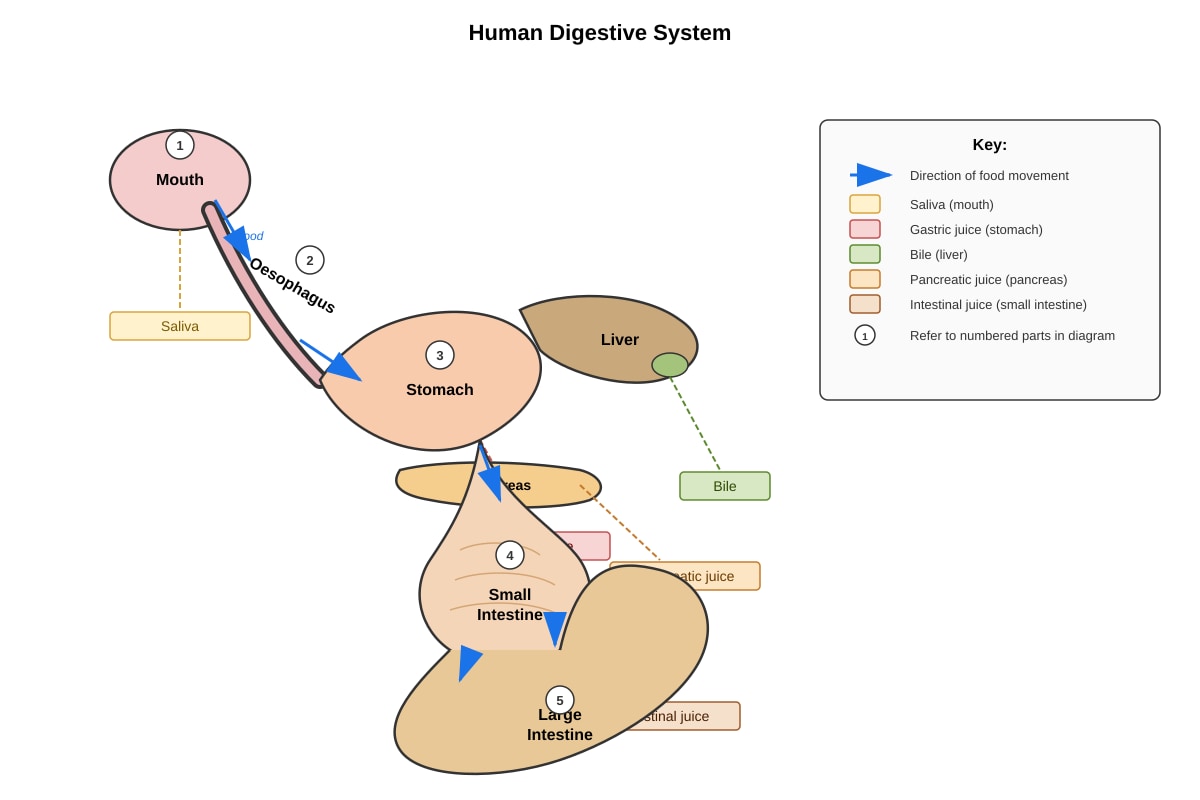
Explanation: D is the small intestine. Its inner wall has villi that greatly increase surface area for absorption of digested nutrients into the bloodstream.
12. Answer: (2) Mouth → Oesophagus → Stomach → Small Intestine → Large Intestine → Anus
Explanation: This is the correct anatomical sequence. Food passes from mouth to oesophagus (not directly to stomach), then stomach, small intestine, large intestine, anus.
13. Answer: (2) Saliva contains digestive juices that break down starch into simpler sugars.
Explanation: Saliva contains amylase, an enzyme that breaks down starch (complex carbohydrate) into maltose (simpler sugar), making the bread taste sweeter.
14. Answer: (2) Absorbs water from undigested food
Explanation: The large intestine's main functions are absorbing water and minerals from undigested food, and storing faeces temporarily. Protein digestion occurs in stomach/small intestine. Bile is produced by liver.
15. Answer: (1) Group X: Fungi, Group Y: Flowering Plants
Explanation: Mushroom, yeast, mould, bracket fungus are all fungi. Hibiscus, balsam, orchid, rose are all flowering plants.
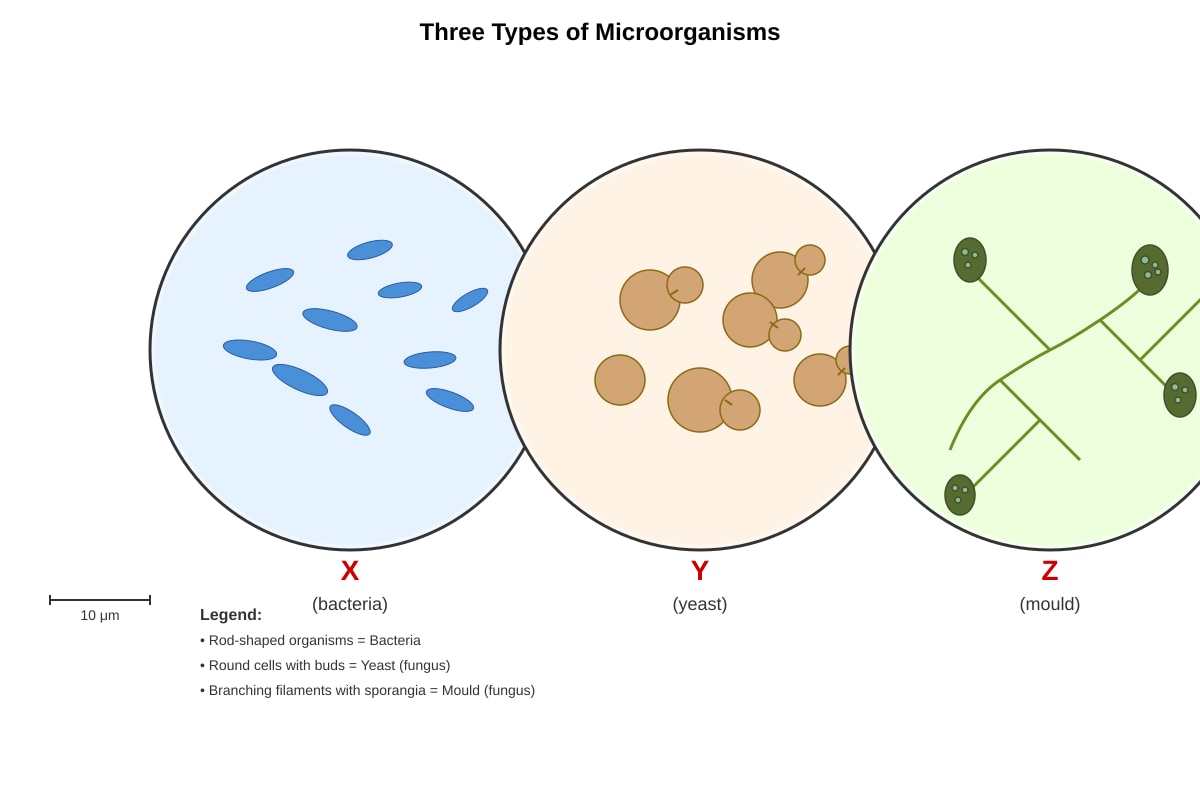
16. Answer: (2) X is a bacterium, Y is a fungus, Z is a fungus.
Explanation: X shows rod-shaped bacteria. Y shows budding yeast cells (fungus). Z shows mould with hyphae and sporangia (fungus).
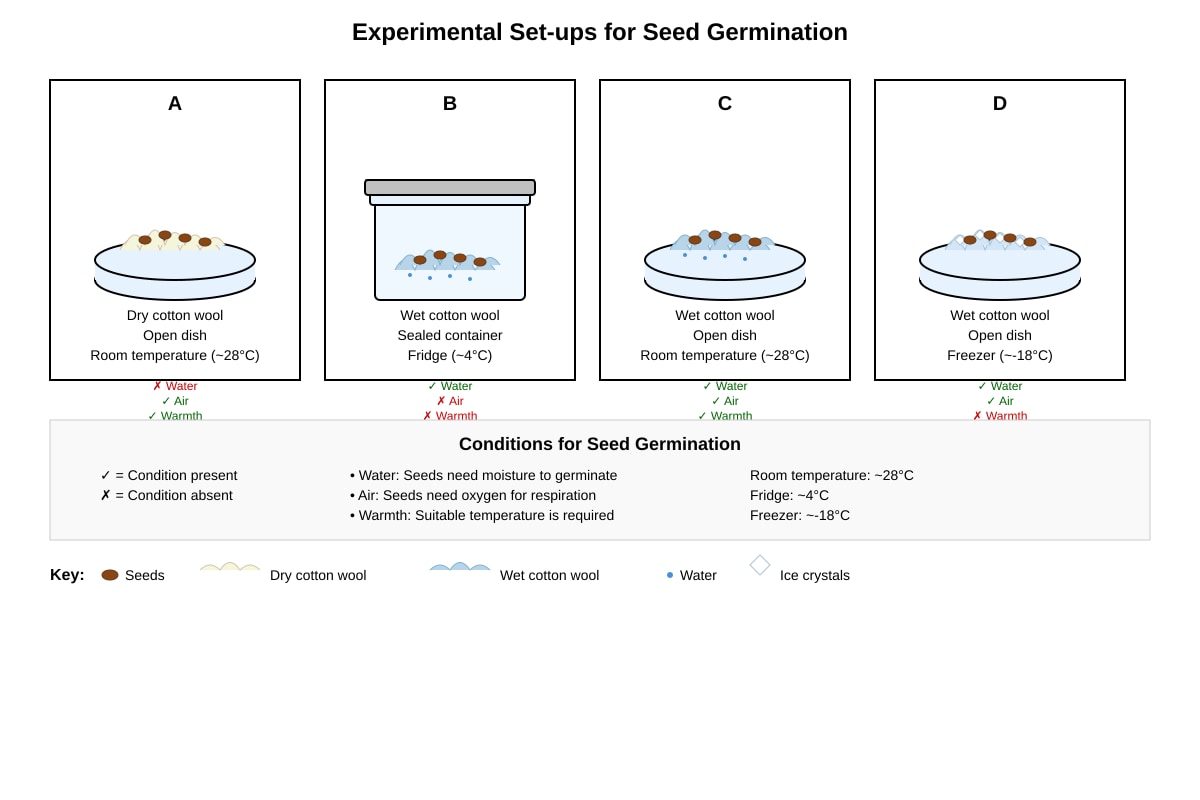
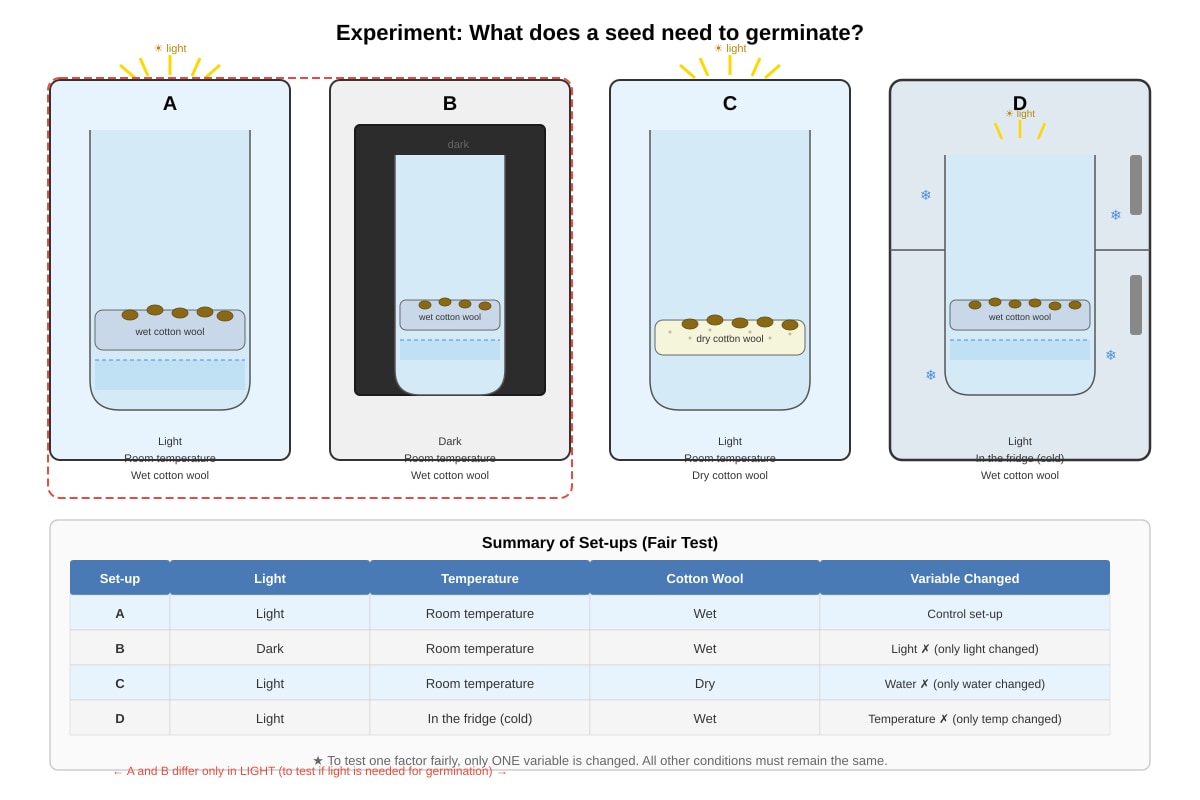
17. Answer: (3) C
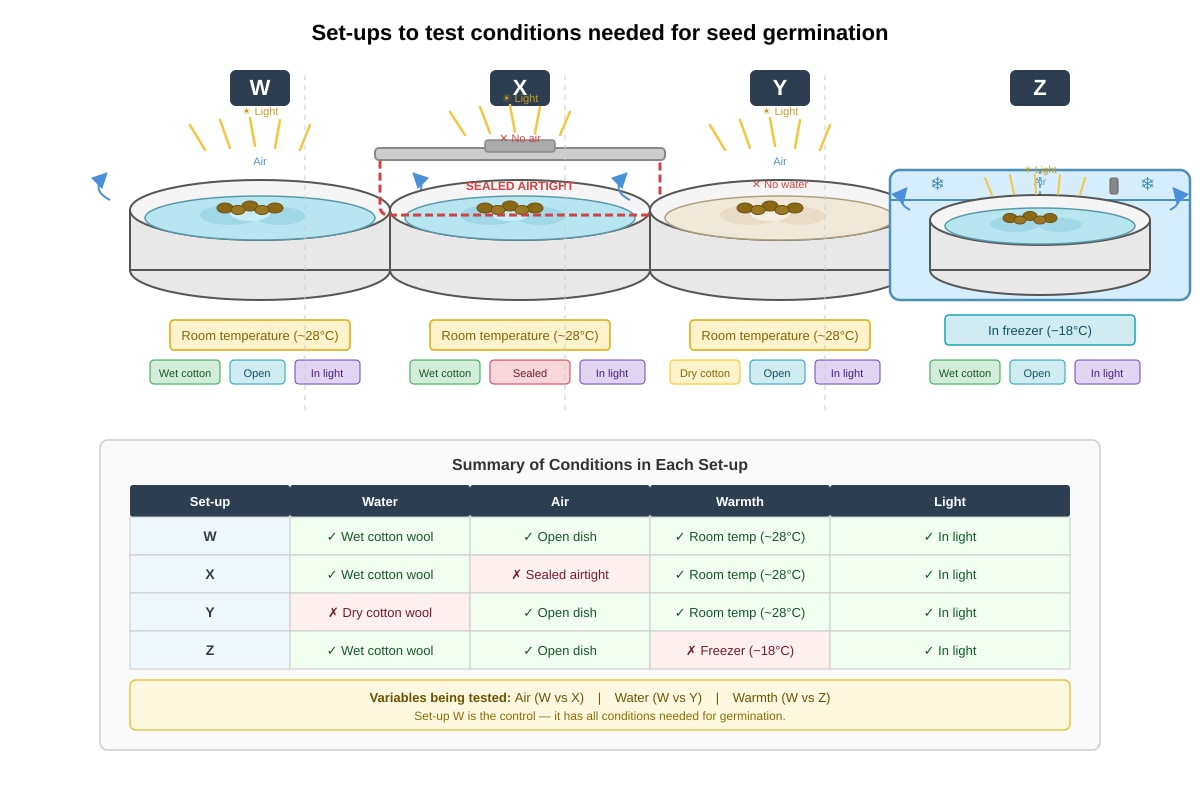
Explanation: Germination needs air, water, warmth. A: no water. B: no air (sealed). C: has air, water, warmth (room temp). D: no warmth (freezer).
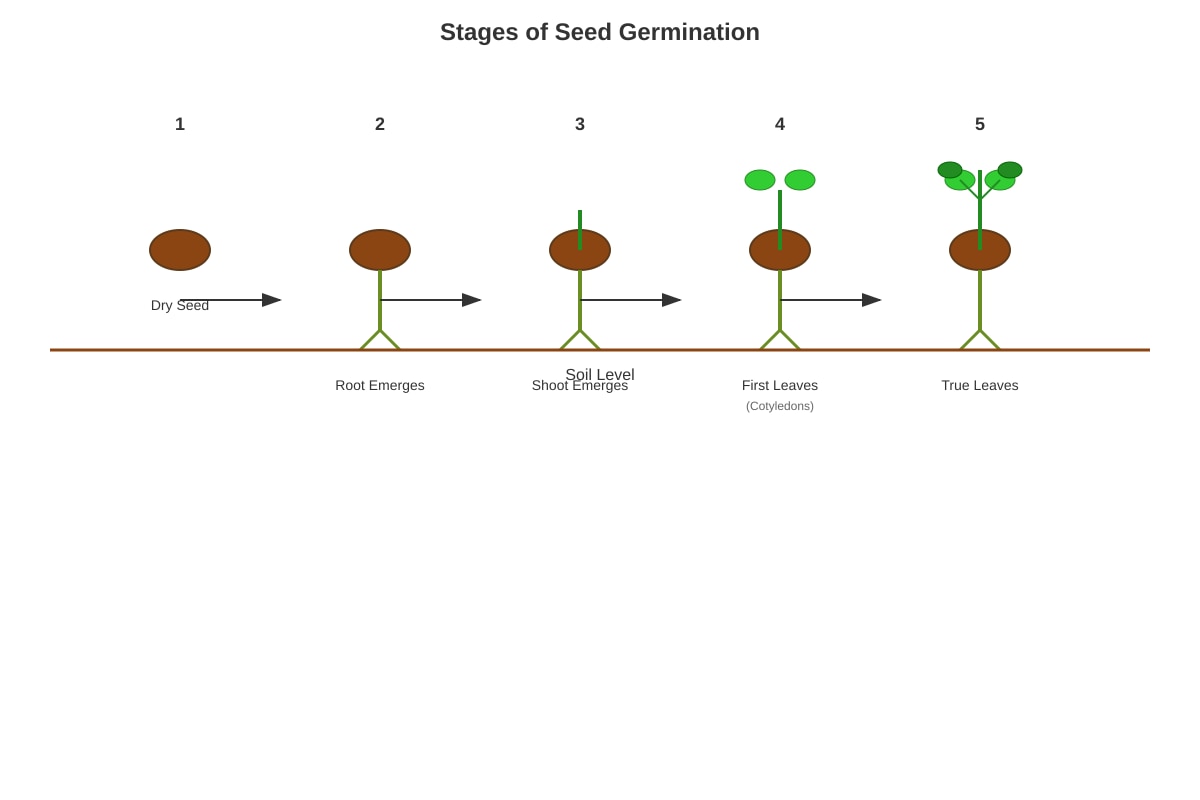
18. Answer: (4) Stage 5
Explanation: Stage 4 shows cotyledons (seed leaves) which may still have stored food. Stage 5 shows true leaves with chlorophyll — only then can the seedling photosynthesise and make its own food.
19. Answer: (3) Bat
Explanation: Bats are mammals — they give birth to live young and feed them milk. Penguins are birds (lay eggs). Platypus is a monotreme (egg-laying mammal). Crocodiles are reptiles (lay eggs).
20. Answer: (2) Reptile
Explanation: Following flowchart: No feathers → No hair/fur → No moist skin → Has dry scales → Reptile. Reptiles lay eggs with leathery shells.
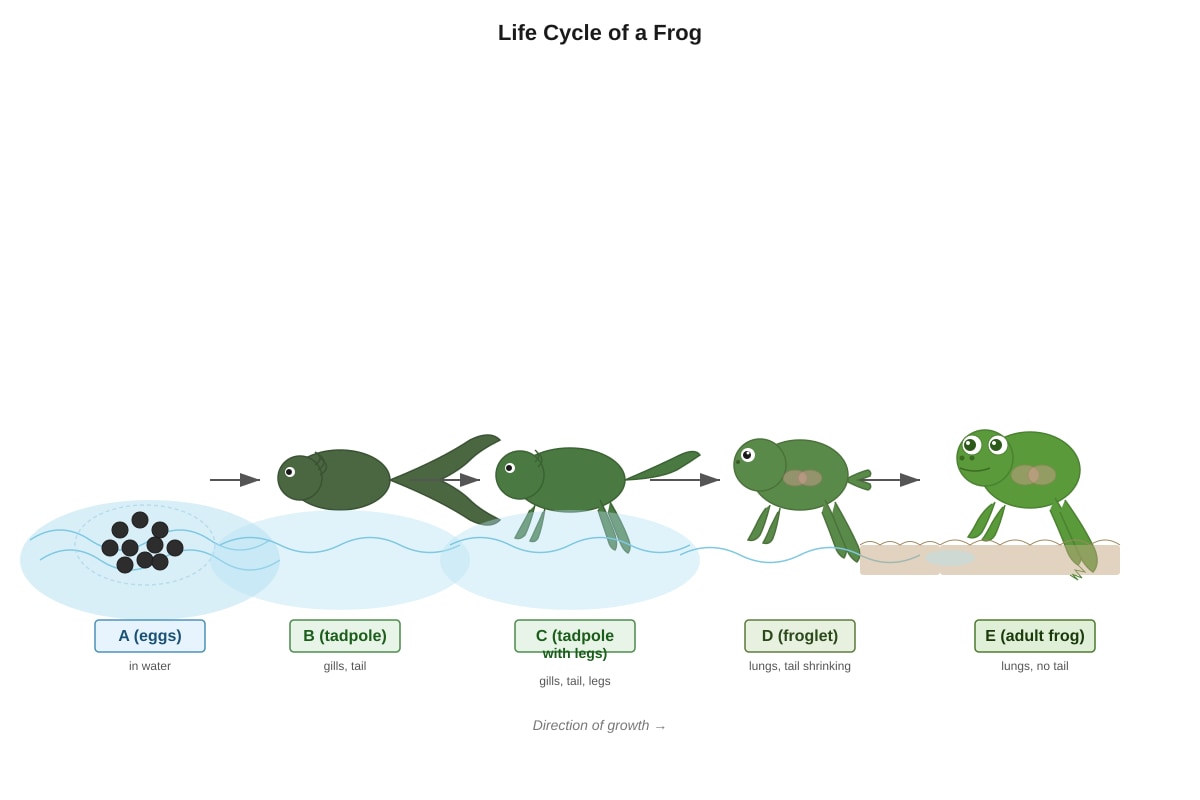
21. Answer: (2) B
Explanation: Stage B (tadpole) has gills and lives only in water. Stage C develops legs but still has gills. Stage D (froglet) has lungs and shrinking tail. Stage E (adult) lives on land and in water.
22. Answer: (4) Eight legs
Explanation: Insects have 6 legs. Arachnids (spiders, scorpions) have 8 legs. Insects have 3 body parts, 2 pairs of wings (sometimes absent).
23. Answer: (3) Y
Explanation: W: makes own food = Plant. X: spores + dead matter = Fungus. Y: no own food, no spores, doesn't feed on dead matter, moves = Animal. Z: spores + dead matter = Fungus. Bacteria are microscopic, reproduce by binary fission (not spores typically), some decompose.
24. Answer: (3) Mouth
Explanation: Digestion begins in the mouth with mechanical (chewing) and chemical (salivary amylase) breakdown of starch.
25. Answer: (2) Seeds dispersed by water have fibrous husks that trap air.
Explanation: Water-dispersed seeds (e.g., coconut) have fibrous husks for buoyancy. Not all seeds are wind-dispersed. Animal-dispersed seeds can be hooked/spiny (not fleshy). Explosive dispersal occurs in some flowering plants (e.g., balsam, rubber tree).
26. Answer: (2) Seed
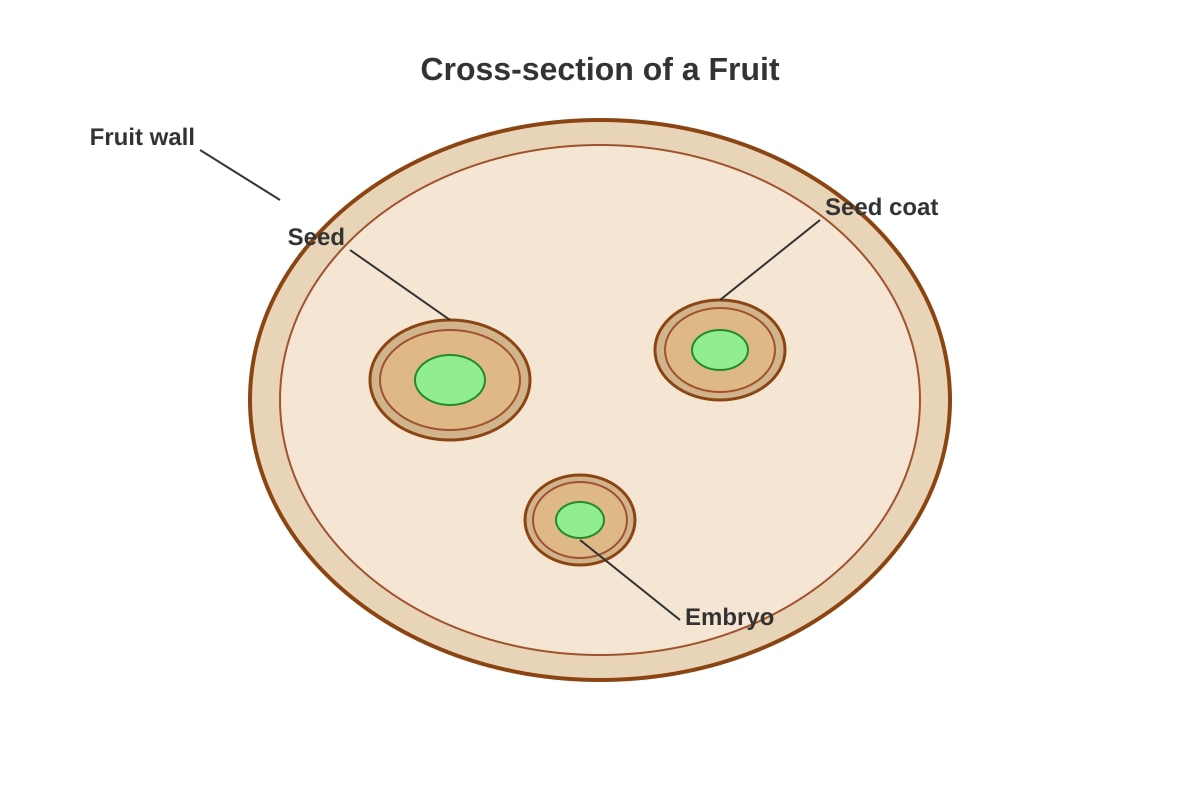
Explanation: After fertilisation: ovule → seed, ovary → fruit. The seed contains the embryo and seed coat (from integuments).
27. Answer: (1) A and B
Explanation: To test light, only light should vary. A (light) and B (dark) both have water, air, warmth. C lacks water. D lacks warmth.
28. Answer: (1) Shark, salmon, whale
Explanation: Shark (fish), salmon (fish), whale (mammal) are all vertebrates. Jellyfish, starfish, cuttlefish are invertebrates. Earthworm, leech, tapeworm are invertebrates. Spider, scorpion, crab are invertebrates (arthropods).
Section B: Structured Questions (24 marks)
29. (a) A: Roots, B: Stem, C: Leaves, D: Flowers [2]
Marking: 0.5 marks each correct label.
(b) Part C (leaves) makes food for the plant through photosynthesis. [1] Key concept: Leaves contain chlorophyll, trap light energy, convert CO₂ and H₂O to glucose.
(c) The tiny hair-like structures (root hairs) increase the surface area for absorption of water and mineral salts from the soil. [1] Key concept: Root hairs are extensions of epidermal cells, vastly increasing absorptive surface area.
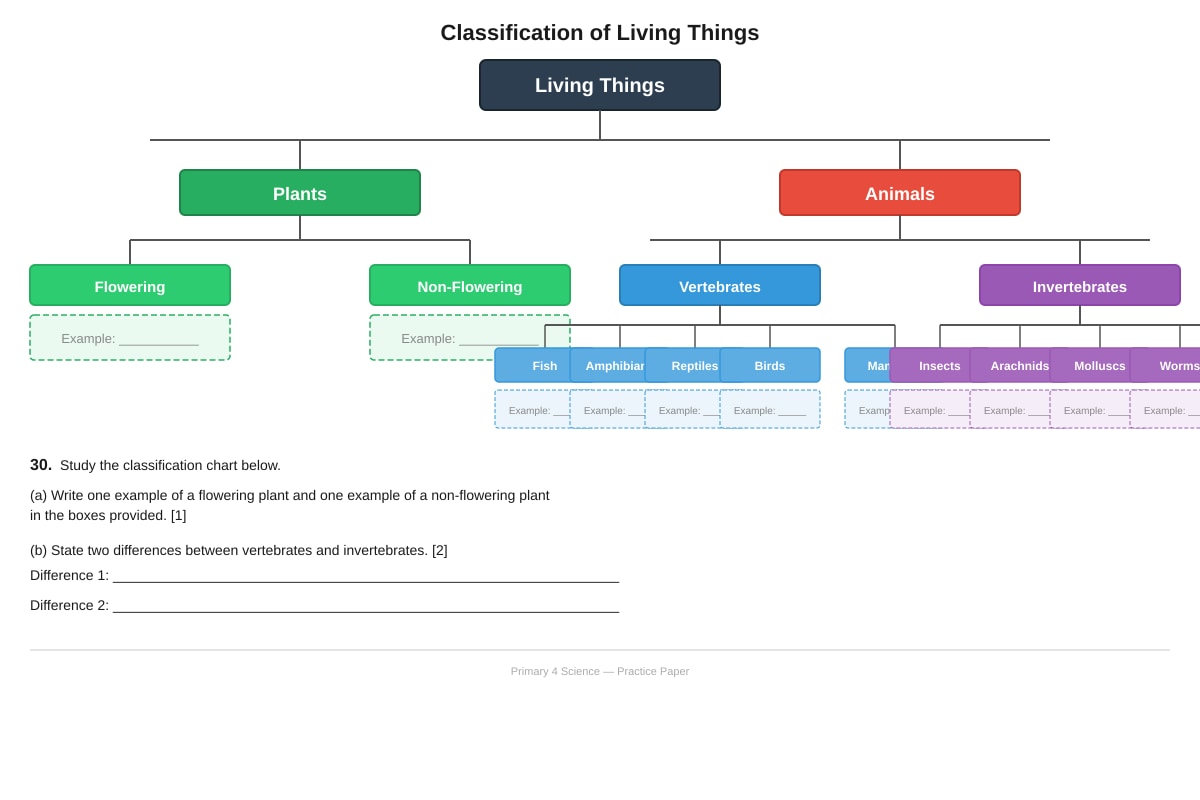
30. (a) Flowering plant: e.g., Hibiscus / Balsam / Orchid / Rose. Non-flowering plant: e.g., Fern / Moss / Algae / Conifer. [1]
Marking: 0.5 each, any valid examples.
(b) Difference 1: Vertebrates have a backbone (vertebral column); invertebrates do not have a backbone. [1] Difference 2: Vertebrates have an internal skeleton (endoskeleton); invertebrates may have an external skeleton (exoskeleton) or
<stage5_exam_answers_md>
TuitionGoWhere Practice Paper - Science Primary 4 (Answer Key)
Subject: Science
Level: Primary 4
Paper: Practice Paper 3 (Version 3 of 5)
Total Marks: 100
Section A: Multiple-Choice Questions (56 marks)
| Question | Answer | Explanation |
|---|---|---|
| 1 | (3) | Hibiscus, balsam, and orchid are all flowering plants. Mushroom, mould, yeast, toadstool, bracket fungus are fungi. Algae is a plant-like protist; bacteria are microorganisms. |
| 2 | (2) | A spider is an arachnid (8 legs), not an insect (6 legs). Whale is a mammal, snake is a reptile, frog is an amphibian — all correct. |
| 3 | (3) | Part C (leaves) contains chlorophyll and makes food through photosynthesis. |
| 4 | (2) | Both fungi and bacteria reproduce by spores. Fungi and bacteria are living things; they do not make their own food. Yeast is a fungus; mould is also a fungus. |
| 5 | (2) | Organism X does not make its own food → not a plant. Feeds on dead/decaying matter → fungus. Does not move → not an animal. Bacteria do not typically feed on dead matter in this classification context. |
| 6 | (3) | Butterfly undergoes complete metamorphosis (4 stages: egg, larva, pupa, adult). Grasshopper and cockroach have 3-stage (incomplete) life cycles. Chicken has a 3-stage life cycle. |
| 7 | (2) | Mosquito larva lives in water and breathes through a siphon tube at the water surface. |
| 8 | (4) | Week 1: Egg; Week 3: Larva; Week 6: Pupa; Week 9: Adult. Only option (4) matches correctly. |
| 9 | (3) | After fertilisation, the ovary develops into the fruit. Germination occurs before seedling growth. Pollination occurs before fertilisation. Dispersal happens after fruit/seed formation. |
| 10 | (3) | Part R (anther) produces pollen grains. |
| 11 | (4) | Part D (small intestine) is where most digested food is absorbed into the blood. |
| 12 | (2) | Correct path: Mouth → Oesophagus → Stomach → Small Intestine → Large Intestine → Anus. |
| 13 | (2) | Saliva contains amylase, which breaks down starch into simpler sugars (e.g., maltose), making it taste sweeter. |
| 14 | (2) | The large intestine absorbs water from undigested food. It does not digest proteins, produce bile, or store faeces (rectum does). |
| 15 | (1) | Group X: Mushroom, Yeast, Mould, Bracket fungus → Fungi. Group Y: Hibiscus, Balsam, Orchid, Rose → Flowering Plants. |
| 16 | (2) | X (rod-shaped) = bacteria; Y (budding cells) = yeast (fungus); Z (hyphae & sporangia) = mould (fungus). |
| 17 | (3) | Set-up C has water (wet cotton wool), air (open dish), and warmth (room temperature) — all three conditions for germination. A lacks water; B lacks air (sealed) and warmth (fridge); D lacks warmth (freezer). |
| 18 | (4) | Stage 5: True leaves appear and contain chlorophyll, enabling photosynthesis. Cotyledons (Stage 4) store food but do not make food. |
| 19 | (3) | Bat is a mammal — gives birth to live young and feeds them milk. Penguin (bird), platypus (monotreme, lays eggs), crocodile (reptile) do not. |
| 20 | (2) | Dry scales + leathery eggshells = Reptile. |
| 21 | (2) | Stage B (tadpole) has gills and lives only in water. |
| 22 | (4) | Insects have six legs, not eight. Eight legs is a characteristic of arachnids. |
| 23 | (3) | Bacterium (Y): Does not make own food, does not reproduce by spores (binary fission), does not feed on dead matter (some do, but not a defining trait in this context). Fungi (X, Z): reproduce by spores, feed on dead matter. Plant (W): makes own food. |
| 24 | (3) | Digestion begins in the mouth (mechanical by teeth, chemical by salivary amylase). |
| 25 | (2) | Seeds dispersed by water (e.g., coconut) have fibrous husks that trap air for buoyancy. Not all seeds dispersed by wind; animal-dispersed seeds not always fleshy/sweet (some have hooks); explosive dispersal occurs in some non-flowering plants too. |
| 26 | (2) | The seed develops from the ovule after fertilisation. Fruit wall develops from ovary wall; seed coat from integuments; embryo from zygote. |
| 27 | (1) | To test light, compare A (light) and B (dark) — only light differs; both have water, air, warmth. |
| 28 | (1) | Shark (fish), salmon (fish), whale (mammal) — all vertebrates. Others are invertebrates. |
Section B: Structured Questions (24 marks)
29.
(a)
A: Roots
B: Stem
C: Leaves
D: Flowers
(b) Part C (leaves) makes food for the plant through photosynthesis.
(c) The tiny hair-like structures (root hairs) increase the surface area for absorption of water and mineral salts from the soil.
30.
(a)
Flowering plant: Hibiscus / Balsam / Orchid / Rose (any one)
Non-flowering plant: Fern / Moss / Algae / Conifer (any one)
(b)
Difference 1: Vertebrates have a backbone; invertebrates do not have a backbone.
Difference 2: Vertebrates have an internal skeleton (endoskeleton); invertebrates may have an external skeleton (exoskeleton) or hydrostatic skeleton.
(c) A bat has wings and hair/fur, so it is classified as a mammal, not a bird.
31.
(a) The life cycle of a mosquito has four stages: egg, larva, pupa, and adult.
(b) The larva and pupa stages live in water.
(c) To prevent mosquitoes from breeding, remove stagnant water (e.g., in flower pots, drains, containers) where they lay eggs.
32.
(a) The anther produces pollen grains which contain the male reproductive cells.
(b) Pollination is the transfer of pollen grains from the anther to the stigma of a flower.
(c) After fertilisation, the ovary develops into the fruit and the ovules develop into seeds.
33.
(a)
A: Mouth
B: Oesophagus
C: Stomach
D: Small intestine
E: Large intestine
(b) Digestion is completed in the small intestine (D).
(c) The large intestine (E) absorbs water from the undigested food, forming semi-solid faeces.
34.
(a) The seed leaves (cotyledons) store food for the young plant until it can make its own food.
(b) The seedling starts to make its own food when the first true leaves appear (Stage 5).
(c) The young plant gets its food from the cotyledons (seed leaves) before it can make its own food.
Section C: Open-Ended Questions (20 marks)
35.
(a) Fungi and bacteria are decomposers. They break down dead organisms and waste materials into simpler substances, returning nutrients to the soil for plants to use.
(b) Yeast is used in bread-making (causes dough to rise by producing carbon dioxide) and brewing (produces alcohol).
(c) Bacteria reproduce by binary fission (splitting into two), while fungi reproduce by spores.
36.
(a) The small intestine has a very long length, villi, and microvilli that greatly increase the surface area for absorption of digested food into the bloodstream.
(b) The stomach churns food and secretes gastric juice containing protease (to digest proteins) and hydrochloric acid (to kill bacteria and provide acidic pH for enzymes).
(c) The liver produces bile, which is stored in the gall bladder and released into the small intestine to emulsify fats (break large fat globules into smaller droplets) for faster digestion by lipase.
37.
(a) Wind dispersal: Seeds are light, small, and have wing-like structures or parachutes (e.g., dandelion, angsana).
Animal dispersal: Seeds have hooks/stiff hairs to cling on fur (e.g., love grass) OR are inside fleshy, sweet, brightly coloured fruits that are eaten (e.g., papaya, mango).
(b) Seed dispersal prevents overcrowding and reduces competition among young plants and the parent plant for light, water, space, and nutrients.
38.
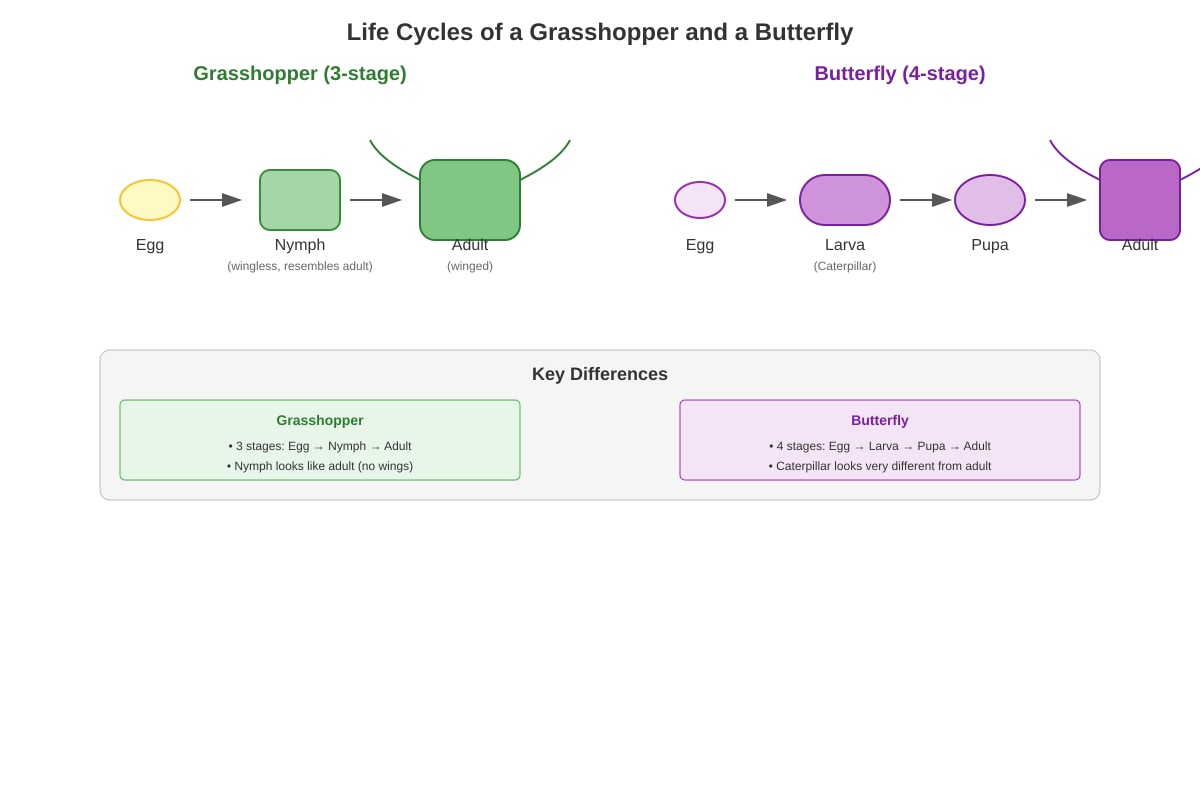
(a) Similarity: Both life cycles have an egg stage and a young stage that looks different from the adult.
Difference: The mosquito has a pupa stage (complete metamorphosis, 4 stages); the grasshopper has no pupa stage — the young (nymph) resembles a small adult (incomplete metamorphosis, 3 stages).
(b) The nymph moults several times, growing larger each time, until it becomes an adult with fully developed wings.
End of Answer Key
Total: 100 marks