From Real Exams Exam Paper
Primary 4 Science Semestral Assessment 2 (End of Year) Paper 3
Free P4 Science SA2 Paper 3, Nemo3 Exam version, with questions, answers, and syllabus-aligned practice for Singapore students.
These static practice materials are generated from the site's syllabus and paper-generation workflow, with source and model context shown so students and parents can evaluate the material before use.
Questions
Free quiz and exam paper access
Enter your details to view this paper
Your access is remembered on this device.
Answers
TuitionGoWhere Practice Paper - Science Primary 4
SA2 (Semestral Assessment 2) - Version 3 - Answer Key
Subject: Science
Level: Primary 4
Paper: SA2 Version 3
Total Marks: 100
SECTION A: Multiple-Choice Questions (56 marks)
Diversity (Living and Non-Living Things)
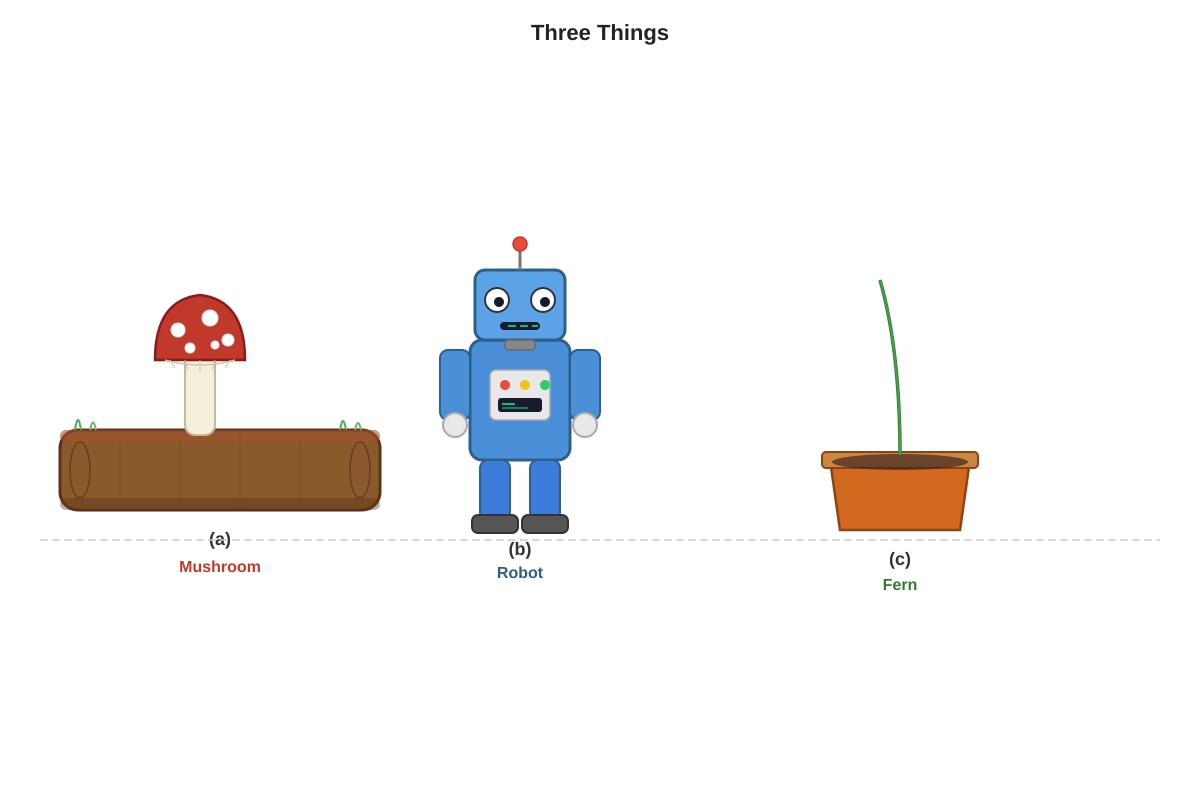
1 Answer: (1) Mushroom, moss, fern [2 marks]
Explanation: Mushroom (fungus), moss (non-flowering plant), and fern (non-flowering plant) are all living things. Cloud, river, rock (Option 2) are natural non-living things. Robot, car, computer (Option 3) are man-made non-living things. Shadow, reflection, rainbow (Option 4) are non-living phenomena.
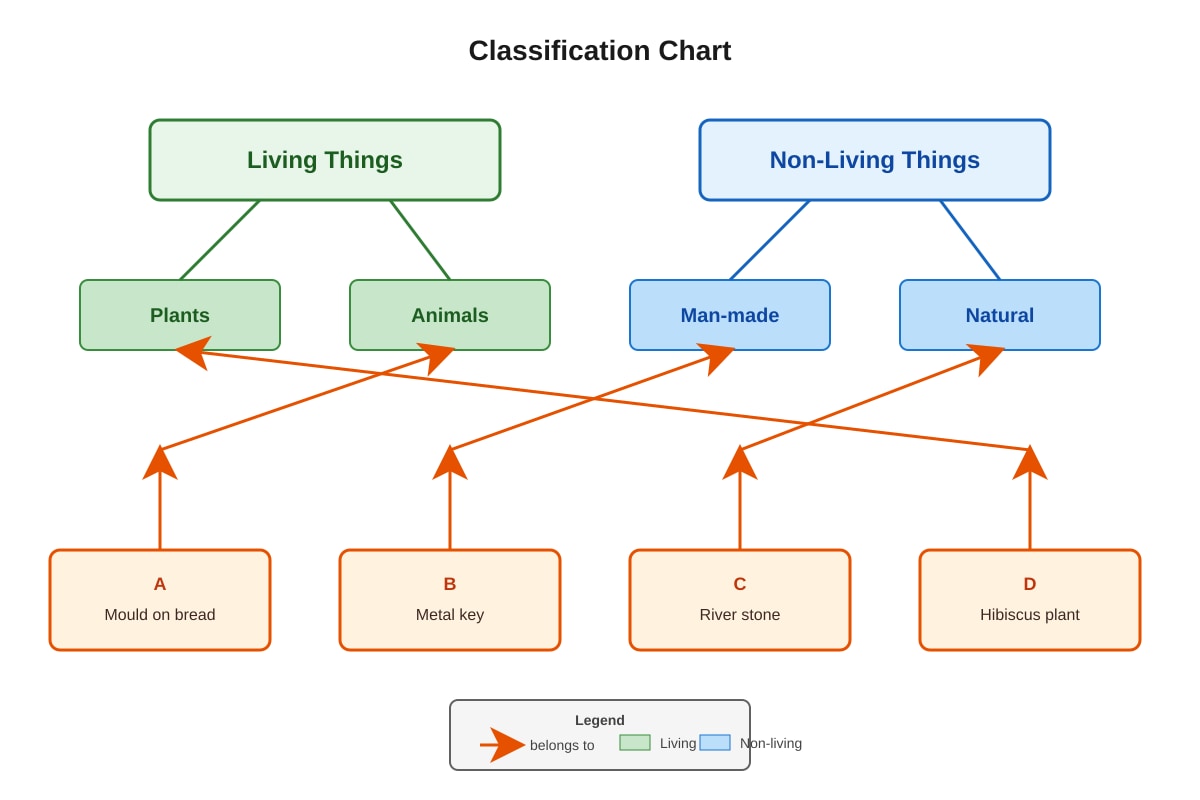
2 Answer: (1) A: Plants, B: Man-made, C: Natural, D: Plants [2 marks]
Explanation:
- Mould on bread (A) is a fungus → classified under Plants (in primary science, fungi are grouped with plants as non-flowering plants)
- Metal key (B) is made by humans → Man-made
- River stone (C) occurs naturally → Natural non-living thing
- Hibiscus plant (D) is a flowering plant → Plants
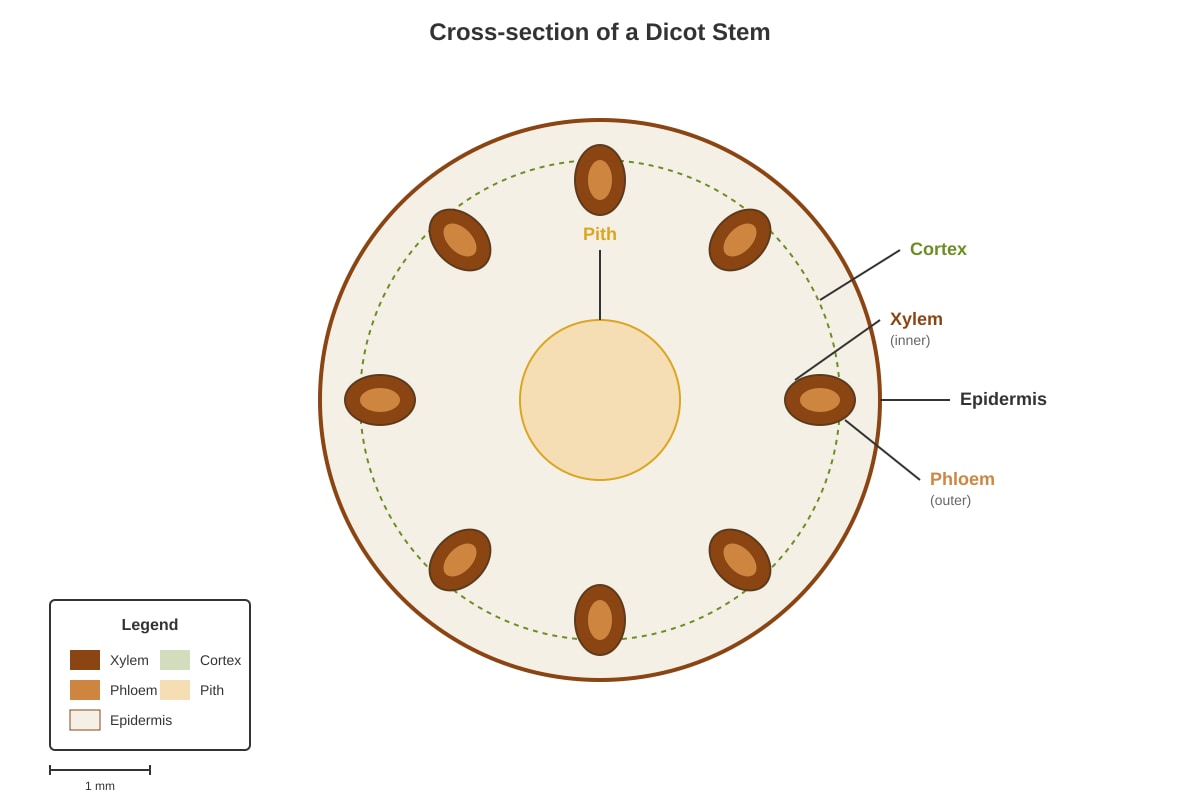
3 Answer: (2) Bala [2 marks]
Explanation: Bala's statement is correct: All living things need air, food, and water to survive.
- Ali is incorrect: Plants are living things but cannot move from place to place.
- Cindy is incorrect: Not all living things lay eggs (e.g., mammals give birth, plants produce seeds).
- Devi is incorrect: Living things grow, but not all "become bigger" indefinitely (e.g., adult humans stop growing taller).
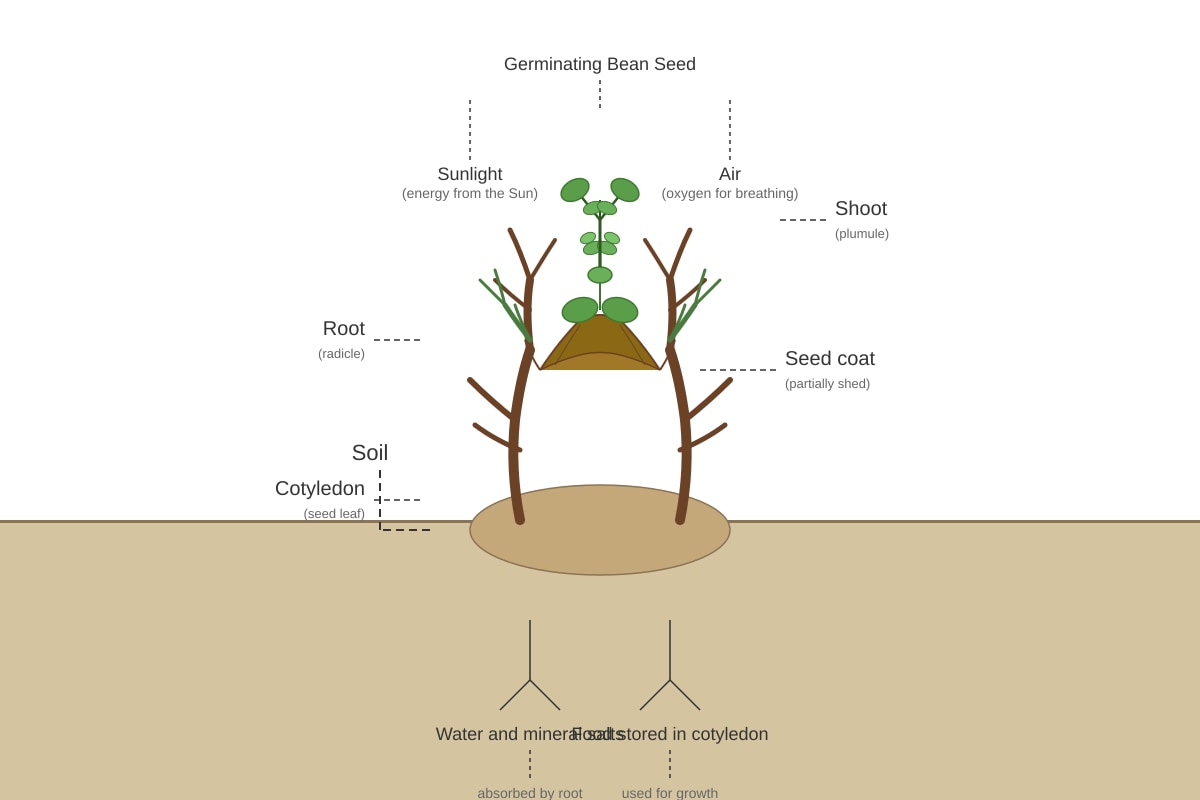
4 Answer: (3) Root [2 marks]
Explanation: The root absorbs water and mineral salts from the soil. The seed coat protects the seed. The cotyledon (seed leaf) stores food for the young plant. The shoot grows upwards to form the stem and leaves.
5 Answer: (1) Coal [2 marks]
Explanation: Coal is formed from dead plants that lived millions of years ago. It was once part of living things. Sand, water, and air are never-living things (natural non-living things).
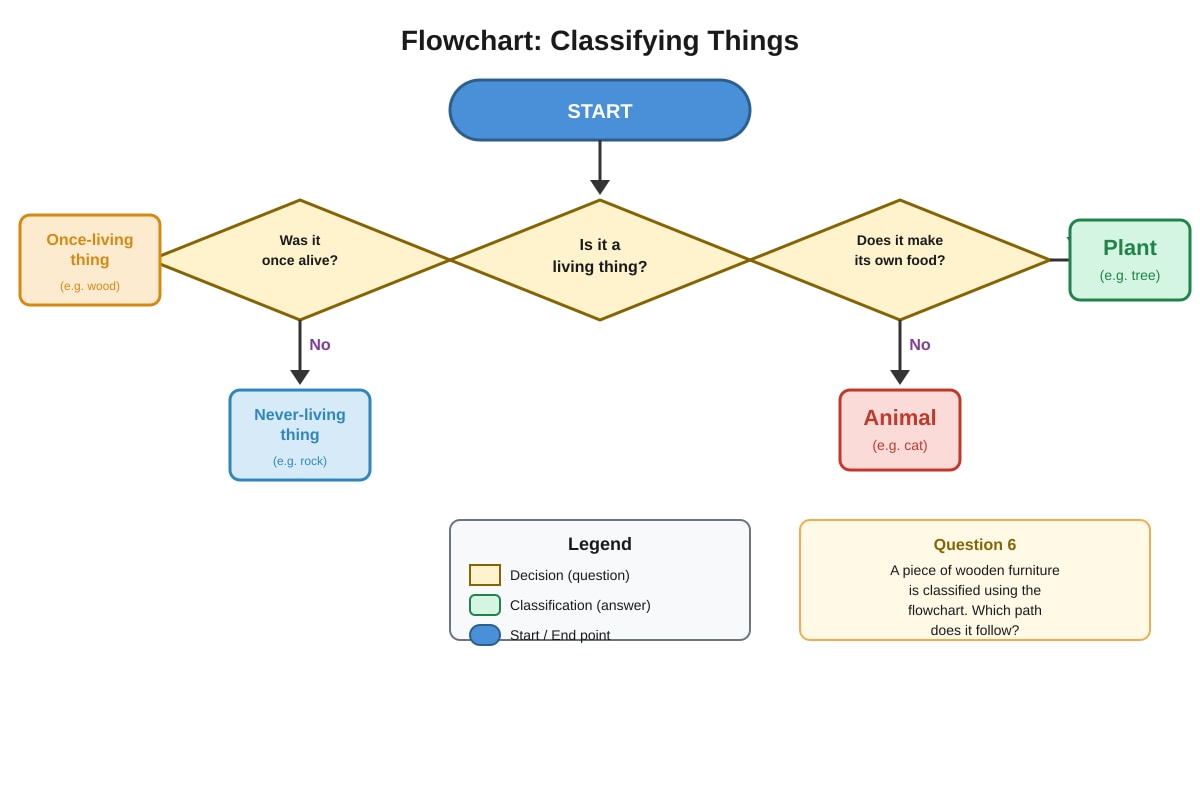
6 Answer: (3) Not living thing → Was once alive → Once-living thing [2 marks]
Explanation: Wooden furniture is made from wood, which comes from trees (once-living). It is not a living thing now, but it was once alive. Therefore, it follows the path: Not living thing → Was once alive → Once-living thing.
7 Answer: (3) They respond to changes around them. [2 marks]
Explanation: All living things respond to stimuli (changes in their environment). This is one of the key characteristics of life.
- (1) Only plants make their own food (photosynthesis).
- (2) Plants cannot move from place to place.
- (4) Only some animals have legs.
8 Answer: (1) W and X [2 marks]
Explanation: Living things show all five characteristics: need air/food/water, grow, respond to changes, reproduce, and are made of cells. Only W and X have ticks (✓) for all five characteristics. Y and Z have crosses (✗) for all, so they are non-living.
Diversity (Plants)
9 Answer: (1) Bird's nest fern [2 marks]
Explanation: Bird's nest fern is a fern, which reproduces by spores. Hibiscus, mango tree, and sunflower are flowering plants that reproduce by seeds.
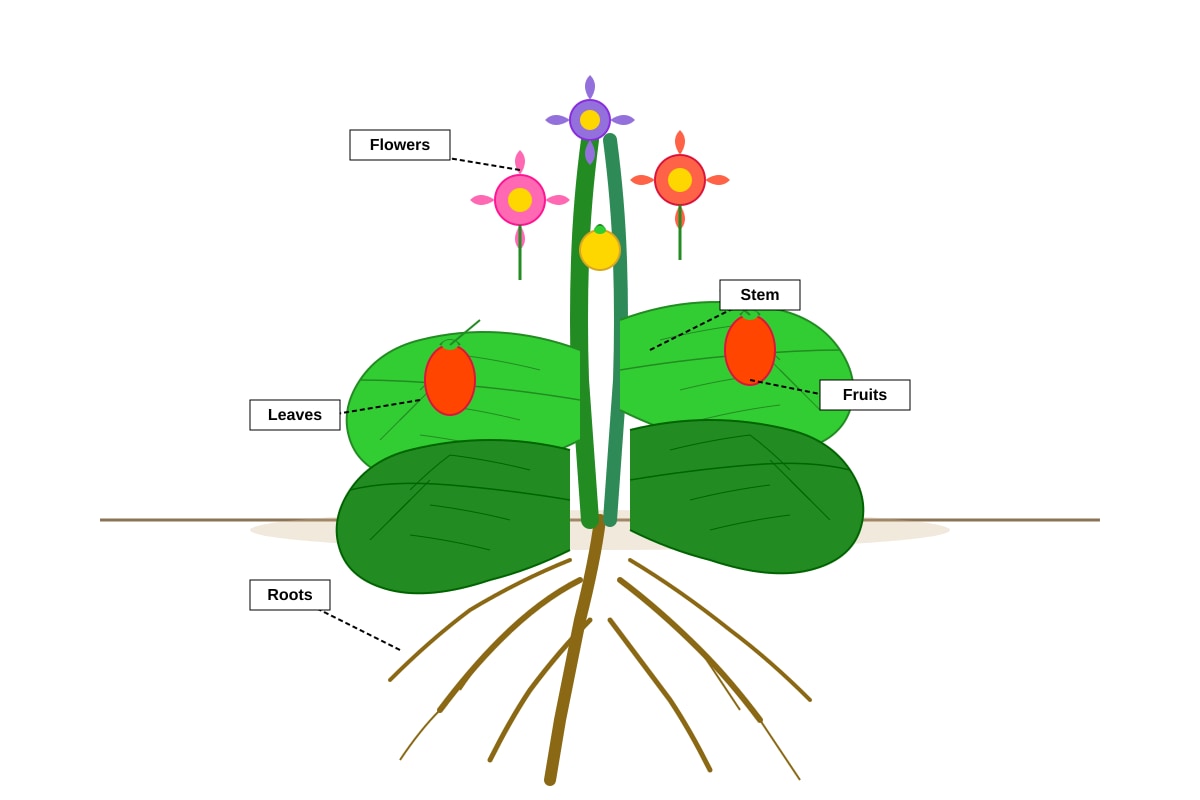
10 Answer: (4) It produces seeds in its fruits. [2 marks]
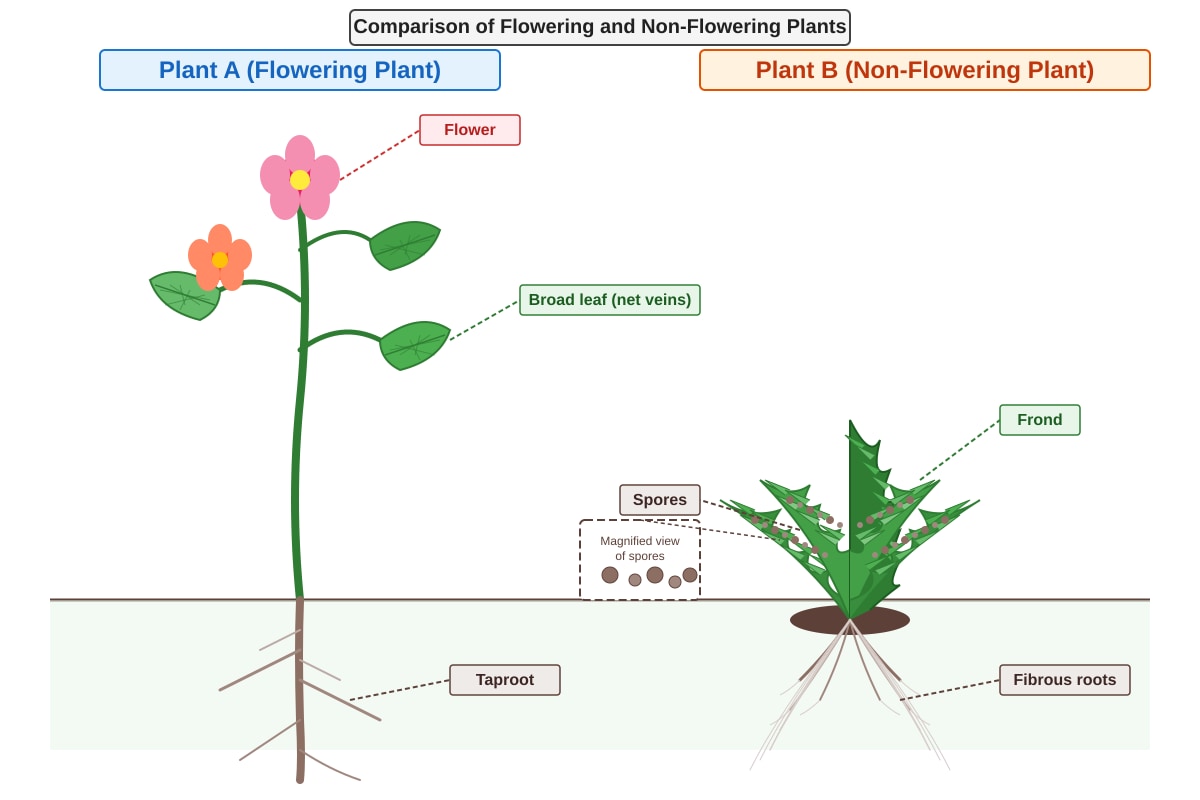
Explanation: The diagram shows a flowering plant (broad leaves with net veins, taproot, flowers, and fruits). Flowering plants produce seeds inside their fruits. It is not a non-flowering plant (1), does not reproduce by spores (2), and has a taproot system, not fibrous (3).
11 Answer: (1) Mould, yeast, mushroom [2 marks]
Explanation: Mould, yeast, and mushroom are all fungi. Moss, fern, algae (2) are non-flowering plants. Hibiscus, rose, orchid (3) are flowering plants. Pine, cypress, fir (4) are gymnosperms (cone-bearing plants).
12 Answer: (1) Group A: Non-flowering plants, Group B: Flowering plants [2 marks]
Explanation: Group A contains Bird's nest fern (fern), Moss, and Mushroom (fungus) — all non-flowering plants. Group B contains Hibiscus, Mango tree, and Sunflower — all flowering plants.
13 Answer: (3) Young plant [2 marks]
Explanation: During germination, the seed uses stored food in the cotyledons. Once the young plant develops leaves (especially the first true leaves), it can photosynthesise and make its own food. The seed (1) and germination stage (2) rely on stored food. The adult plant (3) also makes food, but the young plant stage is when it starts.
Diversity (Animals)
14 Answer: (4) Bat [2 marks]
Explanation: Bats are mammals and give birth to live young. Frogs (1) lay eggs in water. Butterflies (2) lay eggs that hatch into caterpillars. Guppies (3) are fish that give birth to live young, but they are not mammals; however, the question asks which animal gives birth to young alive, and both guppy and bat do. But in primary science classification, "gives birth to young alive" is a key mammalian trait, and bat is the only mammal option. Guppies are live-bearing fish but this is less emphasised. The best answer is Bat.
15 Answer: (1) Insects [2 marks]
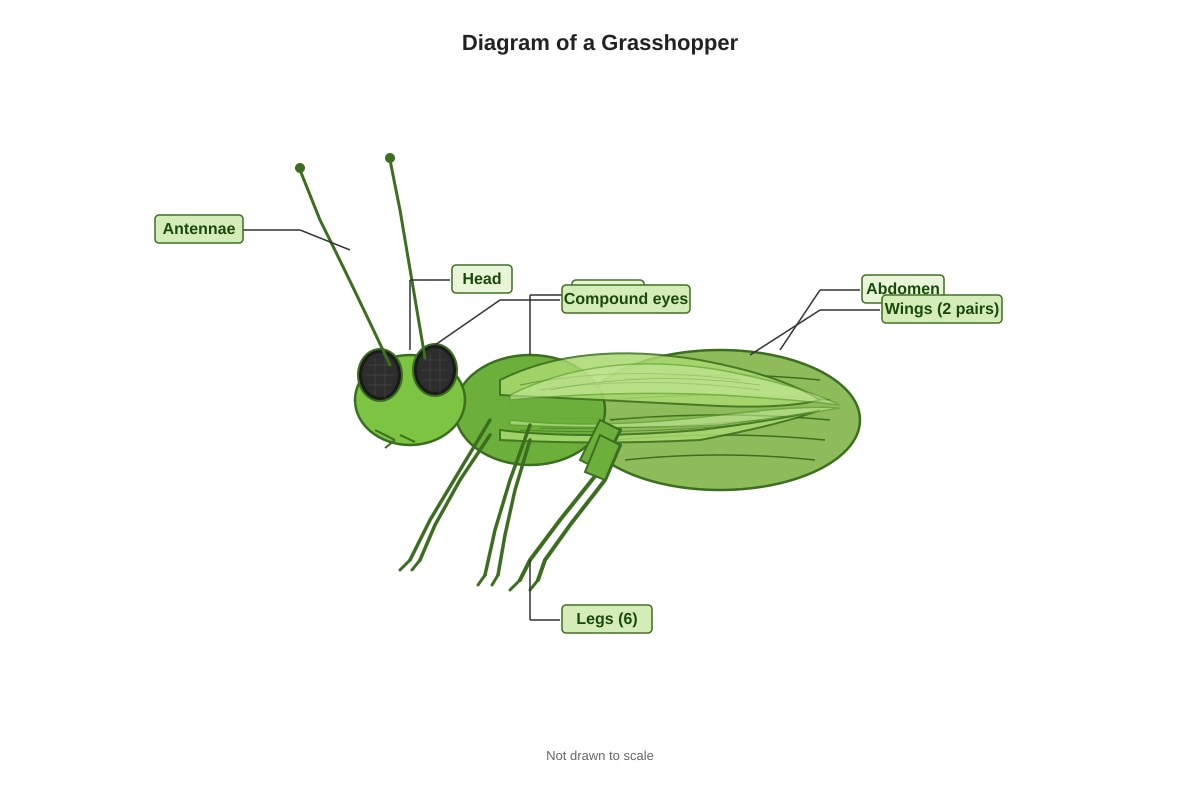
Explanation: The diagram shows an animal with three body parts (head, thorax, abdomen), six legs, two pairs of wings, one pair of antennae, and compound eyes. These are all characteristics of insects.
16 Answer: (3) Grasshopper [2 marks]
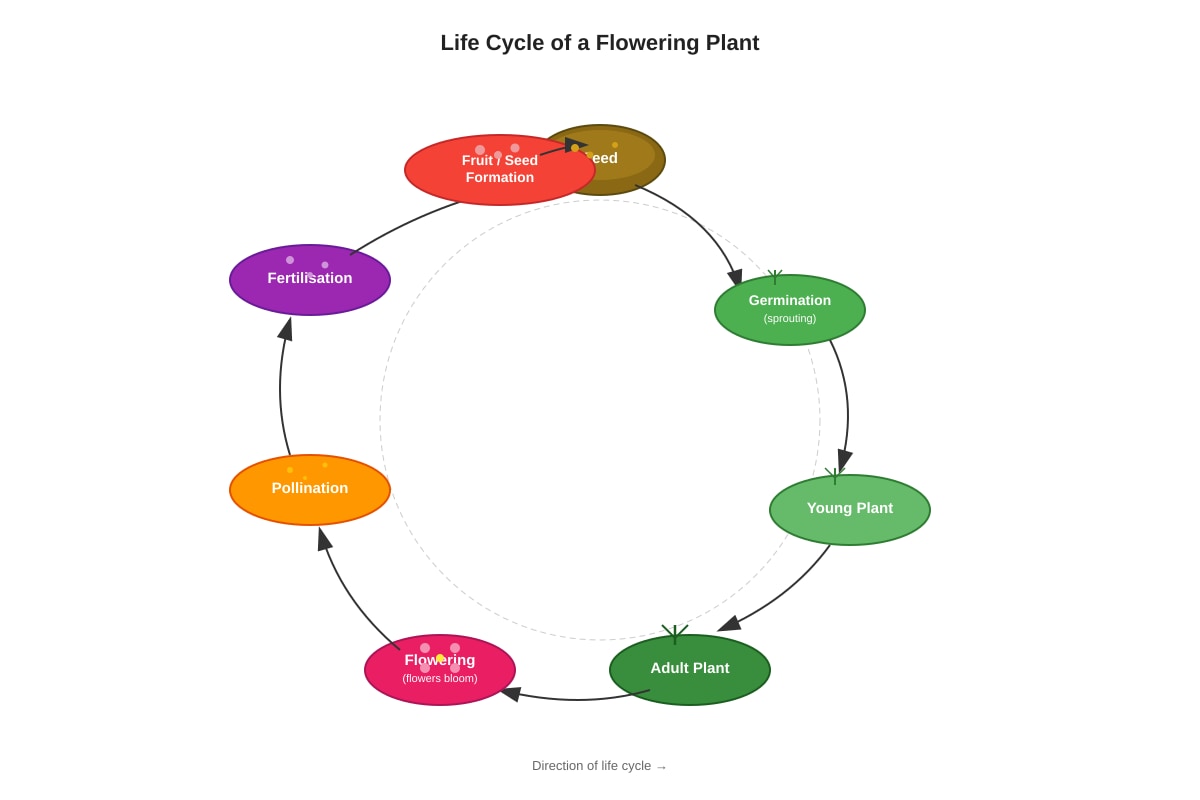
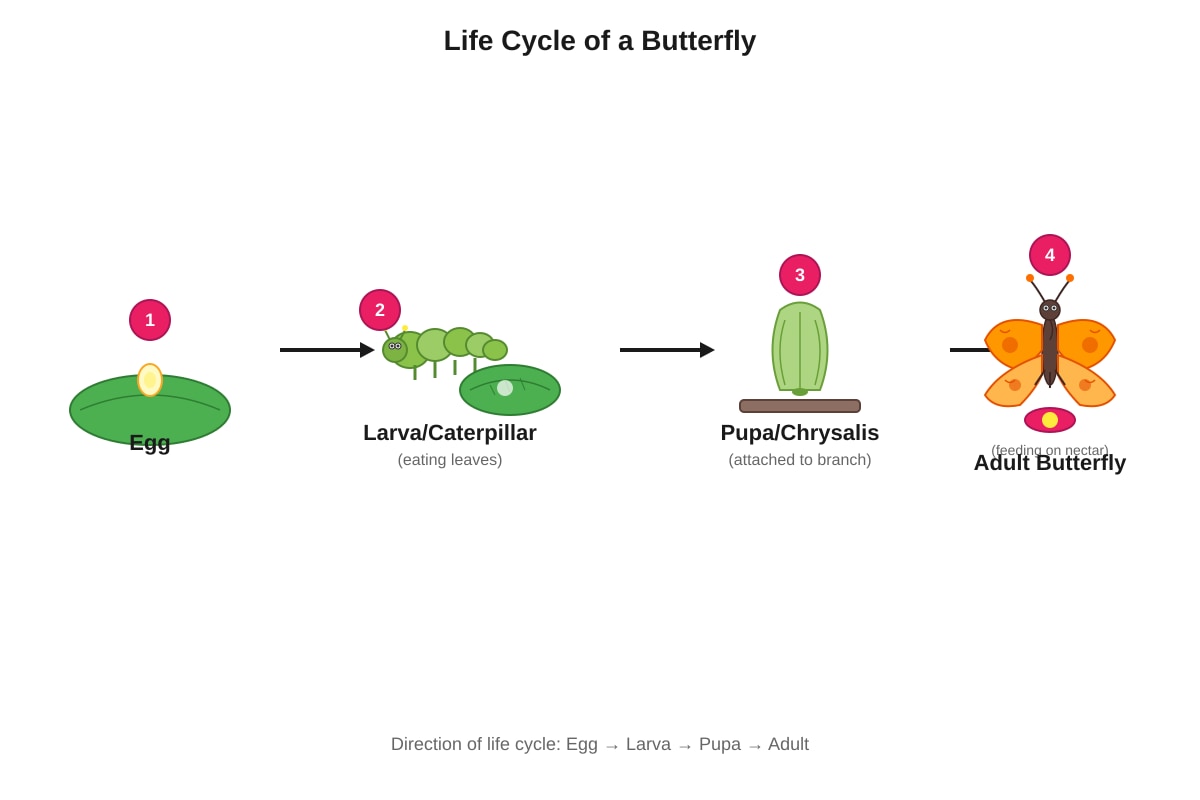
Explanation: Grasshoppers undergo incomplete metamorphosis (three stages: egg → nymph → adult). Mosquito (1), Butterfly (2), and Beetle (4) undergo complete metamorphosis (four stages: egg → larva → pupa → adult).
17 Answer: (3) R [2 marks]
Explanation: Mammals have hair/fur as body covering, breathe with lungs, and give birth to young alive (mostly). Animal R matches all three: Hair, Lungs, Gives birth to young alive.
18 Answer: (3) Reptile [2 marks]
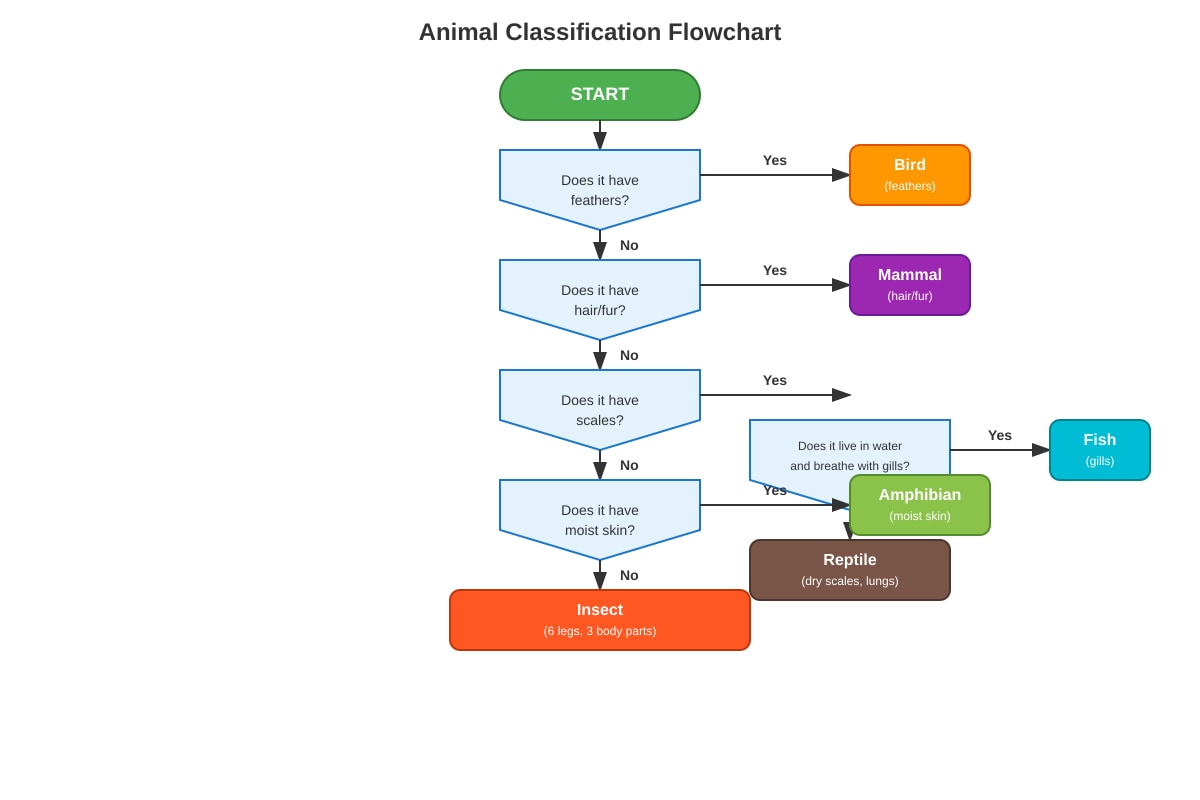
Explanation: Following the flowchart: No feathers → No hair/fur → Has scales → Does not live in water and breathe with gills (it breathes with lungs and lays eggs on land) → Reptile. Reptiles have dry scales, breathe with lungs, and lay leathery-shelled eggs on land.
Diversity (Materials)
19 Answer: (3) Wood [2 marks]
Explanation: A cooking pot handle must be a poor conductor of heat (insulator) so it doesn't burn the user's hand. Wood is a poor conductor of heat. Metal (1) is a good conductor. Glass (2) and ceramic (4) conduct heat better than wood and can become hot.
20 Answer: (1) W [2 marks]
Explanation: Flexibility is the ability to bend easily without breaking AND return to the original shape. Material W bends easily and returns to its original shape. Material X bends easily but does not return (plastic deformation). Materials Y and Z do not bend easily.
21 Answer: (2) Waterproof [2 marks]
Explanation: A raincoat must keep the wearer dry, so the material must be waterproof (does not allow water to pass through). Transparency (1) is not needed. Flexibility (3) and strength (4) are useful but secondary to waterproofing.
22 Answer: (2) The paper clip is made of a magnetic material. [2 marks]
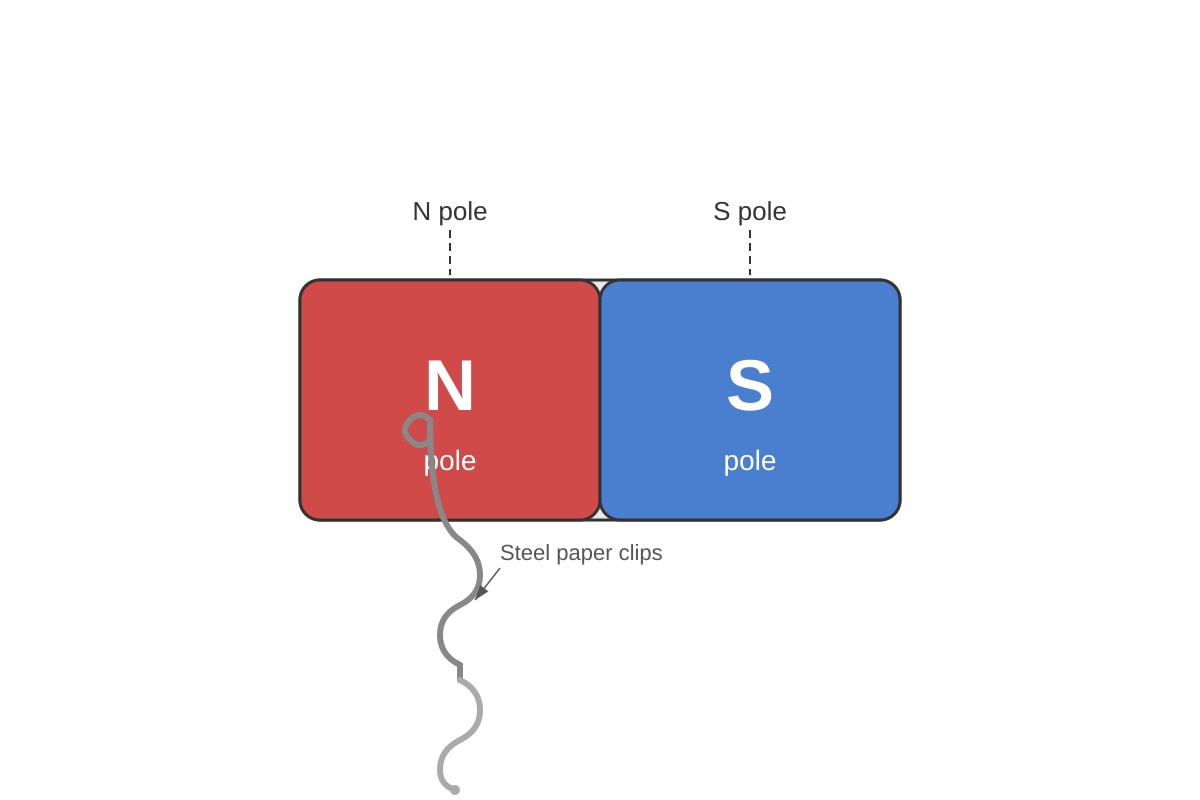
Explanation: The steel paper clip is attracted to the magnet because steel is a magnetic material (contains iron). It becomes a temporary magnet (induced magnetism) but not a permanent magnet (1). The magnet does not lose its magnetism (3). Both poles can attract magnetic materials (4).
23 Answer: (2) Iron and steel [2 marks]
Explanation: Objects A and C are attracted by the magnet, so they must be made of magnetic materials. Iron and steel are magnetic. Plastic, wood, copper, aluminium, glass, and rubber are non-magnetic.
24 Answer: (3) Like poles of two magnets repel each other. [2 marks]
Explanation: This is a fundamental property of magnets: like poles (N-N or S-S) repel, unlike poles (N-S) attract.
- (1) Copper is non-magnetic.
- (2) Magnetic force is strongest at the poles, not the centre.
- (4) Water does not destroy magnetism (though it can cause rusting over time).
Systems (Plant Parts and Functions)
25 Answer: (1) Xylem [2 marks]
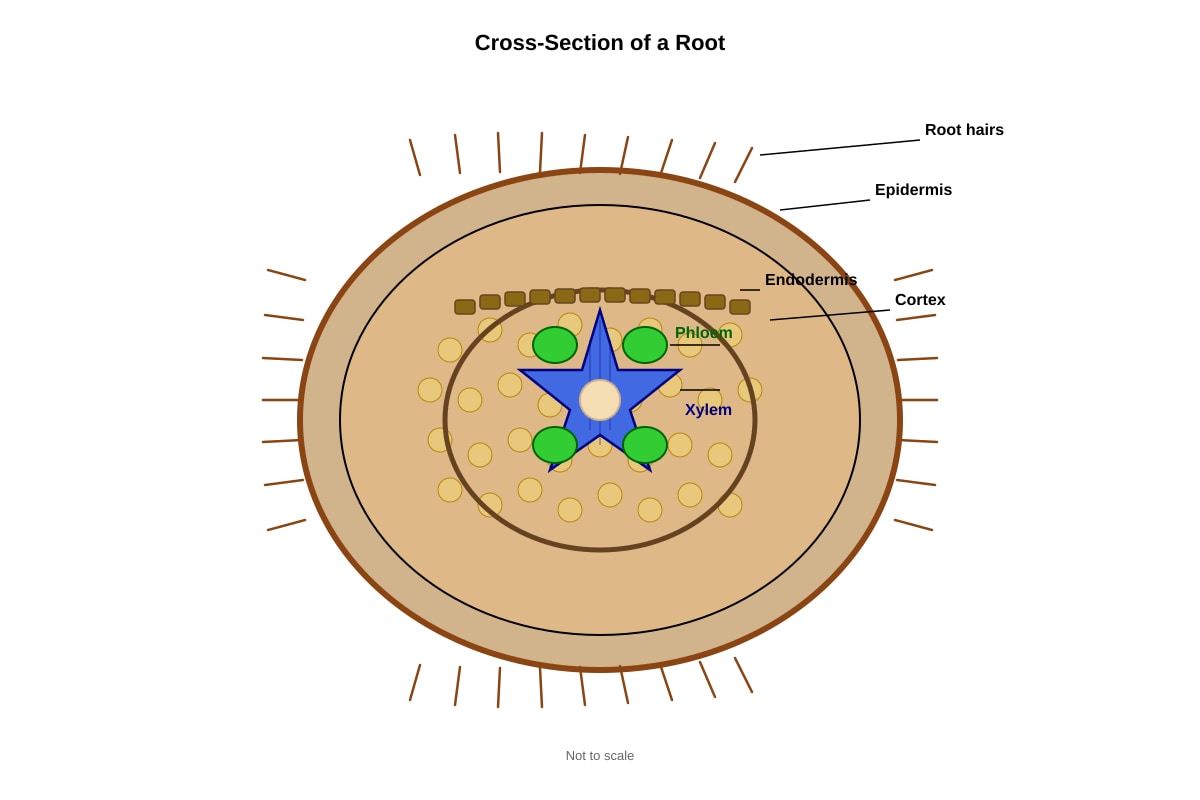
Explanation: Xylem transports water and mineral salts from the roots to the leaves. Phloem transports food (sugar) from the leaves to other parts. Epidermis protects. Cortex stores food.
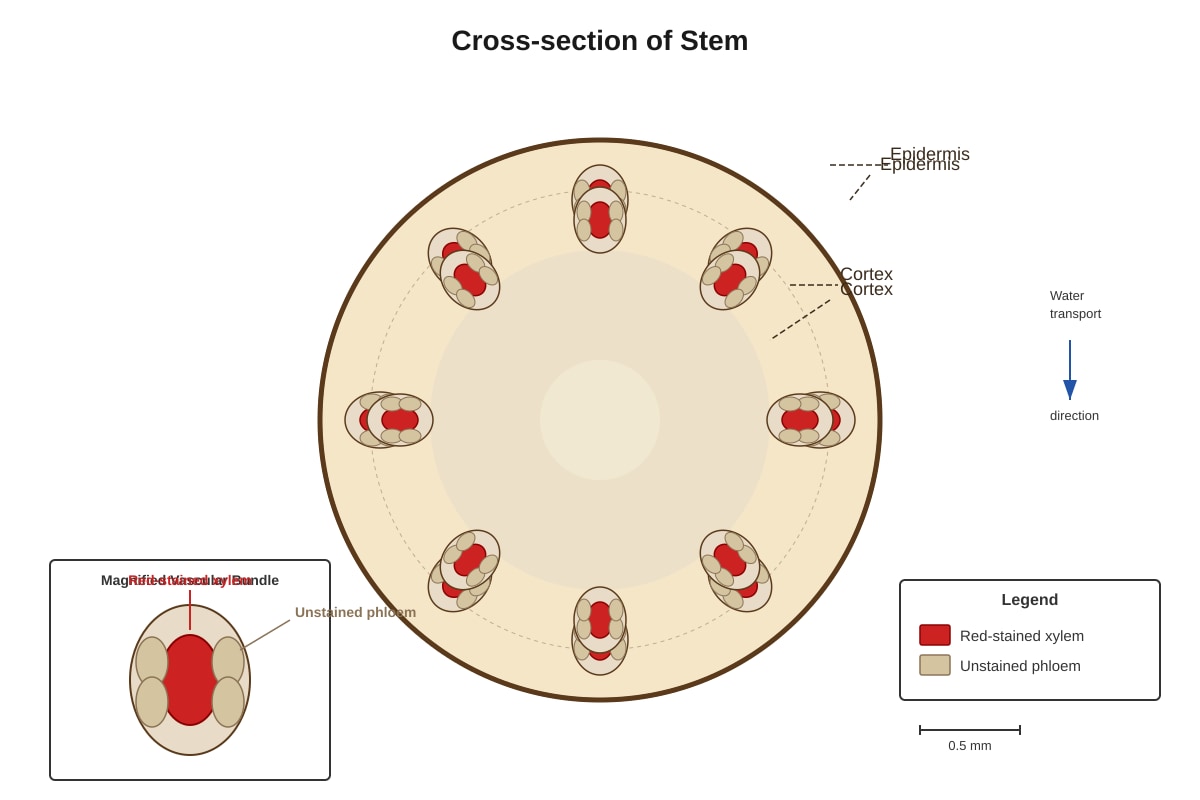
26 Answer: (2) Xylem [2 marks]
Explanation: The red-coloured water is absorbed by the roots and transported up the stem through the xylem vessels. The xylem is stained red, showing it is the water-carrying tissue.
27 Answer: (3) Root - Anchors the plant firmly to the ground [2 marks]
Explanation:
- (1) Leaf makes food, roots absorb water.
- (2) Stem transports, leaves make food.
- (3) Correct: Roots anchor the plant and absorb water/minerals.
- (4) Flower is for reproduction, stem transports.
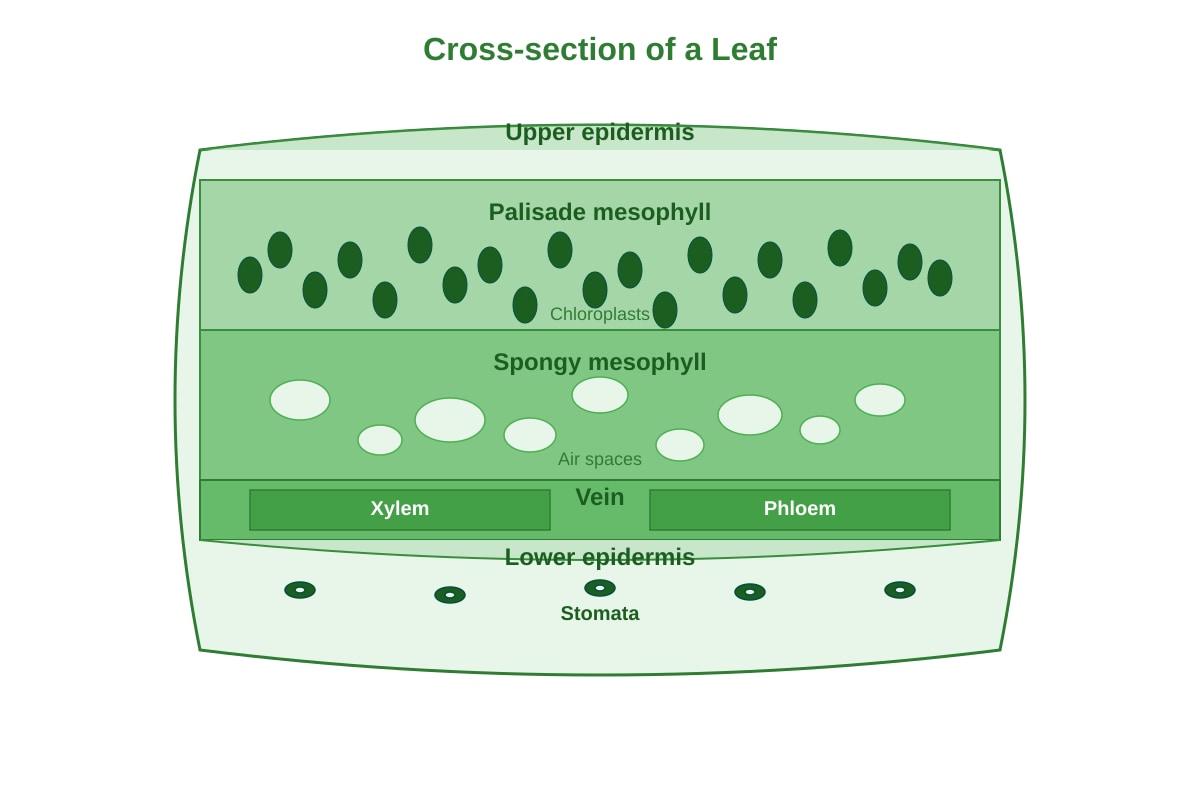
28 Answer: (2) Palisade mesophyll [2 marks]
Explanation: The palisade mesophyll cells are packed with chloroplasts and are the main site of photosynthesis. The upper epidermis is transparent for light to pass through. Spongy mesophyll has fewer chloroplasts and functions in gas exchange. Lower epidermis has stomata for gas exchange.
SECTION B: Open-Ended Questions (44 marks)
<stage3_exam_answers_md>
TuitionGoWhere Practice Paper - Science Primary 4 (Answer Key)
TuitionGoWhere Exam Practice (AI)
Subject: Science
Level: Primary 4
Paper: SA2 (Semestral Assessment 2) - Version 3
SECTION A: Multiple-Choice Questions (56 marks)
| Question | Answer | Explanation |
|---|---|---|
| 1 | (1) | Mushroom, moss, and fern are all living things (fungi and plants). Cloud, river, rock are natural non-living things. Robot, car, computer are man-made non-living things. Shadow, reflection, rainbow are optical phenomena (non-living). |
| 2 | (1) | Mould on bread is a fungus → Plants (in primary science classification, fungi are grouped under plants). Metal key is Man-made. River stone is Natural. Hibiscus plant is a flowering plant → Plants. |
| 3 | (2) | Bala is correct: All living things need air, food, and water. Ali is wrong (plants don't move from place to place). Cindy is wrong (many living things reproduce by other methods). Devi is wrong (growth is not just becoming bigger; also, some living things like adult humans don't grow bigger). |
| 4 | (3) | The root absorbs water and mineral salts from the soil. The shoot grows upwards, the seed coat protects the seed, and the cotyledon stores food. |
| 5 | (1) | Coal is formed from dead plant matter over millions of years (once-living thing). Sand, water, and air are never-living things. |
| 6 | (3) | Wooden furniture: Not a living thing → Was once alive (wood from trees) → Once-living thing. |
| 7 | (3) | All living things respond to changes around them (sensitivity). Not all make their own food (animals don't). Not all move from place to place (plants don't). Not all have legs. |
| 8 | (1) | W and X show all five characteristics of living things (✓ for all). Y and Z show none (✗ for all). |
| 9 | (1) | Bird's nest fern is a fern → reproduces by spores. Hibiscus, mango tree, and sunflower are flowering plants → reproduce by seeds. |
| 10 | (4) | The plant has flowers and fruits → flowering plant → produces seeds in its fruits. It has broad leaves with net veins and a taproot (dicot), not fibrous roots. |
| 11 | (1) | Mould, yeast, mushroom are all fungi. Moss, fern, algae are non-flowering plants. Hibiscus, rose, orchid are flowering plants. Pine, cypress, fir are gymnosperms (cone-bearing plants). |
| 12 | (1) | Group A: Bird's nest fern, moss, mushroom → Non-flowering plants (ferns, mosses, fungi). Group B: Hibiscus, mango tree, sunflower → Flowering plants. |
| 13 | (3) | The plant starts to make its own food at the young plant stage when leaves develop and photosynthesis begins. During germination, it uses stored food in the cotyledons. |
| 14 | (4) | Bat is a mammal → gives birth to young alive. Frog (amphibian) and butterfly (insect) lay eggs. Guppy (fish) lays eggs (though some fish give live birth, guppies are livebearers but in primary science, fish typically lay eggs; however, bat is the definitive mammal example). |
| 15 | (1) | The animal has three body parts (head, thorax, abdomen), six legs, two pairs of wings, antennae, compound eyes → Insect (grasshopper). |
| 16 | (3) | Grasshopper has a three-stage life cycle (incomplete metamorphosis): Egg → Nymph → Adult. Mosquito, butterfly, beetle have four-stage life cycles (complete metamorphosis). |
| 17 | (3) | Animal R: Hair, lungs, gives birth to young alive → Mammal. P: Scales, gills, lays eggs in water → Fish. Q: Feathers, lungs, lays eggs on land → Bird. S: Moist skin, lungs and skin, lays eggs in water → Amphibian. |
| 18 | (3) | Dry scales + breathes with lungs + lays eggs with leathery shells on land → Reptile. Fish have gills. Amphibians have moist skin. Birds have feathers. |
| 19 | (3) | Wood is a poor conductor of heat (insulator), suitable for cooking pot handles. Metal, glass, ceramic are good conductors (or get hot). |
| 20 | (1) | Material W bends easily and returns to original shape → most flexible (elastic). X bends but doesn't return (plastic deformation). Y and Z don't bend easily (stiff/brittle). |
| 21 | (2) | Waterproof is the most important property for a raincoat to keep rain out. |
| 22 | (2) | The paper clip is made of a magnetic material (steel/iron). It becomes a temporary magnet (induced magnetism), not permanent. Both poles attract magnetic materials. Magnet doesn't lose magnetism. |
| 23 | (2) | Iron and steel are magnetic materials (attracted by magnet). Plastic, wood, copper, aluminium, glass, rubber are non-magnetic. |
| 24 | (3) | Like poles repel, unlike poles attract. Copper is non-magnetic. Magnetic force is strongest at the poles, not centre. Water doesn't destroy magnetism. |
| 25 | (1) | Xylem transports water and mineral salts from roots to leaves. Phloem transports food. |
| 26 | (2) | Xylem was stained red because it transports water (with red dye) from roots upwards. |
| 27 | (3) | Root anchors the plant firmly to the ground. Leaf makes food (photosynthesis). Stem transports water and food. Flower is for reproduction. |
| 28 | (2) | Palisade mesophyll has many chloroplasts → main site of photosynthesis. |
SECTION B: Open-Ended Questions (44 marks)
Question 29 [4 marks]
(a)
| Living Things | Non-Living Things |
|---|---|
| Mushroom, Fern | Robot |
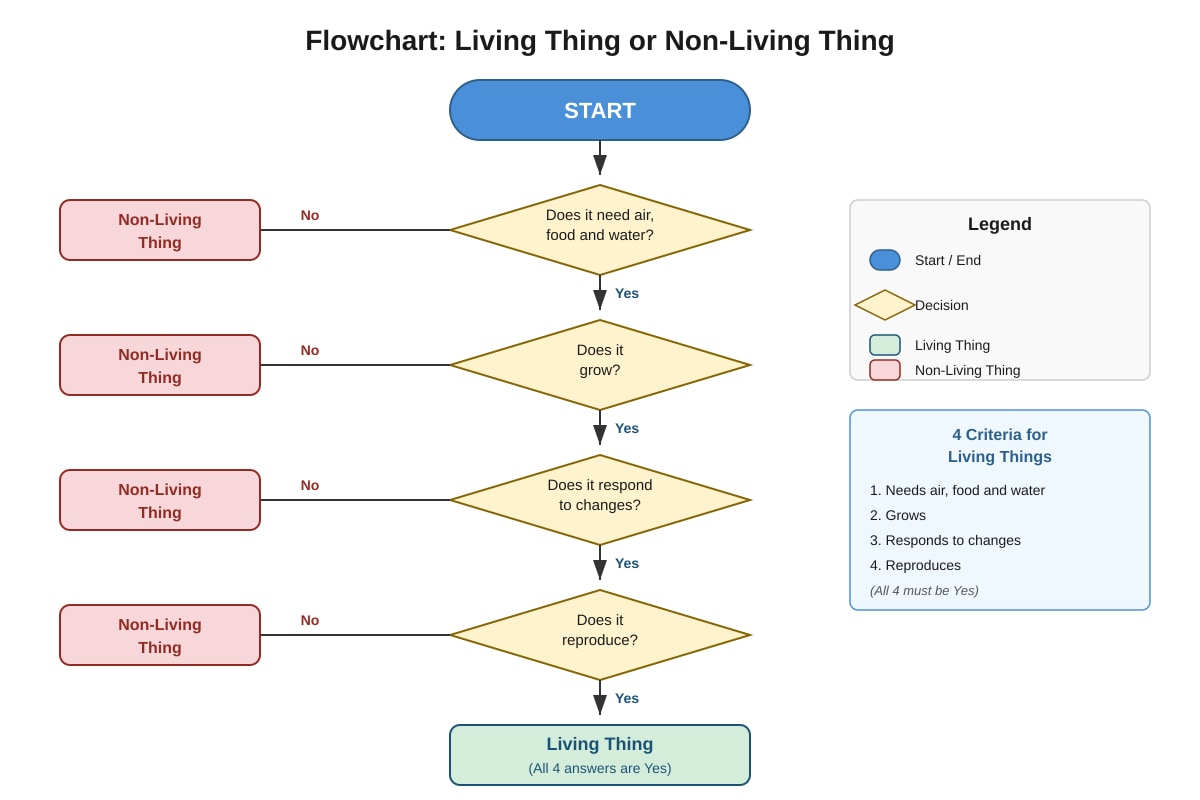
(b) The mushroom is a living thing because it grows, reproduces (by spores), responds to changes, and needs air, food, and water. (Any one valid characteristic)
(c) The robot is a non-living thing because it does not grow, does not reproduce, does not need air, food, or water, and cannot respond to changes on its own (it needs programming/batteries). (Any one valid reason)
Question 30 [4 marks]
(a) A crystal is a non-living thing because although it grows (gets bigger in a saturated solution), it does not need air, food, and water, does not respond to changes, and does not reproduce. (Using the flowchart: it fails at the first criterion "Does it need air, food and water?" → Non-Living Thing)
(b) Yes, the seed is a living thing. Although it is dormant (not growing or reproducing) in a dry, airtight container, it still has the potential to grow and reproduce when given suitable conditions (air, water, warmth). It carries out respiration at a very low rate and contains a living embryo.
Question 31 [4 marks]
(a) Plant A (flowering plant) reproduces by seeds (produced in flowers/fruits), while Plant B (fern) reproduces by spores (produced on the underside of fronds).
(b) Plant A has broad leaves with net-like (reticulate) veins, while Plant B has fronds (divided leaves) with spores on the underside (or simpler vein patterns).
(c) Plant A has a taproot system (one main root with smaller lateral roots), while Plant B has a fibrous root system (many thin roots of similar size spreading out).
(d) Plant B belongs to the group Ferns (or Non-flowering plants / Pteridophytes).
Question 32 [4 marks]
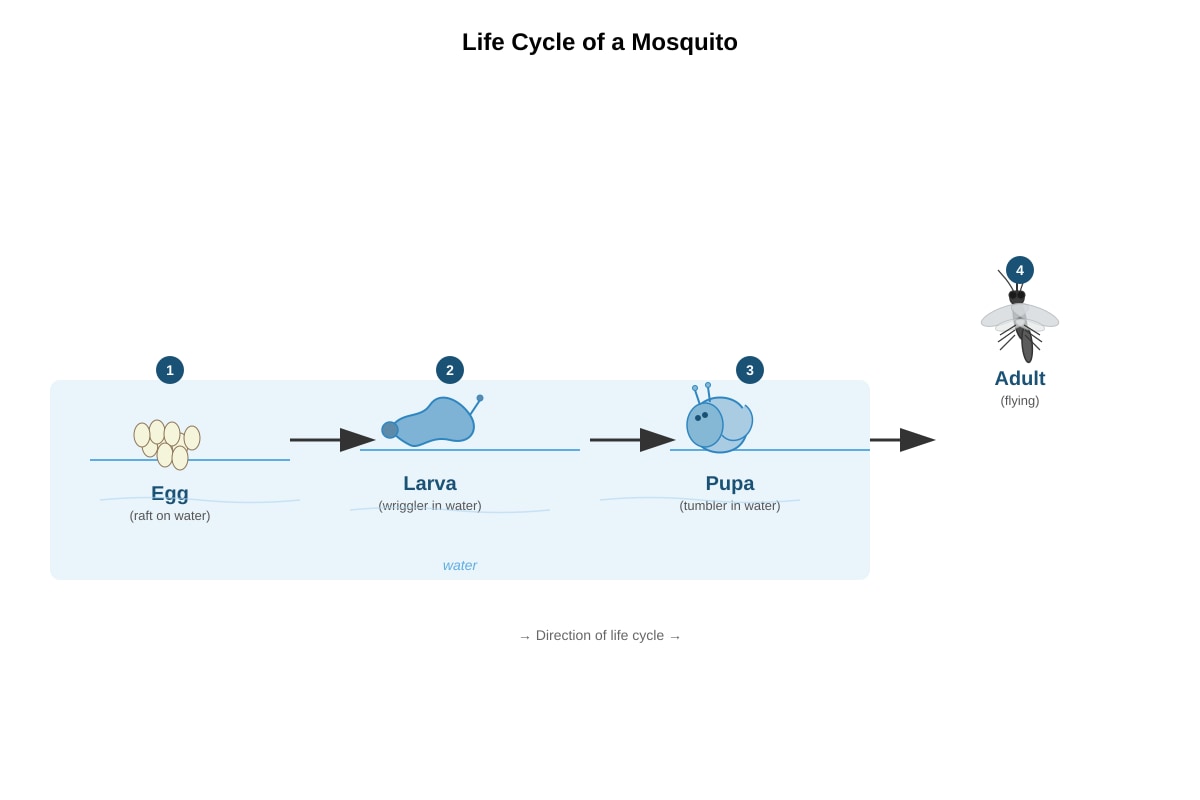
(a) The four stages are: Egg → Larva (wriggler) → Pupa (tumbler) → Adult mosquito.
(b) The larva and pupa stages live in water. (Both are aquatic)
(c) The adult mosquito stage can fly.
(d) The mosquito has a four-stage life cycle (complete metamorphosis) because it has four distinct stages (egg, larva, pupa, adult) and the young (larva and pupa) look very different from the adult.
Question 33 [4 marks]
(a) Animal X: Bird (feathers, beak, wings, lays eggs).
Animal Y: Mammal (hair/fur, gives birth to young alive, feeds young with milk).
(b) Similarity: Both breathe with lungs. (Or both are warm-blooded, both have a backbone/vertebrates)
(c) Difference: Bird has feathers and lays eggs; Mammal has hair/fur and gives birth to young alive (and feeds young with milk).
(d) The bird lays eggs which hatch outside the mother's body. The mammal gives birth to young alive (live birth) and the young develops inside the mother's body.
Question 34 [4 marks]
(a) Object A: Steel ruler (or iron nail, nickel coin) – Magnetic material.
Object B: Plastic ruler (or wooden ruler, copper wire, aluminium foil, glass marble) – Non-magnetic material.
(b) Steel/Iron/Nickel/Cobalt (any one magnetic material).
(c) Method: Stroke the steel ruler with a magnet in one direction only, using the same pole of the magnet, for at least 30-40 strokes.
Test: Bring the steel ruler near some steel paper clips/pins. If it attracts them, it has become a magnet.
(d) The stroking method aligns the magnetic domains in the steel in the same direction, making it a magnet. (Or: The magnetic field of the magnet causes the domains in the steel to align.)
Question 35 [4 marks]
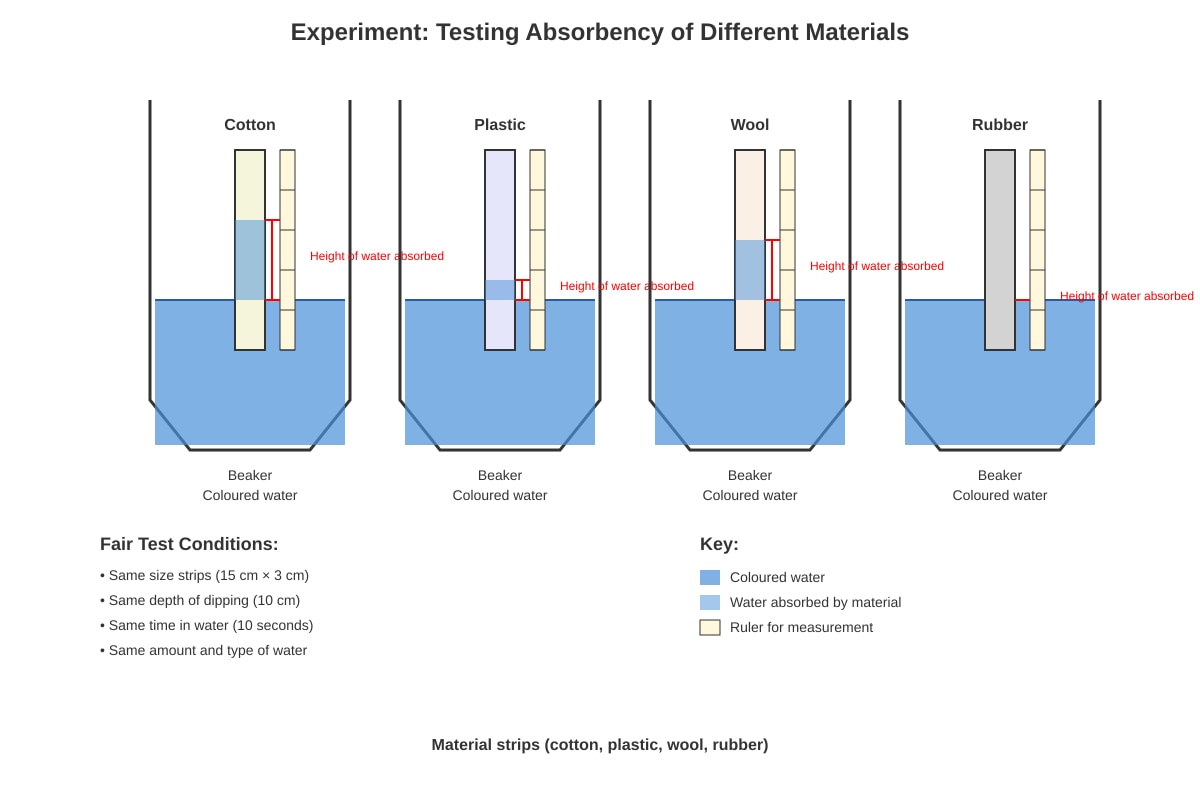
(a) Material Y (does not bend easily, does not return to shape → stiff/strong, not flexible).
Reasoning: A ruler must be stiff and keep its shape to measure straight lines accurately.
(b) Property: Flexibility / Ability to bend without breaking.
Reason: A skipping rope must bend easily and flex as it swings over the head and under the feet.
(c) Material W (bends easily and returns to original shape → flexible and elastic).
(d) Material X (bends easily but does not return to original shape → plastic/deforms permanently).
Use: Making a paper clip or hair clip that can be bent to hold shape.
Question 36 [4 marks]
(a) Part X: Xylem (water-carrying tubes).
Part Y: Phloem (food-carrying tubes).
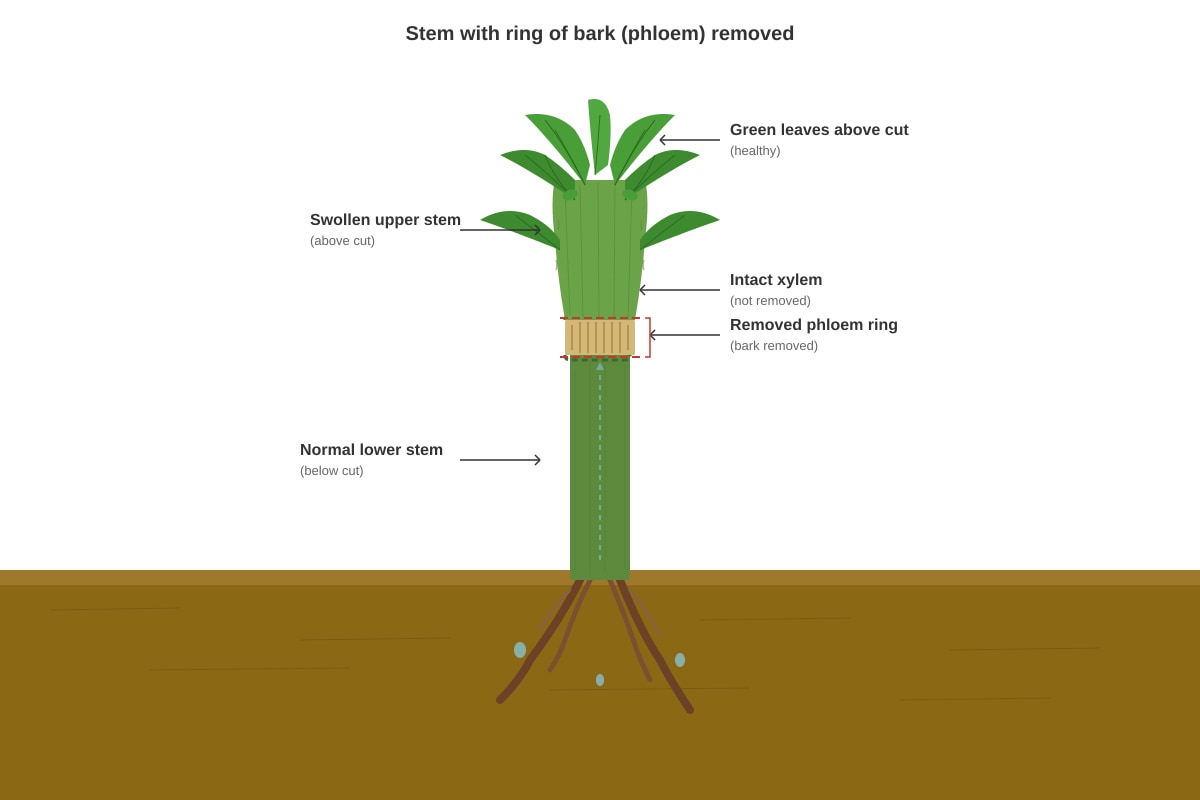
(b) Function of Xylem: Transports water and mineral salts from the roots to the leaves/stem.
Function of Phloem: Transports food (sugar) made by the leaves to all parts of the plant.
(c) The leaves will wilt / droop / turn yellow and die because water cannot be transported from the roots to the leaves (xylem is removed), so the leaves lose water through transpiration faster than it is replaced.
(d) The food made by the leaves cannot be transported to the roots (phloem is removed), so the roots will starve and die, followed by the whole plant.
Question 37 [4 marks]
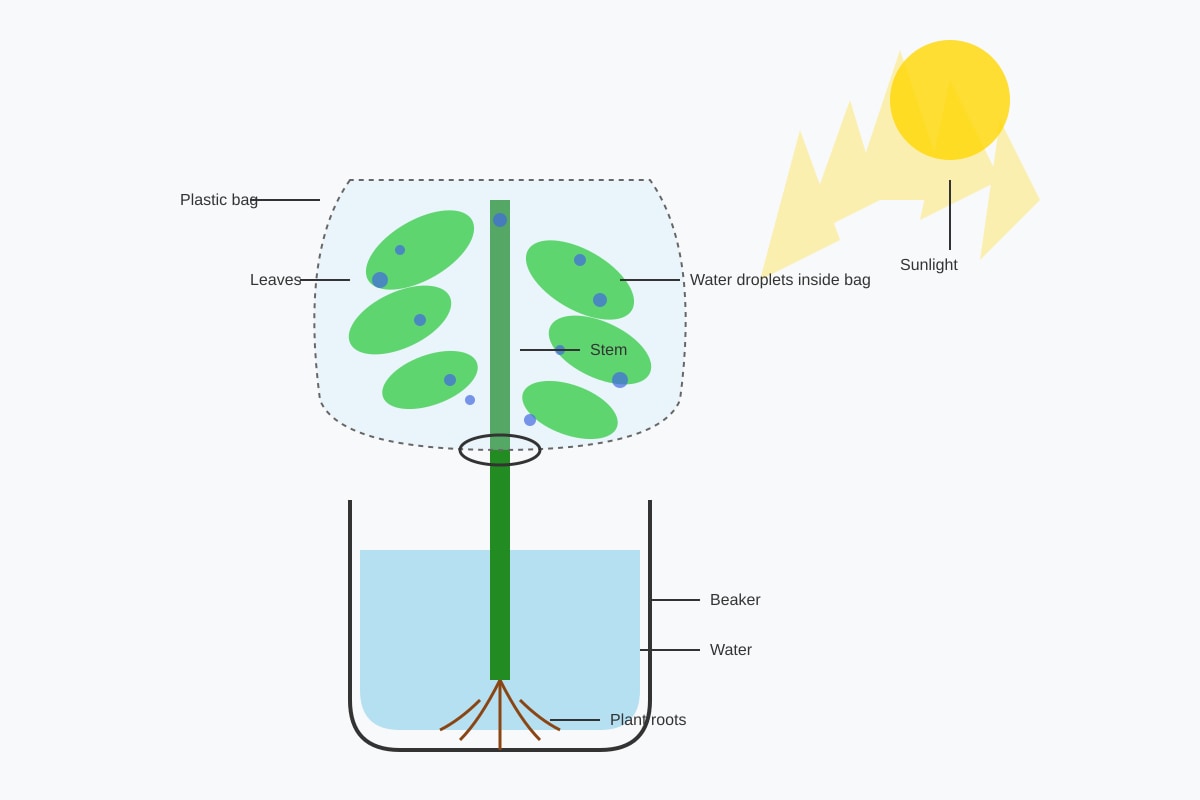
(a) Gas A: Oxygen (released during photosynthesis).
Gas B: Carbon dioxide (taken in during photosynthesis).
(b) Photosynthesis (the process by which green plants make food using light, carbon dioxide, and water, releasing oxygen).
(c) The rate of photosynthesis will decrease / fewer bubbles will be produced because light intensity decreases with distance, and light is needed for photosynthesis.
(d) Add sodium hydrogen carbonate (baking soda) to the water to increase the concentration of dissolved carbon dioxide. (Or: Use a brighter light source / move the lamp closer.)
Question 38 [4 marks]
(a) Cup A (with lid): Very little / no change in water level (evaporation prevented by lid).
Cup B (without lid): Water level decreases (water evaporates into the air).
(b) The lid prevents water vapour from escaping into the surrounding air, so evaporation cannot take place (or is greatly reduced).
(c) Water vapour (gas) in the air inside the cup condenses on the cooler inner surface of the lid, forming tiny water droplets.
(d) Wind / Air movement (blowing over the water surface carries away water vapour, speeding up evaporation).
Other acceptable answers: Higher temperature / larger exposed surface area / lower humidity.
Question 39 [4 marks]
(a) Solid (ice has a fixed shape and fixed volume).
(b) Melting (solid to liquid).
Heat is gained from the warmer surroundings.
(c) The temperature remains constant at 0°C during melting. (Heat gained is used to overcome forces between particles / latent heat of fusion, not to raise temperature).
(d) Water vapour (gas) in the surrounding air loses heat to the cold outer surface of the beaker and condenses into tiny water droplets.
Question 40 [4 marks]
(a) Shadow is formed when light is blocked by an opaque/translucent object. Light travels in straight lines, so the area behind the object receives no light (or less light), creating a dark patch.
(b) The shadow becomes larger / bigger because the object is closer to the light source, blocking more light rays from reaching the screen.
(c) Length of the shadow: Longest in the morning and evening (sun low in the sky), shortest at noon (sun directly overhead).
Direction of the shadow: Changes throughout the day – points west in the morning, north at noon (in northern hemisphere / away from sun), east in the evening. (In Singapore context: shadows point away from the sun's position).
(d) Sundial – uses the position and length of the shadow cast by the sun to tell the time of day.
End of Answer Key