AI Generated Quiz
Primary 4 Mathematics Geometry Quiz
Free P4 Maths Geometry quiz, HY3 AI version, with questions, answers, and syllabus-aligned practice for Singapore students.
These static practice materials are generated from the site's syllabus and paper-generation workflow, with source and model context shown so students and parents can evaluate the material before use.
Questions

Free quiz and exam paper access
Enter your details to view this paper
Your access is remembered on this device.
Answers
Primary 4 Mathematics Quiz - Geometry (Answer Key)
Total Marks: 40
Topic: Geometry (syllabus-first, no past-paper evidence used)
Section A Answers (1 mark each)
1. Right angle
Teaching note: An angle of exactly is called a right angle. It looks like the corner of a square.
2. B
Teaching note: Obtuse angles are greater than but less than . fits. A and C are acute.
3. 4
Teaching note: A square has 4 equal sides and 4 right angles; it can be folded along 4 lines (vertical, horizontal, two diagonals).
4. 180
Teaching note: The sum of angles in any triangle is always . This is a key geometry fact.
5. 6
Teaching note: A cube has 6 faces, all squares. Its net must contain 6 squares.
6.
Teaching note: Angle notation uses three letters with vertex in middle: means angle at B formed by BA and BC.
7. 2
Teaching note: Rectangle has opposite sides equal: 2 pairs (lengths equal, breadths equal).
8. Cube
Teaching note: A cube's net is made of 6 squares arranged so they fold into a closed box.
9. Straight
Teaching note: is a straight line angle, called straight angle.
10. 3
Teaching note: Equilateral triangle has 3 equal sides and 3 lines of symmetry (each from vertex to midpoint of opposite side).
Section B Answers (2 marks each)
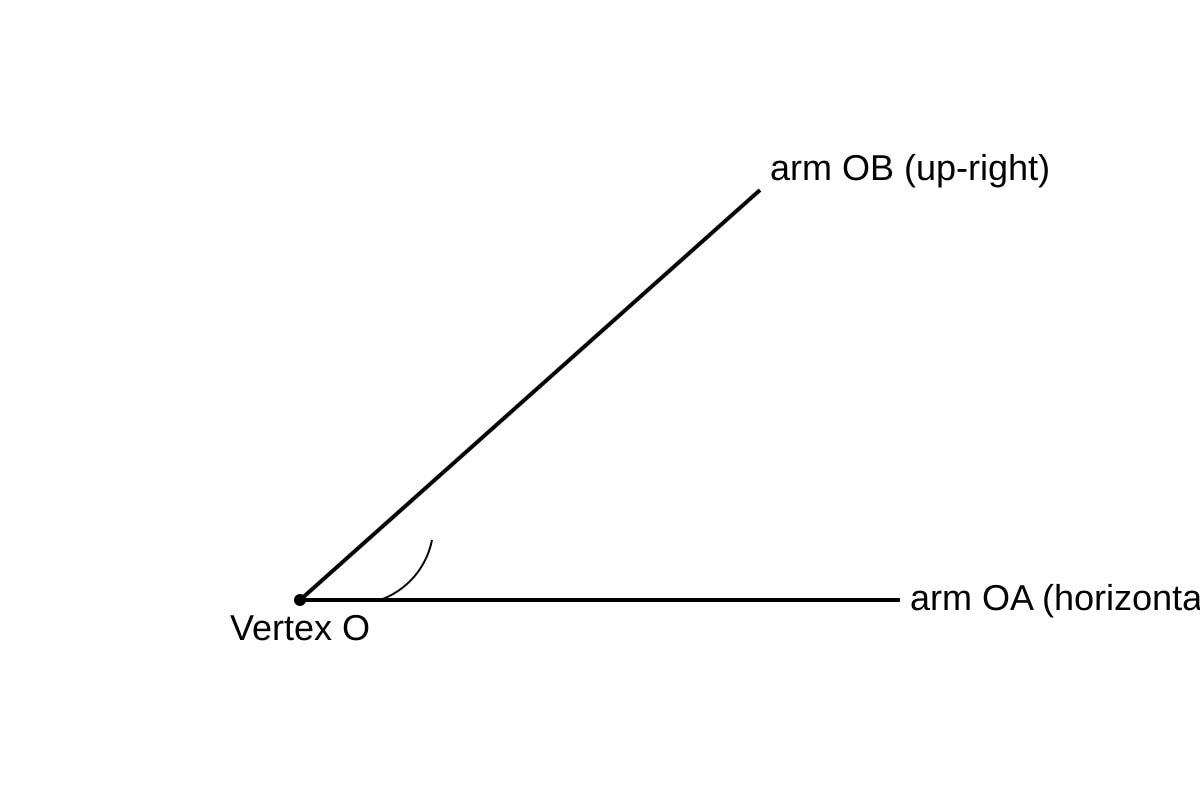
11. (accept – if drawing slight error)
Working: Place protractor centre at O, align base with OA, read where OB crosses scale.
Marking: 2 marks for correct reading.
12. Drawing of with vertex P
Marking: 2 marks: 1 for correct angle size, 1 for label P.
Teaching note: Use protractor: draw base line, mark point, join to vertex.
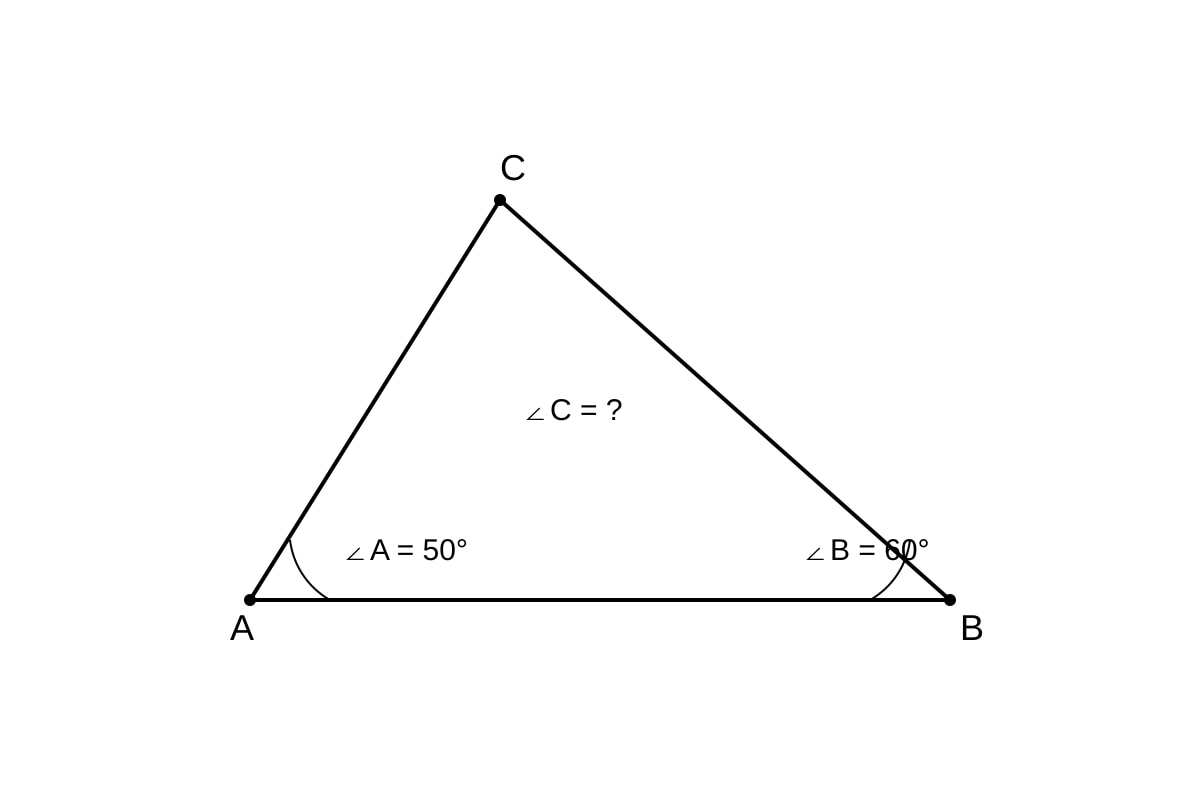
13.
Working: .
Marking: 2 marks: 1 for method, 1 for answer.
14. Perimeter = 26 cm
Working: cm.
Marking: 2 marks: 1 method, 1 answer.
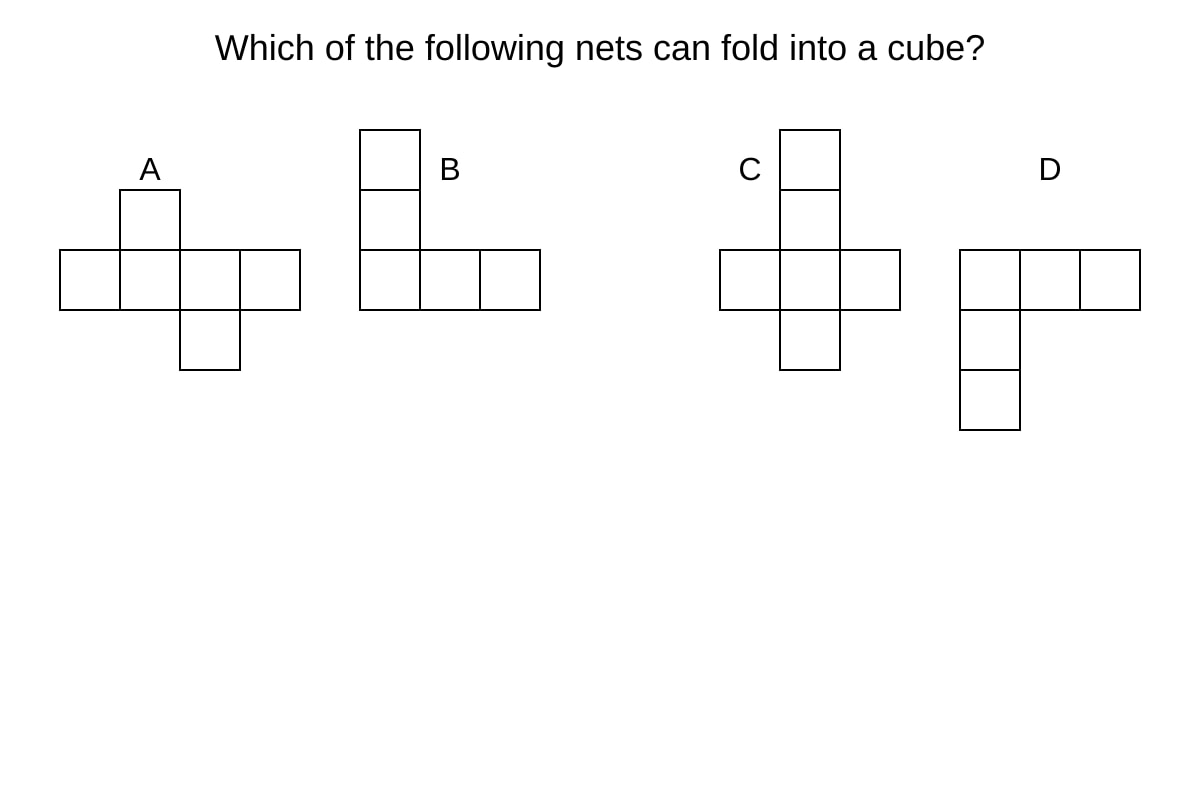
15. C
Teaching note: Only cross-shaped net of 6 squares folds into cube without overlap.
Marking: 2 marks for correct choice.
16. Area = 49 cm
Working: cm.
Marking: 2 marks: 1 method, 1 answer.
Section C Answers (3 marks each)
17.
Working:
Answers: , ,
Marking: 3 marks: 1 for equation, 1 for x, 1 for other two.
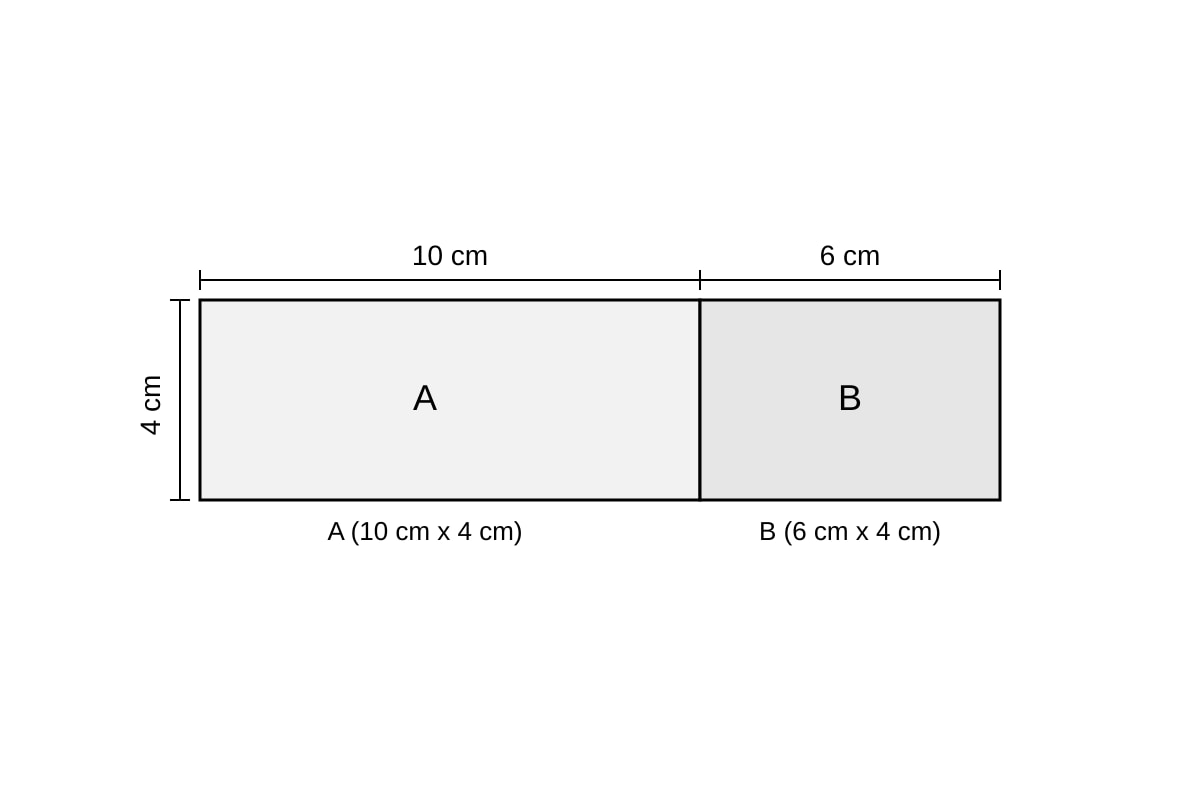
18. Total area = 64 cm
Working:
Area A = cm
Area B = cm
Total = cm
Marking: 3 marks: 1 each step.
19. Number = 2
Marking: 2 marks for drawing 2 symmetry lines (vertical, horizontal), 1 for count.
Teaching note: Rectangle (non-square) has only 2 lines of symmetry.
20. Face 2
Teaching note: In cross net, centre face 3 opposite the face directly across from it when folded (face 2).
Marking: 3 marks: 1 for reasoning, 2 for correct face.