AI Generated Quiz
Primary 4 Mathematics Geometry Quiz
Free P4 Maths Geometry quiz, GLM5.3 AI version, with questions, answers, and syllabus-aligned practice for Singapore students.
These static practice materials are generated from the site's syllabus and paper-generation workflow, with source and model context shown so students and parents can evaluate the material before use.
Questions
Free quiz and exam paper access
Enter your details to view this paper
Your access is remembered on this device.
Answers
Primary 4 Mathematics Quiz - Geometry: Answer Key (Version 1)
Mark scheme matches Questions 1–20. Teaching notes explain each concept for students new to the topic.
Answer 1.
(B) 90° — (1 mark) Teaching note: A right angle is a quarter turn, exactly 90°. Acute angles are smaller than 90°; obtuse angles are between 90° and 180°; a straight angle is 180°. Common mistake: confusing a right angle (90°) with a straight line (180°).
Answer 2.
Point Q — (1 mark) Teaching note: In angle notation ∠PQR, the middle letter is always the vertex (the corner where the two arms meet). The outer letters (P and R) name points on the arms. Common mistake: choosing the first letter. Always look at the middle position.
Answer 3.
- 98° → obtuse
- 90° → right
- 172° → obtuse (2 marks — ½ mark per correct classification after the example) Teaching note: Compare each angle to 90°. Less than 90° = acute; exactly 90° = right; more than 90° but less than 180° = obtuse. 98° and 172° are both just "past a quarter turn", so both are obtuse. Common mistake: calling 172° a straight angle — a straight angle is exactly 180°.
Answer 4.
(A) M — (1 mark) Teaching note: A line of symmetry divides a shape into two mirror-image halves. M folds evenly only along a vertical line down its middle (1 line). S and F cannot fold onto themselves at all (0 lines). O has many lines of symmetry, not exactly one. Common mistake: choosing O — it has infinitely many lines, so it fails the "exactly one" condition.
Answer 5.
6 faces — (1 mark) Teaching note: A cube has 6 flat square faces, 12 edges and 8 vertices. Think of a dice: top, bottom and 4 sides.
Answer 6.
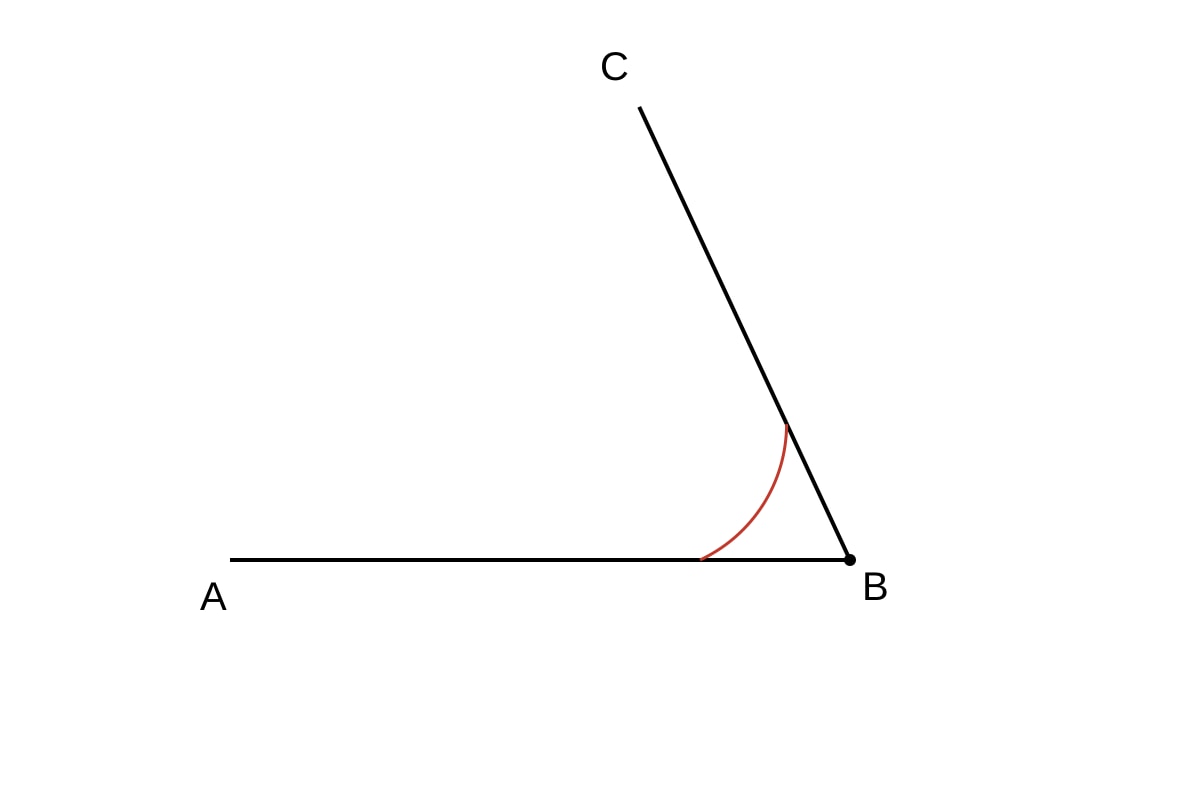
∠ABC = 65° (accept 64°–66° for slight protractor placement differences) — (2 marks: [1] correct protractor technique shown/aligned on baseline, [1] correct reading) Teaching note: Place the protractor's centre point exactly on vertex B and the baseline along arm BA. Read the scale starting from 0° on BA, going up towards BC. The arc crosses the 65° mark. Common mistakes: reading the wrong scale (getting 115°), or placing the protractor centre off the vertex. Check: 65° is less than 90°, and the drawn angle looks slightly smaller than a right angle, so 65° is sensible.
Answer 7.
(a) 35°, 88°, 90°, 145° — (1 mark) (b) 90° — (1 mark) Teaching note: To order angles, compare the degree numbers just like whole numbers. The right angle is the one measuring exactly 90° — here it sits third in the ordered list, between 88° (acute) and 145° (obtuse). Common mistake: thinking 88° is a right angle because it is close to 90°. Only exactly 90° is a right angle.
Answer 8.
(a) equal (the same) — (1 mark) (b) 90° — (1 mark) Teaching note: A rectangle has two pairs of opposite sides;
<stage5_quiz_answers_md>
Primary 4 Mathematics Quiz - Geometry: Answer Key (Version 1)
Mark scheme matches Questions 1–20. Teaching notes explain each concept briefly.
Answer 1.
(B) 90° — (1 mark) Teaching note: A right angle is a quarter turn, exactly 90°. Acute angles are smaller than 90°; obtuse angles are between 90° and 180°. Common mistake: confusing a right angle (90°) with a straight angle (180°).
Answer 2.
Point Q — (1 mark) Teaching note: In ∠PQR, the middle letter is always the vertex — the corner where the two arms meet. Common mistake: choosing the first letter instead of the middle one.
Answer 3.
- 98° → obtuse
- 90° → right
- 172° → obtuse (2 marks) Teaching note: Less than 90° = acute; exactly 90° = right; more than 90° but less than 180° = obtuse. Common mistake: calling 172° a straight angle — a straight angle is exactly 180°.
Answer 4.
(A) M — (1 mark) Teaching note: M folds onto itself only along a vertical line down its middle (1 line). S and F have 0 lines; O has many lines, not exactly one. Common mistake: choosing O, which fails the "exactly one" condition.
Answer 5.
6 faces — (1 mark) Teaching note: A cube has 6 square faces, 12 edges and 8 vertices. Think of a dice.
Answer 6.
∠ABC = 65° (accept 64°–66°) — (2 marks: [1] correct protractor placement, [1] correct reading) Teaching note: Put the protractor centre on vertex B with the baseline along BA; read from 0° on BA towards BC. Common mistakes: reading the wrong scale (115°), or placing the centre off the vertex. Check: the angle looks smaller than a right angle, so 65° is sensible.
Answer 7.
(a) 35°, 88°, 90°, 145° — (1 mark) (b) 90° — (1 mark) Teaching note: Order by comparing the degree numbers. Only exactly 90° is a right angle — 88° is close but acute.
Answer 8.
(a) equal (the same) — (1 mark) (b) 90° — (1 mark) Teaching note: A rectangle has two pairs of equal opposite sides, and all four corner angles are right angles (90°).
Answer 9.
(a) Square: 4 — (1 mark) (b) Rectangle: 2 — (1 mark) Teaching note: A square has 4 lines (vertical, horizontal, two diagonals). A rectangle has only 2 (vertical and horizontal) — its diagonals do NOT give mirror halves because adjacent sides are unequal. Common mistake: saying a rectangle has 4 lines like a square.
Answer 10.
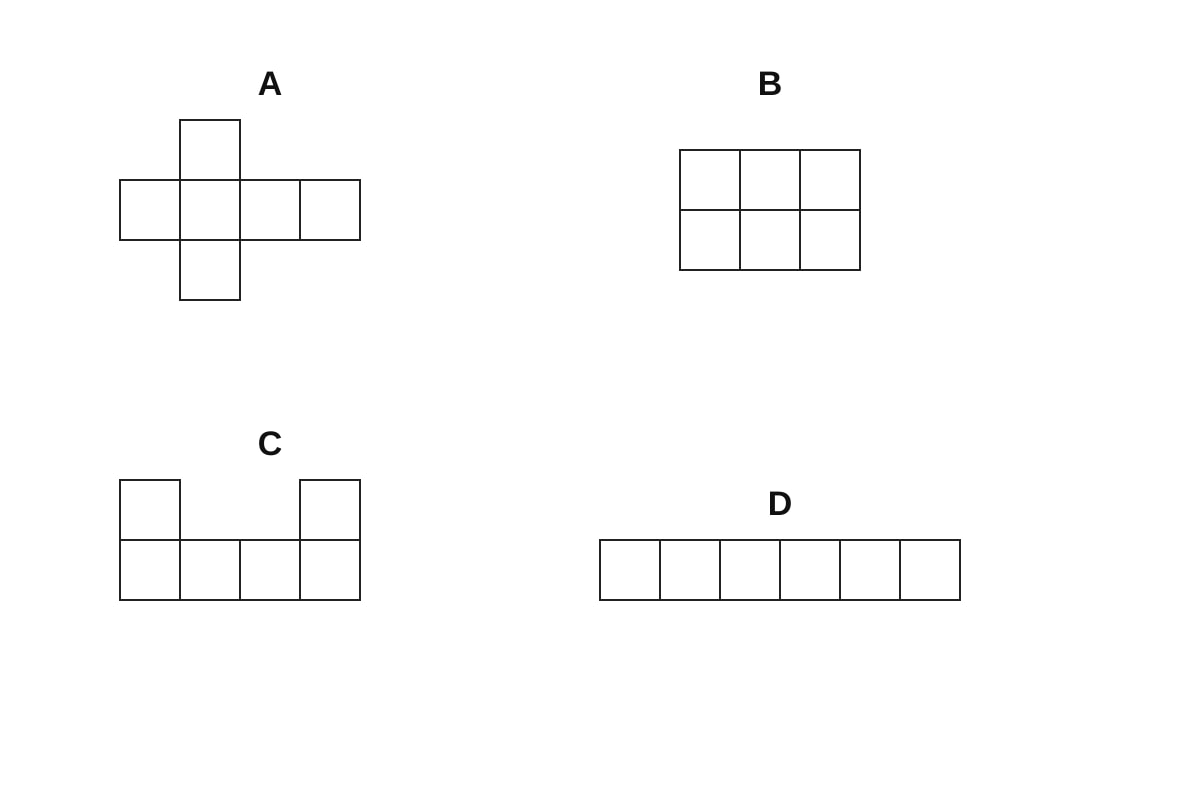
Net A — (2 marks) Teaching note: Net A is a valid 1-4-1 arrangement. Net B (2×3 block) has squares that overlap when folded. Net C has both tabs on the same side, so they collide. Net D (straight strip of 6) leaves the top and bottom uncovered while sides overlap. A cube net needs exactly 6 squares arranged so no faces overlap and all 6 faces are covered.
Answer 11.
(a) 180° — (1 mark) (b) x = 180 − 112 = 68 — (1 mark) Teaching note: Angles on a straight line add up to 180°, so ∠AOC + ∠COB = 180°.
Answer 12.
(a) 90° — (1 mark) (b) Right angle — (1 mark) Teaching note: At 3 o'clock the minute hand points to 12 and the hour hand to 3 — a quarter of a full turn = 360° ÷ 4 = 90°.
Answer 13.
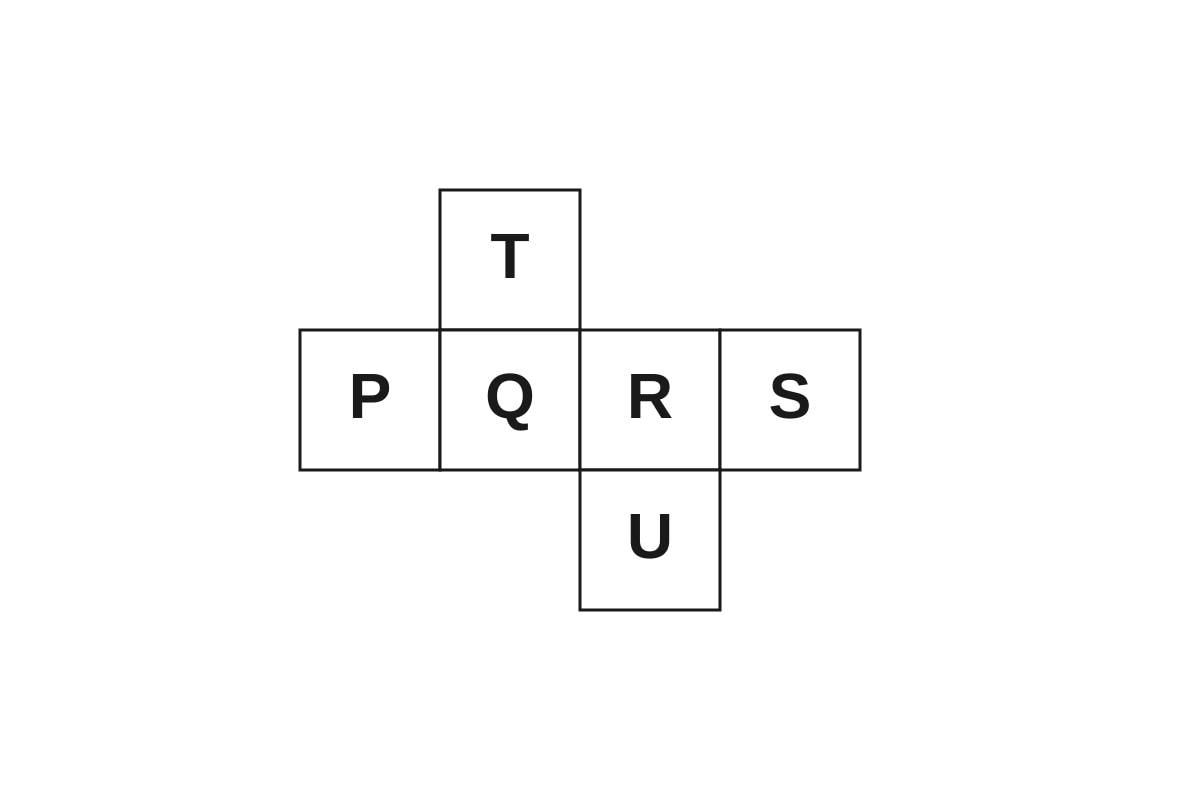
(a) R — (1 mark) (b) T — (1 mark) (c) In the row of four squares, faces separated by exactly one square are opposite when folded. P and R have only Q between them, so R folds to face P. The two remaining tabs (T and U) must then be opposite each other. — (1 mark) Teaching note: Opposite pairs are P↔R, Q↔S, T↔U.
Answer 14.
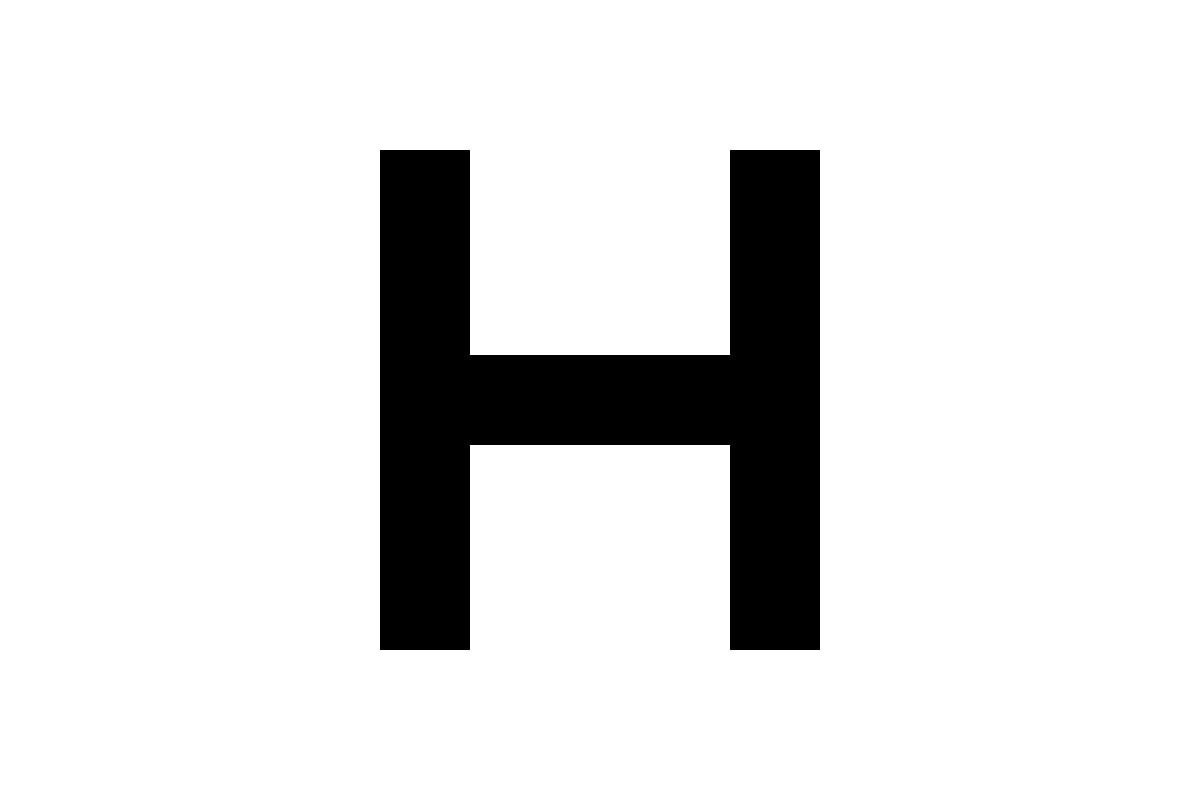
There are 2 lines of symmetry — (2 marks: [1] correct number, [1] both lines drawn correctly) Teaching note: The letter H has a vertical line through the centre of the crossbar and a horizontal line along the crossbar. Both halves match in each case.
Answer 15.
Award (2 marks: [1] accurate construction within ±2° of 140°, [1] ray BC drawn from B with the angle size labelled clearly). Teaching note: Draw ray BA horizontally. Place the protractor centre on B, baseline along BA. Mark 140° (reading from 0° on BA), remove the protractor, draw ray BC through the mark, and write 140° inside the angle. Check: 140° is obtuse, so BC should lean well past vertical.
Answer 16.
(a) ∠Z = 180° − 65° − 48° = 67° — (2 marks: [1] method using 180°, [1] correct answer) (b) Acute angle (67° is less than 90°) — (1 mark)
Answer 17.
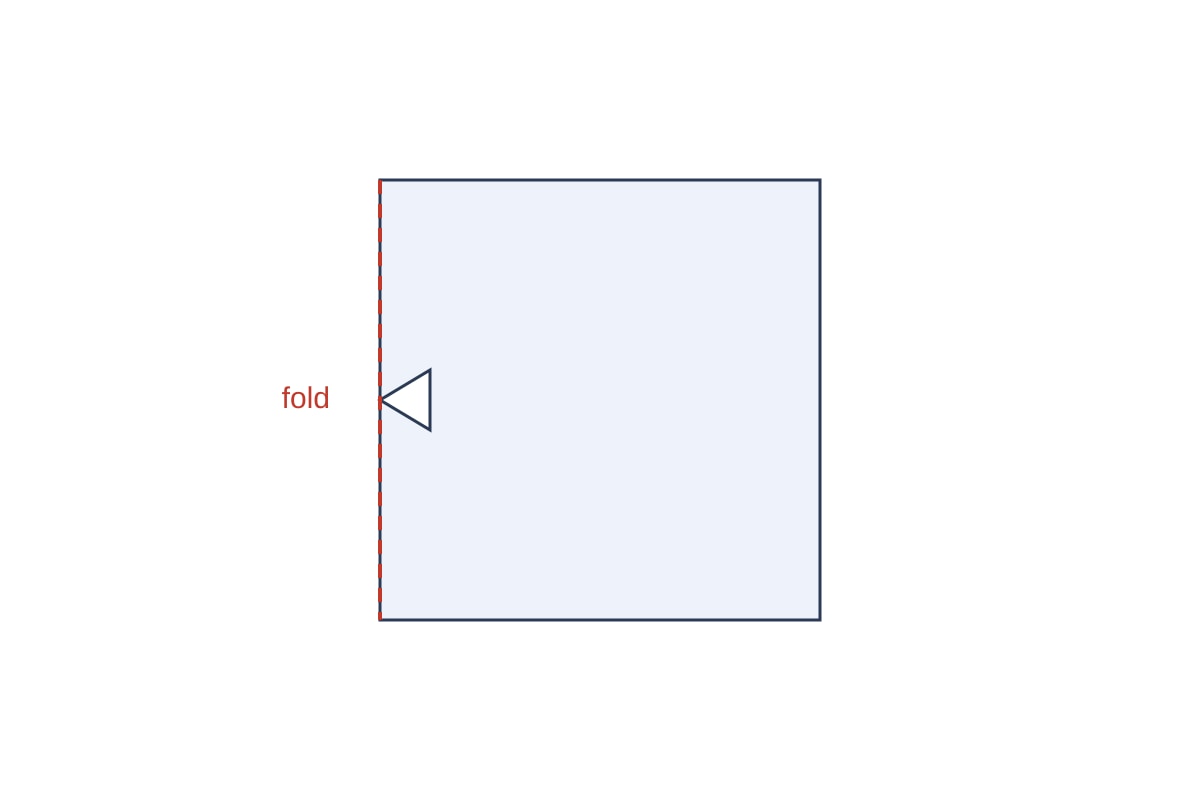
(B) One diamond-shaped (rhombus) hole centred on the fold line — (2 marks) Explanation: The notch is cut on the crease (fold) edge. When the paper is unfolded, the cut is reflected across the fold line, so the two triangular halves join into one diamond-shaped hole sitting exactly on the fold line. — (1 mark) Common mistake: choosing (A) — the hole cannot sit near the edge because the notch touches the crease, and unfolding doubles it symmetrically rather than leaving one triangle.
Answer 18.
(a) A cube has exactly 6 faces, so its net must have exactly 6 squares, one per face. With 7 squares, one square would overlap another face when folded, so it cannot be a cube net. — (1 mark) (b) 6 — (1 mark) (c) No. Folding a straight row of 6 squares makes four squares wrap around the sides with the last square overlapping the first, while no squares are left to cover the top and bottom. Faces overlap and faces are missing, so it cannot form a cube. — (1 mark)
Answer 19.
(a) x = 360° − 120° − 150° = 90 — (2 marks: [1] method using 360°, [1] correct answer) (b) Right angle (x° = 90°) — (1 mark) Teaching note: Angles that make one full turn at a point add up to 360°.
Answer 20.
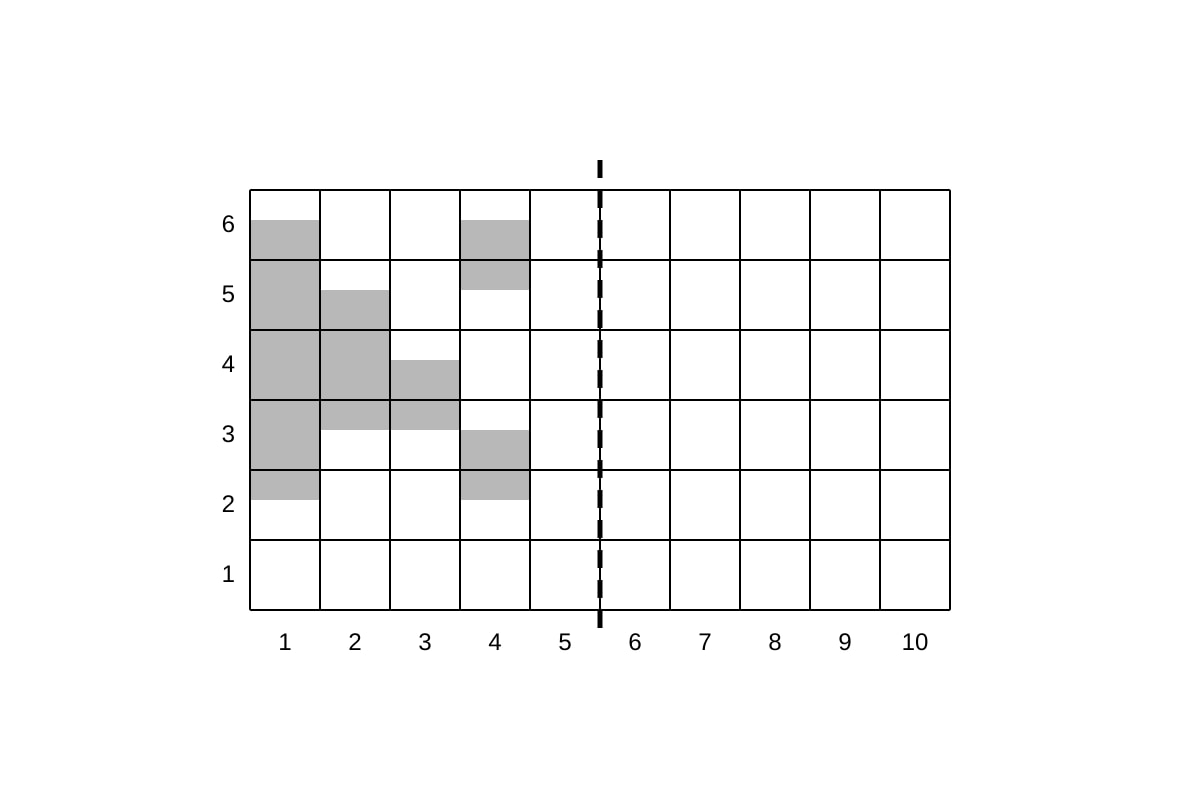
(a) Mirror every shaded square across the dashed line (column c reflects to column 11 − c):
- Column 10: rows 2, 3, 4, 5 (mirror of column 1)
- Column 9: rows 3, 4 (mirror of column 2)
- Column 8: row 3 (mirror of column 3)
- Column 7: rows 2, 5 (mirror of column 4) (2 marks: [1] correct reflection rule used, [1] all cells correctly shaded) (b) 18 squares (9 on each half) — (1 mark) (c) 1 line of symmetry — the vertical dashed line only. — (1 mark) Teaching note: Each shaded square pairs with exactly one mirrored square, so the total doubles: 9 × 2 = 18. The pattern has left–right symmetry but not top–bottom symmetry.
End of answer key.