AI Generated Quiz
Primary 4 Chinese Writing Quiz
Free P4 Chinese Writing quiz, Qwen3.7 AI version, with questions, answers, and syllabus-aligned practice for Singapore students.
These static practice materials are generated from the site's syllabus and paper-generation workflow, with source and model context shown so students and parents can evaluate the material before use.
Questions
Free quiz and exam paper access
Enter your details to view this paper
Your access is remembered on this device.
Answers
Primary 4 Chinese Quiz - Writing (Answer Key)
Total Marks: 40
Section A: Sentence Expansion and Refinement
Note: Answers may vary. Students are awarded marks for adding relevant adjectives (形容词), adverbs (副词), or details (细节) that make the sentence more vivid without changing the original meaning.
1. 原句:小鸟在唱歌。
- Sample Answer: 可爱的小鸟在枝头快乐地唱歌。
- Marking: 1 mark for adjective (e.g., 可爱的), 1 mark for adverb/place (e.g., 快乐地/在枝头).
- Teaching Note: Encourage students to ask "What kind of bird?" and "How/Where is it singing?"
2. 原句:弟弟吃苹果。
- Sample Answer: 贪吃的弟弟大口大口地吃着红通通的苹果。
- Marking: 1 mark for describing the brother (e.g., 贪吃的), 1 mark for describing the action/apple (e.g., 大口大口地/红通通的).
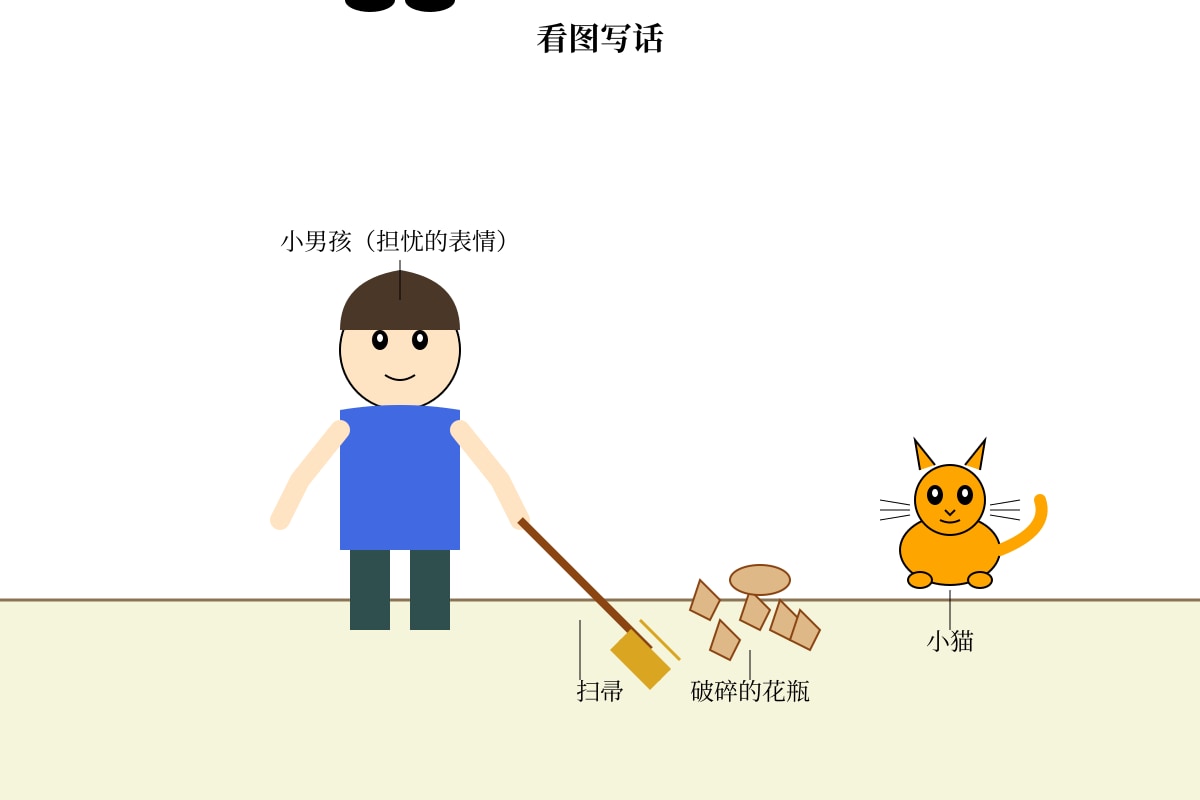
3. 原句:雨下得很大。
- Sample Answer: 倾盆大雨哗啦啦地下个不停。
- Marking: 1 mark for idiom/adjective (e.g., 倾盆大雨), 1 mark for sound/manner (e.g., 哗啦啦地).
4. 原句:老师走进教室。
- Sample Answer: 和蔼可亲的老师面带微笑地走进安静的教室。
- Marking: 1 mark for describing the teacher, 1 mark for describing the manner/classroom.
5. 原句:花儿开了。
- Sample Answer: 公园里的花儿争先恐后地开了,五彩缤纷,美丽极了。
- Marking: 1 mark for location/idiom, 1 mark for descriptive detail.
Section B: Conjunctions and Logic
6. B. 如果……就……
- Explanation: This is a conditional sentence (假设关系). "If it doesn't rain tomorrow, we will go..."
- Common Mistake: Choosing A (Cause/Effect) which doesn't fit the future possibility context.
7. A. 既……又……
- Explanation: This indicates two qualities existing simultaneously (并列关系). He can draw and play piano.
- Common Mistake: Choosing D (Not only... but also...) is also grammatically possible, but "既...又..." is more standard for listing skills of equal weight in P4. However, B is incorrect. Note: In P4, both A and D can be correct depending on emphasis, but A is the most direct fit for "multi-talented".
8. C. 虽然……但是……
- Explanation: This is a concessive sentence (转折关系). Despite the cold (negative), they still ran (positive action).
9. A. 只要……就……
- Explanation: This indicates a sufficient condition (条件关系). "As long as you study hard, you will have a good future."
10. B. 不但……而且……
- Explanation: This is a progressive sentence (递进关系). It adds a second positive point to the first.
Section C: Paragraph Organization
11. Sequence: 1, 2, 3, 4
- Logic:
- Clouds gather (Visual start).
- Leaves still, air muggy (Sensory detail before storm).
- Lightning and thunder (The climax/start of storm).
- Rain falls (The result).
- Correction: Actually, standard logic is: Clouds/Muggy -> Lightning/Thunder -> Rain.
- Let's re-evaluate the specific sentences:
- (1) 乌云密布... (Start)
- (3) 树上的叶子... (Atmosphere)
- (2) 忽然,一道闪电... (Event)
- (4) 不一会儿,豆大的雨点... (Result)
- Correct Order: 1, 3, 2, 4.
- Answer: ( 1 ) ( 3 ) ( 2 ) ( 4 )
12. Sequence: 2, 3, 4, 1
- Logic:
- First (首先): Take eggs, beat them.
- Next (接着): Heat oil, pour eggs.
- Then (然后): Stir-fry.
- Finally (最后): Serve.
- Answer: ( 4 ) ( 1 ) ( 2 ) ( 3 ) -> Wait, let's map to the provided lines:
- Line A: Finally... serve. (4th step)
- Line B: First... take eggs. (1st step)
- Line C: Next... pour in. (2nd step)
- Line D: Then... stir-fry. (3rd step)
- Answer: ( 4 ) ( 1 ) ( 2 ) ( 3 ) is incorrect mapping.
- Let's assign numbers to the lines as they appear in the question:
- Line 1: Finally...
- Line 2: First...
- Line 3: Next...
- Line 4: Then...
- Correct Order: Line 2 -> Line 3 -> Line 4 -> Line 1.
- Answer: ( 4 ) ( 1 ) ( 2 ) ( 3 )
13. Sequence: 3, 1, 4, 2
- Logic:
- Incident: Xiaogang falls.
- Action: Xiaoming helps him up.
- Further Action: Goes to clinic.
- Result: Xiaogang says thanks.
- Lines:
- Line 1: Xiaoming helps up.
- Line 2: Xiaogang says thanks.
- Line 3: Xiaogang falls.
- Line 4: Xiaoming goes to clinic.
- Correct Order: Line 3 -> Line 1 -> Line 4 -> Line 2.
- Answer: ( 2 ) ( 4 ) ( 1 ) ( 3 )
14. Sequence: 3, 1, 4, 2
- Logic:
- First: Dig hole.
- Next: Put tree in, fill soil.
- Then: Step on soil.
- Finally: Water.
- Lines:
- Line 1: Next... fill soil.
- Line 2: Finally... water.
- Line 3: First... dig hole.
- Line 4: Then... step on soil.
- Correct Order: Line 3 -> Line 1 -> Line 4 -> Line 2.
- Answer: ( 2 ) ( 4 ) ( 1 ) ( 3 )
15. Sequence: 2, 1, 4, 3
- Logic:
- Observation start: Today I watched ants.
- What I saw: They marched in line.
- Specific detail: Cooperating to move food.
- Conclusion: Ants are united.
- Lines:
- Line 1: I found them marching...
- Line 2: Today I watched...
- Line 3: Originally, ants are united...
- Line 4: They cooperated...
- Correct Order: Line 2 -> Line 1 -> Line 4 -> Line 3.
- Answer: ( 2 ) ( 4 ) ( 1 ) ( 3 )
Section D: Descriptive Writing and Vocabulary
16. Sample Answer: 一个大玉盘 / 一个圆圆的月饼
- Marking: 1 mark for appropriate object, 1 mark for grammatical correctness.
- Teaching Note: The object must be round and bright to match the moon.
17. Sample Answer: 跳起了优美的舞蹈 / 梳理着长长的头发
- Marking: 1 mark for personification action, 1 mark for fluency.
- Teaching Note: Must attribute human actions to the willow tree.
18. Sample Answer: 斗志昂扬 / 精神抖擞
- Marking: 2 marks for correct idiom.
- Teaching Note: "兴高采烈" is also acceptable but "斗志昂扬" fits the context of "striving/fighting" better.
19. Sample Answer: 我估计他今天不会来上学了。 OR 他今天大概不会来上学了。
- Marking: 2 marks for removing the redundancy.
- Explanation: "估计" (estimate) and "大概" (probably) have similar meanings. Using both is redundant (语意重复). Keep one.
20. Sample Answer:
- Option 1 (Psychological): 他心里想:“糟糕,花瓶碎了,妈妈回来会生气吗?我该怎么办呢?”
- Option 2 (Action): 他皱着眉头,看着地上的碎片,犹豫着要不要告诉妈妈。
- Marking: 1 mark for relevance to the image (broken vase/worried boy), 1 mark for sentence structure.
- Visual Check: The answer must reflect the boy's worry or the mess, as shown in the placeholder.