AI Generated Quiz
Primary 4 Chinese Speaking Quiz
Free P4 Chinese Speaking quiz, AI version, with questions, answers, and syllabus-aligned practice for Singapore students.
These static practice materials are generated from the site's syllabus and paper-generation workflow, with source and model context shown so students and parents can evaluate the material before use.
Questions
Free quiz and exam paper access
Enter your details to view this paper
Your access is remembered on this device.
Answers
Primary 4 Chinese Quiz - Speaking (Answer Key)
Total Marks: 40
Section A: Picture Description and Narration (Q1-Q5)
[5 questions × 3 marks = 15 marks]
Marking Notes for Section A:
- 1 mark: Describes the main elements of the picture (who, what, where).
- 1 mark: Describes actions or events happening.
- 1 mark: Uses complete sentences, appropriate vocabulary, and clear expression.
- Deduct marks for incomplete sentences, major grammar errors, or irrelevant content.
Q1. (3 marks)
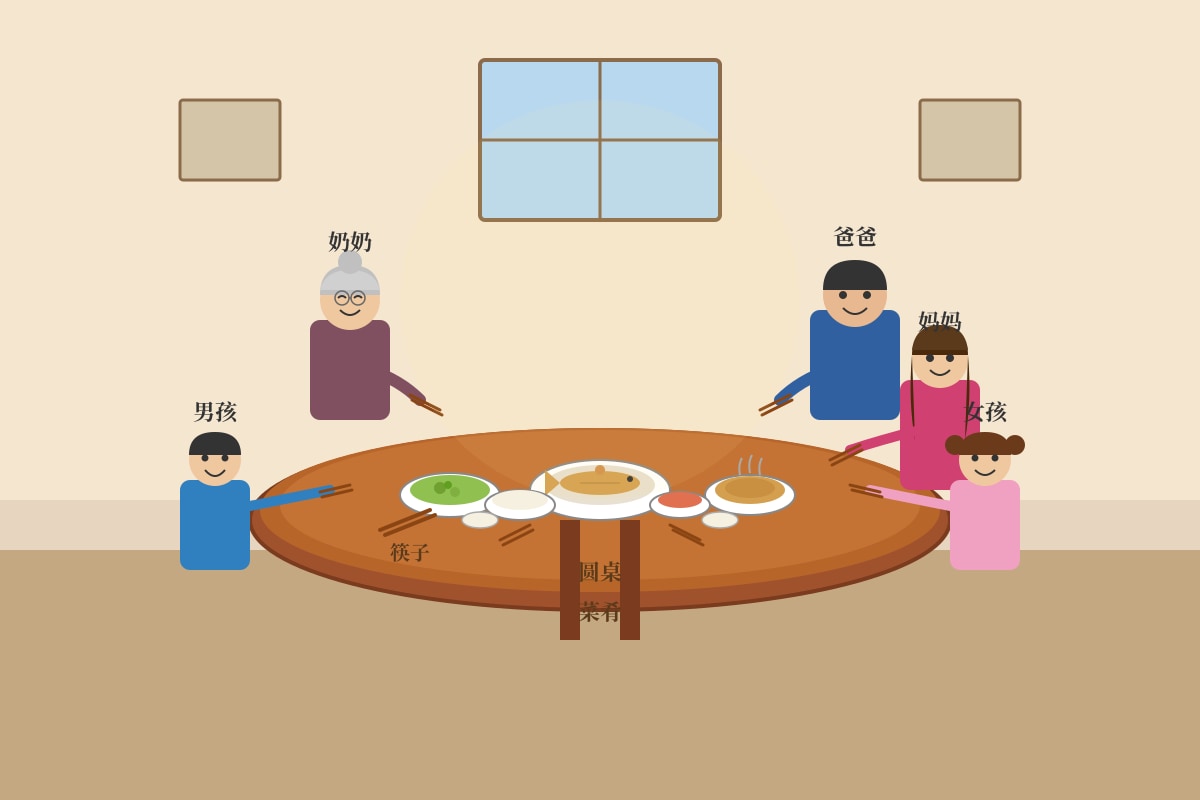
Expected Response (Sample): 这张图里有一家人正在吃晚餐。他们有奶奶、爸爸、妈妈、一个男孩和一个女孩。桌子上有很多菜,有鱼、青菜和汤。他们一边吃饭一边聊天,很开心。
Marking Notes:
- 1 mark: Identifies the family members (奶奶、爸爸、妈妈、孩子).
- 1 mark: Describes the action (吃晚餐/吃饭) and the food (鱼、青菜、汤).
- 1 mark: Expresses the atmosphere (开心/温暖/高兴).
Common Mistakes:
- Only listing objects without describing actions.
- Using incorrect measure words (e.g., "一个桌子" instead of "一张桌子").
- Not mentioning the family interaction or atmosphere.
Q2. (3 marks)
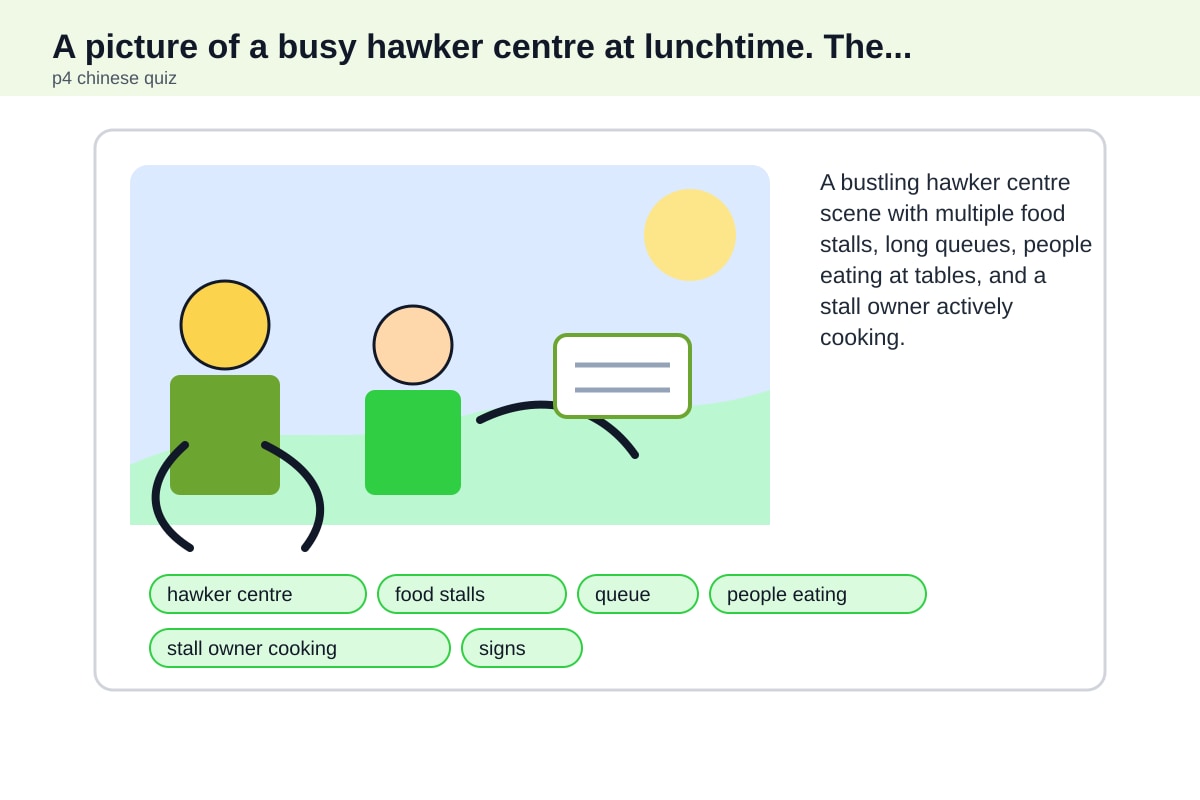
Expected Response (Sample): 这张图是一个小贩中心,中午的时候很多人。有人在排队买食物,有人在吃东西。一个摊主在煮面。小贩中心很热闹。
Marking Notes:
- 1 mark: Identifies the location (小贩中心/hawker centre).
- 1 mark: Describes the activities (排队、吃东西、煮面).
- 1 mark: Describes the atmosphere (热闹/忙碌/很多人).
Common Mistakes:
- Confusing "小贩中心" with "餐厅" or "食堂".
- Not mentioning the time of day (中午/午餐时间).
- Using "很多" repeatedly without variety.
Q3. (3 marks)
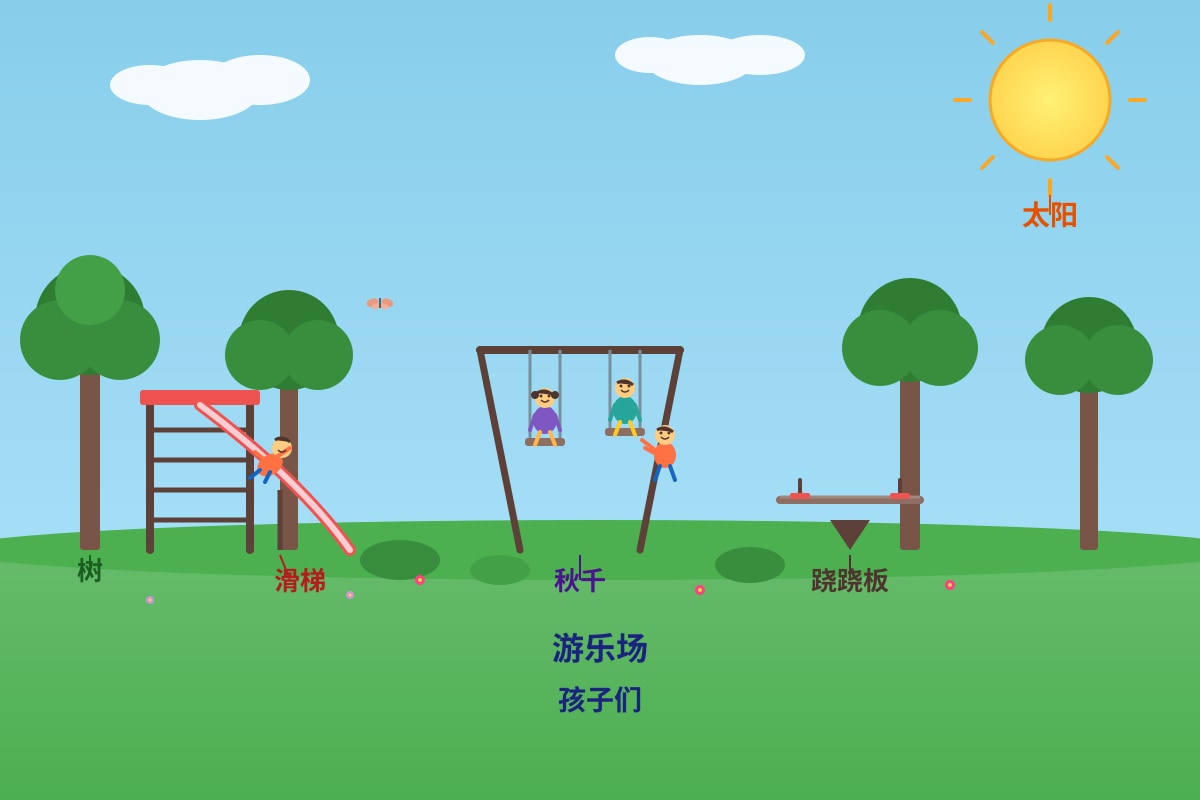
Expected Response (Sample): 三个小朋友在游乐场玩。一个在滑滑梯,一个在荡秋千,还有一个在推秋千。天气很好,有太阳和树。他们玩得很开心。
Marking Notes:
- 1 mark: Identifies the location (游乐场/playground).
- 1 mark: Describes the specific activities (滑滑梯、荡秋千、推秋千).
- 1 mark: Describes the weather or atmosphere (天气好、开心).
Common Mistakes:
- Using "玩" without specifying what they are playing.
- Not describing each child's action separately.
- Forgetting to mention the environment (太阳、树).
Q4. (3 marks)
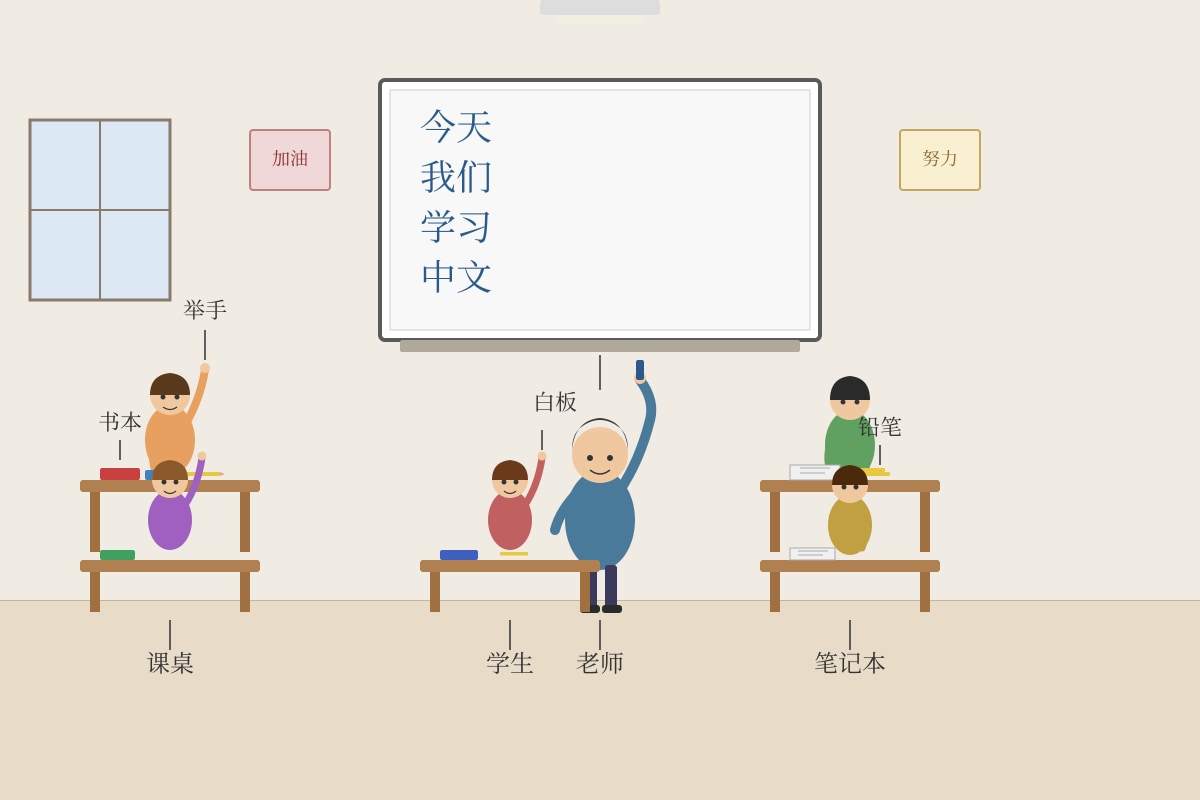
Expected Response (Sample): 这是一间教室。老师在白板上写字,同学们坐在桌子前上课。有些同学举手回答问题,有些在写字。大家都很认真。
Marking Notes:
- 1 mark: Identifies the location (教室/classroom).
- 1 mark: Describes the teacher's action (在白板上写字/教书).
- 1 mark: Describes the students' actions (举手、写字、认真).
Common Mistakes:
- Not mentioning the teacher.
- Using "学生" without describing what they are doing.
- Missing the detail about raised hands.
Q5. (3 marks)
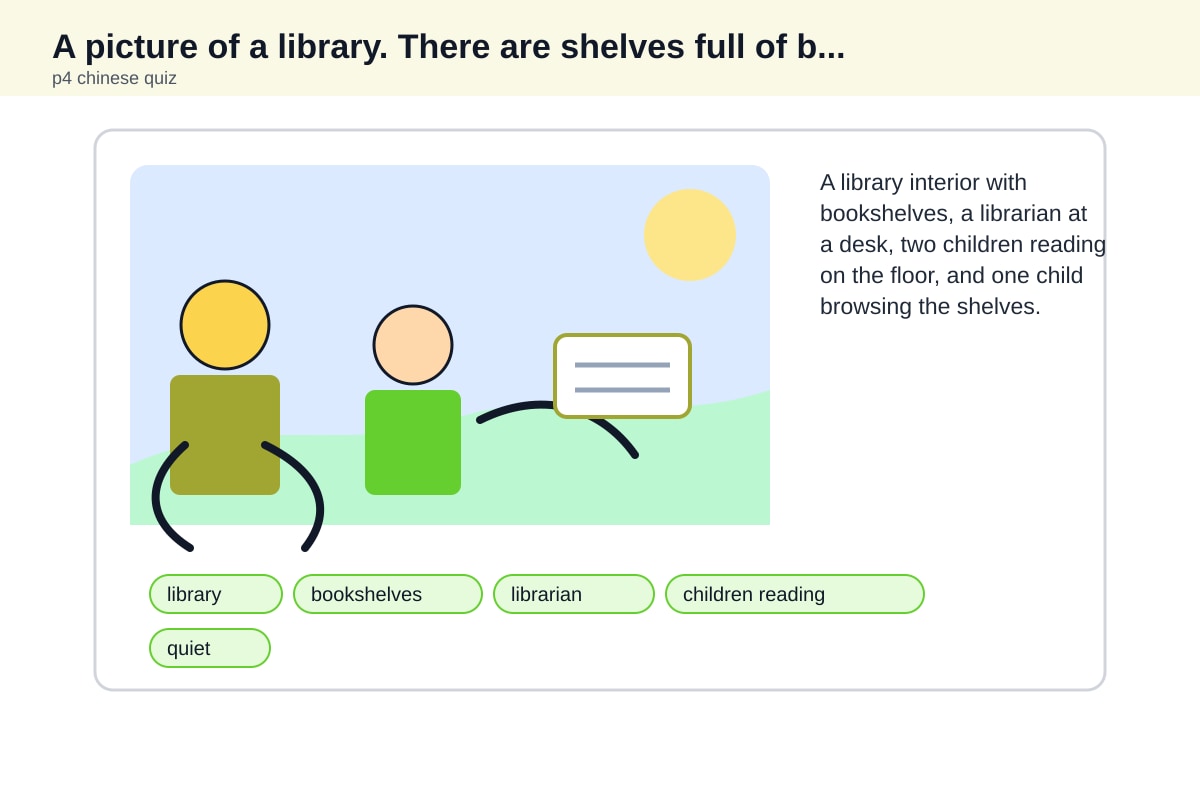
Expected Response (Sample): 这是图书馆。书架上有好多书。一个图书管理员坐在桌子后面。两个小朋友坐在地上看书,还有一个在找书。图书馆很安静。
Marking Notes:
- 1 mark: Identifies the location (图书馆/library).
- 1 mark: Describes the librarian and children's activities (管理员坐着、小朋友看书/找书).
- 1 mark: Describes the atmosphere (安静/quiet).
Common Mistakes:
- Confusing "图书馆" with "书店".
- Not mentioning the librarian.
- Using "很多书" without describing the shelves or the children's actions.
Section B: Expressing Views and Experiences (Q6-Q15)
[10 questions × 2 marks = 20 marks]
Marking Notes for Section B:
- 1 mark: Provides a clear and relevant answer to the question.
- 1 mark: Gives a reason or explanation to support the answer.
- Deduct marks for answers that are too short (less than 2 sentences), off-topic, or contain major grammar errors.
Q6. (2 marks) 你最喜欢什么食物?为什么?
Expected Response (Sample): 我最喜欢吃妈妈做的炒饭。因为炒饭里面有鸡蛋、虾和青菜,很好吃,而且妈妈做的炒饭有家的味道。
Marking Notes:
- 1 mark: Names a specific food (炒饭/面条/鸡翅膀等).
- 1 mark: Gives a reason (好吃/妈妈做的/有营养等).
Common Mistakes:
- Only naming the food without giving a reason.
- Giving a vague reason like "因为好吃" without elaboration.
Q7. (2 marks) 你周末喜欢做什么?请简单说一说。
Expected Response (Sample): 我周末喜欢和家人一起去公园玩。我们会在公园里骑脚踏车、放风筝,有时候还会野餐。我觉得很开心。
Marking Notes:
- 1 mark: States a weekend activity (去公园/看书/打球等).
- 1 mark: Provides some details about the activity (和谁、做什么、感觉如何).
Common Mistakes:
- Answering with only one word (e.g., "玩").
- Not mentioning who they do the activity with.
Q8. (2 marks) 你觉得学习华文重要吗?为什么?
Expected Response (Sample): 我觉得学习华文很重要。因为华文是我们的母语,学好华文可以和家人沟通,也可以了解中华文化。
Marking Notes:
- 1 mark: States a clear opinion (重要/不重要).
- 1 mark: Gives a logical reason (沟通/文化/工作等).
Common Mistakes:
- Saying "重要" without explaining why.
- Giving an irrelevant reason.
Q9. (2 marks) 你最好的朋友是谁?他/她是一个怎样的人?
Expected Response (Sample): 我最好的朋友是小明。他是一个很善良的人,常常帮助别人。他也很幽默,和他在一起很开心。
Marking Notes:
- 1 mark: Names the friend (小明/小红等).
- 1 mark: Describes the friend's character (善良/幽默/聪明/乐于助人等).
Common Mistakes:
- Only naming the friend without describing them.
- Describing physical appearance instead of character.
Q10. (2 marks) 如果你看到同学在吵架,你会怎么做?
Expected Response (Sample): 如果看到同学在吵架,我会先叫他们不要吵。然后我会问他们为什么吵架,帮他们解决问题。如果解决不了,我会请老师帮忙。
Marking Notes:
- 1 mark: States an action to stop the fight (劝架/叫他们不要吵).
- 1 mark: Describes a follow-up action (问原因/找老师帮忙).
Common Mistakes:
- Saying "我会走开" (avoidance) without trying to help.
- Only saying "我会告诉老师" without trying to mediate first.
Q11. (2 marks) 你最喜欢哪个节日?为什么?
Expected Response (Sample): 我最喜欢春节。因为春节可以和家人一起吃团圆饭,还可以拿红包。我也喜欢看舞狮表演,很热闹。
Marking Notes:
- 1 mark: Names a specific festival (春节/中秋节/圣诞节等).
- 1 mark: Gives reasons related to traditions or family activities.
Common Mistakes:
- Naming a festival but not explaining why.
- Giving a reason that is not specific to the festival.
Q12. (2 marks) 请介绍你的学校。
Expected Response (Sample): 我的学校叫光华小学。学校很大,有一个大操场和一个图书馆。我的老师很友善,同学们也很好。我喜欢在学校学习。
Marking Notes:
- 1 mark: Names the school or describes its location/size.
- 1 mark: Describes facilities, teachers, or activities.
Common Mistakes:
- Only saying "我的学校很好" without details.
- Not mentioning any specific features of the school.
Q13. (2 marks) 你觉得怎样做一个好学生?
Expected Response (Sample): 我觉得好学生要认真听课,按时做功课。还要尊敬老师,和同学友好相处。也要积极参加学校的活动。
Marking Notes:
- 1 mark: Mentions academic responsibilities (听课/做功课).
- 1 mark: Mentions social or behavioural aspects (尊敬老师/帮助同学).
Common Mistakes:
- Only focusing on grades (考一百分).
- Not mentioning behaviour or attitude.
Q14. (2 marks) 你长大后想做什么工作?为什么?
Expected Response (Sample): 我长大后想当老师。因为老师可以教学生知识,帮助学生成长。我觉得这是一份很有意义的工作。
Marking Notes:
- 1 mark: States a desired job (老师/医生/警察等).
- 1 mark: Gives a reason related to the job's purpose or personal interest.
Common Mistakes:
- Saying "不知道" without attempting an answer.
- Giving a reason that does not match the job (e.g., "当医生因为可以赚很多钱" without mentioning helping people).
Q15. (2 marks) 如果你有一百元,你会怎么用?
Expected Response (Sample): 如果我有一百元,我会把一部分存起来,一部分买书。剩下的钱我会请爸爸妈妈吃饭,谢谢他们照顾我。
Marking Notes:
- 1 mark: Mentions a specific use for the money (存钱/买书/请吃饭等).
- 1 mark: Shows good values (存钱/感恩/分享).
Common Mistakes:
- Saying "全部拿来买玩具" without any thought for saving or sharing.
- Not explaining how the money will be used.
Section C: Oral Interaction - Responding to Situations (Q16-Q20)
[5 questions × 1 mark = 5 marks]
Marking Notes for Section C:
- 1 mark: Response is appropriate for the situation, polite, and uses complete sentences.
- 0 marks: Response is inappropriate, impolite, or incomplete.
Q16. (1 mark) 你的朋友小明忘记带铅笔来学校。你想借给他一支铅笔。你会怎么说?
Expected Response (Sample): 小明,你是不是忘记带铅笔了?我有一支多余的,借给你用吧。
Marking Notes:
- 1 mark: Offers help politely and clearly.
- Acceptable variations: "小明,我借你一支铅笔。" / "小明,你先用我的铅笔吧。"
Common Mistakes:
- Being rude or demanding ("你怎么不带铅笔?").
- Not offering the pencil directly.
Q17. (1 mark) 妈妈做了你很喜欢吃的菜。你想谢谢妈妈。你会怎么说?
Expected Response (Sample): 妈妈,谢谢你做了这么好吃的菜!我很喜欢。
Marking Notes:
- 1 mark: Expresses gratitude and appreciation for the food.
- Acceptable variations: "妈妈,你做的菜真好吃,谢谢你!" / "谢谢妈妈,你辛苦了。"
Common Mistakes:
- Only saying "好吃" without saying "谢谢".
- Not addressing the mother directly.
Q18. (1 mark) 你在图书馆看书,一个同学大声说话。你想请他安静。你会怎么说?
Expected Response (Sample): 同学,这里是图书馆,请你小声一点说话,好吗?谢谢。
Marking Notes:
- 1 mark: Politely asks for quiet, mentioning the library rules.
- Acceptable variations: "请你安静一点,好吗?" / "图书馆要安静,请你不要大声说话。"
Common Mistakes:
- Being rude or shouting ("喂,不要吵!").
- Not explaining why quiet is needed.
Q19. (1 mark) 你的同学小红生病了,没有来上学。你想打电话问候她。你会怎么说?
Expected Response (Sample): 小红,你好一点了吗?听说你生病了,我很担心你。你要好好休息,早日康复。
Marking Notes:
- 1 mark: Expresses concern and wishes for recovery.
- Acceptable variations: "小红,你身体怎么样了?希望你快点好起来。" / "小红,你好好休息,我们等你回来上课。"
Common Mistakes:
- Only asking "你好了吗" without expressing concern.
- Not mentioning the illness or recovery.
Q20. (1 mark) 老师问你为什么没有做功课。你会怎么回答?
Expected Response (Sample): 老师,对不起,我昨天生病了,所以没有做功课。我会尽快补上。
Marking Notes:
- 1 mark: Gives a truthful reason and shows willingness to make up for it.
- Acceptable variations: "老师,对不起,我忘记做功课了。我明天一定交。" / "老师,我昨天有补习,来不及做。我会补交给您。"
Common Mistakes:
- Lying or making excuses without apologising.
- Not offering a solution or plan to complete the homework.
- End of Answer Key -