AI Generated Quiz
Primary 3 Tamil Writing Quiz
Free P3 Tamil Writing quiz, Kimi2.6 AI version, with questions, answers, and syllabus-aligned practice for Singapore students.
These static practice materials are generated from the site's syllabus and paper-generation workflow, with source and model context shown so students and parents can evaluate the material before use.
Questions
Free quiz and exam paper access
Enter your details to view this paper
Your access is remembered on this device.
Answers
Primary 3 Tamil Quiz - Writing: Answer Key
Total Marks: 40 | Duration: 35 minutes (estimated: Section A ~10 min, Section B ~10 min, Section C ~15 min)
Section A: Grammar in Writing | 10 marks
1. Answer: A) நான் ஒரு கதை எழுதுகிறேன். (1 mark)
Teaching note: The verb must agree with the first-person singular subject "நான்" (I).
- எழுதுகிறேன் = first person singular (I write/am writing)
- எழுதுகிறான் = third person masculine (he writes)
- எழுதுகிறாள் = third person feminine (she writes)
- எழுதுகிறார்கள் = third person plural/ honorific (they write / you write respectfully)
Common mistake: Students sometimes use எழுதுகிறேன் with அவன்/அவள் because they see the -ஏன் ending and confuse it with masculine. The ending -ஏன் always connects to "I."
2. Answer: C) அவர்கள் பள்ளிக்குச் செல்கிறார்கள். (1 mark)
Teaching note: "அவர்கள்" is a plural subject meaning "they" (respectful) or "those people." The verb must use the plural/honorific form:
- செல்கிறார்கள் = plural/honorific (they go / he/she goes respectfully)
- செல்கிறான் = masculine singular
- செல்கிறாள் = feminine singular
- செல்கிறேன் = first person singular
The -அர்கள் ending in the verb matches plural subjects and respectful singular subjects.
3. Answer: B) நான் சோர்வாக இருக்கிறேன், ஆனால் வேலை செய்கிறேன். (1 mark)
Teaching note: Conjunctions like "ஆனால்" (but) typically appear between two clauses with a comma before them:
- Clause 1: நான் சோர்வாக இருக்கிறேன் (I am tired)
- Comma separates the contrasting idea
- Clause 2: ஆனால் வேலை செய்கிறேன் (but I am working)
Option A misses the comma; C and D place ஆனால் incorrectly, breaking Tamil word order conventions. The conjunction must connect two complete thoughts smoothly.
4. Answer: B) என் பாட்டி பழைய கதை சொல்கிறாள். (1 mark)
Teaching note: Standard Tamil word order follows Subject + Adjective + Object + Verb:
- Subject: என் பாட்டி (my grandmother)
- Adjective + Object: பழைய கதை (old story)
- Verb: சொல்கிறாள் (tells — feminine singular because பாட்டி is female)
Options A, C, and D scramble this order. In Tamil, adjectives precede the nouns they modify, and the verb comes last.
5. Answer: A) நாளை நான் சந்தைக்குச் செல்வேன். (1 mark)
Teaching note: The time marker "நாளை" (tomorrow) requires future tense:
- செல்வேன் = future tense, first person (I will go)
- சென்றேன் = past tense (I went)
- செல்கிறேன் = present habitual (I go/am going)
- சென்றிருந்தேன் = past perfect (I had gone)
The -வேன் ending marks future tense for first person singular verbs.
6. Answer: C) எவ்வளவு (1 mark)
Teaching note: Age questions in Tamil use "எவ்வளவு வயது" (how much age) as a fixed expression:
- என்ன = what (used for things)
- எந்த = which (used for selecting from options)
- எவ்வளவு = how much/how many (used for quantity, including age)
- எப்படி = how (used for manner/method)
"என்ன வயது" is sometimes heard conversationally, but "எவ்வளவு வயது" is the grammatically precise form taught at Primary 3.
7. Answer: A) பெரிய மரம் நிழல் தருகிறது. (1 mark)
Teaching note: Adjective-noun order in Tamil: adjective precedes noun.
- பெரிய (big) + மரம் (tree) = பெரிய மரம் (big tree)
- Subject: பெரிய மரம்
- Object: நிழல் (shade)
- Verb: தருகிறது (gives — neuter singular for non-human subjects)
Trees are grammatically neuter in Tamil (not masculine or feminine), so தருகிறது is correct.
8. Answer: C) பசுக்கள் புல் தின்றன. (1 mark)
Teaching note: "பசுக்கள்" (cows) is plural. Tamil plural verbs for rational beings use -அர் or -அ in classical/formal contexts, but in modern spoken/written Tamil for animals:
- தின்றன = neuter plural (they eat — used for animals, objects)
- தின்றான் = masculine singular
- தின்றாள் = feminine singular
- தின்றேன் = first person singular
For animals, the neuter plural form is standard in Primary 3 syllabus. Some dialects use -அ for plural rational, but -அன is the prescribed form here.
9. Answer: A) நான் பள்ளிக்குச் செல்லவில்லை. (1 mark)
Teaching note: Negative formation in Tamil uses the verb root + இல்லை structure, with the negative suffix -அ or -இல்லை attached:
- Positive: செல்கிறேன் (I go)
- Negative: செல்லவில்லை (I do not go)
The form is: verb infinitive (செல்ல) + வில்லை = செல்லவில்லை. This is the standard negative construction. Other options place இல்லை incorrectly or use non-standard constructions.
10. Answer: B) உங்கள் மாணவன், (1 mark)
Teaching note: Letter closing conventions by recipient:
- உங்கள் நண்பன் = your friend (peer to peer, informal)
- உங்கள் மாணவன் = your student (to teachers, elders — shows respect and relationship)
- வணக்கம் = greeting/opening, not a closing
- சென்று வா = go and come (casual farewell, inappropriate for formal letters)
To a teacher, acknowledging the student-teacher relationship through "உங்கள் மாணவன்/மாணவி" is the culturally and educationally appropriate closing.
Section B: Sentence Building and Transformation | 10 marks
11. Answer: (2 marks)
Acceptable answer: ஒரு மழை நாளில் நான் குடை எடுத்துப் பிறகு கடைக்குச் சென்றேன்.
Or with alternative conjunction: மழை பெய்த ஒரு நாளில் நான் குடை எடுத்துக்கொண்டு கடைக்குச் சென்றேன்.
Marking breakdown:
- Correct word order with subject first: 0.5 mark
- Correct verb placement at end: 0.5 mark
- Proper use of conjunction/causative connector (எடுத்து/எடுத்துக்கொண்டு): 0.5 mark
- Correct punctuation (comma if needed): 0.5 mark
Teaching note: The words provide: article (ஒரு), noun (மழை/ரains), time phrase (நாளில்/on a day), subject (நான்/I), object (குடை/umbrella), sequence verb (எடுத்து/taking), direction (கடைக்குச்/to shop), main verb (சென்றேன்/went).
Tamil sequence: Time + Subject + Instrument/Object + Manner + Destination + Verb. The word "எடுத்து" (taking) connects to "சென்றேன்" as a conjunctive participle showing simultaneous or prior action.
12. Answer: (2 marks)
Acceptable answer: அவன் வேகமாக ஓடவில்லை.
Or: அவன் வேகமாக ஓடுகிறான் இல்லை (less preferred but acceptable in some contexts).
Marking breakdown:
- Correct subject preserved: 0.5 mark
- Correct negative verb form (ஓடவில்லை): 1 mark
- Adverb preserved in correct position: 0.5 mark
Teaching note: Positive to negative transformation:
- Positive: verb + து/கிறான் (ஓடுகிறான் — he runs)
- Negative: verb root + வில்லை (ஓடவில்லை — he does not run)
The adverb "வேகமாக" (quickly) stays in its position before the verb. Do not change வேகமாக to வேகமாகவில்லை — that would negate the adverb, not the verb.
13. Answer: (2 marks)
Acceptable answers:
- மாலை நேரம் ஆனதால், பறவைகள் கூட்டம் கூட்டமாகத் திரும்பின.
- மாலை நேரம் ஆனது; ஆகவே பறவைகள் கூட்டம் கூட்டமாகத் திரும்பின.
- மாலை நேரம் ஆனது, எனவே பறவைகள் கூட்டம் கூட்டமாகத் திரும்பின.
Marking breakdown:
- Two simple sentences correctly identified and preserved: 0.5 mark
- Appropriate conjunction/causal connector used: 1 mark
- Correct final punctuation: 0.5 mark
Teaching note: Two simple sentences can become compound through:
- Causal connector: -ஆல் suffix on first verb (ஆனதால் = because it became)
- Disconnective: semicolon + conjunction (ஆகவே, எனவே = therefore/so)
- Coordinating conjunction with comma
The causal relationship is logical here: evening → birds return. Students should show they understand this connection.
14. Answer: (2 marks)
Sample answer: கடினமான பாடத்தை நல்ல மாணவன் கவனமாகப் படிக்கிறான்.
Or: அந்த மாணவன் மிகுந்த ஆர்வத்துடன் புதிய பாடங்களை கவனமாகப் படிக்கிறான்.
Marking breakdown:
- One appropriate adjective added before noun: 0.5 mark
- Adjective correctly inflected/positioned: 0.5 mark
- One appropriate adverb added: 0.5 mark
- Adverb correctly positioned before or after verb: 0.5 mark
Teaching note:
- Adjectives in Tamil precede nouns and may take oblique case: கடினமான (difficult), புதிய (new), அந்த (that), நல்ல (good)
- Adverbs modify verbs and often end in -ஆக: கவனமாக (carefully), வேகமாக (quickly), மிகுந்த (with much/very)
The adjective must agree with the noun it modifies (no agreement changes needed for common adjectives, but some require -ஆன/-ஆனது endings).
15. Answer: (2 marks)
Acceptable answer: அடுத்த வாரம் நாங்கள் கோவிலுக்குச் செல்வோம்.
Or: நாளை நாங்கள் கோவிலுக்குச் செல்வோம். (with any future time marker)
Marking breakdown:
- Correct time marker changed to future OR time marker removed with context clear: 0.5 mark
- Subject நாங்கள் preserved: 0.5 mark
- Correct future verb form (செல்வோம்): 0.5 mark
- Destination preserved with correct case marker: 0.5 mark
Teaching note: Past to future transformation requires:
- Time: கடந்த வாரம் (last week) → future time marker (அடுத்த வாரம்/நாளை/etc.)
- Verb: சென்றோம் (we went — past) → செல்வோம் (we will go — future)
The -வோம் ending marks first person plural future. The case marker -க்கு/க்குச் (directional "to") stays unchanged.
Section C: Paragraph Writing and Composition | 20 marks
16. Answer guide: (3 marks — 1 mark per sentence)
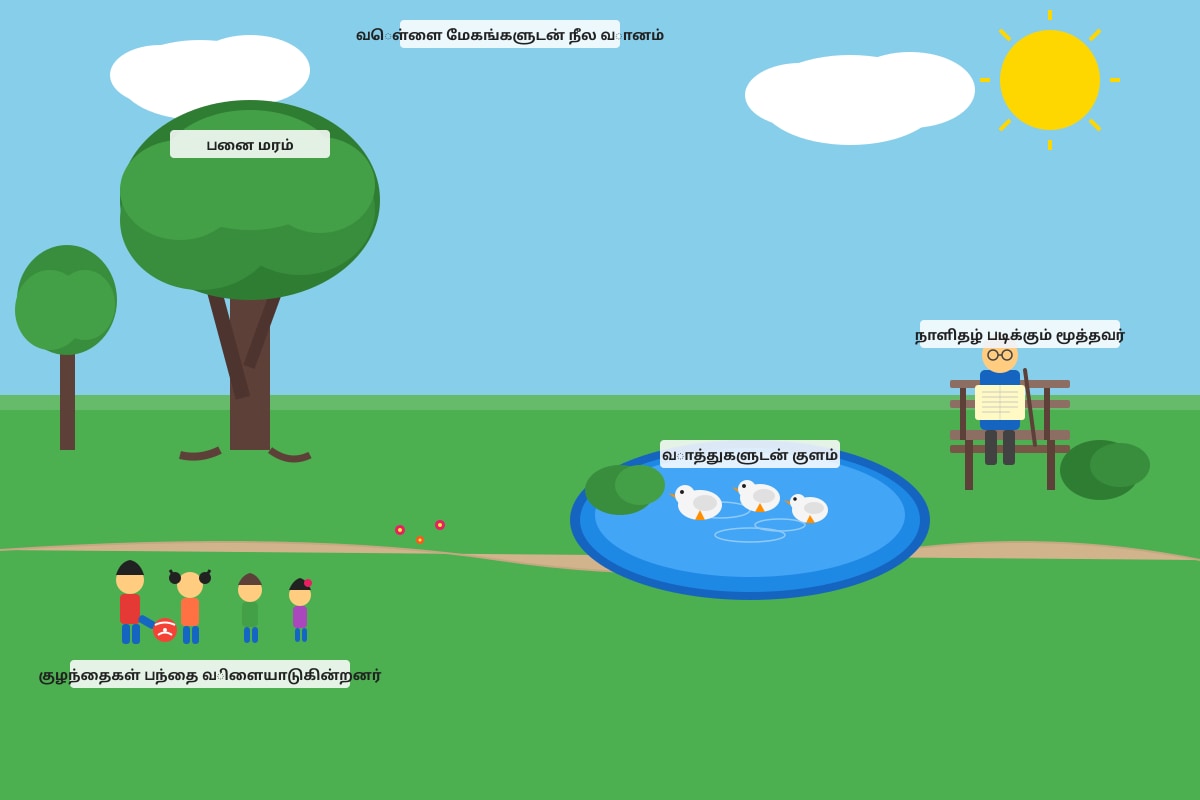
Expected content based on image placeholder:
- Sentence about children's activity: மாணவர்கள் பூங்காவில் பந்து விளையாட்டு விளையாடுகிறார்கள். (The children are playing ball in the park.)
- Sentence about natural elements: ஒரு பெரிய ஆலமரம் நிழல் தருகிறது; புதர்ச்சியில் மூன்று வாத்துகள் நீந்துகின்றன. (A big banyan tree gives shade; three ducks swim in the pond.)
- Sentence about elderly person: ஒரு வயதானவர் மரப்பெஞ்சில் அமர்ந்து பத்திரிகை வாசிக்கிறார். (An elderly person sits on a wooden bench reading a newspaper.)
Marking breakdown:
- Sentence 1: Correct subject-verb agreement, mentions children/activity: 1 mark
- Sentence 2: Mentions natural elements (tree/pond/ducks): 1 mark
- Sentence 3: Mentions elderly person with reading material: 1 mark
Teaching note: Descriptive writing requires students to observe details from visual stimuli and express them in grammatically complete Tamil sentences. Each sentence needs: subject + (optional object) + verb. Penalize verb-final errors or missing verbs.
17. Answer: (3 marks — 0.5 mark per correct blank; 6 items, best 6 answers, 0.5 each = 3 marks maximum)
Completed text:
என் பள்ளி விழா முதலில் காலை 8 மணிக்கு தொடங்கியது. பிறகு மாணவர்கள் பாடல் பாடினர். அதன் பிறகு/பிறகு நடன நிகழ்ச்சிகள் நடைபெற்றன. இறுதியாக பரிசளிப்பு விழா நடந்தது. எனக்கு முதல் பரிசு கிடைத்தது ஏனெனில் நான் கடினமாகப் பயிற்சி செய்தேன்.
Alternative for blank 3: ஆனால் is incorrect here as there's no contrast; ஆயினும் could work if introducing a surprising element.
Marking breakdown per item (0.5 each):
- முதலில் = correct sequence opener: 0.5 mark
- பிறகு = correct continuation: 0.5 mark
- பிறகு/அதன் பிறகு/பின்னர் = second continuation: 0.5 mark
- இறுதியாக = correct conclusion marker: 0.5 mark
- ஏனெனில் = correct causal explanation: 0.5 mark
- [Blank 3 alternative checked for logic]
Teaching note:
- Time sequence: முதலில் (first) → பிறகு (then) → இறுதியாக (finally)
- Causation: ஏனெனில் (because) — explains reason
- Contrast: ஆனால் (but) — not used here as no contrast exists
Students must recognize appropriate discourse markers for different logical relationships.
18. Answer guide: (2 marks)
Sample strong answer: எனக்குப் பிடித்த பண்டிகை பொங்கல் ஆகும்; இது விவசாயிகளின் உழைப்பைப் பாராட்டும் ஒரு அழகான தமிழ் பண்டிகையாகும்.
Or acceptable alternative: நான் மிகவும் விரும்பும் பண்டிகை பொங்கல்; அன்று காலை நாங்கள் புது வண்ணச் சட்டை அணிவோம், புதிய அரிசியில் இனிப்பான பொங்கல் சமைப்போம்.
Marking breakdown:
- Clear topic announcement (mentions Pongal/festival): 0.5 mark
- Specific detail or personal connection: 0.5 mark
- Grammatically complete sentence with proper verb: 0.5 mark
- Appropriate length and sophistication for P3: 0.5 mark
Teaching note: A topic sentence must: name the topic, offer a controlling idea, and invite elaboration. Weak examples to avoid: "இது பொங்கல்" (too simple, no controlling idea) or "எனக்கு பல பண்டிகைகள் பிடிக்கும்" (too broad).
19. Answer guide: (6 marks)
Sample model paragraph (40-50 words):
கடந்த மாதம் நான் என் பெற்றோருடன் சிங்கப்பூர் விலங்குக் காட்டிற்குச் சென்றேன். அங்கு நான் பெரிய ஆனைகள், உயரமான ஒட்டகங்கள், அழகான பறவைகள் மற்றும் வேகமான சிங்கங்களைப் பார்த்தேன். குரங்குகள் மரங்களில் சாதாரணமாகத் தாவுவதையும் கண்டு மகிழ்ந்தேன். அந்த அனுபவம் மிகவும் மகிழ்ச்சியாக இருந்தது; நான் மீண்டும் அங்கே செல்ல விரும்புகிறேன்.
Word count check: approximately 48 words ( Tamil word boundaries).
Marking breakdown:
- When (1 mark): Specific time reference (கடந்த மாதம்/last month, நேற்று/yesterday, etc.)
- What animals (2 marks): At least 3 different animals named with appropriate adjectives or classifiers; 1-2 animals = 1 mark, 0 animals = 0 marks
- How felt (1 mark): Emotional response clearly expressed (மகிழ்ச்சி/happy, ஆச்சரியம்/surprise, etc.)
- Organization and coherence (1 mark): Logical flow, transitions, paragraph structure with beginning-middle-end
- Grammar and vocabulary accuracy (1 mark): Correct verbs, case endings, word order; minor errors acceptable if meaning clear
Teaching note: The 40-50 word target requires concise but complete expression. Students should pre-plan: when (1 phrase) + animals with descriptions (2-3 phrases) + feelings (1-2 phrases). Encourage use of past tense consistent throughout.
20. Answer guide: (6 marks)
Letter format requirements and model:
25.07.2024

அன்புடைய பாட்டி அவர்களுக்கு,

வணக்கம்! என் பள்ளி ஒரு அழகான கட்டிடம். அங்கு பெரிய விளையாட்டு மைதானம் உள்ளது. என் வகுப்பறையில் முப்பது மாணவர்கள் படிக்கிறோம்.

என் சிறந்த நண்பன் சுரேஷ். அவன் நல்ல கிரிக்கெட் விளையாடுவான். எங்கள் இருவரும் ஒன்றாக மதிய உணவு சாப்பிடுவோம், புத்தகங்களைப் பகிர்ந்து படிப்போம். சுரேஷ் எனக்கு கணக்குப் பாடத்தில் உதவுகிறான்.

என்னை மீண்டும் சந்திக்க வரும்போது என் பள்ளிக்கும் வருவீர்களா? பாட்டி, உங்கள் சமையலை மிகவும் நினைவு கூர்கிறேன்.

உங்கள் பேரன்,

கார்த்திக்
Marking breakdown:
| Component | Requirement | Marks |
|---|---|---|
| Date | Present and correctly formatted | 0.5 |
| Greeting | Appropriate respectful opening (அன்புடைய.../வணக்கம்) | 0.5 |
| Body paragraph 1: School | Description with 2+ specific details | 1.5 |
| Body paragraph 2: Best friend | Name, at least 2 activities or qualities shared | 1.5 |
| Closing request/feelings | Personal connection to recipient, forward-looking element | 1 |
| Sign-off | Appropriate closing (உங்கள் பேரன்/மகன்/மகள்/etc.) + name | 0.5 |
| Grammar & coherence | Consistent tense, correct verbs, logical flow | 0.5 |
Teaching note:
- Primary 3 letters need clear format recognition: date top-right, greeting, 2-3 body paragraphs, closing with relationship marker.
- The body must balance school description (what it looks like, what happens there) with best friend description (who, what you do together).
- Penalize missing format elements more heavily than minor grammar errors. A letter without date or sign-off loses format marks even if content is strong.