AI Generated Quiz
Primary 3 Tamil Speaking Quiz
Free P3 Tamil Speaking quiz, AI version, with questions, answers, and syllabus-aligned practice for Singapore students.
These static practice materials are generated from the site's syllabus and paper-generation workflow, with source and model context shown so students and parents can evaluate the material before use.
Questions
Free quiz and exam paper access
Enter your details to view this paper
Your access is remembered on this device.
Answers
Primary 3 Tamil Quiz - Speaking - Answer Key
Total Marks: 40
Section A: Speaking Aloud (Questions 1-5) - 5 marks
Marking Note for Section A: Award 1 mark for each question if the student reads the sentence/poem/dialogue aloud with clear pronunciation, correct intonation, and appropriate expression. No marks for silent reading or mumbling.
1. (1 mark)
- Expected response: Student reads aloud: "நான் நேற்று பள்ளிக்குச் சென்றேன்."
- Explanation: This sentence means "I went to school yesterday." The student should pronounce each word clearly: நான் (nāṉ), நேற்று (nēṟṟu), பள்ளிக்குச் (paḷḷikku), சென்றேன் (ceṉṟēṉ). Pay attention to the ற்று (ṟṟu) sound in நேற்று and the ற (ṟ) sound in சென்றேன்.
- Common mistake: Students may confuse ற (ṟ) with ர (r). Remind them that ற is a hard 'r' sound, while ர is a soft 'r' sound.
2. (1 mark)
- Expected response: Student reads aloud with a friendly, questioning tone: "வணக்கம்! உங்கள் பெயர் என்ன?"
- Explanation: This means "Hello! What is your name?" The student should use a rising tone at the end to show it is a question. The word வணக்கம் (vaṇakkam) should be said with a cheerful greeting tone.
- Common mistake: Students may read it in a flat, monotone voice. Encourage them to sound friendly and curious.
3. (1 mark)
- Expected response: Student reads the poem with rhythm and expression:
மழை வந்தது, (maḻai vantatu) மண் நனைந்தது, (maṇ naṉaintatu) தவளை குதித்தது, (tavaḷai kutittatu) குழந்தை மகிழ்ந்தது. (kuḻantai makiḻntatu)
- Explanation: This poem describes rain falling, the ground getting wet, a frog jumping, and a child being happy. The student should pause slightly at each comma and read with a rhythmic, sing-song quality.
- Teaching note: Explain that poems have a natural rhythm. Clap the beat together: da-DA, da-DA, da-DA.
4. (1 mark)
- Expected response: Student reads the dialogue with two different voices:
- Mother's voice (gentle, questioning): "குழந்தை, பால் குடித்தாயா?"
- Child's voice (answering): "ஆமாம் அம்மா, குடித்தேன்."
- Explanation: This dialogue means:
- Mother: "Child, did you drink milk?"
- Child: "Yes, mother, I drank." The student should change their tone to show two different speakers. The mother's question should have a rising tone at the end (குடித்தாயா?).
- Common mistake: Students may read both lines in the same voice. Encourage them to imagine they are acting.
5. (1 mark)
- Expected response: Student reads with a clear rising tone at the end: "உனக்கு விளையாட்டு பிடிக்குமா?"
- Explanation: This means "Do you like sports/games?" The word பிடிக்குமா (piṭikkumā) ends with a question marker -ஆ, so the voice should go up at the end.
- Teaching note: In Tamil, questions often end with -ஆ or -ஆ? The voice rises at the end to show it is a question.
Section B: Answering Questions (Questions 6-10) - 10 marks
Marking Note for Section B: Award 2 marks for each question if the student answers in a complete Tamil sentence that correctly addresses the question. Award 1 mark if the answer is partially correct or uses a phrase instead of a complete sentence. Award 0 marks if the answer is unrelated or in English.
6. (2 marks)
- Teacher's question: "உனக்குப் பிடித்த நிறம் எது? ஏன்?"
- Expected response example: "எனக்குப் பிடித்த நிறம் நீலம். ஏனென்றால் அது அழகான நிறம்." OR "எனக்குப் பிடித்த நிறம் சிவப்பு. ஏனென்றால் அது மிகவும் பிரகாசமான நிறம்."
- Explanation: The question asks "What is your favourite colour? Why?" The student must:
- Name a colour (நீலம்/blue, சிவப்பு/red, பச்சை/green, மஞ்சள்/yellow, etc.)
- Give a reason starting with ஏனென்றால் (because)
- Marking: 2 marks for a complete sentence with a reason. 1 mark for just naming a colour without a reason.
7. (2 marks)
- Teacher's question: "நீ நேற்று என்ன சாப்பிட்டாய்?"
- Expected response example: "நான் நேற்று சாதமும் கறியும் சாப்பிட்டேன்." OR "நான் நேற்று இட்லி சாப்பிட்டேன்."
- Explanation: The question asks "What did you eat yesterday?" The student must:
- Use the past tense verb சாப்பிட்டேன் (I ate)
- Name the food they ate
- Teaching note: Remind students that நேற்று (yesterday) requires the past tense. The verb சாப்பிடு (eat) becomes சாப்பிட்டேன் (I ate).
- Common mistake: Students may use present tense சாப்பிடுகிறேன். Correct them gently.
8. (2 marks)
- Teacher's question: "உன் வகுப்பில் எத்தனை மாணவர்கள் உள்ளனர்?"
- Expected response example: "என் வகுப்பில் இருபது மாணவர்கள் உள்ளனர்." OR "என் வகுப்பில் முப்பது மாணவர்கள் உள்ளனர்."
- Explanation: The question asks "How many students are in your class?" The student must:
- Use the number in Tamil (இருபது/20, முப்பது/30, etc.)
- Use the word மாணவர்கள் (students) and the verb உள்ளனர் (are there)
- Teaching note: Practice numbers in Tamil: பத்து (10), இருபது (20), முப்பது (30), நாற்பது (40), ஐம்பது (50).
9. (2 marks)
- Teacher's question: "நீ விடுமுறை நாளில் என்ன செய்வாய்?"
- Expected response example: "நான் விடுமுறை நாளில் பூங்காவுக்குச் செல்வேன்." OR "நான் விடுமுறை நாளில் புத்தகம் படிப்பேன்."
- Explanation: The question asks "What do you do on a holiday?" The student must:
- Use the future tense verb form (செல்வேன்/I will go, படிப்பேன்/I will read, விளையாடுவேன்/I will play)
- Describe an activity
- Teaching note: The future tense in Tamil often ends with -வேன் or -பேன் for "I will".
10. (2 marks)
- Teacher's question: "உனக்குப் பிடித்த விளையாட்டு எது? ஏன்?"
- Expected response example: "எனக்குப் பிடித்த விளையாட்டு கால்பந்து. ஏனென்றால் அது மிகவும் வேடிக்கையான விளையாட்டு." OR "எனக்குப் பிடித்த விளையாட்டு நீச்சல். ஏனென்றால் அது உடலுக்கு நல்லது."
- Explanation: The question asks "What is your favourite sport/game? Why?" The student must:
- Name a sport/game (கால்பந்து/football, நீச்சல்/swimming, ஓட்டம்/running, மறைந்து விளையாடு/hide and seek, etc.)
- Give a reason starting with ஏனென்றால் (because)
- Marking: 2 marks for a complete sentence with a reason. 1 mark for just naming a sport without a reason.
Section C: Picture Description (Questions 11-15) - 15 marks
Marking Note for Section C: Award up to 3 marks for each question based on:
- 3 marks: Complete, grammatically correct Tamil sentence(s) that fully address the question
- 2 marks: Mostly correct sentence(s) with minor errors
- 1 mark: Partial answer or sentence with significant errors
- 0 marks: No answer or unrelated answer
11. (3 marks)
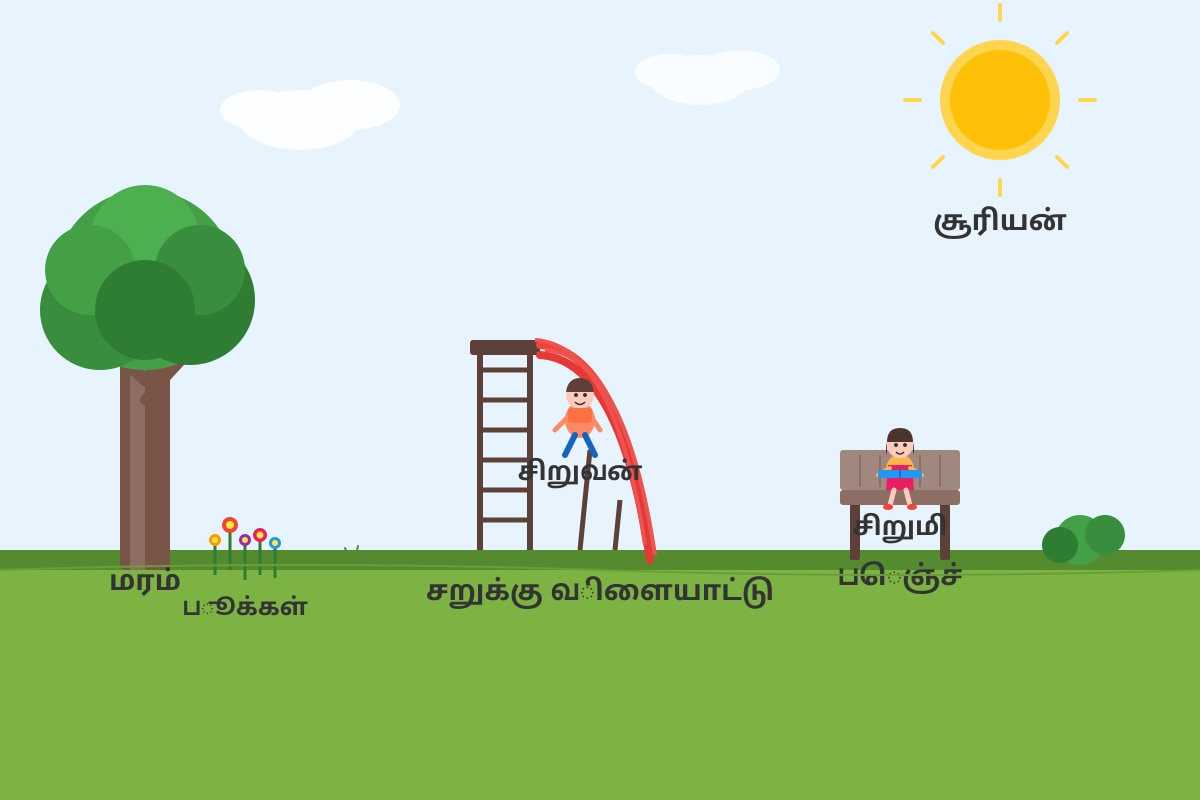
- Expected response example: "இது ஒரு பூங்கா. இங்கே ஒரு பெரிய மரம் உள்ளது. ஒரு ஊஞ்சலும் ஒரு பெஞ்சும் உள்ளன."
- Explanation: The question asks "Describe the place you see in the picture." The student should identify it as a park (பூங்கா) and mention the tree (மரம்), slide (ஊஞ்சல்), and bench (பெஞ்ச்).
- Teaching note: Encourage students to use the word உள்ளது/உள்ளன (there is/are) to describe what exists in the picture.
12. (3 marks)
- Expected response example: "பையன் ஊஞ்சலில் விளையாடுகிறான். அவன் மிகவும் மகிழ்ச்சியாக இருக்கிறான்."
- Explanation: The question asks "Describe what the boy is doing." The student should say the boy is playing on the slide (ஊஞ்சலில் விளையாடுகிறான்) and describe his emotion (மகிழ்ச்சி/happy).
- Teaching note: Use the present continuous tense: விளையாடுகிறான் (is playing), ஓடுகிறான் (is running).
13. (3 marks)
- Expected response example: "பெண் பெஞ்சில் அமர்ந்து புத்தகம் படிக்கிறாள். அவள் மிகவும் அமைதியாக இருக்கிறாள்."
- Explanation: The question asks "Describe what the girl is doing." The student should say the girl is sitting on the bench reading a book (பெஞ்சில் அமர்ந்து புத்தகம் படிக்கிறாள்).
- Teaching note: Use the feminine verb form: படிக்கிறாள் (she reads/is reading), அமர்ந்திருக்கிறாள் (she is sitting).
14. (3 marks)
- Expected response example: "வானத்தில் சூரியன் பிரகாசமாக இருக்கிறது. வானிலை மிகவும் நன்றாக இருக்கிறது."
- Explanation: The question asks "Describe the weather in the picture." The student should mention the sun (சூரியன்) and describe the weather as good/nice (நன்றாக இருக்கிறது).
- Teaching note: Weather vocabulary: வெயில் (sunny), மழை (rainy), மேகம் (cloudy), குளிர் (cold).
15. (3 marks)
- Expected response example: "மரத்தின் அருகில் அழகான பூக்கள் உள்ளன. அவை சிவப்பு மற்றும் மஞ்சள் நிறத்தில் உள்ளன."
- Explanation: The question asks "Tell me one more thing you see in the picture." The student should mention the flowers (பூக்கள்) near the tree.
- Teaching note: Encourage students to add details like colour (நிறம்) or position (அருகில்/near, கீழே/under).
Section D: Expressing Opinions (Questions 16-20) - 10 marks
Marking Note for Section D: Award 2 marks for each question if the student gives a clear opinion with a reason in complete Tamil sentences. Award 1 mark for a simple answer without a reason or with grammatical errors. Award 0 marks for no answer or unrelated answer.
16. (2 marks)
- Expected response example: "எனக்குப் பிடித்த உணவு பிஸ்ஸா. ஏனென்றால் அது மிகவும் சுவையாக இருக்கும்."
- Explanation: The question asks "What is your favourite food? Say why you like it." The student must:
- Name a food (பிஸ்ஸா/pizza, பர்கர்/burger, இட்லி/idli, தோசை/dosai, etc.)
- Give a reason (சுவையாக/because it's tasty, ஆரோக்கியமான/because it's healthy)
- Teaching note: Food vocabulary: சாதம் (rice), கறி (curry), பழம் (fruit), காய்கறி (vegetable), இனிப்பு (sweet).
17. (2 marks)
- Expected response example: "ஆமாம், எனக்குப் பள்ளிக்குச் செல்வது பிடிக்கும். ஏனென்றால் நான் என் நண்பர்களுடன் விளையாட முடியும்." OR "இல்லை, எனக்குப் பள்ளிக்குச் செல்வது பிடிக்காது. ஏனென்றால் நான் வீட்டில் தங்க விரும்புகிறேன்."
- Explanation: The question asks "Do you like going to school? Give one reason." The student can answer yes (ஆமாம்) or no (இல்லை), but must give a reason.
- Teaching note: Teach the phrase எனக்குப் பிடிக்கும் (I like) and எனக்குப் பிடிக்காது (I don't like).
18. (2 marks)
- Expected response example: "நான் பெரியவனானதும் மருத்துவராக விரும்புகிறேன். ஏனென்றால் நான் மக்களுக்கு உதவ விரும்புகிறேன்."
- Explanation: The question asks "What do you want to be when you grow up? Say why." The student must:
- Name a profession (மருத்துவர்/doctor, ஆசிரியர்/teacher, பொறியாளர்/engineer, காவலர்/police officer, etc.)
- Give a reason (உதவ/to help people, கற்பிக்க/to teach, பாதுகாக்க/to protect)
- Teaching note: Profession vocabulary: மருத்துவர் (doctor), ஆசிரியர் (teacher), தீயணைப்பு வீரர் (firefighter), விஞ்ஞானி (scientist).
19. (2 marks)
- Expected response example: "என் நண்பன் பெயர் ரவி. அவன் மிகவும் கனிவானவன். அவன் எப்போதும் எனக்கு உதவுகிறான்."
- Explanation: The question asks "Tell me about your best friend. What do you like about him/her?" The student must:
- Name their friend (என் நண்பன்/my friend (male), என் நண்பி/my friend (female))
- Describe a quality (கனிவான/kind, அறிவாளி/smart, வேடிக்கையான/funny, உதவியான/helpful)
- Teaching note: Friendship vocabulary: நண்பன் (male friend), நண்பி (female friend), நல்ல (good), அன்பான (loving).
20. (2 marks)
- Expected response example: "நான் நன்றாக ஓவியம் வரைவேன். நான் பல அழகான படங்களை வரைந்துள்ளேன்."
- Explanation: The question asks "What is one thing you are good at? Explain." The student must:
- Name a skill (ஓவியம் வரைதல்/drawing, பாட்டு பாடுதல்/singing, நடனம் ஆடுதல்/dancing, எழுதுதல்/writing)
- Give a brief explanation or example
- Teaching note: Skill vocabulary: நன்றாக (well), முடியும் (can), தெரியும் (know how to), பயிற்சி (practice).
Total Marks for Quiz: 40
Marking Summary:
- Section A (Q1-5): 5 marks (1 mark each)
- Section B (Q6-10): 10 marks (2 marks each)
- Section C (Q11-15): 15 marks (3 marks each)
- Section D (Q16-20): 10 marks (2 marks each)
General Teaching Notes:
- Encourage students to speak in complete sentences, not just single words.
- Praise effort and correct pronunciation gently.
- For shy students, allow them to practice with a partner first.
- Use visual aids and gestures to support understanding.
- Remember that speaking is about communication, not perfection. Celebrate progress!