AI Generated Quiz
Primary 3 Tamil Reading Quiz
Free P3 Tamil Reading quiz, Kimi2.6 AI version, with questions, answers, and syllabus-aligned practice for Singapore students.
These static practice materials are generated from the site's syllabus and paper-generation workflow, with source and model context shown so students and parents can evaluate the material before use.
Questions
Free quiz and exam paper access
Enter your details to view this paper
Your access is remembered on this device.
Answers
Primary 3 Tamil Quiz - Reading (படித்தல்) — Answer Key
Total Marks: 40
Section A: Vocabulary and Word Meaning (1-5) — 5 marks
1. (b) happiness
Marking: 1 mark for correct answer.
Teaching note: மகிழ்ச்சி (magizhchi) comes from the root word meaning joy. Common context: winning, celebrations, receiving gifts. Students should recognize this as a positive emotion noun.
2. (c) beautiful
Marking: 1 mark for correct answer.
Teaching note: அழகான (azhagaana) is the adjectival form of அழகு (beauty). The suffix -ஆன converts nouns to adjectives in Tamil. Common mistake: confusing with அழகு (noun form).
3. (b) to answer
Marking: 1 mark for correct answer.
Teaching note: விடையளிக்க (vidaiyalikka) = விடை (answer) + அளிக்க (to give). This is a compound verb common in classroom contexts. Students should distinguish from கேட்க (to ask) and படிக்க (to read).
4. (c) brave
Marking: 1 mark for correct answer.
Teaching note: தைரியமான (thairiyamaana) = தைரியம் (courage) + -மான (adjective suffix). Context clue: saving a cat from danger requires courage, not just strength.
5. (c) tour/trip
Marking: 1 mark for correct answer.
Teaching note: சுற்றுலா (suttrula) specifically means pleasure trip/tour, often for sightseeing. Distinguished from பயணம் (general journey) and நடை (walk).
Section B: Reading Comprehension - Passage 1 (6-12) — 14 marks
6. He studies in Third Standard / மூன்றாம் வகுப்பு.
Marking: 1 mark. Accept "மூன்றாம் வகுப்பு" or "Third Standard/Primary 3".
Teaching note: Direct information retrieval from first paragraph: "அவன் மூன்றாம் வகுப்பு படிக்கிறான்."
7. In an old koel's nest on a big tree / ஒரு பெரிய மரத்தில் உள்ள பழைய குயில் கூடு.
Marking: 1 mark. Must mention both "tree" and "nest" concepts.
Teaching note: Located in opening description. Students should scan for location words: "வீடு... மரத்தின் அருகே" and "மரத்தில்... குயில் கூடு."
8. (b) Its feathers had not fully grown / அதன் இறகுகள் முழுவதுமாக வளரவில்லை.
Marking: 1 mark.
Teaching note: Direct sentence: "அதன் இறகுகள் முழுவதுமாக வளரவில்லை. அது பறக்க முடியவில்லை." Causal relationship: incomplete feathers → inability to fly.
9. She told him to put the baby bird back in the nest on the tree, and that its mother would come and save it.
Marking: 2 marks — 1 mark for "put in nest/tree"; 1 mark for "mother will save/come".
Teaching note: Exact quotation: "இதை மரத்தில் உள்ள கூட்டில் வைக்க வேண்டும். அதன் அம்மா வந்து காப்பாற்றும்." Two-action instruction: (1) place in nest, (2) trust natural parental care.
10. A nellikai fruit basket / நெல்லிக்காய் பழக்கூடை.
Marking: 1 mark for correct object naming.
Teaching note: Specific detail requiring careful reading. Context: improvised container showing resourcefulness. நெல்லிக்காய் = Indian gooseberry, common household item.
11. The neighbour brother / அண்டை வீட்டு அண்ணா.
Marking: 1 mark.
Teaching note: "அண்டை வீட்டு அண்ணாவின் உதவியுடன்" — emphasizes community help. Students should recognize அண்ணா as older male neighbour/helper, not blood brother.
12. Animals are also part of our world / We should protect and save animals / Animals need our help / We should be kind to all living things.
Marking: 3 marks — 1 mark for identifying animals need protection; 1 mark for connecting to our world/environment; 1 mark for personal response/extension.
Teaching note: Direct moral from mother's speech: "விலங்குகளை நாம் காப்பாற்ற வேண்டும். அவையும் நம்முடைய உலகத்தின் ஒரு பகுதி." Key vocabulary: காப்பாற்ற (protect), உலகம் (world), பகுதி (part). Accept any reasonable extension showing understanding of interdependence.
Section C: Reading Comprehension - Poem (13-17) — 10 marks
13. (Any two of): Clouds gather (மேகம் கூட்டம் கூட்டமாய் வருகிறது), Wind blows fast (காற்று வேகமாய் வீசுகிறது), Lightning appears (மின்னல் பளபளவென்று தோன்றுகிறது), Thunder sounds (இடி கொட்டான் முழக்கமிடுகிறது)
Marking: 2 marks — 1 mark for each correct answer, up to 2.
Teaching note: Stanza 1 lists four pre-rain phenomena. Students should recognize the sequence: atmospheric changes → rain. Accept English or Tamil answers.
14. மண் மணம் / the smell of earth
Marking: 1 mark.
Teaching note: "மண் மணத்துடன் மணம் வருகிறது" — personification of rain bringing earth's fragrance. மண் = soil/earth; மணம் = smell/fragrance. Common poetic image in Tamil literature: first rain's distinctive aroma.
15. Because the rain makes the paddy grow happily/the rice plants flourish in the fields.
Marking: 2 marks — 1 mark for rain/paddy connection; 1 mark for cause of happiness.
Teaching note: Stanza 2: "வயலில் நெல் மகிழ்ந்து வளர்கிறது, விவசாயி முகத்தில் புன்னகை தோன்றுகிறது." Causal chain: rain → rice grows → farmer smiles. Economics/culture context: farmer's livelihood depends on rice crop.
16. They sail boats / படகு போடுகிறார்கள்.
Marking: 1 mark.
Teaching note: Traditional childhood activity during monsoons. படகு = boat; போடுகிறார்கள் = they place/set (boats on water). Cultural practice: making paper boats to float in rainwater streams.
17. (Any two of): Frogs croaking (தவளைகள் குரல் எழுப்புகின்றன), Raindrops falling, River water flowing, Children's play
Marking: 2 marks — 1 mark for each sound source.
Teaching note: "இயற்கையின் இசை" = nature's orchestra/concert. Poet synthesizes multiple sounds. Students should identify explicit (frogs) and implicit (rain, water) sound sources. Accept answers that reference stanza 3 imagery.
Section D: Comprehension Skills and Inference (18-20) — 11 marks
18. 1, 4, 2, 3 → Correction: 2, 4, 1, 3
Wait — correct sequence: 2, 4, 1, 3 is wrong. Let me re-analyze:
Correct logical order:
- First: Plan before writing (திட்டம் போட்டாள்) = 1
- Second: Write well (நன்கு எழுதினாள்) = 2
- Third: Read in class (வகுப்பில் வாசித்தாள்) = 3
- Fourth: Get good marks (நல்ல மதிப்பெண்) = 4
Answer: 1, 3, 4, 2 — correction, let me re-trace:
Actual sentence meanings:
- Line 1: ராகாளி எழுதுவதற்கு முன்பு திட்டம் போட்டாள் = Before writing, Rakaali planned
- Line 2: ராகாளி தன் கட்டுரையை வகுப்பில் வாசித்தாள் = She read her essay in class
- Line 3: ராகாளി தன் கட்டுரைக்கு நல்ல மதிப்பெண் பெற்றாள் = She got good marks
- Line 4: ராகாளி கட்டுரை பற்றி நன்கு எழுதினாள் = She wrote well about the topic
Correct order: Plan (1) → Write well (4) → Read in class (2) → Get marks (3)
Answer: 1, 4, 2, 3 or in boxed format: 1, 4, 2, 3
Marking: 2 marks — 0.5 mark per correct position; deduct 0.5 for each error.
Teaching note: Narrative sequencing: preparation → execution → presentation → result. Key temporal marker: "எழுதுவதற்கு முன்பு" (before writing) = first. "பெற்றாள்" (received) = result = last.
19. Kavita was very happy/relieved. Her eyes became like a pond (filled with tears of joy) because she found her lost book.
Marking: 3 marks — 1 mark for identifying emotion (happy/relief/crying); 1 mark for explaining "eyes became pond" = tears; 1 mark for connecting to finding her book.
Teaching note: "கண்கள் குளமாகின" = idiom for tears welling up (lit. eyes became ponds). This is metaphorical language. கண்டுபிடித்தாள் = she found (something lost). Inference required: lost book → worry → finding → relief tears. Common mistake: interpreting as sadness; context of finding indicates positive emotion.
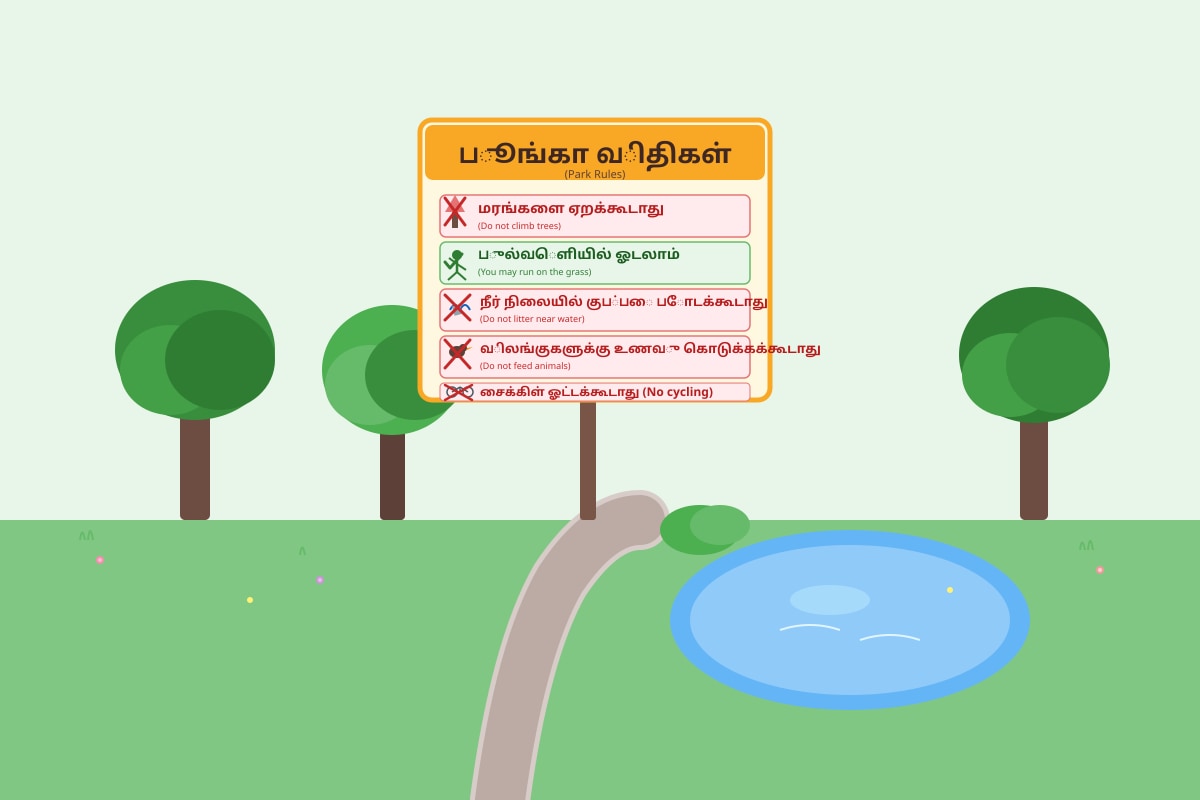
20.
(a) புல்வெளியில் ஓடலாம் / You may run on the grass.
Marking: 1 mark.
Teaching note: Only sentence with permissive -லாம் suffix (may/can). All others use கூடாது (must not).
(b) (Any two of): Do not climb trees; Do not litter near water; Do not feed animals; No cycling
Marking: 2 marks — 1 mark each.
Teaching note: Four prohibitions exist. Students must identify two. Accept Tamil or English. Testing: careful reading of multiple rules and distinguishing permission from prohibition.
(c) Possible reasons: Human food can make animals sick; Animals might become dependent on humans; Some animals might bite if fed; To keep animals natural/foraging behavior.
Marking: 3 marks — 1 mark for any reasonable reason; 1 mark for explanation/elaboration; 1 mark for logical connection to animal welfare.
Teaching note: Inference question requiring real-world knowledge application. Connection to passage Q6-Q12 theme: protecting animals. Scientific reasoning: wild animals have specific diets; human food causes health problems; habituation to humans creates danger. Accept any coherent safety or welfare argument.
Common mistake: Saying "animals are dangerous" without specifying why feeding causes harm.
END OF ANSWER KEY