AI Generated Exam Paper
Primary 3 Tamil Practice Paper 5
Free P3 Tamil Practice Paper 5, Nemo3 AI version, with questions, answers, and syllabus-aligned practice for Singapore students.
These static practice materials are generated from the site's syllabus and paper-generation workflow, with source and model context shown so students and parents can evaluate the material before use.
Questions
Free quiz and exam paper access
Enter your details to view this paper
Your access is remembered on this device.
Answers
TuitionGoWhere Practice Paper - Tamil Primary 3 (Answer Key)
TuitionGoWhere Practice Paper (AI) — Version 5
Subject: Tamil
Level: Primary 3
Paper: Practice Paper – Reading (படித்தல்)
Total Marks: 40
Section A: Multiple-Choice Questions (10 marks)
Passage 1 Answers
1. B (1 mark)
Explanation: The passage states "அவர் ஒவ்வொரு காலையும் காலை 6 மணிக்கு எழுந்துவிடுகிறார்" (He wakes up at 6 AM every morning). Option B matches this information directly.
2. B (1 mark)
Explanation: The passage states "பள்ளிக்கு போகும் முன் பூசை அறையில் தீபம் ஏற்றி பிரார்த்தனை செய்கிறார்" (Before going to school, he lights a lamp in the prayer room and prays). Option B is the exact activity mentioned.
3. C (1 mark)
Explanation: The pronoun 'அவர்' (he) refers to the subject of the passage, which is introduced in the first sentence as "ராமு ஒரு நல்ல பிள்ளை" (Ramu is a good boy). The entire passage describes Ramu's daily routine.
4. B (1 mark)
Explanation: The passage states "வீட்டுக்கு திரும்பிய பிறகு வேலை செய்யும் தாயார் உதவி செய்கிறார்" (After returning home, he helps his mother who is working). 'தாயார்' means mother.
5. B (1 mark)
Explanation: The passage ends with "இரவு 9 மணிக்கு தூங்கி விடுகிறார்" (He goes to sleep at 9 PM at night). Option B matches this exactly.
Passage 2 Answers
6. A (1 mark)
Explanation: The passage explicitly lists "செவ்வாந்தி, மல்லிகை, ரோஜா போன்ற பூக்கள் மலர்கின்றன" (Flowers like chrysanthemum, jasmine, and rose bloom). Option A contains all three flowers mentioned.
7. A (1 mark)
Explanation: The passage states "மாம்பழம், வாழைப்பழம், நெல்லிக்காய் போன்ற மரங்களும் உள்ளன" (There are also trees like mango, banana, and gooseberry). Option A matches this list exactly.
8. C (1 mark)
Explanation: The passage says "ஒவ்வொரு வாரமும் வியாழக்கிழமை நாங்கள் தோட்டத்தில் வேலை செய்கிறோம்" (Every week on Thursday we work in the garden). 'வியாழக்கிழமை' is Thursday.
9. B (1 mark)
Explanation: The teacher explains: "மரங்கள் நமக்கு ஆக்சிஜன் தருகின்றன" (Trees give us oxygen). This is a basic science fact taught at Primary 3 level.
10. C (1 mark)
Explanation: The pronoun 'நாங்கள்' (we) refers to the speakers/narrators of the passage. The context "நாங்கள் தோட்டத்தில் வேலை செய்கிறோம்" (We work in the garden) and "ஆசிரியர் நமக்குத் தோட்டத்தின் முக்கியத்துவத்தை விளக்குகிறார்" (Teacher explains to us) shows the narrators are students.
Section B: Short-Answer Questions (10 marks)
Passage 3 Answers
11. சிறு பறவை மரத்தின் கிளையில் உட்கார்ந்து இருந்தது. (2 marks)
Mark breakdown:
- 1 mark for identifying location: மரத்தின் கிளையில் (on the tree branch)
- 1 mark for complete sentence in Tamil
Teaching note: The answer is directly stated in the first sentence: "ஒரு சிறு பறவை மரத்தின் கிளையில் உட்கார்ந்து இருந்தது."
12. பறவையின் வண்ணம் நீலம் மற்றும் வெள்ளை கலவையாக இருந்தது. (2 marks)
Mark breakdown:
- 1 mark for both colours: நீலம் (blue) மற்றும் வெள்ளை (white)
- 1 mark for complete sentence in Tamil
Teaching note: The passage states "பறவையின் வண்ணம் நீலம் மற்றும் வெள்ளை கலவையாக இருந்தது." Both colours must be mentioned for full marks.
13. பறவை பூவின் மிதக்கை சாப்பிட்டது. (2 marks)
Mark breakdown:
- 1 mark for correct answer: பூவின் மிதக்கை (nectar of the flower)
- 1 mark for complete sentence in Tamil
Teaching note: The passage says "பூவின் மிதக்கை சாப்பிட்டு திருப்தியாக இருந்தது" (It ate the flower's nectar and was satisfied). 'மிதக்கை' means nectar.
14. பறவை மீண்டும் மரத்திற்கு திரும்பி வந்து பாடி ஆரம்பித்தது. (2 marks)
Mark breakdown:
- 1 mark for returning to tree: மீண்டும் மரத்திற்கு திரும்பி வந்து
- 1 mark for singing: பாடி ஆரம்பித்தது
- (Award 2 marks if both actions mentioned in a complete sentence)
Teaching note: The passage states "பறவை மீண்டும் மரத்திற்கு திரும்பி வந்து பாடி ஆரம்பித்தது." Both sequential actions are required.
15. எல்லோரும் பறவ인의 பாடலை கேட்டு மகிழ்ந்தனர். (2 marks)
Teaching note: The passage ends with "எல்லோரும் அதன் பாடலை கேட்டு மகிழ்ந்தர்." The answer should reflect that everyone felt happy/joyful after hearing the bird's song.
Section C: Open-Ended Comprehension (20 marks)
Passage 4 Answers
16. தங்கச்சியின் வயது 10 வயது. தங்கையின் வயது 8 வயது. (4 marks)
Mark breakdown:
- 1 mark for Thangachi's age: 10 வயது
- 1 mark for Thangai's age: 8 வயது
- 2 marks for complete sentence structure in Tamil
Teaching note: Directly from the first sentence: "தங்கச்சி 10 வயது, தங்கை 8 வயது." Both ages must be clearly stated.
17. தங்கை பள்ளியில் வீணாக இருந்தது, ஏனெனில் அவளுக்கு புத்தகம் இல்லை. (4 marks)
Mark breakdown:
- 2 marks for reason: புத்தகம் இல்லை (no book) / எனக்கு புத்தகம் இல்லை என்று தங்கை சொன்னது
- 2 marks for complete explanation in Tamil sentences
Teaching note: The passage shows dialogue: தங்கை "எனக்கு புத்தகம் இல்லை" என்று பதிலளித்தாள். The answer should reference this direct speech.
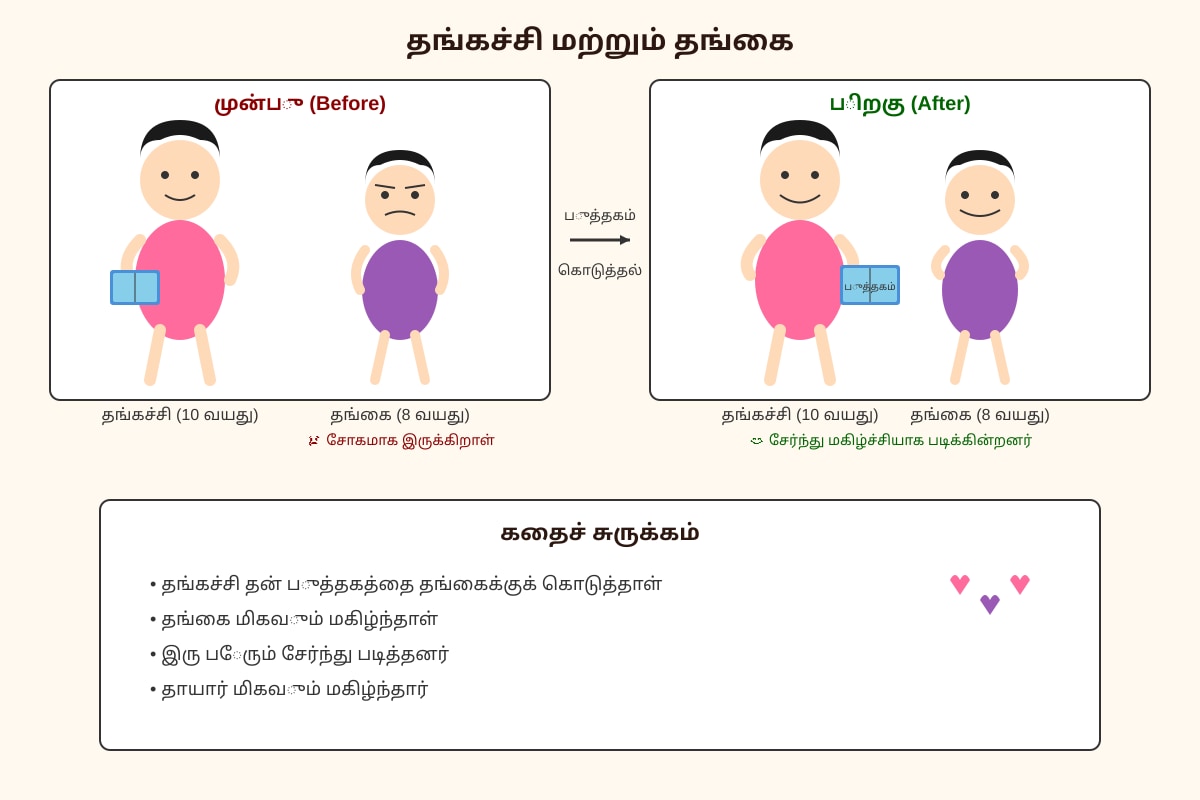
18. தங்கச்சி தன் புத்தகத்தை தங்கைக்குக் கொடுத்தாள். (4 marks)
Mark breakdown:
- 2 marks for action: தன் புத்தகத்தை கொடுத்தாள் (gave her own book)
- 2 marks for complete sentence with context
Teaching note: The passage states "உடனே தங்கச்சி தன் புத்தகத்தை தங்கைக்குக் கொடுத்தாள்." The immediacy ('உடனே' - immediately) shows kindness.
19. தங்கை தங்கச்சியின் உதவியைப் பெற்ற பிறகு மிகவும் மகிழ்ந்தாள். (4 marks)
Mark breakdown:
- 2 marks for emotional state: மிகவும் மகிழ்ந்தாள் (very happy)
- 2 marks for complete sentence linking cause and effect
Teaching note: The passage explicitly states "தங்கை மிகவும் மகிழ்ந்தாள்." Students should connect the book-sharing to the happiness.
20. தாயார் இரு பேரின் நடத்தை அறிந்து மிகவும் மகிழ்ந்தார். இது சகோதரருக்கு இடையேயான அன்பு மற்றும் உதவி மனோபாவத்தை காட்டுகிறது. (4 marks)
Mark breakdown:
- 1 mark for mother's reaction: மிகவும் மகிழ்ந்தார் (very happy)
- 2 marks for moral value identified: அன்பு (love) மற்றும் உதவி மனோபாவம் (helping attitude) / சகோதரருக்கு இடையேயான அன்பு
- 1 mark for complete sentence structure
Teaching note: This is an inference question. The passage states "தாயார் இரு பேரின் நடத்தை அறிந்து மிகவும் மகிழ்ந்தார்." Students must infer the underlying value (sisterly love, sharing, kindness) from the actions described. Accept reasonable moral values like: sharing (பகிர்வு), kindness (கருணை), sibling love (சகோதர அன்பு).
Marking Summary
- Section A: 10 × 1 mark = 10 marks
- Section B: 5 × 2 marks = 10 marks
- Section C: 5 × 4 marks = 20 marks
- Total: 40 marks
General Marking Notes for Teachers
- Language Quality: Accept phonetic spelling variations common in Primary 3. Focus on comprehension, not perfect spelling.
- Complete Sentences: For Sections B and C, deduct 1 mark per question if answer is not in a complete Tamil sentence (missing verb or subject).
- Direct Lifting: Allow direct lifting from passage for factual questions (Sections A, B, Q16-17). For inference questions (Q20), require own words.
- Image Placeholder (Q16-fig1): The illustration supports the narrative but is not required to answer questions. If rendered, it should show two girls (ages 10 and 8), a book being passed, and emotional transition from sad to happy. No question depends solely on the image.
- Common Errors:
- Confusing Thangachi (older) and Thangai (younger) ages
- Missing 'மிதக்கை' (nectar) in Q13, writing 'பூவு' (flower) instead
- Not using complete sentences in Sections B and C
- For Q20, giving only "happy" without explaining the moral value shown
End of Answer Key