AI Generated Exam Paper
Primary 3 Tamil Practice Paper 5
Free P3 Tamil Practice Paper 5, Kimi2.6 AI version, with questions, answers, and syllabus-aligned practice for Singapore students.
These static practice materials are generated from the site's syllabus and paper-generation workflow, with source and model context shown so students and parents can evaluate the material before use.
Questions
Free quiz and exam paper access
Enter your details to view this paper
Your access is remembered on this device.
Answers
TuitionGoWhere Practice Paper - Tamil Primary 3
Answer Key and Marking Scheme
Version 5 of 5
Section A: Vocabulary and Comprehension (25 marks)
Question 1 (1 mark)
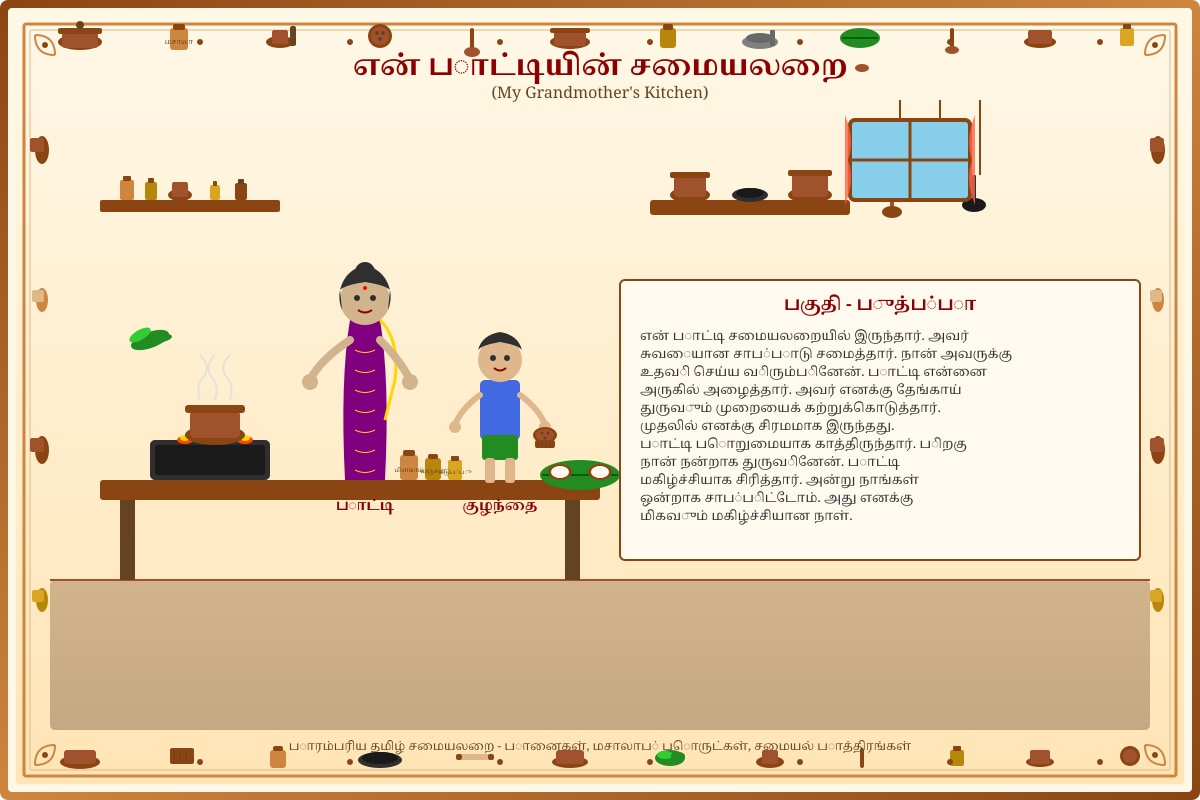
Answer: B) சமையலறையில் (in the kitchen)
Explanation: The first sentence of the passage states "என் பாட்டி சமையலறையில் இருந்தார்" (My grandmother was in the kitchen). The word "சமையலறையில்" explicitly means "in the kitchen." This is a direct comprehension question testing basic factual recall from the text.
Common mistake: Some students might choose D) வீட்டில் because the kitchen is in the house, but the question asks specifically where the grandmother is, and the passage gives the precise location.
Question 2 (1 mark)
Answer: சுவையான சாப்பாடு (tasty/delicious food) OR என் பாட்டி சுவையான சாப்பாடு சமைத்தார்
Explanation: The second sentence states "அவர் சுவையான சாப்பாடு சமைத்தார்" (She cooked tasty food). "சுவையான" means tasty/delicious and "சாப்பாடு" means food. The student should identify that the grandmother cooked food that was tasty.
Marking note: Accept "tasty food" or "delicious food" if answered in English, though Tamil answer preferred. Deduct half mark if only "food" without "tasty/delicious."
Question 3 (2 marks)
Answer: நான் (என் பாட்டிக்கு) உதவி செய்ய விரும்பினேன் / The child wanted to help the grandmother.
Explanation: The third sentence clearly states "நான் அவருக்கு உதவி செய்ய விரும்பினேன்" (I wanted to help her). Key vocabulary: "உதவி" = help, "விரும்பினேன்" = wanted. The child shows initiative and willingness to help with cooking, demonstrating family cooperation.
Marking breakdown:
- 1 mark: Identifying that the child wanted to help/do something
- 1 mark: Correctly identifying that the help was for grandmother/with cooking
Common mistake: Some students might say the child wanted to eat; remind them to distinguish between what the child wanted to do versus what happened later.
Question 4 (2 marks)
Answer: தேங்காய் துருவும் முறையைக் கற்றுக்கொடுத்தார் / How to grate coconut.
Explanation: The fifth sentence states "அவர் எனக்கு தேங்காய் துருவும் முறையைக் கற்றுக்கொடுத்தார்" (She taught me the method of grating coconut). Key vocabulary: "தேங்காய்" = coconut, "துருவும்" = grating, "முறை" = method, "கற்றுக்கொடுத்தார்" = taught.
Marking breakdown:
- 1 mark: Mentioning coconut grating or related cooking skill
- 1 mark: Complete answer with "teaching" aspect correctly identified
Cultural note: Grating coconut is a traditional Tamil cooking skill passed between generations, fitting the passage's theme of intergenerational learning.
Question 5 (2 marks)
Answer: B) சிரமமாக (difficult/hard)
Explanation: The sentence states "முதலில் எனக்கு சிரமமாக இருந்தது" (At first, it was difficult for me). The child found grating coconut hard initially. This word "சிரமமாக" means difficult or strenuous. The grandmother's patience (பொறுமை) later helped the child succeed.
Marking breakdown:
- 1 mark: Correct option B selected
- 1 mark: Explanation referencing that it was the first time/the child was learning/new skill
Teaching note: Help students see the narrative arc—difficulty → patience → success → happiness.
Question 6 (2 marks)
Answer: பொறுமை (patience) / பொறுமையாக இருந்தார்
Explanation: The text states "பாட்டி பொறுமையாக காத்திருந்தார்" (Grandmother waited patiently). The grandmother's patience (பொறுமை) is the key quality. She didn't get angry or give up when the child struggled. She calmly waited until the child learned.
Marking breakdown:
- 1 mark: Identifying patience as the quality
- 1 mark: Explaining how patience helped (waiting, not giving up, giving time to learn)
Extension: This is an important cultural value in Tamil education—elders teach younger generations through patience and demonstration rather than criticism.
Question 7 (1 mark)
Answer: ஒன்றாக
Explanation: The phrase "நாங்கள் ஒன்றாக சாப்பிட்டோம்" means "we ate together." The word "ஒன்றாக" means "together." Students need to scan the text for this specific vocabulary item.
Teaching note: Break down the word: ஒன்று (one) + ஆக (in the manner of) = in the manner of one = together, as one.
Question 8 (2 marks)
Answer: The grandmother smiled happily because the child learned to grate coconut successfully / பாட்டி மகிழ்ச்சியாக சிரித்தார் ஏனெனில் குழந்தை நன்றாக கற்றுக்கொண்டது.
Explanation: The text states "பிறகு நான் நன்றாக துருவினேன். பாட்டி மகிழ்ச்சியாக சிரித்தார்." The sequence shows cause and effect: the child's successful learning → grandmother's happy smile. This demonstrates the grandmother's investment in teaching and her joy at the child's achievement.
Marking breakdown:
- 1 mark: Connecting the smile to the child's success/learning
- 1 mark: Understanding the emotional relationship (pride, satisfaction, bonding)
Question 9 (2 marks)
Answer: Because the child spent quality time with grandmother, learned a new skill, shared food together, and felt accomplished / பாட்டியுடன் நேரம் செலவிட்டேன், புதிய திறனைக் கற்றுக்கொண்டேன், ஒன்றாக சாப்பிட்டோம், வெற்றி பெற்ற உணர்வு.
Explanation: The happy day combines multiple positive elements: successful learning (overcoming difficulty), grandmother's patience and smile, shared meal (ஒன்றாக சாப்பிட்டோம்), and intergenerational bonding. Students should synthesize these elements from across the passage.
Marking breakdown:
- 1 mark: Identifying at least two specific positive events from the text
- 1 mark: Synthesizing these into an understanding of why the day was special
Question 10 (2 marks)
Answer: Family bonding across generations, respecting elders, learning traditional skills from grandparents, patience in teaching, helping each other, shared experiences / மூத்தோரை மதித்தல், குடும்ப உறவுகள், பாரம்பரிய திறன்களைக் கற்றல், ஒருவருக்கு ஒருவர் உதவுதல்.
Explanation: This open-ended question asks students to extract a moral or theme. Acceptable themes include: intergenerational learning (கல்வி மரபு), family cooperation (குடும்ப ஒற்றுமை), patience in education (கல்வியில் பொறுமை), or preserving traditional cooking skills (பாரம்பரிய சமையல்).
Marking breakdown:
- 1 mark: Identifying a relevant family/social value
- 1 mark: Connecting the value to specific evidence from the passage
Section B: Grammar and Word Study (15 marks)
Question 11 (2 marks)
Answer: சமைத்தார்
Explanation: The sentence contains "இன்று இட்லி செய்தார்" with past tense verb "செய்தார்" (made/did). The action is completed in the past. "சமைக்கிறார்" is present tense (cooks), "சமைப்பார்" is future tense (will cook). "சமைத்தார்" is past tense (cooked), matching the timeline of the sentence.
Marking breakdown:
- 1 mark: Correct tense form selected
- 1 mark: Correct reasoning—past tense needed because of "செய்தார்" showing completed action
Grammar note: Tamil verb agreement requires tense consistency within the sentence frame.
Question 12 (3 marks)
Answers:
| Noun | Rational / Irrational |
|---|---|
| (a) மாடு (cow) | பொய்யிற் பெயர் (Irrational) |
| (b) ஆசிரியர் (teacher) | மெய்யிற் பெயர் (Rational) |
| (d) மரம் (tree) | பொய்யிற் பெயர் (Irrational) |
Explanation: In Tamil grammar, மெய்யிற் பெயர் (Rational nouns) refer to beings with intelligence—humans, deities. பொய்யிற் பெயர் (Irrational nouns) refer to objects, animals, and plants without rational faculties.
- மாடு (cow): Animal → Irrational
- ஆசிரியர் (teacher): Human being capable of thought → Rational
- மரம் (tree): Plant → Irrational
Marking: 1 mark for each correct classification. No partial marks.
Common mistake: Students sometimes classify domestic animals as rational because they are familiar; emphasize the grammatical rule about intelligence/speech capacity.
Question 13 (3 marks)
Answers: (a) — (ii), (b) — (iii), (c) — (i)
Explanation:
| Match | Reasoning |
|---|---|
| (a) பொறுமை — (ii) காத்திருப்பு | "பொறுமை" means patience; "காத்திருப்பு" means waiting. These are closely related concepts. |
| (b) மகிழ்ச்சி — (iii) மகிழ்ச்சியான | "மகிழ்ச்சி" (happiness, noun) matches with "மகிழ்ச்சியான" (happy, adjective)—same root word. |
| (c) கவலை — (i) சோகமான | "கவலை" means worry/anxiety; "சோகமான" means sad. Both represent negative emotions that pair together as antonyms to happiness. |
Marking: 1 mark for each correct match.
Question 14 (2 marks)
Answer: பாட்டி சமையலறையில் சமைக்கிறார். / என் பாட்டி சமையலறையில் சமைக்கிறார்.
Explanation: The given words are: பாட்டி (grandmother/noun), சமையலறை (kitchen/noun with locative case), சமைக்கிறார் (cooks/verb). The student must construct a complete sentence with subject-verb agreement. The locative case marker "-இல்" on சமையலறை indicates location "in the kitchen."
Marking breakdown:
- 1 mark: Grammatically correct sentence structure
- 1 mark: Correct use of location (சமையலறையில்) and verb form (சமைக்கிறார்)
Acceptable variations: Present or past tense acceptable if consistent. சமைத்தார் also accepted.
Question 15 (2 marks)
Answer: மேலும் (Furthermore/And then/Also)
Explanation: The two sentences describe sequential compatible actions: the friend came, AND THEN they played. "ஆனால்" means "but" (contrast), "எனவே" means "therefore" (result/cause). "மேலும்" means "furthermore/moreover/also" and is used to add related, sequential information. The friendly visit leading to play is additive, not contrastive or causative in a strict logical sense.
Marking breakdown:
- 1 mark: Correct conjunction selected
- 1 mark: Reasoning that the actions are sequential and compatible, not contrasting or causal
Teaching note: Discuss how context determines conjunction choice—friendship context suggests positive addition, not obstacle (which would need ஆனால்) or deduction (which would need எனவே).
Question 16 (3 marks)
Answers:
| Singular | Plural |
|---|---|
| (a) மரம் | மரங்கள் |
| (b) புத்தகம் | புத்தகங்கள் |
| (c) பெண் | பெண்கள் |
Explanation: Tamil plural formation rules:
- மரம் → மரங்கள்: Most irrational nouns add "-ங்கள்"
- புத்தகம் → புத்தகங்கள்: Same pattern with "-ங்கள்"
- பெண் → பெண்கள்: Rational human nouns in colloquial/educational Tamil often use "-கள்" (historically some use different honorific plural forms, but Primary 3 level uses standard "-கள்")
Marking: 1 mark for each correctly formed plural.
Common mistake: Students may add the wrong plural suffix or double the final consonant incorrectly.
Section C: Reading Aloud and Pronunciation (10 marks)
Question 17 (3 marks)
Answers:
(a) சமையலறை (stress on first syllable: சமை)
(b) மகிழ்ச்சி (stress on first syllable: மகிழ்)
(c) பொறுமை (stress on first syllable: பொறு)
Explanation: In Tamil, stress typically falls on the first syllable of a word. This is a general prosodic pattern. For reading aloud exercises, students learn to emphasize the initial syllable to sound natural.
Expected visual representation: சமை'யலறை or 'சமையலறை (marking may vary by teaching method)
Marking: 1 mark for each correct stress placement. Accept if stress marker is placed clearly on or before the stressed syllable.
Question 18 (2 marks)
Answer: பாட்டி சமையலறையில் இருந்தார் / அவர் சுவையான சாப்பாடு சமைத்தார்.
OR with more detailed pauses: பாட்டி / சமையலறையில் / இருந்தார் / அவர் / சுவையான சாப்பாடு / சமைத்தார்.
Explanation: Meaningful pauses in Tamil reading follow phrase boundaries. The sentence has two main clauses: (1) Grandmother was in the kitchen, (2) She cooked tasty food. A major pause separates these two clauses. Minor pauses can separate subject from location and object from verb.
Marking breakdown:
- 1 mark: Major pause correctly placed between the two clauses
- 1 mark: Sensible additional pauses that aid comprehension without breaking grammatical units
Question 19 (3 marks)
Answers:
(a) இருந்து and இருந்து (lines 1 and 2 both end in இருந்து)
OR
(a) மலரிருந்து and மேகத்திலிருந்து
(b) புன்னகையிலிருந்து and இதயத்திலிருந்து
Explanation: This is a traditional-style Tamil poem with end-rhyme pattern. Each line ends in "-இருந்து" creating rhythmic repetition. The pairs can be identified as:
- Line 1 & 2: both end in இருந்து (exact rhyme)
- Line 3 & 4: both end in இருந்து (exact rhyme)
Or students can identify the fuller rhyming phrases.
Marking breakdown:
- 1 mark: Identifying that rhyming occurs at line endings
- 1 mark per correct pair (max 2 marks for pairs)
Question 20 (2 marks)
Answer: லட்சுமி is more polite. She uses "தயவுசெய்து" (please) and the polite question form "கொடுப்பீர்களா?" (would you give...?) which shows respect and courtesy.
Explanation: Compare the two speech acts:
- குமார்: Direct demand "எனக்கு தண்ணீர் வேண்டும்!" (I want water!) — imperative, self-focused, no politeness markers
- லட்சுமி: Polite request with "தயவுசெய்து" (please/kindly) + indirect question form "கொடுப்பீர்களா?" (would you give?) — other-focused, honorific, offers choice
Marking breakdown:
- 1 mark: Correctly identifying லட்சுமி as more polite
- 1 mark: Explaining at least one specific politeness marker (தயவுசெய்து or -ஈர்களா form)
Cultural note: Tamil has elaborate honorific systems. Teaching children to recognize and use ப为他人考虑 language (other-oriented speech) is part of Tamil socialization.
Summary Mark Distribution
| Section | Questions | Marks |
|---|---|---|
| A: Comprehension | 1-10 | 25 |
| B: Grammar | 11-16 | 15 |
| C: Pronunciation | 17-20 | 10 |
| TOTAL | 20 questions | 50 marks |
Expected timing distribution:
- Section A (reading + answers): ~25 minutes
- Section B (grammar): ~15 minutes
- Section C (reading aloud/pronunciation): ~10 minutes
- Review: ~10 minutes
Verification: All question marks verified to sum to 50. All 20 top-level questions present. No placeholder content. All visual dependencies include explicit <image_placeholder> tags with sufficient detail for image generation stage.