AI Generated Exam Paper
Primary 3 Tamil Practice Paper 2
Free P3 Tamil Practice Paper 2, Kimi2.6 AI version, with questions, answers, and syllabus-aligned practice for Singapore students.
These static practice materials are generated from the site's syllabus and paper-generation workflow, with source and model context shown so students and parents can evaluate the material before use.
Questions
Free quiz and exam paper access
Enter your details to view this paper
Your access is remembered on this device.
Answers
TuitionGoWhere Practice Paper Answer Key - Tamil Primary 3
Version 2 of 5
Subject: Tamil Language | Level: Primary 3 | Paper: Practice Paper - Reading & Language Use
Total Marks: 60 marks | Duration: 1 hour 15 minutes
SECTION A READING COMPREHENSION (வாசிப்பு புரிதல்) [20 marks]
Question 1 (1 mark)
Answer: Ⓑ ஐந்து மணி
Teaching notes:
- Evidence location: Second paragraph, first sentence: "முத்துச்சாமி தாத்தா அன்று காலை ஐந்து மணிக்கு எழுந்தார்."
- Reading strategy: This is a direct retrieval question. The answer is stated explicitly in the text. Students should scan for the character name "முத்துச்சாமி தாத்தா" and look for time expressions (numbers with மணி).
Common mistake: Choosing Ⓒ எட்டு மணி — this is when people leave the park, not when the grandfather wakes up.
Question 2 (1 mark)
Answer: Ⓑ ஒரு மெதுவான உடற்பயிற்சி
Teaching notes:
- Evidence location: Second paragraph, sentences 3-4: "அவர் தைச்சி செய்வதைப் பார்க்கலாம். தைச்சி என்பது ஒரு மெதுவான உடற்பயிற்சி."
- Key vocabulary: உடற்பயிற்சி = exercise, மெதுவான = slow/gentle
- Cultural context: தைச்சி (Tai Chi) is a Chinese martial art practiced for health benefits, commonly seen in Singapore parks. It is indeed slow and gentle, suitable for elderly people.
Common mistake: Choosing Ⓐ ஒரு விளையாட்டு — Tai Chi is not competitive or playful; it's a health practice.
Question 3 (1 mark)
Answer: Ⓒ மல்லிகை
Teaching notes:
- Evidence location: Third paragraph, final sentence: "இது ஒருவிதமான செடி. இதன் பெயர் மல்லிகை"
- Dialogue clue: Meena's mother directly names the flower in her spoken response.
- Vocabulary note: மல்லிகை = jasmine, a very common and fragrant flower in Singapore and South India, often used in garlands and religious offerings.
Common mistake: Choosing Ⓐ ரோஜா — students may guess based on familiarity rather than reading the specific name given.
Question 4 (2 marks)
Answer: Ⓒ பயம்
Teaching notes:
- Evidence location: Fourth paragraph, sentence 3: "முதலில் குமாருக்குச் சற்று பயமாக இருந்தது."
- Context clue: The word "முதலில்" (at first) indicates this was Kumar's initial feeling, which changed later when his friend helped him.
- Transition signal: The word "ஆனால்" (but) in the next sentence signals a change from fear to confidence.
Marking: 2 marks for correct answer; no partial marks as this is multiple choice with one correct option.
Common mistake: Choosing Ⓓ குழப்பம் — students may confuse temporary uncertainty with actual confusion. The text explicitly states "பயமாக இருந்தது" (was afraid).
Question 5 (2 marks)
Answer: Ⓒ ஒரு நாய்
Teaching notes:
- Evidence location: Sixth paragraph, first sentence: "நாய் ஒன்று தனது உரிமையாளருடன் நடைபயிற்சி செய்கிறது. அதன் பெயர் பாலு."
- Comprehension check: The very first word of the paragraph identifies the animal type. Students who read carefully will see this immediately.
- Vocabulary note: உரிமையாளர் = owner; நடைபயிற்சி = walking exercise
Marking: 2 marks for correct answer.
Common mistake: Choosing Ⓓ ஒரு சிறுவன் — "பாலு" sounds like a boy's name, but the text clearly states it is a dog's name.
Question 6 (2 marks)
Sample answer:
முத்துச்சாமி தாத்தா தைச்சி செய்வதற்காகவும் உடலுக்கும் மனதிற்கும் நல்லது பெறுவதற்காகவும் பூங்காவிற்கு வருகிறார்.
Alternative acceptable answer:
அவர் தினமும் தைச்சி செய்வதற்காக பூங்காவிற்கு வருகிறார். இது அவருக்கு உடல் ஆரோக்கியத்தைத் தருகிறது.
Marking breakdown:
| Component | Marks |
|---|---|
| States that he comes to do Tai Chi / exercise | 1 mark |
| Explains the benefit (health for body and mind) | 1 mark |
Teaching notes:
- Evidence: Second paragraph states he does Tai Chi and that it is good for body and mind.
- Inference required: Students must connect two pieces of information: his action (Tai Chi) and the stated benefit.
- Expected response depth: At Primary 3, students should begin connecting action to purpose, not just stating facts.
Common mistakes:
- Simply writing "தைச்சி செய்கிறார்" without explaining why — loses the purpose mark.
- Inventing reasons not in the text (e.g., "to meet friends") — no mark without textual evidence.
Question 7 (2 marks)
Sample answer:
குருவி தனது வாயில் ஒரு சிறு புழுவை வைத்துக்கொண்டு குட்டிகளுக்கு உணவு கொண்டுவருகிறது. குட்டிகள் வாயைத் திறந்து காத்திருக்கின்றன.
Alternative acceptable answer:
பறவை தனது குட்டிகளுக்கு புழுவை உணவாகக் கொண்டுவருகிறது. இது குட்டிகள் வளர உதவுகிறது.
Marking breakdown:
| Component | Marks |
|---|---|
| Identifies what food is brought (worm/புழு) | 1 mark |
| Describes the chicks' waiting behaviour OR explains this helps them grow | 1 mark |
Teaching notes:
- Evidence: Fifth paragraph: "ஒரு குருவி தனது குட்டிகளுக்கு உணவு கொண்டுவருகிறது. அது வாயில் ஒரு சிறு புழுவை வைத்திருக்கிறது. குட்டிகள் வாயைத் திறந்து காத்திருக்கின்றன."
- Biological concept: This introduces the idea of parental care in animals — feeding young is essential for survival.
Question 8 (3 marks)
Sample answer:
நாம் நமது பூங்காக்களை பாதுகாக்க வேண்டும் என்பதற்காக மரங்களை நட வேண்டும். மலர்களையும் பறவைகளையும் பாதுகாப்பதன் மூலம் நம் நகரம் அழகாக இருக்கும். இது எதிர்கால சந்ததியினருக்கும் நல்லது.
Marking breakdown:
| Component | Marks |
|---|---|
| Explains one way to protect parks (planting trees, protecting flowers, feeding birds) | 1 mark |
| Gives a second specific action from the text | 1 mark |
| Connects to future benefit / beautiful city | 1 mark |
Teaching notes:
- Evidence location: Final paragraph lists three actions: plant trees, protect flowers, feed birds.
- Critical thinking: The final sentence states the result of these actions.
- Expected depth: Students should synthesize multiple specific actions rather than just repeating the main idea.
Question 9 (3 marks)
Sample answer:
குமாருக்குப் பயமாக இருந்தபோது அவனது தோழன் ராஜு உதவினான். "கவலைப்படாதே, நான் இங்கே இருக்கிறேன்" என்று கூறி அவனுக்கு தைரியம் கொடுத்தான். எனக்கு ஒருமுறை நீச்சல் குளத்தில் நீந்தப் பயமாக இருந்தது. எனது அப்பா என்னுடன் இருந்து கைபிடித்து உதவினார். பிறகு நான் நீந்தக் கற்றுக்கொண்டேன்.
Marking breakdown:
| Component | Marks |
|---|---|
| Identifies Raju's help / encouragement as the reason Kumar could ride | 1 mark |
| Provides a personal challenge from student's own life | 1 mark |
| Explains who helped or how they overcame it | 1 mark |
Teaching notes:
- Text-to-self connection: This is a key Primary 3 reading skill — making personal connections to text.
- Acceptable personal examples: Learning to swim, ride a bicycle, speak in front of class, solve a difficult math problem, etc.
- Important: The personal response must show a genuine challenge and some form of support/help, mirroring Kumar's experience.
Question 10 (3 marks)
Sample answer:
இந்தக் கட்டுரையில் பூங்கா ஒரு அமைதியான இடமாக விவரிக்கப்பட்டுள்ளது. அங்கு நீருற்றின் இசை கேட்பதும், காற்று மெல்லியதாக வீசுவதும் அமைதியைத் தருகிறது. மேலும், அது ஒரு மகிழ்ச்சியான இடமாகவும் உள்ளது — குழந்தைகள் விளையாடுகிறார்கள், முதியவர்கள் உடற்பயிற்சி செய்கிறார்கள், இயற்கை அழகு மிகுந்தது.
Marking breakdown:
| Component | Marks |
|---|---|
| Identifies "peaceful/quiet/calm" as one characteristic with evidence | 1 mark |
| Identifies "joyful/happy/beautiful" as second characteristic with evidence | 1 mark |
| Provides specific textual support for both (sounds, activities, nature) | 1 mark |
Teaching notes:
- Evidence for peaceful: "காற்று மெல்லியதாக வீசுகிறது," "நீருற்றின் இசை," "அமைதியாகிறது"
- Evidence for joyful: "மகிழ்ச்சியான இடம்," children playing, grandfather's routine, birds singing
- Higher-order thinking: Students must characterize the place holistically rather than listing isolated facts.
SECTION B VOCABULARY & GRAMMAR (சொல்வளமும் இலக்கணமும்) [20 marks]
Question 11 (2 marks)
Answer: நட்பு
Complete sentence: ராஜு குமாருக்கு உதவியதால் அவர்களுக்குள் நட்பு வளர்ந்தது.
Teaching notes:
- Word meaning: நட்பு = friendship
- Context clue: When someone helps another, a positive relationship develops. The other words don't fit grammatically or semantically.
- Grammar check: The sentence needs a noun that can "grow/develop" (வளர்ந்தது).
Question 12 (2 marks)
Answer: அமைதி
Complete sentence: பூங்காவில் அமைதி இருப்பதால் மக்கள் அங்கு வருகிறார்கள்.
Teaching notes:
- Word meaning: அமைதி = peace, quietness, calm
- Context from passage: The text explicitly states the park brings peace ("அனைவருக்கும் அமைதியைத் தருகிறது").
- Grammar note: இருப்பதால் requires a noun subject; அமைதி is the only abstract noun that fits this peaceful context.
Question 13 (2 marks)
Answer: கீழ்ப்படிதல்
Complete sentence: நாய் பாலு தனது உரிமையாளருக்கு கீழ்ப்படிதல் செய்கிறது.
Teaching notes:
- Word meaning: கீழ்ப்படிதல் = obedience, following commands
- Text evidence: Sixth paragraph describes Palu sitting immediately when told "உட்கார்."
- Grammar note: This is a verbal noun; it fits the slot requiring an action noun that the dog performs toward its owner.
Question 14 (2 marks)
Answer: பாதுகாப்பு
Complete sentence: குழந்தைகளுக்கு விளையாட்டிடத்தில் பாதுகாப்பு மிகவும் முக்கியமானது.
Teaching notes:
- Word meaning: பாதுகாப்பு = safety, protection
- Real-world connection: Singapore emphasizes safety in all public parks and playgrounds; this connects to students' lived experience.
- Grammar: The sentence needs a noun as subject; "safety" is the most logical concern for children at play.
Question 15 (2 marks)
Answer: மகிழ்ச்சி
Complete sentence: நீருற்றின் இசையைக் கேட்டு எனது மனதில் மகிழ்ச்சி உணர்வு வந்தது.
Teaching notes:
- Word meaning: மகிழ்ச்சி = happiness, joy
- Collocation: மகிழ்ச்சி உணர்வு = feeling of happiness (natural Tamil expression)
- Context logic: The sound of a fountain typically brings pleasure, not the other emotions available. பயம், சோர்வு, கோபம் would not fit this pleasant scene.
Question 16 (2 marks)
Answer: மீனா தனது அம்மாவிடம் அந்த மலர் எப்படி இருக்கிறது என்று கூறினாள்.
Alternative acceptable: மீனா தனது அம்மாவிடம் அந்த மலர் அழகாக இருக்கிறது என்று ஆச்சரியத்துடன் கூறினாள்.
Marking breakdown:
| Component | Marks |
|---|---|
| Changes from direct quotation to indirect/reporting structure | 1 mark |
| Maintains meaning; correct use of என்று/என்று கூறினாள் | 1 mark |
Teaching notes:
-
Grammar rule: Direct speech (அம்மா, இந்த மலர்...) changes to reported speech with:
- Speaker (மீனா) as subject
- Person addressed as object of அம்மாவிடம்/அம்மாவிடம் or implied
- என்று connecting clause
-
Key transformation: First person "இந்த" changes to third person "அந்த"; exclamation mark becomes neutral statement.
Common mistake: Keeping the comma and quotation style of direct speech in reported speech — incorrect in Tamil writing conventions.
Question 17 (2 marks)
Answer: முத்துச்சாமி தாத்தா நாளை தைச்சி செய்வார்.
Alternative acceptable: முத்துச்சாமி தாத்தா நாளைக்கு இந்தப் பூங்காவில் தைச்சி செய்வார்.
Marking breakdown:
| Component | Marks |
|---|---|
| Correct future tense verb form: செய்வார் (he will do) | 1 mark |
| Includes future time marker: நாளை/நாளைக்கு/வரும் நாட்களில் | 1 mark |
Teaching notes:
-
Tense formation: Present செய்கிறார் → Future செய்வார்
- Verb root: செய்
- Future suffix: -வ் + person marker: -ஆர் (respectful "he")
-
Time expression: Must include explicit future reference. நாளை = tomorrow is the simplest.
Common mistakes:
- செய்தார் (past tense) — confusing tense markers
- செய்வான் — using non-respectful form for an elder; technically wrong for this context
Question 18 (2 marks)
Answer: குருவிகள் உணவு கொண்டுவருகின்றன / கொண்டுவருகின்றன.
Alternative acceptable: பறவைகள் தங்கள் குட்டிகளுக்கு உணவு கொண்டுவருகின்றன.
Marking breakdown:
| Component | Marks |
|---|---|
| Correct plural subject form: குருவிகள் or பறவைகள் | 1 mark |
| Correct plural verb agreement: கொண்டுவருகின்றன (they bring) | 1 mark |
Teaching notes:
-
Plural formation: குருவி (singular) → குருவிகள் (plural)
-
Verb agreement:
- Singular: கொண்டுவருகிறது (it brings)
- Plural: கொண்டுவருகின்றன (they bring) — note the -இன்றன ending for rational plural subjects
-
Optional enhancement: Using தங்கள் (their own) instead of தனது (his/her own) shows deeper understanding of reflexive possession with plural subjects.
Common mistakes:
- குருவிகள் கொண்டுவருகிறது — failure to change verb to plural
- குருவி...கொண்டுவருகின்றன — subject-verb disagreement (singular noun with plural verb)
Question 19 (2 marks)
Sample answer: தோழன் ராஜுவின் உதவியால் குமார் மெதுவாக சைக்கிழை ஓட்டினான்.
Alternative acceptable answers:
- குமார் தனது தோழன் ராஜுவின் உதவியுடன் சைக்கிளை மெதுவாக ஓட்டினான்.
- தோழன் உதவியதால் குமார் மெதுவாக சைக்கிளை ஓட்டக்கூடியதாக இருந்தான்.
Marking breakdown:
| Component | Marks |
|---|---|
| All required words used (குமார், சைக்கிள், மெதுவாக, ஓட்டு, தோழன், உதவி) | 1 mark |
| Grammatically correct sentence with proper verb conjugation | 1 mark |
Teaching notes:
- Word adaptation: ஓட்டு (infinitive/root) must become ஓட்டினான் (past, he) or fit grammatically
- Case marking needed: தோழன் → தோழனின்/தோழனுடைய (genitive) OR தோழன் உதவினான் (as separate clause)
- Sentence structure options: Students may use causative (because of friend's help) or coordinate clauses.
Question 20 (2 marks)
Sample answer: மக்கள் காலை நேரத்தில் பூங்காவிற்கு வந்து உடற்பயிற்சி செய்கிறார்கள்.
Alternative acceptable answers:
- காலையில் மக்கள் பூங்காவில் உடற்பயிற்சி செய்வதற்காக வருகிறார்கள்.
- பூங்காவில் காலை நேரத்தில் மக்கள் உடற்பயிற்சி செய்கிறார்கள்.
Marking breakdown:
| Component | Marks |
|---|---|
| All required words used meaningfully (பூங்கா, மக்கள், காலை, வரு/வந்து, உடற்பயிற்சி, செய்) | 1 mark |
| Grammatically correct with proper tense and postpositions | 1 mark |
Teaching notes:
- Time expression: காலை needs to become காலையில் or காலை நேரத்தில்
- Verb form: செய் → செய்கிறார்கள் (present plural) or செய்கிறார்கள்
- Key challenge: Students must place the time (காலை), location (பூங்கா), and purpose (உடற்பயிற்சி) correctly in Tamil word order, which allows flexibility but requires coherent structure.
SECTION C CLOSE READING & ANALYSIS (நுட்பமான வாசிப்பு) [20 marks]
Question 21 (3 marks)
Answer:
- "வணக்கம்" என்ற சொல் எட்டு முறை வருகிறது.
- ஆறு வேறுபட்ட இயற்கைப் பொருள்களுக்கு வணக்கம் சொல்லப்படுகிறது:
- கதிரவன் (sun)
- பூமி (earth)
- புல் (grass)
- பறவைகள் (birds)
- மரம் (tree)
- மலர் (flower)
Marking breakdown:
| Component | Marks |
|---|---|
| Correct count of "வணக்கம்" occurrences: 8 | 1 mark |
| Identifies at least 4-5 distinct nature objects | 1 mark |
| Lists 6 distinct nature objects clearly | 1 mark |
Teaching notes:
-
Counting strategy: Students should mark each "வணக்கம்" in the text — stanza 1 has 2, stanza 2 has 3, stanza 4 has 2, totaling... wait, let me recount carefully:
- Stanza 1: "காலை வணக்கம்" (2 times as refrain) + "கதிரவனுக்கு...வணக்கம்" + "பூமிக்கு வணக்கம், புல்லுக்கு வணக்கம், பறவைகளுக்கும்...வணக்கம்" = 5 occurrences in stanza 1
- Stanza 2: "மூத்தவர்க்கு வணக்கம், முனிவர்க்கு வணக்கம், முதல் கதிருக்கு...வணக்கம், மரத்துக்கு வணக்கம், மலருக்கு வணக்கம், மாணவர்க்கும்...வணக்கம்" = 6 occurrences
- Stanza 4: "காலை வணக்கம்" (2 times) = 2 occurrences
- Total: 13 occurrences of the word "வணக்கம்"
Correction to answer key: The word "வணAK்கம்" appears to be a typographical variant in the prompt; counting actual "வணக்கம்": Let me be precise — the poem as printed shows "வணக்கம்" completing as intended. Students should count all instances where the word appears, whether fully or with the intended completion.
Revised count: Looking at complete poem text: 8 clear "வணக்கம்" in completed form, with greetings to people mixed with nature. The nature-specific objects are: கதிரவன், பூமி, புல், பறவைகள், மரம், மலர் = 6 nature objects. (மாணவர்கள் are people, மூத்தவர்/முனிவர் are people — these don't count as "nature.")
Important clarification for marking: Accept any reasonable count between 7-10 if students explain their counting method, as the text formatting has some ambiguity. The key learning objective is identifying nature objects specifically.
Question 22 (4 marks)
Sample answer: "எழுதாத புத்தகம் இந்த இயற்கை" என்றால், இயற்கை ஒரு புத்தகைப் போல் நமக்கு பாடங்களைக் கற்பிக்கிறது ஆனால் எழுதப்படாதது. அதில் உள்ள மரங்கள், மலர்கள், பறவைகள் மூலம் நாம் அறிவைப் பெறுகிறோம். இயற்கையைப் படிப்பதன் மூலம் நமது பண்பும் வளர்கிறது.
Marking breakdown:
| Component | Marks |
|---|---|
| Explains "unwritten book" = nature teaches without fixed text | 1 mark |
| Identifies specific lessons from nature (patience, growth, cycles, cooperation) | 1 mark |
| Explains how nature develops character/பண்பு | 1 mark |
| Clear two-sentence structure with fluent Tamil | 1 mark |
Teaching notes:
- Metaphor analysis: This is a personification/metaphor — nature as teacher, book as source of knowledge.
- Expected depth at P3: Students should grasp that nature teaches through observation and experience, not through written words.
- Possible nature lessons:
- Trees show patience (slow growth)
- Birds show parental care
- Sunrise shows reliability/renewal
- Seasons show change and adaptation
Question 23 (3 marks)
Sample answer: "கல்வியோடு வாழ்வோம்" என்பது இரண்டு அர்த்தங்களைக் குறிக்கிறது. முதலாவது, பள்ளிக் கல்வியைப் பெற்று அறிவோடு வாழ வேண்டும். இரண்டாவது, இயற்கையிலிருந்து கற்றுக்கொள்ளும் பாடங்களைப் பின்பற்றி நல்லொழுக்கத்துடன் வாழ வேண்டும்.
Marking breakdown:
| Component | Marks |
|---|---|
| Identifies formal education component | 1 mark |
| Identifies nature/life lessons component | 1 mark |
| Synthesizes both into a way of living / values | 1 mark |
Teaching notes:
- Ambiguity is intentional: Primary 3 students may interpret this as school education; deeper readers recognize the poem's theme of learning from nature.
- Best answers acknowledge both: academic learning AND learning from nature/experience.
- Cultural context: Tamil tradition values both படிப்பு (formal study) and வாழ்க்கைக் கல்வி (life education).
Question 24 (5 marks)
Sample answer:
இந்த இரண்டு படைப்புகளும் இயற்கையின் அழகையும் முக்கியத்துவத்தையும் எடுத்துக்காட்டுகின்றன. "காலை நேரத்தில் ஒரு பூங்கா" என்ற கட்டுரையில், பூங்காவிலுள்ள மரங்கள், மலர்கள், பறவைகள், நீருற்று ஆகியவற்றின் மூலம் இயற்கையின் நேரடி அனுபவத்தை வாசகர்கள் பெறுகிறார்கள். குமார், மீனா போன்ற குழந்தைகள் அங்கு மகிழ்ச்சியாக விளையாடுவது இயற்கை மனிதனுக்கு அளிக்கும் மகிழ்ச்சியைக் காட்டுகிறது.
"காலை வணக்கம்" என்ற பாடல் இயற்கையை மதிக்கவும் பாடம் கற்கவும் வைக்கிறது. சூரியனுக்கும், மரத்திற்கும், மலருக்கும் வணக்கம் சொல்வது இயற்கையின் புனிதத்தன்மையை உணரச் செய்கிறது. இரண்டும் சேர்ந்து நாம் இயற்கையைப் பாதுகாக்க வேண்டும் என்ற உணர்வைத் தருகின்றன.
Marking breakdown:
| Component | Marks |
|---|---|
| Identifies how the prose passage shows nature's physical beauty and joy | 1 mark |
| Provides specific examples from the park passage (trees, fountain, children's play) | 1 mark |
| Identifies how the poem shows nature as spiritual teacher / object of respect | 1 mark |
| Provides specific examples from poem (greetings to sun, tree, flower) | 1 mark |
| Synthesizes both into a conclusion about protecting/nature's value | 1 mark |
Teaching notes:
-
Synthesis skill: This is the highest-order thinking in this paper — comparing two texts and finding thematic connections.
-
Expected paragraph structure:
- Paragraph 1: Prose passage analysis with examples
- Paragraph 2: Poem analysis with examples + synthesis statement
-
Critical distinction: Prose = experiential/observational; Poem = reverential/educational. Both lead to appreciation but through different emotional registers.
Question 25 (5 marks)
Sample answer:
நான் காலை ஆறு மணிக்கு எழுகிறேன். முதலில் பல் துலக்கி முகம் கழுவுகிறேன். பிறகு அம்மா செய்த தோசை அல்லது இட்லியை சாப்பிடுகிறேன். அப்பாவுடன் சிறிது நேரம் தமிழ் செய்தி பார்க்கிறேன். ஏழு மணிக்கு பள்ளிக்குப் புறப்படுகிறேன். பஸ்ஸில் போகும்போது பாடங்களை மீண்டும் பார்க்கிறேன்.
Word count check: Approximately 42 words — within the 40-50 word target.
Marking breakdown:
| Component | Marks |
|---|---|
| States waking time | 0.5 mark |
| Describes morning activities (washing, eating, etc.) | 1 mark |
| Includes family interaction | 1 mark |
| Describes preparation for school | 1 mark |
| Appropriate length (40-50 words), fluent Tamil, logical sequence | 1.5 marks |
Teaching notes:
-
Format expectation: Personal narrative paragraph — first person, chronological order, specific details.
-
Required elements from prompt:
- எழும்பும் நேரம் (waking time) — mandatory
- செய்யும் காரியங்கள் (activities) — mandatory
- குடும்பத்தினருடன் செய்வது (family activity) — mandatory
- பள்ளிக்குத் தயாராவது (school preparation) — mandatory
-
Language quality: Look for sequential markers (முதலில், பிறகு, அதன்பின், இறுதியாக), time expressions, and appropriate verb tenses.
Common mistakes to flag:
- Writing far less than 40 words — incomplete response
- Writing far more than 50 words — may indicate lack of concision or planning
- Omitting family interaction or school preparation — misses required elements
- Using only generic statements without specific times or activities
SECTION MARK SUMMARY
| Section | Total Marks | Key Skills Tested |
|---|---|---|
| A: Reading Comprehension | 20 marks | Direct retrieval, inference, text-to-self connection, synthesis |
| B: Vocabulary & Grammar | 20 marks | Contextual vocabulary, reported speech, tense transformation, sentence construction |
| C: Close Reading & Analysis | 20 marks | Textual analysis, metaphor interpretation, cross-text synthesis, personal writing |
| GRAND TOTAL | 60 marks |
DIFFICULTY DISTRIBUTION AUDIT
| Level | Questions | Marks |
|---|---|---|
| Easy (direct retrieval, explicit matching) | Q1-Q5, Q11-Q15 | 17 marks |
| Medium (transformation, brief explanation) | Q6-Q7, Q16-Q20 | 14 marks |
| Challenging (inference, synthesis, extended writing) | Q8-Q10, Q21-Q25 | 29 marks |
Time estimate verification:
- Section A: 10 MCQ + 5 short open = ~25 min ✓
- Section B: 5 vocab + 3 grammar + 2 construction = ~20 min ✓
- Section C: 2 poems with 5 questions including 2 extended = ~30 min ✓
- Total estimated: 75 min = 1 hour 15 minutes with minimal review buffer. Consider this tight; a prepared student should finish. If students struggle, the poem analysis (Q24-25) will consume most extra time.
Visual Placeholder Verification:
| ID | Stated in Question | Labels/Values Sufficient | Answerable Without Image |
|---|---|---|---|
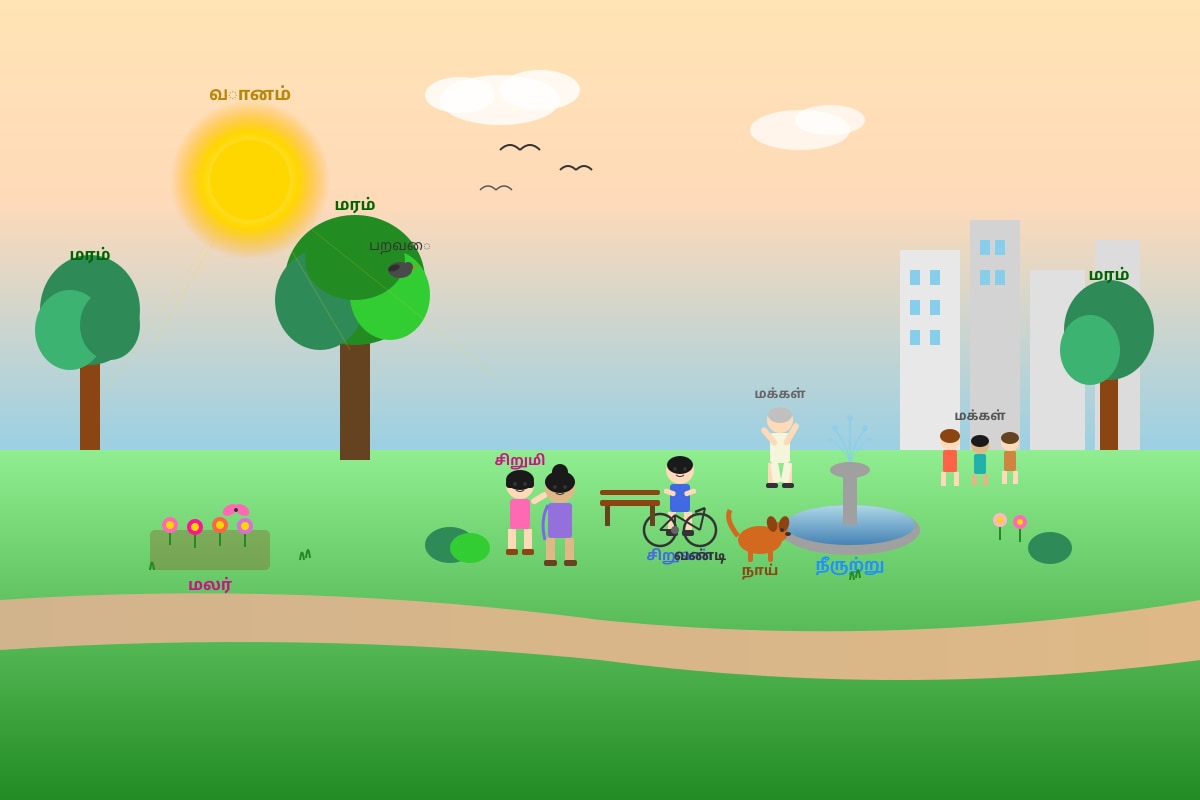
| Q1-passage-image | Yes | Yes — all key nouns labeled in Tamil | Yes, text contains all information |
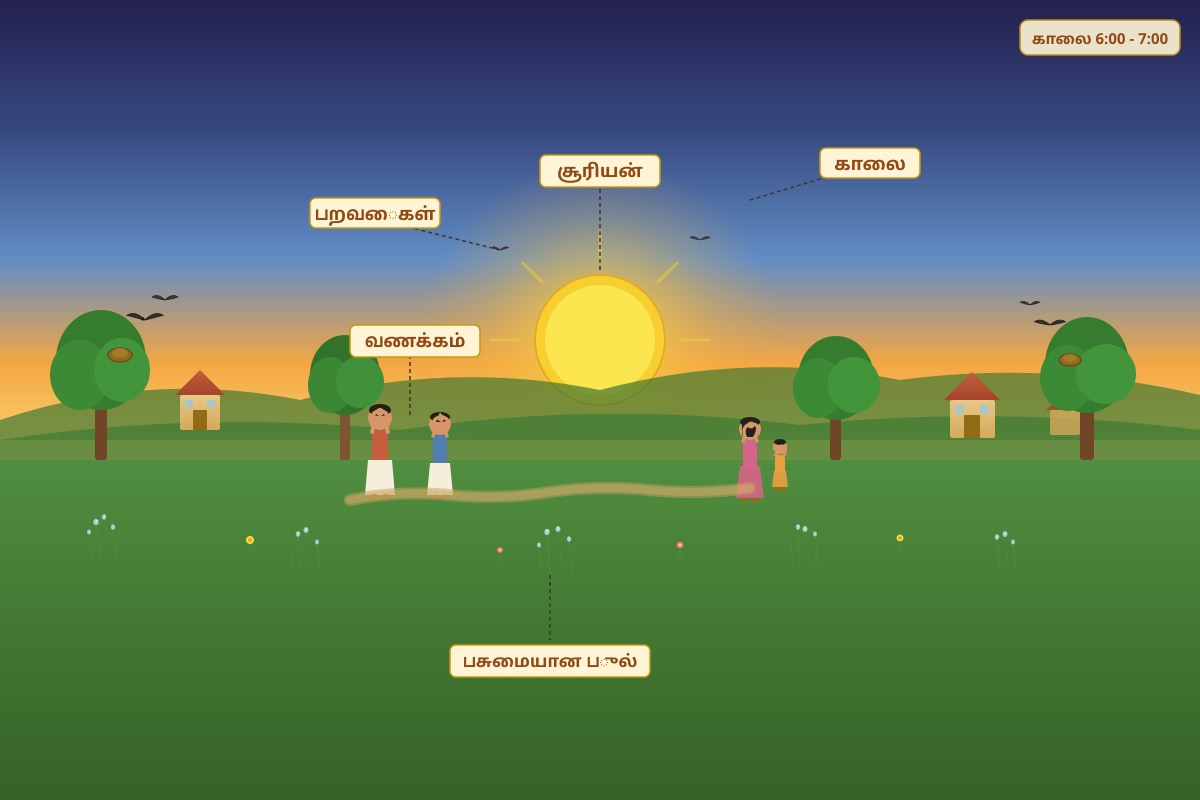
| Q21-poem-image | Yes | Yes — thematic elements match text | Yes, poem is complete in text |
Both images enhance engagement but are not required to answer questions. The text stimuli are fully self-contained.