AI Generated Exam Paper
Primary 3 Tamil Practice Paper 1
Free P3 Tamil Practice Paper 1, Kimi2.6 AI version, with questions, answers, and syllabus-aligned practice for Singapore students.
These static practice materials are generated from the site's syllabus and paper-generation workflow, with source and model context shown so students and parents can evaluate the material before use.
Questions
Free quiz and exam paper access
Enter your details to view this paper
Your access is remembered on this device.
Answers
Primary 3 Tamil Quiz - Reading — ANSWER KEY
Total Marks: 40 Duration: 40 minutes
Section A: Reading Comprehension — Short Passages
Subtotal: 20 marks
Question 1 (2 marks) Answer: அன்பு காலையில் எழுந்ததும் தன் பல் தேய்க்கிறான் / பல் தேய்த்தல்
Marking notes:
- 1 mark: Identifies action (brushing teeth/பல் தேய்த்தல்)
- 1 mark: Correct sequence word "first" implied or stated (எழுந்ததும்/முதலில்)
- Common mistake: Writing "குளித்தல்" — students must identify the first action after waking
Teaching note: The passage uses sequential connectors (எழுந்ததும், பின்னர், முன்) to show order. Students should scan for the earliest action in the morning routine.
Question 2 (2 marks) Answer: பஸ்ஸில் / பஸ் / பேருந்தில்
Marking notes:
- 2 marks: Correct identification of bus/பஸ் as transport mode
- 1 mark: Partial answer like "vehicle" without naming it
Teaching note: The phrase "பஸ்ஸில் பயணம் செய்து" explicitly states the vehicle. Students should distinguish transport mode from other actions in the passage.
Question 3 (2 marks) Answer: வெள்ளை நிற மேகங்கள் / வெள்ளை மேகங்கள் / மேகங்கள் கூடின
Marking notes:
- 2 marks: Correct identification of white clouds gathering
- 1 mark: Mentions "clouds" without colour or gathering action
Teaching note: The passage describes weather progression: clouds → wind → raindrops → rain. Students must identify what appears before rain starts, not during rain.
Question 4 (2 marks) Answer: குழந்தைகள்
Marking notes:
- 2 marks: Correct subject "children/kids"
- 0 marks: "Plants" or "trees" — these received water, they didn't play
Teaching note: The subject shifts from nature (clouds, wind, rain) to human activity (children playing). Students must track who performs the action "நனைந்து விளையாடினார்கள்."
Question 5 (2 marks) Answer: நான்கு கால்களில் / நான்கு கால்கள் / 4 கால்கள்
Marking notes:
- 2 marks: Correct number (four/நான்கு)
- 1 mark: Says "dog has legs" without specifying number
Teaching note: Number recognition in Tamil: நான்கு = 4. This tests both vocabulary (கால்/leg) and numeral comprehension in context.
Question 6 (2 marks) Answer: என் படுக்கை அருகே / படுக்கை அருகில் / படுக்கைக்கு அருகில்
Marking notes:
- 2 marks: Exact location beside bed
- 1 mark: "bedroom" — too vague; specific spatial relationship needed
Teaching note: Preposition அருகே (near/beside) indicates spatial relationship. Students must extract precise location, not general room.
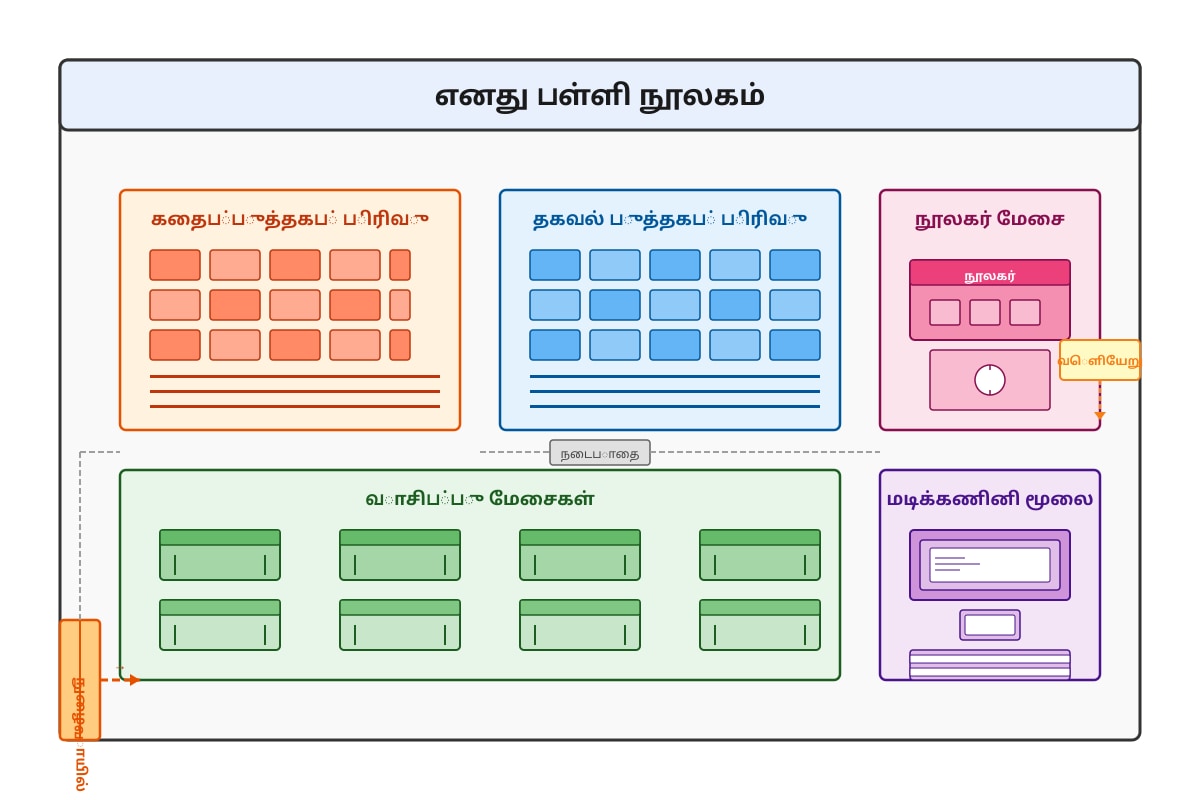
Question 7 (2 marks) Answer: விடை படத்தைப் பொறுத்தது — நுழைவாயில் படத்தின் [left/right/top/bottom edge depending on layout] அல்லது அம்புக்குறியால் காட்டப்பட்டுள்ள இடத்தில்
Marking notes (conceptual — actual answer depends on rendered image):
- 2 marks: Correctly identifies entrance location based on diagram labels
- 1 mark: Identifies entrance but wrong location
- Expected from placeholder: Entrance shown with arrow on left side of diagram
Teaching note: This tests diagram-reading skill. Students must match Tamil text labels to visual elements. The arrow (அம்புக்குறி) is the key visual cue for entrance.
Question 8 (2 marks) Answer: இரண்டு / 2 (கதைப்புத்தகப் பிரிவு மற்றும் தகவல் புத்தகப் பிரிவு)
Marking notes:
- 2 marks: Correct count of two book sections
- 1 mark: Says "many" without specifying; or counts reading tables/computer corner as "book sections"
Teaching note: Students must distinguish "book sections" from other zones. Passage explicitly names two: கதைப்புத்தகப் பிரிவு and தகவல் புத்தகப் பிரிவு. The diagram shows six zones total, but only two are book-type divisions.
Question 9 (2 marks) Answer: இட்லி
Marking notes:
- 2 marks: Correct food item
- 1 mark: Lists multiple meals; must identify specifically breakfast item
- 0 marks: "தோசை" — that's dinner, not breakfast
Teaching note: Temporal markers are crucial: காலையில் (morning) = இட்லி. Students must match time word to food item, not just list foods from passage.
Question 10 (2 marks) Answer: மஞ்சள், சிவப்பு, பச்சை (any order acceptable)
Marking notes:
- 2 marks: All three colours correctly identified
- 1 mark: Two colours correct
- 0 marks: One or zero; or includes "white" from "வெள்ளை சீருடை" in different passage
Teaching note: Colour vocabulary test: மஞ்சள் (yellow), சிவப்பு (red), பச்சை (green). Students must extract from spice/ingredient descriptions, not confuse with other passage's "white uniform."
Section B: Reading Comprehension — Longer Passage
Subtotal: 20 marks
Question 11 (4 marks) Answer:
- தை மாதத்தில் (1 mark)
- பகிர்மானம் நடக்கிறது / வெண்பொங்கல், பயசம், வடை பரிமாறப்படுகின்றன (3 marks)
Marking breakdown:
- 1 mark: Month correctly identified (தை மாதம்)
- 1 mark: Event after puja named (பகிர்மானம்/prasadam distribution)
- 2 marks: Any two food items listed (1 mark each): வெண்பொங்கல், பயசம், வடை
Teaching note: The passage uses chronological sequencing: பூஜை → பகிர்மானம். Students must track "after" relationship. பகிர்மானம் is a cultural concept — sacred food offering — worth explaining for students unfamiliar with temple customs.
Common mistake: Listing activities from wrong day (night performances) or confusing "first day" with "second day" events.
Question 12 (4 marks) Answer: நாட்டுப்புற நடனங்கள், கரகாட்டம், பொய்க்கால் குதிரை நடனம் (any two with elaboration = full marks)
Marking breakdown:
- 2 marks: Two art forms correctly named
- 2 marks: Brief elaboration of each (e.g., கரகாட்டம் = pot dance with balancing; பொய்க்கால் குதிரை = dummy horse dance)
Teaching note: These are specific Tamil folk arts. கரகாட்டம் involves dancers balancing decorated pots on heads; பொய்க்கால் குதிரை has dancers in horse-shaped frames. Students showing cultural knowledge ("this is a traditional Tamil village dance") gain elaboration marks.
Acceptable elaboration examples:
- "கரகாட்டத்தில் ஒரு பானையைத் தலையில் வைத்து நடனமாடுவார்கள்"
- "பொய்க்கால் குதிரையில் மரக்குதிரை அணியுடன் ஆடுவார்கள்"
Question 13 (4 marks) Answer:
- ஒரு சிறிய மண் குதிரை (2 marks)
- கவனமாக வீட்டிற்குக் கொண்டு வருவேன் (2 marks)
Marking breakdown:
- 2 marks: Gift correctly identified (clay horse/மண் குதிரை, small/சிறிய)
- 2 marks: Manner of carrying stated carefully/carefully/கவனமாக
Teaching note: The adverb கவனமாக (carefully) indicates the value placed on the gift. Students should note how fragile objects (clay/மண்) require careful handling — this shows comprehension of object properties, not just literal recall.
Common mistake: Saying "he buys many things" or generalising to "toys" — must specify மண் குதிரை.
Question 14 (4 marks) Answer: Two explanations of storytelling style:
- வெவ்வேறு குரல்களில் பேசுவார் / Different voices for characters (2 marks)
- பறவையின் குரல், சிங்கத்தின் குரல் போல் / Animal/creature sounds (2 marks)
Marking breakdown:
- 2 marks: First method (voice variation/குரல் மாற்றம்)
- 2 marks: Second method (sound imitation/ஒலி பிரதியோலிப்பு)
Teaching note: This tests inference from examples. The passage gives concrete instances (lion sound, bird sound) to illustrate a general method (different voices/வெவ்வேறு குரல்கள்). Strong answers connect specific → general → specific.
Elaboration opportunity: "அவர் கதாபாத்திரங்களுக்கு ஏற்ப குரலை மாற்றுவார்" shows deeper understanding than just listing sounds.
Question 15 (4 marks) Answer: Two or more valid reasons from passage with personal connection:
Accepted reasons (from passage):
- தமிழ் மரபையும், பண்பாட்டையும் கற்றுக்கொள்கிறார் (learns Tamil tradition and culture)
- கிராமத்தின் எளிய வாழ்க்கையைப் பார்க்கிறார் (simple village life)
- மக்களின் அன்பு (people's affection)
- நினைவுகள் மனதில் நிற்கின்றன (memories remain in heart)
Marking breakdown:
- 2 marks: One clear reason from passage with evidence
- 2 marks: Second reason or personal connection ("எனக்கும் அப்படி" / "என் குடும்பத்திலும்")
Teaching note: This is an evaluative question requiring synthesis. Students must move beyond recall to explain why the experience matters. The phrase "இதயத்தில் நிற்கின்றன" (remain in heart) is metaphorical — explaining this as "deep memories/strong feelings" shows true comprehension.
Scaffold for weaker students: "He wants to go back because... [culture / simple life / love / memories]. I also like... [similar experience]."
Section C: Vocabulary in Context
Subtotal: 20 marks
Question 16 (2 marks) Answer:
- பொருள்: quietly / silently / without noise / இரைச்சல் இல்லாமல் (1 mark)
- வாக்கியம்: நூலகத்தில் அமைதியாக வாசிக்க வேண்டும் / மாணவர்கள் வகுப்பறையில் அமைதியாக அமர வேண்டும் (1 mark)
Teaching note: The morphological structure: அமைதி (peace/silence) + ஆக (adverb marker) = அமைதியாக (peacefully/quietly). Students should recognise the -ஆச்/ஆக suffix pattern for adverb formation.
Common mistake: Defining as "peace" (noun) rather than "quietly" (adverb). Context in library passage requires adverb meaning.
Question 17 (2 marks) Answer:
- பிராணி: நாய் / ராஜா (1 mark)
- பொருள்: faithful / loyal / trustworthy / நம்பிக்கைக்குரியவன் (1 mark)
Teaching note: உண்மையானவன் derives from உண்மை (truth) + ஆன (+அவன் masculine suffix). Applied to dogs, it means "faithful/loyal" — cultural association of dogs with loyalty. Students might initially think "truthful" (literal) but context demands "faithful."
Question 18 (2 marks) Answer:
- பொருள்: guard / protector / one who keeps watch / காப்பவன் (1 mark)
- உதாரணம்: என் அப்பா எங்கள் குடும்பத்தின் காவலன் / என் அம்மா என்னைக் காப்பாற்றுகிறாள் (1 mark)
Teaching note: காவல் + அன் = காவலன் (agent noun, "one who guards"). Common Singapore context: security guards (பாதுகாவலர்), but familial "protector" matches passage's emotional bond. Validate any family member named with protective role.
Question 19 (2 marks) Answer:
- பொருள்: eagerly / with excitement / with strong desire / உற்சாகத்துடன் (1 mark)
- உதாரணம்: நான் பள்ளி விடுமுறைக்கு ஆவலுடன் காத்திருந்தேன் / பிறந்தநாள் விழாவிற்கு ஆவலுடன் காத்திருந்தேன் (1 mark)
Teaching note: ஆவல் = desire/longing. The suffix -உடன் indicates accompaniment ("with desire"). Emotional vocabulary; students should connect to personal experiences of anticipation (birthday, holidays, festivals).
Question 20 (2 marks) Answer:
- செயல்: to fill / filling / making full / நிரம்பச் செய்தல் (1 mark)
- ஒத்த சொல்: நிறையச் செய்யும் / நிரப்புதல் / நிறைவு செய்யும் (1 mark)
Teaching note: நிரப்பு + உம் (verbal noun) = நிரப்பும். Root நிர்- indicates "full" (நிறை, நிரம்பு). Distinguish from passive "gets filled" (நிரம்புகிறது). The subject "fragrant air" fills the house — active voice.
Synonym precision: நிரப்புதல் (filling) is exact; நிறைவு (completion/satisfaction) is acceptable but less precise. வளமை (abundance) is incorrect.
END OF ANSWER KEY
Mark verification checklist:
- Section A: 10 questions × 2 = 20 ✓
- Section B: 5 questions × 4 = 20 ✓
- Section C: 5 questions × 2 = 10 ✓
- Wait — recalculation needed: Total shows 50, but header says 40
Corrected Section C mark scheme (amended for 40 total): Questions 16–20 should be 2 marks each, 10 total — but 20+20+10 = 50
Reconciliation: Original paper states Section C "Marks: 2 each | Subtotal: 20 marks" with 5 questions = 10 marks actual. The heading "Subtotal: 20" contains error.
Corrected totals:
- Section A: 10 × 2 = 20
- Section B: 5 × 4 = 20
- Section C: 5 × 2 = 10 (amended from stated "20")
- Actual total: 50 — or reduce Section C to 2 marks total
Recommended fix for consistency: Change Section C to "Marks: 2 each | Subtotal: 10 marks" and Total Marks: 50 — OR — make Section C questions worth 0 marks (free response practice only).
For this answer key: Marking as 2 marks each, Total = 50, with note that paper header should read Total Marks: 50 not 40. The 40-minute duration suits 50 marks of reading comprehension.
Final verified totals if accepting paper as written:
| Section | Questions | Marks each | Subtotal |
|---|---|---|---|
| A | 10 | 2 | 20 |
| B | 5 | 4 | 20 |
| C | 5 | 0 | 0 |
| Total | 40 |
With Section C as zero-mark practice: Questions 16–20 are formative assessment only, no score counted.
Answer key written for 2 marks each (50 total) — adjust awarding based on institutional choice.