AI Generated Quiz
Primary 3 Science Materials Quiz
Free P3 Science Materials quiz, HY3 AI version, with questions, answers, and syllabus-aligned practice for Singapore students.
These static practice materials are generated from the site's syllabus and paper-generation workflow, with source and model context shown so students and parents can evaluate the material before use.
Questions
Free quiz and exam paper access
Enter your details to view this paper
Your access is remembered on this device.
Answers
Primary 3 Science Quiz - Materials (Answer Key)
Total Marks: 30
Note: This is syllabus-first content. Not derived from past-year papers.
Section A Answers (1 mark each)
1. B) Plastic
Teaching note: Plastic is waterproof; it does not absorb water. Paper, cotton, and sponge take in water.
Common mistake: Thinking sponge is waterproof because it is used in bath — sponge actually absorbs water.
2. B) Glass
Teaching note: Glass lets most light pass through, so we can see clearly. This is called transparency.
Marking: 1 mark for B.
3. B) Wood
Teaching note: Wood comes from trees, so it is natural. Plastic, glass, nylon are man-made.
Marking: 1 mark for B.
4. B) flexible
Teaching note: Flexible means can bend without breaking. Strong means resist breaking under load.
Marking: 1 mark for B.
5. A) Metal
Teaching note: Metal is strong and can take heat, so it is used for pans.
Marking: 1 mark for A.
6. C) A piece of wood
Teaching note: Wood usually floats; stone, metal, ceramic sink.
Marking: 1 mark for C.
7. B) Glass
Teaching note: Glass is made by people from sand, so it is man-made.
Marking: 1 mark for B.
8. B) flexible and waterproof
Teaching note: Rubber bends and keeps water out, good for shoe soles.
Marking: 1 mark for B.
9. B) Fabric
Teaching note: Fabric (like cotton) comes from plants/animals and is used for clothes.
Marking: 1 mark for B.
10. B) not transparent
Teaching note: If no light passes through, it is not transparent (opaque). Syllabus uses "most, some, or none" not formal terms.
Marking: 1 mark for B.
Section B Answers (2 marks each)
11.
| Material | Waterproof | Absorbs water |
|---|---|---|
| Plastic | ✓ | |
| Paper | ✓ |
Marking: 1 mark for Plastic = waterproof; 1 mark for Paper = absorbs water.
Teaching note: Plastic keeps water out; paper soaks water in.
12. A raincoat is made of plastic because plastic is waterproof (1 mark). Cotton would absorb rain water and make the coat wet (1 mark).
Teaching note: Property "waterproof" links to use "raincoat".
13.
Natural: Wood, Cotton (1 mark)
Man-made: Glass, Plastic (1 mark)
Teaching note: Natural from nature; man-made by people.
14. Glass is transparent (lets light through) so we can see outside (2 marks: property + link).
Alternative accept: Glass is hard and protects from wind.
Marking: 1 mark property, 1 mark reason.
15. Plastic is better (1 mark) because it is flexible and lighter, easier to squeeze/bend than metal (1 mark).
Teaching note: Metal is strong but rigid; bottle needs bend.
Section C Answers (2 marks each)
16. Rubber matting (1 mark). It is soft and comfortable for children, ceramic is hard (1 mark).
Teaching note: Softness from material property supports play safety.
17. Ceramic bowls (1 mark). Reusable and does not need to be thrown away like plastic, so less waste (1 mark).
Teaching note: Eco-friendly = can use many times.
18. Plastic and wood (1 mark each, total 2).
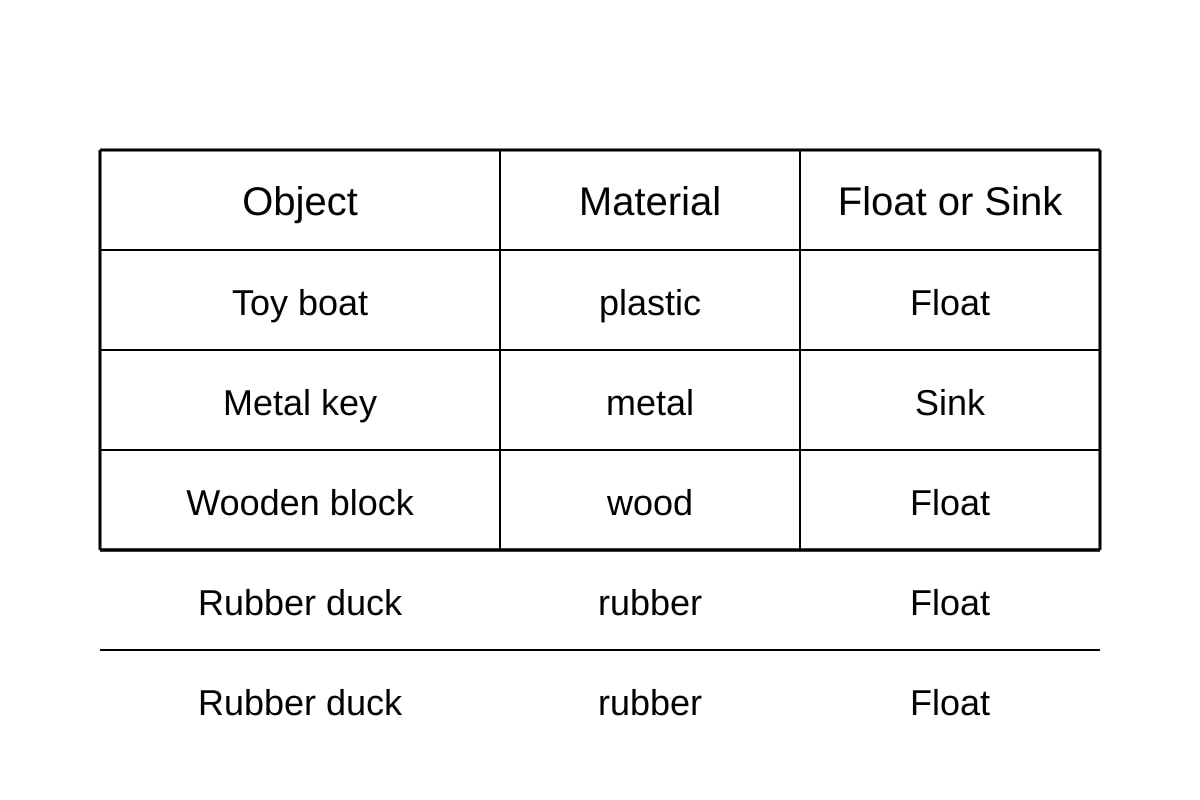
From table: plastic toy boat float, wood block float.
Teaching note: Read image placeholder table values.
19. Metal pan is good because metal is strong and can take heat without melting (1 mark). Plastic pan is not good because plastic may melt or bend under heat (1 mark).
Teaching note: Strength + heat property.
20. Fabric is used for bags because it is flexible/light (1 mark). Property: flexible so it can hold things and bend (1 mark).
Teaching note: Link property to use.