AI Generated Quiz
Primary 3 Science Life Cycles Quiz
Free P3 Science Life Cycles quiz, HY3 AI version, with questions, answers, and syllabus-aligned practice for Singapore students.
These static practice materials are generated from the site's syllabus and paper-generation workflow, with source and model context shown so students and parents can evaluate the material before use.
Questions
Free quiz and exam paper access
Enter your details to view this paper
Your access is remembered on this device.
Answers
Primary 3 Science Quiz - Life Cycles (Answer Key)
Total Marks: 30
Topic: Life Cycles (syllabus-first, LLM-inferred; not past-year derived)
1. B (1 mark)
Answer: Seed → Young plant → Adult plant.
Teaching note: Flowering plants start as seeds. The seed sprouts (germination) into a young plant, which grows into an adult plant that can make new seeds. Choice B is the only one in correct order.
2. A (1 mark)
Answer: egg.
Teaching note: Butterflies begin life inside an egg laid by an adult butterfly. The egg hatches into a caterpillar (larva).
3. C (1 mark)
Answer: Butterfly.
Teaching note: Metamorphosis means a big change in body form. Butterflies go egg → caterpillar → pupa → adult (complete metamorphosis). Chicken and dog grow gradually; grasshopper has incomplete metamorphosis.
4. A (1 mark)
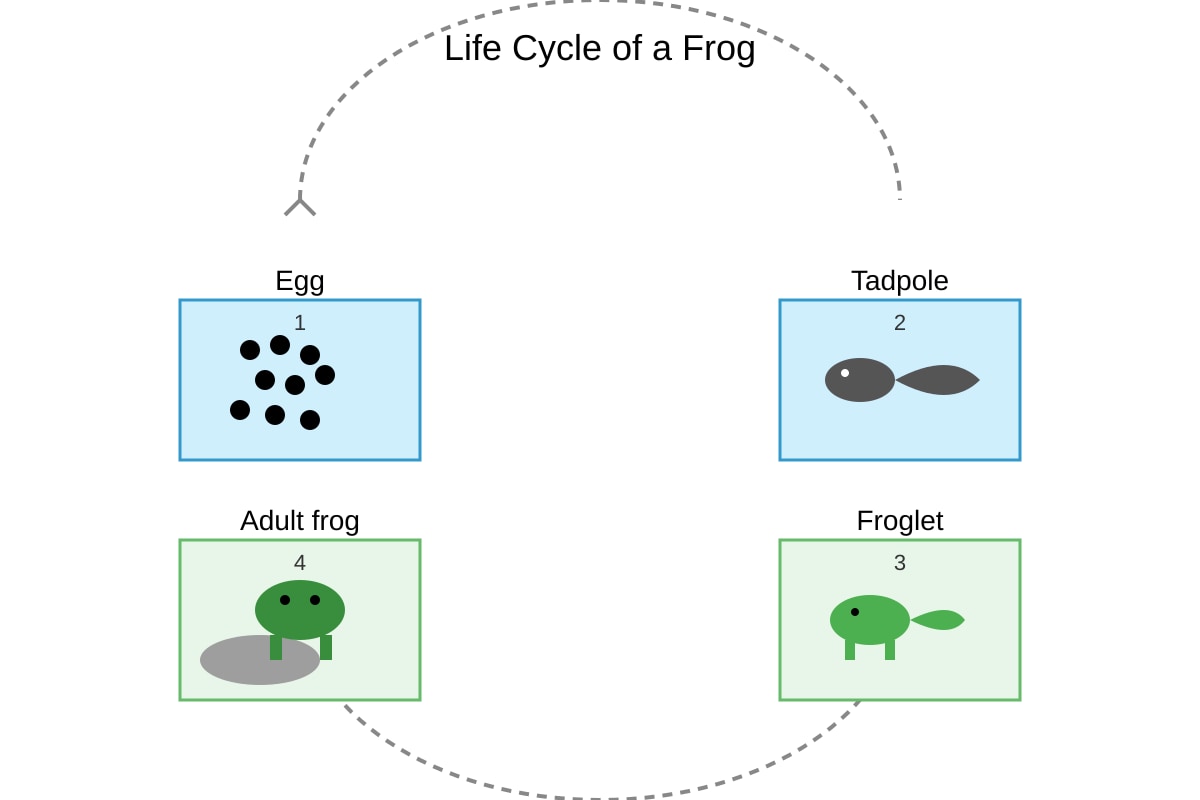
Answer: Egg → Tadpole → Froglet → Adult frog.
Teaching note: Frogs lay eggs in water. They hatch into tadpoles, then become froglets (with legs and small tail), then adult frogs.
5. B (1 mark)
Answer: incomplete metamorphosis.
Teaching note: Cockroach young (nymphs) look like small adults without wings. This is incomplete metamorphosis (egg → nymph → adult).
6. C (1 mark)
Answer: Grasshopper.
Teaching note: Grasshopper has incomplete metamorphosis (egg → nymph → adult) and no larval stage. Mosquito, beetle, butterfly have larva stage.
7. B (1 mark)
Answer: germination.
Teaching note: Germination is when a seed starts to grow into a young plant. It needs water, air, and warmth.
8. C (1 mark)
Answer: Pupa.
Teaching note: Inside the pupa (chrysalis), the caterpillar changes into an adult butterfly.
9. B (1 mark)
Answer: lay eggs and hatch into young.
Teaching note: Birds like hens lay eggs. The eggs hatch into chicks. This is part of their life cycle.
10. B (1 mark)
Answer: Life cycles show the stages of growth and development.
Teaching note: All living things have life cycles. Not all animals look like parents at birth (e.g., butterflies). Plants also have life cycles.
11. (3 marks: 1 per stage)
Answer: Seed → Young plant → Adult plant.
Teaching note: These are the three main stages for flowering plants per P3 syllabus.
12. (2 marks: 1 per blank)
Answer: Egg → Larva (wriggler) → Pupa → Adult mosquito.
Teaching note: Mosquito has complete metamorphosis. After egg comes larva (lives in water), then pupa, then flying adult.
13. (2 marks: 2 stages named correctly = 2; third is bonus clarity)
Answer: Egg, Nymph (young grasshopper), Adult grasshopper.
Teaching note: Grasshopper has 3 stages (incomplete metamorphosis). All three required for full credit; if only 2 given, 1 mark.
14. (2 marks)
Answer: Because it has four very different stages — egg, caterpillar, pupa, adult — and the body changes completely.
Marking: 1 mark for "four stages", 1 mark for "big change / not like parent".
Teaching note: Complete metamorphosis = egg, larva, pupa, adult. The young looks nothing like the adult.
15. (1 mark)
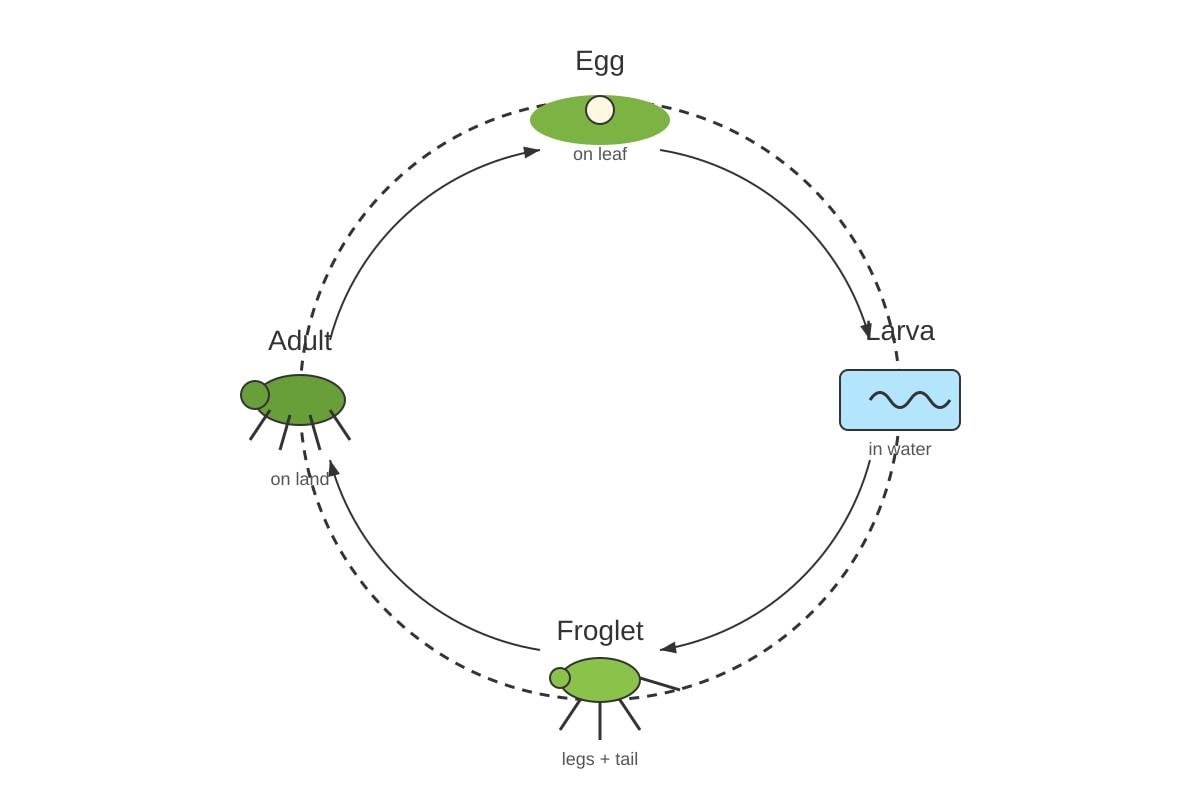
Answer: Frog.
Teaching note: Diagram shows egg on leaf, larva in water, froglet with legs+tail, adult on land = frog cycle. Image must show circular link and labels.
16. (2 marks)
Answer: Chicken hatches from egg as a chick that looks like a small adult bird; butterfly hatches as caterpillar then changes completely in pupa.
Marking: 1 mark each correct contrast.
Teaching note: Chicken = direct development; butterfly = complete metamorphosis.
17. (a) (2 marks: 0.5 each stage)
Answer: Egg → Larva → Pupa → Adult beetle.
(b) (1 mark)
Answer: Stage 2 (Larva).
Teaching note: Beetles have complete metamorphosis like butterflies.
18. (a) (1 mark)
Answer: Young plant.
(b) (2 marks: 1 each)
Answer: Water and air (or sunlight/warmth).
Teaching note: Seeds need water, air, and suitable warmth to germinate.
19. (a) (1 mark)
Answer: Tadpole.
(b) (2 marks)
Answer: It grows legs, loses its tail, and learns to live on land.
Marking: 1 mark for legs/loses tail, 1 mark for land living.
Teaching note: From tadpole (water, tail) to adult (legs, land).
20. (3 marks)
Answer: Cockroach has incomplete metamorphosis (egg → nymph → adult, young looks like adult). Butterfly has complete metamorphosis (egg → caterpillar → pupa → adult, young looks different).
Marking: 1 mark cockroach type, 1 mark butterfly type, 1 mark correct use of "metamorphosis" and contrast.
Teaching note: Metamorphosis = change in form. The two animals show different kinds.