From Real Exams Quiz
Primary 3 Science Systems Quiz
Free P3 Science Systems quiz, Exam version, with questions, answers, and syllabus-aligned practice for Singapore students.
These static practice materials are generated from the site's syllabus and paper-generation workflow, with source and model context shown so students and parents can evaluate the material before use.
Questions
Free quiz and exam paper access
Enter your details to view this paper
Your access is remembered on this device.
Answers
Primary 3 Science Quiz - Systems (Answer Key)
Total Marks: 30
Section A: Multiple-Choice Questions (10 × 1 mark = 10 marks)
1. (c) A bicycle
- Marks: 1
- Explanation: A system is a group of parts that work together to perform a function. A bicycle has parts like wheels, pedals, and a chain that work together to move. A single brick, a pile of sand, or a glass of water are not systems because they do not have parts working together for a function.
2. (b) Oesophagus
- Marks: 1
- Explanation: The oesophagus is a long, muscular tube that connects the mouth to the stomach. It uses muscle contractions to push food down to the stomach. The large and small intestines are further down the digestive tract, and the liver produces bile but is not a tube.
3. (d) Petals
- Marks: 1
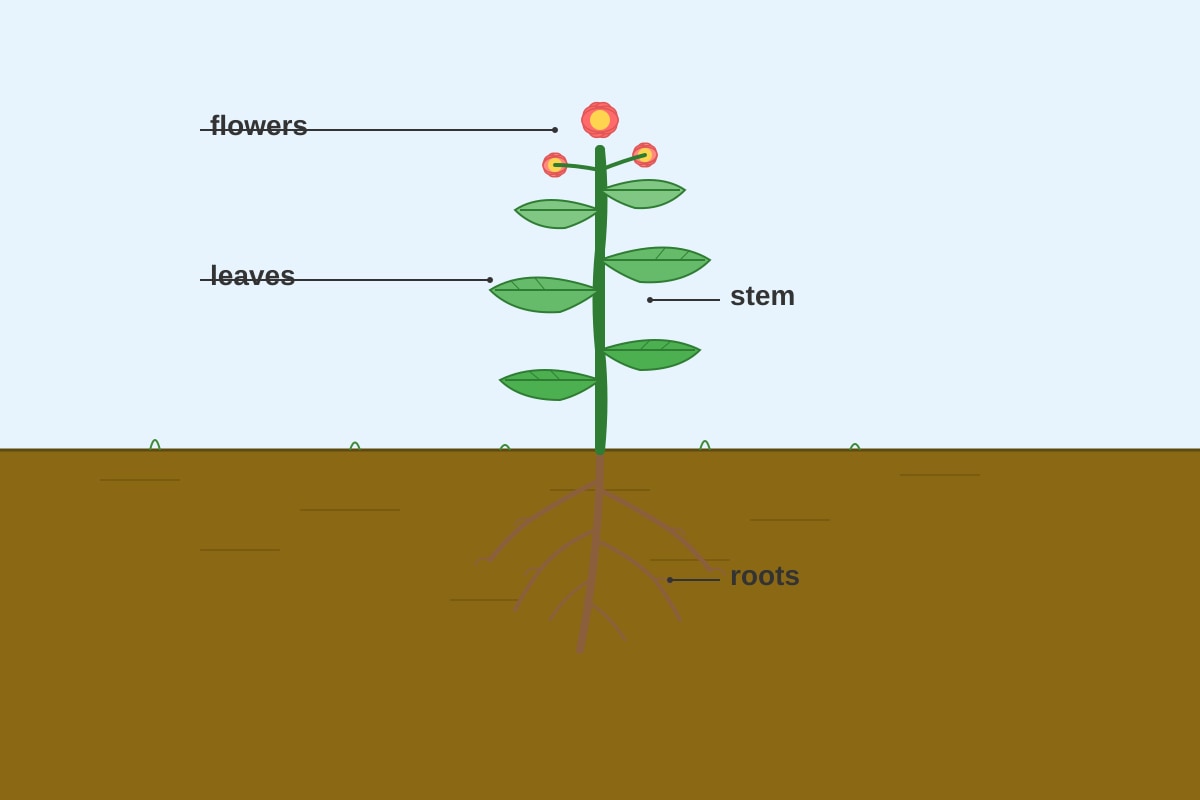
- Explanation: The plant transport system consists of the roots (absorb water), stem (transports water and food), and leaves (use water for photosynthesis). Petals are part of the flower and are involved in reproduction, not transport.
4. (c) Circulatory system
- Marks: 1
- Explanation: The circulatory system is responsible for transporting blood, oxygen, and nutrients around the body. It consists of the heart (pump), blood (transport medium), and blood vessels (tubes). The digestive system breaks down food, the respiratory system handles breathing, and the skeletal system provides support.
5. (b) respond to light
- Marks: 1
- Explanation: Plants can respond to stimuli in their environment. Bending towards light is a response called phototropism. This helps the plant get more light for photosynthesis. It is not reproduction, making food, or growing roots.
6. (b) To absorb water and minerals from the soil
- Marks: 1
- Explanation: The roots are the part of the plant that grow underground. Their main functions are to anchor the plant in the soil and to absorb water and dissolved minerals. Leaves make food, the stem supports the plant, and the stem also transports food.
7. (a) The bulb will light up.
- Marks: 1
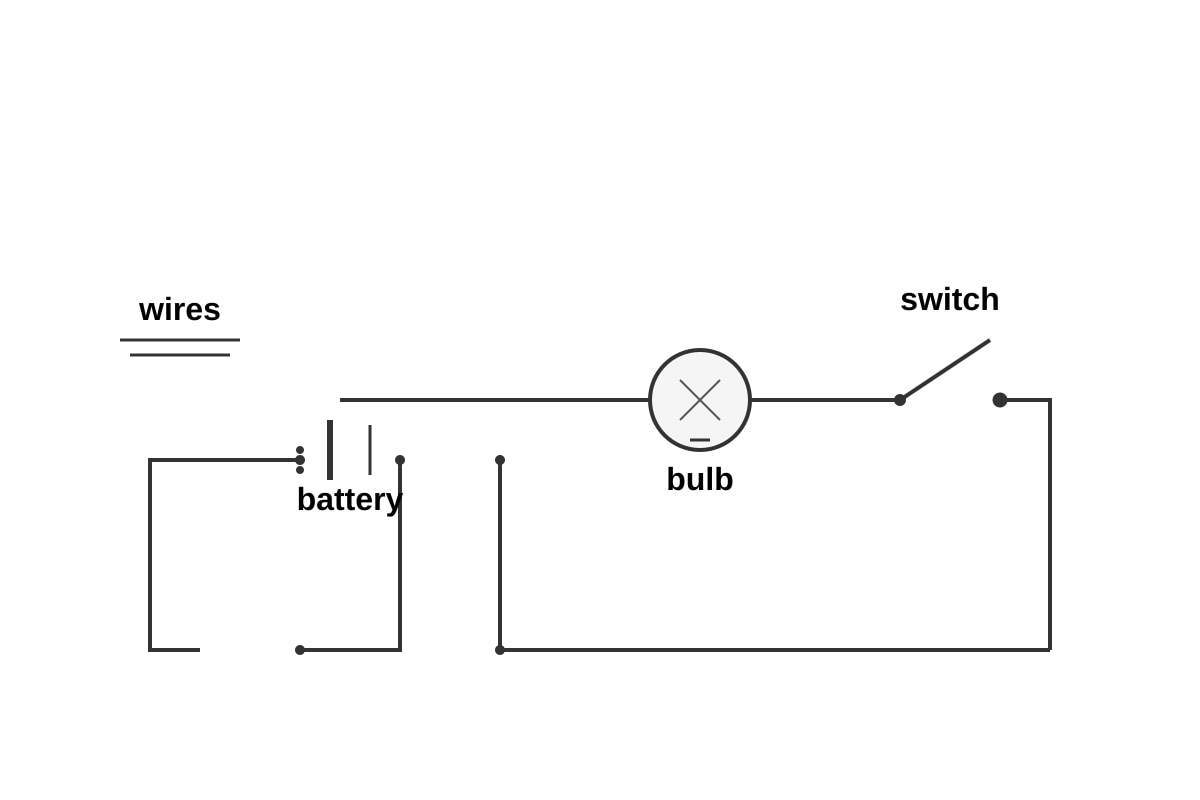
- Explanation: A closed switch completes the circuit, allowing electricity to flow from the battery, through the wires, and to the bulb. This causes the bulb to light up. An open switch breaks the circuit, stopping the flow of electricity.
8. (b) Gills
- Marks: 1
- Explanation: Gills are the respiratory organs of fish. They are located on the sides of the head and are made of thin filaments that absorb oxygen from water as water flows over them. Lungs are for breathing air, not water.
9. (a) It is the control set-up.
- Marks: 1
- Explanation: In a fair experiment, a control set-up is used for comparison. The plant in the sunny spot is the control because it is the normal condition. The plant in the dark cupboard is the experimental set-up, where the variable (sunlight) is changed. The purpose of the control is to see what happens when sunlight is present.
10. (c) The bones and muscles work together to help us run.
- Marks: 1
- Explanation: The skeletal system (bones) and muscular system (muscles) work together as a system for support and movement. Bones provide a rigid framework, and muscles pull on bones to create movement. The other options describe other systems (circulatory, digestive, respiratory).
Section B: Fill in the Blanks (5 × 2 marks = 10 marks)
11. blood vessels
- Marks: 2 (1 for spelling, 1 for correct term)
- Explanation: The circulatory system has three main parts: the heart (pump), blood (transport fluid), and blood vessels (tubes like arteries and veins that carry blood).
12. stem
- Marks: 2 (1 for spelling, 1 for correct term)
- Explanation: The stem is the part of the plant that acts like a highway. It contains tubes (xylem and phloem) that transport water and minerals from the roots to the leaves and other parts of the plant.
13. respiratory
- Marks: 2 (1 for spelling, 1 for correct term)
- Explanation: The respiratory system is responsible for gas exchange. It takes in oxygen from the air and removes carbon dioxide from the body. In humans, this system includes the nose, trachea, and lungs.
14. transport / movement
- Marks: 2 (accept either "transport" or "movement")
- Explanation: A car has a system of parts that work together to move. The engine provides power, the wheels provide traction, and the steering wheel controls direction. This is a movement or transport system.
15. system
- Marks: 2 (1 for spelling, 1 for correct term)
- Explanation: A system is defined as a group of parts or organs that work together to perform a specific function. For example, the digestive system is a group of organs (mouth, stomach, intestines) that work together to digest food.
Section C: Short Answer Questions (5 × 2 marks = 10 marks)
16. (a) Roots (b) Stem
- Marks: 1 mark for each correct part (2 marks total)
- Explanation: The plant transport system includes the roots (absorb water and minerals) and the stem (transports water and food). Leaves are also part of the transport system as they use water for photosynthesis, but roots and stem are the most direct parts. Accept "leaves" as an alternative answer.
- Common mistake: Students may write "flowers" or "petals" which are not part of the transport system.
17. The human digestive system is considered a system because it is made up of different organs (like the mouth, stomach, and intestines) that work together to break down food so the body can use it.
- Marks: 2 marks
- 1 mark for mentioning multiple parts/organs
- 1 mark for explaining that they work together for a common function (digesting food)
- Explanation: A system must have parts that work together. The digestive system has many organs that each have a specific job, but they all work together to achieve the overall function of digestion.
18. (a) Evaporation (b) The water cycle / The water vapour part of the water cycle
- Marks: 2 marks
- 1 mark for (a) evaporation
- 1 mark for (b) water cycle
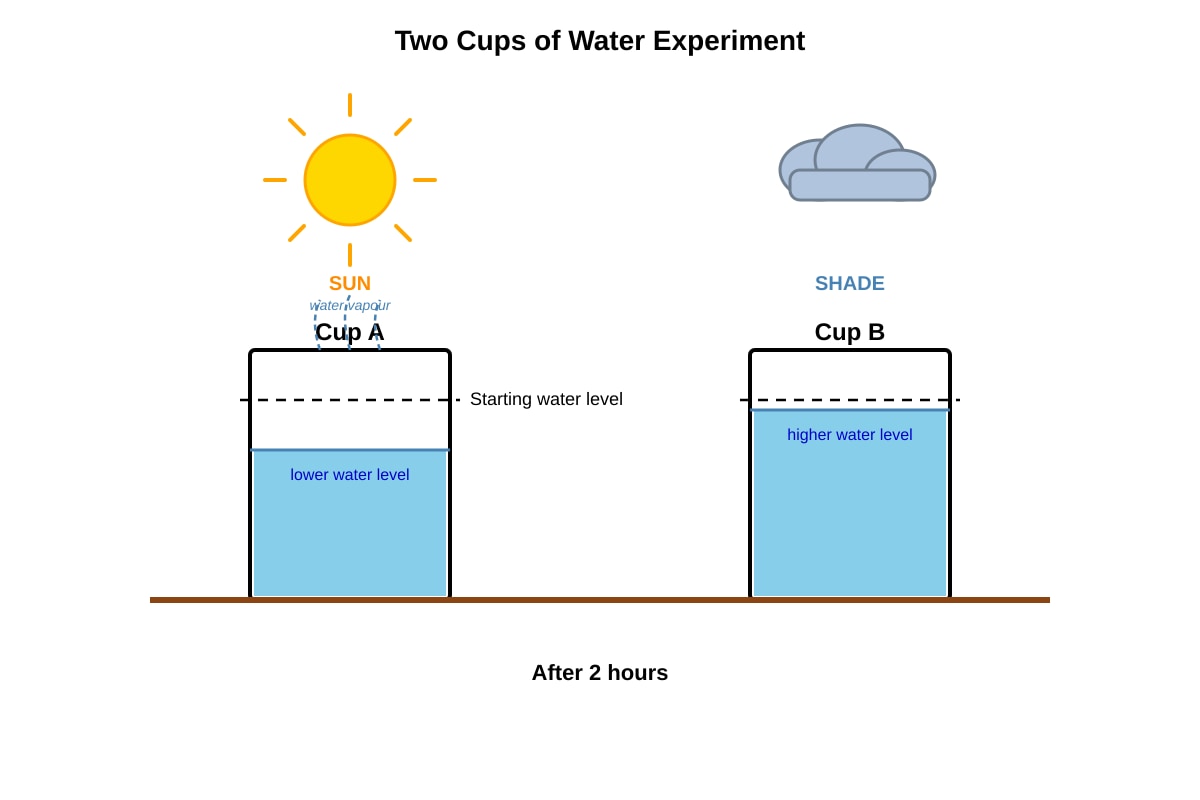
- Explanation: Evaporation is the process where liquid water turns into water vapour (gas) and rises into the air. Heat from the sun causes water to evaporate faster. This is a key part of the water cycle, where water moves from the Earth's surface to the atmosphere.
- Common mistake: Students may say "boiling" instead of "evaporation". Boiling requires a high temperature, while evaporation happens at any temperature.
19. (a) Pedals (b) Chain
- Marks: 1 mark for each correct part (2 marks total)
- Explanation: A bicycle is a system because its parts work together. The pedals are pushed by the rider's feet, which turns the chain. The chain then turns the wheels, making the bicycle move. Other acceptable answers include: wheels, handlebars, brakes, gears.
- Common mistake: Students may list parts that do not directly work together for movement, like "seat" or "bell".
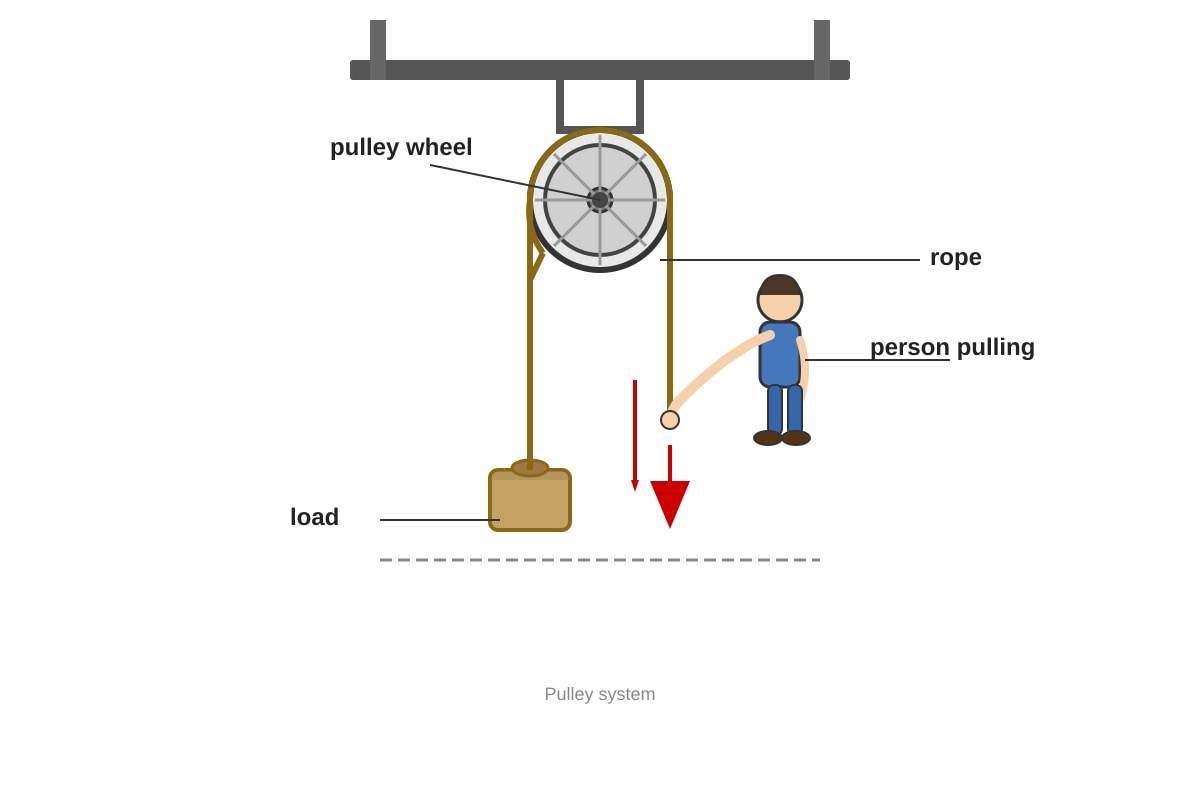
20. The pulley system helps the person lift the heavy load by changing the direction of the force. Instead of lifting the load upwards directly, the person can pull the rope downwards. The pulley wheel allows the rope to move smoothly, making it easier to lift the load.
- Marks: 2 marks
- 1 mark for mentioning changing the direction of force
- 1 mark for explaining how it makes lifting easier
- Explanation: A pulley is a simple machine that makes work easier. It uses a wheel and a rope. When you pull down on one end of the rope, the load on the other end goes up. This is helpful because it is often easier to pull down using your body weight than to lift up.
- Common mistake: Students may say the pulley "makes the load lighter" which is not entirely accurate. It changes the direction of force and can also provide a mechanical advantage if multiple pulleys are used.