From Real Exams Quiz
Primary 3 Science Systems Quiz
Free P3 Science Systems quiz, Exam version, with questions, answers, and syllabus-aligned practice for Singapore students.
These static practice materials are generated from the site's syllabus and paper-generation workflow, with source and model context shown so students and parents can evaluate the material before use.
Questions
Free quiz and exam paper access
Enter your details to view this paper
Your access is remembered on this device.
Answers
Primary 3 Science Quiz - Systems: Answer Key
Total Marks: 30
Section A: Multiple-Choice Questions (10 marks)
Q1. B) The potted plant [1 mark]
- Teaching Note: Living things share common characteristics: they need water, food, and air to survive; they grow; they respond to changes; and they reproduce. A potted plant is a living thing because it grows, needs water and air, and can reproduce. A toy car, a glass of water, and a table are non-living things because they do not have these characteristics.
- Common Mistake: Choosing the toy car because it "moves" when pushed. Movement alone does not mean something is living; living things can move by themselves.
Q2. C) A sunflower turning to face the sun [1 mark]
- Teaching Note: Responding to changes in the surroundings is a characteristic of living things. The sunflower turning to face the sun is a response to the change in light direction. Growing taller (A) is growth, giving birth (B) is reproduction, and needing oxygen (D) is a need for survival, not a response to a change.
- Common Mistake: Confusing growth with responding to changes. Growth is a gradual increase in size, while responding is a reaction to a stimulus.
Q3. B) It is strong. [1 mark]
- Teaching Note: Strength is the ability to withstand loads without breaking. A metal spoon is strong, so it can withstand the heat and the stirring action without breaking or bending easily. Flexibility (A) means it can bend without breaking, which is not the main reason for using metal for cooking. Transparency (C) means light can pass through, and waterproof (D) means it does not absorb water; neither is relevant to cooking.
- Common Mistake: Choosing "waterproof" because the spoon is washed in water. The question specifically asks about withstanding high heat, which relates to strength.
Q4. B) North-South [1 mark]
- Teaching Note: A freely suspended bar magnet will always come to rest pointing in the North-South direction. This is because the Earth itself acts like a giant magnet, and the North pole of the magnet is attracted to the Earth's geographic South pole (which is near the geographic North). This property is used in compasses.
- Common Mistake: Thinking the magnet points East-West or in any random direction. The Earth's magnetic field forces it to align North-South.
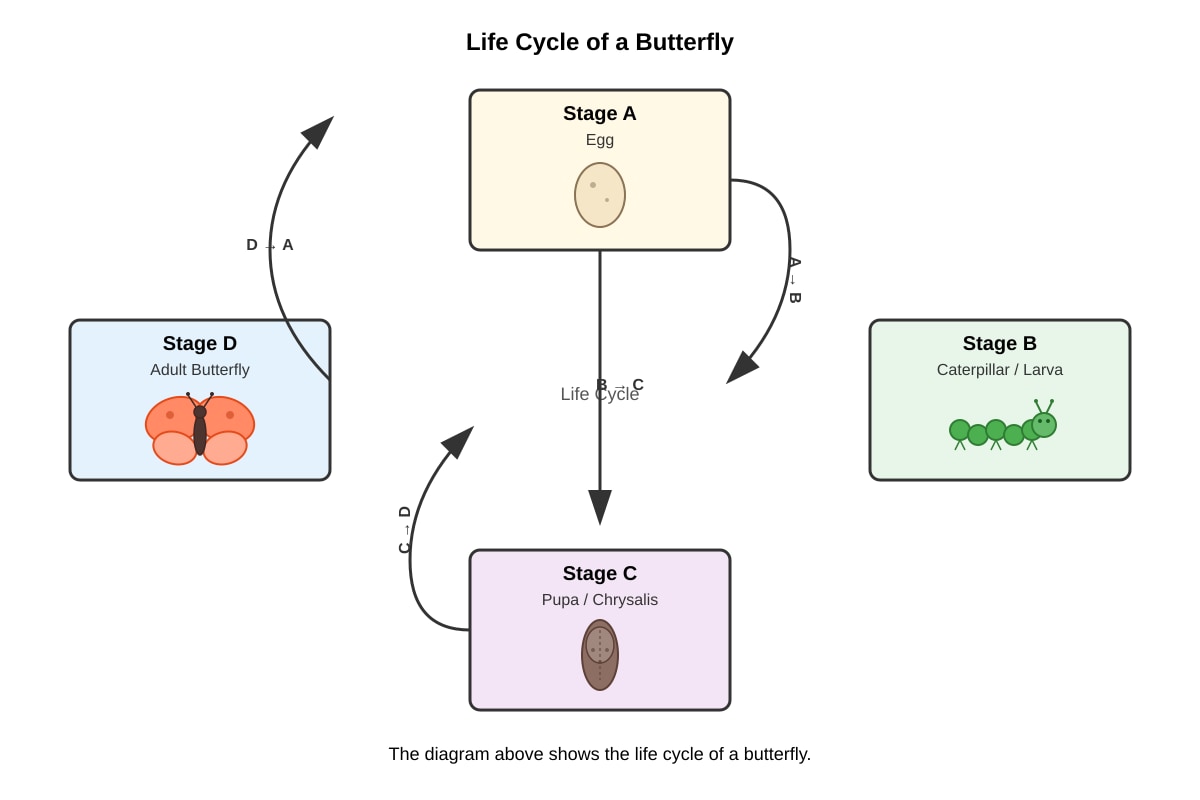
Q5. A) Stage B [1 mark]
- Teaching Note: The life cycle of a butterfly has four stages: egg → caterpillar (larva) → pupa (chrysalis) → adult butterfly. The egg hatches into a caterpillar, which is Stage B in the diagram.
- Common Mistake: Choosing Stage D (adult butterfly) because it is the most familiar stage. The question asks what comes immediately after the egg hatches.
Section B: Short-Answer Questions (12 marks)
Q6. [2 marks]
(a) Wooden chair [1 mark]
- Teaching Note: Wood is a natural material because it comes from trees. Natural materials come from plants, animals, or the ground.
(b) Plastic bottle (or Glass window) [1 mark]
- Teaching Note: Plastic is a man-made material because it is made by humans from chemicals (usually petroleum). Glass is also man-made, as it is made by melting sand. A cotton t-shirt is made from a natural material (cotton from a plant).
- Marking Note: Accept either "Plastic bottle" or "Glass window" for (b). Both are man-made.
Q7. [2 marks]
(a) Material Y [1 mark]
- Teaching Note: An umbrella needs to keep the person dry, so it must not absorb water. Material Y does not absorb water, making it suitable.
(b) Material Y is waterproof / does not absorb water, so it will keep the person dry. [1 mark]
- Teaching Note: The key property for an umbrella is being waterproof. Material Y has this property, while Material X absorbs water and would not be suitable.
- Marking Note: Award the mark for any answer that states Material Y does not absorb water/is waterproof and links it to keeping dry.
Q8. [2 marks]
(a) Q [1 mark]
- Teaching Note: Fish are covered in scales and breathe using gills. Animal Q has both of these characteristics.
(b) It has scales and breathes with gills. [1 mark]
- Teaching Note: These are the defining characteristics of a fish. Birds (P) have feathers and breathe with lungs. Mammals (R) have fur and breathe with lungs.
- Marking Note: Award the mark for mentioning either "scales" or "gills" as the reason, or both.
Q9. [2 marks]
(a) A and C [1 mark]
- Teaching Note: Magnets attract magnetic materials, such as iron and steel. Since both A and C are attracted to the magnet, they could be made of iron (or steel).
(b) B [1 mark]
- Teaching Note: Wood is a non-magnetic material. Magnets do not attract non-magnetic materials, so object B, which is not attracted, could be made of wood.
- Common Mistake: Thinking only one object can be magnetic. Both A and C are attracted, so both could be iron.
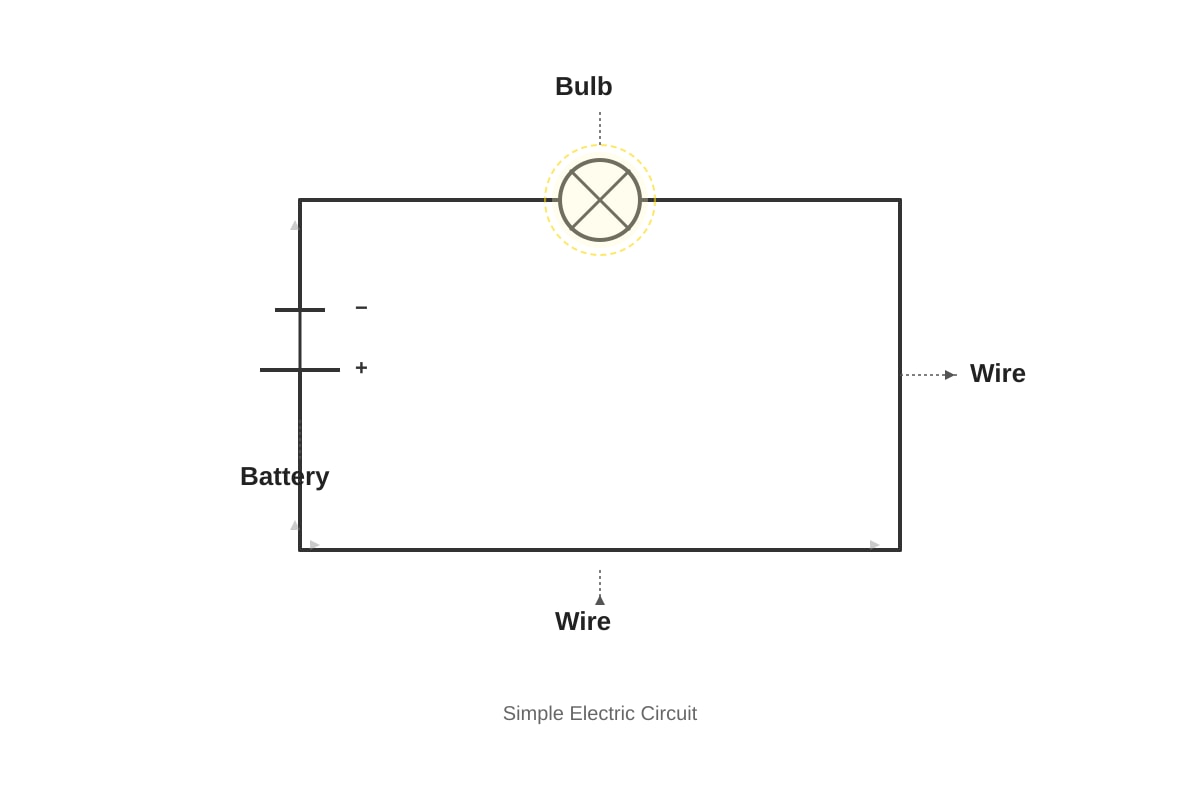
Q10. Battery [1 mark]
- Teaching Note: The battery is the source of electrical energy in a circuit. It pushes the electric current around the circuit to light the bulb. The wires provide a path for the current, and the bulb converts the electrical energy into light and heat.
Q11. [2 marks]
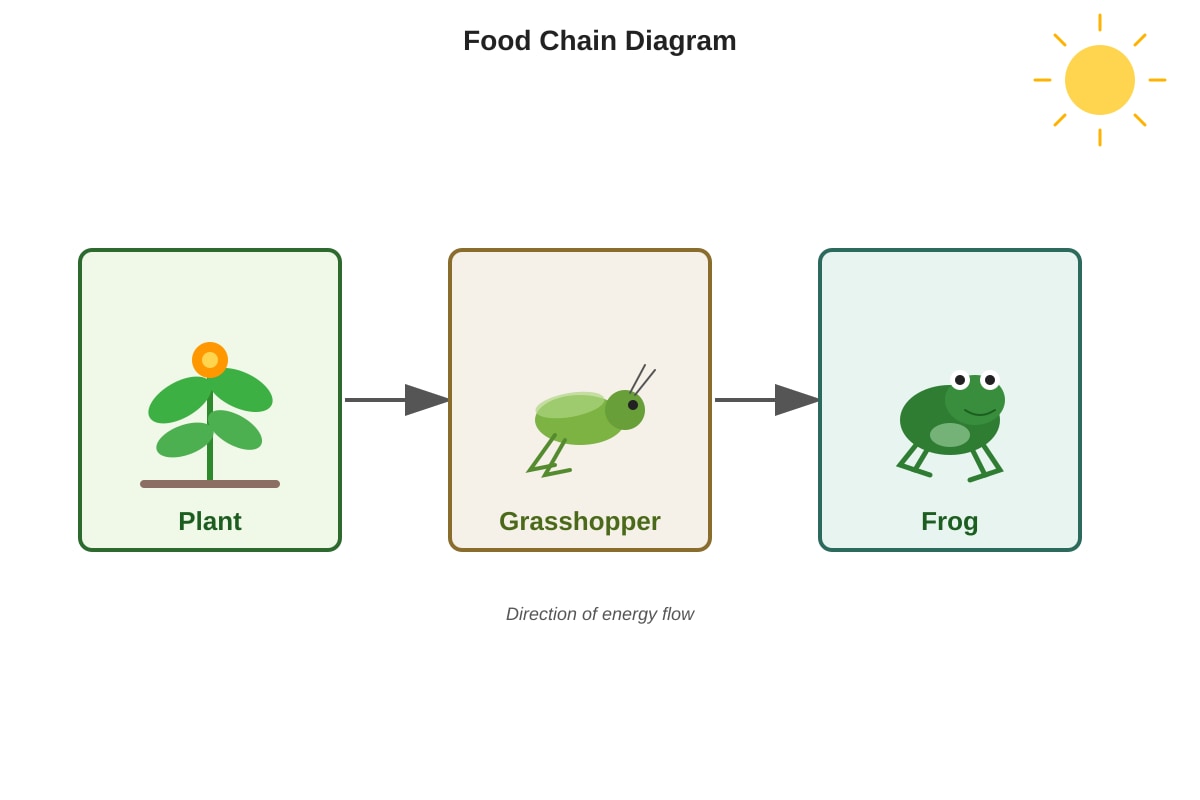
(a) The arrow shows the direction of energy flow / what is eaten by what. [1 mark]
- Teaching Note: In a food chain, the arrow points from the organism that is eaten to the organism that eats it. It represents the transfer of energy from one organism to the next.
(b) The grasshopper [1 mark]
- Teaching Note: The frog eats the grasshopper. The grasshopper is the prey, and the frog is the predator. The arrow points from the grasshopper to the frog, showing the frog eats the grasshopper.
Section C: Open-Ended Questions (8 marks)
Q12. [2 marks]
(a) They will repel / push away from each other. [1 mark]
- Teaching Note: Like poles of a magnet repel each other. North and North are like poles.
(b) Like poles of magnets repel each other. [1 mark]
- Teaching Note: This is a fundamental rule of magnetism. The force of repulsion pushes the two North poles apart.
- Common Mistake: Saying they will attract. Remember: unlike poles attract, like poles repel.
Q13. [2 marks]
(a) The wooden block [1 mark]
- Teaching Note: An object floats if it is less dense than the liquid it is placed in. Since the wooden block floats, it is less dense than water.
(b) The metal key is denser than water / the metal key is heavier for its size than the wooden block. [1 mark]
- Teaching Note: The metal key sinks because it is denser than water. Density is how much mass is packed into a given volume. The metal key has more mass in the same amount of space compared to water.
- Marking Note: Accept any answer that states the metal key is denser than water or is heavier for its size.
Q14. [2 marks]
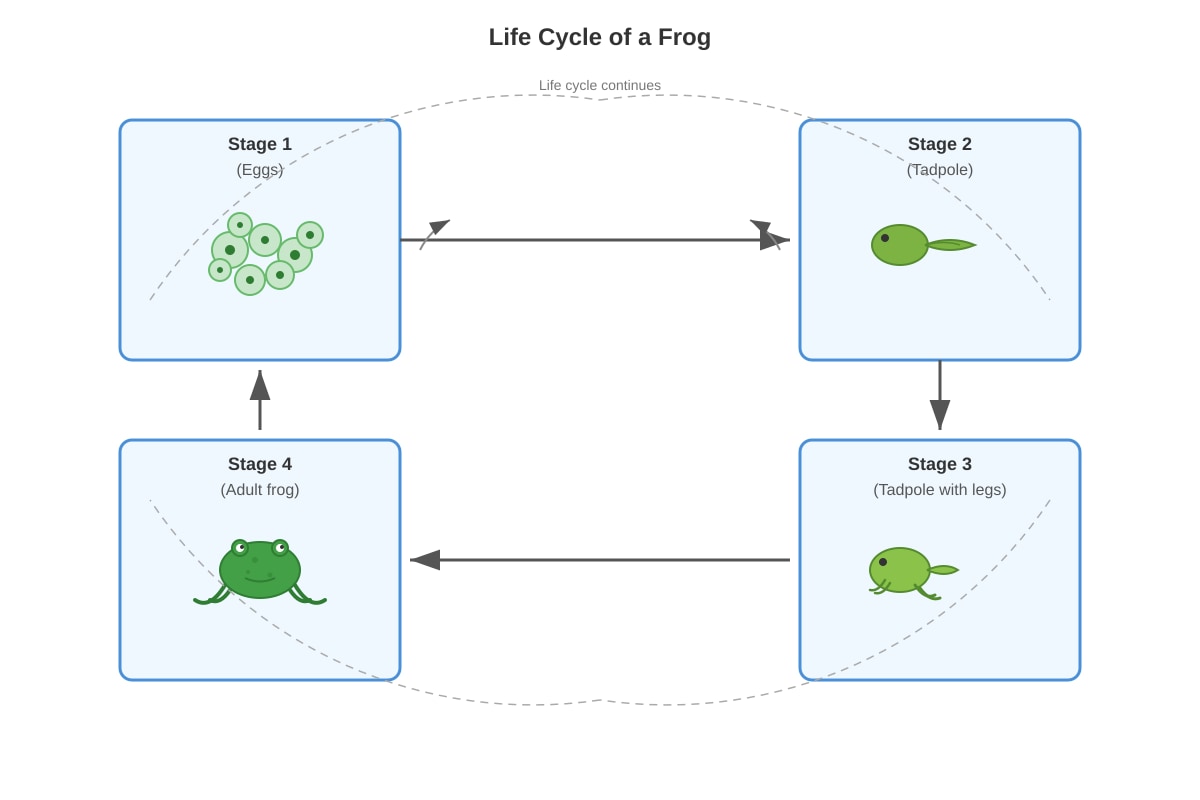
(a) It grows legs / its tail becomes shorter / it develops lungs. [1 mark]
- Teaching Note: A tadpole starts with a tail and no legs. As it grows into an adult frog, it develops legs, its tail shrinks and disappears, and it develops lungs for breathing on land.
(b) The frog goes through metamorphosis (changes form completely), while the chicken does not / The frog starts as an egg in water, while the chicken starts as an egg on land / The young frog (tadpole) looks very different from the adult, while the young chicken looks like a small version of the adult. [1 mark]
- Teaching Note: A chicken's life cycle is egg → chick → adult chicken. The chick looks like a small version of the adult chicken. A frog's life cycle involves a dramatic change in body form (metamorphosis), where the tadpole looks very different from the adult frog.
- Marking Note: Accept any one valid difference.
Q15. [2 marks]
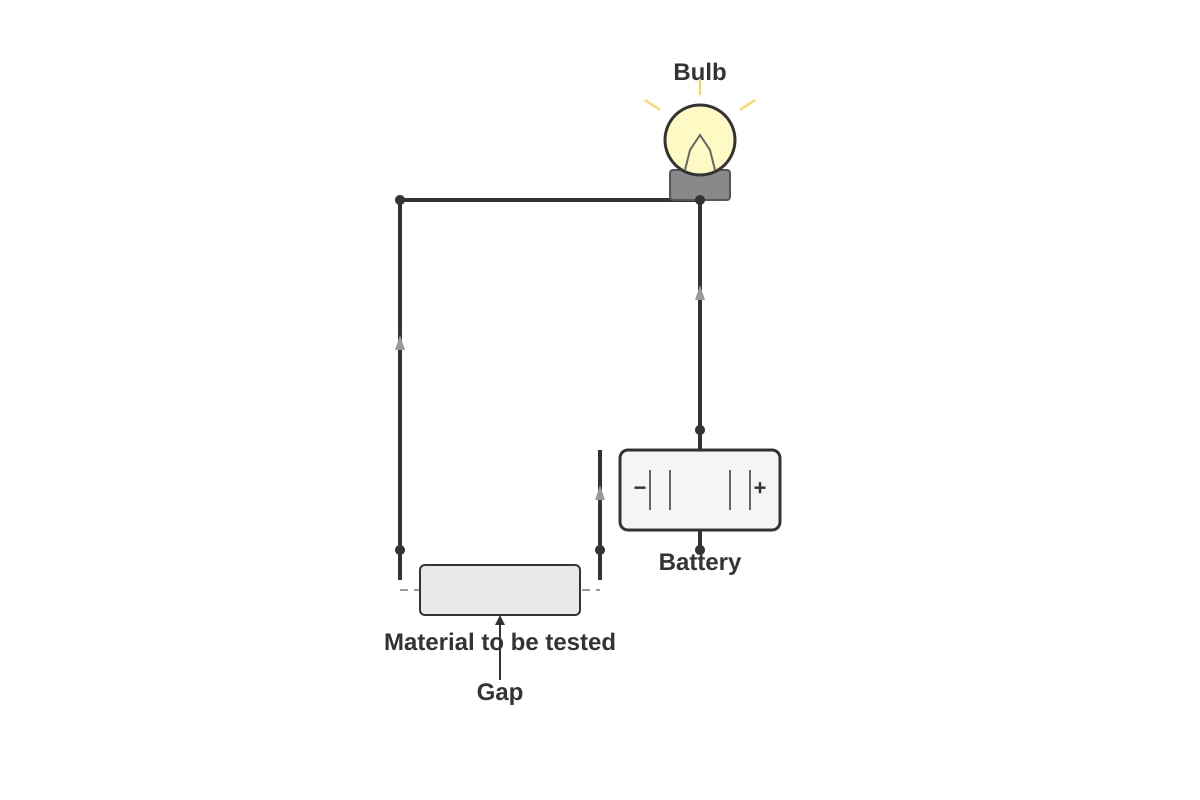
(a) The bulb will light up. [1 mark]
- Teaching Note: A conductor allows electricity to flow through it. When a conductor is placed in the gap, the circuit is complete, and electricity can flow from the battery, through the bulb, and back to the battery, causing the bulb to light up.
(b) Metal (e.g., iron, copper, steel, aluminium) [1 mark]
- Teaching Note: Metals are generally good conductors of electricity. This is why electrical wires are made of copper.
- Marking Note: Accept any metal. Do not accept "water" or "pencil lead" unless specified as a conductor in the syllabus context.
Q16. [2 marks]
(a) Y [1 mark]
- Teaching Note: A raincoat needs to be waterproof and flexible so the person can move easily. Material Y is both flexible and waterproof.
(b) Material Y is waterproof and flexible, so it will keep the person dry and allow them to move comfortably. [1 mark]
- Teaching Note: The question asks for the most suitable material. While W is also waterproof, it is not flexible, which would make it stiff and uncomfortable to wear. Y has both the required properties.
- Marking Note: Award the mark for mentioning both "waterproof" and "flexible" as the reasons.
Q17. [2 marks]
(a) Responding to changes (in the surroundings) [1 mark]
- Teaching Note: The plant is responding to the change in light direction by growing towards the window. This is a response to a stimulus (light).
(b) It grows / It needs water, food, and air / It reproduces. [1 mark]
- Teaching Note: The plant is clearly growing. It also needs water, air, and food (which it makes through photosynthesis) to survive, and it can reproduce.
- Marking Note: Accept any one other characteristic of living things.
Q18. [2 marks]
(a) It will still be attracted to the magnet. [1 mark]
- Teaching Note: A magnet attracts magnetic materials (like iron) regardless of which pole is brought near. Both the North and South poles attract iron.
(b) Magnets attract magnetic materials from either pole / Both poles of a magnet attract iron. [1 mark]
- Teaching Note: The attraction of a magnetic material depends on the material being magnetic, not on which pole is used. The rule "unlike poles attract" applies to two magnets, not to a magnet and a magnetic material.
- Common Mistake: Confusing the attraction of a magnet to a magnetic material with the attraction/repulsion between two magnets.
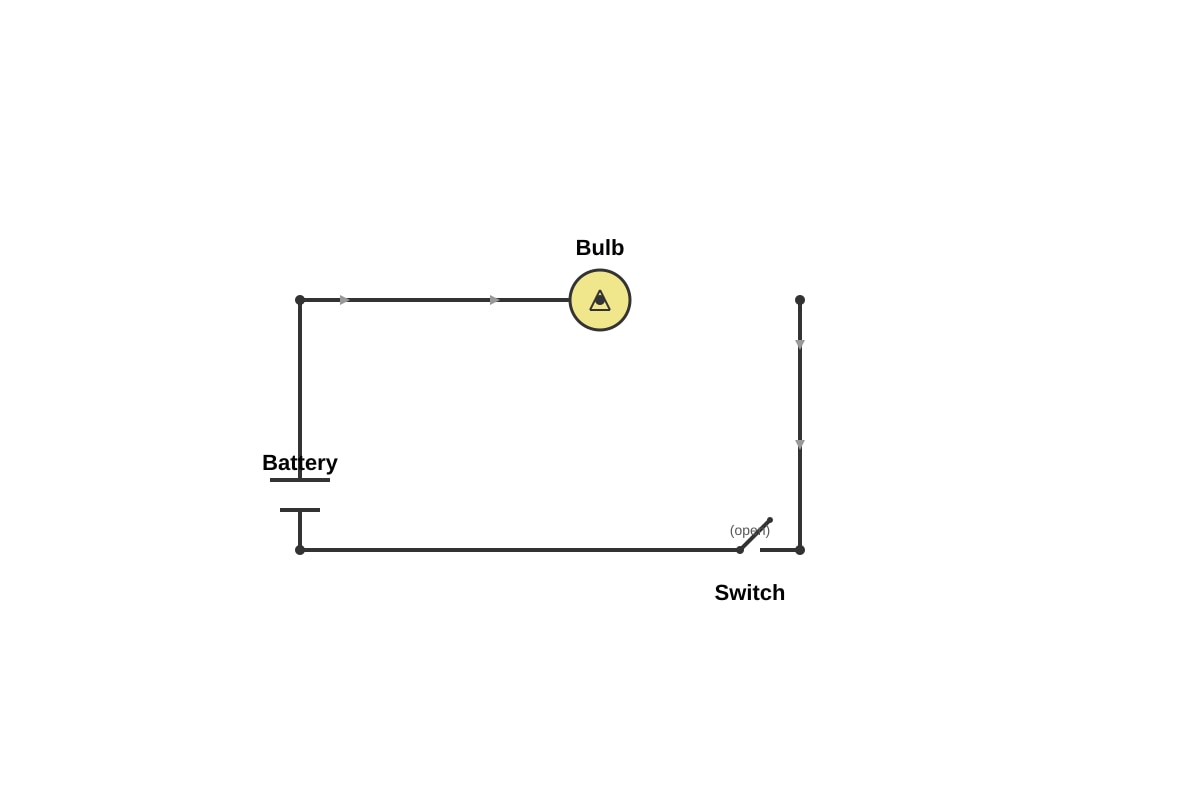
Q19. The bulb will not light up. The switch is open, so the circuit is incomplete / broken, and electricity cannot flow through the circuit. [2 marks]
- Teaching Note:
- Mark 1: State that the bulb will not light up.
- Mark 2: Explain that the open switch breaks the circuit, preventing the flow of electricity.
- Common Mistake: Saying the bulb will light up because the battery is still connected. A complete circuit is needed for electricity to flow.
Q20. [2 marks]
(a) The pattern shows the magnetic field (lines of force) around the magnet. [1 mark]
- Teaching Note: Iron filings line up along the invisible magnetic field lines. The pattern shows the direction and strength of the magnetic force around the magnet.
(b) North pole and South pole [1 mark]
- Teaching Note: Every magnet has two poles: a North pole and a South pole. These are the areas where the magnetic force is strongest.