From Real Exams Quiz
Primary 3 Science Magnets Quiz
Free P3 Science Magnets quiz, Exam version, with questions, answers, and syllabus-aligned practice for Singapore students.
These static practice materials are generated from the site's syllabus and paper-generation workflow, with source and model context shown so students and parents can evaluate the material before use.
Questions

Free quiz and exam paper access
Enter your details to view this paper
Your access is remembered on this device.
Answers
Answer Key - Primary 3 Science Quiz - Magnets
Total Marks: 30
Section A: Multiple-Choice Questions (10 × 1 Mark = 10 Marks)
Q1. Answer: C) An iron nail Mark: 1 Explanation: Magnets attract objects made of magnetic materials. Iron is a magnetic material. Plastic, wood, and glass are non-magnetic materials, so they are not attracted to a magnet. Common mistake: Students may think a magnet attracts all metals. However, not all metals are magnetic. Only certain metals like iron and steel are attracted to magnets.
Q2. Answer: B) They will repel each other. Mark: 1 Explanation: Like poles repel each other. When the north pole of one magnet is brought near the north pole of another magnet, they push each other away. This is a key rule of magnets: like poles repel, unlike poles attract. Common mistake: Students may think all magnets attract each other. Remember: like poles (N-N or S-S) repel, unlike poles (N-S) attract.
Q3. Answer: C) Towards the North Mark: 1 Explanation: A freely suspended magnet will always come to rest pointing in the North-South direction. The north pole of the magnet points towards the Earth's North. This is how a compass works. Teaching note: The Earth itself acts like a giant magnet. The north pole of a freely suspended magnet is attracted to the Earth's magnetic south pole, which is near the geographic North.
Q4. Answer: B) Steel Mark: 1 Explanation: Magnets can be made from iron or steel. Steel is a magnetic material. Wood, plastic, and rubber are non-magnetic materials and cannot be made into magnets. Teaching note: While iron and steel can both be made into magnets, steel is often used for permanent magnets because it stays magnetised for a longer time.
Q5. Answer: C) Bring the magnet close to the spoon. Mark: 1 Explanation: To test if an object is magnetic, we bring a magnet near it and observe whether it is attracted to the magnet. If the spoon is attracted, it is magnetic. Looking, weighing, or putting the spoon in water will not tell us if it is magnetic. Teaching note: This is a fair test. The only thing we are testing is whether the spoon is attracted to a magnet.
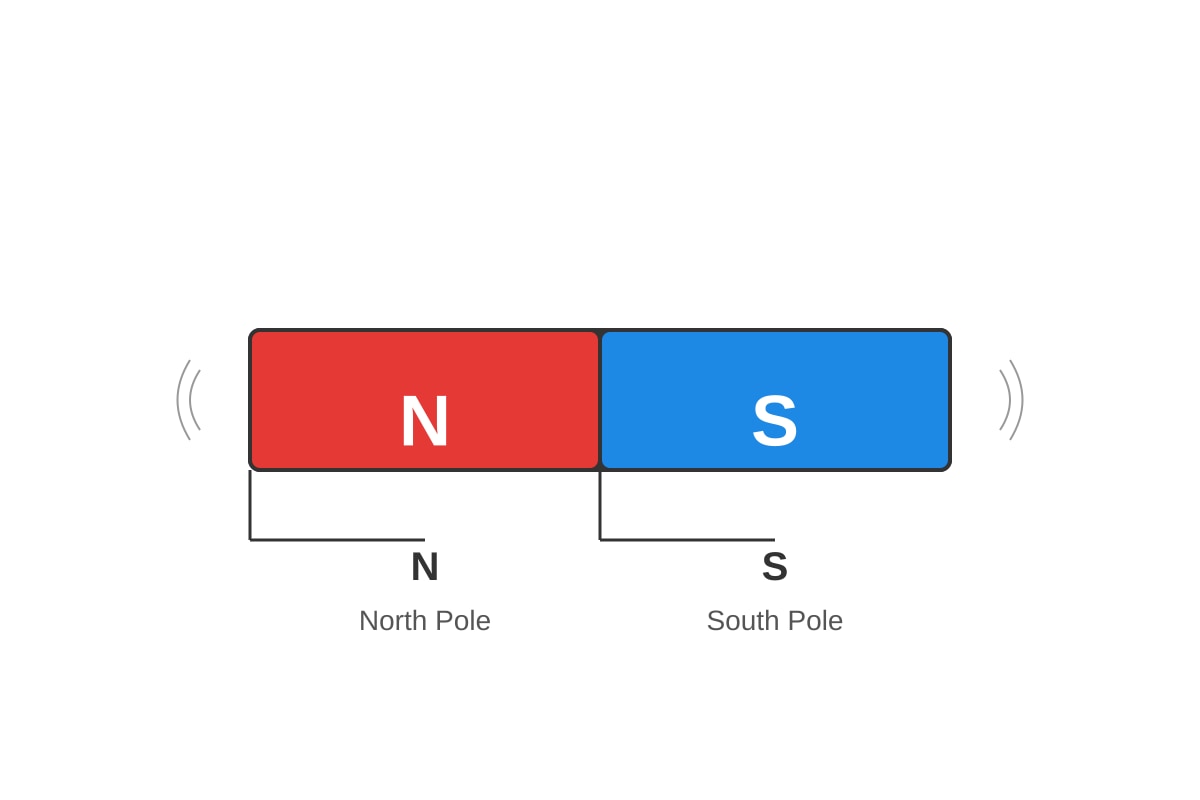
Q6. Answer: A) The magnets will attract each other. Mark: 1 Explanation: The diagram shows a magnet with N on the left and S on the right. The end labelled "S" is the south pole. When the north pole of another magnet is brought near the south pole, they are unlike poles. Unlike poles attract each other. Common mistake: Students may confuse the labels. Remember: N and S are unlike poles, so they attract.
Q7. Answer: C) To keep a fridge door closed Mark: 1 Explanation: Many fridge doors have a magnetic strip around the edge that helps the door stay closed. This is a common everyday use of magnets. Windows, doors, and tables do not typically use magnets for their main function. Teaching note: Other uses of magnets include: in speakers, in compasses, in toys, and in magnetic clasps for bags.
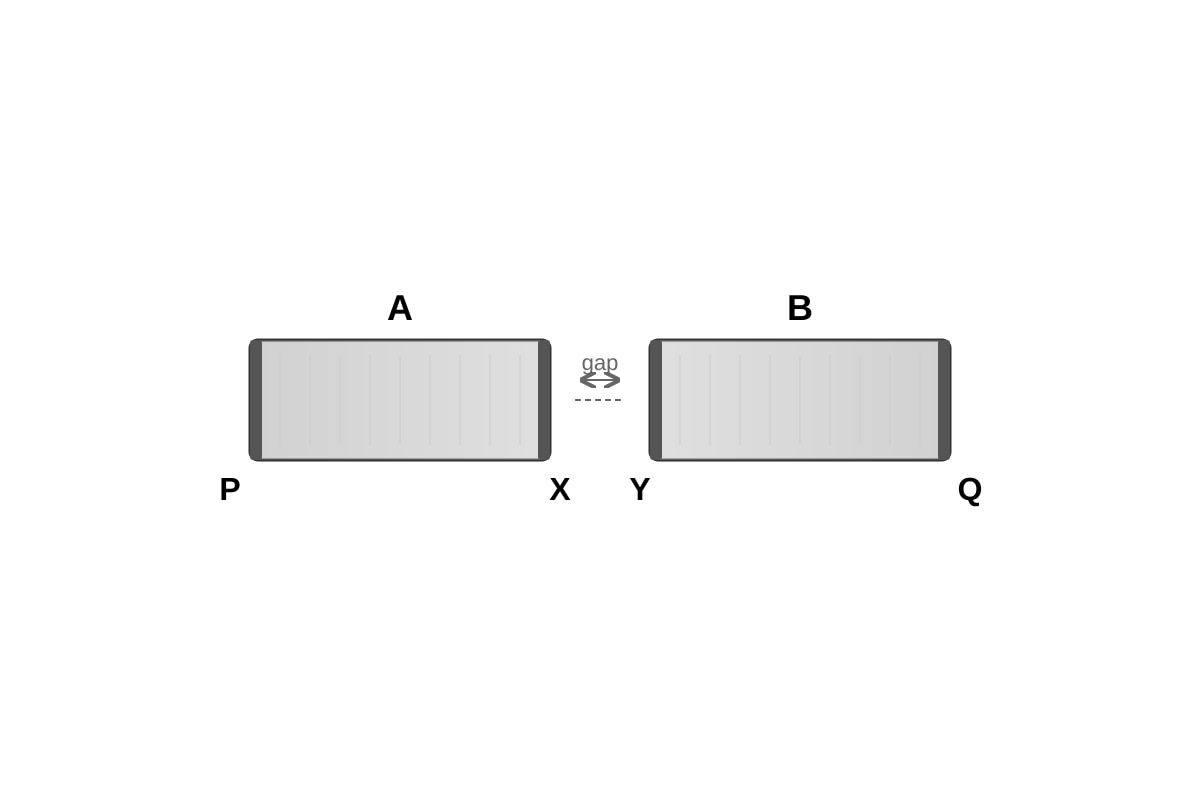
Q8. Answer: B) Bring the end of one bar near the middle of the other bar. Mark: 1 Explanation: A magnet has its magnetic strength concentrated at its two poles (ends). The middle of a magnet has very weak magnetic strength. If bar X is a magnet, when we bring the end of bar Y near the middle of bar X, the end of bar Y will be attracted to the middle of bar X (because the end of Y is a pole). However, if we bring the middle of bar X near the end of bar Y, the middle of X has almost no magnetic strength, so there will be no attraction. This difference helps us identify which bar is the magnet. Teaching note: This is a classic test. The key idea is that the poles (ends) of a magnet have the strongest magnetic force, while the middle has almost none.
Q9. Answer: C) Both pieces will become magnets. Mark: 1 Explanation: When a magnet is cut into two pieces, each piece becomes a smaller magnet with its own north and south pole. The magnetic property is not lost when a magnet is cut. Teaching note: If you cut a bar magnet in half, you get two smaller bar magnets. Each new piece has a north pole at one end and a south pole at the other end.
Q10. Answer: B) A magnet has two poles. Mark: 1 Explanation: Every magnet has two poles: a north pole and a south pole. This is a fundamental characteristic of magnets. Magnets do not attract all metals (only magnetic ones like iron and steel). They do not attract paper. They repel other magnets, not pieces of iron. Common mistake: Students may think magnets attract all metals. Copper and aluminium are metals but are not attracted to magnets.
Section B: Short-Answer Questions (5 × 2 Marks = 10 Marks)
Q11. (a) Answer: The iron filings will arrange themselves in a pattern showing the magnetic field (or they will form lines curving from one pole to the other). Mark: 1 Explanation: The iron filings are attracted to the magnet and will line up along the invisible magnetic field lines. The pattern is most concentrated at the poles (ends) of the magnet.
(b) Answer: The magnet exerts a magnetic force on the iron filings, pulling them towards the areas where the magnetic force is strongest (the poles). Mark: 1 Explanation: Iron is a magnetic material. The magnetic force from the magnet attracts the iron filings. The filings gather most at the poles because the magnetic force is strongest there.
Marking note: Accept any answer that mentions the magnetic force attracting the iron filings, or that the filings show the magnetic field.
Q12. (a) Answer: The iron nail. Mark: 1 Explanation: Iron is a magnetic material. Plastic and copper are non-magnetic materials.
(b) Answer: The iron nail is made of iron, which is a magnetic material. / Iron is attracted to magnets. Mark: 1 Explanation: Magnets attract objects made of magnetic materials like iron and steel. Copper and plastic are not magnetic materials.
Marking note: Award the mark for identifying iron as a magnetic material. Do not accept "because it is metal" alone, as copper is also a metal.
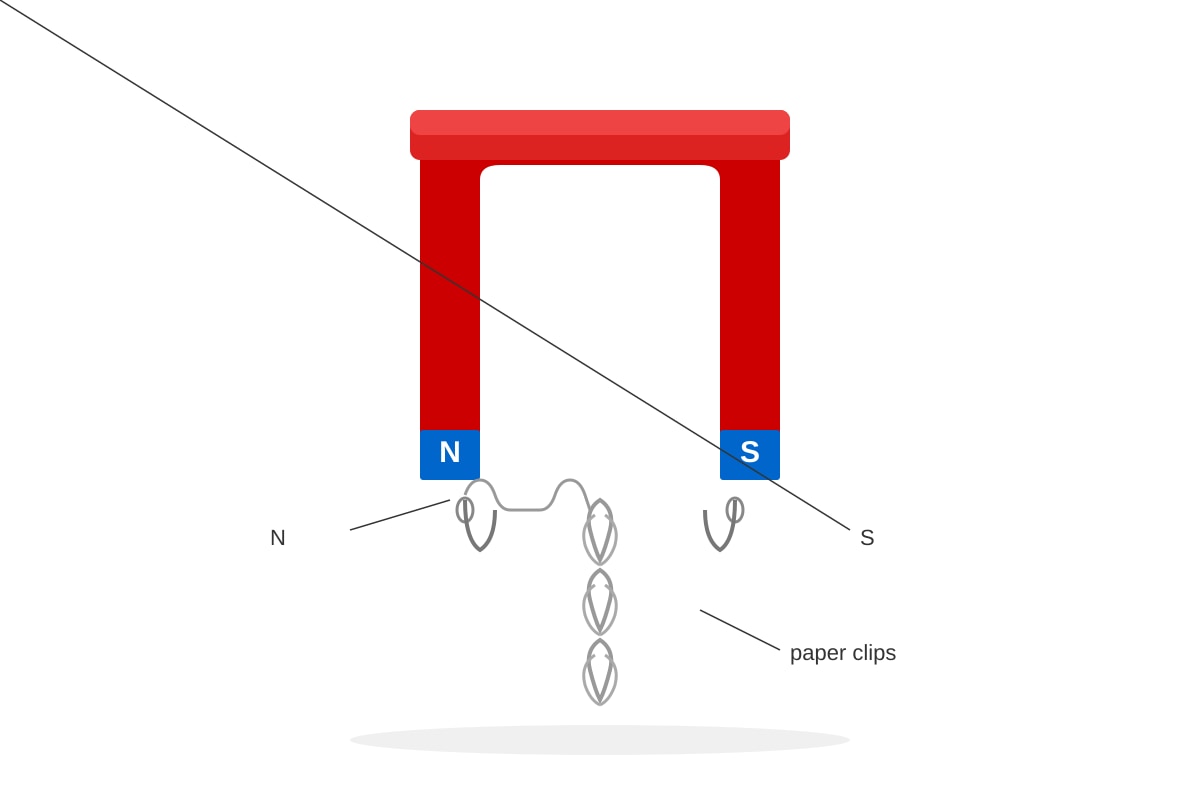
Q13. (a) Answer: The paper clips are made of steel (or iron), which is a magnetic material, so they are attracted to the magnet. Mark: 1 Explanation: Paper clips are typically made of steel, which contains iron. The magnetic force from the magnet attracts the steel paper clips.
(b) Answer: The first paper clip becomes a temporary magnet when it is in contact with the magnet. It then attracts the next paper clip, and so on. Mark: 1 Explanation: When a magnetic material touches a magnet, it becomes temporarily magnetised. This temporary magnet can then attract another paper clip, creating a chain effect. Teaching note: This is called magnetic induction, but students at P3 do not need to know the term. They just need to understand that the paper clip becomes a magnet temporarily.
Marking note: Accept answers that mention the paper clip becomes a temporary magnet and attracts the next one.
Q14. (a) Answer: He should stroke the steel bar with one end of the bar magnet, repeatedly in the same direction (from one end of the steel bar to the other). Mark: 1 Explanation: The stroke method involves rubbing a magnet along a steel bar in one direction, many times. This aligns the magnetic domains in the steel bar, making it a magnet.
(b) Answer: The steel bar will attract the iron nails (because it has become a magnet). Mark: 1 Explanation: After stroking, the steel bar becomes magnetised. It will now attract magnetic materials like iron nails.
Marking note: For (a), accept any description that mentions stroking the steel bar with the magnet in one direction. For (b), accept "the steel bar will attract the iron nails" or "the steel bar has become a magnet".
Q15. (a) Answer: The compass needle will point to the North (and South). / The compass needle will point in the North-South direction. Mark: 1 Explanation: A compass contains a small magnet (the needle) that is free to turn. It always points in the North-South direction.
(b) Answer: A compass helps the hiker find directions (so he does not get lost). Mark: 1 Explanation: By knowing which way is North, the hiker can use a map to find his way. This is very useful when hiking in forests or mountains where there are no roads or signs.
Marking note: Accept any answer that mentions finding direction or not getting lost.
Section C: Open-Ended Questions (5 × 2 Marks = 10 Marks)
Q16. (a) Answer: End X and end Y are the same type of pole (both are north poles or both are south poles). Mark: 1 Explanation: Like poles repel each other. Since X and Y repel, they must be the same type of pole. They are either both north poles or both south poles.
(b) Answer: End P is a south pole. Mark: 1 Explanation: Every magnet has two poles. If X is a north pole, then the other end of the same magnet (P) must be a south pole.
Marking note: For (a), accept "they are the same pole" or "like poles". For (b), accept "south pole" or "S".
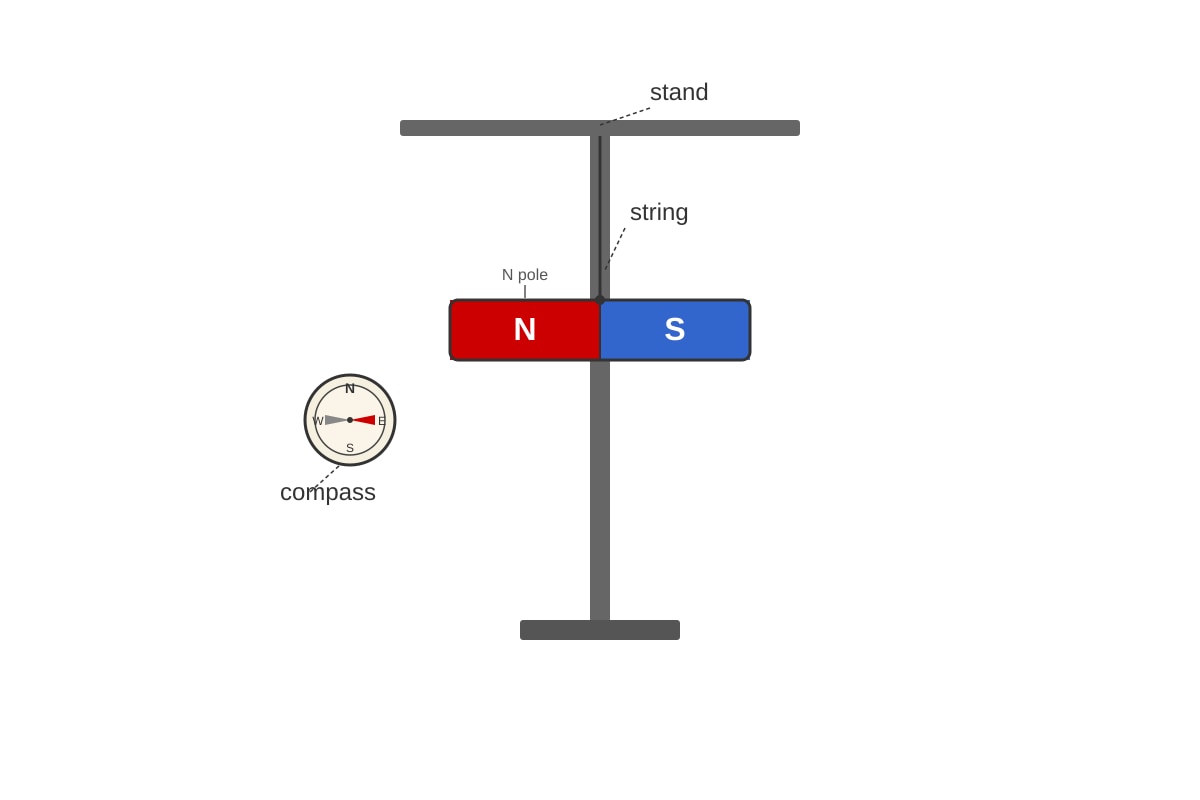
Q17. (a) Answer: The end labelled "N" will point towards the North (direction). Mark: 1 Explanation: A freely suspended magnet will always come to rest pointing in the North-South direction. The north pole of the magnet points towards the Earth's North.
(b) Answer: The hanging magnet will turn/rotate so that its "N" end moves away from the south pole of the other magnet (or the "S" end will turn towards the other magnet's south pole). Mark: 1 Explanation: The south pole of the other magnet will attract the north pole of the hanging magnet? No, wait. Unlike poles attract. The south pole of the other magnet will attract the north pole of the hanging magnet. So the hanging magnet will turn so that its N pole moves towards the S pole of the other magnet. Correction: The south pole of the other magnet will attract the north pole of the hanging magnet. So the hanging magnet will turn so that its N end points towards the S pole of the other magnet.
Marking note: For (b), accept "the N end of the hanging magnet will be attracted to the S pole of the other magnet" or "the hanging magnet will turn towards the other magnet".
Q18. (a) Answer: Iron (or steel contains iron). Mark: 1 Explanation: Iron is a magnetic material. Steel is made from iron, so steel is also magnetic. This is why both the iron nail and the steel paper clip are attracted to the magnet.
(b) Answer: No, the statement is not correct. The table shows that copper and aluminium are metals, but they are not attracted to the magnet. Mark: 1 Explanation: The table shows that copper coin and aluminium foil are not attracted to the magnet. Copper and aluminium are metals. This proves that not all metals are attracted to magnets. Only magnetic metals like iron and steel are attracted.
Marking note: For (b), accept any answer that mentions copper or aluminium being metals that are not attracted to the magnet.
Q19. (a) Answer: The piece of wood will turn/rotate so that the magnet points in the North-South direction. Mark: 1 Explanation: The magnet is free to turn on the wood. It will align itself in the North-South direction, just like a compass needle.
(b) Answer: The Earth behaves like a giant magnet (or the Earth has a magnetic field). Mark: 1 Explanation: The magnet on the wood points North-South because the Earth itself acts like a giant magnet, exerting a magnetic force on the bar magnet.
Marking note: For (b), accept "the Earth is like a magnet" or "the Earth has a magnetic field".
Q20. (a) Answer: He can bring the compass near one end of the magnet. The end of the magnet that attracts the compass's north pole (or the end that the compass's south pole points to) is the magnet's south pole. The other end is the north pole. Mark: 1 Explanation: The compass needle is a magnet. Its north pole points to the Earth's North. When brought near another magnet, the compass needle will be attracted or repelled. The north pole of the compass needle will be attracted to the south pole of the magnet. So, if the compass's north pole points to an end of the magnet, that end is the magnet's south pole. The other end is the north pole.
(b) Answer: The compass contains a small magnet (needle). The north pole of the compass needle is attracted to the south pole of the bar magnet (and repelled by the north pole). This tells us which end is which. Mark: 1 Explanation: The compass needle is a freely suspended magnet. Like poles repel and unlike poles attract. By observing how the compass needle responds to the bar magnet, we can identify the poles of the bar magnet.
Marking note: For (a), accept any description that correctly uses the compass to identify the poles. For (b), accept "the compass needle is a magnet" or "unlike poles attract, like poles repel".
Summary of Marking Notes
- Q11-Q20: For 2-mark questions, award 1 mark for each correct part (a) and (b).
- Common misconception to watch for: Students may think all metals are magnetic. Use Q18 to reinforce that only iron and steel (among common materials) are magnetic.
- Key concept to reinforce: Like poles repel, unlike poles attract. This is tested in Q2, Q6, Q16, Q17, and Q20.